International Relations

FSI researchers strive to understand how countries relate to one another, and what policies are needed to achieve global stability and prosperity. International relations experts focus on the challenging U.S.-Russian relationship, the alliance between the U.S. and Japan and the limitations of America’s counterinsurgency strategy in Afghanistan.

Foreign aid is also examined by scholars trying to understand whether money earmarked for health improvements reaches those who need it most. And FSI’s Walter H. Shorenstein Asia-Pacific Research Center has published on the need for strong South Korean leadership in dealing with its northern neighbor.

FSI researchers also look at the citizens who drive international relations, studying the effects of migration and how borders shape people’s lives. Meanwhile FSI students are very much involved in this area, working with the United Nations in Ethiopia to rethink refugee communities.

Trade is also a key component of international relations, with FSI approaching the topic from a slew of angles and states. The economy of trade is rife for study, with an APARC event on the implications of more open trade policies in Japan, and FSI researchers making sense of who would benefit from a free trade zone between the European Union and the United States.

Authors
Thomas Holme
News Type
News
Date
Paragraphs

5,100 miles separate Tokyo from Stanford. But for Hiroyuki Fukano, the distance was measured in more than miles. It was also a journey of time and memory–of 30 years, to be precise.

As a visiting fellow in the 1988-89 cohort of APARC’s Corporate Affiliate Program (now called Global Affiliates Program), Fukano joined Center alumni and friends from the last four decades for reunions in Beijing and Tokyo. In all, more than 100 former affiliates and visiting fellows gathered to reconnect with peers, meet new ones, and reflect on their times at Stanford.

"These gatherings are a reminder, both to our faculty and alumni, of the power of the APARC experience to change lives,” shared Director Gi-Wook Shin, who delivered welcoming remarks at both events. “We have with us alumni and affiliates from the private and public sectors, as well as from academia. They are doing amazing work in their specific fields; work influenced, in part, by their time at Stanford.”

“Clearly, the APARC experience stretches beyond barriers, both geographical and temporal.”

The gatherings also underscored the influence of the APARC experience on strengthening connections across Asia at large. For example, one Korean affiliate flew in for the Tokyo event, while a Japanese alum, now working in China, joined his Stanford peers at the Beijing gathering.

“It’s an especially unique bond that the affiliates share,” noted Global Affiliates Program Manager Denise Masumoto. “Regardless of the industry or field from which they come, their fellowship year at APARC is a unifying experience for them; it’s something each of them carries forward into everything they do.”

Fukano, who delivered remarks at the Tokyo event, echoed this sentiment. As he reflected on the thirty years that had passed since his time at Stanford, he shared that, even to this day, his year at APARC still held great significance for him.

Director Shin was joined at the events by several Center faculty members. Professor Takeo Hoshi, director of the Japan Program at APARC, updated the Tokyo audience on new research and partnerships being explored by the program.

Professor Jean Oi, director of the China Program at APARC, addressed the Beijing gathering at the Stanford Center at Peking University (SCPKU). Professor Oi spoke about the program’s collaboration this fall with SCPKU on their "On the Road to China" program, which brings Stanford students to SCPKU for three months of coursework and area experiences.

We thank everyone who joined us for these alumni events and look forward to seeing even more friends and partners next time.

Prof. Takeo Hoshi, Lei Guo (2016-17 Visiting Scholar, Peking University), and Masami Miyashita (2011-12 Corporate Affiliate, Ministry of Economy, Trade & Industry, Japan)

Prof. Takeo Hoshi, Lei Guo (2016-17 Visiting Scholar, Peking University), and Masami Miyashita (2011-12 Corporate Affiliate, Ministry of Economy, Trade & Industry, Japan)

Luguang Li (2002-03 Corporate Affiliate, PetroChina) and Professor Gi-Wook Shin

Luguang Li (2002-03 Corporate Affiliate, PetroChina) and Professor Gi-Wook Shin

Masami Miyashita (2011-12 Corporate Affiliate, METI, Japan, now based in Hong Kong) and Zhuoyan Wang (2016-17 Corporate Affiliate, PetroChina)

Masami Miyashita (2011-12 Corporate Affiliate, METI, Japan, now based in Hong Kong) and Zhuoyan Wang (2016-17 Corporate Affiliate, PetroChina)

Zhuoyan Wang (2016-17 Corporate Affiliate, PetroChina)

Zhuoyan Wang (2016-17 Corporate Affiliate, PetroChina)

Jung-Yi Lee (2013-14 Visiting Scholar, Hanmaum Peace & Research Foundation)

Jung-Yi Lee (2013-14 Visiting Scholar, Hanmaum Peace & Research Foundation)

Xiuxiao Wang (2016-17 Visiting Scholar, Central University of Finance and Economics) and Professor Gi-Wook Shin
Xiuxiao Wang (2016-17 Visiting Scholar, Central University of Finance and Economics) and Professor Gi-Wook Shin

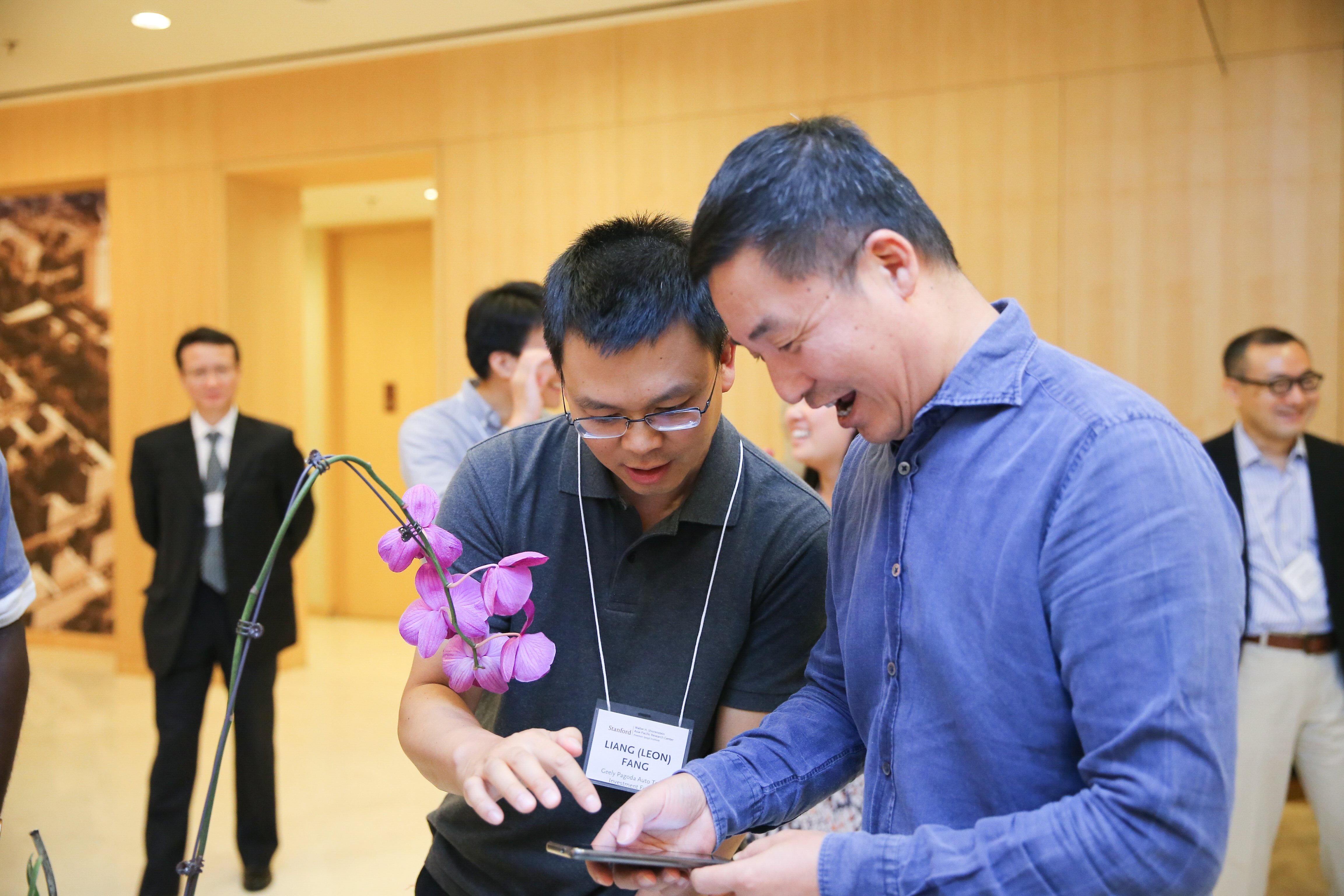
Liang (Leon) Fang (2014-15 Corporate Affiliate, China Sunrain Solar Energy Co., Ltd.) and Zhuoyan Wang (2016-17 Corporate Affiliate, PetroChina)

Liang (Leon) Fang (2014-15 Corporate Affiliate, China Sunrain Solar Energy Co., Ltd.) and Zhuoyan Wang (2016-17 Corporate Affiliate, PetroChina)

Hong Cheng (2016-17 Visiting Scholar, Wuhan University), Lei Guo (2016-17 Visiting Scholar, Peking University), Professor Takeo Hoshi, and Jianxiong Liu (2016-17 Visiting Scholar, Chinese Academy of Social Sciences)

Hong Cheng (2016-17 Visiting Scholar, Wuhan University), Lei Guo (2016-17 Visiting Scholar, Peking University), Professor Takeo Hoshi, and Jianxiong Liu (2016-17 Visiting Scholar, Chinese Academy of Social Sciences)

Professor Jean Oi and Guofeng Sun (2003-04 Corporate Affiliate, Research Institute of People’s Bank of China)
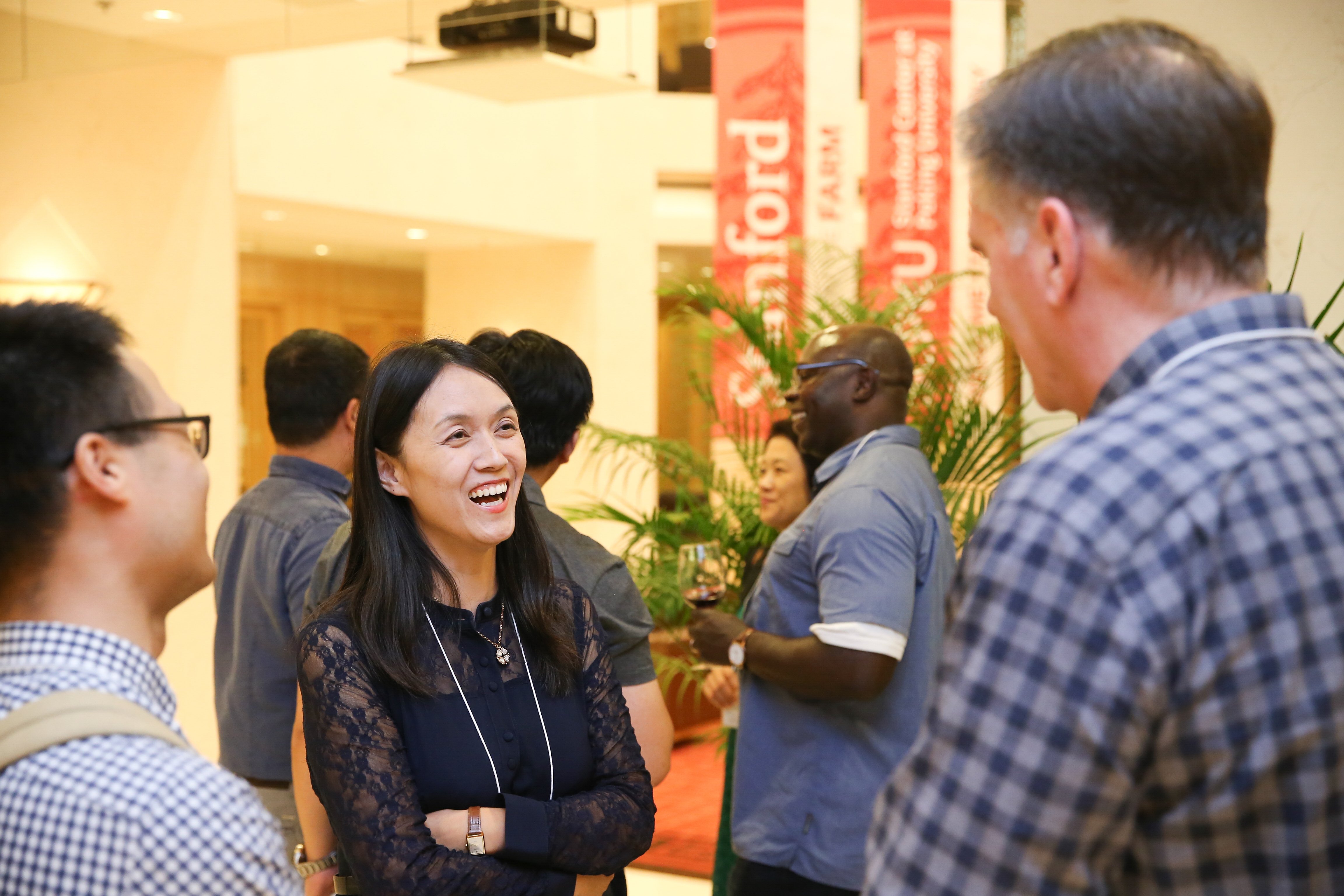
Professor Jean Oi and Guofeng Sun (2003-04 Corporate Affiliate, Research Institute of People’s Bank of China)

Lei Guo, 2016-17 Visiting Scholar from Peking University, and Professor Andy Walder
Lei Guo, 2016-17 Visiting Scholar from Peking University, and Professor Andy Walder

Image
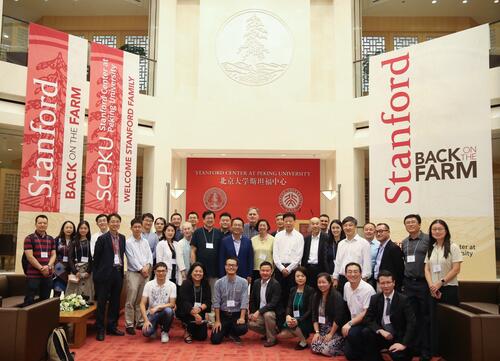
Beijing reception on September 10, 2018
Beijing reception on September 10, 2018

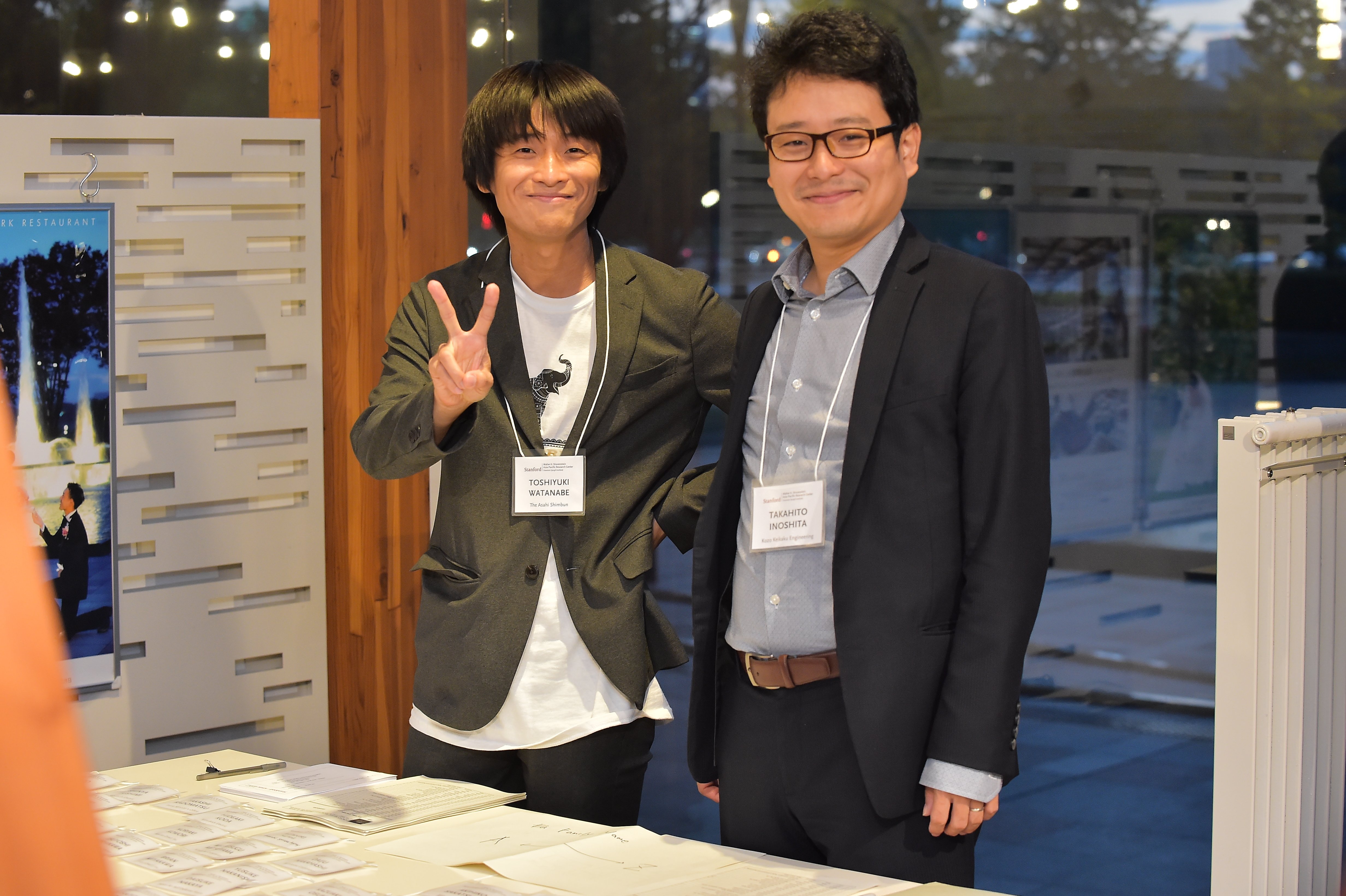
Toshiyuki Watanabe (2017-18 Corporate Affiliate, The Asahi Shimbun) and Takahito Inoshita (2017-18 Corporate Affiliate, Kozo Keikaku Engineering)

Toshiyuki Watanabe (2017-18 Corporate Affiliate, The Asahi Shimbun) and Takahito Inoshita (2017-18 Corporate Affiliate, Kozo Keikaku Engineering)

Hiroyuki Fukano (1988-89 Corporate Affiliate, ITOCHU Corporation)

Hiroyuki Fukano (1988-89 Corporate Affiliate, ITOCHU Corporation)

Takashi Imoto (1998-99 Corporate Affiliate, Kansai Electric Power Company), Yasuhiro Kanda (2005-06 Corporate Affiliate, Kansai Electric Power Company), and Professor Takeo Hoshi

Takashi Imoto (1998-99 Corporate Affiliate, Kansai Electric Power Company), Yasuhiro Kanda (2005-06 Corporate Affiliate, Kansai Electric Power Company), and Professor Takeo Hoshi

Aki Takahashi (2015-17 Corporate Affiliate, Nissoken), Kenichi Kamai and Kimie Kawamoto (affiliate representatives from Nissoken)
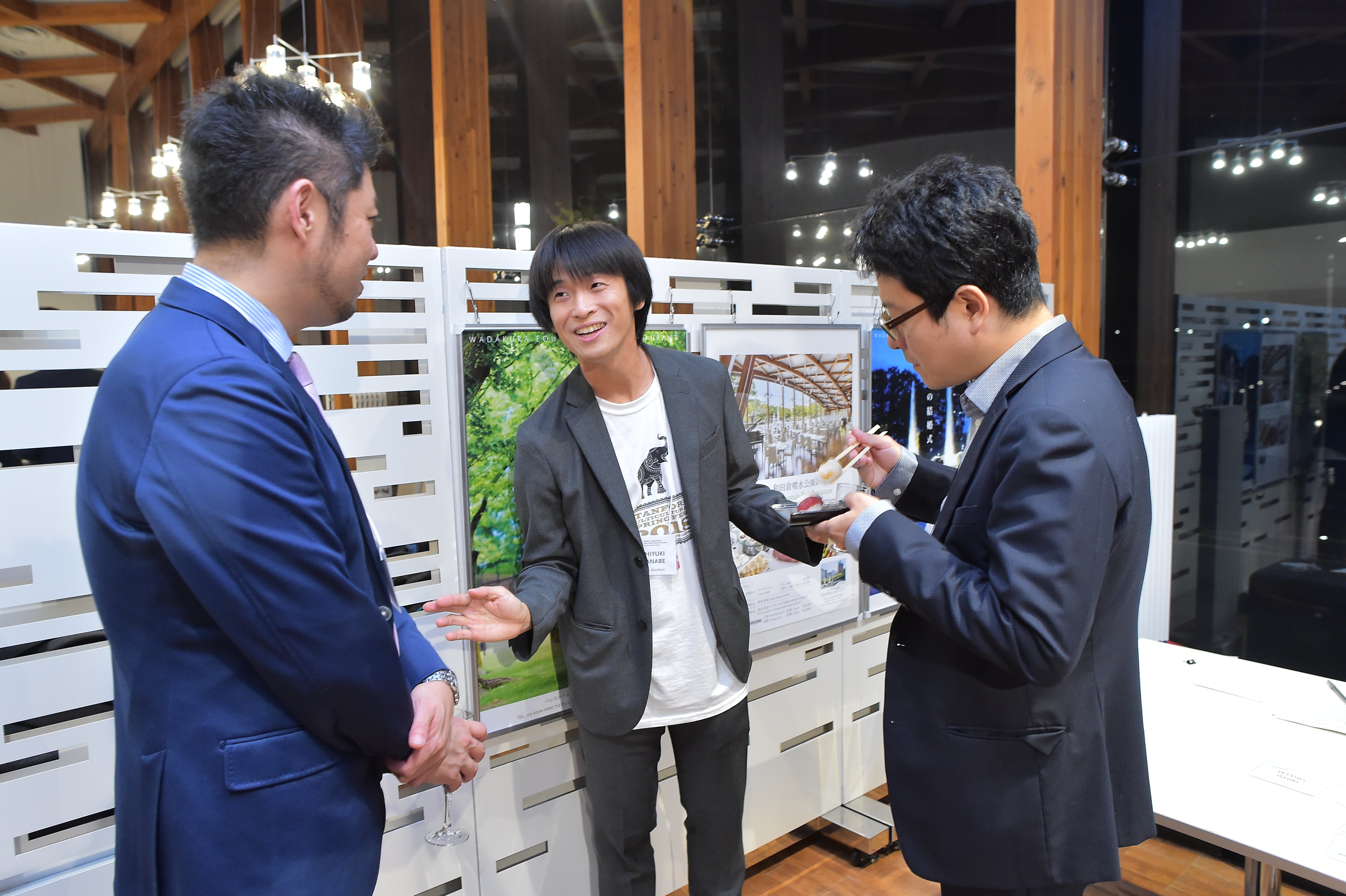
Aki Takahashi (2015-17 Corporate Affiliate, Nissoken), Kenichi Kamai and Kimie Kawamoto (affiliate representatives from Nissoken)

Ryuichiro Takeshita (2014-15 Corporate Affiliate, Huff Post Japan), Toshiyuki Watanabe (2017-18 Corporate Affiliate, The Asahi Shimbun) and Takahito Inoshita (2017-18 Corporate Affiliate, Kozo Keikaku Engineering)
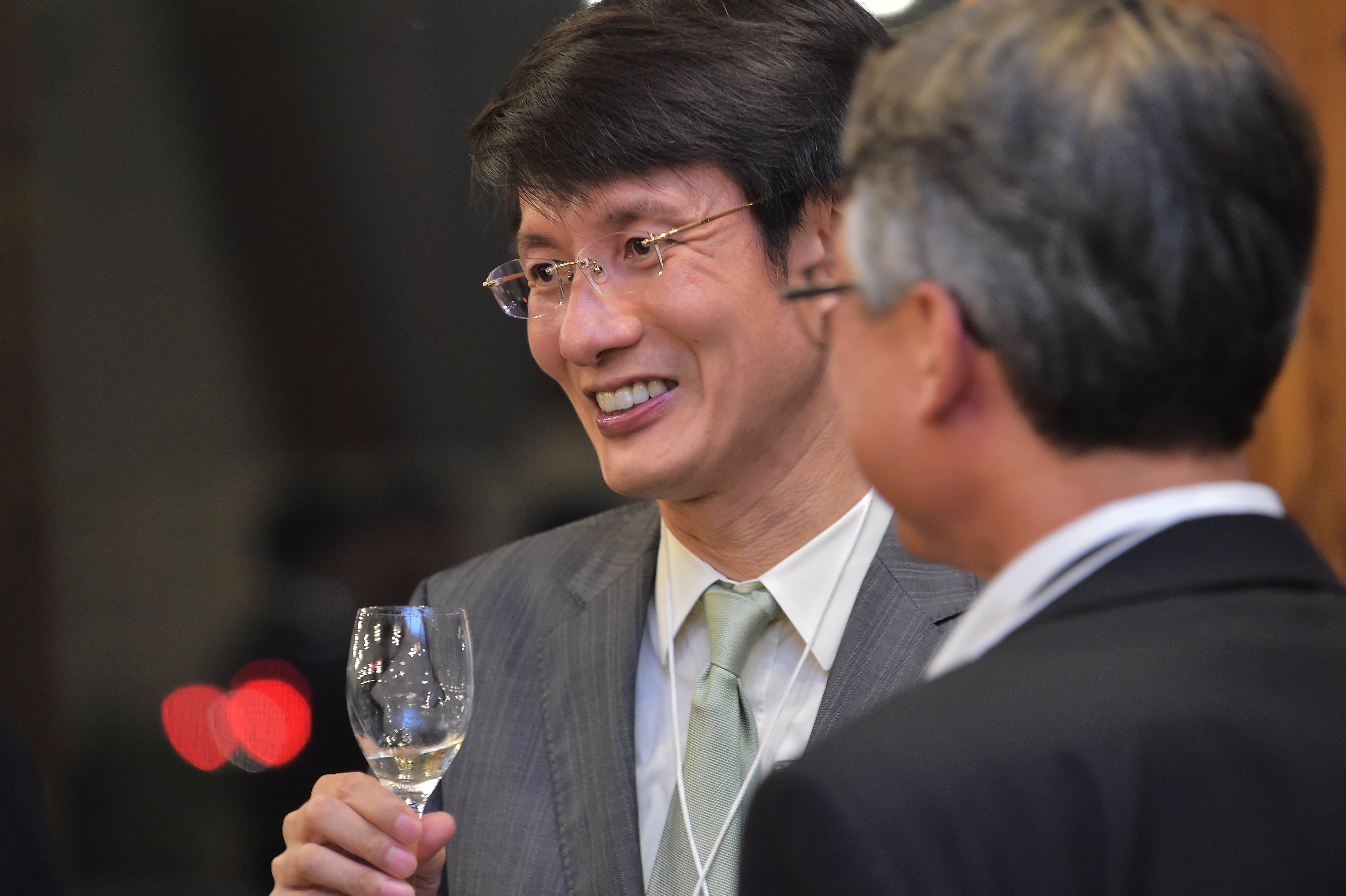
Ryuichiro Takeshita (2014-15 Corporate Affiliate, Huff Post Japan), Toshiyuki Watanabe (2017-18 Corporate Affiliate, The Asahi Shimbun) and Takahito Inoshita (2017-18 Corporate Affiliate, Kozo Keikaku Engineering)

Yotaro Akamine (2007-08 Corporate Affiliate, Tokyo Electric Power Company)

Yotaro Akamine (2007-08 Corporate Affiliate, Tokyo Electric Power Company)

Professor Gi-Wook Shin and Keiichi Uruga (2013-14 Corporate Affiliate, Ministry of Economy, Trade & Industry, Japan)
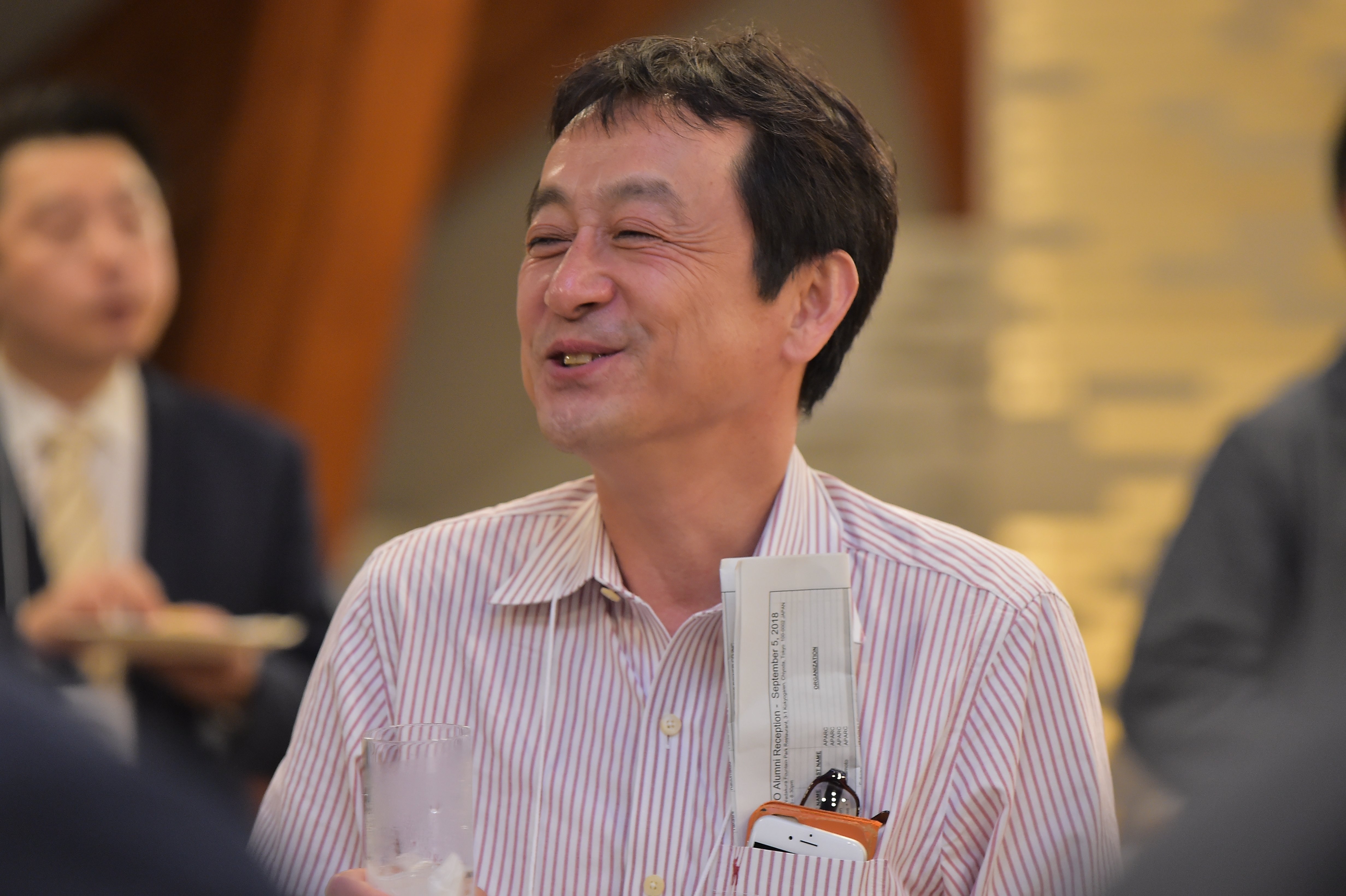
Professor Gi-Wook Shin and Keiichi Uruga (2013-14 Corporate Affiliate, Ministry of Economy, Trade & Industry, Japan)

Tadashi (Brian) Miyakawa (2000-01 Corporate Affiliate, IBM, Japan)

Tadashi (Brian) Miyakawa (2000-01 Corporate Affiliate, IBM, Japan)

Yohei Saito (2016-17 Corporate Affiliate, Future Architect Inc.), Col. Daisuke Nakaya (2016-17 Corporate Affiliate, Japan Air Self Defense Force), Akihiko Sado (2016-17 Corporate Affiliate, The Asahi Shimbun), Hiroki Morishige (2016-18 Corporate Affiliate, Shizuoka Prefectural Government) and Aki Takahashi (2015-17 Corporate Affiliate, Nissoken)

Yohei Saito (2016-17 Corporate Affiliate, Future Architect Inc.), Col. Daisuke Nakaya (2016-17 Corporate Affiliate, Japan Air Self Defense Force), Akihiko Sado (2016-17 Corporate Affiliate, The Asahi Shimbun), Hiroki Morishige (2016-18 Corporate Affiliate, Shizuoka Prefectural Government) and Aki Takahashi (2015-17 Corporate Affiliate, Nissoken)

Tokyo reception on September 5, 2018

Tokyo reception on September 5, 2018

Hero Image
Group photo of Global Affiliates Program participants for 2019-20. Rod Searcey
All News button
1
Paragraphs

On August 9, 2018, the Shorenstein Asia Pacific Research Center (APARC) hosted a conference, “Break Through: Women in Silicon Valley, Womenomics in Japan" with support from the Acceleration Program in Tokyo for Women (APT). Women thought-leaders and entrepreneurs from Stanford, Silicon Valley, and Japan came together to discuss innovative ideas for narrowing the gender gap, and cultivated interpersonal support networks and collaboration across the Pacific. The report, which is an outcome of the conference, offers an analysis and discussion of the themes and takeaways from the day. 

All Publications button
1
Publication Type
Policy Briefs
Publication Date
Journal Publisher
Japan Program at the Shorenstein Asia-Pacific Research Center
-

Image
APARC Annual Holiday Party 2018

-

Malaysia's ruling National Front (BN) coalition ran one of the most durable authoritarian governments in the world. But in May 2018, a coalition of opposition parties won power, unseating the BN government for the first time in 61 years. In two complementary talks, APARC scholars Sophie Lemière and Sebastian Dettman will examine the roots of this victory in light of the strategies, coalitions, and messianic messages used by the opposition. Using findings from their fieldwork in Malaysia, they will show how and why the opposition parties were successful and draw implications of the victory for Malaysia’s future under its new coalition government. The speakers will also convey broader insights about political competition in Southeast Asia’s semi-authoritarian polities and beyond.    

Image
dettman cropped
Sebastian Dettman completed his doctorate in the Department of Government at Cornell University in 2018. He researches party building, electoral competition, and political representation in newly democratic and authoritarian regimes, with a focus on Southeast Asia. Sebastian has an MA in Southeast Asian Studies from the University of Michigan and has worked as a consultant and researcher for organizations including the Asia Foundation, the International Crisis Group, and the Carter Center.


Image
lemiere cropped
Sophie Lemière is a political anthropologist in the Ash Center for Democracy at Harvard University. At Stanford she is working on a political biography of Malaysia’s current prime minister that features his recent election campaign. She is the editor of a series of books on politics and people in Malaysia, including Gangsters and Masters (2019), Illusions of Democracy (2017), and Misplaced Democracy (2014). She has held visiting research positions at universities in Singapore, Australia, and the US. Her PhD is from Sciences-Po in Paris.


Philippines Conference Room
Encina Hall, 3rd Floor
616 Serra Mall, Stanford, CA 94305

Sebastian Dettman 2018-19 Shorenstein Postdoctoral Fellow on Contemporary Asia
Sophie Lemière 2018-19 Lee Kong Chian NUS-Stanford Fellow on Contemporary Southeast Asia
Seminars
-

Populist leaders around the world often fight against corruption in an effort to win public support. Conventional wisdom holds that this strategy works because leaders can signal their benevolent intentions by removing corrupt officials. We argue that fighting against corruption can produce unintended consequences. By revealing scandals of corrupt officials, anti-corruption campaigns can alter citizens’ beliefs about public officials and lead to disenchantment about political institutions. We test this argument by examining how China’s current anti-corruption campaign has changed citizens’ public support for the government and the Communist Party. We analyze the results of two surveys conducted before and during the campaign, and employ a difference-in-differences strategy to show that corruption investigations decrease respondents’ support for the central government and party. We also examine our respondents’ prior and posterior beliefs, and the results support our updating mechanism. 

SPEAKER:
Image
Yuhua Wang
 
Yuhua Wang is an assistant professor in the Department of Government at Harvard University. He received his B.A. from Peking University and his Ph.D. from the University of Michigan. Yuhua's research has focused on the emergence of state institutions, with a regional focus on China. Yuhua is the author of Tying the Autocrat’s Hands: The Rise of the Rule of Law in China (Cambridge University Press, 2015). He is currently working on a book-length project to examine long-term state development in China. 

Philippines Conference Room
Encina Hall, 3rd Floor
616 Serra Mall
Stanford, CA 94305

Yuhua Wang Assistant Professor, Department of Government at Harvard University
-

Singapore’s government is widely seen as competent, honest, and meritocratic—an exceptional case of post-colonial governance.  Nor can any elected incumbent party anywhere match Singapore’s People’s Action Party’s 59-year record of uninterrupted rule.  But recent events have cast doubt on the PAP government’s reputation for performance and stability.  Despite acknowledging its need for new leaders, the government has been unable to select a clear successor to the current prime minister, even as his talented and popular deputy is sidelined, apparently due to his ethnic-minority background.  When the government tried to ascertain public opinion on legislation against “deliberate online falsehoods,” the exercise descended into name-calling and threats against witnesses.  Resentments have meanwhile risen over socioeconomic inequality and the mismanagement of public transport, housing, and health care.

How did this happen? In his talk, Dr. Thum will explore the historical forces that have shaped Singapore's politics and governance; explain the political economy of decision-making there; and recount his own experience with the turmoil affecting the country's government.  He will argue that Singapore's post-colonial independence and governance are an evolution of—not from—British colonial rule.  The government is responsive and accountable to international capital.  But the PAP needs the approval of voting citizens to legitimize its continuation in power. The party’s leaders embody this dilemma in their struggles to reconcile two such different and competing sets of interests.

Image
pj thum cropped
Thum Ping Tjin (“PJ”) is a historian. He founded and serves as managing director of New Naratif (www.newnaratif.com), a Southeast Asian platform for research, journalism, art, and community organization that supports democracy and human rights.  He is also a founding director of Project Southeast Asia, an interdisciplinary research cluster on the region at the University of Oxford.  A Rhodes Scholar, Commonwealth Scholar, Olympic athlete, and the only Singaporean to have swum the English Channel, his scholarship centers on the history of Southeast Asian governance and politics.  In March 2018 he was questioned for six hours by Singapore’s minister for law and home affairs for his criticism of statements and actions undertaken by PAP politicians acting under internal security laws in Singapore during the Cold War.

Philippines Conference Room Encina Hall, 3rd Floor 616 Serra Street, Stanford, CA 94305
Thum Ping Tjin Visiting Research Fellow, University of Oxford
Seminars
-

ABSTRACT

In 2011, as the Arab uprisings spread across the Middle East, Jordan remained more stable than any of its neighbors. Despite strife at its borders and an influx of refugees connected to the Syrian civil war and the rise of ISIS, as well as its own version of the Arab Spring with protests and popular mobilization demanding change, Jordan managed to avoid political upheaval. How did the regime survive in the face of the pressures unleashed by the Arab uprisings? What does its resilience tell us about the prospects for reform or revolutionary change?

In “Jordan and the Arab Uprisings,” Curtis R. Ryan explains how Jordan weathered the turmoil of the Arab Spring. Crossing divides between state and society, government and opposition, Ryan analyzes key features of Jordanian politics, including Islamist and leftist opposition parties, youth movements, and other forms of activism, as well as struggles over elections, reform, and identity. He details regime survival strategies, laying out how the monarchy has held out the possibility of reform while also seeking to coopt and contain its opponents. Ryan demonstrates how domestic politics were affected by both regional unrest and international support for the regime, and how regime survival and security concerns trumped hopes for greater change. While the Arab Spring may be over, Ryan shows that political activism in Jordan is not, and that struggles for reform and change will continue. Drawing on extensive fieldwork and interviews with a vast range of people, from grassroots activists to King Abdullah II, “Jordan and the Arab Uprisings” is a definitive analysis of Jordanian politics before, during, and beyond the Arab uprisings.


SPEAKER BIO

Image
jordan and the arab uprisings ryan
Curtis Ryan joined the Department of Government and Justice Studies at Appalachian State University in 2002. He received his B.A. in history and political science from Drew University, and his M.A. and Ph.D. in political science from the University of North Carolina at Chapel Hill. His areas of interest and expertise include international relations and foreign policy; international and regional security; comparative politics; Middle East politics; and inter-Arab relations and alliance politics. Ryan served as a Fulbright Scholar (1992–93) at the University of Jordan’s Center for Strategic Studies and was twice named a Peace Scholar by the United States Institute of Peace. In addition to his contributions to the Middle East Report, Ryan’s articles on Middle East politics have been published in the Middle East Journal, The British Journal of Middle East Studies, Studies in Ethnicity and Nationalism, World Politics Review, Middle East Insight, Arab Studies Quarterly and many others.He is the author of Jordan in Transition: From Hussein to Abdullah (Lynne Rienner Publishers, 2002) and Inter-Arab Alliances: Regime Security and Jordanian Foreign Policy (University Press of Florida, 2009).

William J. Perry Conference Room,
Encina Hall, 2nd Floor, 616 Serra St,
Stanford, CA 94305

Curtis Ryan Professor of Political Science Appalachian State University
Seminars
Paragraphs

This third volume in the Japan Decides series remains the premier venue for scholarly research on Japanese elections. Spotlighting the 2017 general election, the contributors discuss the election results, party politics, coalition politics with Komeito, the cabinet, constitutional revision, new opposition parties, and Abenomics. Additionally, the volume looks at campaigning, public opinion, media, gender issues and representation, North Korea and security issues, inequality, immigration and cabinet scandals. With a topical focus and timely coverage of the latest dramatic changes in Japanese politics, the volume will appeal to researchers and policy experts alike, and will also make a welcome addition to courses on Japanese politics, comparative politics and electoral politics.

Chapter 15, Abenomics' Third Arrow: Fostering Future Competitiveness?, was written by Shorenstein APARC Research Scholar, Kenji Kushida.

All Publications button
1
Publication Type
Books
Publication Date
Authors
Kenji E. Kushida
Paragraphs

The digital transition of the world economy is now entering a phase of broad and deep societal impact. While there is one overall transition, there are many different sectoral transformations, from health and legal services to tax reports and taxi rides, as well as a rising number of transversal trends and policy issues, from widespread precarious employment and privacy concerns to market monopoly and cybercrime. This Research Handbook offers a rich and interdisciplinary synthesis of some of the recent research on the digital transformations currently under way.

This comprehensive study contains chapters covering sectoral and transversal analyses, all of which are specially commissioned and include cutting-edge research. The contributions featured are global, spanning four continents and seven different countries, as well as interdisciplinary, including experts in economics, sociology, law, finance, urban planning and innovation management. The digital transformations discussed are fertile ground for researchers, as established laws and regulations, organizational structures, business models, value networks and workflow routines are contested and displaced by newer alternatives.

This book will be equally pertinent to three constituencies: academic researchers and graduate students, practitioners in various industrial and service sectors and policy makers.

Chapter 17 of this book, The Impact of Digital Technologies on Innovation Policy, was written by Shorenstein APARC Research Scholar Kenji Kushida.

All Publications button
1
Publication Type
Books
Publication Date
Authors
Kenji E. Kushida
Authors
News Type
News
Date
Paragraphs

Like a lot of people, Colin Kahl long thought of Washington, D.C. as the place to be when it comes to matters of international security. Today, Kahl, who served as national security adviser to former Vice President Joseph Biden, has a different opinion.

"A lot of the most cutting-edge policy questions and international security challenges of this century are, in a strange way, west coast issues," said Kahl, who took over as co-director of social sciences for Stanford's Center for International Security and Cooperation (CISAC) in early September. He points to the role of technology in reshaping the global balance of power, the increasing importance of the Asia-Pacific region to the U.S. economy and security, and the country's changing demographics.

Kahl is one of three new directors at research centers run by The Freeman Spogli Institute for International Studies (FSI). Also in September, Anna Grzymala-Busse took over as director of The Europe Center (TEC) and David Lobell became the Gloria and Richard Kushel Director of the Center on Food Security and the Environment (FSE).

In separate interviews, the incoming directors outlined goals that differed in substance, but had similar objectives: to focus on issues that have historically been important to their centers while advancing work on new and emerging challenges. All three also talked about further leveraging Stanford's interdisciplinary approach to education and research.

"The centers within FSI all address research and policy challenges that are constantly changing," said Lobell, a professor of earth system science who joined FSE in 2008, three years after it was formed. "As part of FSI, we have unique opportunities to better understand the interplay of our specific area within the broader context of international security."

Michael McFaul, FSI's director, said the new leaders take over at an exciting time for their respective centers — and for FSI.

"Coming into a new academic year, I am excited about the tremendous momentum within FSI and its six research centers," said McFaul, who is also the Ken Olivier and Angela Nomellini Professor of International Studies. "Our ability to generate interdisciplinary, policy-oriented research, to teach and train tomorrow's leaders, and to engage policymakers has never been stronger."

Big Data & Food

As FSE's director and a researcher himself, Lobell says he's excited about the potential for technology to solve longstanding questions surrounding food security and world hunger. Satellite imagery of small-scale farming around the globe, for instance, is rapidly advancing efforts to improve crop productivity. "Historically it's been really hard to get good data," said Lobell, whose recent projects include using machine learning to identify poverty zones in rural Africa and map yields of smallholder farms in Kenya. 

"The measurement possibilities from new and different data technologies are going to be really important going forward," said Lobell, who is also looking to add expertise in water management and micronutrients, either by funding new graduate fellowships or hiring new faculty.

Europe and Beyond

For her part, Grzymala-Busse's primary goals at The Europe Center are to develop its international intellectual networks and strengthen its long-term institutional footing. "I am excited to build on our existing strengths and bring together even more historians, anthropologists, economists, and sociologists," said Grzymala-Busse, who joined Stanford faculty in 2016 and teaches political science and international studies. "Europe is ground zero for a lot of what's happening in the world, whether the rise of populism or the economic crises, and you can’t understand these developments without understanding the history, cultures, and economics of the region."

A Third Nuclear Revolution

For CISAC, international security is no longer just about nuclear security, says Kahl, who is one of two co-directors at the center; Rodney Ewing serves as the center's co-director of science and engineering, while Kahl oversees the social sciences.

Kahl says that nuclear weapons will remain a key focus for the center as North Korea, Iran, Russia, and China move to build or modernize arsenals. But, the center will also look at emerging technologies that are becoming serious threats. He cites as examples the rapid rise of cyberattacks, pandemics and biological weapons, and artificial intelligence and machine learning.

"My plan is to ensure that Stanford continues to play a profound leadership role in the most critical security issues facing the world today," said Kahl, who came to Stanford last year as the inaugural Steven C. Házy Senior Fellow, an endowed faculty chair at FSI.

Said McFaul, "We welcome three remarkable individuals with the skills and vision to guide their respective centers into the future."

All News button
1
Subscribe to International Relations