International Relations

FSI researchers strive to understand how countries relate to one another, and what policies are needed to achieve global stability and prosperity. International relations experts focus on the challenging U.S.-Russian relationship, the alliance between the U.S. and Japan and the limitations of America’s counterinsurgency strategy in Afghanistan.

Foreign aid is also examined by scholars trying to understand whether money earmarked for health improvements reaches those who need it most. And FSI’s Walter H. Shorenstein Asia-Pacific Research Center has published on the need for strong South Korean leadership in dealing with its northern neighbor.

FSI researchers also look at the citizens who drive international relations, studying the effects of migration and how borders shape people’s lives. Meanwhile FSI students are very much involved in this area, working with the United Nations in Ethiopia to rethink refugee communities.

Trade is also a key component of international relations, with FSI approaching the topic from a slew of angles and states. The economy of trade is rife for study, with an APARC event on the implications of more open trade policies in Japan, and FSI researchers making sense of who would benefit from a free trade zone between the European Union and the United States.

-

This event is co-sponsored with The Abbasi Program in Islamic Studies.

Abstract:

Why were Islamists less polarizing in Tunisia than their counterparts in Egypt after the downfall of the autocratic regime in 2011? While the electoral processes that brought the Muslim Brotherhood to power in Egypt rapidly polarized society, the Muslim Brothers in Tunisia formed a coalition with secular groups to pry power from the old power centers immediately after the removal of Ben Ali. Different approaches focused on Tunisians’ liberal culture and their proximity to Europe. Scant attention paid to both the historical and political-strategic conditions that shaped boundaries of interactions between Islamists and non-Islamists. I argue that the historical relations between the state and Islamists affect the distribution of power between them on the one hand, and their secular opponents on the other. In Tunisia, Islamist and non-Islamist forces believed in the necessity of conciliation (or were forced to do so by political circumstances). They, therefore, reached across ideological lines and struck deals to hold democratic institutions.


Speaker Bio:

Image
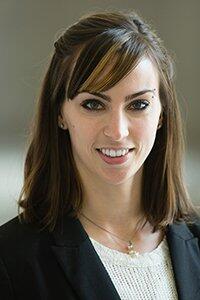
shimaa hatab
Shimaa Hatab is assistant professor of political science at the Faculty of Economics and Political Science, Cairo University. She received her Ph.D. in Political Science from Essex University. She is a Fulbright Visiting Scholar at the Abbasi Program, at Stanford. Her research interests include democratization, authoritarianism, political economy of development, with a focus on countries in the Middle East and Latin America.

Shimaa Hatab assistant professor of political science at the Faculty of Economics and Political Science, Cairo University
Seminars
-

Abstract:

Ever since the Millennium Message, Putin's first presidential speech on January 1, 2000, the Kremlin's political architects have cultivated a narrative of Russia as a unique nation on a righteous path toward restored greatness. The process of myth-making is intertwined with the policies involved in remaking Russia as a global power, as the regime builds legitimacy through careful messaging on Russian nationhood, history, morality, and geopolitical strength, using law and policy to embed those concepts as institutions and persuade citizens that Russia needs autocracy to survive. This talk traces the Kremlin's cooptation of culture and history to tell a certain story about Russia and its citizens, and examines public opinion polls to assess the degree to which the strategy is working, as well as street protests and radical performance art that attempts to claim spaces of agency for citizens who don't fit into the mythic mold.


Speaker Bio:


Image
alice underwood
Alice E.M. Underwood is a Pre-Doctoral Fellow at the Center on Democracy, Development, and the Rule of Law and a Ph.D. Candidate in the Department of Comparative Literature at Stanford University. She is a Weiland Fellow at Stanford and a former Title VIII Fellow at the Kennan Institute at the Woodrow Wilson International Center for Scholars, and has published with Intersection, The Russia File, Russian Life, and Harvard International Review.

 
Pre-doctoral fellow at the Center on Democracy, Development, and the Rule of Law.
Seminars
-

Abstract: The American Lab, published by Johns Hopkins University Press in 2018, tells the story of the Lawrence Livermore National Laboratory (the Lab) from the events leading to its founding in 1952 through its transfer to private status in 2008 (after 66 years of sole University of California management). It highlights the important episodes in that journey beginning with the invention of Polaris, the first submarine launched ballistic missile, continuing through the Lab’s controversial role in the Star Wars program, and helping lead the development of the stockpile stewardship program after the cessation of nuclear testing. It describes the intense focus on-laboratory-scale thermonuclear fusion with early work in magnetic fusion to the world’s largest effort on laser fusion that ultimately resulted in the construction of the National Ignition Facility. It includes a number of smaller projects ranging from its participation in founding the Human Genome Project (and its subsequent effort in biodefense) to its array of activities on global climate and basic research. Throughout, the book emphasizes the national security environment in which the Lab existed and the increasing role of politics in “big science”.


Bio: C. Bruce Tarter is a theoretical physicist with a BS from MIT and a PhD from Cornell. He began as a researcher at the Lawrence Livermore National Laboratory in 1967 and eventually served as its Director from 1994-2002. Since that time as Director Emeritus he has served on a number of Boards and Task Forces including the National Academy study of the Comprehensive Test Ban Treaty and the Congressional Commission on the Strategic Posture of the United States. He is a Fellow of the American Physical Society and the American Association for the Advancement of Science.


Bruce Tarter Former Director Lawrence Livermore National Laboratory
Seminars
-

Abstract: Sagan and Valentino's path-breaking survey of public opinion American attitudes towards the laws of war found Americans are relatively insensitive to international norms and taboos against the use of nuclear weapons and the targeting of civilian populations. We replicated a key question on this study – where respondents were asked if they would support saturation bombing an Iranian city to end a war. We also introduced some variations into the experiment to disaggregate any potential influence of international norms and laws from the effect of historical analogies and interest-based frames embedded in the original experiment. Overall, our quantitative and qualitative findings are more optimistic about Americans' sensitivity to the civilian immunity norm. Nonetheless, our findings suggest much depends on whether legal/ethical considerations, rather than tactical ones alone, are part of any national conversation about war policy.    

Charli's Bio: Charli Carpenter is a Professor in the Department of Political Science at University of Massachusetts-Amherst. Her teaching and research interests include the laws of war, protection of civilians, humanitarian disarmament, global advocacy networks, and the role of popular culture in global affairs. She has a particular interest in the gap between intentions and outcomes among advocates of human security. She has published three books and numerous journal articles, has served as a consultant for the United Nations, and contributed to Foreign Policy and Foreign Affairs. In addition to teaching and research, Dr. Carpenter spends her time raising future members of the American electorate, snowboarding, and rambling about international politics and popular culture at Duck of Minerva.  


Alexander's Bio: Alexander H. Montgomery is associate professor of Political Science at Reed College. He has a B.A. in Physics from the University of Chicago, an M.A. in Energy and Resources from UC-Berkeley, and an M.A. in Sociology and a Ph.D. in Political Science from Stanford University. He has been a fellow at the Belfer Center, CISAC, the Council on Foreign Relations, and the Woodrow Wilson Center. He has published articles on nuclear proliferation and on the effects of social networks of international organizations on interstate conflict, and is the co-editor of the Oxford Handbook of Political Networks (2017).


Charli Carpenter & Alexander Montgomery
-

Abstract: This presentation is based on the book with the same title (Yale University Press, 2018) which examines a crucial element of state behavior -- the use of international institutions, informal alignments and economic instruments such as sanctions -- to constrain the power and threatening behavior of dominant actors. Much of International Relations scholarship fails to capture the use of these non-military instruments for constraining superior power. The soft balancing debate for over a decade has generated much literature and criticisms. However, it has been used exclusively in the context of responses by second-tier states toward U.S. power. This book expands and tests soft balancing arguments to historical eras (such as the Concert of Europe, and the League of Nations during the interwar period) and the emerging/resurging powers, China and Russia while responding to criticisms aired against the concept and strategy. It seeks to explore: under what conditions do states resort to soft balancing as opposed to hard balancing (relying on formal military alliances and intense arms buildups)? When do they combine both? What are the differences and similarities between the 20th and 21st century cases of soft balancing--one under multipolarity, the other under near-unipolarity? When do soft balancing efforts elicit hostile reactions and when do they produce positive results? Finally, what are the implications of soft balancing for the rise of new great powers and the international order, especially conflict and cooperation among them in the 21st century’s globalized international system?


Bio: T.V. Paul is James McGill Professor of International Relations in the Department of Political Science at McGill University, Montreal and a Fellow of the Royal Society of Canada. He was President of International Studies Association (ISA) during 2016-17. Paul is the author or editor of 18 books and over 70 scholarly articles/book chapters in the fields of International Relations, International Security, and South Asia. He is the author of the books: The Warrior State: Pakistan in the Contemporary World (Oxford, 2013); Globalization and the National Security State (with N. Ripsman, Oxford, 2010); The Tradition of Non-use of Nuclear Weapons (Stanford, 2009); India in the World Order: Searching for Major Power Status (with B.R. Nayar Cambridge, 2002); Power versus Prudence: Why Nations Forgo Nuclear Weapons (McGill-Queen’s, 2000); and Asymmetric Conflicts: War Initiation by Weaker Powers (Cambridge, 1994). Paul currently serves as the editor of the Georgetown University Press book series: South Asia in World Affairs. For more, see: www.tvpaul.com


T.V. Paul James McGill Professor of International Relations McGill University
-


Image
Matteo Renzi, former Prime Minister of Italy


Matteo Renzi was born in Florence in January 1975. In 2004 he was elected president of the province of Florence; five years later, in 2009, he was elected Mayor of Florence. In 2012 he ran in the primary elections for the centre-left, losing in the run-off. In 2013 he stood once again in the primaries, this time for leader of the Italian Democratic Party (Partito Democratico, PD), winning with 67.5% of the vote.

On February 22, 2014, following the resignation of Enrico Letta and after a vote by a large majority within the PD, he became President of the Council of Ministers (Prime Minister of Italy), the youngest in the history of Italy. After the negative result of the constitutional referendum on December 4, 2016, Matteo Renzi resigned as Prime Minister. 
 
In April 2017, almost two million voters took part in the primary elections for Secretary of the PD. Renzi was re-elected with 69% of the votes cast. Following the results of the Italian parliamentary election, in March 2018 he resigned as Leader of the PD.
 
Matteo Renzi is currently Senator for the Electoral College of Florence, Scandicci, Signa, Lastra a Signa and Impruneta. His activity as a politician has been accompanied by his writing, which includes the books Fuori! (2011), Stilnovo (2012), Oltre la rottamazione (2013), and Avanti! Perché l’Italia non si ferma (2017). He has also taught at Stanford's Florence campus in recent years. 
Matteo Renzi, former Prime Minister of Italy speaker
Lectures
News Type
Q&As
Date
Paragraphs

Manuel Ramos is a Ford Dorsey Master's in International Policy (MIP) student at Stanford University in the Class of 2019. He spent this past summer working on justice issues in Kenya for the World Bank's Development Impact Evaluation (DIME). Funding is made available to MIP students for 10-week summer internships with organizations that work on international policy issues. 


Check out the full article on Medium.

 
Hero Image
1 izywxiaw55v5 nfunycv8q
All News button
1
Authors
News Type
News
Date
Paragraphs

As Stanford’s fall quarter draws to a close, the first cohort of students who are participating in Freeman Spogli Institute’s (FSI) inaugural overseas program in Beijing embarked on their final field excursion. The 8 students and 4 Stanford faculty traveled first to Jinan city (济南) (capital of Shandong province), then to Zouping county (邹平), both located in China’s eastern region of Shandong (山东).

Image
pic1 1

Stanford China Studies in Beijing students and faculty being greeted by their hosts in Jinan, Shandong

Three Stanford Master’s in International Policy students and 5 undergraduate students are participating in this pilot program in Beijing at the Stanford Center at Peking University (SCPKU). The pilot program is being offered by FSl in cooperation with Peking University. Details regarding student activities, reflections and earlier travels can be found here.

This third and final trip was significant not only for the wide-ranging sites that the students saw, but also because Zouping County has a storied connection to the wider community of China scholars in the U.S. and to Stanford. Zouping county was the first rural site in China where foreign scholars were given official access to conduct field research in the 1980’s after Deng Xiaoping’s Opening and Reform in 1978. The late Professor Michel Oksenberg (1938-2001), senior fellow at Shorenstein APARC and FSl, who also served as a key member of the U.S. National Security Council under President Jimmy Carter, spearheaded this effort, which brought over eighty U.S. academics to the area between 1984 and 1991 (For more details re. that history, please see here).

The students’ field trip included visits with those at the top of the official pyramid to the village grassroots, including meetings with the Mayor and Vice Mayor of Jinan (pop: 6.8 million) and City Planning officials there; plus local city officials in Zouping County. Students and faculty viewed urban plans for the Jinan International Medical and Science Center and toured the corporate conglomerate, Shandong Weiqiao Pioneer Group (山东魏橋创业集团有限公司) that owns the largest textile factory in the world; and Xiwang Group, Ltd. (西王集团有限公司) whose main lines of business are corn oil production and structural steel. In some ways, the site visits reminded one of China’s economic rise as the manufacturing hub of the world; and its beckoning future as a science and technology giant.

Image
pic2 1

China Studies in Beijing students and faculty viewing plans for the Jinan International Medical and Science Center

Image
pic3 1

(From left to right): Students -- Drew Hasson (MIP second year student); Lucas Hornsby (sophomore); Isaac Kipust (junior); Jenn Hu (sophomore); and Cathy Dao (sophomore) – and Stanford faculty meeting with Mayor and Vice Mayor of Jinan city

Image
pic4 1

(From front, left to back, right): Profs. Jean Oi, Andrew Walder, Scott Rozelle, Tom Fingar stop by at the company store inside Xiwang Group

A highlight of the trip also included the village of Wangjing, Linchi Township, also in Zouping County. Surrounded by village children, mixing with residents and exchanging high-fives with “the kids [and] the grandmothers, ” Stanford students got a chance to enter ordinary homes and see what village life is like in one (albeit affluent and well-developed) township of Linchi.

Image
pic5 1

Professor Scott Rozelle, joined by Isaac Kipust, Lucas Hornsy and Prof. Tom Fingar, engage with village residents of Wangjing

Image
pic6 1

Drew Hasson exchanging high-fives with the residents of Wangjing village

Image
pic7 1

Students and faculty crowded into a village's home

Image

Isaac Kipust playing with the villager's son

Image
pic13

Three boys from Wangjing village with Isaac Kipust and Prof. Scott Rozelle

By the village square, Professor Scott Rozelle even took the opportunity to challenge two village boys to strive for not only a college degree, but a graduate degree; and not just an M.A. but a Ph.D. – and not just at any university, but at Stanford University! One day, perhaps – who knows? – Stanford may find itself conferring a doctoral degree to a student who calls Wangjing village his home.

Image
pic7 1

What’s an M.A.? Not higher than a Ph.D.! Prof. Scott Rozelle in conversation with two village boys in the town square at Wangjing

Image

And the laughing continues . . .

Image
pic11 1

Scott Rozelle in conversation with the boys as Profs. Jean Oi and Andrew Walder look on

Image
picture1

All the students, faculty and residents of Wangjing village, Zouping county, gather for the final photo

Students have gone on three field trips during the course of this overseas program – an excursion to the Great Wall at Jinshanling and to Chengde, a “mountain resort” of the Qing Dynasty court; China’s Northeast region, including to the cities of Dalian, Dandong and Jinzhou (see report here); and, now, Shandong province to China’s east. In addition to these field trips, students have also had unparalleled access to speakers from China’s National Development and Reform Commission, which operates directly under China’s State Council; prominent venture capitalistsand start-up entrepreneurs; and executives from large Chinese multinationals. Students have also enjoyed visits to China’s Foreign Ministry for discussions with experts on U.S.-China relations; as well as to the U.S. Embassy, engaging in discussions with its staff on U.S.-China trade tensions and geopolitical relations.  Students have not only accessed the halls of power in China, however, but have also visited peri-urban migrant communities and schools for children of migrant workers.

The China Studies in Beijing Program lasts the length of an academic quarterat Stanford – i.e., a mere eleven weeks – and yet it provided diverse opportunities for students to explore multiple facets of this complex and kaleidoscopic nation – from officialdom to ordinary villages; Beijing’s high-tech entrepreneurs to migrant children; international relations experts to corporate executives at China’s MNCs. Even while taking intensive courses taught by leading Stanford scholars on China’s economy, society, international relations and politics, students also enjoyed weekly brown-bag seminars led by guest speakers who spoke on the current state of U.S.-China relations; China-North Korea trade; U.S.-China military competition; China’s growing middle class; and the country’s severe urban-rural divide.

Pending final university approval, the application page for China Studies in Beijing’s Fall 2019 program will open soon. Please stay tuned for more information here or email Patrick Laboon, FSI’s Academic Program Manager, at plaboon@stanford.edu for updates. We anticipate the due date for candidate statement of interest and application to be set for the end of January.

Hero Image
image1
All News button
1
Subscribe to International Relations