International Relations

FSI researchers strive to understand how countries relate to one another, and what policies are needed to achieve global stability and prosperity. International relations experts focus on the challenging U.S.-Russian relationship, the alliance between the U.S. and Japan and the limitations of America’s counterinsurgency strategy in Afghanistan.

Foreign aid is also examined by scholars trying to understand whether money earmarked for health improvements reaches those who need it most. And FSI’s Walter H. Shorenstein Asia-Pacific Research Center has published on the need for strong South Korean leadership in dealing with its northern neighbor.

FSI researchers also look at the citizens who drive international relations, studying the effects of migration and how borders shape people’s lives. Meanwhile FSI students are very much involved in this area, working with the United Nations in Ethiopia to rethink refugee communities.

Trade is also a key component of international relations, with FSI approaching the topic from a slew of angles and states. The economy of trade is rife for study, with an APARC event on the implications of more open trade policies in Japan, and FSI researchers making sense of who would benefit from a free trade zone between the European Union and the United States.

-


EMERGING ISSUES IN CONTEMPORARY ASIA

A Special Seminar Series


RSVP required by February 22, 2019 at: https://goo.gl/forms/ZCwcHC0qTec2rzj63

VALID STANFORD ID CARD MUST BE PRESENTED UPON ARRIVAL


ABSTRACT: The United States has been the world’s dominant power for more than a century.  Now many analysts believe China is taking its place. Is China an emerging superpower? Should the United States gear up for a new cold war in Asia? In this seminar, I show that China actually lags far behind the United States by the most important measures of national wealth and power—and will probably fall further behind in the coming decades. The most likely threat to American security, therefore, is not a confident Chinese peer competitor, but a deeply insecure China that lashes out after failing to live up to the global hype about its rise. I will discuss how the United States can contain this threat without starting a cold or hot war with Beijing.   
Image
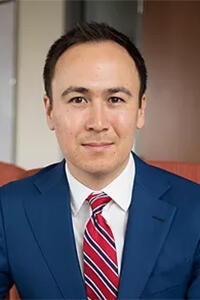
Michael Beckley
PROFILE: Michael Beckley is an assistant professor of political science at Tufts University and a fellow at Harvard's Kennedy School of Government. His research focuses on the rise of China and has received “best article” awards from the American Political Science Association and the International Studies Association and has been featured by numerous media, including CNN, Fox News, the Financial Times, the New York Times, NPR, and the Washington Post. Previously, Professor Beckley worked at the U.S. Department of Defense, the RAND Corporation, and the Carnegie Endowment for International Peace. He currently consults for the Pentagon’s Office of Net Assessment, the Joint Staff, and the National Intelligence Council. He holds a PhD in political science from Columbia University and his first book, Unrivaled: Why America Will Remain the World’s Sole Superpower, was published last fall by Cornell University Press. Part of his talk is based on a Foreign Affairs web article that was named one of the ten “best of 2018.”

Michael Beckley Assistant Professor of Political Science Tufts University
-

Click here to RSVP

Speaker Bio: Dr. Constanze Stelzenmüller is the inaugural Robert Bosch Senior Fellow in the Center on the United States and Europe at the Brookings Institution in Washington, DC. Prior to Brookings, she was a senior transatlantic fellow and Berlin office director with the German Marshall Fund of the United States (GMF). Her areas of expertise include transatlantic relations; German foreign policy; NATO; the European Union’s foreign, security and defense policy; international law; and human rights. Previously, she was a writer and editor at the German weekly DIE ZEIT (1994 to 2005). Dr. Stelzenmüller’s essays and articles have appeared in a wide range of publications, including Foreign Affairs, Internationale Politik, the Financial Times, the Washington Post, and Süddeutsche Zeitung. She is also a frequent commentator on American and European radio and television including Presseclub (ARD), National Public Radio, and the BBC.

Abstract: Judging by media headlines or the agenda of major security conferences, the main issues on the minds of policymakers on both sides of the Atlantic are 1) China and 2) Trump (or vice versa). Russia, it is safe to say, has receded to the back reaches of newspapers and our minds. But the Kremlin continues to engage in hybrid warfare in Europe and to wage a proxy war in Eastern Ukraine that has claimed 13.000 lives. It is gaining influence in other regions where the West is retreating, such as the Middle East and Latin America. How should Europe and America be working together to deal with this challenge—and what‘s stopping us?

Constanze Stelzenmüller Robert Bosch Senior Fellow in the Center on the United States and Europe Brookings Institution
-


EMERGING ISSUES IN CONTEMPORARY ASIA

A Special Seminar Series


RSVP required by February 12, 2019 to: https://goo.gl/forms/h9RRcz4vR9Ybn5cQ2

VALID STANFORD ID CARD MUST BE PRESENTED UPON ARRIVAL


ABSTRACT: Diplomacy plays a critical role in the management and resolution of armed conflict in the international system. After a war breaks out, decision makers see the opening of talks as a constructive step in the conflict’s resolution — dialogue allows for belligerents to broker deals and coordinate the logistics of war termination. However, in modern warfare, states almost always fight initially for period of time without engaging in talks. What factors explain whether states are willing to talk to their enemy while fighting and when might their diplomatic postures change? “Talking to the Enemy” presents a framework to explain variation in countries’ approaches to wartime diplomacy, focusing on the costs of talks and how states mitigate these costs to get to the negotiating table. I test this framework with respect to Chinese decision making in the Korean and Sino-Indian Wars — one in which China was against talks for nine months before opening up and the latter in which China actively pursued talks throughout the whole conflict. The findings have significant implications for crisis management and conflict resolution in U.S.-China relations.  

Image
Oriana Mastro
PROFILE: Oriana Skylar Mastro is an assistant professor of security studies at the Edmund A. Walsh School of Foreign Service at Georgetown University where her research focuses on Chinese military and security policy, Asia-Pacific security issues, war termination, and coercive diplomacy. Dr. Mastro is also a 2017-2019 Jeane Kirkpatrick Scholar at the American Enterprise Institute (AEI) where she is working on a book about China’s challenge to U.S. primacy. Mastro continues to serve in the United States Air Force Reserve for which she works as a Senior China Analyst at the Pentagon. For her contributions to U.S. strategy in Asia, she won the Individual Reservist of the Year Award in 2016. She has published widely, including in Foreign Affairs, International Security, International Studies Review, Journal of Strategic Studies, The Washington Quarterly, The National Interest, Survival, and Asian Security, and is the author of The Costs of Conversation: Obstacles to Peace Talks in Wartime, (Cornell University Press, 2019). She holds a BA in East Asian Studies from Stanford University and an MA.and PhD in Politics from Princeton University. Her publications and other commentary can be found on twitter @osmastro and www.orianaskylarmastro.com.  


Oriana Mastro Assistant Professor of Security Studies Edmund A. Walsh School of Foreign Service, Georgetown University
Seminars
Authors
Noa Ronkin
News Type
News
Date
Paragraphs
The United States is prepared to pursue “simultaneously and in parallel” all of the commitments outlined at the Trump-Kim Singapore Summit, said the U.S. Special Representative for North Korea Stephen Biegun at an event hosted by Shorenstein APARC on Thursday, January 31.
 
Biegun's remarks, delivered as he prepares to travel to South Korea for meetings with North and South Korean officials, were his first public address since he began his appointment in August 2018. On behalf of U.S. Secretary of State Mike Pompeo, Mr. Biegun directs all U.S. policy on North Korea and leads negotiations.
 
Just prior to the event President Trump said he will announce next week the site and date for the second summit he plans with Kim Jong Un at the end of February. Biegun noted that the U.S. is prepared to move forward “provided that North Korea likewise fulfills its commitment to final, fully verified denuclearization” and that “there are many challenges that make it especially complicated for the United States and North Korea to embark upon a diplomatic initiative of this magnitude.” But he also highlighted several areas of progress and concluded his remarks by saying, “Now is the opportunity. Now is the moment. The United States is ready to turn the vision outlined by President Trump and Chairman Kim at Singapore into reality.”
 
Mr. Biegun’s public address was followed by a conversation with Robert Carlin, a specialist on U.S.–North Korea relations and a visiting scholar at Stanford’s Center for International Security and Cooperation. The event concluded with a question-and-answer session. 
 
You can read a transcript of Mr. Biegun’s remarks.
Hero Image
Stephen Biegun delivers remarks at Stanford at a Shorenstein APARC event. Linda A. Cicero / Stanford News Service
All News button
1
Date Label
-

Conversations in Global Health: Providing Healthcare in Conflict Zones
Dr. Tom Catena
Chair of the Aurora Humanitarian Initiative

Tom Catena, MD, is a surgeon, veteran, globally recognized humanitarian, and inaugural Chair of the Aurora Humanitarian Initiative. He founded the Mother of Mercy Hospital in Sudan's war-ravaged Nuba Mountains and has dedicated the last decade of his life to provide medical care in this conflict zone.

Stanford School of Medicine Senior Communications Strategist, Paul Costello, will interview Dr. Catena about how he operates in a low-resources, conflict setting to improve the well-being of the most vulnerable populations. We will also learn about his remarkable life journey that drove him to work in this area.

Following the Conversation, please join us for a screening of "The Heart of Nuba" (6:30pm), a film that tells the story of Dr. Catena's work in the Nuba Mountains.

RSVP here for the February 6 event.


Sponsored by:
Stanford Center for Innovation in Global Health

Co-Sponsored by:
Stanford WSH Handa Center for Human Rights & International Justice
Stanford Health Policy
The Global Health Student Council
The Organization for Global Health

Braun Corner (Geology Corner), Room 105
450 Serra Mall, Stanford

Film Screenings
-


EMERGING ISSUES IN CONTEMPORARY ASIA

A Special Seminar Series


RSVP required by February 8, 2019 to: https://goo.gl/forms/dht3i9iX06mGpNyC3

VALID STANFORD ID CARD MUST BE PRESENTED UPON ARRIVAL


ABSTRACT: Most North Korean refugees and defectors live in South Korea, but in the past decade a growing number have moved beyond the Korean peninsula to create exile communities in North America, Europe, and other locations around the world. These movements have contributed to the emergence of a new and more globally distributed North Korean diaspora. What factors have shaped the emergence of this diaspora, and what effect is it likely to have?  I find that contestation over conceptions of citizenship, at both the level of the individual and the level of government policy, have combined to shape the migration and resettlement of North Korean defectors and refugees over time and across geographic space. I then draw on a comparison with other authoritarian diasporas and extra-territorial opposition movements to show how changing North Korean resettlement patterns are likely to have significant geopolitical implications--not just for the individuals and families that migrate out of North Korea, but for American and international security and human rights policies toward North Korea.  

Image
Sheena Greitens
PROFILE: Sheena Chestnut Greitens is an Assistant Professor of Political Science at the University of Missouri, and co-director of the university’s Institute for Korean Studies. She is also a non-resident senior fellow at the Brookings Institution and an adjunct fellow with the Korea Chair at Center for Strategic and International Studies.  Dr. Greitens holds a Ph.D. from Harvard  University, M.Phil. from Oxford University, where she studied as a Marshall Scholar, and a B.A. from Stanford University. Greitens’ research focuses on security, East Asia, and the politics of democracy and dictatorship. Her work on China and North Korea has appeared in academic journals and edited volumes in English, Chinese, and Korean, and in major media outlets, and she has previously testified to Congress on security issues in the Asia-Pacific. Her first book, Dictators & Their Secret Police (Cambridge, 2016) received the 2017 Best Book Award from both the International Studies Association and the Comparative Democratization section of the American Political Science Association, and an honorable mention from APSA’s Politics and History section. She is currently working on a book manuscript on the geopolitical implications of North Korean defector and refugee resettlement.  

Sheena Greitens Assistant Professor of Political Science at the University of Missouri and co-director of the university’s Institute for Korean Studies
News Type
News
Date
Paragraphs
JANUARY 30 UPDATE
 
A live video stream of the discussion with Stephen Biegun will be available through Shorenstein APARC's Facebook page: https://www.facebook.com/stanfordsaparc.


Stephen Biegun, the U.S. Special Representative for North Korea, will deliver public remarks as part of a discussion on the DPRK hosted by Stanford University’s Walter H. Shorenstein Asia-Pacific Research Center (Shorenstein APARC) on Thursday, January 31, at 12 p.m. As Special Representative, on behalf of U.S. Secretary of State Mike Pompeo Mr. Biegun directs all U.S. policy on North Korea, leads negotiations, and spearheads U.S. diplomatic efforts with allies and partners.
 
Following his opening remarks, Mr. Biegun will be in conversation with Robert Carlin, an expert on U.S.-North Korea relations and a visiting scholar at Stanford’s Center for International Security and Cooperation. The event will conclude with a question-and-answer session. It will be held at the Koret-Taube Conference Center at the John A. and Cynthia Fry Gunn SIEPR Building.
 
The event is open to the Stanford community and the public, but a Stanford or government-issued ID must be presented for admission.
 
The event is on-the-record but off-camera: no photography or video recording will be allowed. Cameras will not be allowed inside the venue.

Media Advisory:
Journalists interested in covering the discussion on the DPRK with Special Representative for North Korea Stephen Biegun should contact Shorenstein APARC’s Associate Director for Communications and External Relations Noa Ronkin at noa.ronkin@stanford.edu by 12:00 p.m., Wednesday, January 30, to register. At the venue, they will be required to present a press credential from an established news organization. Freelance reporters should email a letter from the news organization for which they work to Noa Ronkin by the January 30 deadline. The press area is limited and press seating is not guaranteed.
 
As noted above, the event is on-the-record but off-camera.
 
Attendees and media should enter the campus via Galvez Street and park at the Galvez Lot or other designated, paid visitor parking. See also Stanford’s parking map. No parking at the Stanford Oval is allowed.


Hero Image
U.S. and DPRK Flags on Table Getty Images - Stock
All News button
1
-


UPDATE: This event will be live streamed on our Facebook page. Follow us there to make sure you don't miss the start.

This event is open to the Stanford community and the public, but a Stanford or government-issued ID must be presented for admission.

The event is on-the-record but off-camera. No photography or video recording will be permitted. Cameras will not be permitted inside the venue.

Members of the media: registration is required; please follow the directions below.


Join the Walter H. Shorenstein Asia-Pacific Research Center for a discussion on the DPRK with the U.S. Special Representative for North Korea Stephen Biegun.
 
Mr. Biegun will deliver opening remarks followed by a conversation with Robert Carlin, an expert on U.S.-North Korea relations and a visiting scholar at Stanford’s Center for International Security and Cooperation. The event will conclude with a question-and-answer session.
 
Members of the media interested in covering the event should register with Shorenstein APARC by 12:00 p.m., Wednesday, January 30. A press credential must be presented for admission.

Speaker bio

Stephen E. Biegun was appointed by Secretary of State Mike Pompeo as the U.S. Special Representative for North Korea in August 2018. As Special Representative, on behalf of the Secretary of State he directs all U.S. policy on North Korea, leads negotiations, and spearheads U.S. diplomatic efforts with allies and partners.
 
Biegun has three decades of experience in the Executive and Legislative Branches in government as well as the private sector. Most recently, Biegun was vice president of International Governmental Relations for Ford Motor Company, where—as a third generation Ford employee—he oversaw all aspects of Ford’s international governmental interactions including throughout the Indo-Pacific Region.
 
Previously, as national security advisor to Senate Majority Leader Bill Frist, he provided analysis and strategic planning for the U.S. Senate’s consideration of foreign policy, defense and intelligence matters, and international trade agreements. Prior to that, Biegun worked in the White House from 2001-2003 as Executive Secretary of the National Security Council. He served as a senior staff member to the National Security Advisor, Condoleezza Rice, and performed the function of chief operating officer for the National Security Council.
 
Before joining the White House staff, Biegun served for 14 years as a foreign policy advisor to members of both the House of Representatives and the U.S. Senate. During this time, he held the position of Chief of Staff of the U.S. Senate Committee on Foreign Relations from 1999-2000. In addition, he served as a senior staff member of the U.S. House of Representatives Committee on Foreign Affairs for six years.
 
From 1992 to 1994, Biegun served in Moscow, Russia as the Resident Director in the Russian Federation for the International Republican Institute, a democracy-building organization established under the National Endowment for Democracy.
 
He is a member of the Council on Foreign Relations and the Aspen Strategy Group, and has served on the boards of the National Bureau of Asian Research, the US-ASEAN Business Council, the US-Russia Foundation for Economic Development and the Rule of Law, and Freedom House.


Koret-Taube Conference CenterJohn A. and Cynthia Fry Gunn SIEPR Building366 Galvez Street 
Stephen Biegun, U.S. Special Representative for North Korea
Date Label
-

The event is jointly sponsored by the Japan Program at the Shorenstein Asia-Pacific Research Center and the Japan Foundation Center for Global Partnership.

In this talk, David Leheny (Waseda University) discusses his new book Empire of Hope (Cornell University Press, 2018), which challenges current trends in debates about emotion and politics, arguing that we should instead look at the role of narrative in shaping emotional representation. In the book, Leheny draws from debates about status in international relations theory and from debates about affect and narrative in literary and historical studies to analyze cases from Japan’s Bubble and post-Bubble eras. This talk will focus especially on a 2001 crisis in US-Japan relations over a collision between a US Navy nuclear submarine and a fisheries training boat that resulted in the deaths of nine Japanese, including four high-school students. By presenting grief as both a national emotion and as one that could be narrated through the lens of timeless cultural difference, the US and Japanese governments crafted a crisis resolution that ostensibly rested on “mutual understanding” but that also hid the messier realities of power and of loss in the collision’s aftermath.

Image
lehenyphoto
David Leheny is Professor in the Graduate School of Asia-Pacific Studies at Waseda University. He previously was an assistant and associate professor of political science at the University of Wisconsin-Madison (1998-2007) and the Henry Wendt III ’55 Professor of East Asian Studies at Princeton University (2007-2017). He is the author of, in addition to Empire of Hope, The Rules of Play: National Identity and the Shaping of Japanese Leisure (Cornell University Press, 2003) and Think Global, Fear Local: Sex, Violence, and Anxiety in Contemporary Japan (Cornell University Press, 2006).

Philippines Conference Room Encina Hall, 3rd Floor 616 Serra Mall, Stanford, CA 94305
David Leheny Professor in the Graduate School of Asia-Pacific Studies Waseda University
Seminars
-

EMERGING ISSUES IN CONTEMPORARY ASIA

A Special Seminar Series


RSVP required by January 29, 2019 to: https://goo.gl/forms/0bPqyoTQwub8WaRo2

VALID STANFORD ID CARD MUST BE PRESENTED UPON ARRIVAL


ABSTRACT: How does North Korea think about coercion—that is, threats and the use of force to achieve political goals? The answer affects not only the kinds of “sticks” to employ as part of North Korea policy, but the potential cost of using sticks or pressure at all. In this presentation, Jackson argues that part of North Korean strategic culture—specifically its beliefs about coercion—helps explain a durable pattern in its foreign policy and crisis bargaining history: generating deliberate friction with adversaries despite the risk of its own destruction. This presentation will explain the offensive and reputational underpinnings of how North Korea thinks about coercion, detail how this aspect of North Korean strategic culture helps us make sense of its foreign policy history, and explore the implication of this set of beliefs for recent North Korea policy. It will argue that the policy of “maximum pressure,” and its “strategic patience” antecedent, both contained implicit assumptions about North Korean behavior at odds with the historical record— assumptions that were blind to the risks of blowback they were generating.

Image
PROFILE: Van Jackson is a senior lecturer in international relations at Victoria University of Wellington, the defense and strategy fellow at the Centre for Strategic Studies, and a global fellow at the Woodrow Wilson International Center for Scholars. He is also a senior editor with War on the Rocks and an associate editor with the Texas National Security Review. Jackson's first book, with Cambridge University Press, was Rival Reputations: Coercion and Credibility in U.S.-North Korea Relations (2016). His second book, just out and also with Cambridge University Press, is On the Brink: Trump, Kim and the Threat of Nuclear War (2018). He is a former Council on Foreign Relations International Affairs Fellow. From 2009-2014, Jackson held positions in the Office of the Secretary of Defense (OSD) as a strategist and policy adviser focused on the Asia-Pacific, senior country director for Korea, and working group chair of the U.S.–Republic of Korea Extended Deterrence Policy Committee. He was a contributor to the 2013 Strategic Choices Management Review, the 2014 Quadrennial Defense Review, and OSD’s implementation of the U.S. policy of rebalancing to the Asia-Pacific. He started his career as a Korean linguist in the U.S. Air Force.


Philippines Conference Room Encina Hall, 3rd Floor 616 Serra Mall, Stanford, CA 94305


Van Jackson Senior Lecturer, Victoria University of Wellington; Defence and Strategy Fellow, Centre for Strategic Studies Wilson Center; Global Fellow, Woodrow Wilson International Center for Scholars
Seminars
Subscribe to International Relations