International Relations

FSI researchers strive to understand how countries relate to one another, and what policies are needed to achieve global stability and prosperity. International relations experts focus on the challenging U.S.-Russian relationship, the alliance between the U.S. and Japan and the limitations of America’s counterinsurgency strategy in Afghanistan.

Foreign aid is also examined by scholars trying to understand whether money earmarked for health improvements reaches those who need it most. And FSI’s Walter H. Shorenstein Asia-Pacific Research Center has published on the need for strong South Korean leadership in dealing with its northern neighbor.

FSI researchers also look at the citizens who drive international relations, studying the effects of migration and how borders shape people’s lives. Meanwhile FSI students are very much involved in this area, working with the United Nations in Ethiopia to rethink refugee communities.

Trade is also a key component of international relations, with FSI approaching the topic from a slew of angles and states. The economy of trade is rife for study, with an APARC event on the implications of more open trade policies in Japan, and FSI researchers making sense of who would benefit from a free trade zone between the European Union and the United States.

Authors
Noa Ronkin
News Type
News
Date
Paragraphs
In her acclaimed book The Third Revolution: Xi Jinping and the New Chinese State, Chinese domestic and foreign policy expert Elizabeth Economy argues that Xi Jinping’s dual-reform trajectories—a more authoritarian system at home and a more ambitious foreign policy abroad—provide Beijing with new levers of influence that the United States must learn to use to protect its own interests.
 
Economy, the C. V. Starr senior fellow and director for Asia studies at the Council on Foreign Relations and a distinguished visiting fellow at Stanford University's Hoover Institution, kicked off the China Program’s 2019 winter colloquia with a discussion of the transformations underway in China today and the future of U.S.-China relations.
 
Speaking to a packed audience, Economy described how, in the process of pursuing his vision of the rejuvenation of the Chinese dream, Xi Jinping has upended much of Deng Xiaoping’s "second revolution" and has put in motion four significant strategic shifts in Chinese domestic and foreign policy.
 
The first shift is a move away from Deng’s consensus- and collective-based decision-making process back toward a more single-man, authoritarian role. The second is a reassertion of the Chinese Communist Party more deeply into the everyday political and economic lives of the Chinese people. The third is a creation of a virtual wall of restrictions and regulations that allows Xi and the rest of the Chinese leadership to control more closely what comes into the country and what goes out. The fourth shift, the most visible one to people outside China, is the move from Deng’s low-profile foreign policy to a far more ambitious foreign policy.
 
This foreign policy shift, said Economy, is especially noteworthy in three areas: first, in Xi’s move from staking claims around Chinese sovereignty to realizing them; second, in his Belt and Road Initiative; and third, in his effort to reform institutions of global governance so that they reflect Chinese values and norms.
 
How should the United States address these changes in China’s domestic and foreign policy? Economy listed four ways of response: first, cooperation, namely, collaborating with China on global problems such as those concerning public health or the environment; second, coordination with U.S. allies; third, countering China by pushing back on, for example, its South China Sea claims and incidents of intellectual property infringement; and finally, competing with China by investing domestically in areas including education and research and technological development.
 
Listen to Economy’s discussion. A transcript is also available below.
 

Hero Image
Elizabeth Economy speaking at a podium Thom Holme
All News button
1
Authors
Gary Mukai
News Type
News
Date
Paragraphs

Stanford e-Tottori is a distance-learning course sponsored by the Tottori Prefectural Board of Education and the Stanford Program on International and Cross-Cultural Education (SPICE), Freeman Spogli Institute for International Studies at Stanford University. Tottori Governor Shinji Hirai and Superintendent Hitoshi Yamamoto of the Tottori Prefectural Board of Education were instrumental in its establishment. Offered for the first time in 2016, Stanford e-Tottori presents a creative and innovative approach to teaching Japanese high school students about U.S. society and culture.


Stanford e-Tottori student Hana Hirosaka of Tottori Higashi High School with SPICE Director Gary Mukai Hana Hirosaka of Tottori Higashi High School with SPICE Director Gary Mukai

Stanford e-Tottori instructor Jonas Edman recently recognized three of his top performing students for their exceptional coursework. They are James Banville (Tottori Keiai High School; Principal Shigeo Nikaido), Hana Hirosaka (Tottori Higashi High School; Principal Masato Omuro), and Kosei Kamada (Tottori Nishi High School; Principal Eiju Yamamoto). Since the launching of Stanford e-Tottori, Edman has encouraged his students to think in an internationally minded manner—that is, to consider different points of view and to realize the importance of diversity and cross-cultural communication. Reflecting upon his former students over the first two years of Stanford e-Tottori, Edman noted that “James, Hana, and Kosei were always open-minded to various points of view and demonstrated strong critical thinking skills… and I was also impressed with their regular attendance in class despite their extremely busy schedules. I am so proud of all of the Tottori students’ accomplishments, but those of James, Hana, and Kosei especially stood out.”


Stanford e-Tottori student James Banville with Principal Shigeo Nikaido of Tottori Keiai High School James Banville with Principal Shigeo Nikaido of Tottori Keiai High School


Each of the honorees received a plaque from SPICE/Stanford University, and Edman expressed his hope that this honor would help them with university admissions as well as inspire them to someday study in the United States. As part of the admissions process to Waseda University, Banville spoke about what he learned in Stanford e-Tottori during an interview. He was admitted to Waseda and will begin his freshman year this spring. Hirosaki and Kamada are now in the midst of the university application process and they, too, plan to showcase their participation in Stanford e-Tottori.

Takuya Fukushima, Office Director of the English Education Advancement Office of the High School Division at the Tottori Prefectural Board of Education, expressed his profound gratitude to Edman and feels that these honors have made Stanford e-Tottori more visible in Tottori Prefecture. “With wonderful guidance and skilled facilitation, Edman-sensei has done a great job to foster the students’ interest and participation in discussions… the students’ positive attitude and willingness to participate in lessons was something that I had been long waiting for. It was the moment when I could feel, ‘Oh, Stanford e-Tottori rose one step higher.’”

To stay informed of SPICE news, join our email list or follow us on Facebook and Twitter.


Related articles:


Hero Image
Stanford e-Tottori student Kosei Kamada with Principal Eiju Yamamoto of Tottori Nishi High School
Kosei Kamada with Principal Eiju Yamamoto of Tottori Nishi High School
Tottori Nishi High School
All News button
1
News Type
Commentary
Date
Paragraphs

As tension grows between China and the United States, its effects are felt across Asia. APARC's Southeast Asia Program Director Donald K. Emmerson sat down with Michael McFaul, FSI's Director and host of FSI's podcast World Class, to talk about why Southeast Asia in particular is caught in that rising tension between China and the United States and what can be done to prevent it from becoming a battle ground for a new Cold War between the two superpowers.

Listen to the conversation:


All News button
1
-

Abstract: This talk will discuss the evolution of Russian hybrid war and how the Russians executed it to perfection to seize Crimea. At the same time, it is important to understand some of the peculiarities of Ukraine to understand why the Russians are unlikely to have the same success elsewhere. The talk will describe internal balancing options that bordering nations can take to deter Russian aggression. Finally, the talk will also discuss the fits and formulation of U.S. policymaking with regards to Ukraine.


Speaker Bio: COL Liam Collins is the Director of the Modern War Institute and the Director of the Department Instruction at the United States Military Academy (USMA) at West Point. From 2016-2018, he also served Gen (ret.) Abizaid’s executive officer for his Secretary of Defense appointment as the Senior Defense Advisor to Ukraine, planning and executing meetings with senior Ukrainian and international officials to help reform Ukraine's defense establishment, and meetings with DoS, DoD, NSC, and HASC officials to inform and shape U.S. policy.

Previously, he served as the director of the Combating Terrorism Center (CTC) at West Point where he authored “The Abbottabad Documents: Bin Ladin’s Security Measures” and co-authored Letters from Abbottabad: Bin Ladin Sidelined?  both of which studied documents captured during the Abbottabad raid and released to the CTC. His work has been cited by the Assistant to the President for Homeland Security and Counterterrorism, the White House Press Secretary, The New York Times, the Associated Press, CNN, ABC News, Fox News, NPR, The Wall Street Journal and USA Today.

COL Collins is a career Special Forces officer, who has served in a variety of special operations assignments. He has conducted multiple operational deployments including Operational Nobile Anvil (Kosovo ’99), Operation Joint Forge (Bosnia ’00, ’02), Operation Enduring Freedom (Afghanistan ’01,’02,’11), Operation Iraqi Freedom (’03,’04) as well as operational deployments to South America and the Horn of Africa.

He holds a Bachelor of Science degree in Mechanical Engineering (Aerospace) from the United States Military Academy (1992), and a Master in Public Affairs and a PhD from Princeton University’s Woodrow Wilson School of Public and International Affairs.  He is also a graduate of the Army Command and General Staff College, the Special Forces Qualification Course, the Infantry Officer Advanced Course, and the Engineer Officer Basic Course.

COL Collins’ military awards and decorations include: Bronze Star Medal (with “V” device for valor and two oak leaf clusters), Defense Meritorious Service Medal (with oak leaf cluster), Meritorious Service Medal (with two oak leaf clusters), Joint Service Commendation Medal, Army Commendation Medal (with “V” device for valor and three oak leaf clusters), Army Achievement Medal (with four oak leaf clusters), Combat Infantryman’s Badge, Special Forces Tab, Ranger Tab, Sapper Tab, Military Free Fall Badge with Bronze Star (for combat jump), Master Parachutist Badge, and Air Assault Badge. He won the Army’s Best Ranger Competition in 2007 and was selected as the Army’s Coach of the Year in 2011.


Liam Collins Director of the Modern War Institute and the Director of the Department Instruction at the United States Military Academy (USMA) West Point
Seminars
-

The event is sponsored by the Japan Society for Promotion of Science and
the Japan Foundation Center for Global Partnership.


abe 6364 Japanese Prime Minister Shinzo Abe speaks at Stanford about innovation in Japan and Silicon Valley. He was also joined on stage by Stanford President John Hennessy and George Shultz, the former U.S. Secretary of State and a distinguished fellow at the Hoover Institution (below).
When the Liberal Democratic Party in Japan regained the power led by Prime Minister Shinzo Abe in December 2012, Japan’s government embarked on a set of economic policies dubbed “Abenomics.” Abenomics aimed at bringing Japan back from stagnation and restoring its growth potential.  The Abe administration entered its 7th year and Prime Minister Abe looks most likely to become the prime minister with the longest reign in the post war era.  Abenomics looks seemingly successful as well.  Japan’s economy has been in the longest expansion phase in the post war era.  The unemployment rate is so low that many employers claim they cannot find workers.  Yet, the major goals of Abenomics set at the beginning, such as 2% inflation rate and 2% real economic growth, have not been achieved.  Has Abenomics really succeeded?

This panel features four experts who have been closely watching Abenomics’s impacts on the Japanese economy.  They evaluate what Abenomics has accomplished so far in various areas.


Panelists:

Joshua Hausman, Assistant Professor of Public Policy; Assistant Professor of Economics, University of Michigan

Takatoshi Ito, Professor of International and Public Affairs, Columbia University

Nobuko Nagase, Professor of Labor Economics and Social Policy, Ochanomizu University, Japan

Steven Vogel, Professor of Asian Studies; Professor of Political Science; Chair of the Political Economy Program, University of California, Berkeley

Takeo Hoshi (moderator), Director of the Japan Program at the Shorenstein Asia Pacific Research Center, Stanford University


Koret-Taube Conference Center
Gunn-SIEPR Building
366 Galvez Street, Stanford University

Panel Discussions
Authors
Thomas Holme
News Type
News
Date
Paragraphs

In the nearly seven years since assuming the role of General Secretary of the Communist Party of China, Xi Jinping has had far-ranging impact on the country’s policies at home and abroad. From his anti-corruption campaign and tightening restrictions on civil society to championing the Belt and Road initiative and abolishing China’s presidential term limits, Xi is transforming the Chinese state and its place on the global stage.

Among the cutting-edge topics that China scholars are beginning to explore is Xi’s impact on Chinese politics and its concomitant influence on what and how scholars study Chinese politics. Last December, the China Program at Shorenstein APARC hosted a conference that drew preeminent scholars of Chinese politics and comparative politics primarily from across the United States and Canada, where they gathered to assess the state of the discipline, and where the field might go next.

Too Big for One Room

The conference traces its origins to a prior gathering at the American Political Science Association (APSA). The number of attendees at that meeting outpaced any room upgrade APSA could provide. “We were impressed by the number of people studying Chinese politics,” said the China Program Director Jean Oi . “It was apparent to many of us who attended that meeting that it was time we convened a separate event with leaders in the field.”

The need to bring together the multiple generations of scholars of Chinese politics was also clear. “Younger scholars today are so much more well-equipped with various sophisticated methodologies such as machine learning and web scraping,” noted Oi. “We decided it would be useful to gather those doing various types of research, quantitative and qualitative, to think about what we don’t know about Chinese politics but would like to know; and how possibly we might go about doing that research. Our goal for this conference was to try to identify collectively some of those questions for the study of Chinese politics and how our research might contribute to the broader field of comparative politics.” The first gathering of Chinese politics scholars took place at Harvard in December 2017.

‘Burning Questions’ Light Up Second Gathering

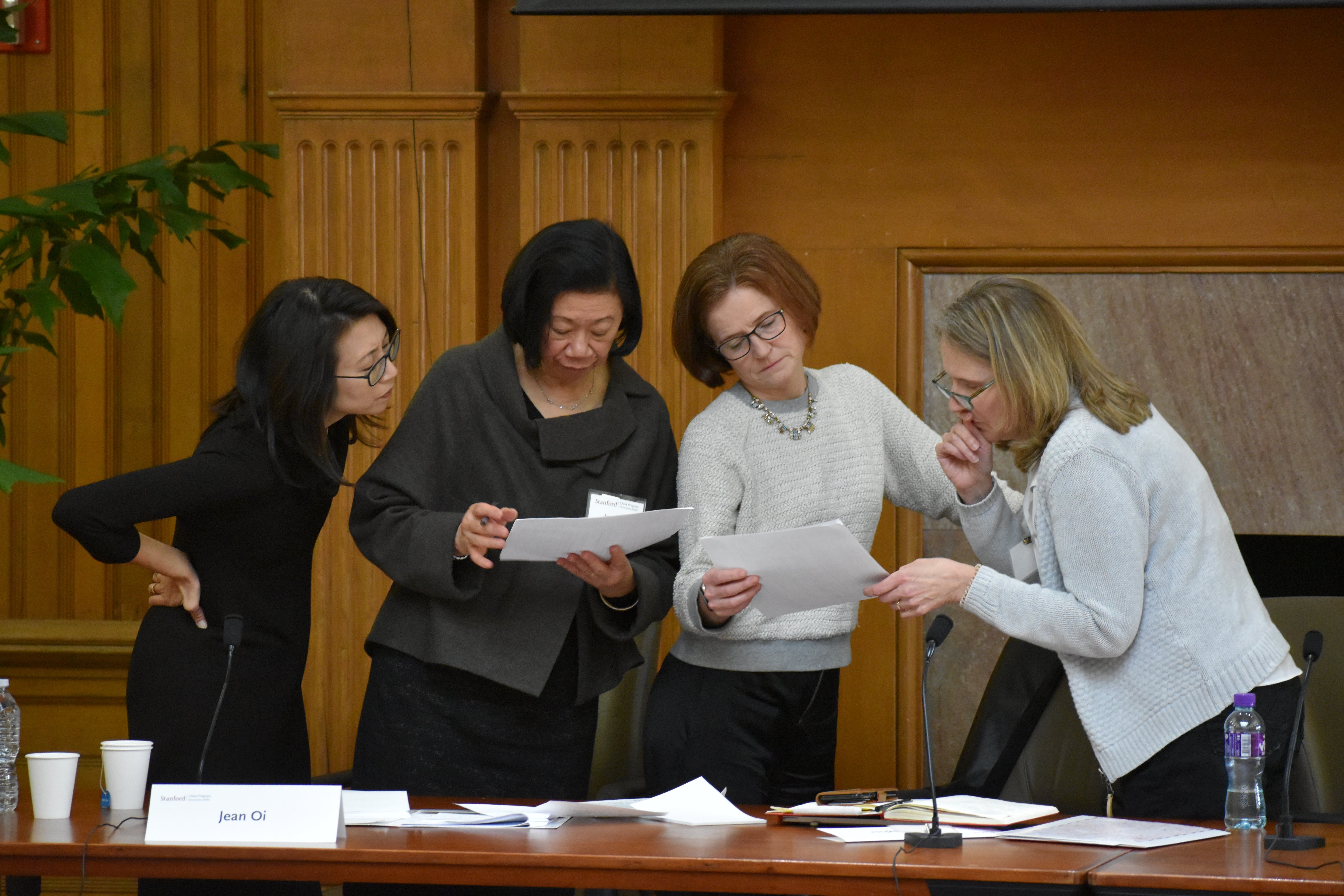
(From left to right): Stanford Professors Jean Oi (chair), Lisa Blaydes, Beatriz Magaloni (partially hidden), Michael McFaul, and Barry Weingast during the conference plenary session with comparative politics scholars

That first conference at Harvard reinforced the utility of inter-dialog and helped organizers secure a grant from APSA, which along with support from from FSI and Shorenstein APARC facilitated the second gathering, this time at Stanford. To ensure that the sessions allowed for maximum participant engagement, attendees were assigned into seven working groups. In the months preceding the conference, each group prepared a memo identifying the key questions in the field of Chinese politics, the ways to addressing these questions, and the synergies between Chinese politics and comparative politics .

“The State of the Field in Chinese Politics” conference opened with presentations by the seven small group leaders to a plenary session, followed by discussion of the various burning questions identified by the participants. Unsurprisingly, one prominent item across many of the memos was the oversized impact of Xi on China. Other areas of interest included “elite politics,” the relationship between newfound billionaires and the party, the renewed role of state-owned enterprises in the economy, and the current status of relationships between the private sector, the Party, and the state

Several groups also expressed their desire to learn more about the internal workings of the Party, specifically the adaptation of political institutions over time. While observers often point out that China’s political institutions have changed little compared to its economic institutions, scholars have also found that, in fact, the changes within China’s governmental organizations have been subtle yet profound. But how can we determine when an organizational structure changes the ways in which it operates, and who decides? The field of Chinese politics remains uncertain about these questions.

On the second day, conference attendees were joined by several Stanford scholars of comparative politics, including FSI Director Mike McFaul and FSI Senior Fellows Lisa BlaydesBeatriz Magaloni and Barry Weingast, who responded to the group memos. Breakout discussions of methodology followed.

Keeping the Fire Going

(From left to right): Professors Kellee Tsai, Hong Kong University of Science and Technology; Jean Oi, Stanford University; Mary Gallagher, University of Michigan; and Margaret Pearson, University of Maryland confer with one another

The conference concluded with a plenary session that focused on the questions "Where are we now?” and “Where do we go next?" One conclusion from the closing was an acknowledgment of the need to more fully consider China in the context of its interactions with other countries in the region as well as globally. “I think that ‘China in the Global Context’ may very well be the theme of our next conference,” said Oi.

A third conference is tentatively scheduled for December 2019. The five partners behind the series—Stanford University, Harvard University, Duke University, MIT, and the University of Michigan—are currently seeking outside funding to keep this effort going. The hope is that the next meeting will be at Duke University.

Hero Image
China Conference Panelists
(From left to right): Three of the presenters during the first plenary session: Professors Mary Gallagher, University of Michigan; Melanie Manion, Duke University; and Jean Oi, Stanford University
Andrea Brown, APARC
All News button
1
-

Image
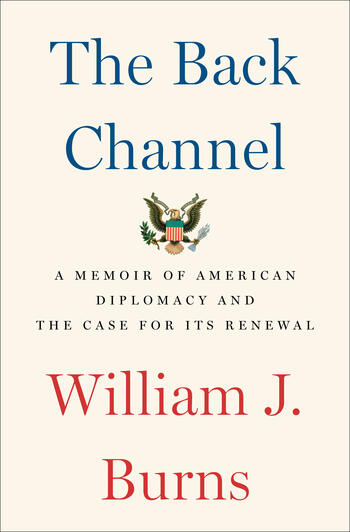
the back channel
Over the course of more than three decades as a diplomat, William J. Burns served five Presidents and ten Secretaries of State. He played a central role in the most consequential diplomatic episodes of his time—from the bloodless end of the Cold War to the collapse of post–Cold War relations with Putin’s Russia, from post–9/11 tumult in the Middle East to the secret nuclear talks with Iran. Burns is widely regarded as one of the most distinguished and admired American statesmen of the last half century. Upon his retirement in 2014, Secretary John Kerry said Burns belonged on “a very short list of American diplomatic legends,” alongside George Kennan. Now, Burns draws on his decades of experience to make an impassioned argument for the enduring value of diplomacy in an increasingly volatile world in THE BACK CHANNEL (A Random House Hardcover; On Sale 3/12/2019). 

In this memoir, Burns recounts with novelistic detail and incisive analysis some of the seminal moments of his career. Employing a trove of newly declassified cables and memos, he gives readers a rare inside look at American diplomacy in action. His dispatches on war-torn Chechnya and Putin’s opulent dacha outside of Moscow and his prescient warnings of the “Perfect Storm” that would be unleashed by the Iraq War will reshape our understanding of history and inform the policy debates of the future. Burns sketches the contours of effective American leadership in a world that resembles neither the zero-sum Cold War contest of his early years as a young diplomat nor the “unipolar moment” of American primacy that followed. Ultimately, THE BACK CHANNEL is an eloquent, deeply informed, and timely story of a life spent in service of American interests abroad. It is also an urgent reminder, in a time of great turmoil, of the enduring importance of diplomacy.


“The Back Channel is a masterfully written memoir from one of America’s most accomplished and respected diplomats. Ambassador Burns not only offers a vivid account of how American diplomacy works, he also puts forward a compelling vision for its future that will surely inspire new generations to follow his incredible example.”

–Madeleine K. Albright, former U.S. Secretary of State

“Bill Burns is a treasure of American diplomacy who I had the honor of watching in action and working closely with during my years at the State Department.  He is a model of the American idea and spirit when we need it most. In The Back Channel, Burns provides another great act of public service by giving us a smart, plain-spoken account of America’s changing role in the world and the power and purpose of American diplomacy at its best.”

–Hillary Clinton, former U.S. Secretary of State

“From one of America’s consummate diplomats, an incisive and sorely needed case for the revitalization of our diplomacy—what Burns wisely describes as our ‘tool of first resort.’”

–Henry Kissinger, former U.S. Secretary of State


Image
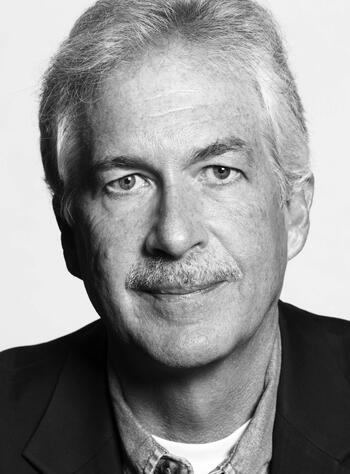
william j  burns c brigitte lacombe croppefd

Retired from the U.S. Foreign Service in 2014, after a thirty-three-year diplomatic career, Ambassador Burns holds the highest rank in the Foreign Service, career ambassador, and is only the second serving career diplomat in history to become deputy secretary of state. Prior to his tenure as deputy secretary, Ambassador Burns served from 2008 to 2011 as under secretary for political affairs. He was ambassador to Russia from 2005 to 2008, assistant secretary of state for Near Eastern affairs from 2001 to 2005, and ambassador to Jordan from 1998 to 2001. Ambassador Burns earned a bachelor’s in history from La Salle University and master’s and doctoral degrees in international relations from Oxford University, where he studied as a Marshall Scholar.

Encina Hall

Bechtel Conference Center, 1st floor

William J. Burns <i>President, Carnegie Endowment for International Peace</i>
Seminars
-

Note:

  • Members of the media interested in covering this event should contact Noa Ronkin at noa.ronkin@stanford.edu by 5:00 pm, Wednesday, February 20, to register. They will also need to present their press credentials for admission. 
  • No recording allowed.
Image
sung andrew kim2

About the speaker: Andrew Kim recently retired as a senior intelligence officer from the Central Intelligence Agency after 28 years of service. He established the CIA's Korea Mission Center in April 2017 in response to a presidential initiative to address North Korea's longstanding threat to global security. As part of his role as head of the Mission Center, he managed and guided CIA Korean analysts in providing strategic and tactical analytic products for a range of policymakers. He accompanied CIA Director and then Secretary of State Mike Pompeo to Pyongyang in meeting with the North Korean leader Kim Jong Un several times. Formerly he served as the Agency's associate deputy director for operations and technology, leading all efforts to update operational technology and incorporate a state-of-the-art doctrine into CIA training curricula.

Earlier in his career, Kim served as the CIA's chief of station in three major East Asian cities, while also managing the intelligence relationship with politically and militarily complicated foreign countries and advancing U.S. interests. He speaks fluent Korean, Japanese, and Mandarin Chinese.


Philippines Conference Room Encina Hall, 3rd Floor 616 Serra Mall, Stanford, CA 94305
0
andrew_kim.jpg

Sung Hyun "Andrew" Kim was a visiting scholar at the Walter H. Shorenstein Asia-Pacific Research Center (APARC) through December 2019. Previously he was William J. Perry visiting scholar at APARC. Kim, who retired from the Central Intelligence Agency in 2018 as a senior intelligence officer after 28 years of service, was assistant director of the CIA's Korea Mission Center, where he helped secure the foundation for the Trump-Kim summit of June 2018.  At Stanford, he will contribute to studies of current North Korea diplomacy in comparison to previous negotiations with the DPRK, a research scope that he refers to as "U.S.-DPRK summit of the century and the tide of history."  Kim will also participate in policy engagement regarding North Korea issues through Shorenstein APARC and its Korea Program.

Kim established the CIA's Korea Mission Center in April 2017 in response to a presidential initiative to address North Korea's longstanding threat to global security. As part of his role as head of the Mission Center, he managed and guided CIA Korean analysts in providing strategic and tactical analytic products for a range of policymakers. He accompanied CIA Director and then Secretary of State Mike Pompeo to Pyongyang in meeting with the North Korean leader Kim Jong Un several times. Formerly he served as the Agency's associate deputy director for operations and technology, leading all efforts to update operational technology and incorporate a state-of-the-art doctrine into CIA training curricula.

Earlier in his career, Kim served as the CIA's chief of station in three major East Asian cities, while also managing the intelligence relationship with politically and militarily complicated foreign countries and advancing U.S. interests. In recognition of his many contributions, Kim was honored by the Agency with the Director's Award (2018), Presidential Rank Award (2012), and the Donovan Award (1990). He speaks fluent Korean, Japanese, and Mandarin Chinese.

Visiting Scholar at APARC
<i>William J. Perry Visiting Scholar, APARC, Stanford University </i>
Seminars
News Type
Commentary
Date
Paragraphs
APARC's Direcror of the Southeast Asia Program Donald K. Emmerson, Center Fellow Thomas Fingar, and Oksenberg-Rohlen Fellow David M. Lampton spoke with The New Silk Road Project as part of a series of conversations that explores China’s Belt and Road Initiative (BRI) from various perspectives. The New Silk Road Project is a student-led research project that aims to better understand and raise awareness of China’s BRI by documenting its land-based component and compiling interviews with leading academics. 
 
Listen to the complete interviews below.
 
Donald K. Emmerson discusses Chinese investment in ASEAN, multilateralism, and the possibility of building the Kra Canal across Thailand to help offset China’s Malacca Dilemma:
 
 
Thomas Fingar discusses how Chinese policies and priorities interact with the goals and actions of other countries in Central and South Asia:
 
 
David M. Lampton discusses China’s development of high-speed railway networks in Southeast Asia:
 

Hero Image
Chinese construction workers in Colombo, Sri Lanka
Chinese Construction workers on site at a shopping mall that is part of the Chinese managed Shangri-La retails and office complex in Colombo, Sri Lanka. For China, the relation with Sri Lanka is a critical link for its Belt and Road Initiative.
Paula Bronstein/Getty Images
All News button
1
Subscribe to International Relations