
International Relations

FSI researchers strive to understand how countries relate to one another, and what policies are needed to achieve global stability and prosperity. International relations experts focus on the challenging U.S.-Russian relationship, the alliance between the U.S. and Japan and the limitations of America’s counterinsurgency strategy in Afghanistan.
Foreign aid is also examined by scholars trying to understand whether money earmarked for health improvements reaches those who need it most. And FSI’s Walter H. Shorenstein Asia-Pacific Research Center has published on the need for strong South Korean leadership in dealing with its northern neighbor.

FSI researchers also look at the citizens who drive international relations, studying the effects of migration and how borders shape people’s lives. Meanwhile FSI students are very much involved in this area, working with the United Nations in Ethiopia to rethink refugee communities.

Trade is also a key component of international relations, with FSI approaching the topic from a slew of angles and states. The economy of trade is rife for study, with an APARC event on the implications of more open trade policies in Japan, and FSI researchers making sense of who would benefit from a free trade zone between the European Union and the United States.

-

This event is now full and we are unable to take any further reservations. However, if you would like to be added to the waitlist, please email us at sj1874@stanford.edu.

Image
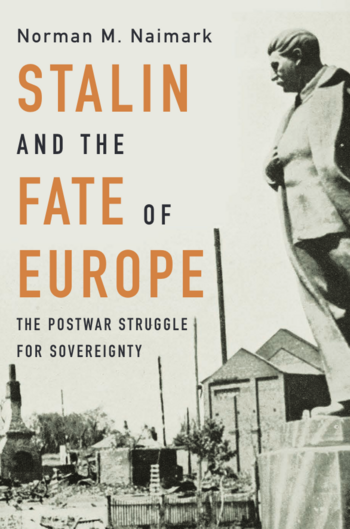
Norman M. Naimark book cover


The Cold War division of Europe was not inevitable―the acclaimed author of Stalin’s Genocides shows how postwar Europeans fought to determine their own destinies.

Was the division of Europe after World War II inevitable? In this powerful reassessment of the postwar order in Europe, Norman Naimark suggests that Joseph Stalin was far more open to a settlement on the continent than we have thought. Through revealing case studies from Poland and Yugoslavia to Denmark and Albania, Naimark recasts the early Cold War by focusing on Europeans’ fight to determine their future.

As nations devastated by war began rebuilding, Soviet intentions loomed large. Stalin’s armies controlled most of the eastern half of the continent, and in France and Italy, communist parties were serious political forces. Yet Naimark reveals a surprisingly flexible Stalin, who initially had no intention of dividing Europe. During a window of opportunity from 1945 to 1948, leaders across the political spectrum, including Juho Kusti Paasikivi of Finland, Wladyslaw Gomulka of Poland, and Karl Renner of Austria, pushed back against outside pressures. For some, this meant struggling against Soviet dominance. For others, it meant enlisting the Americans to support their aims.

The first frost of Cold War could be felt in the tense patrolling of zones of occupation in Germany, but not until 1948, with the coup in Czechoslovakia and the Berlin Blockade, did the familiar polarization set in. The split did not become irreversible until the formal division of Germany and establishment of NATO in 1949. In illuminating how European leaders deftly managed national interests in the face of dominating powers, Stalin and the Fate of Europe reveals the real potential of an alternative trajectory for the continent.


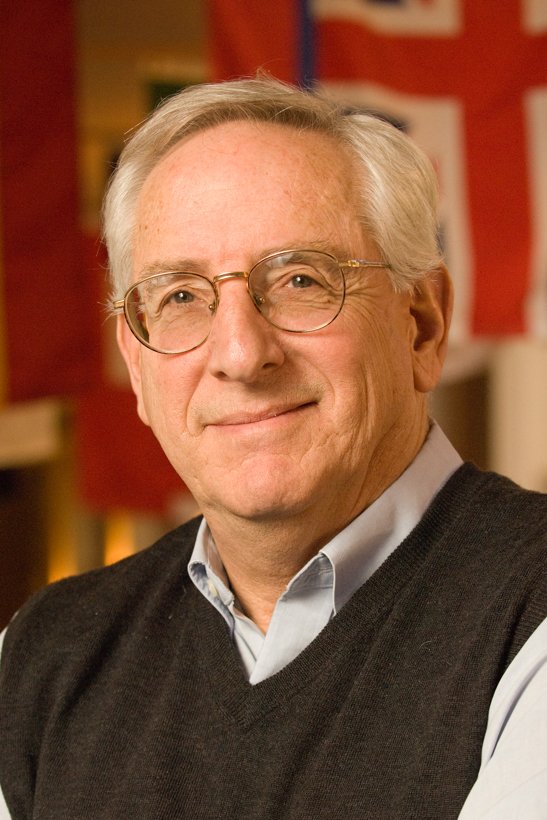
Norman Naimark


Norman M. Naimark received his A.B., M.A. and Ph.D (1972) from Stanford University. He spent fifteen years as Professor at Boston University and Research Fellow at the Russian Research Center at Harvard before returning to Stanford in 1988. He is presently Robert and Florence McDonnell Professor of East European Studies in the History Department at Stanford University, and is Senior Fellow at the Hoover Institution and the Freeman-Spogli Institute. Earlier he served as Chair of the Department of History, Burke Family Director of the Bing Overseas Studies Program, and Fisher Director of Stanford Global Studies.

A selection of his books include The Russians in Germany: A History of the Soviet Zone of Germany (Harvard 1995); Fires of Hatred; Ethnic Cleansing in 20th Century Europe (Harvard 2001); Stalin’s Genocides (Princeton 2010), Genocide: A World History (Oxford 2017), and, most recently Stalin and the Fate of Europe: The Struggle for Sovereignty (Harvard 2019).

Naimark has been awarded the Officer’s Cross First Class of the German Federal Republic. He twice received the Dean’s Award for Outstanding Teaching at Stanford. He also received the Award for Distinguished Contributions to Slavic, East European, and Eurasian Studies from ASEEES in 2011-12.


Discussants:

David Holloway is the Raymond A. Spruance Professor in International History, Professor of Political Science, and Senior Fellow at FSI, Emeritus. He received his BA, MA, and PhD from the University of Cambridge. He has been co-director of CISAC (1991-1997) and director of FSI (1998-2003). He is the author of Stalin and the Bomb: the Soviet Union and Atomic Energy, 1939-1956 (Yale U. P., 1994) among other works.

Robert Rakove is Lecturer in International Relations. He received his PhD from the University of Virginia and is the author of Kennedy, Johnson, and the Nonaligned World.  Rakove studies U.S. foreign policy, particularly in the Cold War era.

Amir Weiner is Associate Professor of Soviet History and the director of the Center for Russian, East European and Eurasian Studies.


Co-sponsored by the Center for Russian, East European and Eurasian Studies, and the Center for International Security and Cooperation.

CISAC
Stanford University
Encina Hall, C235
Stanford, CA 94305-6165

(650) 723-6927 (650) 725-0597
0
Senior Fellow, by courtesy, at the Freeman Spogli Institute for International Studies
Robert & Florence McDonnell Professor of East European Studies
Professor of History
Professor, by courtesy, of German Studies
Senior Fellow at the Hoover Institution
Naimark,_Norman.jpg MS, PhD

Norman M. Naimark is the Robert and Florence McDonnell Professor of East European Studies, a Professor of History and (by courtesy) of German Studies, and Senior Fellow of the Hoover Institution and (by courtesy) of the Freeman-Spogli Institute for International Studies. Norman formerly served as the Sakurako and William Fisher Family Director of the Stanford Global Studies Division, the Burke Family Director of the Bing Overseas Studies Program, the Convener of the European Forum (predecessor to The Europe Center), Chair of the History Department, and the Director of Stanford’s Center for Russian, East European, and Eurasian Studies.

Norman earned his Ph.D. in History from Stanford University in 1972 and before returning to join the faculty in 1988, he was a professor of history at Boston University and a fellow of the Russian Research Center at Harvard. He also held the visiting Catherine Wasserman Davis Chair of Slavic Studies at Wellesley College. He has been awarded the Officer's Cross of the Order of Merit of the Federal Republic of Germany (1996), the Richard W. Lyman Award for outstanding faculty volunteer service (1995), and the Dean's Teaching Award from Stanford University for 1991-92 and 2002-3.

Norman is interested in modern Eastern European and Russian history and his research focuses on Soviet policies and actions in Europe after World War II and on genocide and ethnic cleansing in the twentieth century. His published monographs on these topics include The History of the "Proletariat": The Emergence of Marxism in the Kingdom of Poland, 1870–1887 (1979, Columbia University Press), Terrorists and Social Democrats: The Russian Revolutionary Movement under Alexander III (1983, Harvard University Press), The Russians in Germany: The History of The Soviet Zone of Occupation, 1945–1949 (1995, Harvard University Press), The Establishment of Communist Regimes in Eastern Europe (1998, Westview Press), Fires of Hatred: Ethnic Cleansing In 20th Century Europe (2001, Harvard University Press), Stalin's Genocides (2010, Princeton University Press), and Genocide: A World History (2016, Oxford University Press). Naimark’s latest book, Stalin and the Fate of Europe: The Postwar Struggle for Sovereignty (Harvard 2019), explores seven case studies that illuminate Soviet policy in Europe and European attempts to build new, independent countries after World War II.


Affiliated faculty at The Europe Center
Affiliated faculty at the Center on Democracy, Development and the Rule of Law

CISAC
Stanford University
Encina Hall, E214
Stanford, CA 94305-6165

(650) 723-1737 (650) 723-0089
0
Senior Fellow Emeritus at the Freeman Spogli Institute of International Studies
Raymond A. Spruance Professor of International History
0820stanford-davidholloway-238-edit.jpg PhD

David Holloway is the Raymond A. Spruance Professor of International History, a professor of political science, and an FSI senior fellow. He was co-director of CISAC from 1991 to 1997, and director of FSI from 1998 to 2003. His research focuses on the international history of nuclear weapons, on science and technology in the Soviet Union, and on the relationship between international history and international relations theory. His book Stalin and the Bomb: The Soviet Union and Atomic Energy, 1939-1956 (Yale University Press, 1994) was chosen by the New York Times Book Review as one of the 11 best books of 1994, and it won the Vucinich and Shulman prizes of the American Association for the Advancement of Slavic Studies. It has been translated into seven languages, most recently into Chinese. The Chinese translation is due to be published later in 2018. Holloway also wrote The Soviet Union and the Arms Race (1983) and co-authored The Reagan Strategic Defense Initiative: Technical, Political and Arms Control Assessment (1984). He has contributed to the Bulletin of the Atomic Scientists, Foreign Affairs, and other scholarly journals.

Since joining the Stanford faculty in 1986 -- first as a professor of political science and later (in 1996) as a professor of history as well -- Holloway has served as chair and co-chair of the International Relations Program (1989-1991), and as associate dean in the School of Humanities and Sciences (1997-1998). Before coming to Stanford, he taught at the University of Lancaster (1967-1970) and the University of Edinburgh (1970-1986). Born in Dublin, Ireland, he received his undergraduate degree in modern languages and literature, and his PhD in social and political sciences, both from Cambridge University.

Faculty member at the Center for International Security and Cooperation
Affiliated faculty at the Center on Democracy, Development, and the Rule of Law
Affiliated faculty at The Europe Center
CV
Date Label
Discussant
Robert Rakove Discussant

Building 200, Room 336
Stanford, CA 94305-2024

(650) 723-3527 (650) 725-0597
0
Associate Professor of History
amir_weiner.jpg PhD

Amir Weiner's research concerns Soviet history with an emphasis on the interaction between totalitarian politics, ideology, nationality, and society. He is the author of Making Sense of War, Landscaping the Human Garden and numerous articles and edited volumes on the impact of World War II on the Soviet polity, the social history of WWII and Soviet frontier politics. His forthcoming book, The KGB: Ruthless Sword, Imperfect Shield, will be published by Yale University Press in 2021. He is currently working on a collective autobiography of KGB officers titled Coffee with the KGB: Conversations with Soviet Security Officers. Professor Weiner has taught courses on modern Russian history; the Second World War; Totalitarianism; War and Society in Modern Europe; Modern Ukrainian History; and History and Memory.


Affiliated faculty at The Europe Center
CV
Discussant
Panel Discussions
Authors
News Type
News
Date
Paragraphs

Congress has long weighed sanctions as a tool to block the Nord Stream II gas pipeline under the Baltic Sea from Russia to Germany. Unfortunately, it has mulled the question too long, and time has run out. With some 85% of the pipeline already laid, new congressional sanctions aimed at companies participating in the pipeline’s construction will not stop it. Instead, they will become a new bone of contention between the United States and Europe.

There is a smarter way for Congress to proceed, one that could avoid a U.S.-Europe spat while ensuring significant gas flows continue to transit through pipelines in Ukraine.

The giant Russian Gazprom parastatal company currently moves a large amount of gas through Ukraine to destinations located further west in Europe. In 2018, the volume totaled 87 billion cubic meters (BCM), shipped under a contract that expires at the end of 2019.

The Ukrainians would like to negotiate a new long-term contract, ideally, for 10 years. Russian negotiators, however, have proposed an agreement that would last only one year, anticipating completion in 2020 of Nord Stream II and a separate pipeline to Turkey. The two new pipelines will have a combined capacity of about 71 BCM, meaning that they could take most of the gas that now traverses pipelines through Ukraine.

These new pipelines reflect a decision taken by Moscow more than a decade ago to find ways to get gas to Europe that circumvent Ukraine. The Russian government and Gazprom seek to eliminate Gazprom’s dependence on Ukrainian pipelines as well as to end the transit fees that last year generated $3 billion in revenue for Kyiv.

As Russia has reduced its dependence on Ukraine for transiting gas, Kyiv stopped importing gas directly from Russia for Ukrainian use in 2015, instead bringing gas in from Poland, Hungary, and Slovakia. That gas fills about one-third of Ukraine’s needs, with domestic production satisfying the remainder.

The European Union has sought to facilitate agreement between Kyiv and Moscow on a new contract on gas transit. A deal so far has eluded negotiators, given the wide difference in proposals for a new contract’s duration and Russia’s unreasonable demand that Ukraine drop a $2.7 billion judgment it won against Gazprom.

That all raises questions as to what happens on January 1, 2020. Some suspect that, if there is no agreed contract, Gazprom might nevertheless continue to ship gas west via Ukrainian pipelines, daring Kyiv to stop the flow and incur the wrath of those European countries that depend on that gas.

European Union officials have suggested a 10-year contract with a provision requiring that 60 BCM of gas be shipped each year via Ukraine. While making clear her support for Nord Stream II, German Chancellor Angela Merkel also expressed support for Ukraine continuing to transit significant volumes of Russian gas.

Nord Stream II has concerned Congress, which fears the pipeline would deepen Europe’s dependence on Russian gas and would allow Gazprom to reduce the gas it ships via Ukraine, perhaps to a trickle. Committees in both houses of Congress have developed legislation to sanction companies involved in constructing the pipeline, particularly those owning the ships that are laying the pipes. However, given that the pipeline is almost complete and Congress has not yet passed the legislation, those sanctions could end up punishing European companies — but not actually stopping the pipeline.

It will prove difficult for Congress to make Europe cut its dependence on Russian gas. In any case, Nord Stream II is less about how much gas Europe buys from Russia than about how Russia ships that gas to European markets.

On the latter question, Congress could help protect gas transit through Ukraine. It could amend the legislation, perhaps by adding provisions to provide for waiving the Nord Stream II-related sanctions if a long-term gas transit contract were agreed on between Kyiv and Moscow, a contract that entailed a significant flow of gas through Ukraine. That would give EU negotiators and Merkel an additional incentive to broker an agreement sustaining significant gas transit revenues for Kyiv.

Clearly, Congress’s preferred solution is to block Nord Stream II. That now seems all but impossible. Congress still has a chance to facilitate a second-best outcome, one that would ensure that Ukraine could continue to take advantage of — and profit from — its position as a transit country for Russian gas while avoiding creation of a new area of disagreement with Europe. Congress should amend its legislation accordingly.


Originally for Brookings:https://www.brookings.edu/blog/order-from-chaos/2019/11/12/congress-nord-stream-ii-and-ukraine/

Hero Image
screen shot 2019 11 13 at 7 51 02 am
All News button
1
-

Panelists:

Young-Sun Ha, Chairman, East Asia Institute, South Korea; Professor emeritus, Political Science and International Relations, Seoul National University

Wang Hwi Lee, Professor, Political Science, Ajou University, South Korea

Thomas Fingar, Shorenstein APARC Fellow, Freeman Spogli Institute for International Studies, Stanford University

Gi-Wook Shin (moderator), Director, Shorenstein APARC;  William J. Perry Professor of Contemporary Korea, Stanford University


Panel Discussions
Authors
News Type
News
Date
Paragraphs
Editor's Note:  The observations in this article are based on the author’s conversations with Ukrainians, both inside and outside of government, and others in Kyiv during an October 31-November 2, 2019 visit.
 

How do Ukrainians assess the performance and prospects of President Volodymyr Zelenskiy, now five months in office, as he tackles the country’s two largest challenges: resolving the war with Russia and implementing economic and anti-corruption reforms? In two words: cautious optimism. Many retain the optimism they felt when Zelenskiy swept into office this spring, elected with more than 70% of the vote. At the same time, they express caution about how his presidency will perform.

OPTIMISM

Almost everyone credits Zelenskiy with being open-minded and genuinely sincere in his desire to promote reform, make progress in ending the conflict with Russia in Donbas, and build a successful Ukrainian state. They see his young supporting team — the cabinet ministers’ average age is 39 — as energetic and pro-reform. They want to move quickly.

Zelenskiy has brought many new faces into his presidential office. Likewise, new faces populate the cabinet of ministers and his political party, Sluha Narodu (Servant of the People, which was also the name of his television show before he became president). These people went through their formative years in the mid 1990s and 2000s. Like Zelenskiy himself, they came of age after the collapse of the Soviet system.

Zelenskiy, moreover, has a position unique for Ukrainian presidents since the country regained independence in 1991. He has his own man as prime minister, and Sluha Narodu controls a solid majority of seats in the Rada (parliament). He thus is well positioned to press through reforms and other changes — and has every incentive to do so since, if things go badly, he will have no one to blame other than himself.

All of this generates optimism that, finally, Ukraine can make a definitive breakthrough and proceed quickly down the path to becoming a normal European state — what many joined the Maidan Revolution protests to achieve. However, cautions also arise.

CAPACITY TO MAKE DOMESTIC CHANGES?

Some question whether Zelenskiy’s team has the professional skills and intellectual capacity to manage the government and deliver real change. They have set some lofty ambitions. For example, Prime Minister Oleksiy Honcharuk has suggested the economy will grow by 40% in five years. Accomplishing that will prove a challenge. It will require a focused reform program and discipline among Sluha Narodu members in the Rada.

Whether Sluha Narodu can maintain the needed discipline is, for many, an open question. The party holds 252 of 423 seats in the Rada; another 27 seats that would represent Crimea, illegally annexed by Russia in 2014, or parts of Donbas occupied by Russian and Russian proxy forces, remain unfilled. As it takes 226 votes to pass legislation, Sluha Narodu has real political power. But questions have arisen about differences within the party, with some already seeing factions aligning with particular oligarchs. Lack of party unity could bode ill for Zelenskiy’s legislative agenda.

Another question concerns the nature of Zelenskiy’s relationship with oligarch Ihor Kolomoisky, who owns the television channel that broadcast Zelenskiy’s popular comedy show. A September Zelenskiy-Kolomoisky meeting in the presidential office undercut prior Zelenskiy assurances that Kolomoisky would have no influence over him.

The primary test case for that relationship remains Privatbank, in which Kolomoisky was a major shareholder. The National Bank of Ukraine nationalized Privatbank in 2016, after an audit revealed losses on the order of $5.5 billion. Kolomoisky has filed suit to reclaim his ownership share or wants $2 billion in compensation. He won a favorable ruling in a Ukrainian court earlier this year, though he lost a ruling in a parallel case in London.

Questions about Privatbank’s future have slowed consideration by the International Monetary Fund (IMF) of a new program of credits for Ukraine. If Kolomoisky were to prevail, that would almost certainly kill the IMF program. However, the ministers of finance and economy oppose any compromise with Kolomoisky, and Zelenskiy supporters point to statements by the president and his office that Zelenskiy will not let Kolomoisky win. They express frustration that those statements have not satisfied IMF officials.

Another concern is that Zelenskiy follows opinion polls too closely and adjusts his positions if they appear unpopular. For example, Zelenskiy came out shortly after his election in favor of allowing the sale of agricultural land (a moratorium on such sales dating back to the 1990s has proven a major impediment to development of Ukraine’s agricultural sector). Apparently based on poll results, he subsequently decided to limit sales to Ukrainian citizens. While it might not be surprising that he follows polls, his approval rating in early October exceeded 70% — wildly high by Ukrainian standards. He has political space to take controversial decisions that might go against pollsters’ findings.

PEACE, DONBAS, AND RUSSIA

The simmering conflict in eastern Ukraine, where Russian and Russian proxy forces occupy part of Donbas, has now entered its sixth year. Zelenskiy attaches top priority to ending that conflict and restoring Ukrainian sovereignty. He and his team justify this in real and understandable terms: More Ukrainian soldiers die each week along the line of contact. Moreover, they feel that now could offer their best opportunity to reach a settlement with Moscow.

Zelenskiy seeks a summit meeting of the “Normandy format,” which would involve Russian President Vladimir Putin, German Chancellor Angela Merkel, and French President Emmanuel Macron. To try to shake things loose on Donbas, Zelenskiy endorsed the Minsk agreements reached in 2014 and 2015, accepted the “Steinmeier formula” for implementation of Minsk (albeit reinterpreting its terms), and ordered Ukrainian military forces to disengage and pull back from the line of contact in two locations, with a third disengagement possible in the near future.

The president’s team hopes these steps will set up a summit meeting in which progress can be made or, failing that, the blame falls on Putin. Other Ukrainians worry, however, that Zelenskiy appears too eager for agreement. That could lead Putin to up his demands. They also question whether he has solid red lines on where to stop in any negotiation with the more experienced Russian leader.

CONCERN ABOUT RELATIONSHIPS WITH WEST

As Kyiv prepares for a possible Normandy format summit, Ukrainians are nervous about the backing they will receive from Germany and France. They note the decision to re-admit Russia to the Parliamentary Assembly of the Council of Europe, the nearing completion of the Nord Stream II gas pipeline, and the apparent French desire to move toward business as usual with Moscow and restore the G-8 by bringing Russia back in. All these actions strike Ukrainians as steps to return to a more normal Europe-Russia relationship, despite the fact that the Russians have done nothing to correct their aggressions of the past five-plus years.

Ukrainians also express nervousness about whether the congressional impeachment inquiry might lead to a reduction in U.S. support for Ukraine. Ukrainian officials note that Secretary of State Mike Pompeo’s decision last week to cancel a visit to Kyiv just two days after it was proposed did not help in this regard. Kyiv wants full U.S. backing as it prepares for the possible Normandy summit, especially as Ukrainians see the United States as the only Western country that can serve as a counterbalance to Russia.

SO, CAUTIOUS OPTIMISM

The bottom line is that Ukrainians are both optimistic and cautious about what Zelenskiy might achieve. Depending on whom one speaks to, the emphasis on optimism or caution varies, though caution seems to win out more than optimism, at least in the short term.

Zelenskiy faces two early tests: how he handles a Ukrainian-Russian-German-French summit meeting (assuming that it happens), and whether he can reassure the International Monetary Fund and others (both in Ukraine and in the West) that he will protect Privatbank and that there will be no compromise with Kolomoisky. These questions will affect judgments about Zelenskiy’s ability over the longer term to press forward with the kinds of economic reforms and anti-corruption measures that would enable a significant acceleration in Ukraine’s growth rate and in its movement toward European normalcy.


Originally for Brookings: https://www.brookings.edu/blog/order-from-chaos/2019/11/04/five-months-…

Hero Image
screen shot 2019 11 08 at 11 18 58 am
All News button
1
-
Lectures
-

This event is co-sponsored with The Freeman Spogli Institute for International Studies


Seminar Recording: https://www.youtube.com/watch?v=-vHBvzWHcpw&feature=youtu.be


Abstract: The world’s largest organization is also one of its most mysterious. The Department of Defense (DOD) employs more men and women than Amazon, McDonald’s, FedEx, Target, and General Electric combined. Yet most Americans know little about it beyond its $700 billion budget and iconic five-sided headquarters. Now, the leader who knows the Pentagon best pulls back the curtain on an institution that many regard with a mix of awe and suspicion, revealing not just what it does but why, and why it matters. Former Secretary of Defense Ash Carter will offer an insider’s account of how America’s military works—and how it should work. It is also a timely reassessment of U.S. foreign policy and national security strategies in a rapidly changing world, and a timeless reflection on the leadership qualities essential to not only run but also reform a dauntingly complex organization. 


Speaker's Biography:

Image
2164204 carter ash1
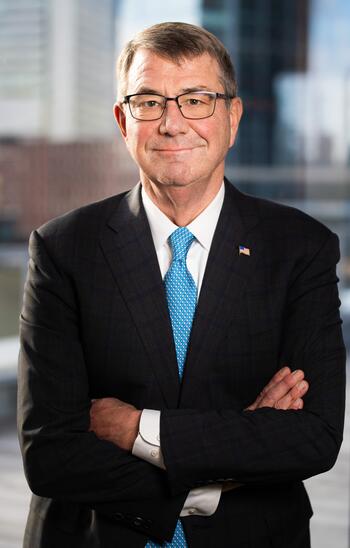
For or over thirty-five years Ash Carter served in numerous jobs in the Department of Defense, mostly recently as the twenty-fifth Secretary of Defense under President Obama. He currently serves as the Director of the Belfer Center for Science and International Affairs at Harvard Kennedy School and an innovation fellow at MIT. He also is a Rhodes scholar with a PhD in nuclear physics.

Ash Carter 25th Secretary of Defense
Seminars
-

North Korea’s international trade has increased by more than three times since mid-1990's. Using various data sources and a frontier theory of international trade, North Korea's economic gains from trade can be quantified to show the gains are substantial. This implies that the opportunity cost of abandoning economic openness is high, thus, this is an important leverage to promote North Korea’s political openness and denuclearization. However, the current economic openness of North Korea has a fundamental limitation because of its heavy reliance on China. The China-dependence pattern of its trades has only recently emerged. It is worth noting that North Korea’s trades were much more diversified before 2008. The comparative advantage analysis shows that North Korea’s trades can be diversified as before; and cooperation among North Korea, South Korea, and the United States can play an important role for the diversification if it is shaped from global perspectives rather than by the bilateral relations.

Image
hyeok jeong photo crop
Hyeok Jeong (PhD, University of Chicago) is a professor at the Graduate School of International Studies (GSIS), Seoul National University. His main research interests include economic growth and development, productivity and inequality dynamics in relation to financial deepening and labor market issues such as human capital and demographic transition. His recent research agenda also includes the influences of firm and product dynamics on international trade, higher education reform, Korea’s long-term development process, evolution of Korea’s demographic dividends, North Korean economy, and international development cooperation on issues such as knowledge sharing and development finance. Prior to joining the faculty of GSIS in 2015, he was a professor of economics at the University of Southern California and Vanderbilt University; National Graduate Institute for Policy Studies in Japan; and the KDI School of Public Policy and Management in Korea.


Hyeok Jeong <i>Professor, Seoul National University</i>
Seminars
Subscribe to International Relations