International Relations

FSI researchers strive to understand how countries relate to one another, and what policies are needed to achieve global stability and prosperity. International relations experts focus on the challenging U.S.-Russian relationship, the alliance between the U.S. and Japan and the limitations of America’s counterinsurgency strategy in Afghanistan.

Foreign aid is also examined by scholars trying to understand whether money earmarked for health improvements reaches those who need it most. And FSI’s Walter H. Shorenstein Asia-Pacific Research Center has published on the need for strong South Korean leadership in dealing with its northern neighbor.

FSI researchers also look at the citizens who drive international relations, studying the effects of migration and how borders shape people’s lives. Meanwhile FSI students are very much involved in this area, working with the United Nations in Ethiopia to rethink refugee communities.

Trade is also a key component of international relations, with FSI approaching the topic from a slew of angles and states. The economy of trade is rife for study, with an APARC event on the implications of more open trade policies in Japan, and FSI researchers making sense of who would benefit from a free trade zone between the European Union and the United States.

-

Seminar Recording: https://youtu.be/HFZJj01vC3U


Abstract: By most accounts, the most important political space in the world's largest country is the four inches between Vladimir Putin’s ears. In a new book, Graeme Robertson and Sam Greene challenge the idea that Putin has shaped Russia in his own image, arguing instead that it his power flows from a particular relationship he has developed with his citizens -- and that his citizens have developed with one another. The result is a view of Russian politics as something much more fluid and fragile than we generally understand, a shifting landscape in which Putin's power -- and that of whoever succeeds him -- is continually negotiated and renegotiated between the Kremlin and the public, even in the confines of an increasingly authoritarian state. In this discussion, Greene and Robertson explore the social and political imperatives, challenges and dilemmas Putin and Russia face as he rounds out his fourth term and wonders about a fifth.


Speakers' Biography:


Sam Greene is reader in Russian politics and Director of the Russia Institute at King's College London. His research focuses on the relationships between citizens and the state in Russia, and in societies experiencing social, economic and political transformation more broadly. His first book, Moscow in Movement: Power and Opposition in Putin's Russia, was published by Stanford University Press in 2014. More recently, he is co-author with Graeme Robertson of Putin v the People: The Perilous Politics of a Divided Russia, published by Yale University Press in 2019. He also serves as Associate Fellow in the Russian and Eurasian Programme of the International Institute for Security Studies and a Visiting Professor at the UK Defence Academy.


Graeme Robertson is a Professor of Political Science at the University of North Carolina at Chapel Hill and Director of the Center for Slavic, Eurasian and East European Studies. His work focuses on political protest and regime support in authoritarian regimes.

Graeme’s new book (with Samuel A. Greene) is Putin v. The People, published by Yale University Press in June 2019. The book presents a fresh new look at the social bases of support for and opposition to authoritarian rule in Russia. Graeme is also the author of Revolution and Reform in Ukraine, published by PONARS Eurasia (with Silviya Nitsova and Grigore Pop-Eleches) and The Politics of Protest in Hybrid Regimes: Managing Dissent in Post-Communist Russia, published by Cambridge University Press. He has published articles in many academic journals including the American Political Science Review, the American Journal of Political Science, The Journal of Politics and the British Journal of Political Science, as well as contributing regularly to the media on Russia and Ukraine. Graeme currently serves as the Associate Editor for Comparative Politics for the American Journal of Political Science.

Sam Greene King's College London
Graeme Robertson University of North Carolina
Seminars
-

Seminar Recording: https://youtu.be/5c8Un2Y9-sw


Abstract: Over the last fifteen years, the Russian government has invested significantly in improving Russia’s education and health care systems and in reversing the health and demographic catastrophes of the 1990s. This discussion will assess the extent to which those investments have paid off and the continued challenges Putin faces in aligning Russia’s human capital resources with his political, economic, and foreign policy ambitions. It will also examine the ways that health and social policy have been used as political tools – not always successfully – by the Putin regime.


Speaker Biography: Judy Twigg is a professor of political science at Virginia Commonwealth University; senior associate (non-resident) with the Center for Strategic and International Studies; consultant for the evaluation units of the World Bank and the Inter-American Development Bank; and adjunct professor at the Walsh School of Foreign Service, Georgetown University. Twigg’s work focuses on issues of health, human capital, and health systems reform in Eurasia, as well as evaluations of human development and public sector management assistance projects globally. She has been a consultant for John Snow, Inc., UNICEF, USAID, the Eurasia Foundation, and the Social Science Research Council. Twigg was a 2005 recipient of the State Council on Higher Education in Virginia Outstanding Faculty Award. She holds a B.S. in physics from Carnegie Mellon University, an M.A. in political science and Soviet studies from the University of Pittsburgh, and a Ph.D. in political science and security studies from MIT.


Judy Twigg Professor of Political Science Virginia Commonwealth University
Seminars
Authors
Noa Ronkin
News Type
News
Date
Paragraphs

The annual award, which carries a US $10,000 cash prize, is sponsored by Stanford University’s Walter H. Shorenstein Asia-Pacific Research Center. It recognizes outstanding journalists and journalism organizations for excellence in coverage of the Asia-Pacific region. News editors, publishers, scholars, journalism associations, and organizations focused on Asia research and analysis are invited to submit nominations for the 2020 award through Friday, February 14.

STANFORD, CA, December 3, 2019 — The Walter H. Shorenstein Asia-Pacific Research Center (APARC), Stanford University’s hub for interdisciplinary research, education, and engagement on contemporary Asia, invites nominations for the 2020 Shorenstein Journalism Award. The award recognizes outstanding journalists who have spent their careers helping audiences around the world understand the complexities of   the Asia-Pacific region. The 2020 award will honor a journalist whose work has mostly been conveyed through American news media. The deadline for nomination submissions is Friday, February 14, 2020.

An annual tradition since 2002, the Shorenstein Journalism Award is sponsored by APARC and carries a cash prize of US $10,000. It honors the legacy of APARC benefactor, Mr. Walter H. Shorenstein, and his twin passions for promoting excellence in journalism and understanding of Asia. “In the face of a shifting geopolitical landscape and amid global declines of democracy, political rights, and civil liberties, it is more crucial than ever before to support independent journalism that seeks accuracy, deep reporting, and nuanced U.S.-Asia dialogue,” said APARC Director Gi-Wook Shin.

Over the course of its history, the award has recognized world-class journalists who push the boundaries of coverage of the Asia-Pacific region and help advance mutual understanding between audiences in the United States and their Asian counterparts. Recent honorees include Maria Ressa, Anna Fifield, Siddharth Varadarajan, Ian Johnson, and Caixin Media. The award alternates between recipients whose work has mostly been published through Asian news media and those whose work has mostly been conveyed through American news media. The 2020 award will recognize a recipient from the latter category.

For the award, the Asia-Pacific region is defined broadly to include Northeast, Southeast, South, and Central Asia and Australasia. Both individual journalists with considerable body of work and journalism organizations are eligible for the award. Nominees’ work may be in traditional forms of print or broadcast journalism and/or in new forms of multimedia journalism. The Award Selection Committee, whose members are experts in journalism and Asia research and policy, presides over the judging of nominees and is responsible for the selection of honorees.

APARC is seeking 2020 award nomination submissions from news editors, publishers, scholars, journalism associations, and entities focused on researching and interpreting the Asia-Pacific region. The Center will announce the winner by April 2020 and present the award at a public ceremony at Stanford in autumn quarter of 2020.

Nominations are accepted electronically through Friday, February 14, 2020 at 11:59 PM PST. For information about the nomination procedures and to submit nominations please visit the award nomination entry page.

Please direct all inquiries to aparc-communications@stanford.edu.


About the Walter H. Shorenstein Asia-Pacific Research Center
The Walter H. Shorenstein Asia-Pacific Research Center (Shorenstein APARC) addresses critical issues affecting the countries of Asia, their regional and global affairs, and U.S.-Asia relations. As Stanford University’s hub for the interdisciplinary study of contemporary Asia, APARC produces policy-relevant research, provides education and training to students, scholars, and practitioners, and strengthens dialogue and cooperation between counterparts in the Asia-Pacific and the United States. Founded in 1983, APARC today is home to a scholar community of distinguished academics and practitioners in government, business, and civil society, who specialize in trends that cut across the entire Asia-Pacific region. Learn more about APARC and about the Shorenstein Journalism Award.

Hero Image
Announcement of open nominations for the 2020 Shorenstein Journalism Award with a background image of Stanford main quad.
All News button
1
News Type
Commentary
Date
Paragraphs

The Democrats are facing a dilemma: If they defend democratic norms by acting to remove President Trump from office, they risk getting dragged into a polarizing style of politics that works to his political advantage. Read here.

Hero Image
trump 2546104 1920
All News button
1
News Type
Commentary
Date
Paragraphs

Our Francis Fukuyama and UELP alumni, Sergii Leshchenko (Draper Hills Summer Fellow 2017) and Oleksandra Ustinova (Ukrainian emerging leaders 2018-9), are feat inMichelle Goldberg's NYT opinion piece "The Beacon Has Gone Out: What Trump & Giuliani Have Wrought." Read here.

Hero Image
my photo
All News button
1
Authors
Noa Ronkin
News Type
News
Date
Paragraphs

As a U.S.-China trade deal hangs in the balance and the world’s two largest economies are locked in a race for technological supremacy, concerns have arisen about China’s counterintelligence threat to the United States. In July 2019, FBI Director Christopher Wray told members of the U.S. Senate Judiciary Committee that China poses the most severe counterintelligence threat to the United States than any other country, and described that national security and economic espionage threat as “deep and diverse and wide and vexing.” He noted that the FBI has to contend not only with Chinese officials but also with “nontraditional collectors,” including Chinese scientists and students who are looking to steal American innovation. There are currently multiple legislative proposals in Congress, all of which, in one way or another, are aimed at limiting university collaboration with Chinese nationals and the education of Chinese nationals in “strategic” research fields by U.S. higher education institutions.

These legislative endeavors, however, argues Arthur Bienenstock, co-chair of the American Academy of Arts and Sciences’ Committee on International Scientific Partnerships, may endanger the U.S. science and technology workforce and limit the effectiveness of U.S. academic research, thus weakening the very fields the nation is most anxious to protect.

Bienenstock is also a member of the National Science Board, the governing body of the National Science Foundation, and former associate director for science of the White House Office of Science and Technology Policy. At Stanford, he is special assistant to the President for federal research policy, associate director of the Wallenberg Research Link, and professor emeritus of photon science. At a recent lecture hosted by APARC’s China Program, Bienenstock discussed some of the proposed legislation and federal acts regarding international scientific collaboration with China and their implications for the U.S. scientific workforce. He cautioned U.S policymakers against an expansive interpretation of what constitutes “sensitive research” in strategic areas, such as artificial intelligence and quantum science, and offered a framework for determining when scientific research should be subject to greater control.

[To get more stories like this delivered to your inbox sign up for APARC newsletters]

Image
Arthur Bienenstock and Gi-Wook Shin seated at a conference room.
Indeed, said Bienenstock, “China is the only nation in the world that can and plans to challenge U.S. economic, military and ideological leadership” – a challenge that is partly based on its becoming a major scientific and technological power. He agreed that the concerns of FBI Director Wray and others are valid and must be considered carefully, but noted, based on his observations at informative sessions and a meeting with an FBI officer, that the overall number of documented misdeeds involving Chinese nationals is over 100 – far from a deep and wide threat – and that he has not seen evidence of significant student participation in those misdeeds.

We must come to terms with reality, claimed Bienenstock, presenting evidence that the United States is no longer the dominant funder of science and technology research; that Chinese nationals constitute a very significant portion of the U.S. workforce in computer science, engineering, and mathematics; and that the U.S. science and technology workforce is highly dependent on Chinese graduate students.

The United States must maintain and strengthen its scientific and technological efforts if it is to maintain a leadership position, Bienenstock said. To do so, he emphasized, U.S. universities must maintain their openness, and lawmakers, in turn, must thoughtfully understand the benefits of collaboration with Chinese scientists and engineers as well as keep the country attractive for Chinese students.

Listen to highlights from Bienenstock’s presentation on our SoundCloud channel. A transcript is available below.

Photo: Arthur Bienenstock (right) and APARC DIrector Gi-Wook Shin (credit: Andrea Brown).

Hero Image
Concept of U,S.-China technology competition: brain-shaped boxing gloves covered in U.S. and China flags facing against each other on a background of a motherboard Just Super/ Getty Images
All News button
1
Authors
News Type
News
Date
Paragraphs

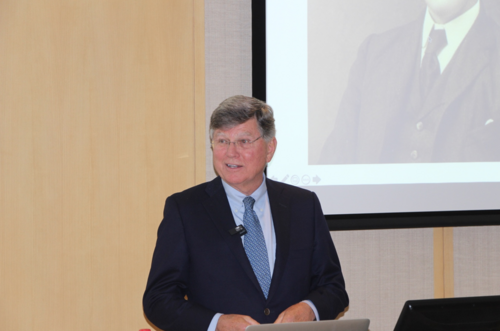
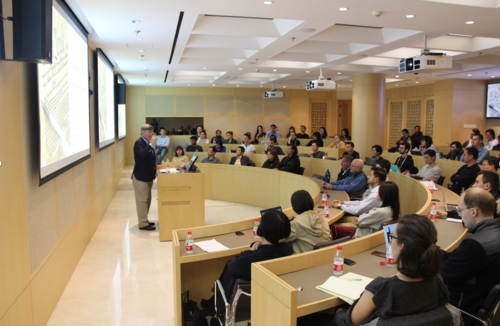
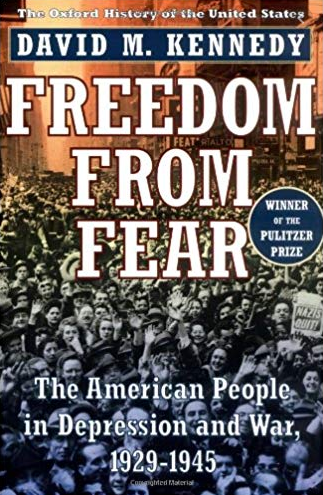
David M. Kennedy, the Donald J. McLachlan Professor of History Emeritus at Stanford University, award winning teaching and author of more than a dozen, including Freedom From Fear: The American People in Depression and War, which won the Pulitzer Prize in history, spoke to a packed audience on October 22nd, 2019.  Kennedy used the outcome of the 2016 American presidential election, which surprised many observers, to reflect on both its historical and current determinants. Professor Kennedy explored some of the deep structural features that have long characterized the American political system, as well as the social, economic, technological, and cultural issues that are shaping American politics today.

Professor Kennedy spoke about the process of “disintermediation,” where different branches of government lose part of their role in the policymaking process.  He used this concept to analyze the long-standing struggle between congress and the president that continues today.   Particularly insightful for current day understanding is how presidents increasingly succeeded in using the public to go around congress in pursuing their policy interests. Franklin D. Roosevelt redefined the president’s relationship with the public with his famous “fireside chats,” making use of the radio, reaching beyond Woodrow Wilson who had to rely on printed newspapers.   John F. Kennedy took this even further via televised news conferences.  The internet and social media have taken disintermediation to the extreme.

Image
screen shot 2019 11 25 at 11 56 28 am


Image
screen shot 2019 11 25 at 11 47 44 am

Image
screen shot 2019 11 25 at 11 52 26 am

Hero Image
screen shot 2019 11 25 at 11 47 44 am
All News button
1
-

Image
Ashish Goel
Abstract:

While the Internet has revolutionized many aspects of our lives, there are still no online alternatives for making democratic decisions at large scale as a society. In this talk, we will describe algorithmic and market-inspired approaches towards large scale decision making that our research group is exploring. We will start with a model of opinion dynamics that can potentially lead to polarization, and relate that to commonly used recommendation algorithms. We will then describe the algorithms behind Stanford's participatory budgeting platform, and the lessons that we learnt from deploying this platform in over 70 civic elections. We will use this to motivate the need for a modern theory of social choice that goes beyond voting on candidates. We will then describe ongoing practical work on an automated moderator bot for civic deliberation (in collaboration with Jim Fishkin's group), and ongoing theoretical work on deliberative approaches to decision making. We will conclude with a summary of open directions, focusing in particular on fair advertising. 

Ashish Goel Bio

Lunch Seminar Series Flyer
  • E207, Encina Hall
  • 616 Jane Stanford Way, Stanford, CA 94305
 
0
ashish_goel.jpg
Ashish Goel is a Professor of Management Science and Engineering and (by courtesy) Computer Science at Stanford University, and a member of Stanford's Institute for Computational and Mathematical Engineering. He received his PhD in Computer Science from Stanford in 1999, and was an Assistant Professor of Computer Science at the University of Southern California from 1999 to 2002. His research interests lie in the design, analysis, and applications of algorithms; current application areas of interest include social networks, participatory democracy, Internet commerce, and large scale data processing. Professor Goel is a recipient of an Alfred P. Sloan faculty fellowship (2004-06), a Terman faculty fellowship from Stanford, an NSF Career Award (2002-07), and a Rajeev Motwani mentorship award (2010). He was a co-author on the paper that won the best paper award at WWW 2009, and an Edelman Laureate in 2014. Professor Goel was a research fellow and technical advisor at Twitter, Inc. from July 2009 to Aug 2014.
Ashish Goel Professor of Management Science and Engineering
Seminars
-

Seminar Recording: https://youtu.be/q5g6fuAVG2w


About this Event: For over a decade, Russian officials have a championed a model of economic growth that draws inspiration from East Asian developmental states. The state’s role in economic decision making has been accentuated, setting in motion ambitious industrial and stimulus policies, import substitution, and as international sanctions have mounted, fierce protectionism. This memo explains how this shift in doctrine has contributed to economic stagnation and falling consumer welfare. Weak institutions have enabled a bureaucratic system that privileges loyalty over merit and consequently unproductive, corruption-riddled spending. Politically motivated concerns about keeping wealth and power concentrated among a small group of elites threaten to generate widespread discontent over economic exclusion. 

This event is co-sponsored with the European Security Initiative


Speaker's Biography: David Szakonyi is an Assistant Professor of Political Science at George Washington University, an Academy Scholar at Harvard University, and a Research Fellow at Higher School of Economics in Moscow, Russia. His research looks at political economy and corruption, with projects underway in Russia and the United States. His book Politics for Profit: Business, Elections, and Policymaking in Russia is forthcoming at Cambridge University Press, with other work published in the American Political Science Review, World Politics, and Journal of Politics, as well as popular publications such as Foreign Affairs, the Washington Post, and Newsweek. He received his PhD in political science from Columbia University and his BA from the University of Virginia


David Szakonyi George Washington University
Seminars
Authors
News Type
Commentary
Date
Paragraphs

What an American-Led Peace Plan Should Look Like

For more than five years, Russian forces and their proxies have waged a bloody war against Ukrainian forces in the Donbas region of eastern Ukraine. The conflict has claimed more than 13,000 lives, driven almost two million people from their homes, and caused immense material damage. France and Germany have together sought to broker peace but failed to produce a durable cease-fire—let alone a political settlement....

If European efforts continue to falter, the United States should take a more active role in the peacemaking process, working with European countries to make Russia’s military engagement in Ukraine more costly and a settlement more attractive. Moreover, Washington should set forth its own peace plan—one that builds on previous diplomatic efforts but includes a UN-authorized peacekeeping mission and an interim international administration in Donbas.


Read the rest at Foreign Affairs

Hero Image
gettyimages 1157385797
All News button
1
Subscribe to International Relations