Utibe R. Essien, MD, MPH, is an Assistant Professor of Medicine, University of Pittsburgh School of Medicine, a general internist and health disparities researcher in the VA Pittsburgh Center for Health Equity Research and Promotion. Dr. Essien’s research focuses on racial disparities in the use of novel therapeutics in the management of chronic diseases including atrial fibrillation and was recently awarded a 5-year, $1 million Career Development Award from the Department of Veterans Affairs. He has applied his health equity research framework to the COVID-19 pandemic, rapidly becoming an expert in examining the disparities that disproportionately affect minority communities with COVID-19. His work has been featured in leading medical journals including JAMA and the NEJM and he has been interviewed by several national news outlets including the New York Times, Washington Post, and NPR. Dr. Essien is a fierce advocate for diversity and equity in medicine, speaking nationally on the topic and co-founding an “Antiracism in Medicine” podcast for the Clinical Problem Solvers podcast. Dr. Essien's leadership in advancing health equity has resulted in several local and national awards including the 2021 AAMC Herbert Nickens Award.
You are invited to a Zoom meeting.
When: Mar 11, 2022 12:00 PM Pacific Time (US and Canada)
Robert G. Wesson Lecture Series in International Relations Theory and Practice
As a Venezuelan, Leopoldo López lived through the gradual deterioration of what was once a regional reference for democracy into an authoritarian regime that has created the worst humanitarian and migration crisis in the Western Hemisphere. Venezuela is a clear example of how democracy could lose the battle against autocracy.
Unfortunately, the fight for freedom is no longer an issue to be solved only among Venezuelans. In fact, our conflict has become, like many others around the world, part of the global conflict between autocracy and democracy.
Autocracy in its different forms is spreading and constitutes a diverse but articulated movement around the world. To face this situation, new forms of organizations and democratic leadership must be promoted and empowered as an effective way to revert this new wave of autocracies. It is essential to create a synergy between effective local leadership, a comprehensive narrative and the use of new technologies that set up a range of possibilities to promote freedom.
The Wesson Lectureship was established at Stanford by the Freeman Spogli Institute for International Studies in 1989. It provides support for a public address at the university by a prominent scholar or practicing professional in the field of international relations. The series is made possible by a gift from the late Robert G. Wesson, a scholar of international affairs, prolific author, and senior research fellow at the Hoover Institution.
In establishing the series, Dr. Wesson stated his hope that the lectures would stimulate increased commitment to the study of international relations in a context that would enable students to understand the importance of developing practical policies within a theoretical and analytical framework. Previous Wesson Lecturers have included such distinguished speakers as McGeorge Bundy, Willi DeClerq, Condoleezza Rice, Mikhail Gorbachev, Fernando Henrique Cardoso, and Mary Robinson.
ABOUT THE SPEAKER
Image
Leopoldo López is a Venezuelan political leader, pro-democracy activist and Sakharov prize laureate. He is the founder and national coordinator of the Voluntad Popular political party.
López received a Bachelor's degree cum laude in sociology and economics from Kenyon College, and a Master´s degree in public policy from the John F. Kennedy School of Government at Harvard University. He was awarded a honoris causa doctorate in Law from Kenyon College in 2007.
Leopoldo López was elected mayor of the municipality of Chacao in Caracas in 2000 and he finished his second term with a 92% approval rate. He also won third place at the World Mayor Awards and the 2007 and 2008 “Premio Transparencia”, awarded by Transparency International.
In 2014 he was unjustly detained by the Maduro regime and was sentenced to 14 years of imprisonment. He spent four years in a military prison, a year and a half in house arrest and another year and a half in the Spanish embassy in Caracas under political asylum. He was recognized by Amnesty International as a prisoner of conscience. Also, in 2015 his detention was declared arbitrary by the UN.
In October 2020, López escaped from Venezuela through Colombia to join his family in Spain. It was the first time in seven years that he was able to be with his family in freedom. In his exile, López continues his fight for Venezuela´s democracy and freedom.
López has received several international awards for his fight for democracy and freedom in Venezuela. Among them, he was honored with the 2014 Harvard alumni achievement award, the NED´S 2013 Democracy Award, the 2016 Geneva Summit Courage Award and the 2017 Sakharov Prize for Freedom and Thought.
Hybrid event: Online via Zoom, and in-person in Bechtel Conference Center
Leopoldo López
Freedom Activist from Venezuela
Lectures
Robert G. Wesson Lecture Series in International Relations Theory and Practice
How do we explain the divergence in the embrace of LGBTQ rights among right-wing European parties? In the 1990s and early 2000s, a few conservative parties started to embrace the gay rights cause, joining earlier adopters among left-wing and liberal Western European parties. Conservative parties in Scandinavia, the Netherlands, and Britain trumpeted their newly found enthusiasm for gay rights as a badge of modernity and political maturity. The embrace was driven by changing social values, the idiosyncratic agency of leadership, and declining religiosity. Today the right-wing lesbian, gay or bisexual parliamentarian is far from an exception. Since 1976, nearly 150 self-identifying LGB parliamentarians from right of center parties have taken office.
The position of the radical right is more complex. When it comes to gay and lesbian rights, radical right parties can be divided into two groups. Parties from the Netherlands, Belgium, and northern European countries have invoked the nationalism of gay rights as a club to beat back the Muslim immigrant. Homonationalism has become a successful electoral strategy, which blends support for gay rights with xenophobia and Islamophobia. In contrast, radical right parties in Eastern and Southern Europe have not embraced gay rights. In most of these countries, “homosexuality” is seen as a foreign threat, imposed by Western liberals or alien to Catholic culture and tradition. While the arc of the gay rights movement bends towards freedom, in most countries the T has been jettisoned from the LGB. When the left is slow to adopt, the right sees little gain in moving on the issue, nor is disposed to lead from the front.
Gabriele Magni is Assistant Professor of Political Science and Director of the Global Policy Institute at Loyola Marymount University in Los Angeles. His research examines the factors that shape political inclusion, solidarity and representation in advanced democracies. One stream of his work explores the link between economic inequality, immigration and welfare attitudes. A second stream examines LGBTQ rights and representation, focusing on LGBTQ candidates and politicians. His research has appeared in the American Political Science Review, the American Journal of Political Science, the Journal of Politics, and the British Journal of Political Science, among other outlets. He has also written for The Washington Post, Politico and The New Republic, and provided commentary to The New York Times, The Washington Post, FiveThirtyEight, NBC News and Reuters. Previously, he was a Postdoctoral Fellow at Princeton University’s Niehaus Center for Globalization and Governance.
*If you need any disability-related accommodation, please contact Shannon Johnson (sj1874@stanford.edu) by February 10, 2022.
Co-sponsored by the Clayman Institute for Gender Research.
On Friday, October 22, 2021 from 10:00-11:00 am PT, The World House Global Network is honored to have Andre Kamenshikov as our guest speaker. We will be discussing current challenges for civil society in Russia, Belarus, and Ukraine.
Andre Kamenshikov is a civil society activist in the field of peacebuilding, with both a US and Russian background. He graduated Moscow State University majoring in sociology in 1991 as well as studied various subjects in Carroll College, Waukesha, Wisconsin and undertook courses in human rights and other relevant topics. He is the representative of a US-based NGO Nonviolence International and the regional coordinator of an international civil society network - the Global Partnership for the Prevention of Armed Conflict (GPPAC) in the Eastern Europe region. He has over 28 years of experience as a civil peacebuilding activist in conflict areas of the ex-USSR. He was the founder of Nonviolence International–CIS, a civil society organization that was based in Moscow and operated in the post-soviet states for 22 years until it had to be closed due to the current political climate in Russia. Since 2015 he has been based in Kyiv, Ukraine, working primarily with the local civil society sector on enhancing its capacities to contribute to peace and democratic development of the country. He is an author of a number of publications about the role of civil society in post-soviet conflicts, including “International experience of civilian peacebuilding in the post-soviet space” (2016), the “Strategic framework for the development of civil peacebuilding activities in Ukraine” (2017).
For Fall Quarter 2021, FSI will be hosting hybrid events. Many events will be open to the public online via Zoom, and limited-capacity in-person attendance for Stanford affiliates may be available in accordance with Stanford’s health and safety guidelines.
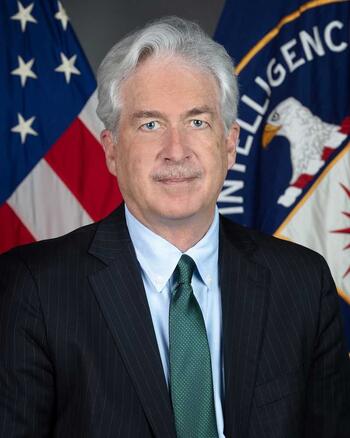
The Freeman Spogli Institute for International Studies (FSI) is honored to host the Director of the Central Intelligence Agency, William J. Burns, for a discussion on the national security challenges and opportunities facing the United States, and his experiences and lessons learned during his career in the Foreign Service. FSI Director Michael McFaul will moderate the discussion and questions from the audience.
Image
Director Burns was officially sworn in as C.I.A. Director on March 19, 2021, making him the first career diplomat to serve as Director. Director Burns holds the highest rank in the Foreign Service—Career Ambassador—and is only the second serving career diplomat in history to become Deputy Secretary of State.
Director Burns retired from the State Department U.S. Foreign Service in 2014 before becoming president of the Carnegie Endowment for International Peace.
Director Burns is a crisis-tested public servant who spent his 33-year diplomatic career working to keep Americans safe and secure. Prior to his tenure as Deputy Secretary of State, he served as Under Secretary of State for Political Affairs from 2008 to 2011; U.S. Ambassador to Russia from 2005 to 2008; Assistant Secretary of State for Near Eastern Affairs from 2001 to 2005; and U.S. Ambassador to Jordan from 1998 to 2001. He was also Executive Secretary of the State Department and Special Assistant to former Secretaries of State Warren Christopher and Madeleine Albright; Minister-Counselor for Political Affairs at the U.S. Embassy in Moscow; Acting Director and Principal Deputy Director of the State Department’s Policy Planning Staff; and Special Assistant to the President and Senior Director for Near East and South Asian Affairs at the National Security Council.
Director Burns received three Presidential Distinguished Service Awards and the highest civilian honors from the Pentagon and the U.S. Intelligence Community. He is the author of the best-selling book, The Back Channel: A Memoir of American Diplomacy and the Case for Its Renewal (2019). He earned a bachelor’s degree in history from LaSalle University and master’s and doctoral degrees in international relations from Oxford University, where he studied as a Marshall Scholar.
For Fall Quarter 2021, CDDRL will be hosting hybrid events. Many events will be open to the public online via Zoom, and limited-capacity in-person attendance for Stanford affiliates may be available in accordance with Stanford’s health and safety guidelines.
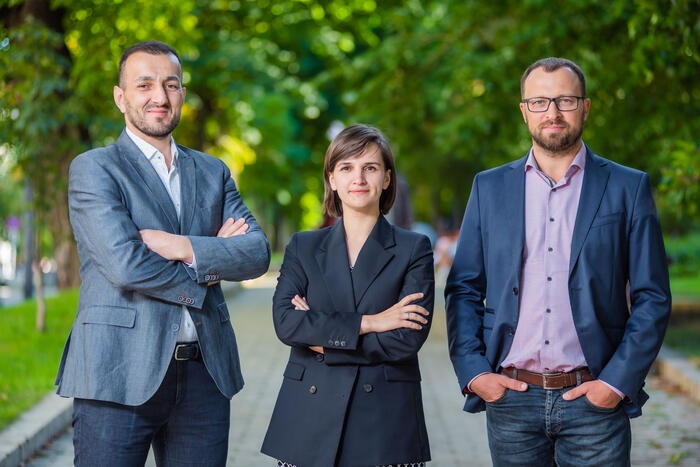
Stanford's Center on Democracy, Development and the Rule of Law invites you to a special event on October 26 to celebrate the arrival of our third cohort of Ukrainian Emerging Leaders at Stanford – Yulia Bezvershenko, Denis Gutenko, and Nariman Ustaiev – who will join us for a conversation about their work and Ukraine's political development.
The three fellows were selected for their outstanding contributions to Ukraine's political, economic and social development. They have arrived at Stanford this September to start the fellowship program, which combines academic and project-based work. The event will be followed by a light outdoor reception.
The Ukrainian Emerging Leaders Program and this event are possible thanks to the generous support of our donors, which include: the Astem Foundation, Tomas Fiala, Victor and Iryna Ivanchyk, MacPaw, Omidyar Network, Parimatch, Slava Vakarchuk and Western NIS Enterprise Fund (WNISEF). The program was founded in 2016 by the Center on Democracy, Development, and the Rule of Law at Stanford’s Freeman Spogli Institute together with Oleksandr Akymenko and Kateryna Akymenko (Stanford John S. Knight fellows) as an initiative to address development challenges in Ukraine and across the broader region.
Image
ABOUT THE FELLOWS
Yulia Bezvershenko is Director General of Directorate for Science and Innovation at the Ministry of Education and Science. The Directorate was created for policy development and implementation in the research, development and innovation sector.
Denis Gutenko joins CDDRL after most recently serving as the head of the State Fiscal Service of Ukraine. Holding this position from 2019-20 he was responsible for dismantling the large-scale State Fiscal Service into three accountable units: Tax Administration, Customs and Tax police.
Nariman Ustaiev is co-founder and Director at Gasprinski Institute for Geostrategy. He is also an external advisor for the Committee on Human Rights, Deoccupation and Reintegration of Temporarily Occupied Territories in Donetsk, Luhansk Regions and the Autonomous Republic of Crimea, National Minorities and Interethnic Relations of the Verkhovna Rada of Ukraine.
This event has both an in-person and Zoom component.
Yulia Bezvershenko is the former Director General of Directorate for Science and Innovation at the Ministry of Education and Science. The Directorate was created for policy development and implementation in the research, development and innovation sector.
Since the Revolution of Dignity, Bezvershenko has been deeply involved in the reform of science development and implementation process. Her mission is to build knowledge-based Ukraine as economy and society based on knowledge, science and innovation. She has contributed to the Law on Science, which was adopted by Parliament in 2015. In cooperation with scientists and reformers she developed and actively participated in the creation of two new institutions, the National Council on Science and Technology and the National Science Fund. Bezvershenko currently works both on implementation of the aforementioned law and on its future iterations.
Bezvershenko holds a PhD in Theoretical Physics from the Bogolyubov Institute for Theoretical Physics (National Academy of Science of Ukraine) and a Master’s degree in Public Policy and Governance from the Kyiv School of Economics. She has diverse experience in the research and development sector, having worked as a researcher at the Bogolyubov Institute as well as a senior lecturer on quantum theory at Kyiv-Mohyla Academy. Until 2019, Yulia was a Deputy Head of Young Scientists Council of National Academy of Science of Ukraine and Vice-President of NGO "Unia Scientifica" aimed to promote science and to advocate reform of science in Ukraine.
There is an ongoing war between Ukraine and Russia. It is not a war solely for territories, resources, or people — it's an ideological war, indicative of the battle between authoritarianism and democracy. What is the real nature of this conflict and who are the parties involved? What tools does the Kremlin use to control the narrative and what can be done to stop it? And why is Ukraine the cornerstone of democracy in the region? Join former Prime Minister of Ukraine Oleksiy Honcharuk, the Bernard and Susan Liautaud Visiting Fellow at FSI, to discuss.
The Liautaud Fellowship was established to bring former heads of state or senior policymakers to Stanford, with the goal of promoting meaningful dialogue on the challenges world leaders face in crafting policy solutions for pressing global problems. Toomas Hendrik Ilves, the former President of Estonia, was the inaugural Liautaud Fellow in 2017, followed by H.R. McMaster in 2018.
ABOUT THE SPEAKER
Image
Oleksiy Honchaurk was Ukraine’s 17th Prime Minister (August 2019 – March 2020). In just 5 months Mr. Honcharuk initiated important changes that other Ukrainian politicians had not dared to do for years (launched of large and small privatization processes, started of land market implementation, conducted Naftogaz unbundling, started combating shade markets – illegal gambling houses and petrol stations were closed, launched of Anti-Raider (illegal seizure of business or property) Office that would react within just 24 hours to any cases of such illegal seizure, etc).
Before he served as a Deputy Head of the Presidential Office of Ukraine and was a member of the National Reforms Council under the President of Ukraine. Previously for more than ten years, Mr. Honcharuk has been working in the legal sphere. He has established a reputation as a strong professional and qualified specialist. Mr. Honcharuk is also known as a strong fighter for business community rights. 2005-2008, he worked as a lawyer at PRIOR-Invest investment company and later on headed its legal department. 2008-2015, he worked as an arbitration manager and managing partner at Constructive Lawyers, a law firm he had founded, which provided legal services in the field of investment and financing real estate construction.
From 2015-2019, Oleksiy Honcharuk headed Better Regulation Delivery Office non-governmental organization (BRDO). Among his achievements as the head of the BRDO was the cancellation of around 1000 Government acts and adoption of more than 50 decisions, facilitating activity of business in Ukraine. Oleksiy Honcharuk also served as an external advisor to the First Deputy Prime Minister - Minister of Economic Development and Trade of Ukraine. He has a degree in law from Interregional Academy of Personal Management and in Public Administration from National Academy for Public Administration under the President of Ukraine. He was born on July 7, 1984, in Zhmerynka, Vinnytsia region.
Hybrid event: Online via Zoom, and in-person in Bechtel Conference Center
Ukraine’s 17th Prime Minister (August 2019 – March 2020). In just 5 months Mr. Honcharuk initiated important changes that other Ukrainian politicians had not dared to do for years (launched of large and small privatization processes, started of land market implementation, conducted Naftogaz unbundling, started combating shade markets –– illegal gambling houses and petrol stations were closed, launched of Anti-Raider (illegal seizure of business or property) Office that would react within just 24 hours to any cases of such illegal seizure, etc).
Before he served as a Deputy Head of the Presidential Office of Ukraine and was a member of the National Reforms Council under the President of Ukraine. Previously for more than ten years, Mr. Honcharuk has been working in the legal sphere. He has established a reputation as a strong professional and qualified specialist. Mr. Honcharuk is also known as a strong fighter for business community rights. 2005-2008, he worked as a lawyer at PRIOR-Invest investment company and later on headed its legal department. During 2008-2015, he worked as an arbitration manager and managing partner at Constructive Lawyers, a law firm he had founded, which provided legal services in the field of investment and financing real estate construction.
From 2015-2019, Oleksiy Honcharuk headed Better Regulation Delivery Office non-governmental organization (BRDO). Among his achievements as the head of the BRDO was the cancellation of around 1000 Government acts and adoption of more than 50 decisions, facilitating activity of business in Ukraine. Oleksiy Honcharuk also served as an external advisor to the First Deputy Prime Minister - Minister of Economic Development and Trade of Ukraine.
Oleksiy Honcharuk has a degree in law from Interregional Academy of Personal Management and in Public Administration from National Academy for Public Administration under the President of Ukraine. He was born on July 7, 1984, in Zhmerynka, Vinnytsia region.
FSI
Stanford University
Encina Hall C140
Stanford, CA 94305-6055
(650) 736-1820
(650) 724-2996
0
kstoner@stanford.edu
Satre Family Senior Fellow, Freeman Spogli Institute for International Studies
kathryn_stoner_1_2022_v2.jpg
MA, PhD
Kathryn Stoner is the Mosbacher Director of the Center on Democracy, Development, and the Rule of Law (CDDRL), and a Senior Fellow at CDDRL and the Center on International Security and Cooperation at FSI. From 2017 to 2021, she served as FSI's Deputy Director. She is Professor of Political Science (by courtesy) at Stanford and she teaches in the Department of Political Science, and in the Program on International Relations, as well as in the Ford Dorsey Master's in International Policy Program. She is also a Senior Fellow (by courtesy) at the Hoover Institution.
Prior to coming to Stanford in 2004, she was on the faculty at Princeton University for nine years, jointly appointed to the Department of Politics and the Princeton School for International and Public Affairs (formerly the Woodrow Wilson School). At Princeton she received the Ralph O. Glendinning Preceptorship awarded to outstanding junior faculty. She also served as a Visiting Associate Professor of Political Science at Columbia University, and an Assistant Professor of Political Science at McGill University. She has held fellowships at Harvard University as well as the Woodrow Wilson Center in Washington, DC.
In addition to many articles and book chapters on contemporary Russia, she is the author or co-editor of six books: "Transitions to Democracy: A Comparative Perspective," written and edited with Michael A. McFaul (Johns Hopkins 2013); "Autocracy and Democracy in the Post-Communist World," co-edited with Valerie Bunce and Michael A. McFaul (Cambridge, 2010); "Resisting the State: Reform and Retrenchment in Post-Soviet Russia" (Cambridge, 2006); "After the Collapse of Communism: Comparative Lessons of Transitions" (Cambridge, 2004), coedited with Michael McFaul; and "Local Heroes: The Political Economy of Russian Regional" Governance (Princeton, 1997); and "Russia Resurrected: Its Power and Purpose in a New Global Order" (Oxford University Press, 2021).
She received a BA (1988) and MA (1989) in Political Science from the University of Toronto, and a PhD in Government from Harvard University (1995). In 2016 she was awarded an honorary doctorate from Iliad State University, Tbilisi, Republic of Georgia.
This event will be held outside on Stanford's campus. In accordance with Santa Clara County Public Health, masks are encouraged to be worn by all at crowded outdoor events.
Join Profs. Rob Reich, Mehran Sahami, and Jeremy Weinstein — the authors of System Error: Where Big Tech Went Wrong and How We Can Reboot — for a discussion hosted by Professor Michael McFaul, director of the Freeman Spogli Institute for International Studies. The operating system of Big Tech is broken, and this panel discussion will explore the path to a reboot. Plus, it will also allow you experience Professor Sahami’s famous tradition of throwing candy into the audience!
A forward-thinking manifesto from three Stanford professors — experts who have worked at ground zero of the tech revolution for decades — System Error reveals how Big Tech’s obsession with optimization and efficiency has sacrificed fundamental human values and demands that we change course to renew our democracy and save ourselves.
Armed with an understanding of how technologists think and exercise their power, these three Stanford professors—a philosopher working at the intersection of tech and ethics, the director of the undergraduate computer science program who was also an early Google engineer, and a political scientist who served under Barack Obama—reveal how we can hold that power to account. Troubled by the values that permeate the university and Silicon Valley, these professors worked together to chart a new path forward, creating a popular course to transform how tomorrow’s technologists might better approach their profession. Now, as the dominance of Big Tech becomes an explosive societal conundrum, join us as they share their provocative insights and concrete solutions to help everyone understand what is happening, what is at stake, and what we can do to control technology instead of letting it control us.
Books will be available for purchase at the event, and the authors will be signing copies as well.
This event is hosted by Professor Michael McFaul, director of the Freeman Spogli Institute for International Studies, and it is co-sponsored by the Center on Philanthropy and Civil Society, the McCoy Family Center for Ethics in Society, the Stanford School of Engineering, and the Stanford School of Humanities and Sciences.
Rob Reich | FSI Affiliate
Mehran Sahami | Associate Chair for Education, Computer Science Department
Associate Chair for Education, Computer Science Department
For Fall Quarter 2021, FSI will be hosting hybrid events. Many events will be open to the public online via Zoom, and limited-capacity in-person attendance for Stanford affiliates may be available in accordance with Stanford’s health and safety guidelines.
Retired U.S. Army Lieutenant Colonel Alexander Vindman, who found himself at the center of a firestorm for his decision to report the phone call between former U.S. President Donald Trump and Ukrainian President Volodymyr Zelensky that led to presidential impeachment, tells his own story for the first time.
Here, Right Matters is a stirring account of Vindman's childhood as an immigrant growing up in New York City, his career in service of his new home on the battlefield and at the White House, and the decisions leading up to the moment of truth he faced for his nation.
Alexander Vindman, a retired U.S. Army Lieutenant Colonel, was most recently the director for Eastern Europe, the Caucasus, and Russia on the White House’s National Security Council. Previously, he served as the Political-Military Affairs Officer for Russia for the Chairman of the Joint Chiefs of Staff and as an attaché at the U.S. Embassy in Moscow, Russia. While on the Joint Staff, he co-authored the National Military Strategy Russia Annex and was the principal author for the Global Campaign for Russia. He is currently a doctoral student and fellow of the Foreign Policy Institute at the Johns Hopkins School of Advanced International Studies (SAIS), Pritzker Military Fellow at the Lawfare Institute, and a visiting fellow at the University of Pennsylvania Perry World House. Follow him on Twitter @AVindman.
Alexander Vindman | Retired U.S. Army Lieutenant Colonel
Stanford Libraries and the Stanford Center on China’s Economy and Institutions hosted the 2021 Dr. Sam-Chung Hsieh Memorial Lecture featuring Professor Barry Naughton speaking on The Summer of 2021: Consolidation of the New Chinese Economic Model.
During the summer of 2021, a “regulatory storm” shook markets in China. While the crackdown had its most immediate effects on private education, internet business, and finance, the government has also rolled out new policies to shape manufacturing and infrastructure, and even household fertility and income distribution. In this talk, Naughton interprets these actions as an extension of the ongoing Chinese government effort to exercise “grand steerage” of the economy. The new policies of summer 2021 in fact represent the consolidation of a new model, in which the Chinese government decisively steers a predominantly market economy.
Watch the Recording
About the Speaker
Image
Barry Naughton is the So Kwan Lok Chair of Chinese International Affairs at the School of Global Policy and Strategy at UC San Diego. He is one of the world’s most highly respected economists working on China. He is an authority on the Chinese economy with an emphasis on issues relating to industry, trade, finance and China's transition to a market economy.
Naughton’s recent research focuses on regional economic growth in China and its relationship to foreign trade and investment. He has addressed economic reform in Chinese cities, trade and trade disputes between China and the United States and economic interactions among China, Taiwan and Hong Kong.
Naughton has written the authoritative textbook “The Chinese Economy: Transitions and Growth,” which has now been translated into Chinese. His groundbreaking book “Growing Out of the Plan: Chinese Economic Reform, 1978-1993” received the Ohira Memorial Prize, and he most recently translated, edited and annotated a collection of articles by the well-known Chinese economist Wu Jinglian. Naughton writes a quarterly analysis of the Chinese economy for China Leadership Monitor.
The family of Dr. Sam-Chung Hsieh donated his personal archive to the Stanford Libraries' Special Collections and endowed the Dr. Sam-Chung Hsieh Memorial Lecture series to honor his legacy and to inspire future generations. Dr. Sam-Chung Hsieh (1919-2004) was former Governor of the Central Bank in Taiwan. During his tenure, he was responsible for the world's largest foreign exchange reserves, and was widely recognized for achieving stability and economic growth. In his long and distinguished career as economist and development specialist, he held key positions in multilateral institutions including the Asian Development Bank, where as founding Director, he was instrumental in advancing the green revolution and in the transformation of rural Asia.