-
Hicham Alaoui Pacted Democracy in the Middle East event

To mark the 20th anniversary of the establishment of CDDRL, Hicham Alaoui joins ARD to discuss his recently released book, Pacted Democracy in the Middle East: Tunisia and Egypt in Comparative Perspective (Palgrave Macmillan, 2022). Click here to order a copy of the book.

Pacted Democracy in the Middle East provides a new theory for how democracy can materialize in the Middle East, and the broader Muslim world. It shows that one pathway to democratization lays not in resolving important, but often irreconcilable, debates about the role of religion in politics. Rather, it requires that Islamists and their secular opponents focus on the concerns of pragmatic survival—that is, compromise through pacting, rather than battling through difficult philosophical issues about faith. This is the only book-length treatment of this topic, and one that aims to redefine the boundaries of an urgent problem that continues to haunt struggles for democracy in the aftermath of the Arab Spring.

ABOUT THE SPEAKER

Image
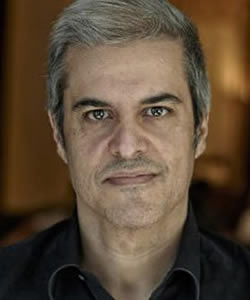
hicham alaoui
Hicham Alaoui is the founder and director of the Hicham Alaoui Foundation, which undertakes innovative social scientific research in the Middle East and North Africa. He is a scholar on the comparative politics of democratization and religion, with a focus on the MENA region.

In the past, he served as a visiting scholar and Consulting Professor at the Center for Democracy, Development and Rule of Law at Stanford University.  He more recently served as postdoctoral fellow and research associate at Harvard University. He was also Regents Lecturer at several campuses of the University of California system. Outside of academia, he has worked with the United Nations in various capacities, such as the peacekeeping mission in Kosovo. He has also worked with the Carter Center in its overseas missions on conflict resolution and democracy advancement. He has served on the MENA Advisory Committee for Human Rights Watch and the Advisory Board of the Carnegie Middle East Center. He served on the board of the Freeman Spogli Institute at Stanford University and has recently joined the Advisory Board of the Weatherhead Center for International Affairs at Harvard.

He holds an A.B. from Princeton University, M.A. from Stanford University, and D.Phil. from the University of Oxford. His latest book is Pacted Democracy in the Middle East: Tunisia and Egypt in Comparative Perspective (Palgrave, 2022). His memoirs, Journal d'un Prince Banni, were published in 2014 by Éditions Grasset, and have since been translated into several languages. He is also co-author with Robert Springborg of The Political Economy of Arab Education (Lynne Rienner, 2021), and co-author with the same colleague on the forthcoming volume Security Assistance in the Middle East: Challenges and the Need for Change (Lynne Rienner, 2023). His academic research has been widely published in various French and English journals, magazines, and newspapers of record.

This event is co-sponsored by ARD, the Abbasi Program in Islamic Studies, and the Center for African Studies at Stanford University.​

Image
ARD and Abbasi Program logos

Image
CAS

Larry Diamond

In-person
Encina Commons Room 123
615 Crothers Way, Stanford, CA

Hicham Alaoui
Lectures
Date Label
-

2022 Sam Dr. Sam-Chung Hsieh Memorial Lecture
Date & Time: Wednesday, September 28, 2022     |    4:30 - 6:00 PM PT 
Location: Green Library, Bing Wing, 5th floor, Bender Room


Overreach and Overreaction: The Downward Spiral in the U.S.-China Relations 

Stanford Libraries and the Stanford Center on China’s Economy and Institutions are pleased to present the 2022 Dr. Sam-Chung Hsieh Memorial Lecture featuring Professor Susan Shirk who will be speaking on Overreach and Overreaction: The Downward Spiral in the U.S.-China Relations.  This is an in-person event.

Why did China abandon its successful foreign policy of restraint and shift toward confrontation and unchecked control over its own society? Surprisingly the shift began under Hu Jintao’s collective leadership (2002-12). Under the personalistic leadership of Xi Jinping the trend has intensified. Those who implement Xi's directives compete to outdo one another, provoking an even greater global backlash. To counter China’s overreach, the worst mistake the rest of the world, and the United States in particular, can make is to overreact. Understanding the domestic political drivers of foreign policy in both countries can help us stem the downward spiral in relations.


About the Speaker

Image
Susan Shirk

Susan Shirk is Chair of the 21st Century China Center and research professor at the UC San Diego School of Global Policy and Strategy. Shirk’s book, China:  Fragile Superpower helped frame the policy debate on China in the U.S. and other countries. Her articles have appeared in leading academic publications in political science, international relations, and China studies. She previously served as deputy assistant secretary of state (1997-2000) responsible for U.S. policy toward China, Taiwan, Hong Kong and Mongolia. She is director emeritus of the UC Institute on Global Conflict and Cooperation and founded the Northeast Asia Cooperation Dialogue, an unofficial forum for discussion of security issues. Shirk is a graduate of Mt. Holyoke College and received her PhD from M.I.T.


The family of Dr. Sam-Chung Hsieh donated his personal archive to the Stanford Libraries' Special Collections and endowed the Dr. Sam-Chung Hsieh Memorial Lecture series to honor his legacy and to inspire future generations. Dr. Sam-Chung Hsieh (1919-2004) was former Governor of the Central Bank in Taiwan. During his tenure, he was responsible for the world's largest foreign exchange reserves, and was widely recognized for achieving stability and economic growth. In his long and distinguished career as economist and development specialist, he held key positions in multilateral institutions including the Asian Development Bank, where as founding Director, he was instrumental in advancing the green revolution and in the transformation of rural Asia. Read more about Dr. Hsieh.


Questions? Contact Sonia Lee from Stanford Libraries 

Green Library, Bing Wing, 5th floor, Bender Room

Susan Shirk University of California San Diego
Lectures
-

A SCCEI Spotlight Speaker Event


Friday, April 22, 2022          6 - 7 PM Pacific Time 
Saturday, April 23, 2022    9 - 10 AM Beijing Time


U.S.-China Relations in the Age of Uncertainty

The US-China relations are entering into an uncertain era. More than any other bilateral relations in the world, the US-China relations are characterized by complexities. The two countries compete in multiple arenas, but the competition takes place in a broad context of mutual dependency and collaborations. The Russian invasion of Ukraine may further unravel US-China relations. This talk will discuss and examine these issues.

This event features Yasheng Huang, Professor of Global Economics and Management at the MIT Sloan School of Management. He is joined by Scott Rozelle, co-director of Stanford Center on China's Economy and Institutions, and Helen F. Farnsworth Senior Fellow at the Freeman Spogli Institute for International Studies (FSI) and the Stanford Institute for Economic Policy Research (SIEPR), who will moderate a discussion about the major themes of the research. A question and answer session with the audience follows the discussion.


About the Speakers
 

Image
Yasheng Huang headshot.
Yasheng Huang is Epoch Foundation Professor of International Management, Professor of Global Economics and Management, and Faculty Director of Action Learning at Sloan School of Management, Massachusetts Institute of Technology. He is currently involved in research projects in three broad areas: 1) political economy of contemporary China, 2) historical technological and political developments in China, and 3) as a co-PI in “Food Safety in China: A Systematic Risk Management Approach” (supported by Walmart Foundation, 2016-). He has published numerous articles in academic journals and in media and 11 books in English and Chinese. His book, The Rise and the Fall of the EAST: Examination, Autocracy, Stability, and Technology in Chinese History and Today, will be published by Yale University Press in 2023.
 

Image
Headshot of Dr. Scott Rozelle
Scott Rozelle is the Helen F. Farnsworth Senior Fellow and the co-director of Stanford Center on China's Economy and Institutions in the Freeman Spogli Institute for International Studies and Stanford Institute for Economic Policy Research at Stanford University.  For the past 30 years, he has worked on the economics of poverty reduction. Currently, his work on poverty has its full focus on human capital, including issues of rural health, nutrition and education. For the past 20 year, Rozelle has been the chair of the International Advisory Board of the Center for Chinese Agricultural Policy, Chinese Academy of Sciences (CAS). Most recently, Rozelle's research focuses on the economics of poverty and inequality, with an emphasis on rural education, health and nutrition in China. In recognition of this work, Dr. Rozelle has received numerous honors and awards. Among them, he became a Yangtse Scholar (Changjiang Xuezhe) in Renmin University of China in 2008. In 2008 he also was awarded the Friendship Award by Premiere Wen Jiabao, the highest honor that can be bestowed on a foreigner.


Questions? Contact Debbie Aube at debbie.aube@stanford.edu


Watch the recording:

Scott Rozelle

Zoom Webinar

Yasheng Huang
Lectures
-
Rethinking Modern Sunni-Shii Relations: The State, Revolution, and Foreign Intervention

What explains the turn towards more politically relevant Sunni and Shii identities in the modern period? How do we account for a shift from Sunni-Shii cooperation against colonialism, for example, or in defense of the Ottoman Caliphate, towards polarisation? This lecture will look especially at the role of the modern state in regulating religion more broadly, coopting certain cultural groups and alienating others, and fostering sharpened sectarian identities. It will also look at the impact of the 1979 revolution in Iran, and reactions towards it, and of foreign intervention, especially the Iraq war of 2003 in sectarianizing the Middle Eastern regional system.

This event is sponsored by the Abbasi Program in Islamic Studies in partnership with the Center for International Security and Cooperation (CISAC) and the Program on Arab Reform and Democracy at CDDRL.

ABOUT THE SPEAKER

Image
Toby Matthieson
Toby Matthiesen is a scholar of Comparative Politics and International Relations with a focus on the Middle East. He is currently a Marie Curie Global Fellow at Stanford University and Ca’ Foscari University in Venice, leading a project on Sunni-Shii Relations in the Middle East.

Toby's aim in research and teaching is to study the Middle East in a global context. His research is characterized by the use of primary sources, archives, fieldwork, and engagement with social science and historiographical debates. He is the author of Sectarian Gulf: Bahrain, Saudi Arabia, and the Arab Spring That Wasn’t (Stanford University Press, 2013), a book on the impact of the Arab Spring on the Gulf States. His second book, The Other Saudis: Shiism, Dissent and Sectarianism (Cambridge University Press, 2015) dealt with the relationship between the Shii community in the Eastern Province and the Saudi state, and with transnational movements and Iran. It is based on fieldwork in Saudi Arabia and the wider region, and hitherto unused Arabic archives.

His forthcoming book, The Caliph and the Imam: The Making of Sunnism and Shiism, is a global history of Sunni-Shii relations and is published by Oxford University Press. Toby's work has also been translated into Arabic and Persian and apart from English, he publishes in German. His other research interests relate to the history of Leftist movements and the use of Islam as anti-Communism during the Cold War.

Encina Commons 123 or online via Zoom

Toby Matthiesen
Lectures
-
China Chats with Stanford Faculty event header by the Stanford Center on China's Economy and Institutions

China Chats with Stanford Faculty 


Friday, May 13, 2022          6 - 7 PM Pacific Time 
Saturday, May 14, 2022    9 - 10 AM Beijing Time


From Education to World Development

Ensuring that every child in the world achieves basic skills is a key development goal emphasized in the UN's Sustainable Development Goals. But how far is the world away from reaching this goal? And what would achieving Sustainable Development Goal 4 mean for world development?  This talk will outline the development of an achievement data base for all of the countries of the world along with estimation of the economic gains from educational improvement. 

This Stanford alumni event will feature Eric Hanushek, the Paul and Jean Hanna Senior Fellow at the Hoover Institution of Stanford University. He will be joined by Scott Rozelle, the Helen F. Farnsworth Senior Fellow and the co-director of Stanford Center on China's Economy and Institutions in the Freeman Spogli Institute for International Studies and Stanford Institute for Economic Policy Research at Stanford University, who will moderate a discussion about the major themes of the research. A question and answer session with the audience will follow the discussion.


About the Speakers
 

Image
Eric Hanushek
Eric Hanushek is the Paul and Jean Hanna Senior Fellow at the Hoover Institution of Stanford University. He has been a leader in the development of economic analysis of educational issues, and he was awarded the Yidan Prize for Education Research in 2021. His widely-cited research spans many policy-related education topics including the economic value of teacher quality, the finance of schools, and the role of education in economic growth. His latest book, The Knowledge Capital of Nations: Education and the Economics of Growth, identifies the close link between the skills of the people and the economic growth of the nation. He has authored or edited 24 books along with over 250 articles. He is a Distinguished Graduate of the United States Air Force Academy and completed his Ph.D. in economics at the Massachusetts Institute of Technology. 


Image
Scott Rozelle
Scott Rozelle is the Helen F. Farnsworth Senior Fellow and the co-director of Stanford Center on China's Economy and Institutions in the Freeman Spogli Institute for International Studies and Stanford Institute for Economic Policy Research at Stanford University.  For the past 30 years, he has worked on the economics of poverty reduction. Currently, his work on poverty has its full focus on human capital, including issues of rural health, nutrition and education. For the past 20 year, Rozelle has been the chair of the International Advisory Board of the Center for Chinese Agricultural Policy, Chinese Academy of Sciences (CAS). Most recently, Rozelle's research focuses on the economics of poverty and inequality, with an emphasis on rural education, health and nutrition in China. In recognition of this work, Dr. Rozelle has received numerous honors and awards. Among them, he became a Yangtse Scholar (Changjiang Xuezhe) in Renmin University of China in 2008. In 2008 he also was awarded the Friendship Award by Premiere Wen Jiabao, the highest honor that can be bestowed on a foreigner.


Questions? Contact Debbie Aube at debbie.aube@stanford.edu


Watch the recording: 

Scott Rozelle

Zoom Webinar

Eric Hanushek Paul and Jean Hanna Senior Fellow at the Hoover Institution Stanford University
Lectures
-

Russian forces invaded Ukraine on February 24, 2022. Why is Ukraine strategically important to Russia and the West? What are the broader global implications of this attack? Join Stanford scholars from the Freeman Spogli Institute for International Studies for a discussion of the military invasion of Ukraine and the policy choices facing the United States, NATO, and their allies.

Panelists include Kathryn Stoner, the Mosbacher Director of the Center for Democracy, Development and the Rule of Law and senior fellow at the Freeman Spogli Institute for International Studies (FSI), Steve Pifer, the William J. Perry Fellow at the Center for International Security and Cooperation (CISAC) and a former U.S. ambassador to Ukraine, Rose Gottemoeller, the Steven C. Házy Lecturer at CISAC and a former deputy secretary-general of NATO, and Andriy Kohut, Director of the Sectoral State Archive of the Security Service of Ukraine and visiting scholar at the Stanford Center for Russian, East European and Eurasian Studies.

Scott Sagan, co-director of CISAC, senior fellow at FSI, and the Caroline S.G. Munro Professor of Political Science will moderate.

This event is co-sponsored by the Center on Democracy, Development and the Rule of Law (CDDRL), the Center for International Security and Cooperation (CISAC), and the Freeman Spogli Institute for International Studies (FSI).

Scott D. Sagan


In-person attendance is limited to Stanford affiliates only.
Attendance by Zoom is open to the public.

Oksenberg Conference Room
Encina Hall, Third Floor, Central
616 Jane Stanford Way, Stanford, CA 94305

FSI
Stanford University
Encina Hall C140
Stanford, CA 94305-6055

(650) 736-1820 (650) 724-2996
0
Satre Family Senior Fellow, Freeman Spogli Institute for International Studies
kathryn_stoner_1_2022_v2.jpg MA, PhD

Kathryn Stoner is the Mosbacher Director of the Center on Democracy, Development, and the Rule of Law (CDDRL), and a Senior Fellow at CDDRL and the Center on International Security and Cooperation at FSI. From 2017 to 2021, she served as FSI's Deputy Director. She is Professor of Political Science (by courtesy) at Stanford and she teaches in the Department of Political Science, and in the Program on International Relations, as well as in the Ford Dorsey Master's in International Policy Program. She is also a Senior Fellow (by courtesy) at the Hoover Institution.

Prior to coming to Stanford in 2004, she was on the faculty at Princeton University for nine years, jointly appointed to the Department of Politics and the Princeton School for International and Public Affairs (formerly the Woodrow Wilson School). At Princeton she received the Ralph O. Glendinning Preceptorship awarded to outstanding junior faculty. She also served as a Visiting Associate Professor of Political Science at Columbia University, and an Assistant Professor of Political Science at McGill University. She has held fellowships at Harvard University as well as the Woodrow Wilson Center in Washington, DC. 

In addition to many articles and book chapters on contemporary Russia, she is the author or co-editor of six books: "Transitions to Democracy: A Comparative Perspective," written and edited with Michael A. McFaul (Johns Hopkins 2013);  "Autocracy and Democracy in the Post-Communist World," co-edited with Valerie Bunce and Michael A. McFaul (Cambridge, 2010);  "Resisting the State: Reform and Retrenchment in Post-Soviet Russia" (Cambridge, 2006); "After the Collapse of Communism: Comparative Lessons of Transitions" (Cambridge, 2004), coedited with Michael McFaul; and "Local Heroes: The Political Economy of Russian Regional" Governance (Princeton, 1997); and "Russia Resurrected: Its Power and Purpose in a New Global Order" (Oxford University Press, 2021).

She received a BA (1988) and MA (1989) in Political Science from the University of Toronto, and a PhD in Government from Harvard University (1995). In 2016 she was awarded an honorary doctorate from Iliad State University, Tbilisi, Republic of Georgia.

Download full-resolution headshot; photo credit: Rod Searcey.

Mosbacher Director, Center on Democracy, Development and the Rule of Law
Professor of Political Science (by courtesy), Stanford University
Senior Fellow (by courtesy), Hoover Institution
CV
Date Label

Center for International Security and Cooperation
Encina Hall
616 Jane Stanford Way
Stanford University
Stanford, CA 94305-6165

0
William J. Perry Lecturer, Freeman Spogli Institute for International Studies
Research Fellow at the Hoover Institution
dsg_gottemoeller.jpg

Rose Gottemoeller is the William J. Perry Lecturer at Stanford University's Freeman Spogli Institute for International Studies and Research Fellow at the Hoover Institute.

Before joining Stanford, Gottemoeller was the Deputy Secretary General of NATO from 2016 to 2019, where she helped to drive forward NATO’s adaptation to new security challenges in Europe and in the fight against terrorism.  Prior to NATO, she served for nearly five years as the Under Secretary for Arms Control and International Security at the U.S. Department of State, advising the Secretary of State on arms control, nonproliferation and political-military affairs. While Assistant Secretary of State for Arms Control, Verification and Compliance in 2009 and 2010, she was the chief U.S. negotiator of the New Strategic Arms Reduction Treaty (New START) with the Russian Federation.

Prior to her government service, she was a senior associate with the Carnegie Endowment for International Peace, with joint appointments to the Nonproliferation and Russia programs. She served as the Director of the Carnegie Moscow Center from 2006 to 2008, and is currently a nonresident fellow in Carnegie's Nuclear Policy Program.  

At Stanford, Gottemoeller teaches and mentors students in the Ford Dorsey Master’s in International Policy program and the CISAC Honors program; contributes to policy research and outreach activities; and convenes workshops, seminars and other events relating to her areas of expertise, including nuclear security, Russian relations, the NATO alliance, EU cooperation and non-proliferation. 

Date Label
Andriy Kohut
Lectures
-
S.T. Lee Lecture with Emmanuel Gyimah-Boadi

2022 S.T. LEE LECTURE

In the 1990s and early 2000s, most West African nations embarked on transitions to democratic governance. In the ensuing decade, the sub-region enjoyed relative peace and material progress. Unfortunately, these gains in democratization are being eroded. The lecture contends that democratic reforms at the turn of the 21st century were key drivers of the subsequent sanguine political, social, and economic conditions in the ECOWAS group; that popular attitudes in today’s West African societies are largely anti-autocratic; and that therefore the unfolding retreat from democratic governance in nations across the sub-region portends ill for their overall stability and material prosperity in the 2020s and beyond. The lecture proposes measures to arrest the democratic recession in West African nations to prevent economic decline, social unrest, and political implosion.

The S.T. Lee Lectureship is named for Seng Tee Lee, a business executive and noted philanthropist. Dr. Lee is the director of the Lee group of companies in Singapore and of the Lee Foundation.

Dr. Lee endowed the annual lectureship at the Freeman Spogli Institute for International Studies in order to raise public understanding of the complex policy issues facing the global community today and to increase support for informed international cooperation. The S.T. Lee Distinguished Lecturer is chosen for his or her international reputation as a leader in international political, economic, social, and health issues and strategic policy-making concerns.

ABOUT THE SPEAKER

Image
Gyimah-Boadi.jpg

E. Gyimah-Boadi is co-founder and board chair of Afrobarometer, the pan-African survey research network and global reference point for high-quality data on African democracy, governance, and quality of life. He is also co-founder and former executive director of the Ghana Center for Democratic Development, a leading independent democracy and good-governance think tank. A former professor in the Department of Political Science at the University of Ghana, he has also held faculty positions at several universities in the United States, including the American University’s School of International Service, as well as fellowships at Queen Mary University; the Center for Democracy, Rule of Law and Development at Stanford University; the Woodrow Wilson International Center for Scholars; and the International Forum for Democratic Studies at the National Endowment for Democracy.

A graduate of the University of California (Davis) and University of Ghana (Legon), Gyimah-Boadi is a fellow of the National Academy of Sciences (U.S.) and the Ghana Academy of Arts and Sciences. For his contributions to research and policy advocacy on democracy, accountable governance, and human rights, he has won a myriad of awards, including the Distinguished Africanist of the Year Award of the African Studies Association (2018); the Martin Luther King, Jr. Award for Peace and Social Justice (2017); and one of the Republic of Ghana’s highest honors, the Order of Volta (2008). He was named one of New African Magazine’s “100 Most Influential Africans of 2021.”

Larry Diamond
Emmanuel Gyimah-Boadi Chair, Afrobarometer Chair, Afrobarometer Chair, Afrobarometer
Lectures
Date Label
-

Join the REDI Task Force for an invigorating keynote speech by Professor Tracey L. Meares, weaving together the past and present linkages between racial inequality and the law.

Safety and security are critical building blocks of community vitality, but too often the state’s response to safety — especially in race-class subjugated communities — is to assume that armed first responders are coincident with public safety. This response is wrong both normatively and empirically, but it does not mean that the state ought to retreat from its obligation to address safety deprivation.  This lecture will focus on the concept of “the police power,” which has a long history outside the policing service, and what it might mean to rethink it.
 

This online event is free and open to the public.


Image
image of Tracey L. Meares

Speaker bio:

Tracey L. Meares is the Walton Hale Hamilton Professor and a Founding Director of the Justice Collaboratory at Yale Law School. Before joining the faculty at Yale, she was a professor at the University of Chicago Law School from 1995 to 2007, serving as Max Pam Professor and Director of the Center for Studies in Criminal Justice. She was the first African American woman to be granted tenure at both law schools.

Professor Meares is a nationally recognized expert on policing in urban communities. Her research focuses on understanding how members of the public think about their relationship(s) with legal authorities such as police, prosecutors and judges. She teaches courses on criminal procedure, criminal law, and policy and she has worked extensively with the federal government having served on the National Academy of Sciences Committee on Law and Justice, a National Research Council standing committee and the U.S. Department of Justice, Office of Justice Programs Science Advisory Board.

In April 2019, Professor Meares was elected as a member to the American Academy of Arts and Sciences. In December 2014, President Obama named her as a member of his Task Force on 21st Century Policing. She has a B.S. in general engineering from the University of Illinois and a J.D. from the University of Chicago Law School.

Zoom Registration required:

REGISTER

Tracey L. Meares Walton Hale Hamilton Professor of Law and Founding Director of The Justice Collaboratory Speaker Yale University
Lectures
-

Image
Utibe R. Essien Gives Health Equity Lecture at Stanford Health Policy

Utibe R. Essien, MD, MPH, is an Assistant Professor of Medicine, University of Pittsburgh School of Medicine, a general internist and health disparities researcher in the VA Pittsburgh Center for Health Equity Research and Promotion. Dr. Essien’s research focuses on racial disparities in the use of novel therapeutics in the management of chronic diseases including atrial fibrillation and was recently awarded a 5-year, $1 million Career Development Award from the Department of Veterans Affairs. He has applied his health equity research framework to the COVID-19 pandemic, rapidly becoming an expert in examining the disparities that disproportionately affect minority communities with COVID-19. His work has been featured in leading medical journals including JAMA and the NEJM and he has been interviewed by several national news outlets including the New York Times, Washington Post, and NPR. Dr. Essien is a fierce advocate for diversity and equity in medicine, speaking nationally on the topic and co-founding an “Antiracism in Medicine” podcast for the Clinical Problem Solvers podcast. Dr. Essien's leadership in advancing health equity has resulted in several local and national awards including the 2021 AAMC Herbert Nickens Award.

You are invited to a Zoom meeting. 

When: Mar 11, 2022 12:00 PM Pacific Time (US and Canada)
 

Registration

After registering, you will receive a confirmation email containing information about joining the meeting.


Lectures
-

Robert G. Wesson Lecture Series in International Relations Theory and Practice

As a Venezuelan, Leopoldo López lived through the gradual deterioration of what was once a regional reference for democracy into an authoritarian regime that has created the worst humanitarian and migration crisis in the Western Hemisphere. Venezuela is a clear example of how democracy could lose the battle against autocracy.

Unfortunately, the fight for freedom is no longer an issue to be solved only among Venezuelans. In fact, our conflict has become, like many others around the world, part of the global conflict between autocracy and democracy.

Autocracy in its different forms is spreading and constitutes a diverse but articulated movement around the world. To face this situation, new forms of organizations and democratic leadership must be promoted and empowered as an effective way to revert this new wave of autocracies. It is essential to create a synergy between effective local leadership, a comprehensive narrative and the use of new technologies that set up a range of possibilities to promote freedom.

The Wesson Lectureship was established at Stanford by the Freeman Spogli Institute for International Studies in 1989. It provides support for a public address at the university by a prominent scholar or practicing professional in the field of international relations. The series is made possible by a gift from the late Robert G. Wesson, a scholar of international affairs, prolific author, and senior research fellow at the Hoover Institution.

In establishing the series, Dr. Wesson stated his hope that the lectures would stimulate increased commitment to the study of international relations in a context that would enable students to understand the importance of developing practical policies within a theoretical and analytical framework. Previous Wesson Lecturers have included such distinguished speakers as McGeorge Bundy, Willi DeClerq, Condoleezza Rice, Mikhail Gorbachev, Fernando Henrique Cardoso, and Mary Robinson.
 

ABOUT THE SPEAKER

Image
Leopoldo Lopez
Leopoldo López is a Venezuelan political leader, pro-democracy activist and Sakharov prize laureate. He is the founder and national coordinator of the Voluntad Popular political party.

López received a Bachelor's degree cum laude in sociology and economics from Kenyon College, and a Master´s degree in public policy from the John F. Kennedy School of Government at Harvard University. He was awarded a honoris causa doctorate in Law from Kenyon College in 2007.

Leopoldo López was elected mayor of the municipality of Chacao in Caracas in 2000 and he finished his second term with a 92% approval rate. He also won third place at the World Mayor Awards and the 2007 and 2008 “Premio Transparencia”, awarded by Transparency International.

In 2014 he was unjustly detained by the Maduro regime and was sentenced to 14 years of imprisonment. He spent four years in a military prison, a year and a half in house arrest and another year and a half in the Spanish embassy in Caracas under political asylum. He was recognized by Amnesty International as a prisoner of conscience. Also, in 2015 his detention was declared arbitrary by the UN.

In October 2020, López escaped from Venezuela through Colombia to join his family in Spain. It was the first time in seven years that he was able to be with his family in freedom. In his exile, López continues his fight for Venezuela´s democracy and freedom.

López has received several international awards for his fight for democracy and freedom in Venezuela. Among them, he was honored with the 2014 Harvard alumni achievement award, the NED´S 2013 Democracy Award, the 2016 Geneva Summit Courage Award and the 2017 Sakharov Prize for Freedom and Thought.

Hybrid event: Online via Zoom, and in-person in Bechtel Conference Center

Leopoldo López Freedom Activist from Venezuela
Lectures
Date Label
Subscribe to Lectures