-

* Please note all CISAC events are scheduled using the Pacific Time Zone.


Seminar Recording:  https://youtu.be/-hERfg-DCYw


About the Event: 

This presentation explores two topics at the nexus of technology and international security: interstate influence operations and technological revolutions.

After Russian interference in the 2016 U.S. election, influence operations have become a central focus among American policymakers, foreign policy pundits, and publics alike. Yet, Goldstein argues that they remain under-explored and under-theorized in international security studies, with disagreement over how to define the phenomenon implicit in the existing literature. Goldstein will introduce a conceptual framework for foreign influence operations and argue that security studies scholars should pay greater attention to the subject for two reasons. First, they are policy-relevant and likely to remain so; they are cost effective, propagandists are prone to inflate their impact, and they are difficult to deter. Second, studying influence operations can contribute to the academic discipline of security studies by helping to expand restrictive notions of state power and challenge dominant models of foreign policy decision-making.

How do emerging technologies affect the rise and fall of great powers? Scholars have long observed that rounds of technological revolution disrupt the economic balance of power, bringing about a power transition in the international system. However, there has been limited investigation of how this process occurs. The standard explanation emphasizes a country’s ability to dominate innovation in leading sectors, seizing monopoly profits in new, fast-growing industries centered around major technological breakthroughs. Investigating historical cases of industrial revolutions followed by economic power transitions, Ding will present an alternative mechanism based on the diffusion of general-purpose technologies. The findings have direct implications for how recent breakthroughs in artificial intelligence could affect the U.S.-China power balance.


About the Speakers: 

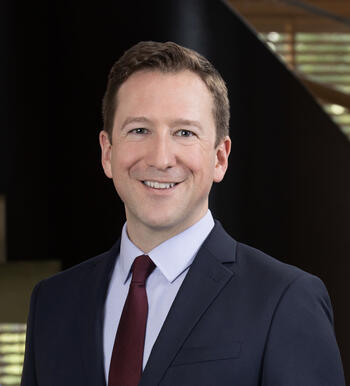
Jeffrey Ding is a Ph.D. candidate in the Department of Politics and International Relations at the University of Oxford. Jeffrey’s current research is centered on how technological change affects the rise and fall of great powers. Through investigating historical cases of industrial revolutions, Jeffrey traces causal mechanisms that connect significant technical breakthroughs and economic power transitions — with an eye toward the implications of advances in AI for a possible U.S.-China power transition. Jeffrey’s previous research covered related topics, including China's development of AI, identifying strategic goods and technologies, and technical standards as a vehicle of AI governance.


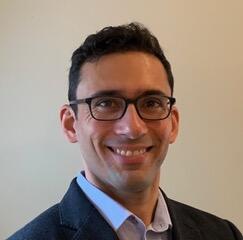
Josh A. Goldstein is a PhD Candidate and Clarendon Scholar in the Department of Politics and International Relations at the University of Oxford. For the 2020-2021 year, he is a pre-doctoral fellow with the Stanford Internet Observatory and part of the inaugural class of non-resident Hans J. Morgenthau Fellows at the Notre Dame International Security Center. Josh’s 3-paper doctoral dissertation takes a multi-method approach to studying the challenges that democracies face from influence operations. His broader research interests lie in international security, political psychology, and foreign policy-decision making.


Virtual Seminar

0
Postdoctoral Fellow, Stanford Internet Observatory (2021-2022)
Predoctoral Fellow, Stanford Internet Observatory (2020-2021)
Josh-Goldstein.jpeg

Josh A. Goldstein is a past postdoctoral scholar at the Stanford Internet Observatory. He received his PhD in International Relations from the University of Oxford, where he studied as a Clarendon Scholar. At the Stanford Internet Observatory, Dr. Goldstein investigated covert influence operations on social media platforms, studied the effects of foreign interference on democratic societies, and explored how emerging technologies will impact the future of propaganda campaigns. He has given briefings to the Department of Defense, the State Department, and senior technology journalists based on this work, and published in outlets including Brookings, Lawfare, and Foreign Policy.

Prior to joining SIO, Dr. Goldstein received an MPhil in International Relations at Oxford with distinction and a BA in Government from Harvard College, summa cum laude. He also assisted with research and writing related to international security at the Belfer Center, Brookings Institution, House Foreign Affairs Committee, and Department of Defense.

0
ding.png

Jeff is an Assistant Professor of Political Science at George Washington University. Previously, he was a postdoctoral fellow at Stanford's Center for International Security and Cooperation, sponsored by Stanford's Institute for Human-Centered Artificial Intelligence. His research agenda centers on technological change and international politics. His book project investigates how past technological revolutions influenced the rise and fall of great powers, with implications for U.S.-China competition in emerging technologies like AI. Other research papers tackle how states should identify strategic technologies, assessments of national scientific and technological capabilities, and interstate cooperation on nuclear safety and security technologies. Jeff's work has been published in Foreign Affairs, Security Studies, The Washington Post, and other outlets. Jeff received his PhD in 2021 from the University of Oxford, where he studied as a Rhodes Scholar. He has also worked as a researcher for Georgetown's Center for Security and Emerging Technology and the Centre for the Governance of AI at the University of Oxford.

Affilate
Seminars
-

About the Event: 

Political violence is rising in the United States, alarming citizens and leaders alike. How many Americans endorse partisan violence and other forms of extreme hostility? What are its deep social, political, historical, and psychological roots? What can be done about it? And what does it mean for democracy? 

In this talk, Drs. Mason and Kalmoe make sense of our contentious politics with a groundbreaking study of radicalism among ordinary American partisans. Their individual-level studies utilize more than a dozen new nationally representative surveys and experiments to trace recent trends since 2017, reactions to elections and violent events, broader conditions that spur support for violence, links from violence attitudes to aggressive behavior, and the role of leaders in enflaming or pacifying their followers.

The results reshape the study of modern American political behavior by showing that ordinary partisanship is far more volatile than scholars have recognized in the past century of study.  


About the Speaker(s)

Image
Nathan Kalmoe
Dr. Nathan P. Kalmoe is an associate professor of political communication at Louisiana State University in the Manship School of Mass Communication and Department of Political Science. He is the author of With Ballots & Bullets: Partisanship & Violence in the American Civil War and co-author of Neither Liberal nor Conservative: Ideological Innocence in the American Public. He has also written essays for The Washington Post and Politico, and his work has been featured in The New York Times, The Atlantic, and Vox, among other popular outlets.


Image
Lillilana Mason
Lilliana Mason is associate professor of Government and Politics at the University of Maryland, College Park, and author of Uncivil Agreement: How Politics Became Our Identity (University of Chicago Press). Her research on partisan identity, partisan bias, social sorting, and American social polarization has been published in journals such as American Political Science Review, American Journal of Political Science, Public Opinion Quarterly, and Political Behavior, and featured in media outlets including the New York Times, the Washington Post, CNN, and National Public Radio.


Online, via Zoom:  REGISTER

Dr. Nathan P. Kalmoe Associate Professor of Political Communication, Louisiana State University
Lilliana Mason Associate professor of Government and Politics at the University of Maryland, College Park
Seminars
-

This is a virtual event. Please click here to register and generate a link to the talk. 
The link will be unique to you; please save it and do not share with others.

How can the U.S. best manage its relationship with China? The country is at once a major and increasingly hostile competitor to the U.S., a formidable challenger to U.S.’ regional and global leadership, and an important partner on a range of transnational challenges. Will it be possible for both sides to coexist amidst intensifying competition? How great is the risk of US-China conflict, including over Taiwan? Ryan Hass, author of Stronger: Adapting America’s China Strategy in an Age of Competitive Interdependence, will address these questions and more in opening comments before engaging in an open Q&A on the future of the world’s most consequential bilateral relationship.


Image
Portrait of Ryan Hass
Ryan Hass is a senior fellow and the Michael H. Armacost Chair in the Foreign Policy program at Brookings, where he holds a joint appointment to the John L. Thornton China Center and the Center for East Asia Policy Studies. He is also the Interim Chen-Fu and Cecilia Yen Koo Chair in Taiwan Studies. Hass focuses his research and analysis on enhancing policy development on the pressing political, economic, and security challenges facing the United States in East Asia. He is the author of Stronger: Adapting America’s China Strategy in an Age of Competitive Interdependence, published by Yale University Press.

Image
"Stronger" Book Cover
From 2013 to 2017, Hass served as the director for China, Taiwan and Mongolia at the National Security Council (NSC) staff. In that role, he advised President Obama and senior White House officials on all aspects of U.S. policy toward China, Taiwan, and Mongolia, and coordinated the implementation of U.S. policy toward this region among U.S. government departments and agencies. He joined President Obama’s state visit delegations in Beijing and Washington respectively in 2014 and 2015, and the president’s delegation to Hangzhou, China, for the G-20 in 2016, and to Lima, Peru, for the Asia-Pacific Economic Cooperation (APEC) Leaders Meetings in 2016. Prior to joining NSC, Hass served as a Foreign Service Officer in U.S. Embassy Beijing, where he earned the State Department Director General’s award for impact and originality in reporting. Hass also served in Embassy Seoul and Embassy Ulaanbaatar, and domestically in the State Department Offices of Taiwan Coordination and Korean Affairs. 


Image
American and Chinese flags
This event is part of the 2021 Winter/Spring Colloquia series, Biden’s America, Xi’s China: What’s Now & What’s Next?, sponsored by APARC's China Program.


Via Zoom Webinar. Register at: https://bit.ly/3c3v10W

Ryan Hass Senior Fellow, Michael H. Armacost Chair in Foreign Policy Studies, Brookings Institution
Seminars
-

About the Speaker:

Image
Stephen Krasner
Stephen Krasner is the Graham H. Stuart Professor of International Relations. A former director of CDDRL, Krasner is also an FSI senior fellow, and a fellow of the Hoover Institution.

From February 2005 to April 2007 he served as the Director of Policy Planning at the US State Department. While at the State Department, Krasner was a driving force behind foreign assistance reform designed to more effectively target American foreign aid. He was also involved in activities related to the promotion of good governance and democratic institutions around the world.

At CDDRL, Krasner was the coordinator of the Program on Sovereignty. His work has dealt primarily with sovereignty, American foreign policy, and the political determinants of international economic relations. Before coming to Stanford in 1981 he taught at Harvard University and UCLA. At Stanford, he was chair of the political science department from 1984 to 1991, and he served as the editor of International Organization from 1986 to 1992.

He has been a fellow at the Center for Advanced Studies in the Behavioral Sciences (1987-88) and at the Wissenschaftskolleg zu Berlin (2000-2001). In 2002 he served as director for governance and development at the National Security Council. He is a fellow of the American Academy of Arts and Sciences and a member of the Council on Foreign Relations.

Online, via Zoom:  REGISTER

CDDRL
Stanford University
Encina Hall
Stanford, CA 94305-6055

(650) 723-0676 (650) 724-2996
0
Senior Fellow at the Freeman Spogli Institute for International Studies, Emeritus
Graham H. Stuart Professor of International Relations
Senior Fellow at the Hoover Institution, Emeritus
krasner.jpg MA, PhD

Stephen Krasner is the Graham H. Stuart Professor of International Relations. A former director of CDDRL, Krasner is also an FSI senior fellow, and a fellow of the Hoover Institution.

From February 2005 to April 2007 he served as the Director of Policy Planning at the US State Department. While at the State Department, Krasner was a driving force behind foreign assistance reform designed to more effectively target American foreign aid. He was also involved in activities related to the promotion of good governance and democratic institutions around the world.

At CDDRL, Krasner was the coordinator of the Program on Sovereignty. His work has dealt primarily with sovereignty, American foreign policy, and the political determinants of international economic relations. Before coming to Stanford in 1981 he taught at Harvard University and UCLA. At Stanford, he was chair of the political science department from 1984 to 1991, and he served as the editor of International Organization from 1986 to 1992.

He has been a fellow at the Center for Advanced Studies in the Behavioral Sciences (1987-88) and at the Wissenschaftskolleg zu Berlin (2000-2001). In 2002 he served as director for governance and development at the National Security Council. He is a fellow of the American Academy of Arts and Sciences and a member of the Council on Foreign Relations.

His major publications include Defending the National Interest: Raw Materials Investment and American Foreign Policy (1978), Structural Conflict: The Third World Against Global Liberalism (1985), Sovereignty: Organized Hypocrisy (1999), and How to Make Love to a Despot (2020). Publications he has edited include International Regimes (1983), Exploration and Contestation in the Study of World Politics (co-editor, 1999),  Problematic Sovereignty: Contested Rules and Political Possibilities (2001), and Power, the State, and Sovereignty: Essays on International Relations (2009). He received a BA in history from Cornell University, an MA in international affairs from Columbia University and a PhD in political science from Harvard.

CV
The Graham H. Stuart Professor of International Relations. A former director of CDDRL, Krasner is also an FSI senior fellow, and a fellow of the Hoover Institution
Seminars
-

About the Event:  Decentralization and community-driven development programs have become increasingly common policies to attempt to improve the distribution of public goods across low- and middle-income countries. We study a series of reforms in the city of Delhi that decentralized the administration of discretionary school-level budgets to elected bodies of parents. We find that parents have preferences for representatives that are substantially more educated than them and discriminate against Muslims. Parents act on these preferences when given the opportunity to elect SMC members. They elect parents that are wealthier and more educated and are also of higher status. The paper provides empirical evidence to the question of under what conditions decentralization leads to elite capture. When bureaucrats have a stronger say in the selection of representatives, budgets are captured to reflect the preferences of state representatives, rather than constituents.


Image
Emmerich Davies
About the Speaker:  Emmerich Davies is an Assistant Professor of Education at the Harvard Graduate School of Education, a Faculty Associate at the Weatherhead Center for International Affairs and Center for International Development, and a co-convener of the Brown-Harvard-M.I.T. Joint Seminar on South Asian Politics. He studies the political economy of education with a regional focus on South Asia. His work has been published in Comparative Political Studies and Governance. He received his Ph.D. and M.A. in political science from the University of Pennsylvania, and his B.A. in political science and economics from Stanford University.

Online, via Zoom:  REGISTER

Emmerich Davies Assistant Professor of Education at the Harvard Graduate School of Education
Seminars
-

* Please note all CISAC events are scheduled using the Pacific Time Zone.


Seminar Recording:  https://youtu.be/Mwjn39S48rE


About the Event: NATO Secretary General Stoltenberg will speak about how the transatlantic alliance is adapting to change in this turbulent period.  President Biden has clearly signaled that he is resolved to reach out to the NATO allies, working to repair the trans-Atlantic bond. To strengthen the bond between America and Europe and prepare the alliance for the future, the Secretary General has launched the NATO 2030 initiative.  This includes proposals on how NATO can better harness technology and innovation, tackle the security implications of climate change, and help make our societies more resilient. While NATO must continue to deter and defend against Russia, it is also keeping channels open to Moscow. The rise of China presents both challenges and opportunities that NATO has started to address. And missions in Afghanistan and Iraq are on the cusp of change, with decisions underway about what role NATO will play in the future. All in all, an exciting time to hear from NATO’s Secretary General.

This event is co-sponsored with The Europe Center.


About the Speaker: 

Jens Stoltenberg became NATO Secretary General in October 2014, following a distinguished international and domestic career. As a former Prime Minister of Norway and UN Special Envoy, Mr. Stoltenberg has been a strong supporter of greater global and transatlantic cooperation. Mr. Stoltenberg’s mandate as NATO Secretary General has been extended until the end of September 2022.

Under Mr. Stoltenberg’s leadership, NATO has responded to a more challenging security environment by implementing the biggest reinforcement of its collective defence since the Cold War, increasing the readiness of its forces and deploying combat troops in the eastern part of the Alliance. He believes in credible deterrence and defence while maintaining dialogue with Russia. He has also advocated for increased defence spending and better burden sharing within the Alliance, and a greater focus on innovation. NATO has also stepped up its efforts in the fight against terrorism. He strongly supports a partnership approach, with cooperation between NATO and the European Union reaching unprecedented levels.

Before coming to NATO, he was the UN Special Envoy on Climate Change from 2013 to 2014. He has also chaired UN High-level Panels on climate financing and the coherence between development, humanitarian assistance and environmental policies.

As Prime Minister of Norway, Mr. Stoltenberg increased the defence spending and transformed the Norwegian armed forces with new high-end capabilities and investments. He also signed an agreement with Russia on establishing maritime borders in the Barents and Polar Sea, ending a 30-years dispute.

Mr. Stoltenberg was also Prime Minister during the deadly terrorist attacks, which killed 77 people in Oslo and Utøya on 22 July 2011, urging in response, “more democracy, more openness, and more humanity, but never naïvete”.

Mr Stoltenberg holds a postgraduate degree in Economics from the University of Oslo. After graduating in 1987, he held a research post at the National Statistical Institute of Norway, before embarking on a career in Norwegian politics.

  • 2005-2013: Prime Minister of Norway
  • 2002-2014: Leader of the Norwegian Labor Party
  • 2000-2001: Prime Minister of Norway
  • 1996-1997: Minister of Finance
  • 1993-1996: Minister of Industry and Energy
  • 1991-2014: Member of Parliament
  • 1990-1991: State Secretary at the Ministry of the Environment
  • 1985-1989: Leader of the Norwegian Labour Youth

Jens Stoltenberg was born in Oslo on 16 March 1959. He is married to Ingrid Schulerud. They have two grown-up children.

Virtual Seminar

Jens Stoltenberg Secretary General NATO
Seminars
-

China Chats with Stanford Faculty

"Invisible China: How the Urban-Rural Divide Threatens China's Rise"

Friday, March 12, 2021 5 PM - 6 PM PDT

Saturday, March 13, 2021 9 AM - 10 AM Beijing


As the glittering skyline in Shanghai seemingly attests, China has quickly transformed itself from a place of stark poverty into a modern, urban, technologically savvy economic powerhouse. But as FSI Senior Fellow Scott Rozelle shows in his new book Invisible China, the truth is much more complicated and might be a serious cause for concern. 

Drawing on extensive surveys on the ground in China, Rozelle reveals that while China may be the second-largest economy in the world, its labor force has one of the lowest levels of education of any comparable country. The low levels of basic education of such a large share of workers may leave many unable to find work in the formal workplace as China’s economy changes and as manufacturing jobs both begin to automate and move elsewhere 

In this Stanford alumni event, Rozelle, who is also the co-director of Stanford Center on China's Economy and Institutions and senior fellow at the Freeman Spogli Institute for International Studies, will be joined by Hongbin Li, co-director of Stanford Center on China's Economy and Institutions and senior fellow at the Stanford Institute for Economic Policy Research, who will moderate a discussion about the major themes of the book. 

A question and answer session with the audience will follow the discussion.


About the Speakers:

Image
Headshot of Dr. Scott Rozelle
Scott Rozelle is the Helen F. Farnsworth Senior Fellow and the co-director of Stanford Center on China's Economy and Institutions in the Freeman Spogli Institute for International Studies and Stanford Institute for Economic Policy Research at Stanford University.  For the past 30 years, he has worked on the economics of poverty reduction. Currently, his work on poverty has its full focus on human capital, including issues of rural health, nutrition and education. For the past 20 year, Rozelle has been the chair of the International Advisory Board of the China Center for Agricultural Policy in Peking University. In recent years Rozelle spends most of his time co-directing the Rural Education Action Project (REAP). In recognition of this work, Dr. Rozelle has received numerous honors and awards. Among them, he became a Yangtse Scholar (Changjiang Xuezhe) in Renmin University of China in 2008. In 2008 he also was awarded the Friendship Award by Premier Wen Jiabao, the highest honor that can be bestowed on a foreigner. 


Image
hongbin li headshot
Hongbin Li is the James Liang Director of the China Program at the Stanford King Center on Global Development, and a Senior Fellow of Stanford Institute for Economic Policy Research (SIEPR). Hongbin’s research has been focused on the transition and development of the Chinese economy, and the evidence-based research results have been both widely covered by media outlets and well read by policy makers around the world. He is currently the co-editor of the Journal of Comparative Economics.


Register Here

Zoom Webinar
Registration Required


Seminars
-

About the Event:   The number of Americans arrested, brought to court, and incarcerated has skyrocketed in recent decades. Criminal defendants come from all races and economic walks of life, but they experience punishment in vastly different ways. How and why is the court process unequal? This talk draws on findings from my book Privilege and Punishment: How Race and Class Matter in Criminal Court (Princeton University Press, November 2020). Drawing on fieldwork and interviews in the Boston court system, I show that lawyers and judges often silence, coerce, and punish disadvantaged defendants when they try to learn their legal rights and advocate for themselves. These dynamics reveal how unwritten institutional norms devalue the exercise of legal rights among the disadvantaged, and that ensuring effective legal representation is no guarantee of justice. Drawing on other research and activism on the courts as a tool of racialized social control, I conclude with reflections on the democratic potential and possibilities of criminal court abolition.  


Image
Matthew Clair
About the Speaker:  Dr. Matthew Clair is Assistant Professor in the Department of Sociology and (by courtesy) the Law School. His research examines the law, culture, and inequality. Dr. Clair's research has been published in Criminology, Law & Social Inquiry, Social Science & Medicine, and Social Forces and has been supported by the National Science Foundation and the American Society of Criminology. He has received awards from the American Sociological Association, the American Society of Criminology, the Law & Society Association, and the Society for the Study of Social Problems. His first book Privilege and Punishment: How Race and Class Matter in Criminal Court was published by Princeton University Press in November 2020.


Online, via Zoom:  REGISTER

Matthew Clair Assistant Professor in the Department of Sociology and (by courtesy) at Stanford Law School
Seminars
-


Which has more of a “single market,” the United States or the European Union, and why? Most scholars and policy-makers will expect easy answers. Surely interstate exchange faces fewer regulatory barriers in the fluid American arena than between European countries. We argue that this common wisdom profoundly mischaracterizes both polities. The US never attempted to complete a project remotely like Europe’s SMP. Europeans have now removed or mitigated a lengthening list of barriers that Americans retain. Across the “four freedoms” of goods, services, persons and capital, today’s EU unambiguously claims and actively exercises more authority to require interstate openness than the US has ever considered. Existing explanations that privilege economic flows, institutional path dependence, or cultural attitudes struggle with these actual outcomes. Our explanation highlights contingent connections that political movements in each arena forged between ideas about markets and governance, channeling the 20th-century “return to markets” into contrasting varieties of neoliberalism.


Image
Matthias Matthijs


Matthias Matthijs is Associate Professor of International Political Economy at Johns Hopkins University’s School of Advanced International Studies (SAIS) and Senior Fellow for Europe at the Council on Foreign Relations (CFR) in Washington, DC. Since May 2019, he also serves as the chair of the Executive Committee of the European Union Studies Association (EUSA). He is the author of Ideas and Economic Crises in Britain (2012) and co-editor (with Mark Blyth) of The Future of the Euro (2015). He has published numerous peer-reviewed articles in the fields of comparative and international political economy, on the politics of economic ideas, and on European integration. He is currently working on a book-length project that delves into the fall and rise of national elite consensus around European integration.

Online via Zoom

Matthias Matthijs speaker Johns Hopkins University (SAIS)
Seminars
-

This is a virtual event. Please click here to register and generate a link to the talk. 
The link will be unique to you; please save it and do not share with others.


This event is co-sponsored by the Center on Democracy, Development, and the Rule of Law.

How does autocratic lobbying affect political outcomes and media coverage in democracies? This talk focuses on a dataset drawn from the public records of the US Foreign Agents Registration Act. It includes over 10,000 lobbying activities undertaken by the Chinese government between 2005 and 2019. The evidence suggests that Chinese government lobbying makes legislators at least twice as likely to sponsor legislation that is favorable to Chinese interests. Moreover, US media outlets that participated in Chinese-government sponsored trips subsequently covered China as less threatening. Coverage pivoted away from US-China military rivalry and the CCP’s persecution of religious minorities and toward US-China economic cooperation. These results suggest that autocratic lobbying poses an important challenge to democratic integrity.


Portrait of Erin Baggott CarterErin Baggott Carter is an Assistant Professor at the Department of Political Science and International Relations at the University of Southern California. There, she is also a Co-PI at the Lab on Non-Democratic Politics. She received a Ph.D. in Government from Harvard University, is currently a visiting scholar at the Stanford Center on Democracy, Development and the Rule of Law, and was previously a Fellow at the Stanford Center for International Security and Cooperation.

Dr. Carter's research focuses on Chinese politics and propaganda. She recently completed a book on autocratic propaganda based on an original dataset of eight million articles in Arabic, Chinese, English, French, Russian, and Spanish drawn from state-run newspapers in nearly 70 countries. She is currently working on a book on how domestic politics influence US-China relations. Her other work has appeared or is forthcoming in the British Journal of Political ScienceJournal of Conflict Resolution, and International Interactions. Her work has been featured by the New York Times, the Brookings Institution, and the Washington Post Monkeycage Blog.


Image
American and Chinese flags
This event is part of the 2021 Winter/Spring Colloquia series, Biden’s America, Xi’s China: What’s Now & What’s Next?, sponsored by APARC's China Program.


Via Zoom Webinar. Register at: https://bit.ly/3beG7Qz

Erin Baggott Carter Assistant Professor, Department of Political Science and International Relations, University of Southern California; Visiting Scholar, Center on Democracy, Development and the Rule of Law, Stanford University
Seminars
Subscribe to Seminars