-

THIS EVENT STARTS AT 1:50PM. Introductions will start at 1:50pm. Each presentation will be 20 minutes with a 10 minute discussion.


* Please note all CISAC events are scheduled using the Pacific Time Zone.


Register in advance for this webinar: https://stanford.zoom.us/webinar/register/WN_Uoa_Nef3RAu1JAfPRDTg2A


About the Event: Russia harbors both real and imagined grievances against the West. Since the end of the Cold War, the Kremlin has accumulated a litany of complaints – spanning NATO enlargement to liberal hegemony, economic sanctions to cultural degeneracy – and amplified them with renewed fervor at home and abroad. Despite the resurgence of resentment politics in Russia, China, and Iran, few studies have examined the phenomenon of national grievance narratives. This thesis fills the gap with a study on the sources and strategic aims of Russia’s grievances against the West. An original dataset of 471 grievances, created by surveying hundreds of Russian presidential speeches, interviews, and strategic documents, charts Russia’s grievance narrative since 1991. Contrary to conventional assumptions, grievance narratives do not reflect the genuine foreign policy interests of the state. A fifth of the grievances in the dataset are neither reliable nor merely rhetorical, but rather instrumental to a revisionist Russian foreign policy. Instrumental grievances, a term this thesis introduces, are tactical complaints that state actors exploit to undermine, challenge, or gain leverage over an adversary. An in-depth case study on Russia’s long-standing grievance against NATO suggests the Russian political elite inflate national security threats to serve their geopolitical ambitions and domestic political interests. Consequently, policymakers should interpret Russia’s grievance narrative with caution and skepticism. When policymakers mistake an instrumental grievance for harmless rhetoric or, worse, genuine offense, they overlook the subversive ways that Russia exploits the grievance to deceive and undermine the West.


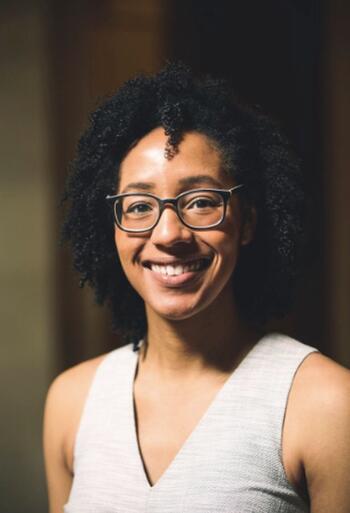
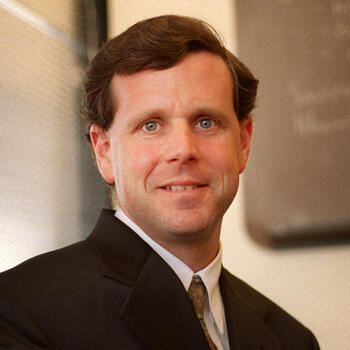
About the Speaker: Yasmin is an international student from the UK studying History and Economics at Stanford. Since visiting Russia three times and studying the language, she has developed a deep interest in the country and turned to historical analysis to help make sense of Russian foreign policy.

Virtual Seminar

Yasmin Samrai CISAC Honors Student Stanford University
Seminars
-

Introductions will start at 2:40pm. Each presentation will be 20 minutes with a 10 minute discussion.


* Please note all CISAC events are scheduled using the Pacific Time Zone.


Register in advance for this webinar: https://stanford.zoom.us/webinar/register/WN_Y4kF9dTJTJinogbJqvNSpw


About the Event: How do Chinese state media partnerships impact perceptions of China in East Asia and the Pacific? Chinese state media groups form partnerships to publish content in local outlets, reaching foreign audiences through trusted sources. Previous scholars identify media partnerships as the most impactful form of Beijing’s public diplomacy, but do not investigate which factors moderate this influence. This thesis analyzes the relationship between partnerships and approval of China in 12 countries using an original dataset of 98 partnerships from 2006-2020. By recording the size of partner groups, strength of ties, and language of publication, this this investigation differentiates itself from previous studies. Partnerships are collectively associated with increasing approval and decreasing disapproval of China, but surprisingly the most influential partnerships are with small, Chinese language media groups. These results contradict the conventional logic that partnerships with larger, multilingual media would have greater impact. An interview with a Xinhua journalist and case studies of media organizations in Thailand and Australia suggest that small, Chinese language platforms are uniquely vulnerable to influence from PRC state media. Policymakers must support independent publishers to prevent the consolidation of the Chinese language media ecosystem.


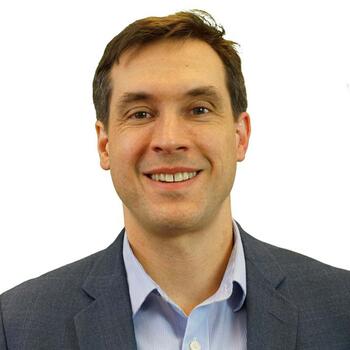
About the Speaker: Dylan is a senior studying international relations and human rights. After researching disinformation for the Department of Defense and working for a journalism-tech startup, Dylan chose to investigate Chinese state media partnerships in East Asia and the Pacific. After graduation, he will move to D.C. and work as a Junior Fellow at the Stimson Center.

Virtual Seminar

Dylan Junkin CISAC Honors Student Stanford University
Seminars
-

THIS EVENT STARTS AT 2:40PM. Introductions will start at 2:40pm. Each presentation will be 20 minutes with a 10 minute discussion.


* Please note all CISAC events are scheduled using the Pacific Time Zone.


Register in advance for this webinar: https://stanford.zoom.us/webinar/register/WN_Y4kF9dTJTJinogbJqvNSpw


About the Event: How do U.S. and UN targeted sanctions impact the behavior and strategies of militant groups? Despite several theories on the use of sanctions to punish non-state actors, scholars have largely neglected the impact of targeted sanction application on militant group behavior. This thesis combines an original dataset of 160 U.S. and UN sanction regimes with data on the activity of over 600 militant groups to examine the relationship between sanction imposition and militant activity. The results show mixed impact of sanctions on militant activity. While UN targeted sanctions precipitate falls in militant activity, unilateral U.S. sanctions are associated with a significant increase in violence committed by sanctioned groups. Comparative analysis of two militant groups in India –The National Democratic Front of Bodoland and Hizbul Mujahideen– explores the causality of this finding. U.S. sanctions strip militant groups of international legitimacy but often fail to limit their availability to resources. As a result, U.S. sanctions reduce the incentives of non-state actors to seek international recognition and constrain the forms of violence and insurgency they employ. This thesis illustrates the importance of international cooperation in ensuring targeted sanctions effectively limit the operating capabilities of militant groups.


About the Speaker: Nathalie is a senior from Kansas City, Kansas, studying Economics and Political Science. Her experiences working for the World Bank and studying at Oxford have made her passionate about the intersection of economic development, human rights, and violence prevention. After graduation, she plans on conducting economic analysis for the Ludwig Institute for Shared Economic Prosperity in Washington, D.C.

Virtual Seminar

Nathalie Kiersznowski CISAC Honors Student Stanford University
Seminars
-

Please note the event time has been changed to 10:30AM (PT) to 12:00PM (PT).


This is a virtual event. Please click here to register for the talk. 


This event is presented in partnership with Global:SF and the State of California Governor’s Office of Business and Economic Development.
 

U.S.-China economic relations have grown increasingly fraught and competitive.  Even amidst intensifying tensions, however, our two major economies remain intertwined.  While keeping alert to national security concerns, the economic strength of the United States will depend on brokering a productive competition with China, the world’s fastest growing economy.  Precipitous decoupling of trade, investment, and human talent flows between the two nations will inflict unnecessary harm to U.S. economic interests -- and those of California.  

Chinese trade and investments into California have grown exponentially over the last decade.  But they have come under increasing pressure following geopolitical and economic tensions between the two nations, particularly in the science and technology sectors.  This session will explore the role of Chinese economic activity in California in the context of the greater US-Chinese relationship. 


Portrait of Ambassador Craig AllenCraig Allen began his tenure in Washington, DC, as the sixth President of the United States-China Business Council, a private, nonpartisan, nonprofit organization representing over 200 American companies doing business with China. Ambassador Allen began his government career in 1985 at the Department of Commerce’s International Trade Administration (ITA) where, from 1986 to 1988, he worked as an international economist in ITA’s China Office. In 1988, Allen transferred to the American Institute in Taiwan, where he served as Director of the American Trade Center in Taipei. He returned to the Department of Commerce for a three-year posting at the US Embassy in Beijing as Commercial Attaché in 1992. In 1995, Allen was assigned to the US Embassy in Tokyo where he was promoted to Deputy Senior Commercial Officer in 1998. Allen became a member of the Senior Foreign Service in 1999. Starting from 2000, he served a two-year tour at the National Center for APEC in Seattle where he worked on the APEC Summits in Brunei, China, and Mexico. In 2002, Allen first served as the Senior Commercial Officer in Beijing where he was later promoted to the Minister Counselor rank of the Senior Foreign Service. After a four-year tour in South Africa, Ambassador Allen became Deputy Assistant Secretary for Asia at the US Department of Commerce’s International Trade Administration. He later became Deputy Assistant Secretary for China. Ambassador Allen was sworn in as the United States ambassador to Brunei Darussalam on December 19, 2014 where he served until he transitioned to take up his position as President of the US-China Business Council.
 

Image
Portrait of David Cheng
David Cheng is the chair and managing partner of Nixon Peabody’s China and Asia-Pacific practice. He is qualified in both the United States and Hong Kong. He focuses on cross-border transactions, litigations and investigations, advising on issues ranging from acquisitions, capital financing (initial public offering), intellectual property protection and disputes to fraud, FCPA and SEC investigations. He has a client portfolio from all over the world, including the United States, Middle East, Europe, Japan, Singapore, Taiwan, mainland China and Hong Kong.
 

james greenJames Green has worked for over two decades on U.S.-Asia relations. For five years, Green was the Minister Counselor for Trade Affairs at the U.S. Embassy in Beijing (2013-2018).  As the senior official in China from the Office of the United States Trade Representative (USTR), Green was deeply involved in all aspects of trade negotiations, trade enforcement, and in reducing market access barriers for American entities.  In prior government service, Green worked on the Secretary of State’s Policy Planning Staff and at the State Department’s China Desk on bilateral affairs. He also served as the China Director of the White House’s National Security Council.  In the private sector, Green was a senior vice president at the global strategy firm founded by former Secretary of State Madeleine Albright and was the founding government relations manager at the American Chamber of Commerce in Shanghai, Asia’s largest AmCham.  Currently, Green is a Senior Research Fellow at Georgetown University's Initiative for U.S.-China Dialogue on Global Issues and hosts a U.S.-China Dialogue Podcast.  He was most recently named as APARC's inaugural China Policy Fellow
 

Image
Portrait of Anja Manuel
Anja Manuel is Co-Founder and Principal, along with former Secretary of State Condoleezza Rice, former National Security Advisor Stephen Hadley and former Secretary of Defense Robert Gates, in Rice, Hadley, Gates & Manuel LLC, a strategic consulting firm that helps US companies navigate international markets. She currently serves on two corporate boards: Overseas Shipping Group, Inc., a NYSE listed energy transportation company, and Ripple Labs Inc., a leading blockchain payments company. Manuel also serves on several advisory boards, including Former Governor Brown’s California Export Council. From 2005-2007, she served as an official at the U.S. Department of State, responsible for South Asia Policy. She is a frequent commentator on foreign policy and technology policy, for TV and radio (NBC/MSNBC, Fox Business, BBC, Bloomberg, Charlie Rose, NPR, etc.) and writes for publications ranging from the New York Times, to the Financial Times, Fortune, The Atlantic, and Newsweek, among others. She is the author of the critically acclaimed This Brave New World: India, China and the United States, published by Simon and Schuster in 2016. A graduate of Harvard Law School and Stanford University, Manuel now also lectures and is a Research Affiliate at Stanford University. She is the Director of the Aspen Strategy Group and Aspen Security Forum -- the premier bipartisan forum on foreign policy in the U.S. -- and is a member of the Council on Foreign Relations.


This Session is part of a larger conference series titled “The New Economy Conference – California’s Place in the New Global Economy”.   The New Economy Conference will broadcast public programs from April 21-May 25 on a weekly basis, designed to inform and identify the impact of COVID-19 on the economic competitiveness and resilience of the State of California.  Topics addressed will include Challenges and Opportunities Post-COVID in California (4/21); the International Dimension (4/28), Investing in the New Economy and Keeping Businesses in California (5/5); Sustainability and Urbanism (5/12); Navigating Chinese Investment, Trade and Technology (5/19); and Where do We Go from Here? (6/09).


Via Zoom Webinar. Register at: https://www.globalsf.biz/session-5-nec 

Amb. Craig Allen <br><i>President of US-China Business Council</i><br><br>
David K. Cheng <br><i>Chair and Managing Partner of China & Asia Pacific Practice, Nixon Peabody LLP</i><br><br>
James Green <br><i>Senior Research Fellow, Initiative for U.S.-China Dialogue on Global Issues, Georgetown University</i><br><br>
Anja Manuel <br><i>Co-Founder and Principal, Rice, Hadley, Gates & Manuel LLC</i><br><br>
Seminars
-

Tuesday, May 25, 2021 | 11:00am-12:15 pm Pacific Time

Institutional Genes: Confucianism vs. Christianity

This talk was based on a chapter of my ongoing book project titled “Institutional Genes: A Comparative Analysis of Origins of China’s Institutions.” Confucianism / Imperial-Exam-System is one of three what I called institutional genes of China's institutions. As a comparison, Christianity is an institutional gene for other institutions, including constitutional democracy (in the West) on the one hand and totalitarianism (in the Soviet Union), which is implanted into China on the other hand.  In this talk, I’ll explain how Confucianism/  Imperial-Exam-System is created and evolved, and why it is an institutional gene that affects today’s institutions in China.   

Watch the Recorded Event:


Image
Headshot of Dr. Chenggang Xu.
About the Speaker

Chenggang Xu is Visiting Professor at Finance Department, Imperial College London. He is one of the first recipients (joint with Yingyi Qian) of China Economics Prize for contributions in understanding government and enterprise incentive mechanisms for the transition economy of China. 

Dr Xu received his PhD in Economics from Harvard in 1991. He is currently a board member of the Ronald Coase Institute (RCI) and a research fellow of the CEPR. He has previously taught at the London School of Economics (1991-2009) as a Reader, at the University of Hong Kong (2009-2016) as Chung Hon-Dak Professor in Economic Development and as Quoin Professor in Economic Development (2008-2016), and as Special-Term Visiting Professor at Tshinghua University (2002-). He has also taught and worked at Harvard (1992-2002), the IMF (1997-1999) and the Chinese Academy of Social Sciences (1982-1992). He was the President of the Asian Law and Economics Association (2010-2012) and World-Class University Professor at Seoul National University (2009-2013). He won the Sun Yefang Economics Prize in 2013. In 2016, he was the joint winner of the China Economics Prize.


Seminar Series Moderators:

Image
Headshot of Dr. Scott Rozelle

Scott Rozelle holds the Helen Farnsworth Endowed Professorship at Stanford University and is Senior Fellow in the Food Security and Environment Program and the Shorenstein Asia-Pacific Research Center, Freeman Spogli Institute (FSI) for International Studies. For the past 30 years, he has worked on the economics of poverty reduction. Currently, his work on poverty has its full focus on human capital, including issues of rural health, nutrition and education. For the past 20 year, Rozelle has been the chair of the International Advisory Board of the Center for Chinese Agricultural Policy, Chinese Academy of Sciences (CAS). In recent years Rozelle spends most of his time co-directing the Rural Education Action Project (REAP). In recognition of this work, Dr. Rozelle has received numerous honors and awards. Among them, he became a Yangtse Scholar (Changjiang Xuezhe) in Renmin University of China in 2008. In 2008 he also was awarded the Friendship Award by Premiere Wen Jiabao, the highest honor that can be bestowed on a foreigner. 

Image
hongbin li headshot
Hongbin Li is the James Liang Director of the China Program at the Stanford King Center on Global Development, and a Senior Fellow of Stanford Institute for Economic Policy Research (SIEPR). Hongbin obtained his Ph.D. in economics from Stanford University in 2001 and joined the economics department of the Chinese University of Hong Kong (CUHK), where he became full professor in 2007. He was also one of the two founding directors of the Institute of Economics and Finance at the CUHK. He taught at Tsinghua University in Beijing 2007-2016 and was C.V. Starr Chair Professor of Economics in the School of Economics and Management. He founded the Chinese College Student Survey (CCSS) in 2009 and the China Employer-Employee Survey (CEES) in 2014.

Hongbin’s research has been focused on the transition and development of the Chinese economy, and the evidence-based research results have been both widely covered by media outlets and well read by policy makers around the world. He is currently the co-editor of the Journal of Comparative Economics.


Zoom Meeting

Seminars
-

Tuesday, May 11, 2021 | 11:00am-12:15 pm Pacific Time

The Political Economy of Policy Experimentations in China

Policy learning, often involving experimentations, is an essential component of government's decision making. In this project, we aim to describe and understand China's policy experimentations, which are speculated by many to have played a vital role in fostering China's reform and growth. We collect comprehensive data on policy experimentations conducted in China over the past 4 decades by 139 ministries and commissions. In sum, our results suggest that policy experimentations take place under various political and bureaucratic constraints, which could limit the scope and bias the direction of policy learning.

Watch the Recorded Event:


Image
Headshot of Dr. David Yang
About the Speaker

David Yang is an Assistant Professor of Economics at Harvard University, as well as a Faculty Research Fellow at the National Bureau of Economic Research (NBER) and Global Scholar at the Canadian Institute for Advanced Research (CIFAR). His research focuses on political economy, behavioral and experimental economics, economic history, and cultural economics. In particular, David studies the forces of stability and forces of changes in authoritarian regimes, drawing lessons from historical and contemporary China.


Seminar Series Moderators:

Image
Headshot of Dr. Scott Rozelle

Scott Rozelle holds the Helen Farnsworth Endowed Professorship at Stanford University and is Senior Fellow in the Food Security and Environment Program and the Shorenstein Asia-Pacific Research Center, Freeman Spogli Institute (FSI) for International Studies. For the past 30 years, he has worked on the economics of poverty reduction. Currently, his work on poverty has its full focus on human capital, including issues of rural health, nutrition and education. For the past 20 year, Rozelle has been the chair of the International Advisory Board of the Center for Chinese Agricultural Policy, Chinese Academy of Sciences (CAS). In recent years Rozelle spends most of his time co-directing the Rural Education Action Project (REAP). In recognition of this work, Dr. Rozelle has received numerous honors and awards. Among them, he became a Yangtse Scholar (Changjiang Xuezhe) in Renmin University of China in 2008. In 2008 he also was awarded the Friendship Award by Premiere Wen Jiabao, the highest honor that can be bestowed on a foreigner. 

Image
hongbin li headshot
Hongbin Li is the James Liang Director of the China Program at the Stanford King Center on Global Development, and a Senior Fellow of Stanford Institute for Economic Policy Research (SIEPR). Hongbin obtained his Ph.D. in economics from Stanford University in 2001 and joined the economics department of the Chinese University of Hong Kong (CUHK), where he became full professor in 2007. He was also one of the two founding directors of the Institute of Economics and Finance at the CUHK. He taught at Tsinghua University in Beijing 2007-2016 and was C.V. Starr Chair Professor of Economics in the School of Economics and Management. He founded the Chinese College Student Survey (CCSS) in 2009 and the China Employer-Employee Survey (CEES) in 2014.

Hongbin’s research has been focused on the transition and development of the Chinese economy, and the evidence-based research results have been both widely covered by media outlets and well read by policy makers around the world. He is currently the co-editor of the Journal of Comparative Economics.

Zoom Meeting

Seminars
-

This is a virtual event. Please click here to register and generate a link to the talk. 
The link will be unique to you; please save it and do not share with others.

The strategic competition between India and China has turned deadly in the Himalayas, but the stakes may be higher elsewhere, in the Bay of Bengal. While India gradually fortifies its island outposts in the Bay, China is preparing for a long-term naval presence there. Both countries are scrambling to build security cooperation with littoral states, especially Bangladesh and Myanmar. This webinar will explore what makes the Bay of Bengal a particularly important sub-region of the Indo-Pacific. It will consider how China’s growing political and military influence poses security risks for India, and how India and its partners – including the United States and the Quad – can build resilience and deterrence in the Bay of Bengal.  

Speakers:
Image
Raja Mohan
Professor C Raja Mohan is the Director of the Institute of South Asian Studies at the National University of Singapore. Professor Mohan is one of India’s leading commentators on India’s foreign policy. He has been associated with a number of think tanks in New Delhi, including the Institute of Defence Studies and Analyses, the Centre for Policy Research and the Observer Research Foundation. He was also the founding director of Carnegie India.  He served on India’s National Security Advisory Board, and led the Indian Chapter of the Pugwash Conferences on Science and World Affairs from 1999 to 2006. He writes a regular column for the Indian Express and was earlier the Strategic Affairs Editor for The Hindu newspaper. Professor Mohan has a Master’s degree in nuclear physics and a PhD in international relations. Among his recent books are Samudra Manthan: Sino-Indian Rivalry in the Indo-Pacific (2013) and Modi’s World: Expanding India’s Sphere of Influence (2015).
 
Image
Nilanthi Samaranayake
Ms. Nilanthi Samaranayake directs the Strategy and Policy Analysis Program at CNA. She focuses on the study of US alliances and partnerships globally and led several studies on Indian Ocean security. Her work has examined U.S.-India naval cooperation, water resource competition in the Brahmaputra River, and Sri Lankan foreign policy. She also has conducted research on the navies of Bangladesh and Pakistan, the Maldives Coast Guard, security threats in the Bay of Bengal, and relations between smaller South Asian countries and China, India and the United States. Prior to joining CNA, Samaranayake held positions at the National Bureau of Asian Research and the Pew Research Center. Samaranayake holds an M.Sc. in International Relations from the London School of Economics and Political Science and a B.A. in International Studies from American University.
 
Moderator:
Image
Arzan Tarapore
Dr. Arzan Tarapore is the South Asia research scholar at the Shorenstein Asia-Pacific Research Center at Stanford University, where he leads the newly-restarted South Asia research initiative. He is also a senior nonresident fellow at the National Bureau of Asian Research. His research focuses on Indian military strategy and contemporary Indo-Pacific security issues. He previously held research positions at the RAND Corporation, the Observer Research Foundation, and the East-West Center in Washington. Prior to his scholarly career, he served in the Australian Defence Department. Arzan holds a PhD in war studies from King’s College London.

This event is co-sponsored by: The Center for South Asia

Via Zoom webinar.
Please register at:  https://bit.ly/2P4CllG

Seminars
-

China Chats with Stanford Faculty


USA vs China:  A New Cold War? Great Power Relations and Competition in the 21st Century

Thirty years ago, the Cold War ended. Today, great power competition is back – or so it seems – with many describing our present era as a “New Cold War” between the United States and China (and Russia). But is this label an illuminating or distorting analogy? More importantly, what should the U.S. do to meet the challengers of great power competition in the 21st century? 

In analyzing contemporary relations, we must trace the historical origins of the U.S.-China relationship, then assess the similarities and differences between the Cold War and U.S.-China relations today along dimensions such as power, ideology, and multilateralism, in order to effectively devise unilateral, bilateral, and multilateral policy prescriptions for U.S. policymakers.

This Stanford alumni event featured Stanford professor Michael McFaul, director at the Freeman Spogli Institute for International Studies. He was joined by professor Hongbin Li, co-director of Stanford Center on China's Economy, who moderated a discussion about the major themes of the research. 

Watch the event recording:


About the Speakers:

Image
Headshot of Michael McFaul - 3x4
Michael McFaul is Director at the Freeman Spogli Institute for International Studies, the Ken Olivier and Angela Nomellini Professor of International Studies in the Department of Political Science, and the Peter and Helen Bing Senior Fellow at the Hoover Institution. He joined the Stanford faculty in 1995.

Dr. McFaul also is as an International Affairs Analyst for NBC News and a columnist for The Washington Post. He served for five years in the Obama administration, first as Special Assistant to the President and Senior Director for Russian and Eurasian Affairs at the National Security Council at the White House (2009-2012), and then as U.S. Ambassador to the Russian Federation (2012-2014).

He has authored several books, most recently the New York Times bestseller From Cold War to Hot Peace: An American Ambassador in Putin’s Russia. Earlier books include Advancing Democracy Abroad: Why We Should, How We Can; Transitions To Democracy: A Comparative Perspective (eds. with Kathryn Stoner); Power and Purpose: American Policy toward Russia after the Cold War (with James Goldgeier); and Russia’s Unfinished Revolution: Political Change from Gorbachev to Putin.

His current research interests include American foreign policy, great power relations, and the relationship between democracy and development. Dr. McFaul was born and raised in Montana. He received his B.A. in International Relations and Slavic Languages and his M.A. in Soviet and East European Studies from Stanford University in 1986. As a Rhodes Scholar, he completed his D. Phil. in International Relations at Oxford University in 1991.


Image
hongbin li headshot
Hongbin Li is the Co-Director of the Stanford Center on China's Economy and Institutions (SCCEI) and a Senior Fellow of Stanford Institute for Economic Policy Research (SIEPR). Hongbin obtained his Ph.D. in economics from Stanford University in 2001 and joined the economics department of the Chinese University of Hong Kong (CUHK), where he became full professor in 2007. He was also one of the two founding directors of the Institute of Economics and Finance at the CUHK. He taught at Tsinghua University in Beijing 2007-2016 and was C.V. Starr Chair Professor of Economics in the School of Economics and Management. He also founded and served as the Executive Associate Director of the China Social and Economic Data Center at Tsinghua University. He founded the Chinese College Student Survey (CCSS) in 2009 and the China Employer-Employee Survey (CEES) in 2014.

Hongbin’s research has been focused on the transition and development of the Chinese economy, and the evidence-based research results have been both widely covered by media outlets and well read by policy makers around the world . He is currently the co-editor of the Journal of Comparative Economics.


Seminars
-

This event is part of Shorenstein APARC's spring webinar series "The United States in the Biden Era: Views from Asia."

American politics, especially presidential elections, have always drawn significant attention from Japanese policy makers and the public, because of their enormous impact on Japanese politics. The recent developments in the U.S. – from the Trump presidency to the contested election and the unconventional transition of power that included a riot at the Capitol – have engendered an elevated level of curiosity and concern about the state of American politics in Japan. This webinar will examine how Japanese leaders and citizens have processed what unfolded in the U.S. and how it may have shaped their current views on US-Japan relations, featuring two leading experts on the topic, Keiko Iizuka (Yomiuri Shimbun) and Toshihiro Nakayama (Keio University). Moderated by Kiyoteru Tsutsui, Director of the Japan Program at APARC, the webinar will have a Q&A session, and the participants are welcome to submit their questions in advance using the registration form and at the event using the Q&A function of Zoom.

SPEAKERS

Image
Keiko Iizuka
Keiko Iizuka is Senior Political Writer/Editorial Writer at The Yomiuri Shimbun and lead commentator for the nightly news program “News in Depth (Shinso News)” on the BS4 channel. Her expertise is international relations specially focusing on Indo-Pacific, Japan-U.S. relations, and European affairs. Her U.S. experience includes working at the Brookings Institution as a visiting fellow (2008-2009) and a role of Washington Bureau Chief with Yomiuri (2013-2015). She has held several other positions at the paper including chief editor for international news department (2015-2017) and chief political correspondent at the Prime Minister’s office of Japan (2006-2007). She was posted twice in London as correspondent (2003-2006, 2017-2019).

Image
Toshihiro Nakayama
Toshihiro Nakayama, Ph.D, is a Professor of American Politics and Foreign Policy at the Faculty of Policy Management at Keio University. He is also a Senior Adjunct Fellow at the Japan Institute of International Affairs (JIIA). He was a Special Correspondent for the Washington Post at the Far Eastern Bureau (1993-94), Special Assistant at the Permanent Mission of Japan to the United Nations in New York (1996-98), Senior Research Fellow at The Japan Institute of International Affairs (2004-06), Associate Professor at Tsuda College (2006-10), and Professor at Aoyama Gakuin University (2010-14). He was also a CNAPS Visiting Fellow at the Brookings Institution (2005-06), Sir Howard Kippenberger Chair Visiting Professor at the Center for Strategic Studies, Victoria University in Wellington (2017) , Japan Scholar at the Woodrow Wilson Center (2018-2019), and an Advisor to the Ministry of Defense (2019-2020). He received his M.A.(1993) and Ph.D.(2001) from Aoyama Gakuin University. He has written two books and numerous articles on American politics, foreign policy and international relations. Recipient of Nakasone Yasuhiro Award (Incentive Award) in 2014.

MODERATOR 

Image
Kiyoteru Tsutsui
Kiyoteru Tsutsui is Henri H. and Tomoye Takahashi Professor and Senior Fellow in Japanese Studies at the Walter H. Shorenstein Asia-Pacific Research Center at Stanford University, where he is also Director of the Japan Program, a Senior Fellow of the Freeman Spogli Institute for International Studies, and a Professor of Sociology. He is the author of Rights Make Might: Global Human Rights and Minority Social Movements in Japan (Oxford University Press, 2018), co-editor of Corporate Responsibility in a Globalizing World (Oxford University Press, 2016) and co-editor of The Courteous Power: Japan and Southeast Asia in the Indo-Pacific Era (University of Michigan Press, forthcoming 2021). 

This event is being held virtually via Zoom. Please register for the webinar via the following link: https://bit.ly/3sfxcVs

Keiko Iizuka <br><i>Senior Political Writer/Editorial Writer at The Yomiuri Shimbun</i><br><br>
Toshihiro Nakayama <br><i>Professor of American Politics and Foreign Policy at the Faculty of Policy Management at Keio University</i><br><br>
Seminars
-

The Tokyo Olympics-Paralympics Games are scheduled to open in late July with various adjustments to address concerns about COVID-19 such as no foreign visitors to watch the game. The unusual Olympics has sparked heated debates in Japan and elsewhere, but what will it look like when it opens and what should the organizers seek to accomplish? In the process of planning for the Olympics, a number of issues around governance and gender in Japanese sports associations got exposed. How should we go about resolving these issues and create an environment that is most desirable for athletes? Our seminar features two prominent former Olympians who continue to wield significant influence in Japanese sports scenes, Yuko Arimori and Dai Tamesue, to discuss these issues and the future of the Japanese sports world beyond the Tokyo Olympics. Moderated by our program director Kiyoteru Tsutsui, the seminar includes a Q&A session featuring questions from the audience. Simultaneous interpretation will be provided. 

コロナ禍の東京五輪と日本スポーツ界におけるガバナンスとジェンダー

東京オリンピック・パラリンピックの開幕を7月下旬に控え、コロナ対策のために外国人観戦客を受け入れないなど、通常の五輪とは異なる大会へ向けた準備が進んでいる。日本国内でも世界でも様々な意見が交錯する今回の五輪はどのような大会になるのか、どのような大会を目指すべきなのか。また、東京五輪への準備の中で、様々な日本スポーツ界の問題点、特にそのガバナンスとジェンダー・バランスの問題が浮き彫りになってきた。頻発するこのような問題を解決し、アスリートにとって理想的な環境を提供するにはどうすれば良いのか。今回のセミナーでは、高名なオリンピアンで、日本スポーツ界で大きな影響力を持つ、有森裕子氏と為末大氏に御登壇いただき、これらの問題について考え、五輪後も見据えた日本のスポーツ界の将来を語っていただく。当プログラム所長の筒井清輝をモデレーターとして、両氏に参加者からの質問に答えてもらう質疑応答の時間も予定されている。

このイベントは日本語で行われます。同時通訳がついています。

This event will be held in Japanese. Simultaneous translation will be offered. 

SPEAKERS 

Image
Yuko Arimori
Yuko Arimori was born in 1966 in Okayama prefecture. After graduating from Nippon Sport Science University, she joined Recruit. She won silver and bronze medals in the women's marathon event at the Barcelona Olympics and the Atlanta Olympics, which marked the beginning of the “Golden era of the Marathon” for Japanese female athletes. She became the first professional marathon runner in the country after the Atlanta Olympics. After her retirement, in addition to her running and marathon activities, she has served as a member of the International Olympic Committee (IOC), Sports and Active Social Committee, Director of the Japan Association of Athletics Federations, a Representative Director of the Heart of Gold, a president of Special Olympics Nippon, and Vice President of the University Sports Association (UNIVAS). In June 2010, she was the first Japanese to win the (IOC) Women and Sports Award.

有森裕子は1966年岡山県生まれ。日本体育大学卒業後、リクルート入社。バルセロナオリンピック、アトランタオリンピックの女子マラソンでは銀メダル、銅メダルを獲得し、その後に続く日本女子マラソン黄金期の幕開けを切った。アトランタオリンピック後、国内のプロマラソンランナー第1号に。現役引退後は、ランニングやマラソンに関わる活動以外にも、国際オリンピック委員会(IOC)スポーツと活動的社会委員会委員、日本陸上競技連盟理事、ハート・オブ・ゴールド代表理事、スペシャルオリンピックス日本理事長、大学スポーツ協会(UNIVAS)副会長などを務めている。2010年6月、国際オリンピック委員会(IOC)女性スポーツ賞を日本人として初めて受賞


Image
Dai Tamesue
Dai Tamesue, born in 1978 in Hiroshima, is the first Japanese medalist in a world competition for a sprint event.  He also participated in three Olympics and holds the Japanese record for men's 400m hurdles (as of April 2021). Dai currently serves as CEO of Deportare Partners. He is also the Director of Shin-toyosu Brillia Running Stadium, and the author of “Winning Alone” "The Philosophy of Running" "The Strength to Give Up," among other titles.

1978年広島県生まれ。スプリント種目の世界大会で日本人として初のメダル獲得者。男子400メートルハードルの日本記録保持者(2021年4月現在)。現在は執筆活動、会社経営を行う。Deportare Partners代表。新豊洲Brilliaランニングスタジアム館長。Youtube為末大学(Tamesue Academy)を運営。主な著作に『Winning Alone』『走る哲学』『諦める力』など。


MODERATOR 

Image
Kiyoteru Tsutsui
Kiyoteru Tsutsui is Henri H. and Tomoye Takahashi Professor and Senior Fellow in Japanese Studies at the Walter H. Shorenstein Asia-Pacific Research Center at Stanford University, where he is also Director of the Japan Program, a Senior Fellow of the Freeman Spogli Institute for International Studies, and a Professor of Sociology. He is the author of Rights Make Might: Global Human Rights and Minority Social Movements in Japan (Oxford University Press, 2018), co-editor of Corporate Responsibility in a Globalizing World (Oxford University Press, 2016) and co-editor of The Courteous Power: Japan and Southeast Asia in the Indo-Pacific Era (University of Michigan Press, forthcoming 2021). 

This event is being held virtually via Zoom. Please register for the webinar via the following link: https://bit.ly/3sfNNs2

Yuko Arimori <br><i>Two Time Olympic Marathon Medalist/バルセロナ・アトランタ オリンピック女子マラソンメダリスト</i><br><br>
Dai Tamesue <br><i>Three Time Olympian and CEO, Deporte Partners/ 元陸上選手・Deportare Partners代表</i><br><br>
Seminars
Subscribe to Seminars