-

Never in history has a democracy succeeded in being both diverse and equal, treating members of many different ethnic or religious groups fairly. And yet achieving that goal is now central to the democratic project in countries around the world. It is “the great experiment” of our time.

Why is it so hard to build diverse democracies? Would principles and policies do we need to adopt to maximize the chances of making them work? And how good are the chances of success? The project of building thriving diverse democracies may well fail. But the chances of success, this talk argues, are better than the pessimism which is now dominant suggests.

ABOUT THE SPEAKER

Image
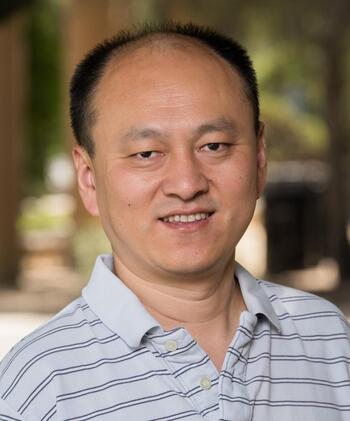
yascha_mounk.jpg
Yascha Mounk is a Professor of the Practice of International Affairs at Johns Hopkins University, a Contributing Editor at The Atlantic, a Senior Fellow at the Council on Foreign Relations, and the Founder of Persuasion. The host of The Good Fight podcast, his latest book is The Great Experiment: Why Diverse Democracies Fall Apart and How They Can Endure.


Virtual to Public. Only those with an active Stanford ID with access to E008 in Encina Hall may attend in person.

Didi Kuo

Virtual to Public. Only those with an active Stanford ID with access to E008 in Encina Hall may attend in person.

Yascha Mounk Professor of the Practice of International Affairs Johns Hopkins University
Seminars
-

 All CISAC events are scheduled using the Pacific Time Zone. 
 

SEMINAR RECORDING

Virtual only.

Sylvie Kauffmann
Seminars
-

The Trump presidency generated concern about democratic backsliding and renewed interest in measuring the national democratic performance of the United States. However, the U.S. has a decentralized form of federalism that administers democratic institutions at the state level.

Using 51 indicators of electoral democracy from 2000 to 2018, we develop a measure of subnational democratic performance, the State Democracy Index. We then test theories of democratic expansion and backsliding based in party competition, polarization, demographic change, and the group interests of national party coalitions. Difference-in-differences results suggest a minimal role for all factors except Republican control of state government, which dramatically reduces states' democratic performance during this period. This result calls into question theories focused on changes within states. The racial, geographic, and economic incentives of groups in national party coalitions may instead determine the health of democracy in the states.

ABOUT THE SPEAKER

Image
Jacob M. Grumbach Headshot
Jacob M. Grumbach is an Assistant Professor of Political Science at the University of Washington and a Faculty Associate with the Harry Bridges Center for Labor Studies. Grumbach’s research focuses broadly on the political economy of the United States, with an emphasis on public policy, racial and economic inequality, American federalism, and statistical methods.


At this time, in-person attendance is limited to Stanford affiliates only. We continue to welcome our greater community to join virtually via Zoom.

Didi Kuo
Jacob Grumbach Assistant Professor University of Washington
Seminars
-

Time:  7:30am-8:45am  California, USA 2 March 2022 
9:00pm-10:15pm New Delhi, India 2 March 2022
 

India’s international position has evolved sharply in the first two decades of the 21st century, and it is poised to become only more consequential in coming decades. Its strategic interests and influence have now stretched into the distant reaches of the Indo-Pacific, it has emerged as a central actor in managing global governance challenges like climate change, and it may have the capacity to take a commanding position in some key leading-edge technologies. In this webinar, veteran journalist Indrani Bagchi, who spent nearly two decades covering India’s foreign relations for the Times of India, will reflect on India’s recent trajectory and its prospects. Through the prism of some key episodes and issues of India in the 21st century, the webinar will examine India’s capacity and approach to manage international issues, as well as the constraints and challenges Indian policymakers must face. 

Speaker: 

Image
Headshot photo of Indrani Bagchi
Indrani Bagchi is CEO-designate at Ananta Aspen Centre, India. She was Associate Editor with the Times of India, where she reported and analyzed foreign policy issues for the newspaper from 2004 until 2022. As Diplomatic Editor, Indrani covered the Ministry of External Affairs (MEA) on her news beat, and interpreted and analyzed global trends with an Indian perspective. Earlier, Indrani worked with India Today, the Economic Times and The Statesman, and has held fellowships at Oxford University and the Brookings Institution. She is a Fellow of the Kamalnayan Bajaj Fellowship Class 3 of the Ananta Aspen Centre and a member of Aspen Global Leadership Network. She graduated from Loreto College, Calcutta University with English honors. 

Moderator:

Image
Photo Portrait of Arzan Tarapore
Arzan Tarapore is the South Asia research scholar at the Shorenstein Asia-Pacific Research Center at Stanford University, where he leads the newly-restarted South Asia research initiative. He is also a senior nonresident fellow at the National Bureau of Asian Research. His research focuses on Indian military strategy and contemporary Indo-Pacific security issues. Prior to his scholarly career, he served as an analyst in the Australian Defense Department. Arzan holds a PhD in war studies from King’s College London. 


This event is co-sponsored by Center for South Asia

Via Zoom  Register at:
https://bit.ly/3HXiwTy

Indrani Bagchi, CEO-designate, Ananta Aspen Centre, India<br> Panelist
0
Research Scholar at CISAC
Arzan Tarapore Headshot CISAC PhD

Arzan Tarapore is a Research Scholar whose research focuses on Indian military strategy and regional security issues in the Indo-Pacific. In academic year 2024-25, he is also a part-time Visiting Research Professor at the China Landpower Studies Center, at the U.S. Army War College. Prior to his scholarly career, he served for 13 years in the Australian Defence Department in various analytic, management, and liaison positions, including operational deployments and a diplomatic posting to the Australian Embassy in Washington, DC.

His academic work has been published in the Journal of Strategic Studies, International Affairs, The Washington Quarterly, Asia Policy, and Joint Force Quarterly, among others, and his policy commentary frequently appears on platforms such as Foreign Affairs, the Hindu, the Indian Express, The National Interest, the Lowy Institute's Interpreter, the Brookings Institution’s Lawfare, and War on the Rocks.

He previously held research and teaching positions at Georgetown University, the East-West Center in Washington, the Observer Research Foundation in New Delhi, and the RAND Corporation.

He earned a PhD in war studies from King's College London, an MSc from the London School of Economics, and a BA (Hons) from the University of New South Wales. Follow his commentary on Twitter @arzandc and his website at arzantarapore.com.

CV
Date Label
<br>Arzan Tarapore, South Asia Research Scholar, Shorenstein APARC Moderator South Asia Research Scholar, Shorenstein APARC
Seminars
-

Image
collage showing cory doctorow, Dr. Tomicah Tillemann and Michelle Finck

Join us on Tuesday, February 22 from 12 PM - 1 PM PT for a panel discussion on “The Policy Implications of Web3”, featuring Tomicah Tillemann of KRH Partners, Cory Doctorow of Craphound.com, and Michèle Finck of the University of Tübinge in conversation with Marietje Schaake of the Stanford Cyber Policy Center. This weekly seminar series is jointly organized by the Cyber Policy Center’s Program on Democracy and the Internet and the Hewlett Foundation’s Cyber Initiative.

The year 2021 marked an important moment for web3. Proponents believe the potential of web3 to democratize, decentralize and improve the internet is huge. Others argue that evangelists have yet to deliver results, and that web3 will inevitably tend towards centralization. Few however have explored the policy and political implications of the concept: how should regulators approach a potential web3 explosion? How should lawmakers think about the wider internet infrastructure? Is web3 an opportunity to reimagine the internet, or will it present even more challenges to policymakers? This webinar will explore these angles and foster a reflection on public policy by leading technologists and academics. The session is open to the public, but registration is required.

ABOUT THE SPEAKERS:


Image
cory doctorow
Cory Doctorow (craphound.com) is a science fiction author, activist and journalist. He is the author of many books, most recently Radicalized and Walkaway. He maintains a daily blog at Pluralistic.net. He works for the Electronic Frontier Foundation, is a MIT Media Lab Research Affiliate, a Visiting Professor of Computer Science at Open University, a Visiting Professor of Practice at the University of North Carolina’s School of Library and Information Science and co-founded the UK Open Rights Group. In 2020, he was inducted into the Canadian Science Fiction and Fantasy Hall of Fame.

Image
Michele Finck
Dr. Michèle Finck is Professor of Law and Artificial Intelligence at the University of Tübingen, an Affiliated Fellow at the Max Planck Institute for Innovation and Competition in Munich and the Centre for Blockchain Technologies at University College London as well as a Visiting Professor at LUISS University in Rome. She previously worked at the University of Oxford and the London School of Economics.


Image
tomicah tillemann
Dr. Tomicah Tillemann is a partner and Global Chief Policy Officer at KRH Partners, a new crypto venture fund led by former a16z General Partner Katie Haun, where he builds public policy architecture to support the next generation of the Internet. Until recently, he was the Global Head of Policy for an arm of Andreessen Horowitz. He worked in collaboration with the Rockefeller Foundation, the World Bank, MIT, and governments around the world to develop a new generation of open source technology platforms to power the public sector. He also oversaw the work of the Blockchain Trust Accelerator and the Responsible Asset Allocator Initiative.

Image
Marietje Schaake
Marietje Schaake (Moderator) is international policy director at Stanford University Cyber Policy Center and international policy fellow at Stanford’s Institute for Human-Centered Artificial Intelligence. Between 2009 and 2019, Marietje served as a Member of European Parliament for the Dutch liberal democratic party where she focused on trade, foreign affairs, and technology policies. Marietje is an (Advisory) Board Member with a number of nonprofits including MERICS, ECFR, ORF and AccessNow. She writes a monthly column for the Financial Times and a bi-weekly column for the Dutch NRC newspaper.

Seminars
-


Image
an image of a map of the world with a U.S. and China flag with the event text details.


How can we understand the geopolitical rivalry between the U.S. and China without fueling anti-Asian hate?

Join REDI's student representatives, Maddy Morlino and Miku Yamada, for an open discussion on how we can avoid contributing to racial discrimination when engaging in academic dialogues on U.S.-China competition.

This in-person event will facilitate an open dialogue with participants and invited speakers, FSI Senior Fellow Thomas Fingar and Postdoctoral Fellow, Dongxian Jiang. Since seating is limited, registration is reserved for current Stanford faculty, students, and staff only with a Stanford.edu email.

Confirmed attendees will be notified by email on February 22.

Speaker bios:

Thomas Fingar is a Shorenstein APARC Fellow in the Freeman Spogli Institute for International Studies at Stanford University. He was the inaugural Oksenberg-Rohlen Distinguished Fellow from 2010 through 2015 and the Payne Distinguished Lecturer at Stanford in 2009. From 2005 through 2008, he served as the first deputy director of national intelligence for analysis and, concurrently, as chairman of the National Intelligence Council. Fingar served previously as assistant secretary of the State Department’s Bureau of Intelligence and Research (2000-01 and 2004-05), principal deputy assistant secretary (2001-03), deputy assistant secretary for analysis (1994-2000), director of the Office of Analysis for East Asia and the Pacific (1989-94), and chief of the China Division (1986-89). Between 1975 and 1986 he held a number of positions at Stanford University, including senior research associate in the Center for International Security and Arms Control.

Dongxian Jiang is a political theorist and intellectual historian. His primary research interests lie in comparative political theory, the history of political thought, and pressing practical questions of democratic and international politics, including Western and non-Western perspectives on human rights, democracy, good governance, and political legitimacy. He is also interested in the transmission and traveling of political ideas across divergent intellectual traditions. He holds a B.A. in International Politics and Philosophy from Peking University, an M.A. in Political Science from Duke University, and a Ph.D. in Politics from Princeton University (as of September 2020). Dongxian Jiang is currently Civics Initiative Postdoctoral Fellow, Department of Political Science, Stanford University.

Registration required:

REGISTER


Thomas Fingar FSI Senior Fellow Speaker Stanford University
Dongxian Jiang Political Science Postdoctoral Fellow Speaker Stanford University
Seminars
-

For winter quarter 2022, CISAC will be hosting hybrid events. Many events will offer limited-capacity in-person attendance for Stanford faculty, staff, fellows, visiting scholars, and students in accordance with Stanford’s health and safety guidelines, and be open to the public online via Zoom. All CISAC events are scheduled using the Pacific Time Zone. 

SEMINAR RECORDING


About the Event: With the devastating loss of life, economic disruption, and political instability it has wrought, COVID-19 has revealed that national governments and the international community are woefully unprepared to respond to pandemics—underscoring the world’s vulnerability to future catastrophic biological threats that could meet or exceed the severe consequences of the current pandemic. To effectively guard against future biological risks, leaders should take a longer-term view and recognize that, while naturally occurring pandemics remain a threat, the next global catastrophe could result from a laboratory accident or the deliberate misuse of bioscience and biotechnology.   This talk will provide a high-level overview of the broader biothreat landscape and outline actions that national leaders and the international community should take with a view to preventing catastrophic biological events—specifically by constraining capabilities and shaping the intent of powerful actors who may wish to exploit the tools of modern bioscience to cause harm. This talk will outline two priority NTI initiatives to strengthen international capabilities to prevent catastrophic biological events. We are working to develop and launch the International Biosecurity and Biosafety Initiative for Science (IBBIS), a new international organization that will focus on preventing the deliberate abuse or accidental misuse of bioscience and biotechnology by strengthening international biosecurity norms and developing innovative, practical tools to reduce risks throughout the research and development life cycle. NTI is also working to develop the concept of a new Joint Assessment Mechanism to strengthen UN-system capabilities to investigate high-consequence biological events of unknown origin. The ability to rapidly discern the source of emerging pandemics is critical to mitigating their effects in real time and protecting against future risks.
 

About the Speaker: Dr. Jaime M. Yassif is Senior Director and Lead Scientist for Global Biological Policy and Programs at NTI, where her work focuses on strengthening governance of dual-use bioscience and reducing global catastrophic biological risks. Yassif previously served as a Program Officer at Open Philanthropy, where she led the Biosecurity and Pandemic Preparedness initiative. In this role, she managed approximately $40 million in biosecurity grants, which rebuilt the field and supported work in several key areas, including developing new biosecurity programming at leading think tanks, establishing the Global Health Security Index, and initiating new biosecurity work in China and India. Prior to this, Yassif served as a science and technology policy advisor at the U.S. Department of Defense and worked on the Global Health Security Agenda at the U.S. Department of Health and Human Services.

Virtual to Public. Only those with an active Stanford ID with access to William J Perry Conference Room in Encina Hall may attend in person. 

Jaime Yassif NTI
Seminars
-

The digital transformation of Southeast Asia is in full swing.  In 2021, 8 of the 10 ASEAN countries had internet penetration rates higher than those for Asia (64%) and the world (66%).  But digital access is unevenly distributed between and within Southeast Asian countries.  How are the new technologies impacting the region?  Are they helping civil society or the surveillance state—free speech and economic growth or unaccountable concentrations of power and wealth?  Are Huawei and the Digital Silk Road creating a future with Chinese characteristics?  Who will write the rules of the digital road?  How are specific countries coping?  What is ASEAN’s role?  What should the US do?  Two leading experts, Huong Le Thu and Elina Noor, will discuss these and related questions.

Image
Huong Le Thu
Huong Le Thu is a co-author of Digital Southeast Asia, a just-published policy-focused study of the webinar topic.  A prolific and influential policy analyst of security and diplomacy in the region, she has written widely in journals and global media and for international think tanks including, as a non-resident fellow, the Center for Strategic and International Studies (Wash., DC).  She has held positions at the Australian National University, the ISEAS Yusof Ishak Institute, and the Institute of International Relations in Taipei. Her alma maters include National Chengchi University (Taiwan, PhD) and Jagiellonian University (Poland, Master’s).  She speaks five languages and has published in four.

Image
Elina Noor
Elina Noor has just launched a podcast, “Between the Binary: Tech and the Global South.”  It assesses technology’s intersections with history, gender, power, and economic growth through the underheard voices of guests from developing countries.  Cybersecurity has figured prominently in her many publications on Southeast Asia.  She is a member of the Global Commission on the Stability of Cyberspace and has held key positions at the Inouye Asia-Pacific Center for Security Studies (Hawaii), the Institute of Strategic and International Studies (Malaysia), and the Council for Security Cooperation in the Asia Pacific (CSCAP). Her higher degrees are from the London School of Economics and Political Science (LLM) and Georgetown University (MA).

Image
Winter2022_series_NewFrontiers
This event is part of the 2022 Winter webinar series, New Frontiers: Technology, Politics, and Society in the Asia-Pacific, sponsored by the Walter H. Shorenstein Asia-Pacific Research Center.

Via Zoom Webinar
Register: bit.ly/3LjVVTj

Huong Le Thu Senior Analyst, Australian Strategic Policy Institute, Canberra
Elina Noor Director, Political-Security Affairs, and Deputy Director, Asia Society Policy Institute, Washington, DC
Moderator: Moderator
0
Senior Fellow Emeritus at the Freeman Spogli Institute for International Studies
Affiliated Faculty, CDDRL
Affiliated Scholar, Abbasi Program in Islamic Studies
aparc_dke.jpg PhD

At Stanford, in addition to his work for the Southeast Asia Program and his affiliations with CDDRL and the Abbasi Program in Islamic Studies, Donald Emmerson has taught courses on Southeast Asia in East Asian Studies, International Policy Studies, and Political Science. He is active as an analyst of current policy issues involving Asia. In 2010 the National Bureau of Asian Research and the Woodrow Wilson International Center for Scholars awarded him a two-year Research Associateship given to “top scholars from across the United States” who “have successfully bridged the gap between the academy and policy.”

Emmerson’s research interests include Southeast Asia-China-US relations, the South China Sea, and the future of ASEAN. His publications, authored or edited, span more than a dozen books and monographs and some 200 articles, chapters, and shorter pieces.  Recent writings include The Deer and the Dragon: Southeast Asia and China in the 21st Century (ed., 2020); “‘No Sole Control’ in the South China Sea,” in Asia Policy  (2019); ASEAN @ 50, Southeast Asia @ Risk: What Should Be Done? (ed., 2018); “Singapore and Goliath?,” in Journal of Democracy (2018); “Mapping ASEAN’s Futures,” in Contemporary Southeast Asia (2017); and “ASEAN Between China and America: Is It Time to Try Horsing the Cow?,” in Trans-Regional and –National Studies of Southeast Asia (2017).

Earlier work includes “Sunnylands or Rancho Mirage? ASEAN and the South China Sea,” in YaleGlobal (2016); “The Spectrum of Comparisons: A Discussion,” in Pacific Affairs (2014); “Facts, Minds, and Formats: Scholarship and Political Change in Indonesia” in Indonesian Studies: The State of the Field (2013); “Is Indonesia Rising? It Depends” in Indonesia Rising (2012); “Southeast Asia: Minding the Gap between Democracy and Governance,” in Journal of Democracy (April 2012); “The Problem and Promise of Focality in World Affairs,” in Strategic Review (August 2011); An American Place at an Asian Table? Regionalism and Its Reasons (2011); Asian Regionalism and US Policy: The Case for Creative Adaptation (2010); “The Useful Diversity of ‘Islamism’” and “Islamism: Pros, Cons, and Contexts” in Islamism: Conflicting Perspectives on Political Islam (2009); “Crisis and Consensus: America and ASEAN in a New Global Context” in Refreshing U.S.-Thai Relations (2009); and Hard Choices: Security, Democracy, and Regionalism in Southeast Asia (edited, 2008).

Prior to moving to Stanford in 1999, Emmerson was a professor of political science at the University of Wisconsin-Madison, where he won a campus-wide teaching award. That same year he helped monitor voting in Indonesia and East Timor for the National Democratic Institute and the Carter Center. In the course of his career, he has taken part in numerous policy-related working groups focused on topics related to Southeast Asia; has testified before House and Senate committees on Asian affairs; and been a regular at gatherings such as the Asia Pacific Roundtable (Kuala Lumpur), the Bali Democracy Forum (Nusa Dua), and the Shangri-La Dialogue (Singapore). Places where he has held various visiting fellowships, including the Institute for Advanced Study and the Woodrow Wilson International Center for Scholars. 


Emmerson has a Ph.D. in political science from Yale and a BA in international affairs from Princeton. He is fluent in Indonesian, was fluent in French, and has lectured and written in both languages. He has lesser competence in Dutch, Javanese, and Russian. A former slam poet in English, he enjoys the spoken word and reads occasionally under a nom de plume with the Not Yet Dead Poets Society in Redwood City, CA. He and his wife Carolyn met in high school in Lebanon. They have two children. He was born in Tokyo, the son of U.S. Foreign Service Officer John K. Emmerson, who wrote the Japanese Thread among other books.

Selected Multimedia

Date Label
Director, Southeast Asia Program, Asia-Pacific Research Center, Stanford University
Seminars
-

Using administrative data on over 4 million hospital visits, we document striking gender disparities within a government health insurance program that entitles 46 million poor individuals to free hospital care in Rajasthan, India. Females account for only 33% of hospital visits among children and 43% among the elderly. These shares are lower for more expensive types of care, and far lower than sex differences in illness prevalence can explain. Almost two-thirds of non-childbirth spending is on males. We combine these data with patient survey, census, and electoral data to show that 1) the program is unable to fully offset the costs of care-seeking, which results in disparities in hospital utilization because some households are willing to allocate more resources to male than female health; 2) lowering costs does not reduce disparities, because males benefit as much as females do; and 3) long-term exposure to village-level female leaders reduces the gender gap in utilization, but effects are modest and limited to girls and young women. In the presence of gender bias, increasing access to and subsidizing social services may increase levels of female utilization but fail to address gender inequalities without actions that specifically target females.

Image
Radhika Jain 4X4 022521
Radhika Jain is the Asia Health Policy Postdoctoral Fellow for 2019-2022 at the Walter H. Shorenstein Asia-Pacific Research Center (Shorenstein APARC).  Her research focuses on health care markets, the effectiveness of public health policy, and gender disparities in health.

She completed her doctorate in the Department of Global Health at Harvard University in 2019. Her dissertation examined the extent to which government subsidies for health care under insurance are captured by private hospitals instead of being passed through to patients, and whether accountability measures can help patients claim their entitlements. Dr. Jain's research has been supported by grants from the Weiss Family Fund and the Jameel Poverty Action Lab (JPAL). She has worked on impact evaluations of health programs in India and on the implementation of HIV programs across several countries in sub-Saharan Africa. She also held a doctoral fellowship at the Center for Global Development.

At Shorenstein APARC, Radhika is starting new work on understanding the factors that contribute to poor female health outcomes and interventions to increase the effectiveness of public health insurance.

Image
ahpp_-_aparc_spring_webinar_series_2022
This event is part of the 2022 Spring webinar series, Negotiating Women's Rights and Gender Equality in Asia, sponsored by the Walter H. Shorenstein Asia-Pacific Research Center.

Via Zoom Webinar
Register: bit.ly/3otRoDZ

2019-2022 Asia Health Policy Postdoctoral Fellow, Stanford University
Seminars
-

 All CISAC events are scheduled using the Pacific Time Zone. 

SEMINAR RECORDING


About the Event: The Russian military continues to mass forces near Ukraine, while the Kremlin says that the United States and NATO have addressed its secondary concerns but have ignored its key demands, such as that the Alliance foreswear further enlargement. Britain has played a critical role in NATO deliberations on how to respond to Moscow proposals and actions, and the British military is sending additional forces to bolster the Alliance's eastern flank. Sir Roderic Lyne, a former British ambassador to Russia and former foreign policy advisor to the prime minister, will describe how the crisis is viewed in London, the motivations driving Russian actions, and how the West should respond.


About the Speaker: Roderic Lyne served in the UK's Diplomatic Service for 34 years, including three postings to Moscow between 1972 and 2004, and was the last Head of the Soviet Department in the Foreign Office. In the mid-1990s he was the adviser to the Prime Minister on foreign affairs, security and Northern Ireland. Since retiring as Ambassador to the Russian Federation in 2004 he has visited Russia about fifty times as a business consultant and lecturer, and has written extensively on the subject. His most recent article was "Putin's Gamble: Must It End Up As Lose/Lose", published by Chatham House in late January. From 2009 to 2016 Roderic Lyne served on the UK's Inquiry into the Iraq conflict of 2003.

Virtual only.

Sir Roderic Lyne
Seminars
Subscribe to Seminars