-

For spring quarter 2022, CISAC will be hosting hybrid events. Many events will offer limited-capacity in-person attendance for Stanford faculty, staff, fellows, visiting scholars, and students in accordance with Stanford’s health and safety guidelines, and be open to the public online via Zoom. All CISAC events are scheduled using the Pacific Time Zone. 

About the Event: Artificial intelligence (AI) has enormous potential for both positive and negative impact, especially as we move from current-day systems towards more capable systems in the future. However, as a society we lack an understanding of how the developers of this technology, AI researchers, perceive the benefits and risks of their work, both in today's systems and impacts in the future. In this talk, Gates will present results from over 70 interviews with AI researchers, asking questions ranging from "What do you think are the largest benefits and risks of AI?" to "If you could change your colleagues’ perception of AI, what attitudes/beliefs would you want them to have?"


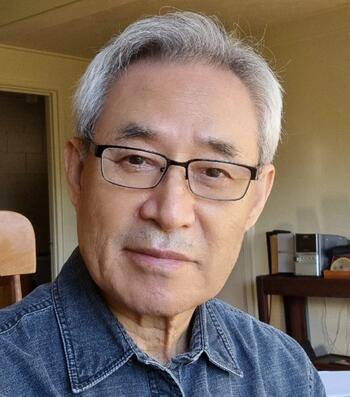
About the Speaker: Dr. Vael Gates is a postdoctoral researcher at the Institute for Human-Centered Artificial Intelligence (HAI) and the Center for International Security and Cooperation (CISAC) at Stanford University. They study perceptions of AI safety, and are currently interviewing technical AI researchers to understand their views about risks from AI. They previously completed their PhD at UC Berkeley, formalizing and testing computational models of social collaboration.

Virtual

Vael Gates
Seminars
-

For spring quarter 2022, CISAC will be hosting hybrid events. Many events will offer limited-capacity in-person attendance for Stanford faculty, staff, fellows, visiting scholars, and students in accordance with Stanford’s health and safety guidelines, and be open to the public online via Zoom. All CISAC events are scheduled using the Pacific Time Zone. 

SEMINAR RECORDING

Virtual to Public. Only those with an active Stanford ID with access to William J Perry Conference Room in Encina Hall may attend in person. 

Gorakh Pawar
Seminars
-

For winter quarter 2022, CISAC will be hosting hybrid events. Many events will offer limited-capacity in-person attendance for Stanford faculty, staff, fellows, visiting scholars, and students in accordance with Stanford’s health and safety guidelines, and be open to the public online via Zoom. All CISAC events are scheduled using the Pacific Time Zone. 


About the Event: Freddy Chen has developed a domestic political theory to explain the consequences of economic shocks for foreign policy. He argues that political leaders have incentives to improve their perceived competence by linking economic grievances to foreign countries. This linkage, in turn, increases public desire for more hawkish foreign policy. Nonetheless, leaders’ ability to make such connections depends on whether they can successfully manipulate information about the culpability for economic shocks. Therefore, the extent to which leaders can control the information environment determines whether an economic shock leads to more aggressive foreign policy. Survey experiments fielded on the American public and a unique sample of U.S. foreign policy analysts show that the information environment shapes elites’ expectations about leaders’ political behavior, public perceptions of leader competence, perceived culpability for the economic shock, and public preferences over foreign policy. Moreover, a cross-national analysis demonstrates that an economic shock tends to increase foreign policy hawkishness if the shock is more foreign-related or if the public has less access to a potential voice of the opposition. This article advances our understanding of the relationship between economic shocks, foreign policy, and public opinion as well as the interactions between domestic politics and international relations, with important implications for both political science research and policymakers.

About the Speaker: Frederick Chen is a Ph.D. Candidate in the Department of Political Science at the University of Wisconsin–Madison and currently a Pre-doctoral Fellow at the Center for International Security and Cooperation at Stanford University. His research focuses on how economics and security can interact to influence international relations, particularly through domestic political mechanisms. His work has appeared in the Journal of Politics and Conflict Management and Peace Science. He received the David A. Lake Award for best paper from the International Political Economy Society. He earned his M.A. in International Relations from Peking University (2016) and B.A. in International Politics from Tsinghua University (2013).

Virtual to Public. Only those with an active Stanford ID with access to William J Perry Conference Room in Encina Hall may attend in person. 

Frederick R. Chen CISAC
Seminars
-

How does a country move from a low information-low accountability political equilibrium to one where voters are informed and politicians feel pressure to perform well? This paper explores two broad aspects of this equilibrium shift in the context of a national scale-up of a political information campaign in Sierra Leone. The first looks at the fundamentals of supply and demand for information, measuring i) politician willingness to participate in initiatives that inform voters and how it responds to the introduction of a guaranteed dissemination platform; and ii) voter willingness to pay for information and its compatibility with for-profit private sector dissemination models. The second captures general constraints in scaling a controlled demonstration pilot to serve a much broader population, including displacement effects, spillovers, distributional effects, piloting bias, and the ability to maintain impact while extending reach and lowering cost.

ABOUT THE SPEAKER

Image
Katherine Casey
Katherine Casey is an Associate Professor of Political Economy at the Stanford Graduate School of Business. Her research explores the interactions between economic and political forces in developing countries, with a particular interest in the role of information in enhancing political accountability and the influence of foreign aid on economic development. Her work has appeared in the American Economic Review, Journal of Political Economy, and Quarterly Journal of Economics, among others. She teaches a course in the MBA program focused on firm strategy vis a vis government in emerging markets.


At this time, in-person attendance is limited to Stanford affiliates only. We continue to welcome our greater community to join virtually via Zoom.

Didi Kuo

Online, via Zoom

Katherine Casey Associate Professor, Stanford Graduate School of Business
Seminars
-

Too often, the debate over NATO enlargement avoids a discussion of the alternative policies and the pros and cons of each. Even if take a NATO-centric approach to the question of European security after the Cold War, there were three major alternatives to the policy chosen: pursuing Partnership for Peace and setting aside enlargement; opting for including some but not all of the countries that joined NATO after 1999; and inviting Russia to join. Each of these options had its proponents within the US government. This seminar will compare and contrast the costs and benefits of the policy chosen against its alternatives in order to evaluate NATO enlargement.

ABOUT THE SPEAKER

Image
Jim Goldgeier
James Goldgeier is a Visiting Scholar at Stanford University’s Center for International Security and Cooperation, a Visiting Fellow at the Brookings Institution, and a Professor of International Relations at the School of International Service at American University, where he served as Dean from 2011-17. He is a past president of the Association of Professional Schools of International Affairs. He is a senior adviser to the Bridging the Gap initiative, funded by the Carnegie Corporation of New York and the Raymond Frankel Foundation, and he serves as co-editor of the Bridging the Gap book series at Oxford University Press. He has authored or co-authored four books.


Virtual to Public. Only those with an active Stanford ID with access to E008 in Encina Hall may attend in person.

Didi Kuo

Virtual to Public. Only those with an active Stanford ID with access to E008 in Encina Hall may attend in person.

Jim Goldgeier
Seminars
-

Democratic backsliders attack not just institutions but the culture of democracy – the public’s beliefs about the quality and value of their democracies. They try to convince the public that (opposing) politicians are corrupt, judges are partisan, bureaucrats are hacks, newspapers purposely lie – in sum, that the public sphere is shabby and not much is lost if they attack it. But this trash-talking of democracy is unevenly successful. Why does it sometimes fail, and what do its failures suggest about effective resistance to democratic backsliding? Susan Stokes will explore these questions with evidence from the US, Turkey, Mexico, and several other countries.

ABOUT THE SPEAKER

Image
Susan Stokes
Susan Stokes is the Tiffany and Margaret Blake Distinguished Service Professor of Political Science at the University of Chicago and Director of the Chicago Center on Democracy. She is also a founding member of Bright Line Watch. Her current research projects are on mechanisms of direct democracy, and on democratic erosion.


Virtual to Public. Only those with an active Stanford ID with access to E008 in Encina Hall may attend in person.

Didi Kuo

Virtual to Public. Only those with an active Stanford ID with access to E008 in Encina Hall may attend in person.

Susan Stokes Director, Chicago Center on Democracy Blake Professor of Political Science University of Chicago
Seminars

Image
Facebook's Faces event flyer on blue and red background with photo of Chinmayi Arun
Join us on Tuesday, March 1 from 12 PM - 1 PM PT for a panel discussion on “Facebook’s Faces” featuring Chinmayi Arun, Resident Fellow at the Yale Law School in conversation with Nate Persily of the Stanford Cyber Policy Center. This weekly seminar series is jointly organized by the Cyber Policy Center’s Program on Democracy and the Internet and the Hewlett Foundation’s Cyber Initiative.

About The Seminar: 

Scholarship about social media platforms discusses their relationship with states and users. It is time to expand this theorization to account for differences among states, the varying influence of different publics and the internal complexity of companies. Viewing Facebook’s relationships this way includes less influential states and publics that are otherwise obscured. It reveals that Facebook engages with states and publics through multiple, parallel regulatory conversations, further complicated by the fact that Facebook itself is not a monolith. Arun argues that Facebook has many faces – different teams working towards different goals, and engaging with different ministries, institutions, scholars and civil society organizations. Content moderation exists within this ecosystem.
 
This account of Facebook’s faces and relationships shows that less influential publics can influence the company through strategic alliances with strong publics or powerful states. It also suggests that Facebook’s carelessness with a seemingly weak state or a group, may affect its relationship with a strong public or state that cares about the outcome.

To be seen as independent and legitimate, the Oversight Board needs to show its willingness to curtail Facebook’s flexibility in its engagement with political leaders where there is a real risk of harm. This essay hopes to show that Facebook’s fear of short-term retaliation from some states should be balanced out by accounting for the long-term reputational gains with powerful publics and powerful states who may appreciate its willingness to set profit-making goals aside in favor of human flourishing.

About the Speakers:

Image
Chinmayi Arun
Chinmayi Arun is a resident fellow of the Information Society Project at Yale Law School, and an affiliate of the Berkman Klein Center of Internet & Society at Harvard University. She has served on the faculties of two of the most highly regarded law schools in India for over a decade, and was the founder Director of the Centre for Communication Governance at National Law University Delhi. She has been a Human Rights Officer with the United Nations and is a member of the United Nations Global Pulse Advisory Group on the Governance of Data and AI, and of UNESCO India’s Media Freedom Advisory Group.

Chinmayi serves on the Global Network Initiative Board, and is an expert affiliated with the Columbia Global Freedom of Expression project. She has been consultant to the Law Commission of India and member of the Indian government’s multi stakeholder advisory group for the India Internet Governance Forum in the past.

Image
Nate Persily
Nathaniel Persily is the James B. McClatchy Professor of Law at Stanford Law School, with appointments in the departments of Political Science, Communication, and FSI.  Prior to joining Stanford, Professor Persily taught at Columbia and the University of Pennsylvania Law School, and as a visiting professor at Harvard, NYU, Princeton, the University of Amsterdam, and the University of Melbourne. Professor Persily’s scholarship and legal practice focus on American election law or what is sometimes called the “law of democracy,” which addresses issues such as voting rights, political parties, campaign finance, redistricting, and election administration. He has served as a special master or court-appointed expert to craft congressional or legislative districting plans for Georgia, Maryland, Connecticut, New York, North Carolina, and Pennsylvania.  He also served as the Senior Research Director for the Presidential Commission on Election Administration. His current work, for which he has been honored as a Guggenheim Fellow, Andrew Carnegie Fellow, and a Fellow at the Center for Advanced Study in the Behavioral Sciences, examines the impact of changing technology on political communication, campaigns, and election administration.  He is codirector of the Stanford Cyber Policy Center, Stanford Program on Democracy and the Internet, and the Stanford-MIT Healthy Elections Project, which supported local election officials in taking the necessary steps during the COVID-19 pandemic to provide safe voting options for the 2020 election. He is also a member of the American Academy of Arts and Sciences, and a commissioner on the Kofi Annan Commission on Elections and Democracy in the Digital Age.


Seminars
-

When backsliding occurs at the hands of populist presidents who were elected in landslide elections, producing dominant executives with few institutional checks and weak opposition parties, should we blame the decline in democracy on their populist ideology, their presidential powers, or their parties’ dominance in the legislature? The literature on democratic backsliding has mostly arrived at a consensus on what backsliding entails and collectively has revealed its growing prevalence around the globe. Yet, scholars have not settled on causal explanations for this phenomenon. We assess the evidence for recent ideology-centered arguments for democratic backsliding relative to previous institutional arguments among all democratically elected executives serving in all regions of the world since 1970. We use newly available datasets on populist leaders and parties to evaluate the danger of populists in government, and we employ matching methods to distinguish the effects of populist executives, popularly-elected presidents, and dominant executives on the extent of decline in liberal democracy.

ABOUT THE SPEAKER

Image
Marisa Kellam
Marisa Kellam is associate professor of political science at Waseda University (Tokyo, Japan). Her research focuses on the quality of democracy in Latin America. In her work, she links institutional analysis to governance outcomes within three lines of inquiry: (1) political parties and coalitional politics, (2) media freedom and democratic accountability, and (3) populism and democratic backsliding. She has published her research in peer-reviewed journals such as the British Journal of Political Science, Comparative Political Studies, Party Politics, Electoral Studies, and Political Communication. After earning a Ph.D. in political science from UCLA, she spent several years as an assistant professor at Texas A&M University. Since 2013, Marisa Kellam has been teaching international and Japanese students in the English-based degree programs of Waseda University’s School of Political Science & Economics.

At this time, in-person attendance is limited to Stanford affiliates only. We continue to welcome our greater community to join virtually via Zoom.

Didi Kuo

Online, via Zoom

Encina Hall

616 Jane Stanford Way

Stanford, CA 94305-6055

0
CDDRL Visiting Scholar, 2021-23
marisa_kellam_2022.jpg

Marisa Kellam researches the quality of democracy with a focus on Latin America and a growing interest in East Asia. Her research links institutional analysis to various governance outcomes in democracies along three lines of inquiry: political parties and coalitional politics; mass electoral behavior and party system change; and democratic accountability and media freedom. She has published her research in various peer-reviewed journals, including The British Journal of Political Science, Comparative Political Studies, Party Politics, Electoral Studies, and Political Communication. Originally from Santa Rosa, California, Marisa Kellam earned her Ph.D. in political science from UCLA and spent several years as an assistant professor at Texas A&M University. Since 2013, she has been Associate Professor at Waseda University in Tokyo, Japan, where she also served as Director of the English-based degree programs for the School of Political Science & Economics. Currently she is a steering committee member for the V-Dem Regional Center for East Asia.

CV
Seminars
Governance
-

Studies of group-based conflict typically focus on the group as the unit of analysis. But group attributes often mask individual-level variation. Why do some individuals within groups identify more strongly with the group, feel greater hostility toward out-groups, and participate in conflict more than others?

We argue that a key ingredient in explaining who within a group feels more aggrieved, more attached, and more hostile to others is the legacy of violence. Violence itself creates and amplifies group identities that then persist across generations within families. It also forges a sense of victimhood, an identity that implies moral status and out-group threat. We test this argument using multigenerational surveys we fielded in Guatemala and Cambodia in 2017 and 2018.

We find that individuals whose ancestors were exposed to more violence during prior periods of conflict identify more strongly with their group, identify as victims, and distrust the rival out-group. We find that the effect of these identities on political participation depends on the political context, both during and after the conflict, and how it shapes blame attribution and the meaning of political participation.

Virtual to Public. Only those with an active Stanford ID with access to E008 in Encina Hall may attend in person.

ABOUT THE SPEAKER

Image
Noam Lupu Headshot
Noam Lupu is Associate Professor of Political Science and Associate Director of LAPOP Lab at Vanderbilt University. He studies comparative political behavior, partisanship and political parties, class and inequality, representation, and legacies of violence. He is the author of Party Brands in Crisis (Cambridge University Press, 2016) and coeditor (with Virginia Oliveros and Luis Schiumerini) of Campaigns and Voters in Developing Democracies (University of Michigan Press, 2019).

This event is co-sponsored by CDDRL and the Center for Latin American Studies.

Image
CDDRL and CLAS logos

Didi Kuo

Virtual to Public. Only those with an active Stanford ID with access to E008 in Encina Hall may attend in person.

Noam Lupu Associate Professor of Political Science Vanderbilt University
Seminars
-

Image
David Molitor
David Molitor is an Associate Professor of Finance and Economics at Gies College of Business, University of Illinois at Urbana-Champaign, and a Research Associate at the National Bureau of Economic Research (NBER). His research explores how location and the environment shape health and health care delivery in the United States. He is a Principal Investigator of the Illinois Workplace Wellness Study, a large-scale field experiment of workplace wellness conducted at the University of Illinois. His work has been supported by the National Institutes of Health, the National Science Foundation, the Social Security Administration, JPAL North America, and the Robert Wood Johnson Foundation. Molitor's research has been published in leading academic journals including The American Economic Review, The Quarterly Journal of Economics, and The Review of Economics and Statistics and has been covered by media outlets including The New York Times, The Wall Street Journal, and The Washington Post.

You are invited to a Zoom meeting. 

Zoom Link 

Meeting ID: 990 6232 4907

Password: 764436

Seminars
Subscribe to Seminars