-
A stethoscope lying over bills of foreign money with text "the future of health policy"

The third installment in a special event series on the occasion of Shorenstein APARC's 40th Anniversary, "Asia in 2030, APARC@40"

Hosted by APARC's Asia Health Policy Program

The Asia Health Policy Program (AHPP) aims to help empower health systems and policymakers in the Asia-Pacific region to improve their proactive, evidence-based responses to population health problems. This webinar brings together former postdoctoral fellows and visiting scholars from the program to explore their contributions to guiding healthcare providers and policy audiences toward a better understanding of health and demographic issues and the delivery of disease management and other health services. In celebrating the 40th anniversary of the Shorenstein Asia-Pacific Research Center, these scholars and practitioners will also share their reflections on how the center and the program have shaped their research and professional careers.

Speakers

Image
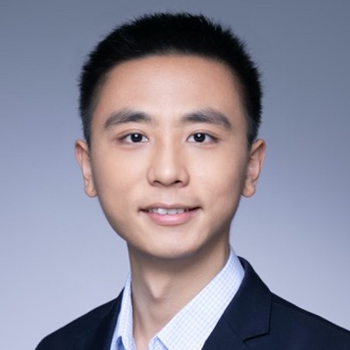
Brian Chen

Brian Chen, JD, PhD. Dr. Chen is an associate professor at the Arnold School of Public Health, University of South Carolina. He brings with him a global perspective on health and well-being, having lived and worked in health-related industries in Taiwan, Japan, and France. Using the tools of economic analysis, his research focuses on the organization and delivery of health care as well as the social determinants of health in Asia and the United States. A particular focus of his work is on the impact of laws and economic incentives on healthcare treatment decisions. His doctoral dissertation, published in the Journal of Public Economics, explored how Taiwan’s separating policy that mandated the separation of diagnosing from drug dispending affected physician prescribing behavior, and whether such changes had an impact on observable health outcomes.

Dr. Chen continues to work on economics- and health law-related research, investigating the impact of opioid regulations on prescribing behavior and subsequent health consequences. His new project aims to understand how the introduction of a novel class of therapeutics may have affected the undertreatment of osteoporosis, an important question in aging societies in Asia, the United States, and around the world.

Dr. Chen received his BA summa cum laude in Linguistics with Computer Science from Harvard College (1992), JD from Stanford Law School (1997), and his PhD in Business Administration from the University of California at Berkeley (2009). He was a postdoctoral fellow at the Walter H. Shorenstein Asia-Pacific Research Center at Stanford from 2009 to 2011.

Image
Wasin Laohavinij

Wasin Laohavinij, MD. Wasin Laohavinij is a medical doctor with an interest in quality improvement and program evaluation. He was a visiting scholar at the Asia Health Policy Program, Walter H. Shorenstein Asia Pacific Research Center, Stanford University in the United States in the Autumn of 2019.

Currently, He is a preventive medicine physician concentrating on non-communicable diseases and serves as a Chief of Data Management and Cost Evaluating Center, at King Chulalongkorn Memorial Hospital, Thailand. His work focuses on reducing healthcare costs while maintaining the quality-of-care patients receive. Furthermore, he is also interested in evaluating the efficacy and cost-effectiveness of health interventions.

Image
Phyu Phyu Thin Zaw

Phyu Phyu Thin Zaw, MBBS, MPP, PhD. Phyu Phyu Thin Zaw, who is a Burmese national, is a medical doctor, epidemiologist, and health systems researcher currently working as a Lecturer in the School of Public Health at the Li Ka Shing Faculty of Medicine, University of Hong Kong. She is also a member of the Steering Committee of the Science in Exile initiative, which brings together at-risk, displaced, and refugee scientists along with like-minded organizations who work together to strengthen systems that support, protect and integrate such affected scientists.

Phyu Phyu’s research interests are equity, health and education policies, Southeast Asia health systems and policies, sexual and reproductive health, gender equality, poverty eradication, and human rights issues. Thin Zaw is also a public health and policy consultant giving technical advice to think tanks and non-governmental organizations.

Image
Margaret Triyana

Margaret Triyana, PhD. Dr Triyana is a Senior Economist at the World Bank's Office of the Chief Economist, South Asia Region. Her main research area examines human capital formation over the life cycle, with an emphasis on how policies and environmental factors affect different dimensions of human capital in low and middle-income countries. She also examines the distributional impacts of both environmental risks and policies.

Image
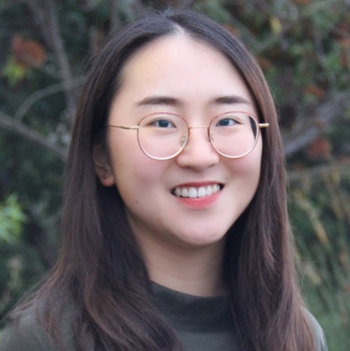
Siyan Li

Siyan Yi, MD, MHSc, PhD. Dr. Yi is a medical doctor and an infectious disease epidemiologist by training. He received his PhD from the School of International Health of the University of Tokyo in Japan in 2010. He was a postdoctoral fellow at the Asia Health Policy Program, Walter H. Shorenstein Asia Pacific Research Center, Stanford University from 2011-2012. He is an Assistant Professor and Director of the Integrated Research Program at Saw Swee Hock School of Public Health, National University of Singapore. He also serves as Director of KHANA Center for Population Health Research in Cambodia and Adjunct Associate Professor at Touro University California, the United States. His implementation research program focuses on developing and evaluating community-based innovative interventions for improving access to prevention, treatment, and care services for HIV/AIDS, tuberculosis, sexual and reproductive health, and maternal and child health among vulnerable and marginalized populations in Southeast Asia.

Karen Eggleston
Karen Eggleston

Online via Zoom Webinar

Brian Chen Associate Professor, Health Services Policy and Management, Arnold School of Public Health, University of South Carolina
Wasin Laohavinij Chief of Data Management and Cost Evaluating Center and Physician, King Chulalongkorn Memorial Hospital, Thailand
Phyu Phyu Thin Zaw Lecturer, School of Public Health, Li Ka Shing Faculty of Medicine, University of Hong Kong
Margaret Triyana Senior Economist, World Bank, South Asia Region
Siyan Yi Assistant Professor and Director of the USH-SSHSPH Integrated Research Program at Saw Swee Hock School of Public Health, National University of Singapore
Seminars
-
Dr. Chun-yi Lee photo and text march 8th

Join the Cyber Policy Center, together with the Hoover Institution on Wednesday, March 8, from Noon–1 PM Pacific, for Semiconductors and Geo-technology: ‘Know-how’ is Power, a discussion with Dr. Chun-Yi Lee, Associate Professor in the School of Politics and International Relations, and Director of the Taiwan Studies Program, at the University of Nottingham. The session will be moderated by Charles Mok, visiting scholar at the Global Digital Policy Incubator (GDPi).

Geopolitics is conventionally understood as a struggle for power. The focus of geopolitical analysis is typically on states; power is understood in terms of states’ economic and military strength. In the era of globalisation, production relies on complex supply chains. While this paper focuses on the production of a hi-tech product—semiconductors—it argues more generally that technology production and supply chain ‘know how’ is implicated in geopolitical power. Through an elaboration of the concept of ‘geo-technology’, this paper argues that a consideration of technology production capacity (or ‘know-how’) can enrich conventional understandings of geopolitics.

The US, Taiwan and China play different roles in the global semiconductor manufacturing supply chain. The leading semiconductor designers are based in the US, while the Taiwan Semiconductor Manufacturing Company (TSMC) produces most of the world’s high-end chips. China, on the other hand, is an economic and manufacturing powerhouse, but remains at the low end of the manufacturing supply chain. This paper argues that the US and Taiwan have significant leverage in the production of semiconductors, granting them geopolitical power. It therefore asks if Taiwan, and the US, can use their technological 'know-how’ to gain further leverage in the geopolitical tug of war with China. Data of this paper will come from semi-constructed interviews in Taiwan and Japan, approximately twenty elite interviews from technology policy analysts, policy makers and high-skilled engineers, along with relevant policy analyses. The paper aims to explore the link between human talents in the semiconductor supply chain and geopolitics.

This session is part of the Winter Seminar Series, a series spanning January through March, hosted at the Cyber Policy Center with the Program on Democracy and the Internet. Sessions are in-person and virtual, with in-person attendance offered to Stanford affiliates only. Lunch is provided for in-person attendance. Registration is required. 

NOTE: This session will take place in MOGHADAM ROOM 119, this is a different conference room than our other Winter Seminar Series sessions. 

About the Speaker

Dr. Chun-Yi Lee is Associate Professor in the School of Politics and International Relations, and Director of the Taiwan Studies Program, at the University of Nottingham. Her first book, Taiwanese Business or Chinese Security Asset?, was published by Routledge in 2011. She is currently working on her second monograph, on semiconductor manufacturing and geopolitics. She is editor in chief of the on-line academic magazine, Taiwan Insight, and co-editor of the ‘Taiwan and World Affairs’ book series with Palgrave.


Charles Mok
Dr. Chun-Yi Lee
Seminars
-
Image
Simone Abbiati event


In this talk, Abbiati will explore how contemporary novels that depict the pain of IRA terrorism represent the perspective of victims. The talk will use computational methods to investigate the structural representation of pain in literary works dealing with "The Troubles", to then consider the emotional impact of using these methods to study politically engaged fiction. By analyzing the aesthetic experience of reading literature having it processed by algorithms, the presentation aims to shed light on the impact of computational literary analysis on the reader's empathetic response.

The presentation will include lunch and take place at the Stanford Center for Spatial and Textual Analysis in Wallenberg 433A. A Zoom link is available upon request from Center Manager, Jonathan Clark (jclark93@stanford.edu).


Simone Abbiati is a third-year PhD student in Transcultural studies in the humanities at University of Bergamo. His work relates to the hermeneutic rethinking of DH methodologies regarding fictional space, and he is particularly interested in combining text mining and digital cartography to reflect on politically debated spaces in literature. He is currently working on the British-Irish border and the Basque Country, with the aim of identifying how literature mirrored different border conceptions such as complex territorialization processes and terrorism.

Sponsored by the Center for Spatial and Textual Analysis, co-sponsored by the Division of Literatures, Cultures, and Languages and The Europe Center.

Encina Hall 2nd floor, William J. Perry Conference Room

Simone Abbiati, University of Bergamo
Seminars
-

Sponsored by CISAC and Stanford Health Policy

Seminar Recording

About the Event: Dean Winslow describes the challenges facing the US during the COVID-19 pandemic emphasizing the importance of diagnostic testing in responding to the pandemic.  He discusses the critical role of the US government in procuring and stockpiling  tests and providing them to areas experiencing hot spots and to schools, communities of high social vulnerability and other congregate settings.  In the second part of the talk Winslow describes how the CDC supported the care and resettlement in the US of more than 124,000 Afghan refugees who fled the country in August 2021 following the fall of Afghanistan to Taliban forces.  He also describes the CDC response and support of undocumented immigrants arriving at the Southwest Border.

About the Speaker: Dean Winslow, MD is Professor of Medicine with appointments in the Divisions of Hospital Medicine and Infectious Diseases and is a Senior Fellow (courtesy) at CISAC/Freeman Spogli Institute. He has served on the Stanford faculty since 1998 and served from 2003-2008 as Co-Director of Stanford's Infectious Diseases Fellowship Training Program. He was in private practice in Wilmington, Delaware where he started the state’s first multidisciplinary clinic for HIV patients in 1985. In 1988 he joined the DuPont Company where he worked both as a bench scientist on HIV drug resistance then later designed the clinical trials supporting FDA approval of efavirenz. In 1999 he became Vice President of Regulatory Affairs at Visible Genetics Inc. and led the FDA clearance of the TRUGENE HIV-1 drug resistance test. Dr. Winslow joined the staff at Santa Clara Valley Medical Center in 2003, where he served as Chief of the Division of AIDS Medicine and later as Chair of the Department of Medicine. In 2015 he was appointed Academic Physician-In-Chief at Stanford/ValleyCare and Vice Chair of the Department of Medicine. He was a Resident Fellow in Robinson House 2013-2017 and was visiting faculty at Oxford University in 2017. He was Lead Physician for the US Antarctic Program of the National Science Foundation 2019-2020 based at McMurdo Station, Antarctica. In 2021 he took leave from Stanford to lead the US COVID-19 Testing and Diagnostic Working Group. He served as CDC Senior Advisor to Operation ALLIES WELCOME and Chief Medical Officer for the Southwest Border Migrant Health Task Force before returning to Stanford in July 2022.

Dr. Winslow is a Master of the American College of Physicians, Fellow of the Royal College of Physicians, the Infectious Diseases Society of America, and the Pediatric Infectious Diseases Society. He is the author of 87 papers. He is,a member of the IDSA Sepsis Task Force, and previously served as Chair of the Standards and Practice Guidelines Committee.

Colonel Winslow entered the Air National Guard in 1980 and was a Distinguished Graduate of the USAF School of Aerospace Medicine. He served as Commander of the 159th Medical Group 1992-1995 and was State Air Surgeon, Delaware Air National Guard 1995-2011. He served as ANG Assistant to the Commander, 59th Medical Wing, Joint Base San Antonio 2011-2014. Colonel Winslow deployed to the Middle East six times from 2003-2011 as a flight surgeon supporting combat operations in Iraq and Afghanistan. From Jan-April 2003 Colonel Winslow was the flight surgeon responsible for combat rescue operations from Tikrit to northern Iraq. In 2005 he coordinated military public health in Louisiana in the aftermath of Hurricane Katrina. In 2006 Colonel Winslow served as an ER physician at the United States Air Force 447th EMEDS (combat hospital) in Baghdad and in 2008 he served as hospital commander during the Iraq surge. He is a 2007 graduate of Air War College. He served as an infectious disease consultant to the USAF Surgeon General. In 2017 Dr. Winslow was nominated by the President to serve as Assistant Secretary of Defense for Health Affairs. He has 1150 military flying hours including 431 combat hours and 263 combat sorties. He has extensive operational experience in fighter, tactical airlift, and combat rescue missions. He holds an FAA Airline Transport Pilot license.

Since 2006 Dr. Winslow has arranged medical care in the U.S. for 28 Iraqi children who have complicated medical conditions for which care is not available in Iraq. In 2015, Dr. Winslow and his wife, Dr. Julie Parsonnet, created The Eagle Fund of the Silicon Valley Community Foundation, which provides aid to middle eastern and central American refugees. In 2018 he co-founded Scrubs Addressing the Firearms Epidemic (SAFE), which unites health care professionals to address gun violence in the US as a public health issue and to advocate for education, research, and evidence-backed policy to reduce gun violence.

 All CISAC events are scheduled using the Pacific Time Zone.

William J. Perry Conference Room

Dean Winslow
Seminars
-

Seminar Recording

About the Event: Hecker will discuss his new book, Hinge Points: An Inside Look at North Korea’s Nuclear Program, in which he describes how North Korea—one of the most isolated in the world and in the policy cross hairs of every U.S. administration during the past 30 years—progressed from zero nuclear weapons in 2001 to a threatening arsenal of likely more than 50 such weapons today. He will also touch on how CISAC inspired his work on North Korea and what it was like in that environment to write the book. 

About the Speaker: Siegfried Hecker is professor of practice at the Middlebury Institute of International Studies at Monterey and professor of practice in the Department of Nuclear Engineering at Texas A&M University. He was at the Los Alamos National Laboratory for 34 years, including serving as its fifth director from 1986 through 1997. He was at Stanford University for 17 years in the Department of Management Science and Engineering and CISAC, including serving as co-director from 2007 to 2012. Hecker has worked on nuclear matters for most of his career, including having visited all countries with declared nuclear weapons programs, including North Korea. Hecker is the editor of Doomed to Cooperate (2016), two volumes documenting the history of Russian-U.S. laboratory-to-laboratory cooperation and Hinge Points: An Inside Look at North Korea’s Nuclear Program (2023) written with Elliot Serbin.

 All CISAC events are scheduled using the Pacific Time Zone.

William J. Perry Conference Room

Siegfried Hecker
Seminars
-
AHPP 3_9

Co-sponsored by Peking University Institute for Global Health and Development, and the Asia Health Policy Program

We study a commons problem in the context of the emergency ambulance service in Tokyo. Emergency ambulance service is free in Japan, and no one is excluded from using it. Because capacity is limited, individually rational ambulance use may delay the use by others, lowering the chance of survival. The Fire Department urges the proper use of ambulances to save lives that can be saved, but little is known about the extent of the negative consumption externality. In this paper, we first estimate how one's ambulance use affects others with respect to arrival delays and survival rates. Then, we analyze the impact of potential remedies that alter non-excludability and rivalry in ambulance use.

Image
Toshiaki Iizuka 030923

Toshiaki Iizuka is a Professor at Graduate School of Economics, the University of Tokyo. His research interests are in the field of health economics and industrial organization. He has written articles on incentive and information in the healthcare markets, which appeared in leading economics journals, including American Economic Review, RAND Journal of Economics, and American Economic Journal: Applied Economics. Dr. Iizuka currently serves as Associate Editor of Journal of Health Economics and a member of the Central Social Insurance Medical Council, a council of the Japanese Health Ministry that determines provider payments and drug prices. He holds a PhD in Economics from the University of California, Los Angeles.

Jianan Yang

Via Zoom webinar http://bit.ly/3IrBNPJ

616 Serra StreetEncina Hall E301Stanford, CA94305-6055
0
toshiaki_iizuka.jpg Ph.D.

Toshiaki Iizuka is Professor at Graduate School of Public Policy and Graduate School of Economics, the University of Tokyo. Before joining the University of Tokyo in 2010, he taught at Vanderbilt University (2001-2005), Aoyama Gakuin University (2005-2009), and Keio University (2009-2010). He served as Dean of Graduate School of Public Policy, the University of Tokyo, between 2016 and 2018. He is a recipient of Abe Fellowship (2018-2019). 

His research interests are in the field of health economics and health policy. He has written a number of articles on incentive and information in the health care markets. His research articles have appeared in leading professional journals, including American Economic Review, RAND Journal of Economics, Journal of Health Economics, and Health Affairs, among others. Dr. Iizuka holds a PhD in Economics from the University of California, Los Angeles, an MIA from Columbia University, and an ME and BE from the University of Tokyo.
Visiting Scholar, Asia Health Policy Program at APARC
Toshiaki Iizuka Professor, Graduate School of Economics, the University of Tokyo.
Seminars
-
Tatjana Thelen

Why have the politically, economically, and emotionally significant parcels sent from West Germany to the Socialist East been neglected by social theory? In my talk, I will argue that ideas of modernity on both sides of the Iron Curtain produced a blind spot that is worth reconsidering.

During the time that two German states existed, parcels sent to the Socialist East were politically, economically, and emotionally important. Successive West German government campaigns supported them as symbols of unity through tax releases, school and poster campaigns. Millions of parcels were sent each year and the socialist governments reluctantly learned to rely on their economic value. Increasingly, the exchange included large kinship networks beyond individual relations. After unification, these networks quickly dissolved and the parcels became symbols of difference between relatives, as well as between East and West Germany more broadly. Despite their material and immaterial significance, these kinship practices represent an epistemic void. They play no role in the analyses of family sociologists and students of political transformation. In my talk, I ask why social scientists have not paid attention to these practices and argue that ideas of modernity on both sides of the Iron Curtain produced this blind spot. Taking these exchanges seriously could still eventually lead to new insights into the co-production of state and kinship.


Tatjana Thelen is Professor for Social and Cultural Anthropology at the University of Vienna and currently serves as Distinguished Visiting Austrian Chair at Stanford. She previously held positions at the Max Planck Institute for Social Anthropology and at universities in Zurich, Bayreuth, Halle and Berlin. Her research has centred on postsocialist transformations in Hungary, Romania, Serbia and eastern Germany with a focus on property, welfare, kinship and state. Her latest co-edited book is The Politics of Making Kinship. Historical and Anthropological Perspectives (Berghahn 2023).

At Stanford, Tatjana is teaching the course ANTHRO 124C: Anthropology of the State in Winter 2023.


*If you need any disability-related accommodation, please contact Shannon Johnson at sj1874@stanford.edu. Requests should be made by May 4, 2023.

Anna Grzymała-Busse
0
Distinguished Visiting Austrian Chair at The Europe Center, 2022-2023
Professor of Social and Cultural Anthropology, University of Vienna
Foto Thelen 2.jpg

Tatjana Thelen is Professor in the Department of Social and Cultural Anthropology at the University of Vienna and will serve during the 2023 academic year as Distinguished Visiting Austrian Chair at Stanford. She previously taught at universities in Zurich, Bayreuth, Halle, and Berlin. After carrying out fieldwork on post-socialist economic transformations in Hungary and Romania, she joined the Legal Pluralism Group at the Max Planck Institute for Social Anthropology and shifted her interest to care and welfare with fieldwork in eastern Germany. She returned to Hungary and Romania, as well as visiting Serbia, for a Volkswagen-founded project on access to natural and state resources in rural areas.

Her theoretical work has centered on the role of care responsibilities in the (re)production (or dissolution) of significant relations that bridge diverse fields in economic and political anthropology. A second major topic has been the state and especially its conceptual separation from kinship. This question was also at the heart of an interdisciplinary research group at the Center for Interdisciplinary research in Bielefeld that she headed along with colleagues from Los Angeles, Zurich and Bayreuth.

Her latest co-edited publications include The Politics of Making Kinship. Historical and Anthropological Perspectives (Berghahn 2023), Politics and Kinship: A Reader (Routledge 2022); Measuring Kinship: Gradual Belonging and Thresholds of Exclusion, a special issue of Social Analysis (2021), Reconnecting State and Kinship. (University of Pennsylvania Press 2018); and Stategraphy: Toward a Relational Anthropology of the State. (Berghahn 2918, revised reprint).

Tatjana also founded the research networks CAST (Care and State) and currently works on a book proposal on the topic as synthesis of her former work.

At Stanford, Tatjana is teaching the course ANTHRO 124C: Anthropology of the State in Winter 2023.

Seminars
-
photo of jack balkin with text reading judging the internet february 17

Join us February 17th at 10 AM Pacific, for The Supreme Court's Upcoming Cases On Platform Regulation featuring Professor Jack Balkin of Yale Law School's Information Society Project, in conversation with Daphne Keller and Evelyn Douek. The session will be moderated by Nate Persily.

This term, the Supreme Court will consider two groundbreaking cases about platform regulation. The outcome of those cases, Gonzalez and Taamneh, will likely re-set the rules telling platforms when to remove content posted by their users.  Two more cases, likely to be heard next term, pose the opposite question. The NetChoice cases, about social media laws enacted in Texas and Florida, ask when lawmakers may prohibit platforms from removing content posted by users. This panel will examine the points of overlap and conflict between the claims in all four cases, and how the Court's resolution may reshape U.S. platform regulation.

About the Speaker

Jack M. Balkin is Knight Professor of Constitutional Law and the First Amendment at Yale Law School. He is the founder and director of Yale's Information Society Project, an interdisciplinary center that studies law and new information technologies. He also directs the Abrams Institute for Freedom of Expression and the Knight Law and Media Program at Yale.

Nathaniel Persily
Daphne Keller
Jack Balkin
Seminars
-
Nathan Lo is a Faculty Fellow in the Division of HIV, Infectious Diseases, and Global Medicine at the University of California San Francisco (UCSF). His research group studies the transmission of infectious diseases with an ultimate goal of informing public health policy. Dr. Lo's research blends diverse computational methodologies, including tools of simulation modeling, decision analysis, machine learning, and microbial genomics. He received a BS in Bioengineering from Rice University and MD/PhD from Stanford University and did his clinical training in internal medicine and infectious diseases at UCSF.
Nathan Lo Photo

After registering, you will receive a confirmation email containing information about joining the meeting.

Registration


Hybrid Seminar: Lunch will be provided for on-campus participants. 
Please register if you plan to attend, both for in-person and via Zoom.

Log in on your computer, or join us in person: 
Encina Commons, Room 119 
615 Crothers Way 
Stanford, CA 94305

Seminars
-
Jonathan Jackson, PhD, is the executive director of the Community Access, Recruitment, and Engagement (CARE) Research Center at Massachusetts General Hospital and is an Assistant Professor of Neurology at Harvard Medical School. Jonathan’s research focuses on inequities in clinical settings that affect marginalized populations, and he has received generous funding for this work, including a prestigious NIH Pioneer Award in 2020.
Jonathan Jackson Headshot


After registering, you will receive a confirmation email containing information about joining the meeting.

Registration


Hybrid Seminar: Lunch will be provided for on-campus participants. 
Please register if you plan to attend, both for in-person and via Zoom.

Log in on your computer, or join us in person: 
Encina Commons, Room 119 
615 Crothers Way 
Stanford, CA 94305

Seminars
Subscribe to Seminars