-
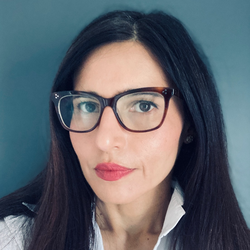
Tomila Lankina seminar

This talk will be based on Lankina's 2022 award-winning book, The Estate Origins of Democracy in Russia. She will discuss how tsarist social divides and the institution of sosloviye (estate) shaped social structure during communism and why the social longue durée matters for understanding post-Communist political regime trajectories.

ABOUT THE SPEAKER

Tomila Lankina is professor of International Relations at the IR Department of the London School of Economics and Political Science. She has worked on democracy and authoritarianism, mass protests and historical drivers of human capital and political regime change in Russia and other countries; she has also analyzed the propaganda and disinformation campaigns in the wake of Russia’s annexation of Crimea and aggression in Ukraine. Her latest research is on social structure and inequality. Her book, The Estate Origins of Democracy in Russia: From Imperial Bourgeoisie to Post-Communist Middle Class (Cambridge University Press 2022), won the 2023 J. David Greenstone Prize for the best book in the Politics and History section of the American Political Science Association and the 2023 Davis Center Book Prize in Political and Social Studies for an outstanding monograph published on Russia, Eurasia, or Eastern Europe in anthropology, political science, sociology, or geography in the previous calendar year. The book also received “Honorable Mention” for the Sartori Book Award of the American Political Science Association Organized Section for Qualitative and Multi-Method Research.

Virtual to Public. Only those with an active Stanford ID with access to Encina E008 in Encina Hall may attend in person.

Hesham Sallam
Hesham Sallam

Virtual to Public. Only those with an active Stanford ID with access to E008 in Encina Hall may attend in person.

Tomila Lankina Professor of International Relations at the London School of Economics and Political Science Professor of International Relations at the London School of Economics and Political Science Professor of International Relations at the London School of Economics and Political Science
Seminars
-
Lisa Blaydes seminar

How do regimes instrumentalize ascriptive identity to maintain political power? In this paper, I document, analyze, and seek to explain patterns of elite continuity in Kuwait. To do this, I establish the pre-oil wealth and "rootedness" of Kuwaiti families and connect this status to post-oil measures of social prestige. Next, I analyze survey data from 13,000 respondents from across the region to show that local "rootedness" positively impacts the ability of Arab Gulf nationals to obtain services from their governments. Taken together, my evidence suggests that ascriptive identity associated with one's historical family lineage impacts economic, political, and social outcomes for citizens in ways that maintain historical rank hierarchies.

ABOUT THE SPEAKER

Lisa Blaydes is Professor of Political Science and Senior Fellow at the Freeman Spogli Institute at Stanford University. She is the author of Elections and Distributive Politics in Mubarak's Egypt (Cambridge University Press, 2011) and State of Repression: Iraq under Saddam Hussein (Princeton University Press, 2018).

Virtual to Public. Only those with an active Stanford ID with access to Encina E008 in Encina Hall may attend in person.

Hesham Sallam
Hesham Sallam

Virtual to Public. Only those with an active Stanford ID with access to E008 in Encina Hall may attend in person.

Encina Hall West, Room 408
Stanford, CA 94305-6044

(650) 723-0649
0
Senior Fellow at the Freeman Spogli Institute for International Studies
Professor of Political Science
lisa_blaydes_108_vert_final.jpg

Lisa Blaydes is a Professor of Political Science at Stanford University. She is the author of State of Repression: Iraq under Saddam Hussein (Princeton University Press, 2018) and Elections and Distributive Politics in Mubarak’s Egypt (Cambridge University Press, 2011). Professor Blaydes received the 2009 Gabriel Almond Award for best dissertation in the field of comparative politics from the American Political Science Association for this project.  Her articles have appeared in the American Political Science Review, International Studies Quarterly, International Organization, Journal of Theoretical Politics, Middle East Journal, and World Politics. During the 2008-2009 and 2009-2010 academic years, Professor Blaydes was an Academy Scholar at the Harvard Academy for International and Area Studies. She holds degrees in Political Science (PhD) from the University of California, Los Angeles, and International Relations (BA, MA) from Johns Hopkins University.


Affiliated faculty at the Center on Democracy, Development and the Rule of Law
Affiliated faculty at the Center for International Security and Cooperation
Date Label
Lisa Blaydes
Seminars
-
eugene_finkel

What drives Russia's violence in and against Ukraine from the 19th century to 2024?

Russia’s full-scale invasion of Ukraine is the single most important event in Europe since the collapse of the Soviet Union in 1991. It is also arguably the major global geopolitical development since 9/11. My main argument is that violence and repression are deeply rooted in the history of Russo-Ukrainian relations. Since the mid-19th century, dominating Ukraine and denying Ukrainians an independent identity, let alone a state, has been the cornerstone of Imperial, Soviet and eventually, post-Soviet Russian policies.

More specifically, I show that Russian and Soviet policies were driven by two factors: identity and security. The idea of the shared origin and fraternity of Russians and Ukrainians is a staple of Russian self-perception and historiography. The second key factor is security. Western powers often passed through Ukraine to attack Russia; Ukraine’s fertile soil was crucial to feeding and funding the Russian and Soviet Empires. Even more than geopolitics, it was regime stability that drove Moscow and St. Petersburg’s obsessive focus on Ukraine. Nothing scares a Russian autocrat more than a democratic Ukraine, because if Ukrainians can build a democracy, then the supposedly fraternal Russian people might too. Thus, combined, identity, security, and the interaction between the two drive Russia’s policies towards Ukraine since the 19th century.


Eugene Finkel is the Kenneth H. Keller Associate Professor of International Affairs, School of Advanced International Studies (SAIS), Johns Hopkins University. His research focuses on how institutions and individuals respond to extreme situations: mass violence, state collapse, and rapid change.

Finkel's most recent book is Intent to Destroy: Russia's Two-Hundred-Year Quest to Dominate Ukraine (Basic Books, 2024). He is also the author of Ordinary Jews: Choice and Survival during the Holocaust (Princeton University Press, 2017), Reform and Rebellion in Weak States (Cambridge University Press, 2020, co-authored with Scott Gehlbach) and Bread and Autocracy: Food, Politics and Security in Putin’s Russia (Oxford University Press, 2023, co-authored with Janetta Azarieva and Yitzhak M. Brudny). His articles have appeared in the American Political Science Review, Journal of Politics, Comparative Political Studies, Comparative Politics, East European Politics and Societies, Slavic Review, and several other journals and edited volumes. Finkel has also published articles and op-eds in The Washington Post, Los Angeles Times, Foreign Affairs, The Spectator and other outlets.

*If you need any disability-related accommodation, please contact Shannon Johnson at sj1874@stanford.edu. Requests should be made by April 11, 2024.


REDS: RETHINKING EUROPEAN DEVELOPMENT AND SECURITY


The REDS Seminar Series aims to deepen the research agenda on the new challenges facing Europe, especially on its eastern flank, and to build intellectual and institutional bridges across Stanford University, fostering interdisciplinary approaches to current global challenges.

REDS is organized by The Europe Center and the Center on Democracy, Development and the Rule of Law, and co-sponsored by the Hoover Institution and the Center for Russian, East European and Eurasian Studies.


Image
CDDRL, TEC, Hoover, and CREEES logos
Anna Grzymała-Busse

Encina Hall 2nd floor, William J. Perry Conference Room

Eugene Finkel, Johns Hopkins University
Seminars
-
isabela_mares

How do parliamentary norms break down?

How does the presence of extremist parties in parliaments modify parliamentary norms? In this talk, I draw on two recent papers to examine the responses of mainstream politicians to the disruptive strategies of extremist legislators. A first study will examine the dynamics of parliamentary erosion during the Weimar parliament. Using a novel dataset of all calls-to-order, I document the existence of a cycle of provocation-counter provocation that led to the erosion of parliamentary norms in the last years of the Weimar Republic. 

A second paper (co-authored with Qixuan Yang) studies informal interactions in the contemporary German Bundestag during the period between 2017 and 2021. Using a novel dataset of over 25,000 parliamentary speeches, we document a significant erosion of parliamentary norms, as measured by an increase in the number of verbal and nonverbal interruptions. Both legislators from mainstream and extremist parties contribute to this erosion of parliamentary norms. We argue that legislators from mainstream parties use informal attacks on legislators from non-proximate extremist parties to appeal to voters on their extremes and signal a more extreme policy position. We show that the incentives of legislators from mainstream parties to engage in these informal attacks on extremist legislators can be explained by partisan and district-level conditions.


Isabela Mares is the Arnold Wolfers Professor of Political Science at Yale University. She specializes in the comparative politics of Europe. Professor Mares has written extensively on labor market and social policy reforms, the political economy of taxation, electoral clientelism, reforms limiting electoral corruption. Her current research examines the political responses to antiparliamentarism in both contemporary and historical settings.

Professor Mares is the author of five books. These include The Politics of Social Risk: Business and Welfare State Development (New York: Cambridge University Press 2003), Taxation, Wage Bargaining and Unemployment (New York: Cambridge University Press 2006), From Open Secrets to Secret Voting (New York: Cambridge University Press 2015), Conditionality and Coercion: Electoral clientelism in Eastern Europe (co-authored with Lauren Young, Oxford University Press 2018) and Protecting the Ballot: How First Wave Democracies Ended Electoral Corruption (Princeton: Princeton University Press 2022)."

*If you need any disability-related accommodation, please contact Shannon Johnson at sj1874@stanford.edu. Requests should be made by May 16, 2024.

Anna Grzymała-Busse

Encina Hall 2nd floor EAST,  Reuben Hills Conference Room

Isabela Mares, Yale University
Seminars
-
Flyer for AHPP event: Navigating Trade-Offs of Technological Innovation in Healthcare

Co-sponsored by Peking University's Institute for Global Health and Development and the Asia Health Policy Program

This event delves into the complex landscape of technological advancements in healthcare, focusing on the critical balance between embracing innovative tools and managing their implications for provider skills and patient outcomes. It presents two pivotal papers that collectively shed light on the nuanced trade-offs inherent in the adoption of new technologies like robotic surgery. The first paper utilizes a Roy model to articulate the coexistence of new and incumbent technologies, emphasizing the trade-offs between different quality dimensions and productivity. The second paper examines the adoption of surgical robots in England's healthcare system. It offers an insightful analysis of how such technologies can bridge the skill gap among healthcare providers, potentially leading to more equitable patient outcomes. The study underscores a significant variance in the benefits of robotic surgery based on the surgeon's expertise, highlighting an uneven landscape of technology utilization. Through these discussions, the event aims to navigate the intricate interplay between technological innovation, healthcare provider skill enhancement, and the ultimate goal of improved patient care.

Image
Breg 20240312

Nathaniel Breg earned his PhD at Carnegie Mellon University and his BA at Tufts University. His interest in health care providers intersects with questions from labor economics and industrial organization. Nate's current research investigates how providers respond to incentives, how they decide to adopt new technology, and how health care services affect local economies and local health. He is a 2020-2021 recipient of the Fellowship in Digital Health from CMU's Center for Machine Learning and Health. He previously worked at RTI International on evaluations of government health care initiatives, prospective payment systems, and health care delivery quality measures.

Image
Tafti 20240312

Elena Ashtari Tafti is an applied microeconomist working on topics at the intersection of innovation, health, and personnel economics. In September 2023, she joined the Ludwig Maximilian University of Munich as an Assistant Professor in Economics. Elena holds a PhD in Economics from University College London and is a Scholar at the Institute of Fiscal Studies (IFS) and the Centre for Microdata Methods and Practice (CeMMAP).


Jianan Yang, Assistant Professor of Economics, Institute for Global Health and Development, Peking University

Via Zoom Webinar

Nathaniel Breg, Postdoctoral Scholar, Stanford University; and the U.S. Veterans Health Administration
Elena Ashtari Tafti, Assistant Professor, Ludwig Maximillian University
Seminars
-
Image
Flyer for Reimagining the Family

Could technological innovation offer a solution for LGBTQ+ couples in a society where they have no access to legal union? In this special event on Social Tech – innovations with social impact – Koki Uchiyama, a serial entrepreneur, discusses his new venture that leverages blockchain to offer a venue for recognition in Japan, where legislative changes for same-sex union do not seem forthcoming. Following his presentation, Tricia Wang, a tech ethnographer who specializes in infusing human insights into big data and designing equity into systems, will have a dialogue about the promises and challenges of his social innovation.

9:30-10 a.m.
Walk-in (coffee & light refreshments served)

10-10:10 a.m.
Introduction welcome remarks

10:10-11:30 a.m.
Presentation by Koki Uchiyama, followed by a discussion with Tricia Wang and Q&A session

11:30 a.m.-1 p.m.
Lunch buffet & networking

Speakers:

Headshot for Koki Uchiyama

Koki Uchiyama is Founder and CEO of Hotto Link Inc. He founded Hotto Link in 2000 and led it to have the first IPO among all the other social media analytics/listening players in the world. He and his team have been exploring the possibility of utilizing social Big Data and AI specifically to support brands in creating and conducting marketing strategies driven by data and evidence for almost 20 years. He is a pioneer of data-driven marketing.
Uchiyama also has a strong passion for social activities. One of his major activities is leading the "Famiee Project" which aims to help society accept diverse forms of family, including LGBTQ couples. He founded this non-profit organization which (1) issues partnership certificates for LGBTQ+ couples based on blockchain technology and (2) organizes the network of big corporations that provide the benefits or services not only for legally married couples but also for families of LGBTQ+ couples with the certificates. As a representative director of Famiee, he was selected by Forbes JAPAN for their "NEXT 100" list which focuses on influential people who hope to save the world.

Headshot for Tricia Wang

Tricia Wang, a social scientist, consultant, and thought leader, is on a relentless quest to ensure technology serves humanity, fostering social impact at the intersection of data and humanity. Renowned for helping companies unearth pivotal customer behavior insights to unlock growth, Tricia co-founded Sudden Compass and has advised industry giants like Google, Spotify, and P&G. Her insights have been featured in publications like Quartz, New Yorker, Buzzfeed, Techcrunch, The Atlantic, Al Jazeera, Slate, Wired, The Guardian, and Fast Company. In a world where data is the cornerstone of innovation, Tricia has long recognized its potential, well before the recent rush of consumer-facing AI products. Tricia's unique fusion of ethnography and data science offers an invaluable perspective on technology, design, and human experience. She has been instrumental in launching tech labs with clients, including a recent collaboration with The World Economic Forum in founding the Crypto Research and Design Lab (CRADL). As an acclaimed speaker, Tricia's enlightening keynotes and her TED Talk delve into AI, data, and their societal, economic, and personal impacts. Her concept of "thick data" advocates for deep human understanding in AI and emerging technologies, transcending conventional data analysis. Her ethnographic fieldwork spans from China to South America and North America, offering unique insights into the adoption of social media under authoritarian regimes and advocating for consumer-centric approaches in the private sector. 


Koki Uchiyama Representative Director Famiee
Tricia Wang Co-Founder Sudden Compass and The Crypto Research and Design Lab
Seminars
-
michele_groppi

Why are far-right movements on the rise virtually everywhere in Europe? Which implications could this have for US interests overseas?

Capitalizing on various forms of societal distress, far-right groups have been on the rise in virtually every European country. But why is Europe witnessing such a resurgence? How are these Neo-Fascist, Neo-Nazi and white supremacist groups organized? What are their main narratives and how may these impact US interests in the region? Which courses of action should Washington and its continental allies undertake to counter the phenomenon in question?


Michele Groppi is lecturer in Defense Studies at the Defense Academy of the UK, where he coordinates the Policy and Strategy Module. Member of the Institute of Directors, Michele is the founder and president of ITSS Verona, an international association dedicated to the study of security. A former varsity athlete, Michele has a BA in IR from Stanford (Honors), an MA in Counter-terrorism and Homeland Security from the IDC, and a PhD in Defence Studies from King's College London. Specializing in terrorism, extremism, and radicalization, Michele has authored various peer-reviewed pieces and regularly appears on international media outlets.

*If you need any disability-related accommodation, please contact Shannon Johnson at sj1874@stanford.edu. Requests should be made by April 18, 2024.

Anna Grzymała-Busse

Encina Hall East, 2nd floor, Reuben Hills Conference Room

Michele Groppi, King's College London
Seminars
-
Flyer for the talk "Procurement Institutions and Essential Drug Supply in Low- and Middle-Income Countries" with headshot of speaker  Lucy Xiaolu Wang.

Note: This talk is also offered as a virtual webinar on April 4 at 6 p.m.

International procurement institutions have played an important role in drug supply. This paper studies price, delivery, and procurement lead time of drug supply for major infectious diseases (antiretrovirals, antimalarials, antituberculosis, and antibiotics) in 106 developing countries from 2007-2017 across four procurement institution types. We find that pooled procurement institutions lower prices: pooling internationally is most effective for small buyers and more concentrated markets, and pooling within-country is most effective for large buyers and less concentrated markets. Pooling can reduce delays, but at the cost of longer anticipated procurement lead times. Finally, pooled procurement is more effective for older-generation drugs, compared to intellectual property licensing institutions that focus on newer, patented drugs. We corroborate the findings using multiple identification strategies, including an instrumental variable strategy, the Altonji-Elder-Taber-Oster method, and reduced-form demand estimation. Our results suggest that the optimal mixture of procurement institutions depends on the trade-off between costs and urgency of need, with pooled international procurement institutions particularly valuable when countries can plan well ahead of time.

Coauthor: Nahim Bin Zahur (Queen’s University).

Image
Lucy Xiaolu Wang 040424

Dr. Lucy Xiaolu Wang is a tenure-track Assistant Professor at University of Massachusetts Amherst, a Faculty Research Fellow at the Max Planck Institute for Innovation and Competition, Germany, and a Faculty Associate at the Canadian Centre for Health Economics. Her research focuses on the economics of innovation & digitization in health care markets (national and global), particularly in the biopharmaceutical and digital health industries. Dr. Wang earned her PhD in economics from Cornell University, her master’s degree in economics from Duke University, and her bachelor’s degree in applied economics (specialty: insurance) from Central University of Finance and Economics in Beijing, China. 

Karen Eggleston
Karen Eggleston, Director of the Stanford Asia Health Policy Program
Lucy Xiaolu Wang, University of Massachusetts Amherst; Max Planck Institute for Innovation and Competition; Canadian Centre for Health Economics
Seminars
-
Martina Kaller

Chewing gum is neither food nor medicine, but it was administered to American troops as a drug substitute during the two world wars of the 20th century. Journalists and marketing strategists at the time referred to chewing gum as "fuel for fighters,” and the U.S. Army Quartermaster Corps classified it as "ammunition" on the supply list. Moreover, Army officials found that providing drinking water, especially on the front lines, was costly and time-consuming, and so chewing gum became a cheap and an effective thirst quencher -- and an indispensable item in the American soldier’s kit.

Without the Caste War (1847-1915) in southeastern Mexico, chewing gum would not have become a wartime supply or a mass-market product: The Maya of the Yucatan rainforest (or Cruzobs, as they were called) resisted the feudal laws of indentured servitude and retreated into the Yucatan rainforest to defy Hispanic landowners. There they extracted chicel from wild trees and smuggled this raw material for chewing gum across the border into Belize in exchange for ammunition. This allowed them to defend themselves for nearly 50 years.

Chicle was eventually mass-produced in the United States via Central America. Then, as American troops fanned out from Europe to Asia after World War I and World War II, they distributed chewing gum to civilian populations as a gesture of friendship, paving the way for Wrigley, today's global leader in chewing gum.

This research offers an innovative window into the complex global connections between chewing gum and war, linking fragmented local and national histories to a global picture.

Co-sponsored by the Center for Latin American Studies (CLAS) and partially funded by Stanford Global Studies’ Oceanic Imaginaries


Martina Kaller is a professor of global history with a background in Latin American studies and is currently a Visiting Scholar at FSI. She has researched in Mexico, Guatemala, the United States, and several European countries. As a guest professor, Kaller has taught at Stanford University (Austrian chair), Sorbonne, and Science Po, Paris. She served for two decades on the board of and later as head of an EU-funded international Master’s program in Global Studies and five years as the president of the permanent committee of the International Congress of Americanists (ICA). Her primary research focuses are on global food history and the History of Latin America 19/20th century. She has worked extensively on the history of international development with particular attention to Mexico and Central America (two books and 27 journal and book contributions). 

Kaller (Dr. Habil) is an Associate Professor of Modern History at the Department of of History at the University of Vienna. She has various ongoing research projects on global food history and the long-term impact of political and economic autonomy of indigenous people, comparing cases in Latin America, Europe, and Canada. Her books and book chapters have been published or are forthcoming at Palgrave McMillan, Routledge, Global South Press, Bloomsbury, et al.

*If you need any disability-related accommodation, please contact Shannon Johnson at sj1874@stanford.edu. Requests should be made by February 15, 2024.

Encina Hall 2nd floor, William J. Perry Conference Room

Martina Kaller, University of Vienna Alberto Díaz-Cayeros, moderating
Seminars
Subscribe to Seminars