Humanitarian aid for the victims of conflict may seem like a simple moral imperative – we should do whatever we can to help. But our good intentions can have unanticipated and unintended consequences. In order to understand the impact of humanitarian aid, we have to examine the context in which each operation takes place and the constraints which limit what can be achieved.
The seminar will look at the legal, financial, organisational, cultural and political context and constraints within which humanitarian aid is provided. It will suggest that states and international organisations are “blind” to ways in which aid could be delivered more effectively.
Finally, the seminar will explore what might be achieved at the World Humanitarian Summit in 2016.
SPEAKER BIO
Image
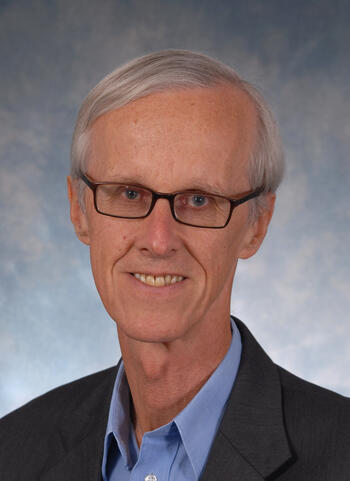
Martin Barber was a senior UN official and has extensive experience in humanitarian affairs and peace operations – both at UN Headquarters and in the field. He served as Director of the United Nations Mine Action Service (UNMAS) at UN Headquarters in New York from 2000 until his retirement from the UN in 2005. Previously, he was Chief of Policy Development and Advocacy in the UN Office for Coordination of Humanitarian Affairs (OCHA). From 1996 to 1998, he was Deputy Special Representative of the UN Secretary-General in the UN Mission in Bosnia and Herzegovina (UNMIBH), Sarajevo. From 1989 to 1996, he worked with the UN Office for Coordination of Humanitarian Assistance to Afghanistan (UNOCHA) in Islamabad, Pakistan, serving as UN Humanitarian Coordinator for Afghanistan in 1995-96. From 1975 to 1982 he served with the UN High Commissioner for Refugees (UNHCR) in Laos and Thailand. Between 1982 and 1989, he was Director of the British Refugee Council, London. From 2010 to 2013, he served as Senior Adviser in the Office for the Coordination of Foreign Aid in the Government of the United Arab Emirates. Barber is now a consultant and analyst working on humanitarian issues. He holds a doctorate in South-East Asian Sociology from the University of Hull and is an Honorary Fellow of the University of Edinburgh. In 2006, he was made an OBE “for services to de-mining”.
Blinded by Humanity: What next for humanitarian aid?
Arab workers participated prominently in the popular uprisings of 2011. They shared the outrage of many of their compatriots over daily abuse by internal security forces, widespread corruption, and foreign policies subservient to U.S. interests. Their participation in those uprisings was also informed by struggles against the neoliberal economic restructuring of the region since the 1970s, which resulted in an indecent chasm between rich and poor, deteriorating working conditions and public social services, and high youth unemployment.
Egypt experienced a strike wave of unprecedented magnitude in the 2000s. Tunisia, with one exception, experienced less intense contestation by workers and others. Egyptian workers’ have had very limited influence on national politics in the post-Mubarak era. Democratic development seems unlikely in the near future. The Tunisian national trade union federation and its affiliates were the central force in installing procedural democracy. The nature of workers’ social movements in the 2000s partially explains these divergent outcomes.
Speaker Bio:
Image
Joel Beinin is the Donald J. McLachlan Professor of History and Professor of Middle East History. He received his A.B. from Princeton University in 1970, his M.A. from Harvard University in 1974, and his A.M.L.S. and Ph.D. from the University of Michigan in 1978 and 1982. He also studied at the American University of Cairo and and the Hebrew University of Jerusalem. He lived in Egypt in 1969, 1980-81, 1985, 1986, 1994, 2004-05, and 2006-08 and in Israel in 1965-66, 1970-73, 1987, 1988, 1993, and 1993. He has taught Middle East history at Stanford University since 1983. From 2006 to 2008 he served as Director of Middle East Studies and Professor of History at the American University in Cairo. His research and writing focuses on workers, peasants, and minorities in the modern Middle East and on Israel, Palestine, and the Arab-Israeli conflict.
Beinin has written or edited nine books, most recently Social Movements, Mobilization, and Contestation in the Middle East and North Africa; co-edited with Frédéric Vairel (Stanford University Press, 2011) and The Struggle for Worker Rights in Egypt (Solidarity Center, 2010). His articles have been published in leading scholarly journals as well as The Nation, Middle East Report, The Los Angeles Times, The San Francisco Chronicle, Le Monde Diplomatique, and others. He has appeared on Al-Jazeera TV, BBC radio, National Public Radio, and many other TV and radio programs throughout North America, and in France, Egypt, Singapore, and Australia, and has given frequent interviews to the global media. In 2002 he served as President of the Middle East Studies Association of North America.
This event is co-sponsored by the Arab Studies Institute.
This event is offered as a joint sponsorship with the Hoover Institution Library & Archives.
About the Topic: Sarah Chayes's book, "Thieves of State: Why Corruption Threatens Global Security," presents an explosive argument: many of today's major world crises -- the ISIS takeover of much of Iraq and Syria, the robust Afghan and Nigerian insurgencies, the Arab Spring and Ukrainian revolutions and their aftermaths -- have their roots in systemic corruption. If this is the case, then the policy priority of addressing corruption must be raised. Rather than a marginal concern to be passed off to development agencies or specialized bureaus, anti-corruption must pervade the conduct of foreign policy. Thieves of State is a riveting book; Chayes will provide a few short readings and reflections on its implications before engaging a conversation with the public.
About the Speaker: A senior associate at the Carnegie Endowment for International Peace, Sarah Chayes served as special assistant to the chairman of the Joint Chiefs of Staff in 2010 and 2011. She is an expert on kleptocracy and anti-corruption, civil-military relations, and South Asia policy. Chayes joined the Pentagon after 8 years living and working in Kandahar, Afghanistan, and advising the command of the international forces in Afghanistan. Since leaving government, she has been conducting in-depth research on the security implications of acute corruption in such contexts as the insurgencies in Iraq, Syria, South and Central Asia, and Nigeria, and the revolutions of the Arab Spring and Ukraine. Her work has been dubbed "revolutionary" and "a paradigm shift" by senior professionals in foreign and security policy.
A new generation of leaders has taken the helm in China. They inherit a China that has experienced more than three decades of hyper growth. Yet the Chinese development model is being tested by growing imbalances even while the Chinese leadership faces growing public expectations at home and rising demand abroad. In this lecture, Professor Yang Dali will discuss the challenges to and prospects for China’s governance.
Dali Yang (Ph.D., Princeton, 1993) is the author of numerous books and scholarly articles on the politics and political economy of China. Among his books are Remaking the Chinese Leviathan: Market Transition and the Politics of Governance in China (Stanford University Press, 2004); Beyond Beijing: Liberalization and the Regions in China (Routledge, 1997); and Calamity and Reform in China: State, Rural Society, and Institutional Change since the Great Leap Famine (Stanford University Press, 1996). He is also editor of Discontented Miracle: Growth, Conflict, and Institutional Adaptations in China (World Scientific, 2007) and co-editor and a contributor to Holding China Together: Diversity and National Integration in Post-Deng China (Cambridge University Press, 2004). He is a member of various committees and organizations and serves on the editorial boards of Asian Perspective, American Political Science Review, Journal of Contemporary China, and World Politics.
China’s Conflicting Policy Directions
A climate of uncertainty marks the Xi administration’s second year in power. The unfurling of a nationwide anti-corruption campaign, including high-profile domestic and international targets, may have unintended effects on economic growth. But will these effects be short- or long-lived? Can this campaign build confidence, domestically and internationally, in the party’s governing capacity? Questions also swirl around the motivations for reviving Mao-era language in the political realm while maintaining a relentless urbanization drive in the social and economic realms. In foreign affairs, centrifugal regional forces and suspicion of US intentions in the Pacific must be reconciled with China’s deepening engagement with global institutions and commitment to “opening up” to the world. To address these issues, this series will bring together experts to share research and insights on the underlying logic for the seemingly contradictory policy paths recently chosen by China’s leaders.
Democracies do not legally bind parties to their policy promises. Thus winning the power to set policy through elections requires making credible commitments to pivotal voters. This paper analyzes theoretically and empirically how the commitment problem affects partisan conflict over redistribution. A theoretical model shows that under majoritarian electoral rules parties' efforts to achieve endogenous commitment using citizen candidates to policies preferred by the middle class leads to different behavior and outcomes than suggested by existing theories that assume commitment or rule out endogenous commitment. Left parties may respond to rising inequality by moving to the right in majoritarian systems but not under proportional representation. The theory also unbundles the anti-left bias attributed to majoritarian systems. The empirical analysis finds evidence for key implications of this logic using panel data on party positions and by analyzing devolution in Britain as a natural experiment to compare candidates under alternative electoral rules.
This talk is part of The Europe Center's "European Governance Seminar Series."
Image
Michael Becher is assistant professor for Political Economy at the University of Konstanz in Germany. He received his PhD (2013) in Politics from Princeton University. His research focuses on comparative politics and political economy, with a special emphasis on redistributive conflict, political institutions, and democratic representation. Professor Becher's work has appeared or is forthcoming in academic journals such as American Journal of Political Science, Journal of Politics, and Comparative Political Studies.
Michael Becher
Assistant Professor for Political Economy
Speaker
Graduate School of Decision Sciences and the Department of Politics and Public Administration at the University of Konstanz
In an effort to infuse Asian studies in the social studies and literature curricula, the Stanford Program on International and Cross-Cultural Education (SPICE), in cooperation with the National Consortium for Teaching About Asia (NCTA), is offering a professional development opportunity at Stanford University.
This all day workshop will focus on teaching about religion in China and Japan and the influence of Daoism, Confucianism, and Buddhism. Participants will hear from top China and Japan scholars, engage in China and Japan related curriculum, and network with other local teachers. This is the fourth seminar in a four part series.
Encina Basement Conf. Room, Encina Hall 616 Serra Street Stanford, CA 94305
In an effort to infuse Asian studies in the social studies and literature curricula, the Stanford Program on International and Cross-Cultural Education (SPICE), in cooperation with the National Consortium for Teaching About Asia (NCTA), is offering a professional development opportunity at Stanford University.
This all day workshop will focus on teaching about ancient China and the Silk Road. Participants will hear from top China scholars, engage in China related curriculum, and network with other local teachers. This is the second seminar in a four part series.
Encia Basement Conf. Room, Encina Hall 616 Serra Street Stanford, Ca 94305
In an effort to infuse Asian studies in the social studies and literature curricula, the Stanford Program on International and Cross-Cultural Education (SPICE), in cooperation with the National Consortium for Teaching About Asia (NCTA), is offering a professional development opportunity at Stanford University.
This all day workshop will focus on teaching about issues Asian American face in contemporary society. This is the fourth workshop in a four part series.
Encina Basement Conf. Room, Encina Hall 616 Serra Street Stanford, CA 94305
In an effort to infuse Asian studies in the social studies and literature curricula, the Stanford Program on International and Cross-Cultural Education (SPICE), in cooperation with the National Consortium for Teaching About Asia (NCTA), is offering a professional development opportunity at Stanford University.
This all day workshop will focus on teaching about Korea in the social studies classroom. Participants will hear from top Korea scholars, engage in Korea related curriculum, and network with other local teachers. This is the third workshop in a four part series.
Encina Basement Conf. Room, Encina Hall 616 serra Street Stanford, CA 94305
In an effort to infuse Asian studies in the social studies and literature curricula, the Stanford Program on International and Cross-Cultural Education (SPICE), in cooperation with the National Consortium for Teaching About Asia (NCTA), is offering a professional development opportunity at Stanford University.
This all day workshop will focus on teaching about contemporary China in the social studies classroom. Participants will hear from top China scholars, engage in China related curriculum, and network with other local teachers. This is the first workshop in a four part series.
During the course of the day, participants will learn about the challenges China faces, including their geopolitical, cultural, military, and economic significance.
Encina Hall, Ground Floor Conf. Room 616 Serra Street Stanford, CA 94305