-

Abstract: According to the UN, in 2008, for the first time, more people live in cities than in rural areas. An estimated 1 billion of these urban dwellers currently live in shanty-towns.  By 2030 more than 60% of global population will be urban, with more than 2 Billion slum dwellers.  The global trend toward urbanization concentrates millions into dense megacities.

More than half of the 25 current largest megacities globally are subject to significant earthquake hazards; a similar number are situated on river floodplains and are subject to frequent flooding. Add in the changes expected from climate change — increasing frequency and severity of weather-related events from droughts to storms to heat waves, as well as rising sea levels — and you get a recipe for disaster, especially given that 10% of the global population, and one out of every eight urban dwellers, lives in coastal areas with elevations below 10 meters above sea level. The problem is intensified by the fact that many of the world’s largest cities are hot spots of extreme poverty, where millions of people live in informal and substandard housing. 

Natural hazards become disasters when they interact with humans and our built environment.  Risk is the convolution of the inherent hazard acting on the “exposure” (people, buildings, ecosystems), through their respective vulnerabilities.  Many new urban dwellers, particularly in developing countries, are settling in high-hazard zones, frequently on previously “unbuildable land” (e.g., steep slopes surrounding major urban centers, or filled-in swamps). Seismic risk, being the product of exposure and vulnerability, is thus increasing exponentially, because of the rapid proliferation of substandard and self-built construction, particularly housing for new urban residents.

Recent large earthquakes and other disasters have illustrated the extent of the destruction that extreme geohazards can inflict on a modern, interconnected society, particularly through cascading effects and chains of failure.

The talk will examine the nature of natural hazard risk, how scientists quantify seismic risk, the impact of future catastrophes, and will conclude with some risk reduction options.

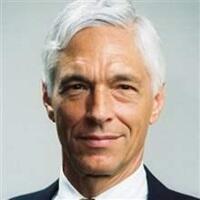
About the Speaker: Mary Lou Zoback is a seismologist and Consulting Professor in the Geophysics Department at Stanford University. From 2006-2011 she was Vice President for Earthquake Risk Applications with Risk Management Solutions, a private catastrophe modeling firm serving the insurance industry. In that role she utilized the company’s commercial risk models to explore the societal role of earthquake insurance, and to quantify the costs and benefits of disaster management and risk reduction activities.

Zoback previously was a senior research scientist at the USGS in Menlo Park, CA where she served as Chief Scientist of the Western Earthquake Hazards team. Her research interests include the relationship between active faulting, deformation and state of stress in the earth’s crust, quantifying earthquake likelihood, and characterizing natural hazard risk.

Dr. Zoback has served on numerous national committees and panels on topics ranging from increasing the Nation’s resilience to disasters, defining the next generation of Earth observations from space, storage of high-level radioactive waste, facilitating interdisciplinary research, and science education. From 1997-2000 she was a member of the National Research Council’s Board on Radioactive Waste Management. In 2012 she was appointed to the U. S. Nuclear Waste Technical Review Board by President Obama.

In 1995 she was elected a member of the U. S. National Academy of Sciences. She is a member of the American Geophysical Union, the Seismological Society of American, and is a past President of the Geological Society of America. Zoback is also past chair of the Advisory Committee for San Francisco’s Community Action Plan for Seismic Safety (CAPSS) program. She is currently a member of the National Academies' Resilient America Roundtable and the Board on Energy and Environmental Systems.


Encina Hall (2nd floor)

Mary Lou Zoback seismologist, Consulting Professor in the Geophysics Department Speaker Stanford University
Seminars
-

Abstract: The Cold War rivalry between the United States and the Soviet Union lasted for much of the second half of the 20th Century. While the superpowers never engaged directly in full-scale armed combat, a nuclear arms race became the centerpiece of a doctrine of mutually assured destruction, and prompted a mass production of plutonium, and the designing, building, and testing of large numbers of nuclear weapons. In more than 50 years of operation, the Cold War battlefields created over 100 metric tons of plutonium, produced tens of thousands of nuclear warheads, oversaw more than 1000 detonations, and left behind a legacy of contaminated facilities, soils, and ground water.  

The extent of long-term adverse health effects will depend on the mobility of plutonium and other actinides in the environment and on our ability to develop cost-effective scientific methods of removing or isolating actinides from the environment. Studying the complex chemistry of plutonium and the actinides in the environment is one of the most important technological challenges, and one of the greatest scientific challenges in actinide science today.

I will summarize our current understanding of actinide chemistry in the environment, and how that understanding was used in the decontamination and decommissioning of the Rocky Flats Site, where plutonium triggers for U.S. nuclear weapons were manufactured. At Rocky Flats, synchrotron radiation measurements made at the Stanford Synchrotron Radiation Laboratory were developed into a science-­based decision-­making tool that saved billions of dollars by focusing Site-­directed efforts in the correct  areas, and aided the most extensive cleanup in the history of Superfund legislation to finish one year ahead of schedule, ultimately resulting in billions of dollars in taxpayer savings.


About the Speaker: David L. Clark received a B.S. in chemistry in 1982 from the University of Washington, and a Ph.D. in inorganic chemistry in 1986 from Indiana University. His thesis work received the American Chemical Society’s Nobel Laureate Signature Award for the best chemistry Ph.D. thesis in the United States. Clark was a postdoctoral fellow at the University of Oxford before joining Los Alamos National Laboratory as a J. Robert Oppenheimer Fellow in 1988. He became a Technical Staff Member in the Isotope and Nuclear Chemistry Division in 1989. Since then he has held various leadership positions at the Laboratory, including program management for nuclear weapons and Office of Science programs, and Director of the Glenn T. Seaborg Institute for Transactinium Science between 1997-2009. He has served the DOE as a technical advisor for environmental stewardship including the Rocky Flats cleanup and closure (1995-2005), closure of High Level Waste tanks at the Savannah River Site (2011), and as a technical advisor to the DOE High Level Waste Corporate Board (2009-2011). He is currently the Program Director for the National Security Education Center at Los Alamos, a Fellow of the American Association for the Advancement of Science, a Laboratory Fellow, and Leader of the Plutonium Science and Research Strategy for Los Alamos. His research interests are in the molecular and electronic structure of actinide materials, applications of synchrotron radiation to actinide science, behavior of actinide and fission products in the environment, and in the aging effects of nuclear weapons materials. He is an international authority on the chemistry and physics of plutonium, and has published over 150 peer-reviewed publications, encyclopedia and book chapters. 

Actinide Chemistry and The Battlefields of the Cold War
Download pdf

Encina Hall (2nd floor)

David L. Clark Laboratory Fellow and Program Director, National Security Education Center, Speaker Los Alamos National Laboratory
Seminars
-

Monday, May 4, 2015

4:30pm – 5:45pm Seminar
5:45pm - 6:15pm Reception


Image
mori ma
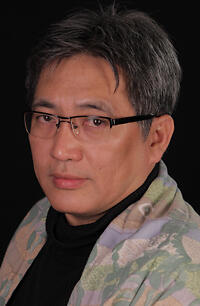
Masako Mori (Liberal Democratic Party) is in her second term as a member of House of Councillors of Japan’s Diet (roughly equivalent of U.S. Senate).  She represents Fukushima prefecture.  From December 2012 to September 2014, she served as Minister in charge of Support for Women's Empowerment and Child-Rearing, Minister of State for Consumer Affairs and Food Safety, Minister of State for Declining Birthrate and for Gender Equality in the Cabinet led by Prime Minister Shinzo Abe.  As a central policy maker in Abe Administration’s “womenomics,” she will discuss the progress on women’s empowerment in Japan and the road ahead.


Bechtel Conference Center
Encina Hall
616 Serra St., 1st floor
Stanford University
Stanford, CA 94305

Masako Mori Member of House of Councillors of Japan's Diet
Seminars
-

Abstract: Recent advances in synthetic biology are transforming our capacities to make things with biology. This bio-based manufacturing technology has the potential to be most disruptive around products for which existing material supply chains result in limited access. For example, broad access to medicines and the development of new medicines has been difficult to achieve, largely due to the coupling between material supply chains and these therapeutic compounds. We are developing a biotechnology platform that will allow us to replace current supply chains for already approved medicines with stable, secure, scalable, distributed, and economical microbial fermentation. Our initial target is the opioids, an essential class of medicines for pain management and palliative care, which are currently sourced through opium poppy cultivation. In addition, we will leverage this technology to access novel compound structural space that will open up tremendous opportunity for transforming the discovery and development of new drugs over a longer-time frame.

About the Speaker: Christina D. Smolke is an Associate Professor, Associate Chair of Education, and W.M. Keck Foundation Faculty Scholar in the Department of Bioengineering and, by courtesy, Chemical Engineering at Stanford University. Christina’s research program develops foundational tools that drive transformative advances in our ability to engineering biology. For example, her group has led the development of a novel class of biological I/O devices, fundamentally changing how we interact with and program biology. Her group uses these tools to drive transformative advances in diverse areas such as cellular therapies and natural product biosynthesis and drug discovery. Christina is an inventor on over 15 patents and her research program has been honored with numerous awards, including the NIH Director’s Pioneer Award, WTN Award in Biotechnology, and TR35 Award.

Encina Hall (2nd floor)

Christina Smolke Associate Chair for Education, Associate Professor, Bioengineering Speaker Stanford University
Seminars
-

Abstract: Any given computer or network runs code from an enormous number of sources, including the producer of the operating system, the hardware, built-in and user-installed applications, websites, and the user herself.  Computers may also run code injected by remote attackers of various sorts including autonomous viruses, individual hackers and state-backed organizations.  What happens when the authors of these various software components have different objectives for the behavior of that single computer or network?

This talk will propose a simple theory that predicts which of these contestants will tend to win in different kinds of computer security contests, including the robustness of encrypted communications; the control of cloud-based and distributed computing systems; and some hypothetical future applications to the security of AI systems.

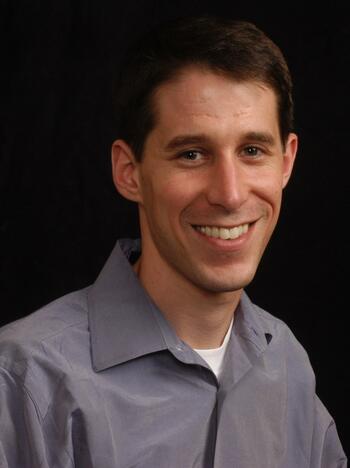
About the Speaker: Peter Eckersley is Technology Projects Director at the Electronic Frontier Foundation. He leads a team of technologists who do both coding and policy work to strengthen Internet security, privacy, and innovation.

His work at EFF has included several projects to improve the strength and deployment of cryptography on the Internet, including HTTPS Everywhere, the SSL Observatory, and Sovereign Keys; efforts to educate Internet users about privacy and security threats such as Surveillance Self-Defense International and Panopticlick; rallying computer scientists in opposition to Internet blacklist legislation; and efforts to make networks more neutral, open, and transparent, including the first controlled tests of packet forgery by Comcast and promoting secure forms of open wireless networks.

Peter holds a PhD in computer science and law from the University of Melbourne. His doctoral research was on digital copyright and the alternatives, including the computer security dimensions of copyright policy.

Encina Hall (2nd floor)

Peter Eckersley Technology Projects Director Speaker Electronic Frontier Foundation
Seminars
-

Due to the overwhelming response we received for this event and to our space constraints,

registration is now closed. We regret that we are unable to accommodate any more visitors.

Abstract: The explosion of an asteroid over the Russian city of Chelyabinsk in 2013 with energy 30X larger than the Hiroshima bomb was a wake-up call that asteroids of this size hit the Earth every few decades. Several large telescopes are in the works which will over the next 10 years drastically increase our ability to discover and track asteroids.  A large number of these asteroids will be found to be on orbits with a high probability (great than a few percent) of hitting the Earth with energy larger than several hundred kilotons, and a few of these will actually hit the Earth. I will discuss the consequences of us actually knowing many years in advance the date and place of an asteroid impact, and how current technology makes it relatively easy to deflect an asteroid in such cases. A number of questions will be discussed such as: Who pays for gathering and analyzing the data? Who controls the data? Who is responsible for deflecting asteroids? What are the consequences (political, social, economic) on a particular area which is known to be threatened during the time period before the asteroid is deflected? The scenario of human beings deflecting an asteroid from hitting the Earth is going to happen, and is something policy makers need to be prepared for.

About the Speaker: Dr. Lu is the CEO and co-founder of the Sentinel Mission, a project of the B612 Foundation. Dr. Lu, a physicist with a PhD from Stanford, was selected for the NASA astronaut corps in 1994. He flew two Space Shuttle missions, was the first American to launch as Flight Engineer on a Russian Soyuz spacecraft, and spent 206 days in space aboard the International Space Station in 2003. He is the recipient of NASA’s highest honor, the Distinguished Service Medal, and worked on Google’s Advanced Project Team.


Ed Lu Astronaut (Fmr.); CEO and co-founder of the Sentinel Mission Speaker Sentinel Mission; B612 Foundation
Seminars
-

AUDIO FROM SEGMENT OF TALK


Abstract:

A democratic recession is underway across much of Africa. Ironically it coincides with sustained economic growth since 1998. Much of this growth derived from political and economic liberalization in the 1990s, that has accelerated over the past 15 years due to an upsurge in demand for Africa’s natural resources. GDP growth does not mean development, however, and deepening inequality is more easily politicised and militarized along identity lines by elites in an era where across the world the politics of identity is resurgent. Both the war against terror and the rise of the Chinese governance model – authoritarian but efficient and compelling politically and economically – have seen elites consolidate power in fewer hands stalling and/or reversing the democratic developments of the last two decades. This elite capture of democratic processes is not limited to the South and has led to a delegitimisation of traditional political parties and players. Additionally, the securitization of geopolitics that has accompanied the ‘war against terror’ has fed a dramatic upsurge in spending on ‘national security’. National security is the last refuge of the corrupt. Indeed, this securitization has been accompanied not only by an upsurge in graft but the ongoing democratic recession. My presentation asks why and how this has come about. Finally, how can democratic gains be protected, consolidated and expanded.


Speaker Bio:

Image
githongo website
John Githongo is the CEO of Inuka, a non-governmental organisation involved in governance issues broadly defined, with an emphasis on working with and for ordinary Kenyans – youth in particular. In doing this Inuka is guided by the principles of heshima (respect), diversity (celebrating the depth and wealth of Kenya’s cultural diversity) and Ni Sisi! (It is us!) – for it is Kenyans who own and will ultimately resolve even the most seemingly intractable of their problems. John is also the Chairman of the Africa Institute for Governing with Integrity; Executive Vice Chair of the Mathare Youth Sports Association (MYSA); Chair board member of the Africa Center for Open Governance (AFRICOG); and a Commissioner of the Independent Commission on Aid Impact (ICAI) of the British government. Previously, he served as Vice President of World Vision, Senior Associate Member, St Antony’s College Oxford; Permanent Secretary in the Office of the President in charge of Governance and Ethics of the Kenya Government; board member Transparency International, Berlin, CEO Transparency International Kenya and a board member of the Kenya Human Rights Commission. In the past he has been a columnist for the EastAfrican, Associate Editor, Executive magazine; and a correspondent for the Economist. In 2004 the German President awarded him the German-Afrika Prize for Leadership. In 2011 he was selected as one of the world’s 100 most influential Africans by New African magazine and one of the world’s top 100 global thinkers by Foreign Policy magazine. In 2012 he was short-listed, alongside US Secretary of State, Hillary Clinton for the prestigious Tipperary International Peace Award.

John Githongo Visiting Anti-Corruption Journalist, Haas Center Visiting Anti-Corruption Journalist, Haas Center Visiting Anti-Corruption Journalist, Haas Center
Seminars
-
Abstract: In many real-world settings, the need for security is often at odds with the desire to protect user privacy. In this talk we will describe some recent cryptographic mechanisms that can be used to resolve this tension. In doing so we will present developments in cryptography of the past few years as well as areas for future work. The talk will be self-contained and intended for a broad audience.
 
About the Speaker: Dr. Boneh is a Professor of Computer Science at Stanford University where he heads the applied cryptography group. Dr. Boneh's research focuses on applications of cryptography to computer security. His work includes cryptosystems with novel properties, security for mobile devices, web security, and cryptanalysis.  He is the author of over a hundred publications in the field and is a recipient of the Godel prize, the Packard Award, the Alfred P. Sloan Award, the RSA award in mathematics and five best paper awards.  In 2011 Dr. Boneh received the Ishii award for industry education innovation.

Encina Hall (2nd floor)

Not in residence

0
Rajeev Motwani Professor in the School of Engineering and Professor of Electrical Engineering
Co-director of the Stanford Computer Security Lab
Co-director of the Stanford Cyber Initiative
Affiliate Faculty at CISAC
dabo.jpg MA, PhD

Professor Boneh heads the applied cryptography group and co-direct the computer security lab. Professor Boneh's research focuses on applications of cryptography to computer security. His work includes cryptosystems with novel properties, web security, security for mobile devices, and cryptanalysis. He is the author of over a hundred publications in the field and is a Packard and Alfred P. Sloan fellow. He is a recipient of the 2014 ACM prize and the 2013 Godel prize. In 2011 Dr. Boneh received the Ishii award for industry education innovation. Professor Boneh received his Ph.D from Princeton University and joined Stanford in 1997.

Dan Boneh Professor of Computer Science and Electrical Engineering; Co-director of the Stanford Computer Security Lab Speaker Stanford University
Seminars
About the Topic: Only 150 years ago, the majority of the world's population was largely illiterate and unschooled. Today, not only do most people have basic reading and writing skills and have attended school, but 20 percent of the world's youth attends some form of higher education. It is clear that the education revolution has transformed postindustrial society in major ways, and that education is a primary rather than a "reactive” institution. What is less clear is what this sea change in exposure to formal education means for the future sustainability of society? Recent research points to a new type of human population with different sets of cognitive abilities, economic interests, and demographic behaviors, all of which will be a major social challenges for the future.
 
About the Speaker: David P. Baker is Professor of Education and Sociology and a research scientist at the Center for the Study of Higher Education and the Population Research Institute at Pennsylvania State University. His book The Schooled Society is the Winner of the 2015 AERA Outstanding Book Award. He is also coauthor of National Differences, Global Similarities: World Culture and the Future of Schooling (Stanford, 2005) and a frequent contributor to scholarly journals on education.


Lunch will be provided.
 
Open to the public.

Encina Hall (2nd Floor) Central Conference Room

Seminars
-

Abstract: The purpose of this book project is to explain what it is about terrorism that makes it inherently difficult for the American government to formulate an effective counterterrorism policy. Why is terrorism such an intractable problem?  What are the obstacles to developing a consistent and coherent counterterrorism strategy?  The barriers that we identify flow from the issue itself, not the particular political predispositions of individual policy makers or flawed organizational processes.  We also find that scholars and policy makers face similar difficulties – the study of terrorism is often confused and contentious, and the study of counterterrorism can be even more frustrating.  

The book is co-authored by Martha Crenshaw and  Gary LaFree, Director of the National Center for the Study of Terrorism and Responses to Terrorism (START) at the University of Maryland, as well as professor in the Department of Criminology and Criminal Justice.


About the Speaker: Martha Crenshaw is a senior fellow at CISAC and FSI and a professor of political science by courtesy at Stanford. She was the Colin and Nancy Campbell Professor of Global Issues and Democratic Thought and professor of government at Wesleyan University in Middletown, Conn., where she taught from 1974 to 2007. She has written extensively on the issue of political terrorism; her first article, "The Concept of Revolutionary Terrorism," was published in the Journal of Conflict Resolution in 1972. Her recent work includes “Trajectories of terrorism: Attack patterns of foreign groups that have targeted the United States, 1970–2004,” in Criminology & Public Policy, 8, 3 (August 2009) (with Gary LaFree and Sue-Ming Yang), “The Obama Administration and Counterterrorism,” in Obama in Office: the First Two Years, ed. James Thurber (Paradigm Publishers, 2011), and “Will Threats Deter Nuclear Terrorism?” in Deterring Terrorism: Theory and Practice, ed. Andreas Wenger and Alex Wilner (Stanford University Press, 2012). She is also the editor of The Consequences of Counterterrorism (Russell Sage Foundation, 2010). In 2011 Routledge published Explaining Terrorism, a collection of her previously published work.

She served on the Executive Board of Women in International Security and is a former President and Councilor of the International Society of Political Psychology (ISPP). She coordinated the working group on political explanations of terrorism for the 2005 Club de Madrid International Summit on Democracy, Terrorism and Security. In 2005-2006 she was a Guggenheim Fellow. Since 2005 she has been a lead investigator with the National Center for the Study of Terrorism and the Response to Terrorism (START) at the University of Maryland, funded by the Department of Homeland Security. In 2009 she was awarded a grant from the National Science Foundation/Department of Defense Minerva Initiative for a project on "mapping terrorist organizations." She serves on the editorial boards of the journals International Security, Political Psychology, Security Studies, Dynamics of Asymmetric Conflict, and Terrorism and Political Violence. She is currently a member of the Committee on Evaluating the Effectiveness of the Global Nuclear Detection Architecture of the National Academies of Science.


Encina Hall (2nd floor)

Martha Crenshaw Senior Fellow at the Freeman Spogli Institute for International Studies Professor, by courtesy, of Political Science Speaker Stanford University
Seminars
Subscribe to Seminars