-

Abstract

Social and economic grievances of Tunisian youth played a major role in igniting the uprising in Tunisia, and more generally, the so-called Arab Spring. Despite a successful political transition in the country, progress on addressing youth grievances has been slow in light of deteriorating living conditions, rampant corruption, and rising unemployment. These realities continue to pose a serious challenge to the prospects of building a sustainable democracy in Tunisia. Based on data gathered from meetings with a diverse group of 500 young Tunisians, this talk will shed light on youth’s perceived and actual exclusion from social, economic, and political opportunities. In doing so it will provide a critical assessment of the underlying causes of youth alienation in the country and prospects for greater political, social and economic inclusion.

Speaker Bio

Image
attachment 1

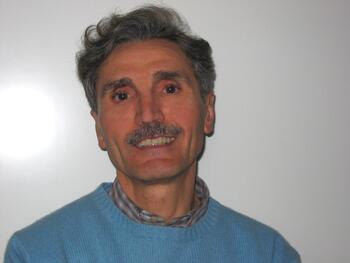
Ghazi Ben Ahmed leads the Mediterranean Development Initiative of the Center for Transatlantic Relations, Johns Hopkins SAIS in Tunisia. He is the founder and the Secretary General of the Club de Tunis, a Tunisian based foundation that helps policymakers and entrepreneurs devise strategies and development projects for inclusive growth. He has set up jointly with Dar El Dhekra (Remembrance House, the first Tunisian Jewish Association), a project to safeguard Tunisian Jewish Heritage by promoting its products on the US market. Ghazi Ben Ahmed is the Tunisia Coordinator for Leaders Engaged in New Democracies (LEND). He cooperates with the U.S. State Department, the Community of Democracies, and the Club de Madrid to provide peer advice, peer support, and capacity building to political leaders and policy makers in Tunisia. Previously he was the Lead Trade Expert in the African Development Bank (AfDB). Before joining the AfDB, he was a Senior Advisor at the United Nation agency for Trade and Development (UNCTAD), in the Africa and LDC Division. He also worked for almost 10 years in the European Commission in Brussels, in several Directorates-Generals: Trade, EuropeAid and External Relations, responsible for trade issues, EU trade and development policy, textile negotiations, macroeconomic analysis, structural adjustment and institutional building in the Mediterranean countries.


*This event is co-sponsored with the Mediterranean Studies Forum.*


[[{"fid":"218669","view_mode":"crop_870xauto","fields":{"format":"crop_870xauto","field_file_image_description[und][0][value]":"Ghazi Ben Ahmed flyer","field_file_image_alt_text[und][0][value]":"","field_file_image_title_text[und][0][value]":"","field_credit[und][0][value]":"","field_caption[und][0][value]":"","field_related_image_aspect[und][0][value]":"","thumbnails":"crop_870xauto","pp_lightbox":false,"pp_description":false},"type":"media","attributes":{"height":"540","width":"870","class":"media-element file-crop-870xauto"}}]]


Okimoto Conference Room
3rd Floor East Wing
Encina Hall
616 Serra Street
Stanford, California 94305

Ghazi Ben Ahmed Executive Director Mediterranean Development Initiative
Seminars
-

This is a time at which the global movement for universal health coverage (UHC) is under intense review.  As an isolated country which recently opened up to the world, Myanmar has endorsed the goal of achieving UHC by 2030. However, current evidence has shown that there will be significant challenges for Myanmar to achieve this target.  The Myanmar health system comprises a pluralistic mix of public and private systems both in financing and provision. It was ranked the second worst in terms of ‘overall health system performance’ by the WHO in 2000. According to World Bank (2012), the country’s out-of-pocket payment burden is one of the highest in the world, at 81% of total health expenditures, resulting in high levels of catastrophic health expenditure. About three-quarters of Myanmar’s citizens, including the poorest and most marginalized communities, find themselves with very limited access to essential health services. And too many of these same populations suffer a further burden of being pushed, or kept, in poverty because they have to pay for their health care. Recognizing the fragility of its health system, Myanmar launched some transformations in the health sector in 2011. The most significant changes were increasing the health budget four-fold since 2011, launching some health insurance programs in some areas, starting to collaborate with a diversity of actors in the health sector, and major structural changes in the Ministry of Health, Myanmar. This colloquium will reflect upon these transformations and discuss how the changes will shape Myanmar’s future health system, drawing upon comparisons with health reforms in other South East Asian countries.

Image
phyu phyu thin zaw4x4
Phyu Phyu Thin Zaw is currently a visiting scholar at the Walter H. Shorenstein Asia-Pacific Research Center (Shorenstein APARC). Her research interests are reproductive health, equity, health policies and gender issues.  

After receiving her MBBS degree from the University of Medicine (Mandalay), Phyu Phyu worked for two years at a public hospital. In 2009, she became an active researcher at the Department of Medical Research (Upper Myanmar). As a researcher, she participated in various clinical and public health researches and presented papers at national and international conferences. She was also actively involved in the welfare of underprivileged groups in Myanmar. She earned her PhD in Epidemiology from the Prince of Songkla University, Thailand in 2013. After her PhD, she continued her work at DMR (Upper Myanmar) as a research officer as well as a member of the secretariat of the Academic Committee. She was also as a field supervisor in two national surveys on HIV and RH commodities and services in Myanmar. She has also published journal articles on equity, gender differences and RH services utilization among the poor.

At APARC, Phyu Phyu will study the current trends of Myanmar health policies in general, as well as the specific sex education programs of the country. She will investigate how Myanmar/Burmese culture affects the objectives of the current sex education programs at schools based on the perceptions of adolescent students, teachers and parents.


The Philippines Conference Room

Encina Hall 3rd Floor Central

616 Serra Street

Stanford, CA 94305

Phyu Phyu Thin Zaw 2014-2015 Walter H. Shorenstein Asia-Pacific Research Center Visiting Scholar
Seminars
-

Abstract:

In July and August, hostilities in the Gaza Strip left 2,131 Palestinians and 71 Israelis dead, including 501 Palestinian children and one Israeli child. Of Gaza’s 1.8 million residents, 475,000 are living in temporary shelters or with other families because their homes have been severely damaged. The extent of destruction has raised questions around culpability for war crimes on all sides of the conflict. International organizations including the United Nations Human Rights Council, Amnesty International and Human Rights Watch have called for independent investigation. At the end of 2014, Palestine deposited a 12(3) application to the ICC for ad-hoc jurisdiction as well as acceded to the Rome Statute, thus granting the International Criminal Court the authority to investigate war crimes conducted in Palestinian territory. Such an investigation would bring both Israel and Palestine under scrutiny for events from this summer and as far back as 2012, and possibly to 2002 when the ICC was first formed to investigate war crimes. This is the third large scale military offensive against the besieged coastal enclave since Israel’s unilateral disengagement in 2005. Given the shortcomings of the ceasefire on August 26, 2014, another attack is seemingly inevitable. How is such civilian carnage possible notwithstanding the humanitarian and human rights legal regimes established to reduce civilian suffering? And what are the prospects for accountability under international criminal law and beyond? This lecture will explore these questions and specifically the prospects for accountability at the ICC. 


Speaker Bio:

Image
20120912 law 006

Noura Erakat is a human rights attorney, activist, and an Assistant Professor at George Mason University. Her scholarship investigates the laws of war, human rights, refugee law, and national security. She is a Co-Editor of Jadaliyya, an electronic magazine that leverages scholarly expertise and local knowledge on the Middle East. She has taught International Human Rights Law and the Middle East at Georgetown University since Spring 2009 and before beginning at George Mason University, she was a Freedman Teaching Fellow at Temple University, Beasley School of Law. She has served as Legal Counsel for a Congressional Subcommittee in the House of Representatives, chaired by Congressman Dennis J. Kucinich. She helped to initiate and organize several national formations including Arab Women Arising for Justice (AMWAJ) and the U.S. Palestinian Community Network (USPCN). While an undergraduate student at UC Berkeley, Noura helped launch the first university divestment campaign at UC Berkeley in 2001 and upon graduating from Berkeley Law School, she helped seed BDS campaigns throughout the country uas the National Organizer with the US Campaign to End the Israeli Occupation. There, she also helped initiate federal lawsuits in the U.S. against Israeli officials in for war crimes and crimes against humanity. She has lived and worked throughout the Middle East including as part of a legal fact-finding delegation to the Gaza Strip in the aftermath of Israel’s Winter 2008/09 onslaught and spent the Spring 2010 academic semester in Beirut, Lebanon as a Visiting Scholar at the American University in Beirut.  Noura has appeared on PBS News Hour, BBC World Service, NPR’s “To The Point,” MSNBC's "Up With Chris Hayes," Fox’s “The O’ Reilly Factor,” NBC’s “Politically Incorrect,” Democracy Now, and Al-Jazeera Arabic and English. Her non-scholarly publications have appeared in the New York Times, USA Today, the Los Angeles Review of Books, The Nation, Huffington Post, and Foreign Policy among others.  Most recently, she co-published an anthology entitled Aborted State? The UN Initiative and New Palestinian Junctures. 


This event is co-sponsored by the Sohaib and Sara Abbasi Program in Islamic Studies.


[[{"fid":"218623","view_mode":"crop_870xauto","fields":{"format":"crop_870xauto","field_file_image_description[und][0][value]":"Noura Erakat flyer","field_file_image_alt_text[und][0][value]":"","field_file_image_title_text[und][0][value]":"","field_credit[und][0][value]":"","field_caption[und][0][value]":"","field_related_image_aspect[und][0][value]":"","thumbnails":"crop_870xauto","pp_lightbox":false,"pp_description":false},"type":"media","attributes":{"width":"870","class":"media-element file-crop-870xauto"}}]]

Okimoto Conference Room
3rd Floor East Wing
Encina Hall
616 Serra Street
Stanford, California 94305

Noura Erakat Assistant Professor George Mason University
Seminars
-

Abstract

This study evaluates the effects of election observers (EOs) on local beliefs about the credibility of elections. It examines those effects using an innovative research design implemented in Tunisia during the 2014 election cycle. A two-wave panel study contains experiments that convey information to randomly selected respondents about the nationality of EOs and their evaluations of the elections. It leverages the unique timing of Tunisia’s elections – two general elections separated by just one month – to investigate how election monitoring and beliefs about election credibility in one election affect political behaviors around future elections. In addition to advancing the literature on the effects of election observation and democracy promotion more generally, the findings from this research contribute to a growing body of work on election credibility, which scholars posit is an important determinant of a number of political behaviors from democratic engagement and voter turnout to protest and election violence.
 

Speaker Bio

prather 0 Lauren Prather
Lauren Prather is a Ph.D. Candidate in Political Science at Stanford University and a future Assistant Professor of Political Science at the University of California, San Diego in the School of International Relations and Pacific Studies. She conducts research in the fields of international relations and comparative politics focusing on political behavior, public opinion, and foreign aid. Her dissertation work examines how ideology, transnational ties, and material interests shape public opinion and individual behaviors related to foreign aid in donor countries. Other ongoing work includes a lab-in-the-field experiment developed to understand the effects of authoritarian iconography on political compliance and a field experiment designed to examine how cost-effectiveness and the location of climate change programs affects willingness to donate to environmental projects.    

Lauren Prather Ph.D. Candidate in Political Science, Stanford University Ph.D. Candidate in Political Science, Stanford University
Seminars
-

Abstract:

Islamic charities occupied a critical space in Mubarak-era Egypt. While there are a plethora of organizational types and activities, Mona Atia describes a particular type of work performed by Islamic charities as a merging of religious and capitalist subjectivity, or pious neoliberalism. Pious neoliberalism describes how Islamism works in conjunction with neoliberalism rather than as an alternative to it. It represents a new compatibility between business and piety that is not specific to any religion, but rather is a result of the ways in which religion and economy interact in the contemporary moment. In Egypt, pious neoliberalism produces new institutions, systems of knowledge production and subjectivities. This lecture explores the relationship between Islamic charity and Egypt’s variegated religious landscape. The author will discuss how Islamic charities helped spread Islamic practices outside the space of the mosque and into everyday life/spaces and their impact on development in Egypt.

Speaker Bio:

Image
mona atia

Mona Atia is Associate Professor of Geography and International Affairs at the George Washington University. She received her PhD in Geography at the University of Washington, where she received the 2008 Distinguished Dissertation Award. She holds a MSc in Cities, Space and Society from the London School of Economics and a BS in Business Administration from the University of California at Berkeley. Professor Atia is a critical development geographer whose areas of expertise include Islamic charity and finance, philanthropy and humanitarianism, and the production of poverty knowledge. She is author of Building a House in Heaven: Pious Neoliberalism and Islamic Charity in Egypt (University of Minnesota Press, 2013). She currently holds an NSF CAREER Award for her project "The Impact of Poverty Mapping on the Geography of Development."


This event is co-sponsored by the Sohaib and Sara Abbasi Program in Islamic Studies.


[[{"fid":"218621","view_mode":"crop_870xauto","fields":{"format":"crop_870xauto","field_file_image_description[und][0][value]":"Mona Atia flyer","field_file_image_alt_text[und][0][value]":"","field_file_image_title_text[und][0][value]":"","field_credit[und][0][value]":"","field_caption[und][0][value]":"","field_related_image_aspect[und][0][value]":"","thumbnails":"crop_870xauto","pp_lightbox":false,"pp_description":false},"type":"media","attributes":{"height":"540","width":"870","class":"media-element file-crop-870xauto"}}]]


Reuben Hills Conference Room
2nd Floor East Wing E207
Encina Hall
616 Serra Street
Stanford, California 94305

Mona Atia Associate Professor The George Washington University
Seminars
-

China has a relatively weak primary healthcare system as well as the highest absolute disease burden of diabetes in the world, accounting for almost one in three diabetes patients globally. An estimated 74.2% of the 114 million Chinese patients with diabetes are untreated. Extending treatment will add a heavy burden on the health care system. As the most developed Chinese city that spends a modest 5.1% GDP on health with excellent outcomes, Hong Kong may serve as a cost-effective model for strengthening primary  care for chronic disease management, with diabetes care as an example.

In this seminar, Professor Leung will discuss the health system in Hong Kong, the importance of primary care, and recent research assessing the ‘value for money’ of care for all 631,469 patients with diabetes who attended the public sector in Hong Kong between 2006 and 2013.  He argues that the publicly funded and provided integrated model of Hong Kong may serve as a useful value-for-money reference as mainland China scales up to address the national epidemic of chronic disease like diabetes.  

Image
leung4x4
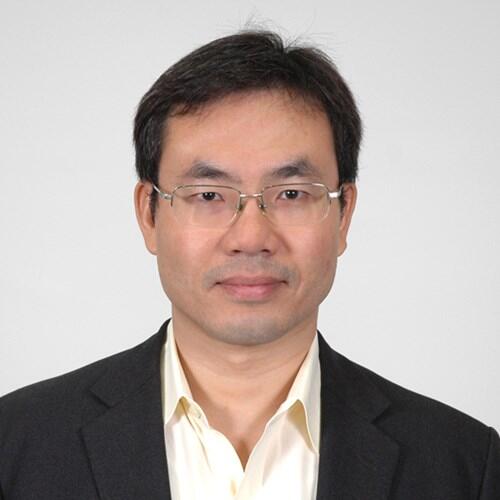
Gabriel Leung became the fortieth Dean of the Li Ka Shing Faculty of Medicine in August 2013. Leung, a clinician and a respected public health authority, concurrently holds the Chair of Public Health Medicine. Previously he was Professor and Head of Community Medicine and served as Hong Kong’s first Under Secretary for Food and Health and fifth Director of the Chief Executive's Office in government.

Leung specialises in the field of public health medicine, a statutorily accredited specialty that covers the full range of public health sciences and their constituent disciplines.

Within the broad scope of public health medicine, his major interests revolve around topics that 1) have major population health impact locally, 2) where Hong Kong is a reliable and unique epidemiologic sentinel for mainland China, or 3) where Hong Kong is particularly endowed and best placed to address the fundamental science at hand. As such his research crosses the traditional boundaries of individual disciplines or fields of enquiry.

Philippines Conference Room

Encina Hall 3rd. Floor Central

616 Serra Street,

Stanford, CA 94305

Gabriel M. Leung Division of Health Economics, Policy and Management, School of Public Health, Li Ka Shing Faculty of Medicine, The University of Hong Kong, Hong Kong SAR, China
Seminars
-

Please note: All research in progress seminars are off-the-record. Any information about methodology and/or results are embargoed until publication.

Abstract:

Conventional wisdom suggests that if private health insurance plans compete alongside a public option, they may endanger the latter's financial stability by cream-skimming good risks. Documenting cream-skimming in dual insurance systems is challenging because of the co-existence of selection and moral hazard. I use a fuzzy regression discontinuity design based on exogenous variation in the propensity of choosing private health insurance to address this challenge. The empirical setting is Germany, where there exists an unsubsidized non-group for-profit private health insurance market in parallel to a statutory alternative. Federal regulation mandates individuals with income below an annually set threshold to enroll into the statutory system. I do not find compelling support for concerns of cream-skimming by private insurers. Using a discrete choice model of demand for private insurance, I explore heterogeneous preferences and long-term contract design of private insurers as potential explanations for this optimistic result about insurance design.

Maria Polyakova Assistant Professor Health Research and Policy
Seminars
-

Please note: All research in progress seminars are off-the-record. Any information about methodology and/or results are embargoed until publication.

Abstract:

Ulcerative colitis is typically treated with medications including steroids and immunomodulators; patients refractory to medications undergo curative surgical resection of the colon and rectum. In 2005, biologic therapy was approved for ulcerative colitis as it improves short-term remission rates, but the long-term clinical benefit is unknown. The aims of the study are to assess the effect of biologics on the need for surgery in ulcerative colitis, describe treatment patterns for ulcerative colitis, and measure the economic impact of biologic therapy in the management of the disease.  Results demonstrate an increase in the use of biologics for ulcerative colitis, no change in rates of surgery for ulcerative colitis after approval of biologics, and dramatically increased overall costs.

Cindy Kin
Seminars
-

**Please note that the event time has been changed to 4:30-6:30pm.**

Abstract

The Middle East security landscape is as complex and challenging as ever: The rise of ISIL; ongoing instability in Syria and Iraq; the framework of a nuclear agreement and the challenges of Iran's destabilizing activities. Dr. Spence will discuss how the U.S. Defense Department approaches these immediate challenges, as well as the impact of longer-term challenges and opportunities in the region. Dr. Spence will also discuss the role of the Defense Department in supporting political reform in the Middle East.


Speaker Bio

Image
matthewspence
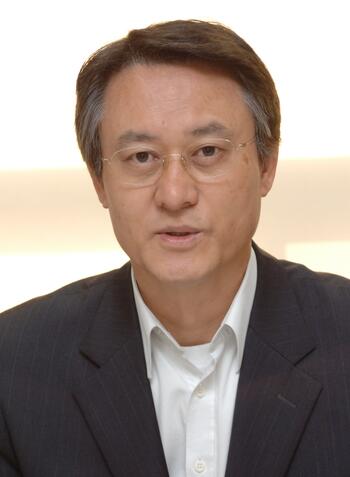
Dr. Matthew Spence was appointed Deputy Assistant Secretary of Defense for Middle East Policy in February 2012.  He is the principal advisor to the Secretary of Defense for Middle East policy, including Iraq, Syria, Iran, Israel, Egypt, and the Gulf states.  Prior to that, Dr. Spence worked at the White House on the National Security Council as Special Assistant to the President and Senior Director for International Economic Affairs and as Senior Advisor to two National Security Advisors. Dr. Spence is the co-founder of the Truman National Security Project. He has served as a Lecturer in International Relations at Oxford University, and has been widely published in international affairs. Trained as a lawyer, Dr. Spence also practiced criminal and international law in California, and served as a law clerk for Judge Richard Posner. A Marshall Scholar and Truman Scholar, Dr. Spence received his doctorate in International Relations from Oxford University; J.D. from Yale Law School; and B.A. and M.A. in International Policy Studies from Stanford University. He was born and raised in southern California.

Matthew Spence Deputy Assistant Secretary of Defense for Middle East Policy Deputy Assistant Secretary of Defense for Middle East Policy
Seminars
-

ABSTRACT:

This study explores the relationship between elected representatives and the parties they belong to in the European context. It uses an elite cross-national survey, exploring the way elected representatives perceive their representative role and construct their perceptions of representation with regards to party unity. In order to bypass the "no-variance" problem in recorded votes, the study makes use of a legislator's sequential decision-making model, according to which party unity is not considered an end-result, but rather a process. Using attitudinal data on legislators’ perceptions and attitudes, the study shows that representatives often feel a tension between different, competing foci of representation – mainly party representation versus all other foci. It then examines how elected representatives reconcile this tension; how they are assisted by internalized perceptions of their role; and the effect of various institutional factors in this process.   


SPEAKER BIO:

Image
malka hs
Reut Itzkovitch-Malka is a visiting scholar at the Center on Democracy, Development and the Rule of Law at Stanford University. She is also a postdoctoral scholar from the Israel Institute. Her research interest centers on political representation from a comparative politics perspective, with a specific focus on the following two major topics. The first is legislative studies. Her main contribution in this regard is a large-scale, cross national comparative research focusing on legislators’ perceptions of representation and on the link between such perceptions and party unity. This research, which she conducted for her dissertation, uses a novel decision-making sequential model for the analysis of legislative attitudes and behavior. Using this model the research provides a first-time inside look into the dynamics surrounding party unity and allows us to gauge the importance of legislators’ representational role perceptions in shaping their behavior. Her second research interest revolves around gender and political representation. While investigating a broad range of issues related to gender and politics – such as women’s descriptive representation, the adoption of gender quotas for women and the gender gap in voting – Reut specializes in the substantive representation of women.

Reut received a Ph.D. in political science from the Hebrew University of Jerusalem in 2014, where she won the President Fellowship for outstanding doctoral students. She holds an M.A. with honors in political science from The Hebrew University of Jerusalem and a B.A with honors in political science and history also from The Hebrew University of Jerusalem. 

Postdoctoral Scholar (CDDRL and Israel Institute) Postdoctoral Scholar (CDDRL and Israel Institute)
Seminars
Subscribe to Seminars