The Trans-Pacific Partnership (TPP) is widely regarded as the economic component of the US strategy of “rebalance” to Asia. As a major trading partner of many of the founding members, Taiwan has obvious economic and security interests at stake and is therefore seeking to join the TPP in the next round. But an overlooked aspect of the TPP for Taiwan is its potential impact on sovereignty. Trade agreements provide a revealing window into the evolving conceptions of modern sovereignty. The way Taiwan’s unique form of statehood and international status is defined in trade agreements could strengthen its position under international law and contribute to its national security. This talk will consider how Taiwan was defined as a sui generis legal entity in its application to join the World Trade Organization (WTO) and as a party to the Cross-Straits Economic Cooperation Framework Agreement (ECFA), with lessons for future negotiations to join the TPP.
Speaker Bio
Image
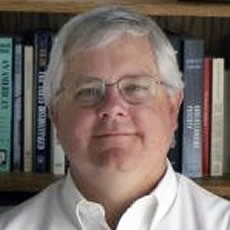
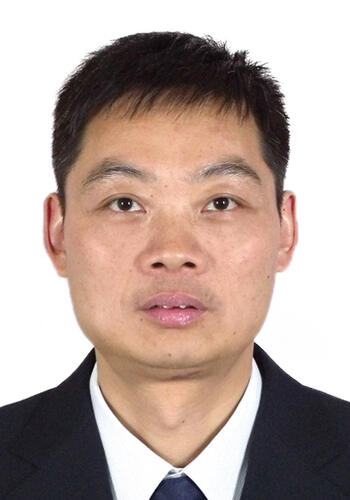
Joseph Yen-ching Chao is an Executive Officer in the Department of International Cooperation and Economic Affairs. A member of Taiwan’s Ministry of Foreign Affairs (MOFA) diplomatic corps since 2005, he has previously served as a German-language interpreter for the Presidential Office, an officer in the Department of Treaty and Legal Affairs, and as a deputy secretary of Taiwan’s permanent mission to the World Trade Organization in Geneva, Switzerland. He holds an LL.M. from Ruprecht-Karls University in Heidelberg and a Doctor juris from Albert-Ludwige University, Frieberg, Germany. Dr. Chao is in residence at Stanford from May-July 2015, where his research examines Taiwan’s prospects for entry into the Trans-Pacific Partnership (TPP).
In the final International Education Initiative seminar of the year, Amita Chudgar, Associate Professor of Educational Administration at Michigan State University and Visiting Scholar at the GSE, will present her new study on "Who teaches marginalized children, and what may explain these teacher distribution patterns? Analysis of data from Asia, Latin America, and Sub-Saharan Africa."
Professor Chudgar's study represents the most systematic cross-national analysis of teacher distribution that has been conducted to date. She will also provide insights into policies and practices that may help ensure a more equitable teacher distribution, and address the vicious cycle that can develop—especially in developing countries—when higher-quality teachers are concentrated in the schools and classrooms of wealthier children, while poor and marginalized children find themselves in the classrooms of relatively weaker teachers.
"The Controversy Over South Korean Wartime Operational Control: The Real Issues"
Speaker: Nam-soo Park, 2014-15 Visiting Scholar, Lieutenant General (Ret.)
South Korean Lt. Gen. (retired) Nam-soo Park will address the controversy in South Korea (ROK) over the indefinite, “conditions-based” postponement last year of Seoul’s planned reassumption of wartime operational control (opcon) over its own forces. Since the Korean War, the U.S. commander in South Korea has been assigned wartime operational control over most South Korean military units, but U.S. and Korean leaders agreed in 2007 that Seoul would resume wartime opcon over all its forces by 2012. That decision was based on progressives’ concerns that U.S. exercise of opcon over South Korean forces diminished Seoul’s sovereignty and disadvantaged it in negotiations with North Korea. Conservatives and some military leaders, however, pushed for postponement in the belief that ROK military forces were not adequately prepared for the change and that it might increase the likelihood of a further reduction in U.S. forces in South Korea. Lt. Gen. Park will share his views on this controversy over opcon change.
"The Use of Domestic and International Law: Against North Korean Subversion and Human Rights Violations"
Speaker: Dong Hyuk Chin, 2014-15 Visiting Scholar from Kim & Chang Law Firm
Visiting scholar Dong Hyuk Chin will discuss issues of criminal law related to North Korea, including the application of the controversial National Security Law in South Korea in the case of individuals and organizations suspected of supporting Pyongyang, and the international community's consideration of the North Korean regime's human rights violations and crimes against humanity. Chin is a former South Korean prosecutor with experience handling cases involving the National Security Law; he also established comprehensive plans for national security-related administration while serving in the Public Security Affairs Division of the Ministry of Justice and District Prosecutor's Office. In his talk, he will review the South Korean Constitutional Court's recent dissolution of a political party accused of supporting North Korea; share his personal experience prosecuting a criminal case involving the National Security Law; and discuss the United Nation's Commission of Inquiry into North Korea's human rights situations and the UN General Assembly's referral of North Korean crimes against humanity to the International Criminal Court.
Shorenstein APARC616 Serra StreetEncina Hall E301Stanford, CA 94305-6055
(650) 723-6530
0
nampark@stanford.edu
nam-soo_park.jpg
Lieutenant General (Ret) Park, Nam-soo joins the Walter H. Shorenstein Asia-Pacific Research Center (Shorenstein APARC) during the 2014-2015 academic year. At Shorenstein APARC, General Park's research will focus on ROK-U.S. strategic responses to North Korean threats, the future of the ROK-U.S. alliance, and the establishment of peace on the Korean Peninsula.
As a career officer, General Park held varied military staff and field positions. His final assignment (2012-2013) was as superintendent of the Korea Military Academy (KMA), and he commanded the Capital Defense Command in 2011. Earlier, he was the director of Combat Readiness Inspection and the deputy chief of staff for Joint Operations with the Joint Chiefs of Staff (2010-2011). General Park also served as the director of Defense Reform Planning and Coordination, and later as the director of Management Reform at the Ministry of National Defense (2006-2008). After retirement, he served as a chair professor of Soegyung University in Seoul, and he is also a senior research fellow with the Korea Research Institute for Strategy (KRIS). He received a BA in literature from KMA and an MA in security assurance from Kyonggi University.
Shorenstein APARC616 Serra StreetEncina Hall, E301Stanford, CA 94305-6055
(650) 723-6530
0
donghyuk@stanford.edu
Visiting Scholar
dong-hyuk_chin.jpg
Dong Hyuk Chin joins the Walter H. Shorenstein Asia-Pacific Research Center during the 2014–15 academic year from the Kim & Chang Law Office in Korea. Chin is a senior attorney at Kim & Chang's Labor and Employment Group and White Collar Defense Practice Group. He served as a public prosecutor for 7 years, and has handled cases of the National Security Act and established comprehensive plans for a national security-related administration while in Public Security Affairs division of the Ministry of Justice and District Prosecutor’s Office.
Chin's research interests include the influence and meaning of criminal cases related to North Korean issues and the role of the jurists in preparation for the unification of Korea.
Chin graduated from the Judicial Research and Training Institute of the Supreme Court of Korea and holds a BA in law from the Seoul National University.
Demetrios G. Papademetriou is Distinguished Senior Fellow, Co-Founder and President Emeritus of the Migration Policy Institute (MPI), and President of MPI Europe. Dr. Papademetriou has published more than 270 books, monographs, articles and research reports on migration and related issues, and advises senior government officials, foundations, and civil society organizations in dozens of countries. He also convenes the Transatlantic Council on Migration and the Regional (North American) Migration Study Group, chairs the Advisory Board of The Open Society Foundations’ International Migration Initiative (IMI), and is Co-Founder and Chair Emeritus of Metropolis.
Demetrios G. Papademetriou
Distinguished Senior Fellow, Co-Founder and President Emeritus of the Migration Policy Institute (MPI) and President of MPI Europe
Speaker
M. J. Chung, a leading South Korean legislator and businessman, will offer his thoughts on South Korea's strategic situation and the role the United States should play in Asia as China continues its rise and Japan seeks to play a larger security role. The United States' reliance on Japan to bolster its "pivot" to Asia is increasing the strategic mistrust between Washington and Beijing, making South Korea feel sandwiched between the two countries. Meanwhile, the world seems to be paying scant attention to the burgeoning North Korean nuclear program. Will South Korea be the biggest loser if the current trajectory is left unchanged?
Dr. Chung is the founder and honorary chairman of the Asan Institute for Policy Studies in South Korea. He has served seven terms as a member of the South Korean National Assembly, and he was a candidate for the 2002 presidential election. He received a BA in economics from Seoul National University, an MS from MIT's Sloan School of Management, and a PhD in international relations from Johns Hopkins University.
Philippines Conference Room
Encina Hall, 3rd Floor
Stanford University
M. J. Chung
<i>Founder and Honorary Chairman of The Asan Institute for Policy Studies</i>
Tom Ginsburg is the Deputy Dean and Leo Spitz Professor of International Law at the University of Chicago, where he also holds an appointment in the Political Science Department. He holds B.A., J.D. and Ph.D. degrees from the University of California at Berkeley. He currently co-directs the Comparative Constitutions Project, an NSF-funded data set cataloging the world’s constitutions since 1789. His books include The Endurance of National Constitutions (2009) (with Zachary Elkins and James Melton), which won the best book award from Comparative Democratization Section of American Political Science Association; Judicial Review in New Democracies (2003), Administrative Law and Governance in Asia (2008), Rule By Law: The Politics of Courts in Authoritarian Regimes (with Tamir Moustafa, 2008), and Comparative Constitutional Law (with Rosalind Dixon, 2011). He is a member of the American Academy of Arts and Sciences. Before entering law teaching, he served as a legal advisor at the Iran-U.S. Claims Tribunal, The Hague, Netherlands, and he has consulted with numerous international development agencies and governments on legal and constitutional reform. He currently serves a senior advisor on Constitution Building to International IDEA.
Stanford University’s School of Law and Freeman Spogli Institute for International Studies (FSI) are sponsoring a set of workshops for faculty working on the rule of law, corporate law, administrative law, international risk analysis, legal development in low-income countries, democratization, public health, development economics, and related fields. One desired outcome is the identification of the cognitive gaps between lawyers and social scientists around these topics, and the development of mutual language and understanding to spur better comprehension of different disciplines’ approaches to similar issues.
There is a fundamental misunderstanding and misconception about the Chinese economy - about how it works and what are the true challenges it faces. In the talk, Dr. Keyu Jin will highlight three major myths: on what really drives growth in China, what explains its high savings rate, and the economic consequences of the one child policy. Everyone has something to complain about the Chinese economy: large misallocation of resources, low employment growth, a declining share of the economic pie going to Chinese households, environmental costs, financial repression, and wage suppression. Dr. Jin will argue that all of these phenomena are not disparate problems, but are all part of the same fundamental problem, one of macroeconomic structure. The Chinese economy is not 'imbalanced,' rather it is subject to a vicious cycle. And yet, there is still reason to view the Chinese economy with 'guarded optimism.'
Dr. Keyu Jin is an Assistant professor of Economics at London School of economics. She is from Beijing, China, and holds a B.A., M.A., and PhD from Harvard University. Her field of expertise is international macroeconomics and the Chinese economy. Her research has focused on global imbalances and global asset prices, demographics, as well as international trade and growth. Her research is tightly linked to examining the various economic issues in China. She has multiple publications in the American Economic Review, and has also written opinion pieces for the Financial Times and Project Syndicate. She sits on the Asian advisory board of Richemont Group and is also a World Economic Forum Young Global Leader.
Please note this event is off the record.
Keyu Jin
Assistant professor in Economics
London School of Economics
The Stanford Silicon Valley-New Japan Project Public Forum Series with Networking
Casey Wahl is the CEO and founder of Wahl & Case K.K., a Tokyo-based global recruitment firm with a focus on startups and cross border expansion. Mr. Wahl has many years of experience in the Japan and is also the founder of Red Brick Ventures, an angel investment and incubation platform. He recently published a book in Japanese (english version to come), containing the stories of several Japanese entrepreneurs, giving insights into the challenges they face and their journeys to success. He will be discussion characteristics of the labor market for startups in Japan and how Japanese companies can best hire talent in Silicon Valley.
Avik Roy is a Senior Fellow at the Manhattan Institute and the Opinion Editor at Forbes. His research interests include the Affordable Care Act, universal coverage, entitlement reform, international health systems, veterans' health care, and FDA policy. In 2012, Roy served as a health care policy adviser to Mitt Romney. He is the author of Transcending Obamacare: A Patient-Centered Plan for Near-Universal Coverage and Permanent Fiscal Solvency and How Medicaid Fails the Poor, published by Encounter Books in 2013.In addition, Roy writes regularly for National Review Online on politics and policy. He is a frequent guest on television news programs, including appearances on Fox News, Fox Business, NBC, MSNBC, CNBC, Bloomberg, PBS, CBS, and HBO. His work has also appeared in The Wall Street Journal, The Atlantic, USA Today, Health Affairs, and National Affairs, among other publications. Roy is a member of the Advisory Board of the National Institute for Health Care Management, and co-chairs the Fixing Vertans Health Care Policy Taskforce. At the Manhattan Institute, Roy is the founder of Roy Healthcare Research, an investment research firm in New York. Previously, he served as an analyst and portfolio manager at Bain Capital, J.P. Morgan, and other firms.
Over the past 20 years, the military balance between the People’s Republic of China and Taiwan has rapidly shifted. As China’s defense budget has grown annually at double-digit rates, Taiwan’s has shrunk. These trends are puzzling, because China’s rise as a military power poses a serious threat to Taiwan’s security. Existing theories suggest that states will choose one of three strategies when faced with an external threat: bargaining, arming, or allying. Yet for most of this period, Taiwan’s leaders have done none of these things. In this talk, I explain this apparent paradox as a consequence of Taiwan’s transition to democracy. Democracy has worked in three distinct ways to constrain rises in defense spending: by intensifying popular demands for non-defense spending, introducing additional veto players into the political system, and increasing the incentives of political elites to shift Taiwan’s security burden onto its primary ally, the United States. Together, these domestic political factors have driven a net decline in defense spending despite the rising threat posed by China’s rapid military modernization program. Put simply, in Taiwan the democratization effect has swamped the external threat effect.
SPEAKER BIO
Kharis Templeman is the Program Manager for the Taiwan Democracy Project in the Center on Democracy, Development, and the Rule of Law, in the Freeman Spogli Institute at Stanford University.