-

Abstract: A number of senior Intelligence Community (IC) officials describe compliance as one of the IC’s biggest problems, perhaps the biggest. The underlying legal and informational issues are bound to become more acute and complex.  How can AI help? The IC protects our nation by analyzing the relationships between people, places, and things - essentially "connecting the dots.”  Doing so while remaining compliant with policies such as Executive Order 12333[1] and Presidential Policy Directive 28[2] is a balancing act. The interpretation, implementation, and enforcement of policy vary across organizations and administrations.  This frequently leaves analysts struggling to determine what data they can and cannot look at. The Internet, mobile, and “Big Data” generally further complicate the problem. The sheer volume, velocity, and variety of data that is constantly being generated necessitate automation, and even AI, to manage.  However, the benefits of analytic automation over the data deluge will remain limited, until the IC finds a way to scale the processing of legal judgments at a comparable rate.

Before we consider the potential benefits to AI-based methodologies we need to understand two things: Data Rights and Application Uncertainty. Data rights are data attributes derived from laws and dependent institutional policies.  Data rights include but are not limited to classifications, access policies, source limitations, “privacy” constraints, etc. While such data rights are entailed in the data itself, the interpretation and application of these rights are contextual and will vary.  More specifically, application of laws on a data set may be indeterminate: they may vary by time, user, and/or geography; the Second Circuit may issue an unexpected, divergent opinion; access may occur before or after a seminal FISA decision; the Office of Legal Counsel may change its mind; the legal state of a data set at the time of collection may be indeterminate; etc. 
 
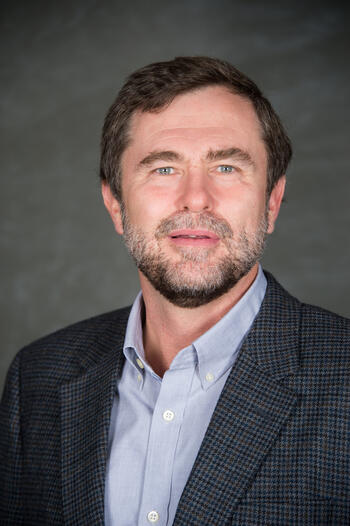
About the Speakers: As Executive Vice President at In-Q-Tel, Bob Gleichauf supports technology advancement programs. He is also Director of IQT’s Lab41 initiative, a unique Silicon Valley-based challenge lab that provides “innovation through collaboration” in the area of Big Data analytics. Gleichauf joined IQT from Cisco Systems, where he spent a decade working on the development of secure network infrastructures across a variety of the company’s products. Gleichauf, who has more than a dozen patents in network security, served as CTO for the Wireless and Security Technology Group at Cisco, and is respected globally for his work in information security. He previously served as head of product engineering for the WheelGroup prior to its acquisition by Cisco. Earlier, he was with IQ Software, a leader in the development of database report writing tools. Before making the leap into technology, Gleichauf pursued a Ph.D. in Early Human Prehistory at the University of Michigan, where he earned a fellowship and had the privilege of working in East Africa with the celebrated Leakey family.
 
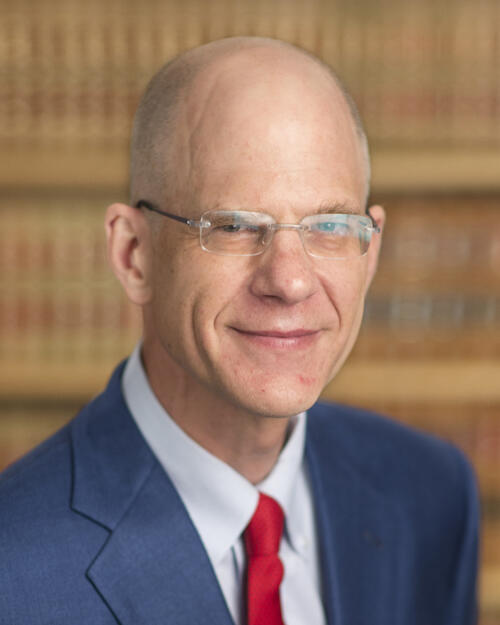
Joshua H. Walker is an Intellectual Property (IP) partner at Greenberg Traurig, LLP, handling all aspects of IP strategy and transactions, and a legal informatics entrepreneur. Josh has built his career at the nexus of law and computer science. Historically, as an analyst, his work has included helping prosecutors convict orchestrators of the 1996 Rwandan genocide to, now, as an attorney, helping many of the largest and most dynamic technology and financial entities in the world improve IP and data rights outcomes in the M&A, licensing, strategic litigation, and network theft contexts. To help clients solve IP governance, transactional, and risk management problems, Josh cofounded the first law and computer science lab in the country (CodeX), at Stanford University, as well as the top “big data” company for IP litigation (Lex Machina; founding CEO & Chief Legal Architect). However, data wins neither cases nor negotiations. We focus on client collaborations employing engineering efficiencies, design thinking, and empirical data to enhance and advance traditional legal practice. Josh’s IP work has been featured in The Wall Street Journal, The New York Times, The Economist, The Financial Times (listed, 2014 Top Ten Legal Innovator for North America), and numerous other publications. He co-taught “IP Analytics, Strategy, and Decision-Making” at Berkeley Law School, and an advanced IP media transactions seminar at Stanford Law School (“SIPX”). He received his J.D. from the University of Chicago Law School, and an A.B. in Conflict Studies (Special Concentrations) from Harvard College, m.c.l.


Bob Gleichauf Chief Scientist and Director of Lab41 In-Q-Tel
Joshua H. Walker Co-founder CodeX: The Stanford Center for Legal Informatics
Seminars
-

Abstract:

This research explores the conditions under which government actors and citizens recognize and incorporate the interests of others in their policy decisions and actions. To do so requires a change in beliefs about whose interests are intertwined and what it is possible and appropriate to do as a polity. This in turn demands changes in governance arrangements and, ultimately, norms of behavior.


Speaker Bio:

Image
margaret levi
Director of Center for Advanced Study in Behavioral Sciences (CASBS) and Professor of Political Science, Stanford. President, American Political Science Association, 2004-5. Member, National Academy of Sciences. Many publications include: Of Rule and Revenue (1988), and In the Interest of Others, with John Ahlquist (2013).


Margaret Levi Professor of Political Science, Stanford University Professor of Political Science, Stanford University
Seminars
-

Co-sponsored by the Health Economics Seminar

We present the first direct evidence on the relative quality of public and private healthcare in a low-income setting, using a unique set of audit studies. We sent standardized (fake) patients to rural primary care providers in the Indian state of Madhya Pradesh, and recorded the quality of care provided and prices charged in each interaction. We report three main findings. First, most private providers lacked formal medical training, but they spent more time with patients and completed more essential checklist items than public providers and were equally likely to provide a correct treatment. Second, we compare the performance of qualified public doctors across their public and private practices and find that the same doctors exerted higher effort and were more likely to provide a correct treatment in their private practices. Third, in the private sector, we find that prices charged are positively correlated with provider effort and correct treatment, but also with unnecessary treatments. In the public sector, we find no correlation between provider salaries and any measure of quality. We develop a simple theoretical framework to interpret our results and show that in settings with low levels of effort in the public sector, the benefits of higher diagnostic effort in the private sector may outweigh the costs of market incentives to over treat. These differences in provider effort may partly explain the dominant market share of fee-charging private providers even in the presence of a system of free public healthcare.

Image
karthik portrait4x6
Karthik Muralidharan is an associate professor of economics at the University of California, San Diego where he joined the faculty as an assistant professor in 2008.

Born and raised in India, he earned an A.B. in economics (summa cum laude) from Harvard, an M.Phil. in economics from Cambridge (UK), and a Ph.D. in economics from Harvard. He is a Research Associate of the National Bureau of Economic Research (NBER), an Affiliate at the Bureau for Research and Economic Analysis of Development (BREAD), a Member of the Jameel Poverty Action Lab (J-PAL) network, an Affiliate at the Center for Effective Global Action (CEGA), and a Research Affiliate with Innovations for Poverty Action (IPA).

Prof. Muralidharan's primary research interests include development, public, and labor economics. Specific topics of interest include education, health, and social protection; measuring quality of public service delivery; program evaluation; and improving the effectiveness of public spending (with a focus on developing countries). Courses taught include undergraduate and graduate classes in development economics, program evaluation, and the economics of education.


Quality and Accountability in Healthcare Delivery: Audit-Study Evidence from Primary Care in India
Download pdf
Quality and Accountability in Healthcare Delivery: Audit-Study Evidence from Primary Care in India
Download pdf
Karthik Muralidharan Associate Professor of Economics at the University of California, San Diego
Seminars
-

Publicly provided long-term care (LTC) insurance with means-tested benefits is suspected to crowd out either private LTC insurance (Brown and Finkelstein, 2008), private saving (Gruber and Yelowitz, 1999; Sloan and Norton, 1997), or informal care (Pauly, 1990; Zweifel and Strüwe, 1997). This contribution predicts crowding-out effects for both private LTC insurance and informal care on the one hand and private saving and informal care on the other. These effects result from the interaction of a parent who decides about private LTC insurance before retirement and the amount of saving in retirement and a caregiver who decides about effort devoted to informal care. Some of the predictions are tested using a recent survey from China.

Image
photo
Peter Zweifel is an Emeritus of the University of Zurich. After a postdoc position with  the University of Wisconsin-Madison in 1974-75, he received tenure with the University of Zurich in 1984. Publications include more than 100 articles in refereed journals (AER, EnJ, EurJHE, JHE, JRI, JRU, PubCh) as well as Health Economics (with F. Breyer und M. Kifmann) and Insurance Economics (with R. Eisen); Energy Economics (with G. Erdmann and A. Praktiknjo) will be available by the end of 2015.

Long-term care: Is there crowding out of informal care, private insurance as well as saving?
Download pdf
Peter Zweifel Emeritus, University of Zurich, Switzerland
Seminars
-

Image
img mk park
Myoung-kyu Park is a professor of sociology and director of the Institute for Peace and Unification Studies (IPUS) at Seoul National University. Professor Park is one of South Korea's leading scholars of the North Korea problem, Korean identity and nationalism, and popular attitudes toward Korean unification. He is an FSI-Humanities Center International Visitor at Stanford for the fall 2015.

In this talk, Professor Park will examine South Koreans' perception of North Korea-related issues: denuclearization, human rights, security, cooperation, and unification. Based on data from annual surveys conducted by IPUS during 2007-2015, Professor Park will discuss South Korean psychological attitudes, the generational gap, and general trends and policy orientation regarding North Korea.
Myoung-kyu Park Professor of Sociology, Seoul National University
Seminars
-

Image
david straub 2014
Americans think of South Korea as one of the most pro-American of countries, but in fact many Koreans hold harsh and conspiratorial views of the United States. If not, why did a single U.S. military traffic accident in 2002 cause hundreds of thousands of Koreans to take to the streets for weeks, shredding and burning American flags, cursing the United States, and harassing Americans? Why, too, the death threats against American athlete Apolo Ohno and massive cyberattacks against the United States for a sports call made at the Utah Winter Olympics by an Australian referee? These are just two of the incidents detailed in David Straub’s recently published book, Anti-Americanism in Democratizing South Korea, the story of an explosion of anti-Americanism in South Korea from 1999 to 2002.

Straub, a Korean-speaking senior American diplomat in Seoul at the time, reviews the complicated history of the United States’ relationship with Korea and offers case studies of Korean anti-American incidents during the period that make clear why the outburst occurred, how close it came to undermining the United States’ alliance with Korea, and whether it could happen again.

David Straub has been associate director of the Korea Program at Stanford University’s Walter H. Shorenstein Asia-Pacific Research Center (APARC) since 2008, following a thirty-year diplomatic career focused on U.S. relations with Korea and Japan.

For more information about this topic, click here.

No longer in residence.

0
Associate Director of the Korea Program
david_straub_cropped.jpg

David Straub was named associate director of the Korea Program at the Walter H. Shorenstein Asia-Pacific Research Center (Shorenstein APARC) on July 1, 2008. Prior to that he was a 2007–08 Pantech Fellow at the Center. Straub is the author of the book, Anti-Americanism in Democratizing South Korea, published in 2015.

An educator and commentator on current Northeast Asian affairs, Straub retired in 2006 from his role as a U.S. Department of State senior foreign service officer after a 30-year career focused on Northeast Asian affairs. He worked over 12 years on Korean affairs, first arriving in Seoul in 1979.

Straub served as head of the political section at the U.S. embassy in Seoul from 1999 to 2002 during popular protests against the United States, and he played a key working-level role in the Six-Party Talks on North Korea's nuclear program as the State Department's Korea country desk director from 2002 to 2004. He also served eight years at the U.S. embassy in Japan. His final assignment was as the State Department's Japan country desk director from 2004 to 2006, when he was co-leader of the U.S. delegation to talks with Japan on the realignment of the U.S.-Japan alliance and of U.S. military bases in Japan.

After leaving the Department of State, Straub taught U.S.-Korean relations at the Johns Hopkins University's School of Advanced International Studies in the fall of 2006 and at the Graduate School of International Studies of Seoul National University in spring 2007. He has published a number of papers on U.S.-Korean relations. His foreign languages are Korean, Japanese, and German.

Associate Director of Korea Program, APARC, Stanford University
Kathleen Stephens Panelist <i>Panelist</i>; former US ambassador to South Korea; William J. Perry Distinguished Fellow, APARC, Stanford University
Daniel Sneider Moderator <i>Moderator</i>; Associate Director for Research, APARC, Stanford University
Seminars
-

Abstract: While social media pervades many aspects of our lives, it has not yet proved to be an effective tool for large scale decision making: crowds of hundreds, perhaps millions, of individuals collaborating together to come to consensus on difficult societal issues. The objective of our research is to develop an algorithmic and empirical understanding of large scale decision making, and experiment with real-life deployments of our algorithms. In this talk, we will first present our platform for voting in participatory budgeting elections, which has been used in over a dozen different elections. We will then describe the related algorithmic problem of knapsack voting, where voters have to allocate a fixed amount of funds among multiple projects. We will conclude by analyzing opinion formation processes in terms of their effect on polarization, and relate this to the design of recommendation systems for friends and contents.

About the Speaker: Ashish Goel is a Professor of Management Science and Engineering and (by courtesy) Computer Science at Stanford University, and a member of Stanford's Institute for Computational and Mathematical Engineering. He received his PhD in Computer Science from Stanford in 1999, and was an Assistant Professor of Computer Science at the University of Southern California from 1999 to 2002. His research interests lie in the design, analysis, and applications of algorithms; current application areas of interest include social networks, participatory democracy, Internet commerce, and large scale data processing. Professor Goel is a recipient of an Alfred P. Sloan faculty fellowship (2004-06), a Terman faculty fellowship from Stanford, an NSF Career Award (2002-07), and a Rajeev Motwani mentorship award (2010). He was a co-author on the paper that won the best paper award at WWW 2009, and an Edelman Laureate in 2014.

Professor Goel was a research fellow and technical advisor at Twitter, Inc. from July 2009 to Aug 2014.


Ashish Goel Professor of Management Science and Engineering Stanford University
Seminars
-

Abstract: The threat of biological attack on the people of the United States and the world, whether intentional, natural or accidental, is of growing concern, both in spite of and because of significant technological advances over the past four decades. As a global leader, the United States needs a comprehensive policy approach for managing future attacks, which incorporates technologic elements from rapid detection through appropriate response. American and international responses to recent infectious disease outbreaks such as anthrax (intentional, accidental), H5N1 influenza (natural) and ebola (natural) have managed to contain these events ‐ with the paradoxical effect on policy makers, both political and administrative, of relief (“missed that bullet”, “we must be doing this right”), rather than serving as wake‐up calls. A challenge in merging technological solutions into policy lies in the rapid advances across the multiple sciences. Translation of these ongoing technologic advances for policy leaders is an essential element in effective policy development. Incorporation of technologic solutions into biosecurity policy construction, combined with motivated leadership, has the potential for enhancing future national and global responses to unprecedented biological attacks.

About the Speaker: Patrick J. Scannon, M.D., Ph.D. is XOMA's Company Founder, Executive Vice President, Chief Scientific Officer and a member of its Board of Directors. Since 1980, Dr. Scannon has directed the Company's product identification, evaluation and clinical testing programs for novel therapeutic monoclonal antibodies and proteins against infectious, oncologic, metabolic and immunologic diseases. As Chief Scientific Officer, he leads evaluations for new therapeutic antibody identification and discovery programs. 

Dr. Scannon holds a Ph.D. in organic chemistry from the University of California, Berkeley and an M.D. from the Medical College of Georgia. He completed his medical internship and residency in internal medicine at the Letterman Army Medical Center in San Francisco. A board-certified internist, Dr. Scannon is also a member of the American College of Physicians. He is the inventor or co-inventor of several issued U.S. patents, and has published numerous scientific abstracts and papers.

Dr. Scannon has served as a member of the Research Committee for Infectious Diseases Society of America (IDSA), the National Biodefense Science Board (NBSB, a federal advisory board for the Department of Health and Human Services), the chair of the Chem/Bio Warfare Defense Panel for the Defense Threat Reduction Agency (DTRA) and a member of the Defense Sciences Research Council (DSRC, a research board for Defense Advanced Research Projects Agency (DARPA)). He has served as a Trustee of the University of California Berkeley Foundation and as a member of the University of California Berkeley Chancellor's Community Advisory Board. Dr. Scannon is currently on the Board of Directors of Pain Therapeutics, Inc.

Technology Impact on Biosecurity Policy and Practice
Download ppt
Patrick J. Scannon Founder, Executive Vice President, Chief Scientific Officer XOMA
Seminars
-

Abstract: Peter Hayes will talk about the risk of nuclear war and complexity. In a February 2015 report (Peter Hayes, "Nuclear command-and-control in the Millenials era", NAPSNet Special Reports, February 17, 2015, http://nautilus.org/napsnet/napsnet-special-reports/nuclear-command-and…), he stated that “very few leaders or even strategic scholars pay attention to the new complexity of the operating environment in which national nuclear command-and-control systems operate, or the new characteristics of the command-and-control systems and their supporting CISR systems that may contribute to the problem of loss-of-control and rapid escalation to nuclear war.”

“Today, the underlying ground is moving beneath the feet of nuclear-armed states. The enormous flow across borders of people, containers, and information, and the growth of connectivity between cities, corporations, and communities across borders, is recasting the essential nature of security itself to a networked flux of events and circumstances that no agency or state can control. The meta-system of nuclear command-and control systems has emerged in this new post-modern human condition.” The report can be accessed here.

About the speaker: Peter Hayes is Honorary Professor, Center for International Security Studies, Sydney University, Australia and Director, Nautilus Institute in Berkeley, California. He works at the nexus of security, environment and energy policy problems. Best known for innovative cooperative engagement strategies in North Korea, he has developed techniques at Nautilus Institute for seeking near-term solutions to global security and sustainability problems and applied them in East Asia, Australia, and South Asia. Dr. Hayes has worked for many international organizations including UN Development Programme, Asian Development Bank, and Global Environment Facility. He was founding director of the Environment Liaison Centre in Kenya in 1975. He has traveled, lived, and worked in Asia, North America, Europe and Africa.

Encina Hall, 2nd floor


Peter Hayes Director Speaker Nautilus Institute
Seminars
-

Abstract: Concerns are mounting that changes in climate, land use, species invasions, and connectivity are changing the global landscape of infectious diseases. Ecological complexity makes these anthropogenic effects on infectious disease difficult to predict. Using data-driven mathematical models, I will show how mosquito-transmitted diseases such as malaria, dengue, and chikungunya may shift with changing climate. I will then discuss sources of uncertainty and how ecological understanding can help to mitigate future shifts in disease risk. Finally, I will introduce the new Center for Disease Ecology, Health, and Development based at Stanford University, which will work to improve human health and well-being through ecological solutions to infectious disease.

About the Speaker: Erin Mordecai has been an Assistant Professor in Biology at Stanford University since January 2015. Her research focuses on the ecology and evolution of infectious diseases in humans and natural systems, and in particular how infectious diseases respond to global change. She graduated from the University of Georgia in 2007 and received her PhD at the University of California Santa Barbara in 2012. She then completed an NSF Postdoctoral Research Fellowship in Biology at the University of North Carolina at Chapel Hill and North Carolina State University. 

Encina Hall

616 Serra Street

Stanford University

Erin Mordecai Assistant Professor in Biology Stanford University
Seminars
Subscribe to Seminars