-

About the Topic: Recent nationwide assessments have documented the low levels of learning in Tanzanian schools. These low levels of learning are driven in part by limited accountability in the education system, which is reflected in the frequent absence of teachers from schools. This is further compounded by the resource constraints that schools face. In this study we conduct a randomized experiment to examine the efficacy of increasing resources to schools relative to increasing teacher incentives. Specifically, we compare the student learning outcomes between four different interventions: one in which we provide schools with extra resources through capitation (or per pupil) grants, one in which we provide teachers with a bonus based on the performance of their students in an externally administered exam, one in which schools received both programs, and the control group which received no support. Overall, we find limited evidence that solely providing resources improves learning outcomes, while we do find some evidence that incentives improve learning outcomes, especially when coupled with extra resources.


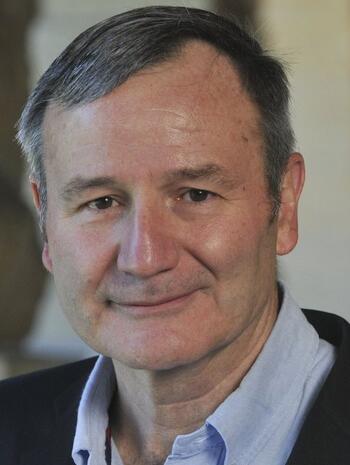
headshot of Isaac Mbiti

About the Speaker:  Isaac Mbiti’s research focuses broadly on African economic development, with particular interests in examining the role of education policies such as free primary education and teacher performance pay programs, as well as the potential for new technologies (especially mobile phones) to spur the development process. His research has been supported by the National Science Foundation, The National Institutes of Health, the International Impact Evaluation Initiative, USAID and the World Bank. He received his Ph.D. in economics from Brown University.

Goldman Conference Room

Encina Hall East, 4th floor

616 Serra St.

Stanford, CA 94305

Isaac Mbiti Assistant Professor of Public Policy and Economics University of Virginia
Seminars
-

Please note: All research in progress seminars are off-the-record. Any information about methodology and/or results are embargoed until publication.

Abstract:

Emergency Departments (ED) are critical to the U.S. health care system, and ED closures can have a profound effect on a community.  On one hand, prior literature has documented some adverse effects of ED closures. On the other hand, it has been posited that closures of EDs could improve acute care by removing poor-performers from the market. Moreover, permanent closure of a local ED could have an amplified effect for patients experiencing time-sensitive illnesses requiring prompt intervention, such as acute myocardial infarction (AMI). In this study using nationally representative data, we explore the mechanisms through which permanent ED closure affects patient access, treatment, and health outcomes in a community.  Specifically, we compare changes in access to cardiac technology (availability of cath lab, cardiac care unit, and cardiac surgery capacity), treatment received (PTCA and thrombolytic therapy), and health outcomes (30-day, 90-day, and 1-year mortality, and 30-day all cause readmission) among Medicare AMI patients whose communities experience varying degrees of increase in driving time to their next available ED when the closest ED to the community shuts down, relative to patients from communities that do not experience any permanent ED closure.

In collaboration with Renee Hsia, UCSF.

Yu-Chu Shen
Seminars
-

Please note: All research in progress seminars are off-the-record. Any information about methodology and/or results are embargoed until publication.

Summary

In this talk I’ll provide a history of the breast cancer screening controversies and discuss the new guidelines from the US Preventive Services Task Force and the American Cancer Society.

Encina Commons, Room 201 
615 Crothers Way Stanford, CA 94305-6006 

Executive Assistant: Soomin Li, soominli@stanford.edu
Phone: (650) 725-9911

(650) 723-0933 (650) 723-1919
0
Henry J. Kaiser, Jr. Professor
Professor, Health Policy
Senior Fellow, Freeman Spogli Institute for International Studies
Professor, Management Science & Engineering (by courtesy)
doug-headshot_tight.jpeg MD, MS

Douglas K. Owens is the Henry J. Kaiser, Jr. Professor, Chair of the Department of Health Policy in the Stanford University School of Medicine and Director of the Center for Health Policy (CHP) in the Freeman Spogli Institute for International Studies (FSI). He is a general internist, a Professor of Management Science and Engineering (by courtesy), at Stanford University; and a Senior Fellow at the Freeman Spogli Institute for International Studies.

Owens' research includes the application of decision theory to clinical and health policy problems; clinical decision making; methods for developing clinical guidelines; decision support; comparative effectiveness; modeling substance use and infectious diseases; cardiovascular disease; patient-centered decision making; assessing the value of health care services, including cost-effectiveness analysis; quality of care; and evidence synthesis.

Owens chaired the Clinical Guidelines Committee of the American College of Physicians for four years. The guideline committee develops clinical guidelines that are used widely and are published regularly in the Annals of Internal Medicine. He was a member and then Vice-Chair and Chair of the U.S. Preventive Services Task Force, which develops national guidelines on preventive care, including guidelines for screening for breast, colorectal, prostate, and lung cancer. He has helped lead the development of more than 50 national guidelines on treatment and prevention. He also was a member of the Second Panel on Cost Effectiveness in Health and Medicine, which developed guidelines for the conduct of cost-effectiveness analyses.

Owens also directed the Stanford-UCSF Evidence-based Practice Center. He co-directs the Stanford Health Services Research Program, and previously directed the VA Physician Fellowship in Health Services Research, and the VA Postdoctoral Informatics Fellowship Program.

Owens received a BS and an MS from Stanford University, and an MD from the University of California-San Francisco. He completed a residency in internal medicine at the University of Pennsylvania and a fellowship in health research and policy at Stanford. Owens is a past-President of the Society for Medical Decision Making. He received the VA Undersecretary’s Award for Outstanding Achievement in Health Services Research, and the Eisenberg Award for Leadership in Medical Decision Making from the Society for Medical Decision Making. Owens also received a MERIT award from the National Institutes on Drug Abuse to study HIV, HCV, and the opioid epidemic. He was elected to the American Society for Clinical Investigation (ASCI) and the Association of American Physicians (AAP.)

Chair, Department of Health Policy, School of Medicine
Director, Center for Health Policy, Freeman Spogli Institute for International Studies
CV
Date Label
Douglas K. Owens
Seminars
-

Please note the venue is now the Bechtel Conference Center at Encina Hall.

This event is jointly sponsored by the China Program at at the Walter H. Shorenstein Asia-Pacific Research Center (APARC) and the Center on Democracy, Development, and the Rule of Law (CDDRL).


Geostrategic rivalry and economic interdependence coexist in uneasy balance between the U.S. and China. Ambassador Fu will identify key strands in U.S. perceptions of China, frequently marked by confusion and anxiety, and China’s perceptions of the U.S., riddled by the desire for closer cooperation and suspicions over U.S.’s exclusion of China. The speech will highlight the South China Sea issue and emphasize the harmful effects of negative perceptions and the importance of cooperation. Commentary will be provided by Dr. Thomas Fingar, the Shorenstein Asia-Pacific Research Center Distinguished Fellow in the Freeman Spogli Institute for International Studies, Stanford University, after the speech.


Ambassador Fu Ying has been the Chairperson of the Foreign Affairs Committee of the National People’s Congress of China since March 2013. She is also the Chairperson of the Academic Committee for China’s Institute of International Strategy, Chinese Academy of Social Sciences. From 1993 to 2000, she served successively as the Director, Counselor of the Foreign Ministry’s Asian Department and the Minister Counselor of the Chinese Embassy in Indonesia (1997). While serving as the head of the Asian Department at the Ministry of Foreign Affairs in 2000, she was instrumental in crafting China’s comprehensive strategic partnership with ASEAN and for launching the Six Party Talks with North Korea. She has served as China’s Ambassador to the Philippines (1998), Australia (2004) and to the United Kingdom (2007). From 2009 to 2013, she served as the Vice Minister of Foreign Affairs for the P.R.C.


Dr. Thomas Fingar is the inaugural Oksenberg-Rohlen Distinguished Fellow in the Freeman Spogli Institute for International Studies at Stanford University. From 2005 to 2008, he served concurrently as the first deputy director of national intelligence for analysis and as chairman of the National Intelligence Council. He served previously as assistant secretary of the State Department’s Bureau of Intelligence and Research (2004–2005), principal deputy assistant secretary (2001–2003), deputy assistant secretary for analysis (1994–2000), director of the Office of Analysis for East Asia and the Pacific (1989–1994), and chief of the China Division (1986–1989).

Chairperson, Foreign Affairs Committee of the National People’s Congress, China; former PRC Ambassador to the Philippines, Australia, and the U.K.
Fu Ying <i>Chairperson, Foreign Affairs Committee of the National People’s Congress, China; former PRC Ambassador to the Philippines, Australia, and the U.K.</i> <i>Chairperson, Foreign Affairs Committee of the National People’s Congress, China; former PRC Ambassador to the Philippines, Australia, and the U.K.</i> <i>Chairperson, Foreign Affairs Committee of the National People’s Congress, China; former PRC Ambassador to the Philippines, Australia, and the U.K.</i>
Dr. Thomas Fingar <i>Shorenstein Asia-Pacific Research Center Distinguished Fellow, Freeman Spogli Institute for International Studies, Stanford Universit</i>
Seminars
-

Abstract:  In recent decades, social scientists have begun to employ the rigorous research methods that used to be the province of the natural sciences. This evidence-based approach has revolutionized how academic work is judged, how policies are created and evaluated and, now, how war is viewed. At the forefront of this movement, the Empirical Studies of Conflict Project (ESOC) has developed a large body of evidence on conflict that enables a new perspective on the causes and effects of violence. Information and War presents a new framework to understand the conflicts that have prevailed since World War II and the kind in which the US was so recently embroiled: asymmetric contests where a greater power struggles to contain an insurgency.

About the Speakers: Dr. Joseph Felter joined CISAC as a senior research scholar in September 2011.

Felter retired from the US Army as a Colonel following a career as a Special Forces and foreign area officer with distinguished service in a variety of special operations and diplomatic assignments. He has conducted foreign internal defense and security assistance missions across East and Southeast Asia and has participated in combat deployments to Panama, Iraq, and Afghanistan.

Prior to arriving at CISAC, he led the International Security and Assistance Force, Counterinsurgency Advisory and Assistance Team (CAAT) in Afghanistan reporting directly to Gen. Stanley McChrystal and Gen. David Petraeus and advising them on counterinsurgency strategy. Felter held leadership positions in the US Army Rangers and Special Forces and directed the Combating Terrorism Center (CTC) at West Point from 2005-2008. He is Co-Director of the Empirical Studies of Conflict Project (ESOC) and a research fellow at the Hoover Institution.

He has published many scholarly articles on the topic of  counterinsurgency and has focused on the study of how to address the root causes of terrorism and political violence. Some highlights include: “Aid Under Fire: Development Projects and Civil Conflict” with Benjamin Crost and Patrick Johnston (American Economic Review), "Can Hearts and Minds be Bought? The Economics of Counterinsurgency in Iraq," with Eli Berman and Jacob N. Shapiro (Journal of Political Economy), and "Do Working Men Rebel? Insurgency and Unemployment in Afghanistan, Iraq, and the Philippines," with Eli Berman, Michael Callen, and Jacob N. Shapiro (Journal of Conflict Resolution).

Felter holds a BS from West Point, an MPA from the Harvard Kennedy School of Government, and a PhD in Political Science from Stanford University.

Dr. Jacob N. Shapiro is Associate Professor of Politics and International Affairs at Princeton University and co-directs the Empirical Studies of Conflict Project. His active research projects study political violence, economic and political development in conflict zones, security policy, and urban conflict. He is author of The Terrorist’s Dilemma: Managing Violent Covert Organizations. His research has been published or is forthcoming in broad range of academic and policy journals including American Journal of Political Science, Foreign Affairs, Foreign Policy, International Organization, International Security, Journal of Political Economy, and World Politics as well as a number of edited volumes. Shapiro is a term member of the Council on Foreign Relations, an Associate Editor of World Politics, a Faculty Fellow of the Association for Analytic Learning about Islam and Muslim Societies (AALIMS), a Research Fellow at the Center for Economic Research in Pakistan (CERP), and served in the U.S. Navy and Naval Reserve. Ph.D. Political Science, M.A. Economics, Stanford University. B.A. Political Science, University of Michigan.


Senior research scholar CISAC, Stanford University
Jacob N. Shapiro Associate Professor of Politics and International Affairs Princeton University
Seminars
-

Abstract: In 2004, al-Qaeda’s security chief smuggled 42 handwritten pages out of Iran, where he was confined under a loose form of house arrest. The notes written by Sayf al-Adl were each folded into a bundle the size of a cigarette, and they included two seminal documents: a history of ISIS Godfather Abu Mus'ab al-Zarqawi's original engagement with al-Qaeda in 2000, and a high-level plan to re-establish the Caliphate between 2013 and 2016. 

Al-Adl’s history has formed the basis of virtually every subsequent retelling of the development of al-Qaeda in Iraq and the Islamic State. But none other than Osama bin Laden himself has repudiated al-Adl’s history, and newly available al-Qaeda correspondence from the period suggests that intra-jihadi competition drove al-Qaeda’s original engagement with Zarqawi more than strategic or ideological alignment.
 
Al-Adl’s other document, a seven-stage ‘Master Plan’ that foretold the declaration of the Caliphate in 2014, has proved extraordinarily prescient. It aimed to exploit a geopolitical loophole to al-Qaeda’s basic worldview and finally unify Zarqawi’s movement with al-Qaeda. The strategic vision proved powerful, but the alliance it was built for was not.
 
About the Speaker: Brian Fishman is a Counterterrorism Research Fellow with the International Security Program at New America, a Washington, DC think tank and a Fellow with the Combating Terrorism Center (CTC) at West Point, where he previously served as the Director of Research. He currently manages policy at Facebook regarding terrorism and violent extremism. Fishman also served as an assistant professor in West Point’s Department of Social Sciences. Fishman built and led Palantir Technologies’ Disaster Relief and Crisis Response team, which brought some of the world’s most sophisticated technology to humanitarian organizations. Fishman is a term member of the Council on Foreign Relations and was a founding editor of the CTC Sentinel.
 
Fishman is the author of numerous studies U.S. national security, terrorism and international jihadi groups. He has specialized in the so-called Islamic State and its predecessors since 2005 and taught a dedicated course about the Islamic State of Iraq in 2008. Fishman coauthored seminal investigations of al-Qaeda's foreign fighters in Iraq and Iranian support for Shia militias fighting U.S. troops in Iraq. Fault Lines in Global Jihad: Organizational, Strategic, and Ideological Fissures, a volume Fishman co-edited with Assaf Moghadam, was named one of the top books for understanding terrorist recruitment. He regularly appears in domestic and international media regarding terrorism and national security issues.
 
Fishman has taught as an adjunct professor in Georgetown's School of Foreign Service and Columbia's School of International and Public Affairs. Before joining the CTC, Fishman was the Foreign Affairs/Defense Legislative Assistant for Congresswoman Lynn Woolsey. Fishman holds a Masters in International Affairs (MIA) from Columbia University and a B.A. from the University of California, Los Angeles.
Counterterrorism Research Fellow, International Security Program New America
Seminars
-

With the G-7 economies in the doldrums since 2008, the roller-coastal behavior of global commodity markets from 2010 to 2015 is convincing evidence of the huge impact that China’s economy now has on the prosperity of many regions, Southeast Asia notably included. The future course of the China’s economy will determine, among other things, the legitimacy of its government, the incentive to project force beyond its borders, and the ability to build an effective international coalition to advance its agenda in world affairs.  Prof. Woo will examine (a) the recent marked slowdown in China’s growth, distinguishing temporary factors from the medium-term trend and comparing the policy options, and (b) the domestic and external implications of two scenarios of Chinese growth for two settings­­­­­­­­ in Southeast Asia.

Image
wing tyewoo050216crop
Wing Thye Woo, in addition to the positions noted above, is a special-term professor in the Fudan University School of Economics (Shanghai). He is co-editing a forthcoming book on the global economy and its Asian component. His many previous publications include Ranking the Liveability of the World’s Major Cities (co-author, 2012); The Asian Financial Crisis: Lessons for a Resilient Asia (co-editor, 2000); and Fiscal Management and Economic Reform in the People's Republic of China (co-authored, 1997). He is the convener of the Asian Economic Panel (AEP), a network of leading scholars on Asian economies who meet tri-annually, and the chief editor of Asian Economic Papers, a journal co-sponsored by research institutes in Indonesia, Malaysia, South Korea, and the US. He has also served as a special advisor to Malaysian prime minister Abdullah Badawi (2005-08), US treasury secretary Robert Rubin (1997-98), and officials of other governments.


Wing Thye Woo President, Jeffrey Cheah Institute on Southeast Asia, Sunway University, Kuala Lumpur, and Professor of Economics, University of California, Davis
Seminars
-

All research in progress seminars are off-the-record. Any information about methodology and/or results are embargoed until publication.

Abstract:

Efforts to understand the dramatic declines in mortality over the past century have focused on life expectancy. However, understanding changes in disparity in age of death is important to understanding mechanisms of mortality improvement and to devising policy to promote health equity. We derive a novel decomposition of variance in age of death, a measure of inequality, and apply it to cause-specific contributions to the change in variance among the G7 countries from 1950 to 2010. We find that the causes of death that contributed most to declines in the variance are different from those that contributed most to increase in life expectancy, in particular they affect mortality at younger ages. We also find that for two leading causes of death, cancers and CVD, there are no consistent relationships between changes in life expectancy and variance either within countries over time or between countries. These results show that promoting health at younger ages is critical for health equity and that policies to control cancer and CVD may have differing implications for equity.

Benjamin Seligman
Seminars
-

We have reached venue capacity and can no longer accept RSVPs.


Half the world is on the Internet. By the end of June 2015, China recorded a total of 667 million Internet users. Taobao and Tmall, Alibaba Group’s giant e-commerce platforms, posted a record-breaking RMB 91.2 billion on Singles' Day, 2015; and Alibaba Group with its annual sales volume of RMB 3 trillion, has surpassed Walmart to become the world’s largest retail platform. Dr. Ming Zeng, Chief Strategy Officer of Alibaba Group, will first give an insider’s account of how Alibaba was able to scale up its operations from Jack Ma’s humble operations into one of the world’s largest companies. He will further discuss how the Web technology is transforming China’s consumer and production economy.


Dr. Ming ZENG currently serves as Executive Vice President of Alibaba Group Holding Limited and Chief Strategy Officer of Alibaba Group. Dr. Zeng is also the founding Dean of Hupan University of Entrepreneurship, an educational institution founded in 2015 by Jack Ma and other business leaders in China. He is a frequent contributor to leading management journals and is the author of Dragons at Your Door: How Chinese Cost Innovation Is Disrupting Global Competition (2007). Dr. Zeng previously served as a faculty member at INSEAD from 1998 to 2002 then helped to found the Cheung Kong Graduate School of Business in Beijing, the first private business school in China. Dr. Zeng obtained his Ph.D. in International Business and Strategy from University of Illinois at Urbana-Champaign in 1998, and his Bachelor's degree in International Economics from Fudan University, China, in 1991.


Duncan Clark is the Chairman of BDA China, a consultancy he founded in Beijing in 1994 after four years as an investment banker with Morgan Stanley in London and Hong Kong. BDA China is an advisory firm serving investors in China’s technology and consumer sectors, employing over 100 mainland Chinese professionals in Beijing. An early advisor to leading Chinese Internet entrepreneurs, Mr. Clark is also the author of Alibaba: The House that Jack Ma Built (2016), an insider’s look at China’s e-commerce and technology giant and its founder Jack Ma.


This event is off the record.


Ming Zeng Chief Strategy Officer, Alibaba Group
Duncan Clark (moderator) Moderator BDA China, Author of Alibaba: The House that Jack Ma Built
Seminars
-

Abstract: Biotechnology is rapidly diffusing globally. Efficient methods for reading, writing, and editing genetic information, producing genetic diversity, and selecting for traits are becoming widely available. New communities of practice are gaining the power to act on timescales and geographies that fall outside current systems of oversight. Governments and scientific communities alike are struggling to respond appropriately.

Recent controversies have brought these issues to light: “gain-of-function” research may risk causing the very pandemics it aims to help mitigate; the development of “gene drives” may drastically alter ecosystems; and crowd-funded “CRISPR kits” are giving decentralized communities access to powerful new tools. Meanwhile, a series of accidents at the nation’s premier biological labs, and recent struggles in responses to Ebola and Zika are raising concerns about the capacity to respond to biological threats regardless of their cause – accidental, deliberate or naturally occurring. The lack of mechanisms to assess the benefits and risks of advances in biotechnology has prompted reactive and blunt policy solutions including scientific and government-lead research moratoriums.

This presentation will review recent developments and discuss improved strategies for preparing for emerging biological risks. It will highlight key needs and opportunities in leadership, oversight and learning to mature our institutions to tackle long-term governance challenges.

About the Speaker: Dr. Megan J. Palmer is a Senior Research Scholar and William J. Perry Fellow in International Security at the Center for International Security and Cooperation (CISAC) at Stanford University. She leads a research program focused on risk governance in biotechnology and other emerging technologies. Dr. Palmer is also an investigator of the multi-university Synthetic Biology Engineering Research Center (Synberc), where for the last 5 years she served as Deputy Director of its policy-related research program, and led projects in safety and security, property rights, and community organization and governance. She was previously a research scientist at the California Center for Quantitative Bioscience at UC Berkeley, and an affiliate of Lawrence Berkeley National Labs.

Dr. Palmer has created and led many programs aimed at developing and promoting best practices and policies for the responsible development of biotechnology. She founded and serves as Executive Director of the Synthetic Biology Leadership Excellence Accelerator Program (LEAP), an international fellowship program in responsible biotechnology leadership. She also leads programs in safety and responsible innovation for the international Genetically Engineered Machine (iGEM) competition. Dr. Palmer advises a diversity of organizations on their approach to policy issues in biotechnology, including serving on the board of the synthetic biology program of the Joint Genomics Institute (JGI)

Dr. Palmer holds a Ph.D. in Biological Engineering from MIT, and was a postdoctoral scholar in the Bioengineering Department at Stanford University, when she first became a CISAC affiliate. She received a B.Sc.E. in Engineering Chemistry from Queen’s University, Canada.

616 Jane Stanford Way
Suite C238
Stanford, CA 94305-6165

(650) 725-8929
0
Senior Director of Public Impact at Ginkgo Bioworks
CISAC Affiliate
meganpalmer.jpeg PhD

Dr. Megan J. Palmer is the Executive Director of Bio Policy & Leadership Initiatives at Stanford University (Bio-polis). In this role, Dr. Palmer leads integrated research, teaching and engagement programs to explore how biological science and engineering is shaping our societies, and to guide innovation to serve public interests. Based in the Department of Bioengineering, she works closely both with groups across the university and with stakeholders in academia, government, industry and civil society around the world.

In addition to fostering broader efforts, Dr. Palmer leads a focus area in biosecurity in partnership with the Freeman Spogli Institute for International Studies (FSI) at Stanford. Projects in this area examine how security is conceived and managed as biotechnology becomes increasingly accessible. Her current projects include assessing strategies for governing dual use research, analyzing the diffusion of safety and security norms and practices, and understanding the security implications of alternative technology design decisions.

Dr. Palmer has created and led many programs aimed at developing and promoting best practices and policies for the responsible development of bioengineering. For the last ten years she has led programs in safety, security and social responsibility for the international Genetically Engineered Machine (iGEM) competition, which last year involved over 6000 students in 353 teams from 48 countries. She also founded and serves as Executive Director of the Synthetic Biology Leadership Excellence Accelerator Program (LEAP), an international fellowship program in biotechnology leadership. She advises and works with many other organizations on their strategies for the responsible development of bioengineering, including serving on the board of directors of Revive & Restore, a nonprofit organization advancing biotechnologies for conservation.

Previously, Megan was a Senior Research Scholar and William J. Perry Fellow in International Security at the Center for International Security and Cooperation (CISAC), part of FSI, where she is now an affiliated researcher. She also spent five years as Deputy Director of Policy and Practices for the multi-university NSF Synthetic Biology Engineering Research Center (Synberc). She has previously held positions as a project scientist at the California Center for Quantitative Bioscience at the University of California Berkeley (where she was an affiliate of Lawrence Berkeley National Labs), and a postdoctoral scholar in the Bioengineering Department at Stanford University. Dr. Palmer received her Ph.D. in Biological Engineering from M.I.T. and a B.Sc.E. in Engineering Chemistry from Queen’s University, Canada.


Senior Research Scholar CISAC
Seminars
Subscribe to Seminars