-

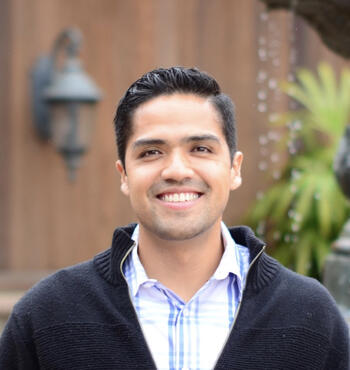
Singapore brandishes an unusual post-colonial identity. As several of its eminent voices have suggested, the country remembers its colonial past with “no hangups.” Meanwhile the visibility of Singapore’s cinema has surged at festivals and in film criticism. Prof. Sim will argue that the films reflect the city-state’s distinctive location between post-colonialism and globalization. He will show how the films evince a local preoccupation with space, which is desperately scarce on the island nation and thus intensely politicized. He will explore how the films map, organize, and understand Singapore as a place, and Singapore’s place in the world, while retaining the ideological inflections of its post-colonial status.

Existing scholarship on cinema in Singapore dwells on how the films, as texts, respond to social realities, political power, and state ideology. These readings are legitimate and illustrative. But they do not adequately account for Singapore’s postcolonial identity and how that identity is expressed in a mapping impulse. Prof. Sim will go beyond this literature to analyze key films, art and museum exhibits, and other cultural artifacts as symptoms of Singapore’s intriguing but understudied fixation on space and place.

Gerald Sim is associate professor of film and media studies at Florida Atlantic University, and the author of The Subject of Film and Race: Retheorizing Politics, Ideology, and Cinema (2014). His current book-in-progress, tentatively entitled Besides Hybridity: Postcolonial Poetics of Southeast Asian Cinema, is contracted with Indiana University Press. In 2016 and 2013 he was a visiting senior research fellow in the National University of Singapore’s Asia Research Institute.


Gerald Sim 2016-17 Lee Kong Chian NUS-Stanford Distinguished Fellow on Southeast Asia
Seminars
-

Join us for a conversation with FSI Director, Michael McFaul, as he showcases all the ways to get involved in student programs at FSI.

Light refreshments will be served. RSVP by 10/28 here.


Encina Hall
616 Jane Stanford Way
Stanford, CA 94305-6055

0
Senior Fellow, Freeman Spogli Institute for International Studies
Ken Olivier and Angela Nomellini Professor of International Studies, Department of Political Science
Peter and Helen Bing Senior Fellow, Hoover Institution
mcfaul_headshot_2025.jpg PhD

Michael McFaul is the Ken Olivier and Angela Nomellini Professor of International Studies in Political Science, Senior Fellow at the Freeman Spogli Institute for International Studies, and the Peter and Helen Bing Senior Fellow at the Hoover Institution, all at Stanford University. He joined the Stanford faculty in 1995 and served as FSI Director from 2015 to 2025. He is also an international affairs analyst for MSNOW.

McFaul served for five years in the Obama administration, first as Special Assistant to the President and Senior Director for Russian and Eurasian Affairs at the National Security Council at the White House (2009-2012), and then as U.S. Ambassador to the Russian Federation (2012-2014).

McFaul has authored ten books and edited several others, including, most recently, Autocrats vs. Democrats: China, Russia, America, and the New Global Disorder, as well as From Cold War to Hot Peace: An American Ambassador in Putin’s Russia, (a New York Times bestseller) Advancing Democracy Abroad: Why We Should, How We Can; and Russia’s Unfinished Revolution: Political Change from Gorbachev to Putin.

He is a recipient of numerous awards, including an honorary PhD from Montana State University; the Order for Merits to Lithuania from President Gitanas Nausea of Lithuania; Order of Merit of Third Degree from President Volodymyr Zelenskyy of Ukraine, and the Dean’s Award for Distinguished Teaching at Stanford University. In 2015, he was the Distinguished Mingde Faculty Fellow at the Stanford Center at Peking University.

McFaul was born and raised in Montana. He received his B.A. in International Relations and Slavic Languages and his M.A. in Soviet and East European Studies from Stanford University in 1986. As a Rhodes Scholar, he completed his D. Phil. in International Relations at Oxford University in 1991. 

CV
Date Label
Seminars
-

Wei Huang uses the experience of China's One Child Policy to examine how fertility restrictions affect economic and social outcomes over the lifetime. The One Child Policy imposed a birth quota and heavy penalties for “out-of-plan” births. Using variation in the fertility penalties across provinces over time, He examines how fertility restrictions imposed early in the lives of individuals affected their educational attainment, marriage and fertility decisions, and later life economic outcomes. Exposure to stricter fertility restrictions when young leads to higher education, more white-collar jobs, delayed marriage, and lower fertility. Further consequences include higher household income, consumption, and saving. Finally, exposure to stricter fertility restrictions in early life increases female empowerment as measured by an increase in the fraction of households headed by women, female-oriented consumption and gender-equal opinions. Overall, fertility restrictions imposed when agents are young have powerful effects throughout the life cycle.

Image
Wei Huang is a Post-doctoral Fellow in Aging and Health Economics at the National Bureau of Economic Research. His main research studies public economics, labor economics, and health economics. He is interested in the topics such as health, education, ethnicity, and China. Wei received his PhD in economics from Harvard University in 2016. He received an M.A in economics from National School of Development at Peking University in 2011, and a B.A. in physics from School of Physics at Peking University in 2008.


Wei Huang Post-doctoral Fellow in Aging and Health Economics, the National Bureau of Economic Research
Seminars
-

Do startups learn from their own past experiences? What about observing other entrepreneurs' experiences? Using the results of her recent study on tech ventures on Kickstarter, Jaclyn Selby will share the circumstances under which startups do - and do NOT - learn from previous success and failure. She will also explore whether startups learn best from prior experience in related or in unrelated industries.

Speaker Bio

Image
Jaclyn Selby's research is at the intersection of technology, management and policy. She focuses on competitive dynamics in high tech and media industries, emphasizing innovation, startups, and intellectual property. She joins Stanford from a postdoctoral fellowship at the Tuck School of Business at Dartmouth. Her work has been published in Communications & Strategies, Foreign Policy Digest, and Intellibridge Asia.  Jaclyn holds a PhD from the University of Southern California, an MA from Georgetown University, and a BA from Sarah Lawrence College.

Prior to PhD life, Jaclyn was a Senior Researcher heading federally-funded tech strategy projects at Project Argus, a leader in disease and disaster intelligence. Her group worked with partners at the Defense Threat Reduction Agency, the Open Source Center, the University of Iowa Avian Flu prediction market, and the Al Fornace molecular biology lab. Prior to Argus, she was Research & Marketing Director of the Style and Image Network, a boutique consultancy, and a geopolitical analyst (Intellibridge, Castle Asia, Courage Services). A U.S. citizen, Jaclyn was raised overseas in Indonesia, Thailand and Singapore.


Agenda

4:15pm: Doors open
4:30pm-5:30pm: Talk and Discussion
5:30pm-6:00pm: Networking

RSVP Required

 
For more information about the Silicon Valley-New Japan Project please visit: http://www.stanford-svnj.org/
Seminars
-

Abstract: New defense technologies raise complex questions about states’ abilities to project force, consequences for civilian casualties, and reactions by foreign leaders and publics. Yet many technologies become normalized and legitimated, whereas others are banned. This paper seeks to account for the failure of strong anti-submarine norms to emerge after World War I, in the process legitimizing submarines as a weapon in World War II and beyond. In the First World War, Germany’s submarine commerce warfare was a major point of contention between the great powers, which sought to strategically deploy and manipulate rules and norms of warfare in response to this new technology. However, despite widespread condemnation of Germany’s “barbaric” practices and calls by Great Britain to abolish the weapon entirely, postwar conferences failed to prohibit or effectively regulate submarine warfare. Rather, the submarine has become an accepted defense technology. I argue that Germany demonstrated the utility of submarines as an offensive weapon and the limits of applying existing rules to their use during the war, with consequences for norm creation and cooperation after the war. The paper suggests lessons for current policy debates, as well as insights into the political processes behind the development of norms of war.

About the Speaker: Dr. Jennifer L. Erickson is a MacArthur Nuclear Security Fellow at the Center for International Security and Cooperation at Stanford University. She is also an Associate Professor of Political Science and International Studies at Boston College (on sabbatical in 2016-2017). Her current research project deals with new defense technologies and the creation of laws and norms of war, examining cases on World War I, nuclear weapons after World War II, and new weapons in the contemporary era. Her book, Dangerous Trade: Conventional Arms Exports, Human Rights, and International Reputation (Columbia UP 2015), explains states’ commitment to and compliance with new humanitarian arms trade norms, articulated in the UN Arms Trade Treaty and related multilateral initiatives. She has additional ongoing research projects dealing with sanctions and arms embargoes.

Previously, Dr. Erickson was a Postdoctoral Fellow in the John Sloan Dickey Center for International Understanding at Dartmouth College. She has also been a research fellow at the Stiftung Wissenschaft und Politik (SWP) and the Wissenchaftszentrum (WZB) in Berlin and a faculty affiliate at the Institute for Quantitative Social Science at Harvard University. She has a B.A. in Political Science from St. Olaf College and a Ph.D. in Government from Cornell University.

Encina Hall, 2nd floor

Jennifer Erickson MacArthur Nuclear Security Fellow CISAC
Seminars
-

Speaker Bio:

Image
boittin margaret
Margaret Boittin is Assistant Professor at Osgoode Hall Law School, York University, Canada. She studies Chinese law and politics.

She was a predoctoral and postdoctoral fellow at CDDRL (2012-2015).

Encina Hall
616 Serra Street
Stanford, CA 94305-6055

0
The Governance Project Postdoctoral Fellow, 2013-15
Boittin_HS.jpg

Margaret Boittin has a JD from Stanford, and is completing her PhD in Political Science at UC Berkeley. Her dissertation is on the regulation of prostitution in China. She is also conducting research on criminal law policy and local enforcement in the United States, and human trafficking in Nepal.

The Governance Project Postdoctoral Fellow, 2013-15
CV
Assistant Professor at Osgoode Hall Law School, York University, Canada
Seminars
-

Image

Leading the world's only global Navy, Secretary Mabus has traveled over 1.3 million miles, visited over 150 countries and territories to maintain and develop international relationships. He has focused efforts to rebalancing the U.S. Fleet to have 60% of all Navy and Marine Corps assets based in the Indo-Asia-Pacific by the end of the decade as a reflection of our commitment to this critical region. Additionally, he has established a Marine Rotational Force in Darwin on a rotational basis to conduct exercises and train with the Australian Defense Force and maintain a stronger presence in the Pacific region.

Secretary Mabus is also leading efforts to use alternative energy sources to improve our warfighting capabilities and reduce our reliance on foreign sources of fossil fuels, denying potential adversaries the opportunity to use energy as a weapon against us, and our partners. During the 2016 Rim of the Pacific Exercise, the largest naval exercise in the world, completed in August, the ships of nine partner nations took delivery of, and operated on, biofuel blends delivered from U.S. ships.

Ray Mabus is the 75th United States Secretary of the Navy, the longest to serve as leader of the Navy and Marine Corps since World War I. Responsible for an annual budget in excess of $170 billion and leadership of almost 900,000 people, Secretary Mabus has worked to improve the quality of life of Sailors, Marines and their families; decrease the Department's dependence on fossil fuels; strengthen partnerships with industry and internationally; and increase the size of the Navy fleet.


Ray Mabus <i>United States Secretary of the Navy</i>
Seminars
-

Abstract: DNA synthesis providers form the primary biosecurity safety net for the synthetic biology industry. Twist’s silicon-based DNA synthesis platform allows for synthesis of 2-3 orders of magnitude more DNA in the same footprint as traditional methods. This poses a challenge to existing labor-intensive biosecurity screening practices as recommended by US government guidance. Can the technical and regulatory environments adapt to lower the cost and increase throughput of screening while maintaining or even improving detection accuracy? This talk will provide an overview of current best practices, review technical gaps in existing regulatory guidance and suggest possible improvements to help continue to power the rapid scientific and economic development of synthetic biology.

About the Speaker: James Diggans leads the Bioinformatics and Biosecurity group at Twist Bioscience, a DNA synthesis company based in San Francisco, CA. The group develops algorithms and predictive models and builds large-scale distributed computing systems supporting Twist’s next generation synthesis technology, including biosecurity and export control screening systems. He currently represents Twist’s membership to the International Gene Synthesis Consortium and to the US Department of Commerce/BIS Materials Technical Advisory Committee.

Dr. Diggans received his PhD from George Mason University and previously led the computational biology group at MITRE, designing software-defined biosensors and battlefield chem/bio sensor fusion systems. He has also worked in molecular diagnostics spending five years building and validating machine learning algorithms for cancer detection from tissue biopsy. 

Encina Hall, 2nd floor

James Diggans Senior Manager, Bioinformatics and Biosecurity |Twist Bioscience
Seminars
-

Agriculture is placed as the centerpiece of Shizo Abe’s package of economic policy, known as Abenomics. Since his return to the president of the Liberal Democratic Party in September in 2012, Shinzo Abe has repeatedly expressed his high expectation on Japan’s agriculture as one of the most promising industries.   Abe argues that agricultural income should be doubled and agricultural exports should be tripled if its fill powers are exerted. Abe claims that the major stumbling block for agriculture is too much political power of the Central Union of Agricultural Co-operatives, popularly called Zenchu, which is an apex body of Japan's system of agricultural co-operatives. Among Japanese mass media, Zenchu has been described as one of the most powerful voting groups for the Liberal Democratic Party. According to Abe, Zenchu is only concerned in its own vested interests and prevents innovation in the agricultural industry. In the current session of the Diet, Abe has submitted new bills to reduce the power of Zenchu. Taking the responsibility for failing to persuade Abe to realize how Zenchu has promoted agricultural development,  Mr. Akira Banzai, the president of Zenchu, has resigned. Abe’s agricultural policy makes a sharp contrast with the traditional agricultural policy in the successive LDP’s governments (including the first Abe cabinet from 2007 to 2008).  Why does Abe take such an unfriendly attitude to Zenchu? Is really Zenchu is so harmful for the agricultural industry? Does Japanese agriculture really have such high potentials? Why did Abe change agricultural policy so drastically after the resignation of the first cabinet? By examining these questions, the speaker explains a new and tricky dynamics of Japanese agriculture. The speaker reveals the fact that, contrary to mass media’s popular image of ‘ever strong Zenchu,’  Zenchu’s political power started declining in the middle of 1990s and sharply dropped in the late 2000s. The speaker also describes that political groups of the manufacturing and commercial industries, which support Abenomics, are now becoming more and more active in staring agriculture-related businesses for the purpose of receiving agricultural subsidies.  The speaker points out that agricultural subsidies are now used as a cover for the implicit collusion between the current Abe government and the political groups of manufacturing and commercial industries: i.e., instead of Zenchu, manufacturing and commercial sector are cow becoming the major recipients of agricultural subsidies.


Image
20160901godophotodsc 0211
Professor Yoshihisa Godo received his PhD from the University of Kyoto in 1992. His research fields include development economics and agricultural economics. Godo’s Development Economics (3rd edition), co-authored with Yujiro Hayami and published by the Oxford University Press in 2005, is especially well known. His Japanese book, Nihon no Shoku to Nou (Food and Agriculture in Japan), received the prestigious 28th Suntory Book Prize in 2006. Three of his books were translated to Mandarin and published by Chinese publishers. He was on sabbatical leave at the East Asian Institute of the National University of Singapore (from April 2013 to March 2014, from August to September 2014, from August to September 2015 and from August to September 2016), the Economic Growth Center at Yale University (from April 2005 to March 2006), and the Asia Pacific Research Center at Stanford University (from April 1997 to March 1998). Prof Godo has served as a committee member on the Osaka Dojima Commodity Exchange, a Special Councillor to the Osaka City Government and a member of the Special Advisory Committee for Regional Revitalisation in the Kagoshima Prefectural Government.

Yoshihisa Godo Professor, Meiji Gakuin University
Seminars
-

Industrial clusters are ubiquitous in history and the contemporary developing world. While many of them grow dynamically, others stagnate. This study explores factors affecting the success and failure of cluster-based industrial development based primarily on own case studies conducted in East Asia, South Asia, and sub-Saharan Africa as well as historical studies in Japan and Europe. It is found that the key to the successful development is multi-faceted innovations, encompassing technical and managerial innovations or improvements. Since innovative ideas spill over, collective actions which attempt to internalize externalities often play a role in sustainable development of industrial clusters. An implication is that stagnant clusters can be vitalized if multi-faceted innovations can be stimulated by policy means.   


Image
xian sheng xie zhen
Keijiro Otsuka is a Professor of Development Economics at the Graduate School of Economics at the Kobe University and a Chief Senior Researcher at the Institute of Developing Economies in Tokyo. He was a professor at the National Graduate Institute for Policy Studies (GRIPS) from April 2001 to March 2016. He received a Ph.D. in economics from the University of Chicago in 1979.

He was a core member of World Development Report 2013: Jobs. He was also President of International Association of Agricultural Economists (IAAE) from 2009 to 2012. He received Purple-Ribbon Medal from the Japanese Government in 2010.

He has been conducting comparative analyses on cluster-based industrial development, poverty and income distribution, land reform and land tenure, and Green Revolution between Asia and Africa. He published 123 articles in refereed international journals and 23 coauthored and coedited books. He is Fellows of International, American, and African Association of Agricultural Economists.

Kei Otsuka Professor, Kobe University
Seminars
Subscribe to Seminars