-
Abstract: Trustworthy measurement results are basic to human interaction. We evolved the critical and sensitive capacity to compare and judge amount and distance and time and a rich portfolio of our sensed environment. And fairness, and Truth. 

Metrology is the science of measuring, and the systematic foundation of how we exchange measurement results that can trusted. Results that can be compared and used to make decisions. Metrology has deep roots, has played a formative role in our industrialized civilization, and promises to shape our future. 

Our social fabric is woven from fairness and shared reality, and the government responsibility to “…fix the Standard of Weights and Measures” is enshrined in the US Constitution. The common good of Metrology is fundamental for security and cooperation. 

I’ll talk about some of the technical and practical things we do to realize metrology at the US National Institute of Standards and Technology.

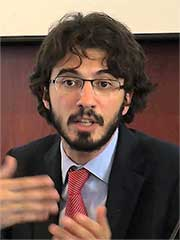
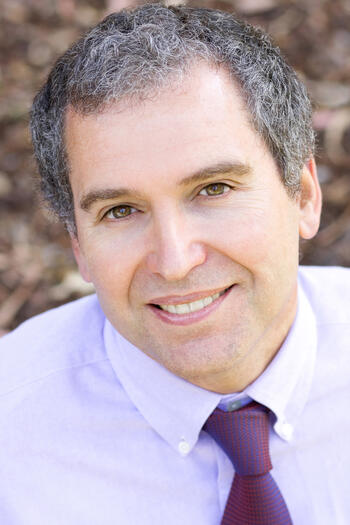
About the Speaker: Marc Salit is a measurement scientist at the National Institute of Standards and Technology (NIST), an agency of the US Department of Commerce. He leads a group that develops metrology and infrastructure to support discovery, technology development, and deployment of measurements in biomedicine and the bioeconomy. He received his B.A. at Skidmore College, and his Ph.D. at Arizona State University. His work at NIST has included development of standards for chemical composition, wavelenghts of spectral lines, and genome-scale biology. His group most recently released the world’s first standards for whole human genomes.
 
In 2013, he moved most of his team to California to seed a new joint scientific initiative in partnership with Stanford faculty groups and Bay Area industry. This initiative has been launched as the Joint Initiative for Metrology in Biology (JIMB — http://jimb.stanford.edu).

Encina Hall, 2nd floor

Marc Salit Consulting Professor, Bioengineering Group Leader, Multiplexed Biomolecular Science, Biosystems and Biomaterials Divisions, NIST Stanford University, National Institute of Standards & Technology
Seminars
-

Abstract: This paper develops a theoretical approach to norm resistance and defiance in international affairs. Conventional models of norm dynamics (e.g. Finnemore and Sikkink’s “norm life-cycle”, Keck and Sikkink’s “boomerang model”; Risse, Ropp and Sikkink’s “spiral model”) focus mainly on diffusion and compliance, failing to account for resistance to global norms. I argue that transnational advocacy and pressure can backfire, resulting in further violations, the promotion of counter-norms, and repression of civil society. Drawing from social psychology, sociology, and criminology, the paper presents an alternative model of norm socialization, whereby attempts to “shame” states provoke defiance, or the increase in incidence or commitment to a particular norm offending behavior by a shamed regime, caused by a proud, shameless reaction against the shaming agent. Defiance unfolds through domestic and international logics that incentivize elites to violate international norms for political gain. In the long term, defiance can attach oppositional norms to collective identity, transforming domestic and international normative orders. I apply the theoretical framework to an empirical case study of the sexuality rights norm and its contestation by Uganda, Nigeria, and Russia.

About the speaker: Rochelle Terman is a political scientist (Ph.D., University of California Berkeley, 2016) studying international norms and identity using computational and mixed methods. Her dissertation / book project examines the backlash and unintended consequences of international “naming and shaming” campaigns, especially around women’s rights in the Muslim World. Previous work on the tension between Islamophobia and feminism was recently published in Theory, Culture & Society. She teaches computational social science in a variety of capacities.

Encina Hall, 2nd floor

Pick Hall 411 5828 S. University Avenue Chicago, Illinois 60637
0
rochelleterman_rsd17_076_0417a.jpg

Rochelle is an assistant professor in the Department of Political Science at the University of Chicago. Her research examines international norms, gender and advocacy, with a focus on the Muslim world. She is currently working on a book project that examines resistance and defiance towards international norms. The manuscript is based on her dissertation, which won the 2017 Merze Tate (formerly Helen Dwight Reid) Award for the best dissertation in international relations, law, and politics from the American Political Science Association. Rochelle received her Ph.D. in Political Science with a designated emphasis in Gender & Women’s Studies at the University of California, Berkeley. Before coming to Chicago, she was a post-doc at the Center for International Security and Cooperation at Stanford University.

Affiliate
CV
Seminars
-

Abstract: In the 2008 presidential campaign, Barack Obama had a very specific agenda to revise and update the U.S. nuclear posture. However, there were many elements in his program which later disappeared, or which were modified by the time his Nuclear Posture Review came out in April 2010. Over the course of the 18-month review process, the option to implement a no-first use policy and the idea of an unconditional negative security assurance were both examined. A no-first use policy would mean that the U.S. would never use nuclear weapons first, only in response to a nuclear attack by its opponents; an unconditional negative security assurance would mean that the U.S. would not use or threaten to use nuclear weapons against non-nuclear weapon states. Both of these policies could have significantly reduced the role of nuclear weapons in U.S. posture, and they could have also limited the number of adversaries and contingencies that nuclear weapons need to cover. Although these goals were in line with President Obama’s nuclear agenda, the administration decided to adopt a careful alternative in both cases. My paper investigates why President Obama agreed to these alternatives, and the strategic implications of these policies.

About the Speaker: Dr. Anna Péczeli is a Stanton Nuclear Security Fellow at the Center for International Security and Cooperation (CISAC) at Stanford University. She is also a research fellow at the Centre for Strategic and Defence Studies (National University of Public Service – Budapest, Hungary), where she is currently on sabbatical leave. Previously she was an assistant lecturer at Corvinus University of Budapest, an adjunct fellow at the Hungarian Institute of International Affairs, a visiting research fellow at the Peace Research Institute Frankfurt, and a visiting Fulbright fellow at the Nuclear Information Project of the Federation of American Scientists in Washington, DC. Dr. Péczeli earned a Ph.D. degree in International Relations from Corvinus University of Budapest, her research focused on the Obama administration’s nuclear strategy – the review of nuclear guidance, and the extent to which the legacies of the Cold War still define U.S. nuclear planning.

Dr. Péczeli is a member of the G7 Berlin Group – International Coalition for CBRN Security Culture; the European Defence and Security Network (sponsored by the European Parliament); the CSIS Project on Nuclear Issues (PONI); the EU Non-Proliferation and Disarmament Consortium; and chair of the Executive Board of the International Student/Young Pugwash (ISYP) group.

Encina Hall, 2nd floor

Stanton Nuclear Security Fellow CISAC, Stanford University
Seminars
-

Abstract: We all know that we face cyberrisks everyday, from destructive attacks on our critical infrastructure to the theft of intellectual property. Yet countries and companies are woefully behind in making the investments necessary to secure themselves and withstand potential attacks. How should we move forward? Given the range of cyberthreats facing the United States and its allies and partners we should focus on (1) securing our most important missions and operations and (2) on planning for the certainty of some technological disruption. The talk begins by presenting a series of assumptions about the limits and opportunities for security planners in mitigating risks (cyber and otherwise), and then outlines strategic recommendations for governments and companies to improve their cybersecuity posture. It explores elements of effective cyber strategy; the role of leaders in managing cybersecurity across large organizations; the future of public-private partnerships for collective defense and contingency response; and the dark but necessary nature of resiliency planning. 

About the Speaker: Jonathan Reiber is currently Senior Fellow at the University of California at Berkeley's Center for Long-Term Cybersecurity. A writer, speaker, and security researcher, Mr. Reiber held a number of senior advisory positions in the Obama Administration within the U.S. Department of Defense. He was also the principal author of the U.S. Department of Defense Cyber Strategy (2015).

From January 2013 to September 2015, he served as Chief Strategy Officer for Cyber Policy in the Office of the Secretary of Defense. As Chief Strategy Officer, he advised the Pentagon leadership and led strategic initiatives across the cyber policy portfolio, to include strategic planning; key international, interagency, and industry partnerships; and strategic communications. In addition to serving as Chief Strategy Officer, he was also the Executive Secretary of the Defense Science Board Task Force on Cyber Deterrence.

Earlier in the Obama Administration, Mr. Reiber served as Special Assistant and Speechwriter to the United States' Deputy Secretary of Defense, Dr. Ashton B. Carter, and previously as Special Assistant to the United States' Principal Deputy Under Secretary of Defense for Policy, Dr. James N. Miller. In both positions he focused on strategy, Middle East security, Asia-Pacific security, cyber policy, and public communications.

From 2007 to 2009, Mr. Reiber was Research Manager at Ergo, a consulting and intelligence firm focusing on emerging markets. At Ergo he coordinated scenario planning exercises and deep-dive geopolitical analysis, advising Fortune 500 companies and other organizations on the political and social affairs of South Asia, Africa, and the Middle East. Earlier in his career he served with the United Nations Peacekeeping Mission in Sudan, as a policy advisor to the Episcopal Church of the United States, and as a Thomas J. Watson Fellow in South Africa, Italy, India, Turkey and Cyprus, where he studied the role of religion in political and social change.

Mr. Reiber is a graduate of Middlebury College, where he studied Religion, and The Fletcher School of Law and Diplomacy, where he focused his studies on international security and U.S. diplomatic history and served as Editor-in-Chief of The Fletcher Forum of World Affairs.

At Berkeley Mr. Reiber focuses his writing and research on human resilience, national contingency planning, and cybersecurity in the Asia-Pacific region. He regularly advises companies and governments on cybersecurity, strategy, and geopolitical risk. 

Encina Hall, 2nd floor

Jonathan Reiber Senior Fellow University of California at Berkeley's Center for Long-Term Cybersecurity
Seminars
-

As the 21st century unfolds, some fundamentals remain the same including the abiding affinity between Australia and the United States. However as the world changes and evolves, so to must this relationship. The Asia-Pacific region continues to experience breakneck change including the emergence of China, the rapid economic development of the region and simmering security issues. How Australia and the U.S. relationship responds to these developments will help shape the relationship between our countries for decades to come.

Image

The Honorable Joe Hockey is Australia’s Ambassador to the United States, taking up his posting in Washington in January 2016.

Mr. Hockey has had a long and distinguished career in public service. He first entered Parliament in 1996 as the Member for North Sydney and spent more than seventeen years on the front bench.

Mr. Hockey served as a Minister in a number of different portfolios including Financial Services, Small Business and Tourism, Human Services and Employment and Workplace Relations.

In 2013 Mr. Hockey was appointed Treasurer of the Commonwealth and was responsible for all economic policy including fiscal policy. He served as Chair of the G20 Finance Ministers and Central Bank Governors in 2014 and a member of the leadership troika in 2015. As Treasurer he was a regular delegate to IMF, World Bank, Asian Development Bank and APEC meetings.

Previously Mr. Hockey served as a banking and finance lawyer with a major Australian law firm. He graduated from the University of Sydney with Bachelor degrees in Arts and Law.

This event is co-sponsored by the U.S. - Asia Security Initative and the Southeast Asia Program

His Excellency, the Honorable Joe Hockey <i>Australian Ambassador to the U.S. </i>
Seminars
-

- This talk is co-sponsored by the Stanford Institute for Innovation in Developing Economies (SEED) -

Abstract: Financial markets expose individuals to the broader economy. Does participation in financial markets also lead citizens to re-evaluate the costs of conflict, their views on politics and even their voting decisions? Prior to the 2015 Israeli elections, we randomly assigned financial assets from Israeli and Palestinian companies to likely voters and gave them incentives to actively trade for up to seven weeks. Exposure to financial markets systematically shifted vote choices and increased support for peace initiatives. We delineate the mechanisms for this change and show that financial market exposure led to learning and reevaluation of the economic costs of conflict.

About the Speaker: Saumitra Jha is an Associate Professor of Political Economy at Stanford’s Graduate School of Business, and, by courtesy, of Economics and of Political Science. Saumitra's research focuses upon understanding the effectiveness of organizations and innovations that societies have developed to address the problems of violence and other political risks, and to seek new lessons for fostering peace and development. Saum holds a BA from Williams College, master’s degrees in economics and mathematics from the University of Cambridge, and a PhD in economics from Stanford University. Prior to joining the GSB, he was an Academy Scholar at Harvard University. He has been a Fellow of the Niehaus Center for Globalization and Governance and the Center for the Study of Democratic Politics at Princeton University and received the Michael Wallerstein Award for best published article in Political Economy from the American Political Science Association in 2014 for his research on ethnic tolerance. Saumitra has consulted on economic and political risk issues for the United Nations/ WTO and the World Bank. 


Encina Hall, 2nd floor

Saumitra Jha Associate Professor of Political Economy Stanford University's Graduate School of Business
Seminars
-

Please note: All research in progress seminars are off-the-record unless otherwise noted. Any information about methodology and/or results are embargoed until publication.

The misery of the medical malpractice litigation process for all involved has led some hospitals to develop alternative ways to resolve medical injuries with patients.  In communication-and-resolution programs (CRPs), for example, hospitals disclose errors and adverse events, apologize and explain what happened, and where appropriate, proactively offer compensation.  Patients’ perceptions of these processes are not well understood. This presentation will report on an empirical study of patients’ experiences with disclosure and compensation offers, using interview data collected in 3 hospital systems.


Stanford Law School
Crown Building, Classroom 95
559 Nathan Abbott Way
Stanford, CA 94305

(650) 725-3894
0
Professor, Health Policy
Professor, Law
mello-scott_macdonald-profile.jpg JD, PhD

Michelle Mello is Professor of Law at Stanford Law School and Professor of Health Policy in the Department of Health Policy at Stanford University School of Medicine.  She conducts empirical research into issues at the intersection of law, ethics, and health policy.  She is the author of more than 230 articles on medical liability, public health law, the public health response to COVID-19, pharmaceuticals and vaccines, biomedical research ethics and governance, health information privacy, and other topics.
 
The recipient of a number of awards for her research, Dr. Mello was elected to the National Academy of Medicine at the age of 40.  From 2000 to 2014, she was a professor at the Harvard School of Public Health, where she directed the School’s Program in Law and Public Health.
 
Dr. Mello teaches courses in torts, public health law, and health policy.  She holds a J.D. from the Yale Law School, a Ph.D. in Health Policy and Administration from the University of North Carolina at Chapel Hill, an M.Phil. from Oxford University, where she was a Marshall Scholar, and a B.A. from Stanford University. 

Michelle Mello
Seminars
-

Abstract:   There is a state of high anxiety about this year's election being "hacked" or "rigged". The media began speculating about the possibility when emails were stolen from the Democratic National Committee and, later, Hillary Clinton's campaign chairman, allegedly by state-sponsored hackers. Additionally, Donald Trump has been predicting that the election will be "rigged", worrying many of his supporters. New voter ID requirements have been imposed in many states in response to allegations of "voter fraud", but voting rights advocates worry that these requirements will disenfranchise many voters. In this talk, I will attempt a rational evaluation of election security risks and propose what we should do to address them.

About the Speaker: David L. Dill is the Donald E. Knuth Professor in the School of Engineering and Professor of Computer Science at Stanford University, where he has been on the faculty for 29 years. He is a member of the National Academy of Engineering and the American Academy of Arts and Sciences. He has been working on policy issues in voting technology since 2003. He is the founder of VerifiedVoting.org, whose mission is to safeguard elections in the digital age, and continues to serve as a board director in that organization.  He was a principle investigator in the National Science Foundation's "ACCURATE" voting tresearch center center from 2006 to 2011. In 2004, he received the Electronic Frontier Foundation's "Pioneer Award" for spearheading and nurturing the popular movement for integrity and transparency in modern elections."

Encina Hall, 2nd floor

David Dill Professor in the School of Engineering and Professor of Computer Science Stanford University
Seminars

A Stanford Training Seminar for Law Enforcement Professionals

encina group shot The CNS delegation concludes its seminar with seminar with co-directors Beatriz Magaloni and Alberto Diaz Cayeros in a group shot outside
historic Encina Hall, home of the Freeman Spogli Institute and the site of the seminar.

The Stanford Program on Poverty and Governance delivered a five-day training course for the Planning Unit of the Mexican Comision Nacional de Seguridad (CNS) from October 11 to 15, 2016. The training was led by Professors Beatriz Magaloni and Alberto Diaz-Cayeros, co-principal investigators of the State Department-funded research project “Citizen Trust and Evidence-Based Police Accountability and Professionalization in Mexico.” Learn more about the seminar from this report. To view event images click here.


A Stanford Training Seminar for Law Enforcement Professionals
Download docx
Seminars
-

Abstract:

Many authoritarian regimes use the threat of repression to suppress dissent. Theory from psychology suggests that emotions should affect how citizens perceive and process information about repression risk, and ultimately how they behave. I test the implications of this view for understanding dissent in autocracy by running a lab-in-the-field experiment with 671 opposition supporters in Zimbabwe. In the experiment, I randomly assign some participants to an exercise that induces a state of fear. The fear treatment reduces participation in a behavioral measure of dissent by 14-23%, and increases pessimism and risk aversion. These effects may lead to variation in real participation in dissent: self-efficacy, a psychological characteristic that influences emotional reactions to threats, is a better predictor of dissent than access to information and communication technology or strength of identification with the opposition. These effects suggest that fear may be used strategically by autocrats to suppress dissent.


Speaker Bio:

Image
lauren young
Lauren Young is a Postdoctoral Fellow at CDDRL. Her research aims to understand how citizens make decisions when faced with the threat of political violence. Her dissertation uses a mix of experimental, quasi-experimental, and qualitative methods with more than 2,100 total participants to investigate how emotions influence decisions to participate in pro-democracy dissent using the case of Zimbabwe. Lauren is currently working on projects that test for similar effects in the context of narco-trafficking, violent crime, and police abuse. Lauren received her PhD in Political Science with distinction from Columbia University in May 2016 and holds a BA from Stanford University with honors in International Security Studies. She is also a non-resident postdoctoral scholar at the Center for Global Development.

Postdoctoral Fellow at CDDRL
Seminars
Subscribe to Seminars