-

Abstract:

Commentators have vigorously debated whether international criminal justice mechanisms favor conflict or peace. Others have debated whether decapitation (i.e., assassination of leaders) strengthens or weakens militias, insurgencies, and terrorist groups. This study examines how arrests of, and threats to arrest, militia leaders pursuant to international criminal warrants have affected demobilization of Rwandan militias in the eastern Democratic Republic of the Congo.


Speaker Bio:

Image
rsteinberg

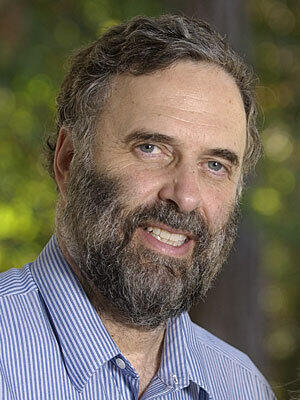
Richard Steinberg  writes and teaches in the areas of international law and international relations. He currently teaches International Trade Law, International Business Transactions, and Theories of International Law, and directs Law School clinics that work with the Office of the Prosecutor of the International Criminal Court and conduct research in conflict and post-conflict zones.  He is also Director of the Sanela Diana Jenkins Human Rights Project, and Editor-in-Chief of the award-winning  www.ICCforum.com (link is external). In addition to his UCLA appointment, Professor Steinberg is currently Visiting Professor of Stanford Global Studies at the WSD Handa Center for Human Rights and International Justice, and the Center on Democracy, Development, and the Rule of Law at Stanford.


Co-sponsor:  HANDA Center for Human Rights & International Justice


Richard Steinberg Visiting Professor at Stanford Global Studies and on faculty at UCLA School of Law
Seminars
-

Abstract: A growing body of empirical evidence indicates that changes in climate are associated with increases in human violence.  I review new and recent evidence on this topic, using data ranging from baseball games in the US to civil war in Africa.  Across disparate settings, warmer-than-average temperatures are shown to cause increases in violence, with effect sizes that are both consistent and large.  Economic theories of conflict appear to explain some of the linkage between climate and conflict, but are not consistent with the data in all settings. Constructive engagement with the political science and security communities will be very helpful in understanding and interpreting these findings.

About the Speaker: Marshall Burke is assistant professor in the Department of Earth System Science, and Center Fellow at the Center on Food Security and the Environment at Stanford University. His research focuses on social and economic impacts of environmental change, and on the economics of rural development in Africa. His work has appeared in both economics and scientific journals, including recent publications in Nature, Science, the Proceedings of the National Academy of Sciences, and the Review of Economics and Statistics. He holds a PhD in Agricultural and Resource Economics from UC Berkeley, and a BA in International Relations from Stanford.

Marshall Burke Assistant Professor, Dept. of Earth System Science Stanford University
Seminars
-

About the Topic: Professor Park will discuss how promotion incentives influence the effort of public employees by providing evidence from China's system of promotions for teachers. He tests a tournament model of promotion using retrospective panel data on primary and middle school teachers. Consistent with theory, high wage increases for promotion are associated with better performance. Teachers increase effort in years leading up to promotion eligibility and reduce effort if they are repeatedly passed over for promotion. Evaluation scores are positively associated with teacher time use and with student test scores, diminishing concerns that evaluations are manipulated.


About the Speaker: Albert Park is Chair Professor of Social Science and Professor of Economics at Hong Kong University of Science and Technology. He is a development and labor economist who is an expert on China’s economic development. In recent years he has published articles in leading economics journals on firm performance, poverty and inequality, migration and employment, health and education, and the economics of aging in China. He has co-directed numerous survey research projects in China including the Gansu Survey of Children and Families, a longitudinal study of rural youth. He previously held faculty appointments at the University of Michigan and Oxford University. 

Chair Professor of Social Science and Professor of Economics
Download pdf

Encina Hall: 4th floor

Goldman Conference Room 

Seminars
-

ABSTRACT

Six years post Egypt’s January 25 revolution, the country remains in a state of volatility and political turmoil marked by an ailing economy, a security crisis, and unprecedented levels of repression. In this talk, Jack Shenker will discuss his recent book The Egyptians: A Radical History of Egypt's Unfinished Revolution (The New Press). The book examines the roots of Egypt’s revolution, arguing for a much more nuanced, and far-reaching view of the forces that are reshaping the region.

SPEAKER BIO

Image
js profile
Jack Shenker is an award-winning journalist based in London and Cairo, whose reporting has spanned the globe. Formerly Egypt correspondent for The Guardian, his coverage of the Egyptian revolution received multiple prizes. In 2012, his investigation into the deaths of African migrants in the Mediterranean was named news story of the year at the prestigious One World media awards. The Egyptians, published by Allen Lane / Penguin in the UK and The New Press in the US, is his first book.

CISAC Central Conference Room
Encina Hall, 2nd Floor
616 Serra St
Stanford, CA 94305

Jack Shenker Journalist and Writer
Seminars
-

Since Abenomics launched corporate governance reforms as the third arrow of its policies mix, a series of reform measures were introduced such as the Stewardship Code, Corporate Governance Code, and the organization of JPX 400 by the Tokyo Stock Exchange. In this presentation, I firstly summarize recent changes of governance arrangements in Japanese firms, focusing on the trend of listing and de-listing, ownership changes, rapid deleveraging, the rise and fall of activism, gradual increase of independent directors, and modest use of high-powered incentives. I characterize these changes as a hybridization of corporate governance. Then, I suggest an agenda for how to fine tune hybrid structures: the reestablishment of mega-banks and client firms, the role of block shareholders, a new long-term commitment scheme post cross shareholding, the choice of management or monitoring boards, and the use of pay for performance associated with long-term employment.


Hideaki Mi

Image
yan xie zhen gong dao ying zhao
yajima is Director, Waseda Institute for Advanced Study(WIAS), Professor of Japanese Economy, Ph.D. in Commerce, Graduate School of Commerce, Waseda University. He teaches about the Japanese economy and corporate governance in Japan. He finished his Ph.D coursework at the University of Tokyo in economics, got a position as Research Associate at the University of Tokyo Institute of Social Sciences, and then moved to Waseda University. He stayed at Reischauer Institute of Japanese Studies, Harvard University, as a visiting scholar from 1992-94 and 2004-05. He was asked to consult by several institutions such as the World Bank, Hawaii University, Hebrew University, and Korean Development Institute. He was also appointed at numerous positions: Faculty Fellow, Research Institute of Economy, Trade & Industry, a Special Research Fellow of Policy Research Institute (Ministry of Finance), Research Fellow of EHESS (Paris), and an Adjunct Professor of Chung-Ang University (Seoul). He has written several books and numerous papers including: The Ownership of Japanese Corporations in the 20th Century, Review of Financial Studies, 2014, Benchmarking Business Unit Governance in Turbulent Times: The Case of Japanese Firms, Benchmarking: An International Journal, 2012, The Global Financial Crisis and the Evolution of Corporate Governance in Japan, laviedesidees.fr, 2009, Corporate Governance in Japan, Oxford University Press, 2007 (co-edited), Changes and Continuity in Japan, Routledge Curzon Press, 2002 (co-edited), Policies for Competitiveness, Oxford University Press, 1999 (co-edited).

Corporate Governance Reform in Japan
Download pdf
Hideaki Miyajima Director, Waseda Institute for Advanced Study and Professor, Waseda University
Seminars
-

Abstract:

In Revolution and Rebellion in the Early Modern World, I showed that turning points in global population trends have been driving waves of political stability or crisis for at least the last 500 years. We are currently seeing a new turning point, as rich countries enter a period of workforce decline and emerging markets divide into those with falling fertility vs. stable and still-high fertility. Drawing on experience from previous centuries in Europe and Asia, we can forecast political trends; these include a new wave of revolutions in Africa and the Middle East and a surge in populist and protectionist politics in Europe and the U.S., but also eventual peaceful transitions to democracy in Russia and China.


Speaker Bio:

Image
jack goldstone
Jack A. Goldstone (PhD Harvard) is the Virginia E. and John T. Hazel, Jr. Professor of Public Policy at George Mason University. Previously, Dr. Goldstone was on the faculty of Northwestern University and the University of California, and has been a visiting scholar at Cambridge University and the California Institute of Technology. He is the author of Revolution and Rebellion in the Early Modern World, awarded the 1993 Distinguished Scholarly Research Award of the American Sociological Association; Why Europe? The Rise of the West in World History; and co-editor of Political Demography: How Population Changes are Reshaping International Security and National Politics. He has been a Fellow at the Center for Advanced Study at Stanford University, and won Fellowships from the Guggenheim Foundation, the MacArthur Foundation and the American Council of Learned Societies. He has also won the Arnoldo Momigliano Award of the Historical Society, the Myron Weiner award of the International Studies Association, and been Holbrooke lecturer at the American Academy in Berlin. His current research focuses on conditions for building democracy and stability in developing nations, the impact of population change on the global economy and international security, and the cultural origins of modern economic growth.

Jack A. Goldstone Virginia E. and John T. Hazel, Jr. Professor of Public Policy at George Mason University
Seminars
-

Since assuming the presidency of the Philippines in June 2016 Rodrigo Duterte has been the focus of considerable international attention because of his brusque personality and two dramatically new policies: 1) a take-no-prisoners war on illegal drugs that has resulted in the deaths of over 6,000 alleged drug pushers and users; and 2) an abrupt distancing of relations with the United States coupled with an enthusiastic embrace of China. But considerably less attention is being paid to the Duterte government’s other policies or to the underlying political dynamics that will determine the efficacy of his government and, perhaps, the future of liberal democracy in the Philippines. The speaker will situate the Duterte government in the context of Philippine’s democratic experience, identify the political dynamics that are likely to determine its future, and assess the multiple threats to liberal democracy in the Philippines.

Image
david timberman 4x6
David Timberman is a political analyst and development practitioner with 30 years of experience analyzing and addressing political, governance and conflict-related challenges, principally in Southeast and South Asia.  As a Visiting Scholar at Stanford/APARC he is working on a book on the contemporary Philippine political economy.  During 2015-2016 he was a Visiting Professor of Political Science at De La Salle University in Manila. He has lived and worked in the Philippines, Indonesia and Singapore, including experiencing first-hand the democratic transitions in the Philippines (1986-1988) and Indonesia (1998-2001). He has written extensively on political and governance issues in the Philippines and has edited or co-edited multi-author volumes on the Philippines, Cambodia, and economic policy reform in Southeast Asia.


David G. Timberman 2016-2017 Lee Kong Chian NUS-Stanford Fellow on Contemporary Southeast Asia
Seminars
-

Due to venue capacity limits, we are no longer accepting RSVPs for this event.


India prides itself on being the "world's largest democracy". In some respects it is certifiably democratic; as in the regular conduct of free and fair elections. But in other respects there are deficits. One such area is freedom of expression. While Indian writers, artists and film-makers are certainly freer than their counterparts in totalitarian countries such as China, they are less free when compared to their colleagues in democracies such as Sweden or the United States. This lecture identifies eight distinct threats to freedom of expression in India, the most important of which are the presence of archaic colonial laws and the rise of identity politics.


Image
 Guha is a historian and biographer based in Bangalore. He has taught at the universities of Yale and Stanford, held the Arné Naess Chair at the University of Oslo, and been the Indo-American Community Visiting Professor at the University of California at Berkeley. In the academic year 2011-2012 he served as the Philippe Roman Professor of History and International Affairs at the London School of Economics.

Guha’s books include a pioneering environmental history, The Unquiet Woods (University of California Press, 1989), and an award-winning social history of cricket, A Corner of a Foreign Field (Picador, 2002). India after Gandhi (Macmillan/Ecco Press, 2007) was chosen as a book of the year by the Economist, the Washington Post, the Wall Street Journal, the San Francisco Chronicle, Time Out, and Outlook, and as a book of the decade in the Times of India, the Times of London, and The Hindu. His most recent book is Gandhi Before India (Knopf, 2014), which was chosen as a notable book of the year by the New York Times.

Apart from his books, Guha also writes a syndicated column, that appears in six languages in newspapers with a combined readership of some twenty mllion. Guha’s books and essays have been translated into more than twenty languages. The New York Times has referred to him as ‘perhaps the best among India’s non fiction writers’; Time Magazine has called him ‘Indian democracy’s pre-eminent chronicler’.

Ramachandra Guha’s awards include the Leopold-Hidy Prize of the American Society of Environmental History, the Daily Telegraph/Cricket Society prize, the Malcolm Adideshiah Award for excellence in social science research, the Ramnath Goenka Prize for excellence in journalism, the Sahitya Akademi Award, and the R. K. Narayan Prize. In 2009, he was awarded the Padma Bhushan, the Republic of India’s third highest civilian honour. In 2008, and again in 2013, Prospect Magazine nominated Guha as one of the world’s most influential intellectuals. In 2014, he was awarded an honorary doctorate in the humanities by Yale University. In 2015, he was awarded the Fukuoka Prize for contributions to Asian studies.


About the colloquia:

In 2014, Indian voters gave Narendra Modi and the BJP a mandate to accelerate India’s economic reforms and revitalize its foreign relations, in particular with the United States and with partners in East Asia. But the pace and depth of reforms and economic transformation have not met the high expectations, despite strong GDP performance. Economic growth remains uneven, job creation sluggish, and massive infrastructural and administrative problems continue to trouble many sectors of the economy. After twenty-five years of economic reforms, India’s potential as a new global industrial hub has still not been realized and its vast resources of labor and talent remain underdeveloped.

During the 2017 winter and spring quarters Shorenstein APARC and the Center for South Asia will host a series of lectures and discussions that explore what makes India democratic and dynamic, and the obstacles that prevent the country from realizing its enormous potential.

Also, in 2017, the next Global Entrepreneur Summit will be in India, sequel to the 2016 Stanford-hosted Summit. This colloquium will help prepare for that event by reaching out to scholars, students, interested stakeholders, business leaders and others in the Bay Area.

This colloquia is co-sponsored with the Stanford Center for South Asia 

Image
csa logorust cropped

Seminars
-

Since its independence, India’s statesmen, policymakers and social scientists all firmly believed that the entrenched hierarchical caste order and the deep divisions between religious communities would become less salient, and perhaps wither away, as the country developed a modern economy and a new division of labor based on skill and merit rather than a ‘traditional’ inherited status. Today, after seven decades of democracy and steady economic growth, it is clear that both caste and religious community are as important as ever. Rather than disappearing, these cultural identities and social networks have evolved along with the economy. A closer look at how the Indian economy is organized reveals that caste and community fundamentally shape how labor is organized, how markets function, how urban development happens, and how industry is owned and organized. Two case studies, one of skilled labor in South India and another of the structure of industrial growth in a city in central India, will illustrate how India actually works.

Image
Thomas Blom HansenDirector, Center for South Asia; Reliance-Dhirubhai Ambani Professor in South Asian Studies; Professor in Anthropology, Stanford University

As the Director of Stanford’s Center for South Asian Studies, Hansen is charged with building a substantial new program. He has many and broad interests spanning South Asia and Southern Africa, several cities and multiple theoretical and disciplinary interests from political theory and continental philosophy to psychoanalysis, comparative religion and contemporary urbanism..


Image
Aruna Ranganathan, Assistant Professor of Organizational Behavior, Stanford University

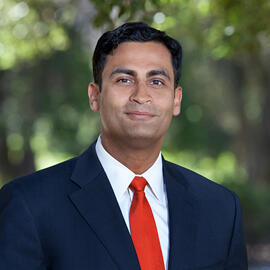
Aruna Ranganathan studies questions of work and employment in the context of economic development. By applying novel methods that combine field-experimental and quantitative research designs with ethnography and interviews, Aruna's research investigates how low-income occupations in developing countries are governed, organized, seek meaning through their work and navigate the market. Through her research, Aruna strives to advance our theoretical understanding of work, while informing the design of labor-market institutions and policy for the developing world. In previous projects based in India, Aruna has studied the boom of IT and business process outsourcing, the professionalization of plumbing, price-setting behavior among handcraft artisans and the transition of women into formal employment in garment factories.


About the colloquia:

In 2014, Indian voters gave Narendra Modi and the BJP a mandate to accelerate India’s economic reforms and revitalize its foreign relations, in particular with the United States and with partners in East Asia. But the pace and depth of reforms and economic transformation have not met the high expectations, despite strong GDP performance. Economic growth remains uneven, job creation sluggish, and massive infrastructural and administrative problems continue to trouble many sectors of the economy. After twenty-five years of economic reforms, India’s potential as a new global industrial hub has still not been realized and its vast resources of labor and talent remain underdeveloped.

During the 2017 winter and spring quarters Shorenstein APARC and the Center for South Asia will host a series of lectures and discussions that explore what makes India democratic and dynamic, and the obstacles that prevent the country from realizing its enormous potential.

Also, in 2017, the next Global Entrepreneur Summit will be in India, sequel to the 2016 Stanford-hosted Summit. This colloquium will help prepare for that event by reaching out to scholars, students, interested stakeholders, business leaders and others in the Bay Area.


This colloquia is co-sponsored with the Stanford Center for South Asia 

Image
csa logorust cropped

Seminars
-

Long a laggard on human rights, the Association of Southeast Asian Nations (ASEAN) is being pressed from within to reconsider its indifference. In 2009 an ASEAN Human Rights Commission (AICHR) was created and tasked with promoting (not protecting) human rights in Southeast Asia. In 2012 its members agreed to issue a first-ever ASEAN Human Rights Declaration. Most observers dismissed these moves as symbolic—an effort mainly to assuage foreign critics and  gain international legitimacy. Prof. Jetschke differs.  She will argue that the AICHR’s formation was prompted in part by the swelling flows of refugees across borders inside Southeast Asia, especially from Myanmar, and the problems thereby created for the region’s states and societies. She will also explore the extent to which these factors have eroded one of ASEAN’s strongest regional norms—the taboo on interfering in members’ domestic affairs. That erosion could strengthen ASEAN as something more than the sum of its sovereign members.

Image
anja jetschke 4x6
Anja Jetschke is Professor of International Relations at the University of Göttingen’s political science department since 2012. Her Comparative Regional Organizations Project has developed the world’s largest database on regional organizations. Previously she headed a research program on international governance at the German Institute of Global and Area Studies (Hamburg) and was an assistant professor at the University of Freiburg. She also held research fellowships at Ohio State University and the University of Berlin. Her publications include many articles and chapters on comparative regionalism, ASEAN, and the AICHR, and a prize-winning book, Human Rights and State Security: Indonesia and the Philippines (2011). Her doctorate is from the European University (Florence).

Anja Jetschke Professor of International Relations, University of Göttingen
Seminars
Subscribe to Seminars