-

Abstract: Space debris are leftovers from human activities in space. Earth orbit gets increasingly congested by a rising number of active spacecraft and debris, resulting in an increased risk of collision. Collisions with debris can destroy entire spacecraft, resulting in economic loss or worse. The additional debris increases the risk of further collision. There are several dilemmas: If we want to further our venture into space beyond what is possible today, a vastly increased number of rocket launches are necessary. That could negatively impact the debris environment and make further space endeavors more challenging. Proposed active debris removal methods could lessen that problem. However, such methods have dual-use implications, because a capability to remove large pieces of debris from orbit also implies a capability to remove active spacecraft. Hence, building up a debris removal capability could be seen as a threat to other nations' satellites. This talk will give an overview about origins of debris, projections of the future debris environment, and debris mitigation methods and their security implications. A special focus will be on a less invasive debris mitigation method based on ground-based lasers and research to assess its efficiency using long-term debris projections.

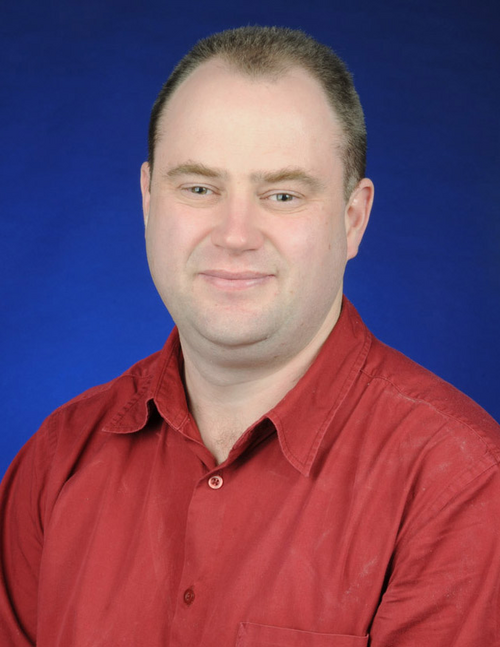
About the Speaker: Jan Stupl is an affiliate and a former postdoctoral fellow at CISAC.  He is currently a Research Scientist with SGT, a government contractor, and works in the Mission Design Division at NASA Ames Research Center (Mountain View, CA). In the Mission Design Division, Jan conducts research on novel methods for laser communication and space debris mitigation and supports concept development for space missions.

Before his current position, Jan was a postdoctoral fellow at the Center for International Security and Cooperation (CISAC) at Stanford University until 2011, investigating technical and policy implications of high power lasers for missile defense and as anti-satellite weapons (ASAT), as well as the proliferation of ballistic missiles. The research on laser ASATs focuses on damage mechanisms, the potential sources and countries of origin of laser ASATs and ways to curb their international proliferation. Before coming to CISAC, Jan was a Research Fellow at the Institute of Peace Research and Security Policy (IFSH) at the University of Hamburg, Germany. His PhD dissertation was a physics-based analysis of future of High Energy Lasers and their application for missile defense and focused on the Airborne Laser missile defense system. This work was jointly supervised by the IFSH, the Institute of Laser and System Technologies at Hamburg University of Technology and the physics department of Hamburg University, where he earned his PhD in 2008. His interest in security policy and international politics was fuelled by an internship at the United Nations in New York in 2003.

Encina Hall, 2nd floor

0
Affiliate
janstupl_rsd17_076_0352a.jpg PhD

Jan Stupl is an affiliate and a former postdoctoral fellow at CISAC.  He is currently a Research Scientist with SGT, a government contractor, and works in the Mission Design Division at NASA Ames Research Center (Mountain View, CA). In the Mission Design Division, Jan conducts research on novel methods for laser communication and space debris mitigation and supports concept development for space missions.

Before his current position, Jan was a postdoctoral fellow at the Center for International Security and Cooperation (CISAC) at Stanford University until 2011, investigating technical and policy implications of high power lasers for missile defense and as anti-satellite weapons (ASAT), as well as the proliferation of ballistic missiles. The research on laser ASATs focuses on damage mechanisms, the potential sources and countries of origin of laser ASATs and ways to curb their international proliferation. Before coming to CISAC, Jan was a Research Fellow at the Institute of Peace Research and Security Policy (IFSH) at the University of Hamburg, Germany. His PhD dissertation was a physics-based analysis of future of High Energy Lasers and their application for missile defense and focused on the Airborne Laser missile defense system. This work was jointly supervised by the IFSH, the Institute of Laser and System Technologies at Hamburg University of Technology and the physics department of Hamburg University, where he earned his PhD in 2008. His interest in security policy and international politics was fuelled by an internship at the United Nations in New York in 2003.

CV
SGT, Inc. / Mission Design Division, NASA Ames Research Center
Seminars
-

Abstract: How easily and quickly can states rise in the military domain? Do industrial espionage and in particular cyber-espionage facilitate and accelerate this process? In other words, are there empirical and theoretical reasons to believe that other states can easily imitate U.S. advanced weapon systems and thus erode American military- technological superiority? Drawing from the literature in economic history, economics, management and sociology, we maintain that the dramatic increase in the complexity of military technology that has taken place over the past 150 years has led to a change in the system of production, which in turn has made the imitation and the replication of the performance of military technology more difficult - despite globalization and advances in communications. As a result, developing advanced weapon systems has become significantly more challenging. We test our theory on a set of crucial case studies addressing possible cofounders. The available evidence supports our account. Our findings reassure about the threat of cyber-espionage, the role of globalization in armaments production and rise of China for American military-technological superiority. 

About the Speaker: Dr. Andrea Gilli is a postdoctoral fellow at the Center for International Security and Cooperation at Stanford University. He holds a PhD in Social and Political Science from the European University Institute (EUI) in Fiesole, and in 2015 he was awarded the European Defence Agency and Egmont Institute’s bi-annual prize for the best dissertation on European defense, security and strategy. Andrea’s research focuses on change in military technology and its implications for international security. At CISAC, he is working on the consequences of the robotics revolutions for American military primacy. In the past, Andrea provided consulting services to both private and public organizations, and worked or was associated with the Italian Ministry of Foreign Affairs, the Preparatory Commission for the Nuclear Test-Ban Treaty Organization, the NATO Defense College, the Royal United Services Institute, the Center for Transatlantic Relations at SAIS-Johns Hopkins University, the European Union Institute for Security Studies, the Saltzman Institute for War and Peace Studies at the Columbia University in New York and the Center for Security Studies at Metropolitan University Prague. Andrea has published articles on suicide terrorism, the diffusion of drone warfare and defense policy more in general in Security Studies, The RUSI Journal, and Washington Post’s Monkey Cage, among others.

Encina Hall, 2nd floor

Postdoctoral Fellow CISAC
Seminars
-

In Japan's increasingly complex security environment, the Japan-U.S. Alliance is indispensable not only to the security of Japan, but also to the peace and stability of the Asia-Pacific region.  The Honorable Satoshi Morimoto, former Defense Minister of Japan, will talk about Japan’s security policy and the importance of the Japan-U.S. Alliance under the Trump Administration.

This seminar will be moderated by Ambassador Karl Eikenberry, Director, U.S.-Asia Security Initiative


Image
The Honorable Satoshi Morimoto served with the Japan Air Self-Defense Force and is a graduate of the National Defense Academy of Japan. In 1977, he was assigned to the Security Division, American Affairs Bureau of the Ministry of Foreign Affairs of Japan. In 2009 he served as the 1st Senior Adviser to the Minister of Defense. Since October 2015, he has served as the Special Adviser to the Minister of Defense of Japan. In March 2016, he was appointed President of Takushoku University.


This event is co-sponsored by the Japan Program, U.S.-Asia Security Initiative and the Consulate-General of Japan, San Francisco


The Honorable Satoshi Morimoto <i>Former Minister of Defense,</i> Japan
Seminars
-

Abstract: Russia’s adaptation to the changing character of war has been an object of an ongoing discussion among security experts. Contemporary warfare is being profoundly altered by an increasingly wired world, disruptive technologies, the role of information and social interactions; it aims to impact the state’s entire capacity by exerting political, economic and cultural influence rather than by annihilating the adversary. As put by the Russian General Staff, the 21st century wars are not even declared and nonmilitary tools play an increasing role in achieving objectives of war. Russia’s swift annexation of Crimea, as well as a widespread use of disinformation, cyber attacks, electronic warfare, economic levers, and a spectrum of other means merging military, nonmilitary, asymmetrical and indirect approaches have supposedly manifested a new doctrinal and operational era in the Russian strategy, called ‘hybrid war,’ ‘new generation warfare,’ ‘non-linear war,’ or even ‘ambiguous war,’ among other terms. However, the assessments of Russian strategy lack conceptual clarity and have been accompanied by conflicting narratives, one portraying Russia as a master of strategy that has outmaneuvered the United States in key international security issues, the other claiming that strategic thinking is foreign to the current Russian authorities. This study identifies misconceptions about Russia’s contemporary military strategy, disentangles its theoretical foundations, and examines key patterns in the Russian adaptation to the challenges of modern-day and future conflict.

About the Speaker: Dr. Katarzyna Zysk is an associate professor at the Norwegian Defence University College – the Norwegian Institute for Defence Studies in Oslo, a position she has held since 2007. In the academic year 2016–2017, she is on a sabbatical leave and serves as a visiting scholar at the Center for International Security and Cooperation (CISAC) at Stanford University, and subsequently as a visiting fellow at the University of Oxford. She is also a member of the Hoover Institution’s Arctic Security Initiative and was a research fellow (resident and non-resident) at the US Naval War College – Center for Naval Warfare Studies, where she also cooperated closely with the War Gaming Department. In 2016, she served as an acting dean of the Norwegian Defence University College. Dr. Zysk has an academic background in international relations and international history. Following her PhD thesis on NATO enlargement (2006), her research and publications have focused on various aspects of security and strategic studies, in particular on Russia’s security and defense policies, including military change and modernization of the Russian armed forces, strategic culture, political philosophy, Arctic geopolitics, as well as uses of seapower and maritime security. Currently, she is writing a book about Russia’s military strategy. 

Encina Hall, 2nd floor

Norwegian Defence University College; CISAC
Seminars
-

Abstract: Since their conception in the 1950s, thorium reactors have been promoted as a promising technology for nuclear energy generation, though they have not yet been successfully commercialized. Proponents of thorium reactors argue that they are safer, produce less waste, and are proliferation-resistant, compared with uranium-fueled light water reactors used around the world today. The central question guiding this research concerns the final claim. Is the thorium fuel cycle inherently more resistant to nuclear weapons proliferation than the traditional uranium fuel cycle?

Advocates argue that the thorium fuel cycle is less vulnerable to proliferation of nuclear weapons technology because little or no plutonium is produced. Additionally, fissile U-233 is claimed to be “self-protected” by U-232, which is produced with U-233 and decays through Tl-208, emitting highly energetic gamma radiation. But the amount of U-232 generated depends on reactor operation. Furthermore, the U-232 content can be further decreased by conducting chemical separations at the back-end of the fuel cycle.

This presentation will discuss the proliferation risks of the thorium fuel cycle. The potential for generating large stockpiles of isotopically pure U-233 by conducting protactinium separations at the back end of the fuel cycle is examined as a new proliferation pathway that current IAEA safeguards may not be prepared to address.

About the Speaker: Eva C. Uribe is a Stanton Nuclear Security Postdoctoral Fellow at CISAC for the 2016-2017 academic year. Her research involves identifying proliferation pathways in the thorium fuel cycle and assessing the potential impact and implications of U-233 stockpile generation on the international nonproliferation regime. Eva received a Ph.D. in Chemistry from the University of California, Berkeley in 2016. Her dissertation research focused on structural analysis of organically-modified porous silica surfaces for the extraction of uranium from aqueous solutions using nuclear magnetic resonance spectroscopy. In 2011 Eva received a B.S. from Yale University with a double major in Chemistry and Political Science. She served as a Next Generation Safeguards Initiative intern with the Nonproliferation Division at Los Alamos National Laboratory in 2008 and 2009.

Encina Hall, 2nd floor

Stanton Nuclear Security Postdoctoral Fellow CISAC
Seminars
-

Abstract: While impressive strides have been made in detecting physical evidence of nuclear weapons production, there is no consensus on how international relationships combine to motivate or deter policymakers from seeking nuclear weapons. Rather than address a single variable, this study investigates how networks of interstate conflict, alliances, trade, and nuclear cooperation merge to increase or decrease the proliferation likelihood of individual states. Using multiplex networks to study the structure of international relations factors theorized to deter or incentivize nuclear proliferation and open-source data on military alliances, macroeconomic ties, armed conflicts, and nuclear cooperation agreements, we construct a multilayer network model in which states are nodes linked by proliferation-relevant variables. This work shows the first quantitative heterogenous analysis of external proliferation determinants using a network science formalism and opens a new avenue of study of the external proliferation motivators for each state within an international network. Preliminary findings suggest that specific external relations—particularly the existence of armed conflict and the signing of Nuclear Cooperation Agreements—largely explain the decision of states to proliferate or not.

About the Speaker: Bethany L. Goldblum is a member of the research faculty in the Department of Nuclear Engineering at the University of California, Berkeley. She is the Scientific Director of the Nuclear Science and Security Consortium, a multi-institution initiative established by DOE’s NNSA to support the nation’s nonproliferation mission through cutting-edge research in nuclear security science in collaboration with the national laboratories. Goldblum founded and directs the Nuclear Policy Working Group, an interdisciplinary team of undergraduate and graduate students focused on developing policy solutions to strengthen global nuclear security. She has been involved with the Public Policy and Nuclear Threats Boot Camp nearly since its inception, and acted as director of the program since 2013. Goldblum received a Ph.D. in Nuclear Engineering from the University of California, Berkeley in 2007.


Encina Hall, 2nd floor

Bethany L. Goldblum Department of Nuclear Engineering, UC Berkeley
Seminars
-

ABSTRACT

This talk examines the ways through which successive Egyptian governments have utilized lawmaking to eliminate opponents and silence voices of dissent since the coup of 3 July 2013. Key examples include the adoption of a draconian protest law and anti-terrorism laws. Most recently, the legislature passed a bill that, subject to the president’s approval, is poised to significantly curtail the autonomy of civil society organizations. By restricting freedom of expression and association and clamping down on voices of dissent, these legal initiatives have helped upgrade the repressive bureaucratic tools at the disposal of the government.

SPEAKER BIO

Image
amr hamzawy cropped
Amr Hamzawy is a Senior Fellow at the Middle East Program at the Carnegie Endowment for International Peace and FSI-Stanford Humanities Center International Visitor, 2016-17. He studied political science and developmental studies in Cairo, The Hague, and Berlin. After finishing his doctoral studies and after five years of teaching in Cairo and Berlin, Hamzawy joined the Carnegie Endowment for International Peace (Washington, DC) between 2005 and 2009 as a senior associate for Middle East Politics. Between 2009 and 2010, he served as the research director of the Middle East Center of the Carnegie Endowment in Beirut, Lebanon. In 2011, he joined the Department of Public Policy and Administration at the American University in Cairo, where he continues to serve today. Hamzawy also serves as an associate professor of political science at the Department of Political Science, Cairo University. He is a former Visiting Scholar at CDDRL's Program on Arab Reform and Democracy.

His research and teaching interests as well as his academic publications focus on democratization processes in Egypt, tensions between freedom and repression in the Egyptian public space, political movements and civil society in Egypt, contemporary debates in Arab political thought, and human rights and governance in the Arab world.

Dr. Hamzawy is a former member of the People’s Assembly after being elected in the first Parliamentary elections in Egypt after the 25th of Jan 2011 revolution. He is also a former member of the Egyptian National Council for Human Rights. Hamzawy contributes a daily column and a weekly op-ed to the Egyptian independent newspaper Shorouk.

Amr Hamzawy Senior Fellow Senior Fellow at the Middle East Program at the Carnegie Endowment for International Peace
Seminars
-
The benefits of screening depend on whether information changes individual behaviors. We study the National Health Screening Program in Korea which provides free general health screening to individuals aged over 40. We apply a regression discontinuity design to estimate behavioral responses to information about one’s risk classifications for diabetes, obesity, and high cholesterol. We find evidence of weight loss around the high risk threshold for diabetes, where risk information is combined with prompting for a secondary examination and medical treatment. However, we find no differences around other risk classification thresholds, where risk information is not combined with such prompting.
 
Image
kim portrait
Hyuncheol Bryant Kim
is an applied micro-economist with broad interests in  health economics, development economics, public economics, education economics, and labor economics. The main goal of Prof.Kim's research is to understand the impact and behavioral responses to the public intervention programs in both developed and developing countries. Prof.Kim has been investigating various public intervention programs such as cancer screening, general health screening, long-term care insurance, girls' education support program, HIV/AIDS prevention programs such as male circumcision and HIV testing, mother and child health program as well as job opportunity and internship program on employment.


Hyuncheol Bryant Kim Lois and Mel Tukman Assistant Professor, Department of Policy Analysis and Management (PAM), Cornell University
Seminars
-

Rennie Moon explores a new framework for higher education official development assistance (ODA) with a focus on the transnational bridging benefits of social capital. She first explains why and how a transnational social capital approach can improve the current focus on human resources and local bridges in higher education development. She then illustrates its merits by examining, 1) the transnational bridging potential of social capital formed by foreign students currently studying in Korea; and 2) the actual transnational social capital contributions of foreign professionals who returned home after completing a Korean higher education ODA program. In doing so, she directs particular attention to the value of transnational social capital in promoting development cooperation and public diplomacy. She concludes by discussing how this approach has conceptual importance and practical implications for development cooperation in higher education.

Image
rennie moon 0
Moon is the 2016-17 Koret Fellow in the Korea Program at the Walter H. Shorenstein Asia-Pacific Research Center, and an associate professor at the Underwood International College at Yonsei University in Seoul, South Korea. With a background in international comparative education and sociology, her research has concentrated on globalization and education, brain/talent flows, diversity and social tolerance and official development assistance in higher education. Moon, a graduate of Stanford’s Graduate School of Education, Ph.D. ‘09, has collaborated with Stanford professor Gi-Wook Shin on a multiyear research project that examines diversity in higher education in East Asia. She co-edited the book Internationalizing Higher Education in Korea: Challenges and Opportunities in Comparative Perspective published in 2016. Her articles have appeared in academic journals including Comparative Education ReviewComparative EducationAustralian Journal of International Affairs, and Pacific AffairsAs a Korean-American scholar, Moon has written editorials and columns in both English and Korean on higher education in Korea and Asia for the Nikkei Asian Review, The Conversation, East Asia Forum, Australian Outlook, Dong-A Daily, MK News, and other media outlets. Moon holds her a doctorate and a master's degree in international comparative education from Stanford and a bachelor’s degree in French from Wellesley College.

Supported by the Koret Foundation, the Koret Fellowship brings professionals to Stanford to conduct research on contemporary Korean affairs. 

616 Serra StreetEncina Hall E301Stanford, CA94305-6055
(650) 723-9404 (650) 723-6530
0
rennie_moon.jpg Ph.D.

Rennie J. Moon joins the Walter H. Shorenstein Asia-Pacific Research Center as the 2016-17 Koret Fellow in the Korea Program.  Moon is an associate professor at the Underwood International College at Yonsei University in Seoul, South Korea. Her research explores the interrelationships among globalization, migration and citizenship, and internationalization of higher education.

Moon, a graduate of Stanford’s Graduate School of Education, Ph.D. ‘09, has collaborated with Stanford professor Gi-Wook Shin on a multiyear research project that examines diversity in higher education in East Asia. She co-edited the book Internationalizing Higher Education in Korea: Challenges and Opportunities in Comparative Perspective published earlier this year. Her articles have appeared in academic journals including Comparative Education ReviewComparative EducationAustralian Journal of International Affairs, and Pacific Affairs.

As a Korean-American scholar, Moon has written editorials and columns in both English and Korean on higher education in Korea and Asia for the Nikkei Asian Review, The Conversation, East Asia Forum, Australian Outlook, Dong-A Daily, MK News, and other media outlets.

Supported by the Koret Foundation, the Koret Fellowship brings professionals to Stanford to conduct research on contemporary Korean affairs. In 2015, the fellowship expanded its focus to include social, cultural and educational issues in North and South Korea, and aims to identify emerging scholars working on those areas.

During her fellowship, Moon will also give public talks and be a lead organizer of the Koret Workshop, an international conference held annually at Stanford.

Moon holds a doctorate and master’s degree in international comparative education from Stanford and a bachelor’s degree in French from Wellesley College.

Visiting Associate Professor
2016-2017 Koret Fellow
Rennie Moon <i>2016-17 Koret Fellow</i>, Shorenstein Asia-Pacific Research Center, Stanford University
Seminars
-

Abstract:

Join Professor Larry Diamond and the winners of the 10x10K Cuba competition for a talk on the emerging entrepreneurial scene in Cuba. The 10x10K Cuba is an international competition seeking to help talented programmers and entrepreneurs in Cuba. This event will feature Janse Lazo Valdes and Victor Manuel Moratón, the entrepreneurs leading the startups MiKMa and NinjaCuba.


Speaker(s) Bio:

Janse Lazo Valdes is a Computer Science engineer from the Havana University of Technologies José Antonio Echeverría. Valdes and his team Sírvete participated in Havana’s first Startup Weekend, coming in 2nd place. At Stanford, he is hoping to learn more about business opportunities, marketing, human resources, and leadership to promote entrepreneurship and development in Cuba. Valdes is representing the startup MiKMa.

MiKMa is a startup that will guarantee the advertising of houses for rent in national currency in Cuba and hopes to revolutionize the way in which the user makes the reservations of these properties.


Victor Manuel Moratón is a Computer Science engineer from the Havana University of Technologies José Antonio Echevarría. He specializes in software development and is the product developer of Ninjas Cuba. At Stanford, he wants to represent the emerging entrepreneurial Cuban community and meet leaders in the sector of entrepreneurship and development. Moratón is representing the startup NinjaCuba.

NinjaCuba is a website oriented to the search of talents of computer science in Cuba thought for the thousands of computer engineers, cybernetics, designers, companies and groups of development. NinjaCuba hopes to connect people in the technology space with employment opportunities.


Image
development and entrepreneurship in cuba

Janse Lazo Valdes Computer Science Engineer, Havana University of Technologies José Antonio Echeverría
Victor Manuel Moratón Computer Science Engineer, Havana University of Technologies José Antonio Echevarría.
Seminars
Subscribe to Seminars