-

Abstract: The conventional international approach to post-conflict intervention has fallen short of expectations despite the enormous resources devoted to the endeavor. In this talk, Naazneen H. Barma will offer her original analysis of the underlying problem, arguing that while international peacebuilders aim to build effective and legitimate government, post-conflict elites co-opt process-focused interventions to serve their own very different political ends. She will present the core findings of her book, The Peacebuilding Puzzle, which develops a historical institutionalist approach to understanding peacebuilding. Through a comparative analysis of UN peace operations in Cambodia, East Timor, and Afghanistan, she will illustrate how competing international and domestic visions of post-conflict political order shape outcomes at three critical peacebuilding phases: the peace settlement; the transformative peace operation; and the aftermath of intervention. The central implication emerging from this study is that international peacebuilders must abandon the notion that post-conflict institutions can be designed and transplanted in whole cloth. Barma will conclude the talk with suggestions for a more incremental and adaptive approach to better achieve robust political order in post-conflict countries.

Speaker bio: Naazneen H. Barma is Associate Professor of National Security Affairs at the Naval Postgraduate School. Her research and teaching focus on peacebuilding and political order, the political economy of development, and natural resource governance, with a regional specialization in East Asia and the Pacific. Her most recent book, The Peacebuilding Puzzle (Cambridge University Press 2017), argues that international peace operations fall short of achieving the modern political order sought in post-conflict countries because the interventions empower domestic elites to attain their own political ends. Barma received her PhD and MA in Political Science from the University of California, Berkeley, and her MA in International Policy Studies and BA in International Relations and Economics from Stanford University. From 2007–2010, she was a Young Professional and Public Sector Specialist at the World Bank, where she conducted political economy analysis and worked on operational dimensions of governance and institutional reform in the East Asia Pacific Region. Barma is a founding member and co-director of Bridging the Gap, an initiative devoted to enhancing the policy impact of contemporary international affairs scholarship. 

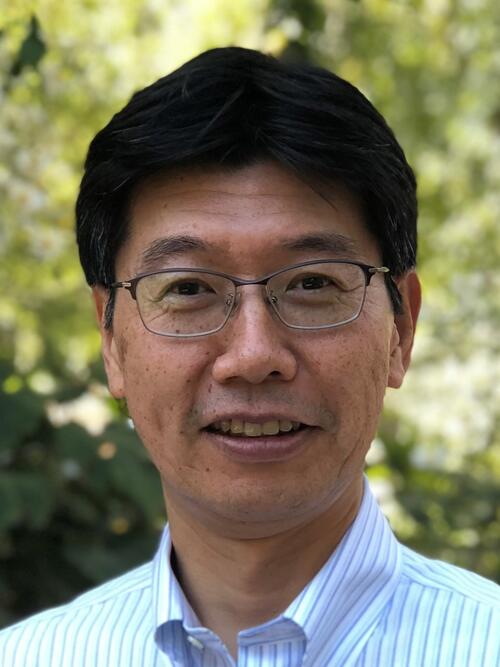
Naazneen H. Barma Associate Professor, Department of National Security Affairs Naval Postgraduate School
Seminars
-

Abstract: This talk will explore the historical roots of the modern concept of identity, and how it plays out in contemporary nationalism, Islamism, populism, and liberal multiculturalism.  It will be based on my forthcoming book Identity: The Demand for Dignity and the Politics of Resentment, to be published by Farrar, Straus and Giroux in September 2018.

Speaker bio: Francis Fukuyama is Olivier Nomellini Senior Fellow at FSI and Mosbacher Director of the Center on Democracy, Development, and the Rule of Law. He has worked previously at the State Dept., the Rand Corporation, and taught at George Mason University and Johns Hopkins SAIS before coming to Stanford in 2010.
 
Frank Fukuyama CDDRL, Stanford University
Seminars
-

Transferring knowledge and skills through skilled labor has become a critical topic in contemporary migration studies. Countries that are traditionally non-immigrant destinations often turn to their diaspora communities to increase the chances of return flows and knowledge transfer. It has been almost twenty years since South Korea enacted the ‘Overseas Korean Act’ in 1999, which attracted a large number of overseas Koreans back to its shore. Yet there has been very little discussion over the policy implications and what particular ‘skills’ or contributions the returnees have brought to Korean society.

In this seminar, Jane Yeonjae Lee describes some of the research findings from her forthcoming book Quest for home: Transnational return migration of 1.5 generation Korean New Zealanders (Lexington Press, 2018). This book project, which has been based on a life-history and transnational ethnographic research with 49 Korean return migrants, partly investigates the implications for global knowledge transfer through skilled mobilities. Lee will discuss a number of different pathways of returnees’ particular influences on Korean society, and how their certain knowledge and skills can be transferred, hindered, or mutated.

Image
yeonjae lee
Jane Yeonjae Lee is an interdisciplinary qualitative researcher and her research revolves around transnationalism, migrant communities, mobilities, health, and urban environmental politics. In particular, she is interested in understanding the migratory experiences of highly skilled immigrants and how their mobile lives connect and shape the places of migration they move through. Her work has been featured in academic journals such as Health and Place; New Zealand Geographer; and Journal of Ethnic and Migration Studies. She has also contributed to key texts in the field of geography including Elgar Handbook on Medical Tourism and Patient Mobility; Researching the Lifecourse: Critical reflections from the social sciences; and Contemporary Ethnic Geographies in America. Lee holds a PhD in Geography from the University of Auckland. Dr. Lee is currently a visiting scholar at Shorenstein Asia-Pacific Research Center at Stanford University. 

616 Serra StreetEncina Hall E301Stanford, CA94305-6055
(650) 723-6530
0
yeonjae_lee.jpg Ph.D.

Jane Lee joins the Walter H. Shorenstein Asia-Pacific Research Center as a Visiting Scholar during the 2017-18 academic year. Prior to joining Shorenstein APARC, she was a Postdoctoral Research Fellow at Northeastern University working in a global comparative project on exploring sustainable mobilities policies.

Jane is an interdisciplinary qualitative researcher and her research revolves around transnationalism and migration, skilled mobilities, and social policies. In particular, she is interested in understanding the mobile (and marginalized) experiences of migratory groups, and how the particular mobilities of people and ideas may affect the places that are involved. Her work has been featured in academic journals such as Health and Place, and New Zealand Geographer. She has also contributed to key texts in the field of Geography including Elgar Handbook on Medical Tourism and Patient Mobility, Researching the Lifecourse: Critical reflections from the social sciences, and Contemporary Ethnic Geographies in America. During her time at Shorenstein APARC, Jane will participate as a paper author in the Koret Workshop and other center activities.

Jane holds a PhD and BA(Hons) in Geography from the University of Auckland. She also currently serves as an Honorary Research Associate at the University of Auckland. 


Recent Publications:

Lee, J.Y. (2017) ‘Being non-Christian in a Christian community: Experiences of Belonging and Identity among Korean Americans’, Institute of Asian American Studies Publications. 43.

Lee, J.Y., Friesen, W. and Kearns, R. (2015) ‘Return migration of 1.5 generation Korean New Zealanders: Long term and Short term reasons’, NZ Geographer, 71, 34-44.

Lee, J.Y., Kearns, R. and Friesen, W. (2015) ‘Diasporic medical return’, In Lunt, N., Hanefeld, J. and Horsfall, D. (Eds) Elgar Handbook on Medical Tourism and Patient Mobility. London: Elgar, (p.207-216).

Lee, J.Y. (2015) ‘Narratives of the Korean New Zealanders’ return migration: Taking a life history approach’, In Worth, N. and Hardill, I. (Eds) Researching the Lifecourse: Critical reflections from the social sciences. Bristol: Policy Press, (p.183-198). (Invited Contribution)

Lee, J.Y. (2015) ‘Korean Americans: Entrepreneurship and religion’, In Miyares, I. and Airriess, C. (Eds) Contemporary Ethnic Geographies in America (2nd Edition). Rowan & Littlefield Publishing Group, (p.285-302) (Invited Contribution)

Lee, J.Y. (2015) ‘Returning Diasporas: Korean New Zealander returnees’ journeys of searching ‘home’ and identity’ In Christou, A. and Mavroudi, E. (Eds) Dismantling diasporas: rethinking the geographies of diasporic identity, connection and development. London: Ashgate, (p.161-174).

Lee, J.Y. (2011) ‘A trajectory perspective towards return migration and development: The case of young Korean New Zealander returnees’, In Frank, R., Hoare, J., Kollner, P. and Pares, S. (Eds) Korea: Politics, Economy and Society. Danvers: Brill, (p.233-256).

Lee, J.Y., Kearns, R. and Friesen, W. (2010), ‘Seeking affective health care: Korean immigrants’ use of homeland medical services’, Health and Place, 16 (1), 108-115.

Visiting Scholar
<i>Visiting Scholar, APARC, Stanford University</i>
Seminars
-

Abstract: Humans and natural ecosystems are exposed to toxic metals from many sources and following many exposure pathways. In this seminar, Dr. Blum will explain how small variations in the isotopic compositions of lead and mercury are created and how they can be used to unravel many of the mysteries of the exposure of these metals to people and ecosystems.

Speaker bio: Joel Blum holds the MacArthur and Keeler Professorships in Earth and Environmental Sciences at the University of Michigan. He earned his B.A. from CWRU, M.S. from the University of Alaska, and Ph.D. from Caltech. Professor Blum’s research focuses on the sources, fate, and cycling of metals and on the application of stable and radiogenic isotopes across earth sciences, chemistry and ecology. He has studied topics that include granite petrogenesis, ore deposits, meteorites, impacts, soils, forest nutrient cycling, hydrogeochemistry, terrestrial and aquatic foodwebs, animal migration, atmospheric chemistry and chemical oceanography. Blum is a past editor of Chemical Geology and Elementa and is currently the editor of the American Chemical Society’s journal Earth and Space Chemistry. He is a Fellow of the Geochemical Society, the American Geophysical Union, the Geological Society of America, and the AAAS. He was awarded the Patterson Medal of the Geochemical Society for his work on the application of mercury isotopes in the environment. 

Joel D. Blum Professor of Earth & Environmental Sciences; Chemistry; Ecology & Evolutionary Biology University of Michigan
Seminars
-

Abstract: China’s participation in venture deals financing is at a record level of 10-16% of all venture deals (2015-2017) and has grown quite rapidly in the past seven years.  Technologies where Chinese firms are investing are foundational to future innovation:  artificial intelligence, autonomous vehicles, augmented/virtual reality, robotics and blockchain technology. Moreover, since these technologies are dual use--designed for commercial use but also equally applicable for military applications, these are some of the same technologies of interest to the U.S. Defense Department.  

Investing is itself only a piece of a larger story of massive technology transfer from the U.S. to China. China has a long-term, systematic effort to attain global leadership in many industries, partly by transferring leading-edge technologies from around the world.

U.S. military superiority since World War II has relied on both U.S. economic scale and technological superiority. If we allow China access to these same technologies concurrently, then not only may we lose our technological superiority but we may even be facilitating China’s technological superiority. 

Speaker bio: Michael Brown is a White House Presidential Innovation Fellow in the U.S. Defense Department. He is the co-author of a Pentagon study on China’s participation in the U.S. venture ecosystem which served as key input for the proposed Foreign Investment Risk Review Modernization Act (FIRRMA) being reviewed with bipartisan support by both the House and Senate.

Michael is the former CEO of Symantec Corporation, the global leader in cybersecurity and the world’s 10th largest software company with revenues of $4 billion and more than 10,000 employees worldwide. During his tenure as CEO, Michael led a turnaround as the company developed a new strategy focusing on its security business.

Michael is the former Chairman & CEO of Quantum, a leader in the computer storage industry specializing in backup and archiving products. After leaving Quantum, Michael served as Chairman of EqualLogic, a storage array company. 

He serves on the Board of Trustees of the Berklee College of Music in Boston, received his BA degree in economics from Harvard University in 1980 and his MBA degree from Stanford University in 1984.  

Michael Brown U.S. Department of Defense
Seminars
-

Abstract: 

  1. What do some of America’s adversaries think about U.S. scientists, engineers and technical specialists they meet?
  2. What is it really like to be an intelligence officer (IO) abroad? What are some of the stresses IO’s experience in their work?
  3. What is Counterintelligence (CI)?
 
Speaker bio: Bill Phillips is a former senior officer of the CIA’s clandestine service (Directorate of Operations.) He has over 36 years experience as a professional intelligence officer. Bill served overseas for most of his 25 years at CIA. Among other things, Bill was the CIA’s senior field operations executive manager in three overseas posts. He also served as the Chief of Staff to the Head of the Clandestine Service  in the months following the 911 attacks. After his retirement from the Directorate of Operations (DO), Bill worked for the National Nuclear Security Administration (DOE) as Director of Counterintelligence at Los Alamos National Laboratory. After that, Bill retired again and worked as a national security consultant on CI to various elements of the executive branch of government. Bill is the recipient of CIA’s Distinguished Career Intelligence Medal, two Meritorious Unit Citations, the CIA National HUMINT Collector Award, CIA’s Latin America Division Medal and numerous other honors for sustained exceptional performance. He was certified as a ‘CI Professional’ by the CIA. Bill is now completely retired and occasionally consults on CI doctrine, the practice of mindfulness in the intelligence profession and resilience issues.
Central Intelligence Agency (retired)
Seminars
-

The “Baby Boomer” generation (dankai no sedai) has begun to reach the age of retirement en mass.  10,000 people turn 65 every day in the United States. In Japan, one-fifth of the population is over the age of 65 and is on track to increase to one-third of the population by 2050. In addition, people are living longer. Japan boasts the highest life expectancy in the world with an average of 84 years. As a result, we currently have a growing group of accomplished professionals contemplating spending their next 20-30 years doing something other than traditional work. According to the International Longevity Center (ILC) there is a great interest among this population to engage in activities that contribute back to society, but very few actually make the leap to do so. Nonprofits in the United States have developed a variety creative strategies to engage older adults; creating dynamic partnerships that provide opportunity and meaning to seniors while furthering social purpose missions. Lago will provide an overview of how nonprofits are leveraging the skills and experience of senior professionals for the social good.

SPEAKER:

Ulea Lago, Director of Consulting Empower Success Corp

BIO:

Ulea Grace Lago directs ESC’s consulting practice of 150 senior professionals, overseeing approximately $2.5M in pro bono services annually. An attorney and independent consultant, Ulea has over 17 years of experience working with nonprofits, religious organizations, and community groups. A veteran community organizer, she is the former director of the Truth and Reconciliation Project in Nashville, Tennessee, and previously served as Associate Director of Community Partnership and Service Learning at Sarah Lawrence College and Chair of the Political Action Network at Vanderbilt University, where she organized educational panels, forums, and fundraisers. She has a BA from Sarah Lawrence College, and a M.Div. and J.D. from Vanderbilt University

AGENDA:

4:15pm: Doors open
4:30pm-5:30pm: Talk and Discussion
5:30pm-6:00pm: Networking

RSVP REQUIRED:

Register to attend at http://www.stanford-svnj.org/31218-public-forum

For more information about the Silicon Valley-New Japan Project please visit: http://www.stanford-svnj.org/
Ulea Lago, Director of Consulting, Empower Success Corp
Seminars
-

Sleep is essential for life, and we spend 1/3 of our lives sleeping. If asked about the roles of sleep, most people can list a few examples as restoration of sleepiness and fatigue. Sleep is well known to be important for hormone and autonomic nerve adjustment, since growth hormone, a fundamental hormone for body metabolism, is released at the first NREM sleep. It is also well-known that sleep is important for memory fixations. More recently, sleep has been recognized to strengthen immune functions and facilitate clearance of waste products in the brain. Memory erasure, another important function of memory consolidation, also occurs during sleep. Although the public awareness of the importance of sleep has increased recently, people living in the modern era stay up late and are sleeping less and less; chronic sleep loss, or “Sleep Debt” accumulates. “Sleep Debt” not only impairs daily performance but also increases the risk for various diseases including metabolic syndrome, hypertension, stoke, ischemic heart disease, psychiatric diseases, cancer, and cognitive disorders. Nishino will discuss the Stanford Method for Ultimate Sound Sleep, which will strives to provide people with better sleep and an edge in their performance throughout the day. This technique is based on evidences from Stanford and other research facilities around the world.

SPEAKER:

Dr. Seiji Nishino, Professor, Stanford Department of Psychiatry and head of Stanford Sleep and Circadian Neurobiology Lab


BIO:

Image
nishino

Dr. Seiji Nishino is a professor in the Department of Psychiatry at Stanford University, and the head of the Stanford Sleep and Circadian Neurobiology Lab (SCN lab). He was born in Osaka, Japan, in 1955. In 1987, he joined to the Stanford Center for Sleep Sciences and Medicine at Stanford University. His research focus at the SCN Laboratory is sleep and circadian physiology using various animal models. A portion of the research is carried out using rodent models of narcolepsy and circadian rhythm sleep disorders. The laboratory also carries out pharmacological studies aiming to develop new treatments for these sleep disorders. He has published a book “The Stanford Method for Ultimate Sound Sleep” in Japan in March 2017, and 300,000 copies has been sold. In the book, he introduced the concept of “Sleep Debt” to Japanese readers, and “ Sleep Debt” was selected as one of top 10 most popular words in 2017 in Japan.

AGENDA:

4:15pm: Doors open
4:30pm-5:30pm: Talk and Discussion
5:30pm-6:00pm: Networking

RSVP REQUIRED:

Register to attend at http://www.stanford-svnj.org/svnjpf21518

For more information about the Silicon Valley-New Japan Project please visit: http://www.stanford-svnj.org/
Dr. Seiji Nishino, Professor, Stanford Department of Psychiatry and head of Stanford Sleep and Circadian Neurobiology Lab
Seminars
-

Abstract:

The world is in turmoil. From India to Turkey and from Poland to the United States, authoritarian populists have seized power. As a result, Yascha Mounk shows, democracy itself may hang in the balance.

Using his own original research and on-the-ground reporting from countries around the world, Mounk makes clear in THE PEOPLE VS. DEMOCRACY what exactly is at risk if the current trends in America and Western Europe continue. Astounding numbers of people in all age, economic, and social groups are more open to military rule, media controls, and other hallmarks of authoritarianism than ever before.
    
“Under these radically changed circumstances, it would be foolhardy to assume that the stability of democracy is sure to persist,” Mounk writes in his introduction. “The first big assumption of the postwar era—the idea that rich countries in which the government had repeatedly changed hands through free and fair elections would forever remain democratic—has all along stood on shaky ground.”

Mounk shows that the two core components of liberal democracy—individual rights and the popular will—are increasingly at war with each other. As the role of money in politics soared and important issues were taken out of public contestation, a system of “rights without democracy” took hold. Populists who rail against this say they want to return power to the people. But in practice they create something just as bad: a system of “democracy without rights.”

The consequence, Mounk writes, is that trust in politics is dwindling. Citizens are falling out of love with their political system. Democracy is wilting away. Drawing on vivid stories and original research, Mounk identifies three key drivers of voters’ discontent: stagnating living standards, fears of multiethnic democracy, and the rise of social media. To reverse the trend, politicians need to enact radical reforms that benefit the many, not the few.


Speaker Bio:

Image
yascha mounk
Yascha Mounk is a Lecturer on Government at Harvard University and a Senior Fellow at New America.

A columnist at Slate and the host of The Good Fight podcast, he is a leading expert on the rise of populism and the crisis of liberal democracy.


Image
people vs democracy jacket


Yascha Mounk Lecturer on Government at Harvard University and a Senior Fellow at New America
Seminars
-

Using previously unexamined nationally representative data from the Philippines, this study employs detailed measures of children’s welfare and addresses biases related to endogeneity of parental migration to examine the wellbeing of left-behind children. The results are robust across several econometric methods (treatment effects, biprobit, PSM, PSM-IV). They suggest that migrants’ children have better educational outcomes and are less likely to work, but are more likely to be physically sick, which cognitive stress theory would attribute to parental migration as a stressor. Still, the positive impacts of parental migration, attributable to income effect, outweigh the negative effects attributable to parental absence. The results also show heterogeneity in the impacts of parental migration conditional on children’s gender.

Image
marjorie
Dr. Marjorie Pajaron is an Assistant Professor at the School of Economics, University of the Philippines. Prior to her appointment, she was a Postdoctoral Fellow at Stanford University’s Walter H. Shorenstein Asia-Pacific Research Center. She also served as a lecturer at the University of Hawai’i at Manoa Department of Economics where she also received her PhD in Economics. Her research lies at the intersection of applied microeconometrics, gender, health, migration, and development economics.

Walter H. Shorenstein
Asia-Pacific Research Center
616 Serra St C333
Stanford University
Stanford, CA 94305-6055

(650) 724-6459 (650) 723-6530
0
Asia Health Policy Postdoctoral Fellow in Developing Asia
PajaronMarjorie_WEB.jpg

Marjorie Pajaron joins the Walter H. Shorenstein Asia-Pacific Research Center during the 2012–13 academic year from the University of Hawai’i at Manoa Department of Economics where she served as a lecturer.

She took part for five years in the National Transfer Accounts project based in Honolulu. Her research focuses on the role of migrant remittances as a risk-coping mechanism, as well as the importance of bargaining power in the intra-household allocation of remittances in the Philippines.

Pajaron received a PhD in economics from the University of Hawai’i at Manoa.

Working Papers:

 “Remittances, Informal Loans, and Assets as Risk-Coping Mechanisms: Evidence from Agricultural Households in Rural Philippines.” October 2012. Revise and Resubmit, Journal of Development Economics.

“The Roles of Gender and Education on the Intra-household Allocations of Remittances of Filipino Migrant Workers.” June 2012.

“Are Motivations to Remit Altruism, Exchange, or Insurance? Evidence from the Philippines.” December 2011.

Assistant Professor at the School of Economics, University of the Philippines
Seminars
Subscribe to Seminars