-

Abstract: Many scholars and policymakers argue that drone proliferation will be destabilizing. By removing pilots from harm’s way, drones allow states to launch military operations without the political risks of sending troops into battle. Although these reduced risks may increase the likelihood of conflict onset, technology that removes warfighters from the battlefield may actually help states avoid escalatory spirals. To identify the effect of drones on escalation dynamics, I develop a theory of technology-enabled escalation control: when used as a substitute for manned assets, drones increase the frequency of conflict between actors, but limit the intensity of these disputes by decreasing pressures for retaliation. This restrained retaliation prevents crises from spiraling into more destabilizing conflicts. To test this argument, I develop a novel methodological approach – embedding experimental manipulations into wargames played by military personnel. The wargames demonstrate that drones can limit escalation and showcase wargaming as a tool for international relations research. 


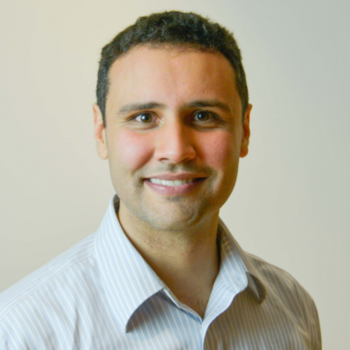
Speaker Bio: Erik Lin-Greenberg is a Predoctoral Fellow at CISAC and a PhD candidate in political science at Columbia University. His dissertation assesses the effects of emerging technology on military escalation. In other work, Erik examines alliance dynamics, the interaction of technology and international law, and the determinants of military force structure. His research has appeared or is forthcoming in a variety of outlets including Security Studies, International Peacekeeping, War on the Rocks, and The Washington Post. Erik previously served as an active duty U.S. Air Force officer, and he continues to serve as a reservist assigned to the Joint Staff.


Erik Lin-Greenberg Predoctoral Fellow CISAC
Seminars
-

Abstract

In How We Win: How Cutting-Edge Entrepreneurs, Political Visionaries, Enlightened Business Leaders, and Social Media Mavens Can Defeat the Extremist Threat, Farah Pandith, the former first-ever Special Representative to Muslim Communities argues that the solutions to the crisis of recruitment and radicalization are available and affordable. A pioneer in the war of ideas, her unprecedented experiences for Bush and Obama reveal information about Washington’s soft power challenge. She calls out the false claim that “ISIS is defeated” and focuses on the importance of defeating the ideology. The need is urgent as terrorist organizations continue to beat the current approach to this global threat. To win, she argues, we must go “all in” in order to extinguish this threat once and for all. She lays out a comprehensive strategy that is a call to action for policymakers, tech entrepreneurs, the media, business professionals, and anyone interested in fighting hate, and presents concrete solutions and recommendations for how we can stem the extremists’ toxic message. Drawing upon her experiences at the National Security Council, U.S. Department of State, and USAID, she makes the case that we have the resources right now to defeat the extremist threat. http://farahpandith.com/book/


Bio

FARAH PANDITH is an author, foreign policy strategist, and former diplomat. A world-leading expert and pioneer in countering violent extremism, she is a frequent media commentator and public speaker. She served as a political appointee under Presidents George H.W. Bush, George W. Bush, and Barack Obama, and most recently she was the first-ever Special Representative to Muslim Communities.  She has served on the National Security Council, at the U.S. Department of State, and the U.S. Agency for International Development (USAID) in various senior roles. She is a senior fellow with the Future of Diplomacy Project at the Belfer Center for Science and International Affairs at the Harvard Kennedy School as well as an adjunct senior fellow at the Council on Foreign Relations. Her book is How We Win: How Cutting-Edge Entrepreneurs, Political Visionaries, Enlightened Business Leaders and Social Medial Mavens Can Defeat the Extremist Threat.


Farah Pandith
Seminars
-

Since its establishment, DNX Ventures (formerly Draper Nexus Ventures) has acted as a bridge between growing Silicon Valley businesses and large Japanese firms. Since 2011, DNX Ventures has created more than 100 partnerships between its portfolio companies and its over 25 large Japanese corporate LPs. During this seminar, Managing Director of DNX Ventures Hiro Rio Maeda will extrapolate from his over 15 years of experience in both corporate venture capital and venture capital and extensive experience working with both startups and large Japanese corporations to discuss the basics of venture capital, and how Japanese corporations leverage venture capital to push forward open innovation initiatives. From a VC perspective: how are decisions about strategic investments made? How does money flow? What ratio of successful investments to non-successful investments do VCs aim for? From a large Japanese corporate perspective: how do large Japanese firms use VC to achieve open innovation goals? What are some of the obstacles to Japanese large firm-startup partnerships, and what are some of the ways to overcome these challenges? Maeda will answer these questions and more, as well as share examples of successful partnerships and large Japanese firms that are successfully harnessing Silicon Valley to further open innovation efforts.  

SPEAKER:

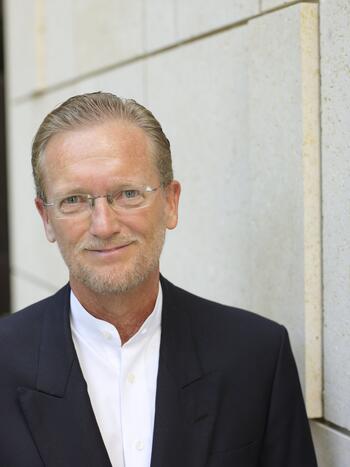
Hiro Rio Maeda, Managing Director, DNX Ventures (formerly Draper Nexus)

BIO:

Hiro Rio Maeda is a Managing Director at venture capital firm DNX Ventures (formerly Draper Nexus). Rio focuses on investing in innovative companies in Cyber Security, mobile, storage, and retail tech area that could work on a global scale. His portfolio companies include Cylance, SafeBreach, JASK, vArmour, AppDome, Ayasdi, Remotium, Klout, Fyde, JoyMode, and Hom.ma. 

Prior to joining DNX Ventures (formerly Draper Nexus), Rio spent six years at Globespan Capital Partners where he had put his resource on both investment and business development of Japan/US portfolio companies. Palo Alto Networks(NYSE: PANW) was a good example portfolio company that he took a lead on taking them to the Japanese market.

Prior to Globespan, Rio spent seven years at Sumitomo Corporation, a Japanese conglomerate trading company in which he had built expertise his international business skill in IT technologies and consumer web services in Tokyo and his capitalist career at Presidio Ventures (Sumitomo’s corporate venture capital arm) in Santa Clara.Japanese conglomerate trading company in which he had built expertise his international business skill in IT technologies and consumer web services in Tokyo and his capitalist career at Presidio Ventures (Sumitomo’s corporate venture capital arm) in Santa Clara.

AGENDA:

4:15pm: Doors open
4:30pm-5:30pm: Talk and Discussion
5:30pm-6:00pm: Networking

RSVP REQUIRED:

Register to attend at http://www.stanford-svnj.org/22819-public-forum

For more information about the Silicon Valley-New Japan Project please visit: http://www.stanford-svnj.org/


Hiro Rio Maeda, Managing Director, DNX Ventures (formerly Draper Nexus)
Seminars
-

The event is jointly sponsored by the Japan Program at the Shorenstein Asia-Pacific Research Center and the Japan Foundation Center for Global Partnership.

The Heisei era started in 1989, with high hopes for Japan to contribute to the international order. As the Heisei era draws to an end, Japan is once again expected to “step up” with increased urgency, given the current US administration’s withdrawal from, and challenge to the international order.  In this talk, I will first look back at the thirty years of Heisei, and discuss why Japan did not take the “internationalist” path in a way that some had expected. Looking forward, I discuss how the domestic institutional changes, together with the geopolitical challenges in Asia, have prompted Japan to seek active leadership in the region and beyond. I will elaborate on the evolution of the “Free and Open Indo-Pacific Vision,” with focus on how exactly Japan seeks to achieve “free and open” in the region, and challenges and limitations going forward.

Image
hikotaniphoto2017
Takako Hikotani is Gerald L. Curtis Associate Professor of Modern Japanese Politics and Foreign Policy. She previously taught at the National Defense Academy of Japan, where she was Associate Professor, and lectured at the Ground Self Defense Force and Air Self Defense Force Staff Colleges, and the National Institute for Defense Studies. Her research focus on civil-military relations and Japanese domestic politics, Japanese foreign policy, and comparative civil-military relations. Her publications (in English) include, “The Japanese Diet and defense policy-making.” International Affairs, 94:1, July, 2018; “Trump’s Gift to Japan: Time for Tokyo to Invest in the Liberal Order,” Foreign Affairs, September/October 2017; and “Japan’s New Executive Leadership: How Electoral Rules "Japan’s New Executive Leadership: How Electoral Rules Make Japanese Security Policy" (with Margarita Estevez-Abe and Toshio Nagahisa), in Frances Rosenbluth and Masaru Kohno eds, Japan in the World (Yale University Press, 2009). She was a Visiting Professional Specialist at Princeton University as Social Science Research Council/Abe Fellow (2010-2011) and Fellow of the US-Japan Leadership Program, US-Japan Foundation (2000- ). Professor Hikotani received her BA from Keio University, MAs from Keio University and Stanford University, and PhD in Political Science from Columbia University, where she was a President’s Fellow.

Takako Hikotani Associate Professor, Modern Japanese Politics and Foreign Policy, Columbia University
Seminars
-

Abstract

From the point of view of institutional economics, growth is related to the implementation and enforcement of property rights. The system that emits, and enforces those rights needs to have very low transactions costs leading to the least possible frictions. The lowest the transactions costs the highest the level of security of investment, as well as the benefits of direct and indirect socioeconomic impacts. However, traditional economic development models do not focus on transactions costs and property rights systems, both of which seem to be the suspects for low productivity, slow growth, and informality. Many developing countries suffer from systems of property rights that are unpredictable because they are inundated with overwhelming bureaucracy, difficult to follow, track, and measure. The speaker has developed a methodology to best diagnose the reasons why a country has such high transactions costs and how to reduce them systematically. This diagnostic method is called Reality Check Analysis (RCA) and its outcomes allow for the best design of policy reforms and strategic application. The presentation will focus on the theoretical definition of the problem, the analysis of Reality Check Analysis, its application and important results measured through a socioeconomic 3,000 household survey. This survey presented the direct benefits of applying a simple property rights system to investment, savings, property values, trust, child labor, to mention a few.

Speaker Bio

Image
panaritis photo
Elena Panaritis until recently served as a senior economic advisor, handling the Euro and Greek Economic Crisis, to two Greek Governments (2009; 2015). In 2015 she also served as the Special Envoy for Negotiating the Greek Sovereign debt and lending program of Greece. Elena worked directly with 3 Greek Prime Ministers and the Minister of Finance, as well as EU and IMF high-level officials, lenders to Greece. In 2015 she was appointed the Alternate Director to the IMF of Italy, Greece, Portugal, Malta, Albania and San Marino, from which position she resigned the same year after strong political pressures. In 2009 she was appointed honorary Member of the Hellenic Parliament until 2012. She is the founder of Panel Group, a triple-bottom-line business that focuses in the informal sector, transforming the wealth base of poor property holders, to proud middle class owners. She has also founded Thought4Action, an Action Tank that works as an educational foundation to create awareness and calls for action, about transforming countries under solvency, economic crisis and informality. Elena Panaritis has taught economic development, housing finance and property markets reform courses at the Wharton Business School, University of Pennsylvania, INSEAD, and the Johns Hopkins University- School of Advanced International Studies (SAIS).

Elena Panaritis Founder and CEO Thought 4 Action - Panel Group
Seminars
-

Click here to RSVP


Speaker Bio: Ms. Kirsti Kauppi became Ambassador of Finland to the United States in September 2015. Before that (2012-2015) she was Political Director (Director General for Political Affairs) and (2009-2012) Director General for Africa and the Middle East in the Ministry for Foreign Affairs in Helsinki.

2005 she was appointed Ambassador of Finland to Austria and Permanent Representative to the UN-related international organizations located in Vienna. Ambassador Kauppi has also served in the Finnish Embassy in Berlin (2003-2005) as Deputy Chief of Mission (Minister). Her other foreign posts include Washington (1997-2000), the Finnish Permanent Mission to the EU in Brussels (1993-1997) and Bangkok (1989-92).


Abstract: Pillars of European security show signs of strain. The question is what can be the building blocks for stability and security in Europe in the future. 

Finland is a Nordic country, amongst the most stable countries in the world, one of the most open economies, technologically advanced and the “happiest” country in the world.  A rules-based international order is vitally important for countries like Finland. Return of great power competition as the organizing principle of international relations is a bleak perspective for small nations.  How should Europe position itself and what should the Europeans do? How about the transatlantic community and the West as a whole?

Finland offers an interesting point of view.  A committed member of the European Union, Finland underlines the importance of European integration, including using EU methods to strengthen European security and defense.  Finland holds the transatlantic relationship and NATO an irreplaceable pillar of stability in Europe even if the country has not joined the Alliance.  Believer in cooperative security Finland promotes dialogue and confidence building, but at the same time possesses robust military capabilities.  Finland looks at Russia with clear eyes and concern, and has through history a unique perspective to what to make of Russia and how to manage the relationship with Russia.

At the talk, the different challenges to European security are discussed and also the elements through which Europe and the US could respond and reinforce the foundations of stability in Europe, as well as why it is important that the USA and Europe are on the same page in these issues. 

Kirsti Kauppi Ambassador of Finland to the United States
Seminars
-

Abstract: This talk will discuss the evolution of Russian hybrid war and how the Russians executed it to perfection to seize Crimea. At the same time, it is important to understand some of the peculiarities of Ukraine to understand why the Russians are unlikely to have the same success elsewhere. The talk will describe internal balancing options that bordering nations can take to deter Russian aggression. Finally, the talk will also discuss the fits and formulation of U.S. policymaking with regards to Ukraine.


Speaker Bio: COL Liam Collins is the Director of the Modern War Institute and the Director of the Department Instruction at the United States Military Academy (USMA) at West Point. From 2016-2018, he also served Gen (ret.) Abizaid’s executive officer for his Secretary of Defense appointment as the Senior Defense Advisor to Ukraine, planning and executing meetings with senior Ukrainian and international officials to help reform Ukraine's defense establishment, and meetings with DoS, DoD, NSC, and HASC officials to inform and shape U.S. policy.

Previously, he served as the director of the Combating Terrorism Center (CTC) at West Point where he authored “The Abbottabad Documents: Bin Ladin’s Security Measures” and co-authored Letters from Abbottabad: Bin Ladin Sidelined?  both of which studied documents captured during the Abbottabad raid and released to the CTC. His work has been cited by the Assistant to the President for Homeland Security and Counterterrorism, the White House Press Secretary, The New York Times, the Associated Press, CNN, ABC News, Fox News, NPR, The Wall Street Journal and USA Today.

COL Collins is a career Special Forces officer, who has served in a variety of special operations assignments. He has conducted multiple operational deployments including Operational Nobile Anvil (Kosovo ’99), Operation Joint Forge (Bosnia ’00, ’02), Operation Enduring Freedom (Afghanistan ’01,’02,’11), Operation Iraqi Freedom (’03,’04) as well as operational deployments to South America and the Horn of Africa.

He holds a Bachelor of Science degree in Mechanical Engineering (Aerospace) from the United States Military Academy (1992), and a Master in Public Affairs and a PhD from Princeton University’s Woodrow Wilson School of Public and International Affairs.  He is also a graduate of the Army Command and General Staff College, the Special Forces Qualification Course, the Infantry Officer Advanced Course, and the Engineer Officer Basic Course.

COL Collins’ military awards and decorations include: Bronze Star Medal (with “V” device for valor and two oak leaf clusters), Defense Meritorious Service Medal (with oak leaf cluster), Meritorious Service Medal (with two oak leaf clusters), Joint Service Commendation Medal, Army Commendation Medal (with “V” device for valor and three oak leaf clusters), Army Achievement Medal (with four oak leaf clusters), Combat Infantryman’s Badge, Special Forces Tab, Ranger Tab, Sapper Tab, Military Free Fall Badge with Bronze Star (for combat jump), Master Parachutist Badge, and Air Assault Badge. He won the Army’s Best Ranger Competition in 2007 and was selected as the Army’s Coach of the Year in 2011.


Liam Collins Director of the Modern War Institute and the Director of the Department Instruction at the United States Military Academy (USMA) West Point
Seminars
-

Image
the back channel
Over the course of more than three decades as a diplomat, William J. Burns served five Presidents and ten Secretaries of State. He played a central role in the most consequential diplomatic episodes of his time—from the bloodless end of the Cold War to the collapse of post–Cold War relations with Putin’s Russia, from post–9/11 tumult in the Middle East to the secret nuclear talks with Iran. Burns is widely regarded as one of the most distinguished and admired American statesmen of the last half century. Upon his retirement in 2014, Secretary John Kerry said Burns belonged on “a very short list of American diplomatic legends,” alongside George Kennan. Now, Burns draws on his decades of experience to make an impassioned argument for the enduring value of diplomacy in an increasingly volatile world in THE BACK CHANNEL (A Random House Hardcover; On Sale 3/12/2019). 

In this memoir, Burns recounts with novelistic detail and incisive analysis some of the seminal moments of his career. Employing a trove of newly declassified cables and memos, he gives readers a rare inside look at American diplomacy in action. His dispatches on war-torn Chechnya and Putin’s opulent dacha outside of Moscow and his prescient warnings of the “Perfect Storm” that would be unleashed by the Iraq War will reshape our understanding of history and inform the policy debates of the future. Burns sketches the contours of effective American leadership in a world that resembles neither the zero-sum Cold War contest of his early years as a young diplomat nor the “unipolar moment” of American primacy that followed. Ultimately, THE BACK CHANNEL is an eloquent, deeply informed, and timely story of a life spent in service of American interests abroad. It is also an urgent reminder, in a time of great turmoil, of the enduring importance of diplomacy.


“The Back Channel is a masterfully written memoir from one of America’s most accomplished and respected diplomats. Ambassador Burns not only offers a vivid account of how American diplomacy works, he also puts forward a compelling vision for its future that will surely inspire new generations to follow his incredible example.”

–Madeleine K. Albright, former U.S. Secretary of State

“Bill Burns is a treasure of American diplomacy who I had the honor of watching in action and working closely with during my years at the State Department.  He is a model of the American idea and spirit when we need it most. In The Back Channel, Burns provides another great act of public service by giving us a smart, plain-spoken account of America’s changing role in the world and the power and purpose of American diplomacy at its best.”

–Hillary Clinton, former U.S. Secretary of State

“From one of America’s consummate diplomats, an incisive and sorely needed case for the revitalization of our diplomacy—what Burns wisely describes as our ‘tool of first resort.’”

–Henry Kissinger, former U.S. Secretary of State


Image
william j  burns c brigitte lacombe croppefd

Retired from the U.S. Foreign Service in 2014, after a thirty-three-year diplomatic career, Ambassador Burns holds the highest rank in the Foreign Service, career ambassador, and is only the second serving career diplomat in history to become deputy secretary of state. Prior to his tenure as deputy secretary, Ambassador Burns served from 2008 to 2011 as under secretary for political affairs. He was ambassador to Russia from 2005 to 2008, assistant secretary of state for Near Eastern affairs from 2001 to 2005, and ambassador to Jordan from 1998 to 2001. Ambassador Burns earned a bachelor’s in history from La Salle University and master’s and doctoral degrees in international relations from Oxford University, where he studied as a Marshall Scholar.

Encina Hall

Bechtel Conference Center, 1st floor

William J. Burns <i>President, Carnegie Endowment for International Peace</i>
Seminars
-

Note:

  • Members of the media interested in covering this event should contact Noa Ronkin at noa.ronkin@stanford.edu by 5:00 pm, Wednesday, February 20, to register. They will also need to present their press credentials for admission. 
  • No recording allowed.
Image
sung andrew kim2

About the speaker: Andrew Kim recently retired as a senior intelligence officer from the Central Intelligence Agency after 28 years of service. He established the CIA's Korea Mission Center in April 2017 in response to a presidential initiative to address North Korea's longstanding threat to global security. As part of his role as head of the Mission Center, he managed and guided CIA Korean analysts in providing strategic and tactical analytic products for a range of policymakers. He accompanied CIA Director and then Secretary of State Mike Pompeo to Pyongyang in meeting with the North Korean leader Kim Jong Un several times. Formerly he served as the Agency's associate deputy director for operations and technology, leading all efforts to update operational technology and incorporate a state-of-the-art doctrine into CIA training curricula.

Earlier in his career, Kim served as the CIA's chief of station in three major East Asian cities, while also managing the intelligence relationship with politically and militarily complicated foreign countries and advancing U.S. interests. He speaks fluent Korean, Japanese, and Mandarin Chinese.


Philippines Conference Room Encina Hall, 3rd Floor 616 Serra Mall, Stanford, CA 94305
0
andrew_kim.jpg

Sung Hyun "Andrew" Kim was a visiting scholar at the Walter H. Shorenstein Asia-Pacific Research Center (APARC) through December 2019. Previously he was William J. Perry visiting scholar at APARC. Kim, who retired from the Central Intelligence Agency in 2018 as a senior intelligence officer after 28 years of service, was assistant director of the CIA's Korea Mission Center, where he helped secure the foundation for the Trump-Kim summit of June 2018.  At Stanford, he will contribute to studies of current North Korea diplomacy in comparison to previous negotiations with the DPRK, a research scope that he refers to as "U.S.-DPRK summit of the century and the tide of history."  Kim will also participate in policy engagement regarding North Korea issues through Shorenstein APARC and its Korea Program.

Kim established the CIA's Korea Mission Center in April 2017 in response to a presidential initiative to address North Korea's longstanding threat to global security. As part of his role as head of the Mission Center, he managed and guided CIA Korean analysts in providing strategic and tactical analytic products for a range of policymakers. He accompanied CIA Director and then Secretary of State Mike Pompeo to Pyongyang in meeting with the North Korean leader Kim Jong Un several times. Formerly he served as the Agency's associate deputy director for operations and technology, leading all efforts to update operational technology and incorporate a state-of-the-art doctrine into CIA training curricula.

Earlier in his career, Kim served as the CIA's chief of station in three major East Asian cities, while also managing the intelligence relationship with politically and militarily complicated foreign countries and advancing U.S. interests. In recognition of his many contributions, Kim was honored by the Agency with the Director's Award (2018), Presidential Rank Award (2012), and the Donovan Award (1990). He speaks fluent Korean, Japanese, and Mandarin Chinese.

Visiting Scholar at APARC
<i>William J. Perry Visiting Scholar, APARC, Stanford University </i>
Seminars
-


EMERGING ISSUES IN CONTEMPORARY ASIA

A Special Seminar Series


RSVP required by February 12, 2019 to: https://goo.gl/forms/h9RRcz4vR9Ybn5cQ2

VALID STANFORD ID CARD MUST BE PRESENTED UPON ARRIVAL


ABSTRACT: Diplomacy plays a critical role in the management and resolution of armed conflict in the international system. After a war breaks out, decision makers see the opening of talks as a constructive step in the conflict’s resolution — dialogue allows for belligerents to broker deals and coordinate the logistics of war termination. However, in modern warfare, states almost always fight initially for period of time without engaging in talks. What factors explain whether states are willing to talk to their enemy while fighting and when might their diplomatic postures change? “Talking to the Enemy” presents a framework to explain variation in countries’ approaches to wartime diplomacy, focusing on the costs of talks and how states mitigate these costs to get to the negotiating table. I test this framework with respect to Chinese decision making in the Korean and Sino-Indian Wars — one in which China was against talks for nine months before opening up and the latter in which China actively pursued talks throughout the whole conflict. The findings have significant implications for crisis management and conflict resolution in U.S.-China relations.  

Image
Oriana Mastro
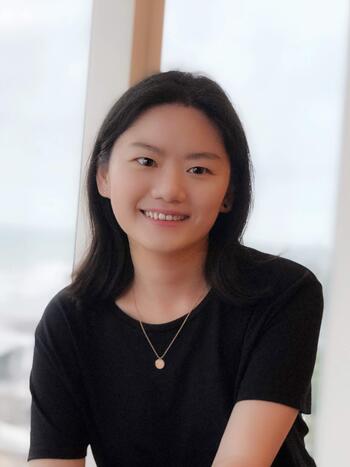
PROFILE: Oriana Skylar Mastro is an assistant professor of security studies at the Edmund A. Walsh School of Foreign Service at Georgetown University where her research focuses on Chinese military and security policy, Asia-Pacific security issues, war termination, and coercive diplomacy. Dr. Mastro is also a 2017-2019 Jeane Kirkpatrick Scholar at the American Enterprise Institute (AEI) where she is working on a book about China’s challenge to U.S. primacy. Mastro continues to serve in the United States Air Force Reserve for which she works as a Senior China Analyst at the Pentagon. For her contributions to U.S. strategy in Asia, she won the Individual Reservist of the Year Award in 2016. She has published widely, including in Foreign Affairs, International Security, International Studies Review, Journal of Strategic Studies, The Washington Quarterly, The National Interest, Survival, and Asian Security, and is the author of The Costs of Conversation: Obstacles to Peace Talks in Wartime, (Cornell University Press, 2019). She holds a BA in East Asian Studies from Stanford University and an MA.and PhD in Politics from Princeton University. Her publications and other commentary can be found on twitter @osmastro and www.orianaskylarmastro.com.  


Oriana Mastro Assistant Professor of Security Studies Edmund A. Walsh School of Foreign Service, Georgetown University
Seminars
Subscribe to Seminars