-

Image
andray book cover

The stories of North Korea and Myanmar (Burma) are two of Asia’s most difficult. For decades they were infamous as the region’s most militarized and repressed, self-isolated and under sanctions by the international community while, from Singapore to Japan, the rest of Asia saw historic wealth creation. Andray Abrahamian, author of the recent book North Korea and Myanmar: Divergent Paths (McFarland, 2018), examines and compares the recent histories of North Korea and Myanmar, asking how both became pariahs and why Myanmar has been able to find a path out of isolation while North Korea has not. 

Abrahamian finds that both countries were faced with severe security threats following decolonization. Myanmar was able to largely take care of its main threats in the 1990s and 2000s, allowing it the space to address the reasons for its pariah status. North Korea's response to its security threat has been to develop nuclear weapons, which in turn perpetuates and exacerbates its isolation and pariah status. In addition, Pyongyang has developed a state ideology and a coercive apparatus unmatched by Myanmar, insulating its decision makers from political pressures and issues of legitimacy to a greater degree.

Dr. Andray Abrahamian is currently the 2018-19 Koret Fellow in Korea Program at Stanford. He is a member of the US National Committee on North Korea and an Adjunct Fellow at Pacific Forum and at Griffith University. Working for a non-profit, Choson Exchange, has taken him to the DPRK nearly 30 times; he has also lived in Myanmar.

Philippines Conference Room Encina Hall, 3rd Floor 616 Serra Mall, Stanford, CA 94305
0
Lecturer
Koret Fellow, 2018-19
andray_abrahamian.jpg Ph.D.
Andray Abrahamian was the 2018-19 Koret Fellow at Stanford University. He is also an Honorary Fellow at Macquarie University, Sydney and an Adjunct Fellow at the Griffith Asia Institute. He is an advisor to Choson Exchange, a non-profit that trains North Koreans in economic policy and entrepreneurship. He was previously Executive Director and Research Director for Choson Exchange. That work, along with supporting sporting exchanges and a TB project, has taken him to the DPRK nearly 30 times. He has also lived in Myanmar, where he taught at Yangon University and consulted for a risk management company. He has conducted research comparing the two countries, resulting in the publication of "North Korea and Myanmar: Divergent Paths" (McFarland, 2018). Andray has published extensively and offers expert commentary on Korea and Myanmar, including for US News, Reuters, the New York Times, Washington Post, Lowy Interpreter and 38 North.  He has a PhD in International Relations from the University of Ulsan, South Korea and an M.A. from the University of Sussex where he studied media discourse on North Korea and the U.S.-ROK alliance, respectively. Andray speaks Korean, sometimes with a Pyongyang accent.
<i>2018-19 Koret Fellow, APARC, Stanford University</i>
Seminars
-
Recent decades of rapid social transformations across the globe provoked tectonic shifts: minorities are more visible than ever, equality movements spread across many borders and historic milestones were achieved. However, the same globalization processes allowed hate groups to become smarter, more effective and coordinate globally. "Transborder Hate Movements" is new, but overlooked phenomenon of internationally organized effort by vast spectrum of hate groups utilizing politics and disinformation to trump equality movements all across emerging democracies and in the Global South. It is also a strengthening ideology binding millions from Russia to the US and from Brazil to Uganda. Breaking myths about what an actual frontline against civil rights inequality really looks like in 2019 is key for figuring out an adequate response. First step would be to realize that global fight against homophobia won't be winnable without fully addressing civil rights inequality in the West.


Speaker Bio:

Image
eristavi
Maxim Eristavi is the only openly gay journalist coming from Ukraine, one of the few in Eastern Europe. Self-described 'bridge-builder', his work concentrates on amplifying and explaining stories from global frontline battles for equal human and civil rights. He is a research fellow with the Atlantic Council, a DC-based foreign policy think-tank; co-founder of the Russian Language News Exchange, the biggest support network for independent journalism in Eastern Europe; policy adviser at the European Parliament; writer for Washington Post, Politico, Foreign Policy, among others and sits on the managing board of Kyiv Pride, the biggest pride event in the post-Soviet space. Eristavi is a 2015 Poynter fellow at Yale University with a focus on informational wars and pan-regional LGBTI civil rights movements. Find out more at maximeristavi.com


Seminars
-
Abstract:
 
We assemble novel data from approximately 120 countries around the world on recent reelection rates of legislators to the national lower house of representatives. Data
show that incumbent reelection rates increase substantially with acountry's level of economic development. Using a formal model to inform our understanding, we argue that as acountry develops economically, the pool of individuals who seek political office improves. As better candidates enter the political arena, more good types are elected and then reelected. Historical data buttresses this line of argument.  We use empiricalmethods to explore mechanisms to account for the pattern in political entry that we identify
 
 
Speaker Bio:
 

Image
miriam golden
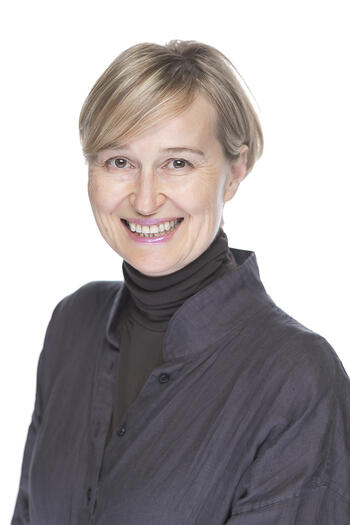
Miriam Golden is Professor of Political Science. She was educated at the University of California at Berkeley, the London School of Economics and Political Science, and Cornell University.  Professor Golden's research is in the area of political economy. She has conducted field research on issues of corruption and political malfeasance in Europe, Asia, and Africa.  With economist Raymond Fisman, Professor Golden has recently authored Corruption: What Everyone Needs to Know (Oxford University Press, 2017).  Her current field project concerns political responsiveness in Pakistan. She is also engaged in a cross-national and historical study of how and when politicians secure reelection.


Miriam Golden Professor of Political Science, University of California at Los Angeles
Seminars
-

Abstract:

To what extent do European citizens have a populist view of politics? Under what conditions are these populist attitudes more prevalent? What are their political consequences in terms of individual behavior? The talk will present an overview of the causes and consequences of populist attitudes in Europe using comparative and longitudinal survey data. The effect of economic conditions (both objective and perceived), emotional reactions of anger and fear, and internal political efficacy are explored. Our evidence suggests that populism is more related to sociotropic perceptions than to objective economic hardship, and to anger than to fear. Populist attitudes seem to be also powerful mobilisatory motivations for political engagement, particularly for people with low levels of income and education. 
 
 
Speaker Bio:
 

Image
eva perea
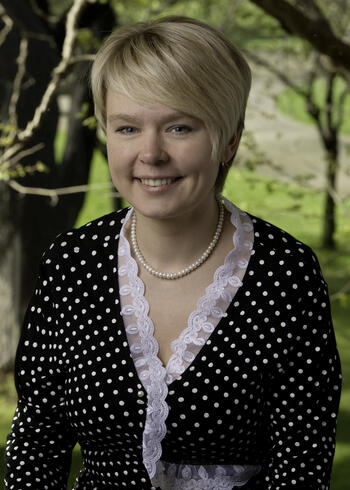
I am professor of political science at the Universitat Autònoma de Barcelona where I am also ICREA Academia research fellow. I direct the research group on Democracy, Elections and Citizenship and I have until recently directed also the Master in Political Science. I am currently 2018-19 fellow at the Center for Advanced Study in the Behavioural Sciences at Stanford University. My main areas of research deal with different aspects of citizens’ involvement in politics in advanced democracies. This includes an interest in the causes and consequences of electoral turnout, political protest, digital media and political attitudes. I am also interested in attitudes towards corruption and in survey and experimental methodology. Recently my research has focused on the attitudinal consequences of the economic crisis, with a special focus on populist attitudes. In my next project I intend to explore how individuals’ attitudes towards gender equality and feminism change along time.

 
Eva Anduiza Perea Professor of Political Science at Universitat Autònoma de Barcelona
Seminars
-

Improvements in medical treatment have clearly contributed to significant increases in medical spending, yet there is relatively little quantitative evidence on whether the rise in expenditure is “worth it” in the sense of producing health outcomes of commensurate value. This seminar will focus on empirical research assessing the net value of health care for patients with chronic disease, using the case of type 2 diabetes mellitus. Based on analysis of detailed longitudinal, patient-level data, the collaborating researchers from Hong Kong, Japan, Taiwan, the Netherlands, and the US describe patterns in resource use and quality outcomes as measured by clinical markers and predicted risk of complications and death. In most of the studied cases, increases in spending were accompanied with improvements in outcomes of commensurate or greater value, given a range of values for a quality-adjusted life year. The authors conclude with a discussion of what the results imply about productivity of medical care, quality adjustment of price indices for healthcare, and policies for healthy aging in Asia (based on a forthcoming book).

Philippines Conference Room Encina Hall, 3rd Floor 616 Serra Mall, Stanford, CA 94305
Jianchao Quan Hong Kong University
616 Serra StreetEncina Hall E301Stanford, CA94305-6055
0
toshiaki_iizuka.jpg Ph.D.

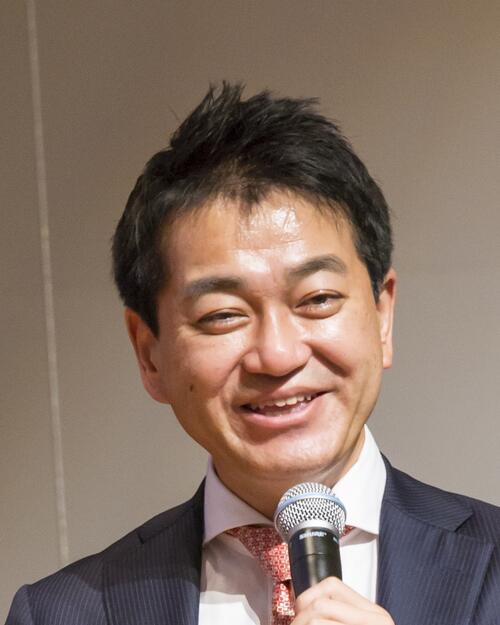
Toshiaki Iizuka is Professor at Graduate School of Public Policy and Graduate School of Economics, the University of Tokyo. Before joining the University of Tokyo in 2010, he taught at Vanderbilt University (2001-2005), Aoyama Gakuin University (2005-2009), and Keio University (2009-2010). He served as Dean of Graduate School of Public Policy, the University of Tokyo, between 2016 and 2018. He is a recipient of Abe Fellowship (2018-2019). 

His research interests are in the field of health economics and health policy. He has written a number of articles on incentive and information in the health care markets. His research articles have appeared in leading professional journals, including American Economic Review, RAND Journal of Economics, Journal of Health Economics, and Health Affairs, among others. Dr. Iizuka holds a PhD in Economics from the University of California, Los Angeles, an MIA from Columbia University, and an ME and BE from the University of Tokyo.
Visiting Scholar, Asia Health Policy Program at APARC
University of Tokyo

Shorenstein APARC
Stanford University
Encina Hall E301
Stanford, CA 94305-6055

(650) 723-9072 (650) 723-6530
0
Senior Fellow at the Freeman Spogli Institute for International Studies
Center Fellow at the Center for Health Policy and the Center for Primary Care and Outcomes Research
Faculty Research Fellow of the National Bureau of Economic Research
Faculty Affiliate at the Stanford Center on China's Economy and Institutions
karen-0320_cropprd.jpg PhD

Karen Eggleston is a Senior Fellow at the Freeman Spogli Institute for International Studies (FSI) at Stanford University and Director of the Stanford Asia Health Policy Program at the Shorenstein Asia-Pacific Research Center at FSI. She is also a Fellow with the Center for Innovation in Global Health at Stanford University School of Medicine, and a Faculty Research Fellow of the National Bureau of Economic Research (NBER). Her research focuses on government and market roles in the health sector and Asia health policy, especially in China, India, Japan, and Korea; healthcare productivity; and the economics of the demographic transition.

Eggleston earned her PhD in public policy from Harvard University and has MA degrees in economics and Asian studies from the University of Hawaii and a BA in Asian studies summa cum laude (valedictorian) from Dartmouth College. Eggleston studied in China for two years and was a Fulbright scholar in Korea. She served on the Strategic Technical Advisory Committee for the Asia Pacific Observatory on Health Systems and Policies and has been a consultant to the World Bank, the Asian Development Bank, and the WHO regarding health system reforms in the PRC.

Director of the Asia Health Policy Program, Shorenstein Asia-Pacific Research Center
Stanford Health Policy Associate
Faculty Fellow at the Stanford Center at Peking University, June and August of 2016
CV
Date Label
Stanford University and NBER
Seminars
-

This event is co-sponsored with The Abbasi Program in Islamic Studies.

Abstract:

Why were Islamists less polarizing in Tunisia than their counterparts in Egypt after the downfall of the autocratic regime in 2011? While the electoral processes that brought the Muslim Brotherhood to power in Egypt rapidly polarized society, the Muslim Brothers in Tunisia formed a coalition with secular groups to pry power from the old power centers immediately after the removal of Ben Ali. Different approaches focused on Tunisians’ liberal culture and their proximity to Europe. Scant attention paid to both the historical and political-strategic conditions that shaped boundaries of interactions between Islamists and non-Islamists. I argue that the historical relations between the state and Islamists affect the distribution of power between them on the one hand, and their secular opponents on the other. In Tunisia, Islamist and non-Islamist forces believed in the necessity of conciliation (or were forced to do so by political circumstances). They, therefore, reached across ideological lines and struck deals to hold democratic institutions.


Speaker Bio:

Image
shimaa hatab
Shimaa Hatab is assistant professor of political science at the Faculty of Economics and Political Science, Cairo University. She received her Ph.D. in Political Science from Essex University. She is a Fulbright Visiting Scholar at the Abbasi Program, at Stanford. Her research interests include democratization, authoritarianism, political economy of development, with a focus on countries in the Middle East and Latin America.

Shimaa Hatab assistant professor of political science at the Faculty of Economics and Political Science, Cairo University
Seminars
-


This event is co-sponsored with The Abbasi Program in Islamic Studies.

Abstract:

Severe polarization is a global threat that has detrimental effects on democracy and well-being. What can citizens and collective actors such as political parties do to reverse polarization and to sustain democracy in affected polities? The triggers of current polarizations across the world often are political and thus intentional: they exemplify various forms of “the politics of transforming through polarizing,” which are aimed at achieving wide-scale transformations in political-economic institutions and policies. Yet, as these polarizations take a life of their own, the causal mechanisms that render them pernicious gain a structural nature. They lock in both the incumbents and the oppositions in a downward spiral of polarization-cum-democratic erosion, generating many unintended consequences. With comparative examples from various polities, this talk will discuss a political and relational notion of polarization, the dilemmas faced by opposition actors who want to reverse polarization and democratic backsliding, and implications for theory and policy.


Speaker Bio:

Image
murat somer

Murat Somer is a Professor of Political Science and International Relations at Koç University and a Visiting Scholar at the Abbasi Program in Islamic Studies at Stanford University. His research on democratization and autocratization, polarization, ethnic conflicts, religious and secular politics, political Islam, and the Kurdish question have been published in books, book volumes and journals such as Comparative Political Studies and Democratization. His book on the Turkish and Kurdish Question won a Sedat Simavi Social Sciences Prize in 2015 and he recently co-edited two special journal volumes on polarization, democracy and democratic erosion across the world. Among other visiting appointments, Somer was a Democracy and Development Fellow at Princeton University, a Senior Visiting Scholar at Stockholm University, and a Visiting Scholar at the Weatherhead Center for International Affairs at Harvard University. He has been a frequent contributor to Turkish and international media and he is working on a research and book project that explores the multiple paths through which polarizing politics lead to authoritarianism, and what pro-democracy citizens and political actors can and cannot do to sustain democracy.

Murat Somer Professor of Political Science and International Relations at Koç University, Istanbul
Seminars
-

Abstract:

Ever since the Millennium Message, Putin's first presidential speech on January 1, 2000, the Kremlin's political architects have cultivated a narrative of Russia as a unique nation on a righteous path toward restored greatness. The process of myth-making is intertwined with the policies involved in remaking Russia as a global power, as the regime builds legitimacy through careful messaging on Russian nationhood, history, morality, and geopolitical strength, using law and policy to embed those concepts as institutions and persuade citizens that Russia needs autocracy to survive. This talk traces the Kremlin's cooptation of culture and history to tell a certain story about Russia and its citizens, and examines public opinion polls to assess the degree to which the strategy is working, as well as street protests and radical performance art that attempts to claim spaces of agency for citizens who don't fit into the mythic mold.


Speaker Bio:


Image
alice underwood
Alice E.M. Underwood is a Pre-Doctoral Fellow at the Center on Democracy, Development, and the Rule of Law and a Ph.D. Candidate in the Department of Comparative Literature at Stanford University. She is a Weiland Fellow at Stanford and a former Title VIII Fellow at the Kennan Institute at the Woodrow Wilson International Center for Scholars, and has published with Intersection, The Russia File, Russian Life, and Harvard International Review.

 
Pre-doctoral fellow at the Center on Democracy, Development, and the Rule of Law.
Seminars
-

Abstract: My research focuses on the 2011 Fukushima nuclear disaster and on the release of radioactive contamination throughout Japan. Based on 14 months of fieldwork in Japan, the research examines the crisis of expertise that ensued when many citizens became wary of state institutional experts, especially in their capacities to explain and manage the problems engendered by residual radioactivity.In this context of public skepticism, I ask the following: how does the Japanese state attempt to govern the hazards of radioactive contamination, and ultimately, the reconstruction of normality in the aftermath of a nuclear disaster? I argue that the management of radiation hazard after Fukushima includes an important reorganization of state expertise, which now moves beyond traditional forms of risk communication and institutional experts.My research advances policyand public-relevant understandings of repliesto radioactive contamination by highlighting the needs of appropriate educational infrastructure around radiation risk, while emphasizing democratic opportunity for citizen-government collaboration. Within post-Fukushima Japan, anthropological investigations of the governance of radiation hazards are essential for understanding the configurations of cultural schemas, social relationships, and technological interplays that led individuals to “accept” life amidst toxicity and other to refuse it.


Speaker's Biography: Maxime Polleri is a Ph.D. candidate in the Department of Anthropology at York University. His current research focuses on the 2011 Fukushima Dai’ichi nuclear disaster and on the crisis of expertise that ensued, in which many citizens have become wary of state institutional experts, especially in their capacities to manage the problems engendered by residual radioactivity. In such a context, his dissertation is concerned with how the Fukushima crisis has participated in the formations of new forms of expertise and consequently, new means of governing toxicity. It asks: How is radioactive hazard being governed in the wake of a crisis of legitimacy against state institutional expert? Based on 14 months of ethnographic fieldwork throughout Japan, the dissertation argues that averting the crisis of expertise and managing the reconstruction of what “normality” involves in a post-Fukushima Japan include a fundamental reorganization of state governance, where the dissemination of radiation hazards cannot simply rest on dry, clinical manner in which government-packaged expertise about radiation was initially promulgated to a former lay public. In particular, these shift in the governance of radioactive risk are increasingly being enacted by promoting a state-sponsored affective embodiment toward nuclear matter, as well as by encouraging the endeavor of citizen science, where former lay citizens now track and monitor residual radioactivity in their environment. His fieldwork was funded by the Japan Foundation and the Canada Social Sciences and Humanities Research Council. His work has been published in Anthropology Now, Anthropology Today, and Medical Anthropology Quarterly Second Spear.


Maxime Polleri CISAC Predoctoral Fellow Stanford University
Seminars
-

Click here to view paper


Abstract: Nuclear disarmament treaties are not sufficient in and of themselves to neutralize the existential threat of the nuclear weapons. Technologies are necessary for verifying the authenticity of the nuclear warheads undergoing dismantlement before counting them towards a treaty partner’s obligation. A team of scientists working at MIT has developed two novel concepts which leverage isotope-specific nuclear resonance phenomena to authenticate a warhead's fissile components by comparing them to a previously authenticated template.  Most actinides such as uranium and plutonium exhibit unique sets of resonances when interacting with MeV photons and eV neutrons. When measured, these resonances produce isotope-specific features in the spectral data, thus creating an isotopic  "fingerprint" of an object. All information in these measurement has to be and is encrypted in the physical domain in a manner that amounts to a physical zero-knowledge proof system. Using Monte Carlo simulations and experimental proof-of-concept measurements these techniques are shown to reveal no isotopic or geometric information about the weapon, while readily detecting hoaxing attempts. These new methodologies can dramatically increase the reach and trustworthiness of future nuclear disarmament treaties.  The talk will discuss the concepts and recent results, and will give a general overview of nuclear security research pursued at MIT.


Bio: Areg Danagoulian is an Assistant Professor of Nuclear Science and Engineering at MIT.  He did his PhD research in Experimental Nuclear Physics at the University of Illinois at Urbana-Champaign. Areg’s PhD thesis focused on experiments that used real Compton scattering on the proton at 2-6 GeV, allowing to probe the proton's internal structure and understand how it couples to external excitations. After his PhD Areg worked at Los Alamos as a postdoctoral researcher, and then as a senior scientist at Passport Systems, Inc. (PSI). At PSI Areg focused on the development of Prompt Neutron from Photofission (PNPF) technique, which allows to rapidly detect shielded fissionable materials in the commercial cargo traffic. Areg's current research interests focus on scientific applications in nuclear security, such areas nuclear nonproliferation, technologies for treaty verification, nuclear safeguards, and cargo security. Current specific research areas include:  warhead verification using nuclear resonances;  use of nuclear reactions for high precision radiography in nuclear security applications.


Areg Danagoulian Assistant Professor, Nuclear Science and Engineering MIT
Seminars
Subscribe to Seminars