-
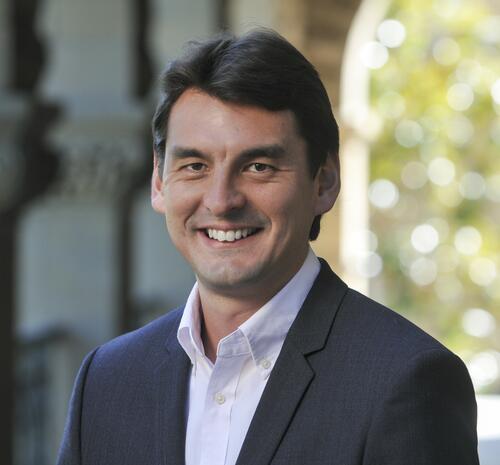
Abstract: A Syria Divided:  International rhetoric has evolved to accept Bashar al-Assad's continuance in power, at least for the time being.  And yet, there is a growing recognition among many Syrians and some in the international community that the Assad regime’s center is decaying, and it is incapable of regaining control over all parts of Syria.  Rather than accept Assad's control as a fait accompli, the international community should focus its political capital on those parts of Syria with room for democratic growth.  For this discussion, Shaikh will draw on an extensive series of track II Syrian dialogues.
 
Speaker Bio: Salman Shaikh is the Founder and CEO of The Shaikh Group (TSG). Before establishing TSG, he was the director of the Brookings Institution's Doha Center, where his research focused on conflict resolution, domestic policy, and geopolitics of the Middle East, with a particular focus on the Levant (particularly Syria, Lebanon, and Iraq) and the Gulf Cooperation Council (GCC) states. Shaikh has extensive experience working the United Nations in a number of offices, including as Special Assistant, Middle East and Asia in the Office of the Undersecretary-General for Political Affairs, Political Advisor to the Secretary-General's Personal Representative for Lebanon during the 2006 war, Special Assistant to the Special Coordinator to the Middle East Peace Process, and Programme Officer for the Special Representative for Children in Armed Conflict. Shaikh also served as Director for policy and research in the private office of Her Highness Sheikha Moza bin Nasser al-Missned, the Consort of the former Emir of the State of Qatar. Shaikh is a respected commentator and policy adviser on the Middle East. He has been featured in key publications and broadcasters, including CNN, BBC, Sky New, Al Jazeera, and NBC, and he has published commentaries with Foreign Policy, The New York Times, The Daily Beast, The Christian Science Monitor, and elsewhere.

Salman Shaikh CEO The Shaikh Group
Seminars
-

Image
vincent brooks 2x3
About the speaker: Vincent K. Brooks is a career Army officer who recently retired from active duty as the four-star general in command of all U.S. Forces in Korea, where he concurrently commanded United Nations Command – continuously serving since 1950 and initially commanded by General of the Army Douglas MacArthur; and the Republic of Korea-U.S. Combined  Forces Command comprising over 625,000 Koreans and Americans under arms.

General Brooks, who goes by “Vince,” is a 1980 graduate of the United States Military Academy at West Point, the first class to include women, and he led the 4,000 cadets as the cadet brigade commander or “First Captain.”  He is the first African American to have been chosen for this position, and he was also the first cadet to lead the student body when women were in all four classes (freshman or “plebe” to senior or “first classman”).

General Brooks is from a career military family and claims Alexandria, Virginia as home given the long roots in maternal and paternal branches of the family tree. His areas of expertise are national security, policy, strategy, international relations, military operations, combating terrorism and countering the proliferation of weapons of mass destruction, diversity and inclusion, leadership in complex organizations, crisis leadership, and building cohesive trust-based teams. He is a combat veteran and a member of the Council on Foreign Relations.

Image
karl eikenberry 3x2 crop
Ambassador Karl Eikenberry, currently director of U.S.-Asia Security Initiative at Stanford's Shorenstein Asia-Pacific Research Center, will moderate the discussion. He served as the U.S. Ambassador to Afghanistan from 2009 until 2011. Before appointment as Chief of Mission on Kabul, Ambassador Eikenberry had a thirty-five year career in the United States Army, retiring in April 2009 with the rank of Lieutenant General.
 

This keynote event is part of the 11th annual Koret Workshop, "North Korea and the World in Flux," and open to the general public with registration.

The event is made possible through the generous support of the Koret Foundation


Oksenberg Conference Room
Encina Hall, 3rd floor
616 Serra Mall, Stanford University
 

General Vincent Brooks <i>former Commander of U.S. Forces Korea</i>
Moderated by Ambassador Karl Eikenberry
Seminars
-

*This event is co-sponsored with the Hamid and Christina Moghadam Program in Iranian Studies.


Jason Rezaian discusses his new book, Prisoner: My 544 Days in an Iranian Prison, with Brett McGurk, the former Special Envoy to Defeat ISIS. Rezaian was the Washington Post’s Tehran bureau chief when he was imprisoned and McGurk led 14 months of secret negotiations with Iran that helped free him in 2016.


Jason Rezaian is one of the few Western journalists to have been based in Tehran in recent years. From 2009 until his arrest in 2014 he covered stories that tried to explain Iran to a general American audience, first as a freelancer for a variety of outlets and later as The Washington Post’s Tehran bureau chief.

He reported on two presidential elections, Iran’s nuclear negotiations with global powers, the effects of one of the most punitive sanctions regimes in modern times and environmental issues. In between those momentous topics he told the stories of everyday Iranians which sought to make them more accessible to readers, reporting on Iran’s small community of baseball players, the quest for the best high end hamburger in Tehran, and a clinic for female drug addicts.

In July of 2014 Rezaian and his wife were detained in their home and he went on to spend 545 in Tehran’s Evin prison, released on the same day that the historic nuclear deal between Iran and world powers was implemented. 


Brett McGurk is joining Stanford University’s Freeman Spogli Institute for International Studies as the Frank E. and Arthur W. Payne Distinguished Lecturer.

McGurk recently served as special presidential envoy for the Global Coalition to Defeat ISIS at the U.S. Department of State. He helped build and then led the coalition of seventy-five countries and four international organizations and was responsible for coordinating all aspects of U.S. policy in the campaign against the Islamic State in Iraq, Syria, and globally.

McGurk previously served in senior positions in the George W. Bush and Barack Obama administrations, including as Special Assistant to President Bush and Senior Director for Iraq and Afghanistan, and then as Deputy Assistant Secretary of State for Iraq and Iran and Special Presidential Envoy for the U.S. campaign against the Islamic State under Obama.

McGurk has led some of the most sensitive diplomatic missions in the Middle East over the last decade, including negotiations with partners and adversaries to advance U.S. interests. In 2015 and 2016, McGurk led 14 months of secret negotiations with Iran to secure the release of Washington Post reporter Jason Rezain, U.S. Marine Amir Hekmati, and Pastor Saad Abadini, as well as three other American citizens.


Hauck Auditorium, David & Joan Traitel Building, Hoover Institution

435 Lasuen Mall, Stanford University

Jason Rezaian Iranian-American journalist
Seminars
-

We are sorry that the registration is now closed. It has reached the limit of the room capacity.

Brent Christensen is the Director of the American Institute in Taiwan’s Taipei office. Mr. Christensen has been in the United States Foreign Service for more than 29 years and has extensive experience in senior positions related to Taiwan and China.  Mr. Christensen previously served as Deputy Director of the American Institute in Taiwan’s Taipei office.  Prior to that, he was Director of the State Department’s Office of Taiwan Coordination, where he had a primary role in formulating U.S. policy toward Taiwan.  He has served three assignments at the U.S. Embassy in Beijing, the most recent being Environment, Science, Technology and Health Counselor.

Mr. Christensen has also served as a Senior Level Career Development Advisor in the State Department’s Human Resources Bureau.  Prior to that assignment, he served as the Foreign Policy Advisor at the Asia-Pacific Center for Security Studies (APCSS).  Other overseas postings include Hong Kong and South Africa.  Mr. Christensen also served as a Congressional Fellow on the staff of Senator Olympia Snowe.  Prior to joining the Foreign Service, he was a captain in the U.S. Air Force.

Mr. Christensen is a career member of the Senior Foreign Service and holds the personal rank of Minister-Counselor.  Mr. Christensen earned an M.A. in East Asian Studies from the George Washington University, a B.A. in Chinese language and literature from Brigham Young University, and a Doctor of Medical Dentistry degree from the Oregon Health and Sciences University.  Mr. Christensen is married to Brenda Barrus Christensen and has three children.  He is a native of Provo, Utah.

Oksenberg Conference Room Encina Hall, 3rd Floor 616 Serra Mall, Stanford, CA 94305
Brent Christensen Director, American Institute in Taiwan
Seminars
-

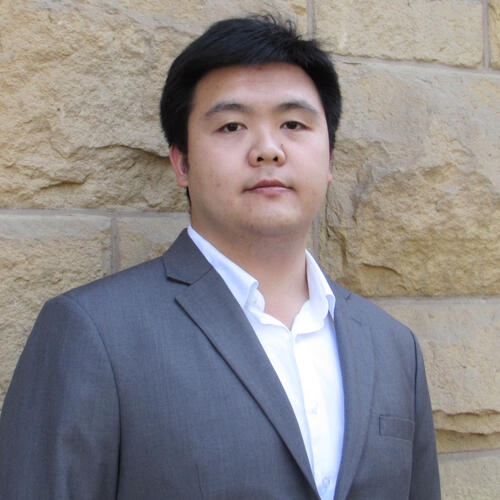
Abstract: Many scholars and policymakers argue that drone proliferation will be destabilizing. By removing pilots from harm’s way, drones allow states to launch military operations without the political risks of sending troops into battle. Although these reduced risks may increase the likelihood of conflict onset, technology that removes warfighters from the battlefield may actually help states avoid escalatory spirals. To identify the effect of drones on escalation dynamics, I develop a theory of technology-enabled escalation control: when used as a substitute for manned assets, drones increase the frequency of conflict between actors, but limit the intensity of these disputes by decreasing pressures for retaliation. This restrained retaliation prevents crises from spiraling into more destabilizing conflicts. To test this argument, I develop a novel methodological approach – embedding experimental manipulations into wargames played by military personnel. The wargames demonstrate that drones can limit escalation and showcase wargaming as a tool for international relations research. 


Speaker Bio: Erik Lin-Greenberg is a Predoctoral Fellow at CISAC and a PhD candidate in political science at Columbia University. His dissertation assesses the effects of emerging technology on military escalation. In other work, Erik examines alliance dynamics, the interaction of technology and international law, and the determinants of military force structure. His research has appeared or is forthcoming in a variety of outlets including Security Studies, International Peacekeeping, War on the Rocks, and The Washington Post. Erik previously served as an active duty U.S. Air Force officer, and he continues to serve as a reservist assigned to the Joint Staff.


Erik Lin-Greenberg Predoctoral Fellow CISAC
Seminars
-

Abstract

In How We Win: How Cutting-Edge Entrepreneurs, Political Visionaries, Enlightened Business Leaders, and Social Media Mavens Can Defeat the Extremist Threat, Farah Pandith, the former first-ever Special Representative to Muslim Communities argues that the solutions to the crisis of recruitment and radicalization are available and affordable. A pioneer in the war of ideas, her unprecedented experiences for Bush and Obama reveal information about Washington’s soft power challenge. She calls out the false claim that “ISIS is defeated” and focuses on the importance of defeating the ideology. The need is urgent as terrorist organizations continue to beat the current approach to this global threat. To win, she argues, we must go “all in” in order to extinguish this threat once and for all. She lays out a comprehensive strategy that is a call to action for policymakers, tech entrepreneurs, the media, business professionals, and anyone interested in fighting hate, and presents concrete solutions and recommendations for how we can stem the extremists’ toxic message. Drawing upon her experiences at the National Security Council, U.S. Department of State, and USAID, she makes the case that we have the resources right now to defeat the extremist threat. http://farahpandith.com/book/


Bio

FARAH PANDITH is an author, foreign policy strategist, and former diplomat. A world-leading expert and pioneer in countering violent extremism, she is a frequent media commentator and public speaker. She served as a political appointee under Presidents George H.W. Bush, George W. Bush, and Barack Obama, and most recently she was the first-ever Special Representative to Muslim Communities.  She has served on the National Security Council, at the U.S. Department of State, and the U.S. Agency for International Development (USAID) in various senior roles. She is a senior fellow with the Future of Diplomacy Project at the Belfer Center for Science and International Affairs at the Harvard Kennedy School as well as an adjunct senior fellow at the Council on Foreign Relations. Her book is How We Win: How Cutting-Edge Entrepreneurs, Political Visionaries, Enlightened Business Leaders and Social Medial Mavens Can Defeat the Extremist Threat.


Farah Pandith
Seminars
-

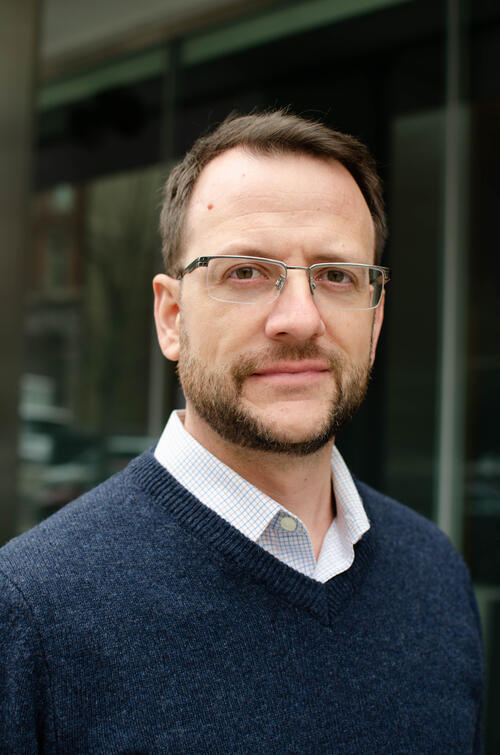
Since its establishment, DNX Ventures (formerly Draper Nexus Ventures) has acted as a bridge between growing Silicon Valley businesses and large Japanese firms. Since 2011, DNX Ventures has created more than 100 partnerships between its portfolio companies and its over 25 large Japanese corporate LPs. During this seminar, Managing Director of DNX Ventures Hiro Rio Maeda will extrapolate from his over 15 years of experience in both corporate venture capital and venture capital and extensive experience working with both startups and large Japanese corporations to discuss the basics of venture capital, and how Japanese corporations leverage venture capital to push forward open innovation initiatives. From a VC perspective: how are decisions about strategic investments made? How does money flow? What ratio of successful investments to non-successful investments do VCs aim for? From a large Japanese corporate perspective: how do large Japanese firms use VC to achieve open innovation goals? What are some of the obstacles to Japanese large firm-startup partnerships, and what are some of the ways to overcome these challenges? Maeda will answer these questions and more, as well as share examples of successful partnerships and large Japanese firms that are successfully harnessing Silicon Valley to further open innovation efforts.  

SPEAKER:

Hiro Rio Maeda, Managing Director, DNX Ventures (formerly Draper Nexus)

BIO:

Hiro Rio Maeda is a Managing Director at venture capital firm DNX Ventures (formerly Draper Nexus). Rio focuses on investing in innovative companies in Cyber Security, mobile, storage, and retail tech area that could work on a global scale. His portfolio companies include Cylance, SafeBreach, JASK, vArmour, AppDome, Ayasdi, Remotium, Klout, Fyde, JoyMode, and Hom.ma. 

Prior to joining DNX Ventures (formerly Draper Nexus), Rio spent six years at Globespan Capital Partners where he had put his resource on both investment and business development of Japan/US portfolio companies. Palo Alto Networks(NYSE: PANW) was a good example portfolio company that he took a lead on taking them to the Japanese market.

Prior to Globespan, Rio spent seven years at Sumitomo Corporation, a Japanese conglomerate trading company in which he had built expertise his international business skill in IT technologies and consumer web services in Tokyo and his capitalist career at Presidio Ventures (Sumitomo’s corporate venture capital arm) in Santa Clara.Japanese conglomerate trading company in which he had built expertise his international business skill in IT technologies and consumer web services in Tokyo and his capitalist career at Presidio Ventures (Sumitomo’s corporate venture capital arm) in Santa Clara.

AGENDA:

4:15pm: Doors open
4:30pm-5:30pm: Talk and Discussion
5:30pm-6:00pm: Networking

RSVP REQUIRED:

Register to attend at http://www.stanford-svnj.org/22819-public-forum

For more information about the Silicon Valley-New Japan Project please visit: http://www.stanford-svnj.org/


Hiro Rio Maeda, Managing Director, DNX Ventures (formerly Draper Nexus)
Seminars
-

The event is jointly sponsored by the Japan Program at the Shorenstein Asia-Pacific Research Center and the Japan Foundation Center for Global Partnership.

The Heisei era started in 1989, with high hopes for Japan to contribute to the international order. As the Heisei era draws to an end, Japan is once again expected to “step up” with increased urgency, given the current US administration’s withdrawal from, and challenge to the international order.  In this talk, I will first look back at the thirty years of Heisei, and discuss why Japan did not take the “internationalist” path in a way that some had expected. Looking forward, I discuss how the domestic institutional changes, together with the geopolitical challenges in Asia, have prompted Japan to seek active leadership in the region and beyond. I will elaborate on the evolution of the “Free and Open Indo-Pacific Vision,” with focus on how exactly Japan seeks to achieve “free and open” in the region, and challenges and limitations going forward.

Image
hikotaniphoto2017
Takako Hikotani is Gerald L. Curtis Associate Professor of Modern Japanese Politics and Foreign Policy. She previously taught at the National Defense Academy of Japan, where she was Associate Professor, and lectured at the Ground Self Defense Force and Air Self Defense Force Staff Colleges, and the National Institute for Defense Studies. Her research focus on civil-military relations and Japanese domestic politics, Japanese foreign policy, and comparative civil-military relations. Her publications (in English) include, “The Japanese Diet and defense policy-making.” International Affairs, 94:1, July, 2018; “Trump’s Gift to Japan: Time for Tokyo to Invest in the Liberal Order,” Foreign Affairs, September/October 2017; and “Japan’s New Executive Leadership: How Electoral Rules "Japan’s New Executive Leadership: How Electoral Rules Make Japanese Security Policy" (with Margarita Estevez-Abe and Toshio Nagahisa), in Frances Rosenbluth and Masaru Kohno eds, Japan in the World (Yale University Press, 2009). She was a Visiting Professional Specialist at Princeton University as Social Science Research Council/Abe Fellow (2010-2011) and Fellow of the US-Japan Leadership Program, US-Japan Foundation (2000- ). Professor Hikotani received her BA from Keio University, MAs from Keio University and Stanford University, and PhD in Political Science from Columbia University, where she was a President’s Fellow.

Takako Hikotani Associate Professor, Modern Japanese Politics and Foreign Policy, Columbia University
Seminars
-

Abstract

From the point of view of institutional economics, growth is related to the implementation and enforcement of property rights. The system that emits, and enforces those rights needs to have very low transactions costs leading to the least possible frictions. The lowest the transactions costs the highest the level of security of investment, as well as the benefits of direct and indirect socioeconomic impacts. However, traditional economic development models do not focus on transactions costs and property rights systems, both of which seem to be the suspects for low productivity, slow growth, and informality. Many developing countries suffer from systems of property rights that are unpredictable because they are inundated with overwhelming bureaucracy, difficult to follow, track, and measure. The speaker has developed a methodology to best diagnose the reasons why a country has such high transactions costs and how to reduce them systematically. This diagnostic method is called Reality Check Analysis (RCA) and its outcomes allow for the best design of policy reforms and strategic application. The presentation will focus on the theoretical definition of the problem, the analysis of Reality Check Analysis, its application and important results measured through a socioeconomic 3,000 household survey. This survey presented the direct benefits of applying a simple property rights system to investment, savings, property values, trust, child labor, to mention a few.

Speaker Bio

Image
panaritis photo
Elena Panaritis until recently served as a senior economic advisor, handling the Euro and Greek Economic Crisis, to two Greek Governments (2009; 2015). In 2015 she also served as the Special Envoy for Negotiating the Greek Sovereign debt and lending program of Greece. Elena worked directly with 3 Greek Prime Ministers and the Minister of Finance, as well as EU and IMF high-level officials, lenders to Greece. In 2015 she was appointed the Alternate Director to the IMF of Italy, Greece, Portugal, Malta, Albania and San Marino, from which position she resigned the same year after strong political pressures. In 2009 she was appointed honorary Member of the Hellenic Parliament until 2012. She is the founder of Panel Group, a triple-bottom-line business that focuses in the informal sector, transforming the wealth base of poor property holders, to proud middle class owners. She has also founded Thought4Action, an Action Tank that works as an educational foundation to create awareness and calls for action, about transforming countries under solvency, economic crisis and informality. Elena Panaritis has taught economic development, housing finance and property markets reform courses at the Wharton Business School, University of Pennsylvania, INSEAD, and the Johns Hopkins University- School of Advanced International Studies (SAIS).

Elena Panaritis Founder and CEO Thought 4 Action - Panel Group
Seminars
-

Click here to RSVP


Speaker Bio: Ms. Kirsti Kauppi became Ambassador of Finland to the United States in September 2015. Before that (2012-2015) she was Political Director (Director General for Political Affairs) and (2009-2012) Director General for Africa and the Middle East in the Ministry for Foreign Affairs in Helsinki.

2005 she was appointed Ambassador of Finland to Austria and Permanent Representative to the UN-related international organizations located in Vienna. Ambassador Kauppi has also served in the Finnish Embassy in Berlin (2003-2005) as Deputy Chief of Mission (Minister). Her other foreign posts include Washington (1997-2000), the Finnish Permanent Mission to the EU in Brussels (1993-1997) and Bangkok (1989-92).


Abstract: Pillars of European security show signs of strain. The question is what can be the building blocks for stability and security in Europe in the future. 

Finland is a Nordic country, amongst the most stable countries in the world, one of the most open economies, technologically advanced and the “happiest” country in the world.  A rules-based international order is vitally important for countries like Finland. Return of great power competition as the organizing principle of international relations is a bleak perspective for small nations.  How should Europe position itself and what should the Europeans do? How about the transatlantic community and the West as a whole?

Finland offers an interesting point of view.  A committed member of the European Union, Finland underlines the importance of European integration, including using EU methods to strengthen European security and defense.  Finland holds the transatlantic relationship and NATO an irreplaceable pillar of stability in Europe even if the country has not joined the Alliance.  Believer in cooperative security Finland promotes dialogue and confidence building, but at the same time possesses robust military capabilities.  Finland looks at Russia with clear eyes and concern, and has through history a unique perspective to what to make of Russia and how to manage the relationship with Russia.

At the talk, the different challenges to European security are discussed and also the elements through which Europe and the US could respond and reinforce the foundations of stability in Europe, as well as why it is important that the USA and Europe are on the same page in these issues. 

Kirsti Kauppi Ambassador of Finland to the United States
Seminars
Subscribe to Seminars