-

This event is part of the Asia Health Policy Program (AHPP) 2020-21 Colloquium series "Health, medicine, and longevity: Exploring public and private roles"

Co-sponsored by the Asia Health Policy Program and the Southeast Asia Program

Jakarta time: Friday, October 30, 2020, 7:30am - 9:00am

Apart from the 1998 Asian Financial Crisis (AFC), the current COVID-19 economic crisis is Indonesia’s most serious economic calamity in half a century with adverse impact. In March 2020, Indonesia’s poverty rate increased from 9.41% to 9.78% year on year, the equivalent of 1.28 million new people entering poverty.  By the end of 2020, it is expected that poverty rates will increase above 10%, wiping out two years of Indonesia’s poverty alleviation achievements. Social protection is key for crisis recovery. Indonesia’s social protection system has continually become stronger since the AFC. Over the past two decades, Indonesia has significantly expanded its social protection programs and coverage buttressed by a robust social registry that covers the poorest 40% of the population. The COVID-19 crisis is pushing the system to its limits. Insufficient data on Indonesians vulnerable to falling into poverty (and above the poorest 40%), coupled with response programs with complicated delivery and eligibility mechanisms, has made it challenging to deliver response-focused social protection. Dr. Sumarto will discuss whether the current social protection system is strong enough to weather the storm, especially to protect those working in the informal sector and marginal groups. Today, Indonesian policymakers have the choice to keep on following the same path and continue investing on the same social protection system, or take a radical move to reform it and make it better equipped to face future challenges.

Image
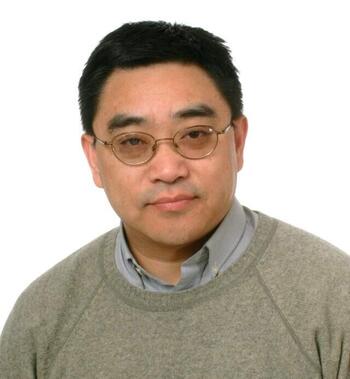
Sudarno Sumarto 102920
Sudarno Sumarto is an economist specializing in poverty reduction, social protection, labor, health, education and political economy of public policy implementation. Before joining the TNP2K, he was previously a visiting scholar at the Shorenstein Asia Pacific Research Center (APARC) at Stanford University as well as Founder and Executive Director of The SMERU Research Institute. Well-versed in leading large-scale research projects, Sudarno also provides intellectual leadership to Indonesia’s RISE country team. His research has been widely published in high-impact journals such as the Journal of Political Economy, Journal of Development Economics, and World Bank Economic Review, and has extensively contributed to policy-making by the Government of Indonesia. Sudarno earned his doctoral and master’s degrees in economics from Vanderbilt University.


Via Zoom Webinar.
Register https://bit.ly/30vi2jJ

Sudarno Sumarto Policy Adviser, National Team for the Acceleration of Poverty Reduction (TNP2K), Senior Research Fellow, The SMERU Research Institute.
Seminars
-


Populist radical right parties are more successful in some areas than others. However, when trying to explain geographical patterns of support for the populist radical right, similar outcomes in otherwise different contexts and different outcomes in otherwise similar contexts can be observed. In this paper, we show that this paradox can be understood when we examine how citizens are affected differently by the context in which they live. Using a unique dataset containing geocoded survey data and contextual data from four countries (DE, FR, NL and UK), we demonstrate that mediating and moderating variables, such a perceptions of local decline and education level shape the relationship between contextual development such as the increasing presence of immigrants, on the one hand, and populist and nativism attitudes and PRR support, on the other hand.
 

A draft copy of this research paper may be downloaded by using the link provided below under "Event Materials".

Image
Sarah L. de Lange


Sarah L. de Lange is Professor by special appointment at the Department of Political Science at the University of Amsterdam, where she holds the Dr. J.M. Den Uyl chair. Her research interests include societal cleavages, political parties, and extremism, populism, and radicalism. Her recent research projects focus on the emergence of new political oppositions in Europe on that basis of, amongst others, geographical, generational, and educational divides. She has recently concluded the collaborative international project Sub-National Context and Radical Right Support in Europe (supported by an ORA grant) and is currently co-directing the research project Generational Differences in Determinants of Party Choice (supported by an NWO grant). Her co-edited volume Radical Right-Wing Populist Parties in Western Europe: Into the Mainstream?, which appeared with Routledge in 2016, analyses the extent to which radical right-wing populist parties have become part of mainstream politics, as well as the factors and conditions which facilitate this trend.


Co-Sponsored by the Global Populisms Project.

A Cross-National Investigation into Contextual Effects and Populist Radical Right Support. A mediated and moderated relationship?
Download pdf

Online via Zoom: REGISTER

Sarah L. de Lange University of Amsterdam
Seminars
-


This talk investigates how unemployment risk within households affects voting for the radical right. Recent advances in the literature demonstrate the role of latent economic threats for understanding the support of radical right parties. We build on these studies and analyze economic risks as a determinant of radical right voting. Crucially, we do not treat individuals as atomistic but investigate households as a crucial context moderating economic risks. Combining large-scale labor market data with comparative survey data, we confirm the relationship between economic risk and support for radical right parties but demonstrate that this direct effect is strongly conditioned by household risk constellations. Voting for the radical right is not only a function of a voters' own but also their partner's risk. We provide additional evidence on the extent to which these effects are gendered and on the mechanisms linking household risk and party choice. Our results imply that much of the existing literature on individual risk exposure underestimates the impact on political behavior due to the neglect of multiplier effects within households. 
 
 
Tarik Abou-Chadi

Tarik Abou-Chadi is Assistant Professor at the department of political science at the University of Zurich. His research focuses on electoral competition, political parties and democratic representation. He is currently the principal investigator of a research project on social status and the tranformation of electoral behavior in Europe. He also hosts the political science teaching and research podcast Transformation of European Politics.


Co-Sponsored by the Global Populisms Project.

Online via Zoom

Tarik Abou-Chadi University of Zurich
Seminars
-

Image
Man w/ iPad

Social media sites have now surpassed cable, network, and local TV as primary sources of political news for one-in-five Americans. Yet the speed and volume of online information, challenges discerning the credibility of online sources, and concerns about viral online disinformation place a significant burden on users. What do we know about what new user-facing digital literacy initiatives are underway, what the research has to say about the impact and effectiveness of media literacy interventions, and what the implications are for both corporate and government policy.

On Wednesday, October 14th, from 10 a.m. - 11 a.m. Pacific Time, please join Kelly Born, Executive Director of the Stanford Cyber Policy Center, in conversation with Jennifer Kavanaugh, of RAND’s Countering Truth Decay initiativeKristin Lord, President and CEO of IREX, and Claire Wardle, co-founder and director of First Draft, for a discussion on the state of Media Literacy.

Kristin Lord
Jennifer Kavanaugh
Claire Wardle
Seminars
-

* Please note all CISAC events are scheduled using the Pacific Time Zone.


Seminar Recording: https://youtu.be/UOHyKJR5d1w


About the Event: 

In 2017, former diplomat Elizabeth Shackelford wrote a pointed resignation letter to her then boss, Secretary of State Rex Tillerson. She had watched as the State Department was gutted, and now she urged him to stem the bleeding by showing leadership and commitment to his diplomats and the country. If he couldn’t do that, she said, “I humbly recommend that you follow me out the door.” In The Dissent Channel, Shackelford chronicles how the challenges facing the State Department under the current administration, while extreme, are not new. In this live-streamed conversation, Shackelford will discuss the costs of a government unwilling to face mistakes or correct its course. She will also discuss how to build a more accountable foreign policy, through greater public engagement, more effective congressional oversight, and a State Department culture more open to dissent. In her book, The Dissent Channel: American Diplomacy in a Dishonest Age, she shares her personal experience as a diplomat trying to push back against the status quo and offers insight into the State Department’s long history of overlooking others who have tried to do the same. 

Moderating the discussion will be Rose Gottemoeller, Frank E. and Arthur W. Payne Distinguished Lecturer at Stanford University's Freeman Spogli Institute for International Studies and CISAC. Gottemoeller served as Deputy Secretary General of NATO from 2016 to 2019 and prior to that as Under Secretary for Arms Control and International Security at the U.S. Department of State for nearly five years. While Assistant Secretary of State for Arms Control, Verification and Compliance in 2009 and 2010, she was the chief U.S. negotiator of the New Strategic Arms Reduction Treaty (New START) with the Russian Federation.

Book Purchase: https://www.amazon.com/Dissent-Channel-American-Diplomacy-Dishonest/dp/1541724488


About the Speakers: 

Elizabeth Shackelford was a career diplomat in the U.S. State Department until December 2017, when she resigned in protest of the Trump administration. During her tenure with the Foreign Service, Shackelford served in the U.S. embassies in Warsaw, Poland, and Juba, South Sudan; the U.S. Mission to Somalia; and Washington, D.C. For her work in South Sudan during the outbreak of civil war, Shackelford received the Barbara Watson Award for Consular Excellence, the State Department's highest honor for consular work. Shackelford is a non-resident fellow with the Quincy Institute for Responsible Statecraft.


Moderated by: Rose Gottemoeller is the Frank E. and Arthur W. Payne Distinguished Lecturer at Stanford University's Freeman Spogli Institute for International Studies and its Center for International Security and Cooperation. Gottemoeller was Deputy Secretary General of NATO from 2016 to 2019. Prior to NATO, she served for nearly five years as Under Secretary for Arms Control and International Security at the Department of State, advising the Secretary of State on arms control, nonproliferation and political-military affairs. Gottemoeller was also the chief U.S. negotiator of the New Strategic Arms Reduction Treaty (New START) with the Russian Federation in 2009 and 2010.


Virtual Seminar

Elizabeth Shackelford
Seminars
-

* Please note all CISAC events are scheduled using the Pacific Time Zone.


Seminar Recording: https://youtu.be/ryBtzvLI0QQ


About the Event: Despite the importance of understanding how refugee crises end, we know little about when and why refugees, who were forced to emigrate, return home. We study the drivers of refugees’ decision-making using original observational and experimental survey data from a representative sample of approximately 3,000 Syrian refugees in Lebanon. We find that conditions in a refugee’s home country are much more important than the situation in the host country in shaping return intentions. Specifically, our findings suggest that refugees’ decisions are influenced primarily by safety and security in their place of origin, their economic prospects, the availability of public services, and their personal networks. Confidence in information is also important: we find that several drivers of return---safety, services, and networks---only impact intentions among people who have high confidence in their information. By contrast, the conditions in hosting countries–so-called “push'” factors–play a negligible role in the process of refugee return. Even in the face of outright hostility and poor living conditions, refugees are unlikely to return unless the situation at home improves significantly.


About the Speakers: 

Ala’ Alrababa’h is a Ph.D. candidate in political science at Stanford University, a graduate fellow at the Immigration Policy Lab, and a junior scholar at the International Policy Scholars Consortium and Network. His research combines fieldwork, machine learning, and experimental methods to study issues related to authoritarian media, political violence, and migration and refugees. His research has been published in Comparative Political Studies, Political Science Research and Methods, and International Studies Quarterly. Prior to arriving at Stanford University, Ala’ was a Junior Fellow at the Carnegie Endowment for International Peace.


Jeremy Weinstein is Professor of Political Science, Fisher Family Director of Stanford Global Studies, and Senior Fellow at the Freeman Spogli Institute for International Studies and the Stanford Institute for Economic Policy Research at Stanford University. He also is faculty co-director of the Immigration Policy Lab and the Data for Development Initiative. In addition, he is a non-resident fellow at the Center for Global Development in Washington, D.C.

His research focuses on civil wars and political violence; ethnic politics; the political economy of development; democracy and accountability; and migration. He is the author of Inside Rebellion: The Politics of Insurgent Violence (Cambridge University Press), which received the William Riker Prize for the best book on political economy. He is also the co-author of Coethnicity: Diversity and the Dilemmas of Collective Action (Russell Sage Foundation), which received the Gregory Luebbert Award for the best book in comparative politics.

Virtual Seminar

Ala' Alrababa'h
Seminars
-

This is a virtual event. Please click here to register and generate a link to the talk. 
The link will be unique to you; please save it and do not share with others.

Most people attribute the Belt and Road Initiative (BRI) to Beijing’s imperialist ambitions. In her talk, Professor Min Ye will go beyond top-level rhetoric, however, and investigate BRI’s origins, its implementation, and its on-the-ground effects inside China. She will unpack different local governments' approaches to the BRI by discussing how subnational entities have leveraged Beijing’s grand strategy and how the implementation of projects and programs related to the BRI facilitate local economic agendas. China’s local developmentalism, which has undergirded not only the BRI but also other national-level strategies (like the Western Development Program and China Goes Global policy), has propelled the Chinese economy from a middle power in 1998 to a superpower in 2018. The talk will conclude with a discussion of COVID-19’s impact on China’s BRI as well as preliminary findings from Professor Ye’s current research into other state-mobilized development initiatives in China.
 

Image
Portrait of Professor Min Ye
Min Ye is an Associate Professor at the Pardee School of Global Studies, Boston University. Her research lies in the nexus between domestic and global politics and economics and security, focusing on China, India, and regional relations. Her publications include The Belt, Road, and Beyond: State-Mobilized Globalization in China 1998 -- 2018 (Cambridge University Press, 2020), Diasporas and Foreign Direct Investment in China and India (Cambridge University Press, 2014), and The Making of Northeast Asia (with Kent Calder, Stanford University Press, 2010). She has received a Smith Richardson Foundation grant (2016-2018), the East Asia Peace, Prosperity, and Governance Fellowship (2013), Princeton-Harvard China and the World Program post-doctoral fellowship (2009-2010), and Millennium Education Scholarship in Japan (2006). In 2014-2016, Min Ye was an NCUSCR Public Intellectual Program fellow. Ye is currently the 2020 Rosenberg Scholar of East Asian Studies at Suffolk University.

Via Zoom Webinar. Register at: https://bit.ly/3kJlhM9

Min Ye Associate Professor, Pardee School of Global Studies, Boston University
Seminars
-

This event is part of Shorenstein APARC’s fall webinar series "Shifting Geopolitics and U.S.-Asia Relations"

Co-sponsored with the Center for South Asia (CSA)

Since May 2020, Chinese troops have crossed the disputed Line of Actual Control (LAC) and occupied positions in the Indian union territory of Ladakh. The Chinese troops crossed in multiple places and in large numbers, and have skirmished with Indian forces. Diplomatic channels are still open, but despite numerous pledges to disengage, this Chinese action appears to be an attempt to revise the LAC. This webinar will examine the crisis’ longer-term implications for China-India-U.S. relations. Can India and China reconcile their relationship or are they destined for a more antagonistic strategic rivalry? What tools and leverage does each side have in strategic competition? How does this affect U.S. policy in the Indo-Pacific region, and what action can Washington take to advance its interests?

Image
Joe Felter 100620
Joseph Felter is a William J. Perry Fellow at the Center for International Security and Cooperation and research fellow at the Hoover Institution.  From 2017 to 2019, Felter served as US deputy assistant secretary of defense for South Asia, Southeast Asia, and Oceania, where he was responsible for defense strategies and plans in the region. He previously taught at West Point and Columbia University. A former US Army Special Forces and Foreign Area officer, Joe served in a variety of special operations and diplomatic assignments, and holds a PhD in political science from Stanford University. 

Image
Madan Tanvi 100620
Tanvi Madan is a senior fellow in the Project on International Order and Strategy in the Foreign Policy program, and director of The India Project at the Brookings Institution in Washington, DC. Madan’s work explores India’s role in the world and its foreign policy, focusing in particular on India's relations with China and the United States. Madan is the author of the book "Fateful Triangle: How China Shaped US-India Relations during the Cold War," and researching her next book on the China-India-US triangle. She holds a PhD in public policy from the University of Texas at Austin.

Image
Yun Sun 100620
Yun Sun is a Senior Fellow and Co-Director of the East Asia Program and Director of the China Program at the Stimson Center. Her expertise is in Chinese foreign policy, U.S.-China relations and China’s relations with neighboring countries and authoritarian regimes. She has previously held positions at the Brookings Institution, where she focused on Chinese national security decision-making processes and China-Africa relations, and at the International Crisis Group, specializing in China’s foreign policy towards conflict countries and the developing world. She earned her master’s degree in international policy and practice from George Washington University.

Moderator:

Image
Arzan Terapore 100620
Arzan Tarapore is the South Asia research scholar at the Shorenstein Asia-Pacific Research Center at Stanford University, where he leads the newly-restarted South Asia research initiative. He is also a senior nonresident fellow at the National Bureau of Asian Research. Tarapore’s research focuses on Indian military strategy and contemporary Indo-Pacific security issues. He previously held research positions at the RAND Corporation, the Observer Research Foundation, and the East-West Center in Washington, and served in the Australian Defence Department. Tarapore holds a PhD in war studies from King’s College London.


Via Zoom Webinar

Register at https://bit.ly/2Hkx3ye

Joseph Felter William J. Perry Fellow, the Center for International Security and Cooperation and research fellow, the Hoover Institution
Tanvi Madan Senior Fellow in the Project on International Order and Strategy in the Foreign Policy program, and director of The India Project, the Brookings Institution, Washington, DC
Yun Sun Senior Fellow and Co-Director of the East Asia Program and Director of the China Program, the Stimson Center
Arzan Tarapore Moderator the South Asia research scholar, the Shorenstein Asia-Pacific Research Center, Stanford University
Seminars
-

This event has been rescheduled to October 14, 2020

It is a good time to be interested in Southeast Asia-China relations. In addition to the three new books referenced in this webinar, additional books on the subject are forthcoming from other authors.  The timing is all the more propitious in view of the current animosity between Beijing and Washington as it may implicate Southeast Asia and American policy toward the region, depending in part on who wins the 3 November US election.  These books are both sweeping and granular.  Hiebert’s and Strangio’s country-focused chapters cover all ten members of the Association of Southeast Asian Nations (ASEAN), while Emmerson and his co-authors mix country studies with thematic arguments about China’s relations with its neighbors.

Given China’s clearly superior size and power, is Beijing’s incremental domination of its neighbors foreordained? Strangio says no: “Southeast Asia’s future will not be one of linear and inexorable Chinese advance, but rather one in which past dynamics and contradictions reproduce themselves over time at varying pitches of tension.” Is he right? Hiebert calls for the US “to support the region as it faces a rising and more assertive China”—to “remain an actively engaged partner that shows up, brings some resources, and rewrites the perception that it is often unreliable and missing in action.” Is that good advice?  For Emmerson, “strategic autonomy necessarily begins at home. Outsiders can help or hurt. But nothing can substitute for the creativity of Southeast Asian states in individual and joint pursuit of their own and their region’s security.” Is that true, and even if it is, so what?

The webinar will explore these and other aspects of Sino-Southeast Asian relations.

Image
Murray Hiebert 100520
Murray Hiebert, in addition to his position at CSIS, is research director for BowerGroup Asia. Before joining CSIS, he was senior director for Southeast Asia at the U.S. Chamber of Commerce. Earlier, he was a journalist in the China bureau of the Wall Street Journal. Prior to his posting to Beijing, he reported from Washingon on US-Asia relations for the Wall Street Journal Asia and the Far Eastern Economic Review. In the 1990s he worked for the Review while based in Kuala Lumpur and, earlier, in Hanoi, having joined the Review's Bangkok bureau in 1986 to cover developments in Vietnam, Cambodia, and Laos. He is also the author of two books on Vietnam, Chasing the Tigers (1996) and Vietnam Notebook (1993). He has a master’s degree in news media studies from American University.


Image
Sebastian Strangio 100520
Sebastian Strangio has written from and on Southeast Asia for many publications including Al Jazeera, The Atlantic, The Economist, Forbes, Foreign Policy, and The New York Times. In addition to living and working in Cambodia, where he spent three years with The Phnom Penh Post, he has reported from Indonesia, Laos, Myanmar, Thailand, Vietnam, and China, among other countries. Other previous affiliations include New America’s International Reporting Project; the Future Forum, a policy institute in Phnom Penh; and Chiang Mai University’s Regional Center for Social Science and Sustainable Development. Foreign Affairs named his first book, Hun Sen’s Cambodia, a 2015 Book of the Year. He has a master’s degree in international politics from the University of Melbourne.


Image
don emmerson 2
Donald K. Emmerson, in addition to his position in APARC, is a faculty affiliate of Stanford’s Center on Democracy, Development, and the Rule of Law. So far in 2019-2020 he has spoken on Southeast Asian topics to audiences in Bangkok, Hanoi, Kuala Lumpur, New York, Singapore, and Washington, DC.  Recent publications include “‘No Sole Control’ in the South China Sea,” Asia Policy (2019) and ASEAN @ 50, Southeast Asia @ Risk: What Should Be Done? (edited, 2018). Before moving to Stanford in 1999, he taught political science at the University of Wisconsin-Madison.  He has held visiting positions at the Institute for Advanced Studies and the Australian National University, among other institutions.  His doctorate in political science is from Yale University.

Via Zoom Webinar

Register at https://bit.ly/35WOb7o

Murray Hiebert senior associate, Southeast Asia Program, Center for Strategic and International Studies (CSIS), Washington, DC, and author of <i>Under Beijing’s Shadow: Southeast Asia’s China Challenge</i> (2020)
Sebastian Strangio journalist, analyst, Southeast Asia editor of The Diplomat, and author of <i>In the Dragon’s Shadow: Southeast Asia in the Chinese Century</i> (2020)
0
Senior Fellow Emeritus at the Freeman Spogli Institute for International Studies
Affiliated Faculty, CDDRL
Affiliated Scholar, Abbasi Program in Islamic Studies
aparc_dke.jpg PhD

At Stanford, in addition to his work for the Southeast Asia Program and his affiliations with CDDRL and the Abbasi Program in Islamic Studies, Donald Emmerson has taught courses on Southeast Asia in East Asian Studies, International Policy Studies, and Political Science. He is active as an analyst of current policy issues involving Asia. In 2010 the National Bureau of Asian Research and the Woodrow Wilson International Center for Scholars awarded him a two-year Research Associateship given to “top scholars from across the United States” who “have successfully bridged the gap between the academy and policy.”

Emmerson’s research interests include Southeast Asia-China-US relations, the South China Sea, and the future of ASEAN. His publications, authored or edited, span more than a dozen books and monographs and some 200 articles, chapters, and shorter pieces.  Recent writings include The Deer and the Dragon: Southeast Asia and China in the 21st Century (ed., 2020); “‘No Sole Control’ in the South China Sea,” in Asia Policy  (2019); ASEAN @ 50, Southeast Asia @ Risk: What Should Be Done? (ed., 2018); “Singapore and Goliath?,” in Journal of Democracy (2018); “Mapping ASEAN’s Futures,” in Contemporary Southeast Asia (2017); and “ASEAN Between China and America: Is It Time to Try Horsing the Cow?,” in Trans-Regional and –National Studies of Southeast Asia (2017).

Earlier work includes “Sunnylands or Rancho Mirage? ASEAN and the South China Sea,” in YaleGlobal (2016); “The Spectrum of Comparisons: A Discussion,” in Pacific Affairs (2014); “Facts, Minds, and Formats: Scholarship and Political Change in Indonesia” in Indonesian Studies: The State of the Field (2013); “Is Indonesia Rising? It Depends” in Indonesia Rising (2012); “Southeast Asia: Minding the Gap between Democracy and Governance,” in Journal of Democracy (April 2012); “The Problem and Promise of Focality in World Affairs,” in Strategic Review (August 2011); An American Place at an Asian Table? Regionalism and Its Reasons (2011); Asian Regionalism and US Policy: The Case for Creative Adaptation (2010); “The Useful Diversity of ‘Islamism’” and “Islamism: Pros, Cons, and Contexts” in Islamism: Conflicting Perspectives on Political Islam (2009); “Crisis and Consensus: America and ASEAN in a New Global Context” in Refreshing U.S.-Thai Relations (2009); and Hard Choices: Security, Democracy, and Regionalism in Southeast Asia (edited, 2008).

Prior to moving to Stanford in 1999, Emmerson was a professor of political science at the University of Wisconsin-Madison, where he won a campus-wide teaching award. That same year he helped monitor voting in Indonesia and East Timor for the National Democratic Institute and the Carter Center. In the course of his career, he has taken part in numerous policy-related working groups focused on topics related to Southeast Asia; has testified before House and Senate committees on Asian affairs; and been a regular at gatherings such as the Asia Pacific Roundtable (Kuala Lumpur), the Bali Democracy Forum (Nusa Dua), and the Shangri-La Dialogue (Singapore). Places where he has held various visiting fellowships, including the Institute for Advanced Study and the Woodrow Wilson International Center for Scholars. 


Emmerson has a Ph.D. in political science from Yale and a BA in international affairs from Princeton. He is fluent in Indonesian, was fluent in French, and has lectured and written in both languages. He has lesser competence in Dutch, Javanese, and Russian. A former slam poet in English, he enjoys the spoken word and reads occasionally under a nom de plume with the Not Yet Dead Poets Society in Redwood City, CA. He and his wife Carolyn met in high school in Lebanon. They have two children. He was born in Tokyo, the son of U.S. Foreign Service Officer John K. Emmerson, who wrote the Japanese Thread among other books.

Selected Multimedia

Date Label
Moderator/Discussant director, Southeast Asia Program, Shorenstein Asia Pacific Research Center (APARC), Stanford University, and editor/co-author of <em>The Deer and the Dragon: Southeast Asia and China in the 21st Century</em> (2020)
Seminars
Subscribe to Seminars