-

About the Event: The Racial Equity, Diversity, and Inclusion (REDI) Task Force invites you to the first event in the "Critical Conversations: Race and Global Affairs" series focused on international research and racism. This conversation is an open dialogue featuring Dr. Christian Davenport, author of one of the pre-selected articles:


About the Speaker: Christian Davenport is a Professor of Political Science and Faculty Associate at the Institute for Social Research at the University of Michigan, Research Professor at the Peace Research Institute Oslo and Elected Fellow at the American Association for the Arts and Sciences. Primary research interests include political conflict, measurement, racism and popular culture. He is the author of seven books and author of numerous articles appearing in the American Political Science Review, the American Journal of Political Science and the Annual Review of Political Science (among others). He is the recipient of numerous grants (e.g., 12 from the National Science Foundation) and awards.

Please register in advance here:  https://stanford.zoom.us/meeting/register/tJUlcumpqDksHtTZFndLWMnSN5YUUKRcJxyv

Online, via Zoom: REGISTER

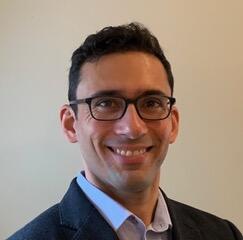
Gabrielle Hecht FSI Senior Fellow REDI
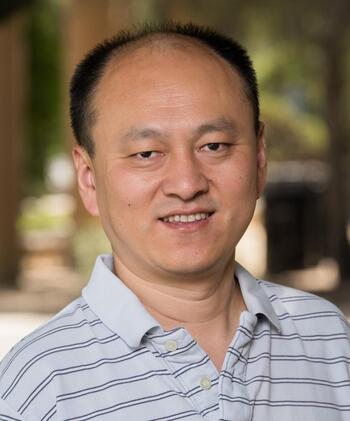
Christian Davenport Professor of Political Science University of Michigan
Seminars
-

This event is part of the Asia Health Policy Program (AHPP) 2020-21 Colloquium series "Health, medicine, and longevity: Exploring public and private roles"

Over the last decade, India has rapidly expanded government health insurance programs that entitle low-income households to free hospital care.  In a major policy shift away from direct public provision of healthcare, these programs contract private hospitals for service delivery. This constitutes a sizeable public subsidy delivered through private agents, but there is relatively little evidence on how private hospitals perform. Using a unique dataset on 6 million insurance claims and 15,000 patient surveys, this talk will present several key insights on the behavior of private hospitals within a large government insurance program. 1) Private hospitals manipulate coding to increase their revenues at the government's expense. 2) They also charge patients out-of-pocket for care that is supposed to be free under program rules. 3) When the government increases hospital reimbursement rates, patient charges decrease substantially. 4) However, hospitals capture approximately half the increased subsidy and this is driven by less competitive markets. The results demonstrate that hospital reimbursement rates are a key policy lever shaping hospital behavior with implications for program outcomes. Improving program performance requires a combination of stronger hospital monitoring and attention to reimbursement rates; focusing on one without the other may reduce the efficiency of public spending or worsen patient welfare. Lastly, market structure, a factor rarely taken into consideration in health policy in India, may play a role in the extent to which public subsidies benefit patients.

https://aparc.fsi.stanford.edu/asiahealthpolicy/news/postdoctoral-spotlight-radhika-jain

Image
Radhika Jain 4X4 022521
Radhika Jain is the Asia Health Policy Postdoctoral Fellow for 2019-2022 at the Walter H. Shorenstein Asia-Pacific Research Center (Shorenstein APARC).  Her research focuses on health care markets, the effectiveness of public health policy, and gender disparities in health.

She completed her doctorate in the Department of Global Health at Harvard University in 2019.  Her dissertation examined the extent to which government subsidies for health care under insurance are captured by private hospitals instead of being passed through to patients, and whether accountability measures can help patients claim their entitlements. Dr. Jain's research has been supported by grants from the Weiss Family Fund and the Jameel Poverty Action Lab (JPAL). She has worked on impact evaluations of health programs in India and on the implementation of HIV programs across several countries in sub-Saharan Africa. She also held a doctoral fellowship at the Center for Global Development.

At Shorenstein APARC, Radhika is starting new work on understanding the factors that contribute to poor female health outcomes and interventions to increase the effectiveness of public health insurance.

Via Zoom Webinar.
Register: https://bit.ly/37218gJ

2019-2022 Asia Health Policy Postdoctoral Fellow
Seminars
-

* Please note all CISAC events are scheduled using the Pacific Time Zone.

Seminar Recording: https://youtu.be/Q6-ErAxGmQ0


About the Event: While research into why repression varies has thrived, essentially no effort has been made to examine stopping large-scale applications once underway. We put forward a new theoretical framework that conceptualizes repressive behavior as a rare/slow-changing process that is unlikely to terminate unless it is perturbed by a significant cost. As such, we maintain that repression is more likely ended by democratization than from diverse factors commonly espoused in the literature and policy community (e.g., military intervention, naming/shaming, international law and economic sanctions). Investigating a new database regarding 239 high-level repression spells for the period 1976-2007, we find that democratization is associated with spell-termination, while there is little systematic pacifying influence for other factors. Additionally, we find that non-violent movements for change largely drive democratization but that these movements have little direct impact on state repression themselves.

Draft Paper


About the Speaker: Christian Davenport is a Professor of Political Science and Faculty Associate at the Institute for Social Research at the University of Michigan, Research Professor at the Peace Research Institute Oslo and Elected Fellow at the American Association for the Arts and Sciences. Primary research interests include political conflict, measurement, racism and popular culture. He is the author of seven books and author of numerous articles appearing in the American Political Science Review, the American Journal of Political Science and the Annual Review of Political Science (among others). He is the recipient of numerous grants (e.g., 12 from the National Science Foundation) and awards.

Virtual Seminar

Christian Davenport Professor University of Michigan
Seminars
-

* Please note all CISAC events are scheduled using the Pacific Time Zone.


Seminar Recording: https://youtu.be/5-om1-NWqv0


About the Event: Traditional international law is not sufficient for the oversight of emerging uses of the space environment, such as in situ resource utilization and increased militarization and weaponization. The US is pushing the boundaries through innovative contracting, governance instruments such as the Artemis Accords and new institutions such as the Space Force to test the space governance system. This presentation outlines a framework for organizing the system as a whole, including international agreements, national space policy and stakeholder interactions and interrelations.


About the Speaker: Aganaba is an assistant professor for the School for the Future in Innovation in Society with a courtesy appointment at the Sandra Day O'Connor College of Law, Arizona State University.

She is most known in her industry for promoting the regulation of technologies to be utilized against climate change. This has expanded to the use of satellites to measure greenhouse gas emissions.

She has received the Young Space Leaders Award from the International Astronautical Federation. She has served as the executive director of the World Space Week Association and trainee legal officer for the Nigerian Space Research and Development Agency.

Virtual Seminar

Timiebi Aganaba Assistant Professor School for the Future of Innovation in Society, Arizona State University
Seminars
-

* Please note all CISAC events are scheduled using the Pacific Time Zone.


Seminar Recording: https://youtu.be/tcWqulaKXy0


About the Event: Since the end of World War II, the United States has set out to oust governments in the Middle East on an average of once per decade—in places such as Iran, Afghanistan (twice), Iraq, Egypt, Libya, and Syria. Though pursued for a wide range of reasons, these operations all failed to achieve their ultimate goals, produced a range of unintended and even catastrophic consequences, carried heavy financial and human costs, and often left the countries in question worse off than they were before. Losing the Long Game: The False Promise of Regime Change in the Middle East gives readers a look at the U.S. experience with regime change over the past seventy years, and an insider’s view on U.S. policymaking in the region at the highest levels.

Book Purchase:  https://www.amazon.com/Losing-Long-Game-Promise-Regime/dp/1250217032


About the Speaker: Dr. Philip Gordon is the Mary and David Boies Senior Fellow in U.S. Foreign Policy at the Council on Foreign Relations.  From 2013-15, he served as Special Assistant to the President and White House Coordinator for the Middle East, North Africa, and the Gulf Region.  As the most senior White House official focused on the greater Middle East, he worked closely with the President, Secretary of State, and National Security Adviser on the full range of geopolitical, economic, and security issues facing the region.  From 2009-13, Dr. Gordon served as Assistant Secretary of State for European and Eurasian Affairs under Secretary of State Hillary Clinton.  In that position he was responsible for 50 countries in Europe and Eurasia as well as for NATO and the European Union (EU).  He is the author of Losing the Long Game: The False Promise of Regime Change in the Middle East, published October 6, 2020.    

Virtual Seminar

Philip Gordon Mary and David Boies Senior Fellow in U.S. Foreign Policy Council on Foreign Relations
Seminars
-

* Please note all CISAC events are scheduled using the Pacific Time Zone.


Seminar Recording: https://youtu.be/yyZ54SgGuz4


About the Event: We are beginning to understand that globalization has strategic consequences. Countries are using their position in globalized networks to "weaponize interdependence," through their dominance of information and financial networks. In this talk, Henry Farrell will discuss the research and policy agenda of weaponized interdependence, addressing such questions as: What areas of the global economy are most vulnerable to unilateral control of information and financial networks? How sustainable is the use of weaponized interdependence? What are the possible responses from targeted actors? And how sustainable is the open global economy if weaponized interdependence becomes a default tool for managing international relations?

Book Purchase:   https://amzn.to/3d29F4a


About the Speaker: Henry Farrell is SNF Agora Institute Professor at Johns Hopkins School of Advanced International Studies, 2019 winner of the Friedrich Schiedel Prize for Politics and Technology, and Editor in Chief of the Monkey Cage blog at the Washington Post. His book (with Abraham Newman) Of Privacy and Power: The Transatlantic Fight over Freedom and Security, was published in 2019 by Princeton University Press, and has been awarded the 2019 Chicago-Kent College of Law / Roy C. Palmer Civil Liberties Prize and the ISA-ICOMM Best Book Award. In addition he has authored or co-authored 34 academic articles, as well as several book chapters and numerous non-academic publications. He is a member of the Council on Foreign Relations.

Virtual Seminar

Henry Farrell SNF Agora Professor Johns Hopkins SAIS
Seminars
-

This is a virtual event. Please click here to register and generate a link to the talk. 
The link will be unique to you; please save it and do not share with others.


Note: This event is off-the-record and will not be recorded for future viewing.
By registering for this webinar, attendees agree to refrain from recording, citing, attributing, or otherwise sharing content from this event.

This event is Co-Sponsored by the Center for South Asia (CSA)

How are India and the United States responding to the growing political and military power of China in the Indian Ocean region? India has traditionally sought to maintain strategic preeminence in the region and sees its influence as being increasingly contested. The United States sees the region as an integral part of the wider “Indo-Pacific,” defined by intensifying strategic competition with China. Military planners at U.S. Indo-Pacific Command are refining their strategy in the region, including their approach to mitigating security risks and deepening the U.S. Major Defense Partnership with India, alongside other allies and partners. In this off-the-record webinar, the Command’s senior policy advisor and two leading experts on the Indian Ocean will share their assessments of the key strategic challenges facing India and the United States in the region.

Speakers:

Image
David Brewster
David Brewster is a Senior Research Fellow at the National Security College at the Australian National University, where he focuses on security in India and the Indian Ocean region, and Indo-Pacific maritime affairs. His books include India as an Asia Pacific Power, about India’s strategic role in the Asia Pacific, India’s Ocean: the Story of India’s Bid for Regional Leadership, which examines India’s strategic ambitions in the Indian Ocean, and the edited volume, India and China at Sea: Competition for Naval Dominance in the Indian Ocean. He is the author of several reports, including The Second Sea, which examines Australia’s role in the Indian Ocean proposes a new roadmap for Australia’s strategic engagement in that region. Brewster holds a PhD from the Australian National University.
 

Image
Shezi Khan
Shehzi Khan is the Senior Policy Advisor in the Strategic Planning and Policy Directorate at Indo-Pacific Command, supporting senior leadership on key regional policy initiatives.  Ms. Khan served on the Secretary of State’s Policy Planning Staff, as Executive Officer to the Principal Deputy Director of National Intelligence, and as senior South Asia analyst at the State Department.  Ms. Khan briefed the President of the United States in 2013.  She has been posted in Pakistan, China, and New Zealand and also lived and worked in India, Egypt, and France. Ms. Khan speaks five foreign languages and holds an MBA in International Finance and an MA in International Relations.  She is a recipient of the National Intelligence Superior Service Medal and was named State Department’s Analyst of the Year in 2014.

Image
Nilanthi Samaranayake
Nilanthi Samaranayake directs the Strategy and Policy Analysis Program at CNA. She has led several studies on Indian Ocean and South Asia security. Recently Samaranayake has worked on U.S.-India naval cooperation, water resource competition in the Brahmaputra River basin, and Sri Lankan foreign policy. She also has conducted research on the navies of Bangladesh and Pakistan, the Maldives Coast Guard, security threats in the Bay of Bengal, and relations between smaller South Asian countries and China, India and the United States. Prior to joining CNA, Samaranayake held positions at the National Bureau of Asian Research and the Pew Research Center. Samaranayake holds an M.Sc. in International Relations from the London School of Economics and Political Science and a B.A. in International Studies from American University.


Image
Arzan Tarapore
Arzan Tarapore (Moderator) is the South Asia research scholar at the Shorenstein Asia-Pacific Research Center at Stanford University, where he leads the newly-restarted South Asia research initiative. He is also a senior nonresident fellow at the National Bureau of Asian Research. Tarapore’s research focuses on Indian military strategy and contemporary Indo-Pacific security issues. This includes a forthcoming paper on “Building Strategic Leverage in the Indian Ocean Region.” He previously held research positions at the RAND Corporation, the Observer Research Foundation, and the East-West Center in Washington. Prior to his scholarly career, he served as an analyst in the Australian Defence Department. Tarapore holds a PhD in war studies from King’s College London.


Via Zoom Webinar
Register at:  https://bit.ly/34xYmgu

David Brewster <br><i>Senior Research Fellow at National Security College, Australian National University</i><br><br>
Shehzi Khan <br><i>Senior Policy Advisor in the Strategic Planning and Policy Directorate, Indo-Pacific Command</i><br><br>
Nilanthi Samaranayake <br><i>Director of Strategy and Policy Analysis Program, CNA</i><br><br>
Arzan Tarapore - Moderator <br><i>South Asia Research Scholar, Stanford University</i><br><br>
Seminars
-

ABSTRACT

This talk is based on the speaker's recently released book Archive Wars The Politics of History in Saudi Arabia (Stanford University Press, 2020). The production of history is premised on the selective erasure of certain pasts and the artifacts that stand witness to them. From the elision of archival documents to the demolition of sacred and secular spaces, each act of destruction is also an act of state building. Following the 1991 Gulf War, political elites in Saudi Arabia pursued these dual projects of historical commemoration and state formation with greater fervor to enforce their postwar vision for state, nation, and economy. Seeing Islamist movements as the leading threat to state power, they sought to de-center religion from educational, cultural, and spatial policies. With this book, Rosie Bsheer explores the increasing secularization of the postwar Saudi state and how it manifested in assembling a national archive and reordering urban space in Riyadh and Mecca. The elites' project was rife with ironies: in Riyadh, they employed world-renowned experts to fashion an imagined history, while at the same time in Mecca they were overseeing the obliteration of a thousand-year-old topography and its replacement with commercial megaprojects. Archive Wars shows how the Saudi state's response to the challenges of the Gulf War served to historicize a national space, territorialize a national history, and ultimately refract both through new modes of capital accumulation.

SPEAKER BIO

Image
Rosie Bsheer
Rosie Bsheer is Assistant Professor of History at Harvard University, where she teaches graduate and undergraduate courses on oil and empire, social and intellectual movements, urban history, historiography, and the making of the modern Middle East. Rosie’s publications include Archive Wars: The Politics of History in Saudi Arabia (Stanford University Press, 2020) and “A Counterrevolutionary State: Popular Movements and the Making of Saudi Arabia,” Past and Present (2018). She is Associate Producer of the 2007 Oscar-nominated film My Country, My Country and a co-editor of Jadaliyya E-zine.

Online, via Zoom: REGISTER

Rosie Bsheer Assistant Professor of History Harvard University
Seminars
-

This event is part of the Asia Health Policy Program (AHPP) 2020-21 Colloquium series "Health, medicine, and longevity: Exploring public and private roles"

A quarter century ago in a seminal paper, Hart, Shleifer and Vishny (NBER1996, QJE1997) developed a theory of the ‘Proper Scope of Government.’ In this webinar, Oliver Hart, 2016 Nobel Laureate, reflects on that framework and its place in economics, as well as the inspiration for his more recent work on norms and guiding principles, contracts as reference points, maximizing shareholder welfare, and exit versus voice. In discussion with Karen Eggleston, Hart answers questions posed by economists who have built upon that paper and offers insights on how the theory applies to understanding public and private roles in healthcare, education, and other publicly-financed services. With China, India, and many other emerging markets engaged in decades-long controversies about public and private roles in their health sectors, and international focus on public-private partnerships for COVID-19 response and harnessing innovation to address other global challenges, this is an opportune time to discuss how conceptually rigorous thinking can inform a sometimes divisive and ideological debate with vital implications for human welfare.


Image
Oliver Hart 021021
Oliver Hart is currently the Lewis P. and Linda L. Geyser University Professor at Harvard University, where he has taught since 1993. He is the 2016 co-recipient of the Sveriges Riksbank Prize in Economic Sciences in Memory of Alfred Nobel, a Fellow of the Econometric Society, the American Academy of Arts and Sciences, the British Academy, and the American Finance Association, a member of the National Academy of Sciences, a Distinguished Fellow of the American Economic Association, and has several honorary degrees. Hart works mainly on contract theory, the theory of the firm, corporate finance, and law and economics. His research centers on the roles that ownership structure and contractual arrangements play in the governance and boundaries of corporations. He has published a book (Firms, Contracts, and Financial Structure, Oxford University Press, 1995) and numerous journal articles. He has used his theoretical work on firms and contracts in several legal cases. He has been president of the American Law and Economics Association and a vice president of the American Economic Association.

This keynote is part of the Stanford Asia Health Policy Program colloquium series entitled:  Health, medicine, and longevity: Exploring public and private roles

Governmental agencies and non-state actors interact within health systems in complicated and sometimes controversial ways that are vital for health and well-being. These run the gamut from developing and distributing vaccines and therapeutics for COVID-19 and mitigating the social and economic impact of the pandemic, to achieving and sustaining universal health coverage, addressing the social determinants of health, mitigating disparities, and encouraging innovations for healthy longevity, to name but a few. From the conceptual foundations to the daily reality of practitioners, this colloquium series will explore the evidence and experience of the public-private nexus in health sectors across Asia, in comparative global perspective. With colloquia throughout the academic year, the series features a keynote on February 10, 2021 from Nobel Laureate Oliver Hart, “A quarter century of ‘The Proper Scope of Government’: Theory and Applications” (dating from the 1996 NBER working paper subsequently published in the Quarterly Journal of Economics, QJE).

https://www.youtube.com/watch?v=g9JRhGpXC2Y&feature=emb_title

Via Zoom Webinar.
Register https://bit.ly/3jAvFFQ

Oliver Hart Lewis P. and Linda L. Geyser University Professor, Harvard University
Seminars
-

* Please note all CISAC events are scheduled using the Pacific Time Zone.


Seminar Recording:  https://youtu.be/lxMWuFvq2NU


About the Event: It has become increasingly clear that the Kremlin poses a security challenge to the West, with relations between the United States and Europe, on the one hand, and Russia, on the other, having fallen to their lowest point since the end of the 1980s.  In particular, Moscow seeks to overturn the post-Cold War European security order, which it believes disadvantages Russian interests.  The Russian challenge includes both foreign and domestic policy aspects, as the Kremlin augments traditional political and military tools with more sophisticated efforts to exploit and widen divides within Western societies.

Fiona Hill, a senior fellow at the Brookings Institution, will discuss the challenge posed by Russia and the motives behind it.


About the Speaker: 

Fiona Hill is a senior fellow in the Center on the United States and Europe in the Foreign Policy program at Brookings. She recently served as deputy assistant to the president and senior director for European and Russian affairs on the National Security Council from 2017 to 2019. From 2006 to 2009, she served as national intelligence officer for Russia and Eurasia at The National Intelligence Council. She is co-author of “Mr. Putin: Operative in the Kremlin” (Brookings Institution Press, 2015).

Prior to joining Brookings, Hill was director of strategic planning at The Eurasia Foundation in Washington, D.C. From 1991 to 1999, she held a number of positions directing technical assistance and research projects at Harvard University’s John F. Kennedy School of Government, including associate director of the Strengthening Democratic Institutions Project, director of the Project on Ethnic Conflict in the Former Soviet Union, and coordinator of the Trilateral Study on Japanese-Russian-U.S. Relations.

Hill has researched and published extensively on issues related to Russia, the Caucasus, Central Asia, regional conflicts, energy, and strategic issues. Her book with Brookings Senior Fellow Clifford Gaddy,“The Siberian Curse: How Communist Planners Left Russia Out in the Cold,” was published by Brookings Institution Press in December 2003, and her monograph, “Energy Empire: Oil, Gas and Russia’s Revival,” was published by the London Foreign Policy Centre in 2004. The first edition of “Mr. Putin: Operative in the Kremlin” was published by Brookings Institution Press in December 2013, also with Clifford Gaddy.

Hill holds a master’s in Soviet studies and a doctorate in history from Harvard University where she was a Frank Knox Fellow. She also holds a master’s in Russian and modern history from St. Andrews University in Scotland, and has pursued studies at Moscow’s Maurice Thorez Institute of Foreign Languages. Hill is a member of the Council on Foreign Relations.

Virtual Seminar

Fiona Hill Senior Fellow in the Center on the United States and Europe in the Foreign Policy program The Brookings Institution
Seminars
Subscribe to Seminars