


US Pacific Command hosts Stanford group for Asia security dialogue
News Type
News
Date
Paragraphs
Colonel Patrick Winstead, the 2016-17 FSI senior military fellow at Shorenstein APARC, writes about the second annual orientation at U.S. Pacific Command headquarters
The mission of the Department of Defense (DoD) in the Indo-Asia-Pacific region recently became a bit clearer for 22 faculty and military fellows from Stanford, the Massachusetts Institute of Technology, the Naval Postgraduate School and the Daniel K. Inouye Asia-Pacific Center for Security Studies (APCSS). The U.S.-Asia Security Initiative at the Shorenstein Asia-Pacific Research Center (APARC) in the Freeman Spogli Institute (FSI) organized a group of faculty and fellows for a two-day orientation of United States Pacific Command (USPACOM) and its component military organizations in and around Honolulu, Hawaii, April 13-14, 2017. The purpose of the orientation was to provide researchers with a comprehensive understanding of how America’s armed forces both develop and implement U.S. national security strategy, doctrine and policy throughout Asia.
The trip began with a visit to the headquarters of USPACOM at Camp H.M. Smith. After receiving briefings about USPACOM's mission and operations, the group engaged in roundtable discussions with General Terrence O’Shaughnessy (Commander, U.S. Pacific Air Forces); Major General Kevin B. Schneider (Chief of Staff, USPACOM); Rear Admiral Mark Montgomery (Director for Operations, USPACOM); Major General Steven Rudd (Director for Strategic Planning and Policy, USPACOM); as well as other key joint directors and members of the command staff. The faculty and fellows provided short presentations on the situation in the South China Sea, U.S.-Philippine relations and cyber warfare to an audience of mid-grade military officers and civilian personnel assigned to USPACOM.
In addition to meeting with the leadership of USPACOM, the group was also afforded the opportunity to interact with personnel from the four separate component commands. Deputy Commanding General of U.S. Army Pacific, Major General Charlie Flynn, provided a command briefing at the U.S. Army Pacific headquarters at Fort Shafter. The briefing stimulated a wide-ranging discussion about Army initiatives and activities in support of USPACOM’s mission in the Indo-Asia-Pacific region. At Marine Corps Base Hawaii at Kaneohe Bay, under the guidance of trainers, the visitors took part in a hands-on experience operating Humvee simulators in a virtual-reality convoy setting and firing simulated weapons that Marines typically employ in combat operations. The first day of the trip ended with a working dinner at the historic Nimitz House with the Commander of the U.S. Pacific Fleet, Admiral Scott Swift, where the conversation ranged from Chinese military modernization to evolving U.S. naval doctrine.
Those themes carried into the second day, when the group met for several hours with faculty at APCSS for plenary presentations and multiple breakout sessions to facilitate in-depth dialogue on select topics including the threats posed by nuclear weapons on the Korean Peninsula and in South Asia. The day continued with a tour of the U.S.S Hopper, an Arleigh-Burke class guided missile destroyer, based at Pearl Harbor, Hawaii. Once onboard, the ship’s captain, Lieutenant Commander J.D. Gainey, provided briefings on Hopper’s mission and operational capabilities. In addition, the group spoke with members of the ship’s crew. The experience allowed the faculty and fellows to interact informally with sailors who serve in the Asia-Pacific theatre and to candidly discuss issues of concern. The second day of the orientation ended with a visit to the headquarters of U.S. Pacific Air Forces and a dialogue with O’Shaughnessy and his staff about the unique security challenges of the Indo-Asia-Pacific region, such as tyranny of distance, limited support bases and multiple emerging threats, and how those challenges impact the Air Force and the entire U.S. military’s preparations for contingencies in the region.
Overall, the orientation provided a unique opportunity to engage directly with high-level leaders of USPACOM and to learn first-hand about the challenges faced by those who serve in the armed forces. The orientation also provided a forum to discuss the United States’ national security interests in the region and its efforts to maintain peace and stability in the Indo-Asia-Pacific and to help maintain a rules-based, liberal democratic order.
Related links:
Hero Image

All News button
1
Indian historian: Freedom of expression key to vibrant democracy
News Type
News
Date
Paragraphs
Protecting freedom of expression is essential to vibrant democracies and to meet the needs of people now and into the future, Indian historian Ramachandra Guha said at a Stanford event seeking to draw people together for policy-relevant discussions about India’s growth following 25 years of reforms.
Guha’s remarks were part of a colloquium titled “Eight Threats to Freedom of Expression in India,” and one in a series, co-hosted by the Shorenstein Asia-Pacific Research Center (APARC) and Center for South Asia.
The colloquia, which continue this spring, are motivated by an opportunity to garner reflections and expertise from Kathleen Stephens, the William J. Perry Fellow in the Freeman Spogli Institute, who served as chargé d'affaires at the U.S. Embassy New Delhi in 2014.
“As I was preparing to go to India, I read Ram’s extraordinary book India after Gandhi, which provided much-needed historical, cultural and political context,” Stephens said. “When I visited Bangalore, we met and instantly clicked as we talked about U.S.-India relations. It’s a pleasure to welcome him back to Stanford.”
Guha, a renowned author and scholar, has written numerous critically acclaimed books about India’s history and culture as well as social ecology, and is a frequent commentary contributor to publications such as The Telegraph and Hindustan Times. In 2000, Guha was a visiting professor at Stanford, where he taught courses on the politics and culture of South Asia and cross-cultural perspectives on the global environmental debate.
India is often referred to as the world’s largest democracy for its population size of 1.3 billion and system of governance since partition and independence in 1947. Guha said that, while India is “solidly and certifiably democratic,” there are serious flaws, including growing threats to freedom of expression of Indian artists, filmmakers and writers.
Indian society, Guha said, has become too sensitive to criticism, wherein “somebody will take objection” to any message. This kind of environment has encouraged newspaper editors to self-censor, for example, and led public figures to, at times, neglect to protect artists, filmmakers and writers.
In total, Guha detailed eight threats to freedom of expression in contemporary India: 1) archaic colonial laws affecting the first amendment, 2) imperfections in the judicial system, 3) rising importance of identity politics, 4) complicity of the police force, 5) pusillanimity of politicians, 6) dependence of media on government-sponsored advertisements, 7) dependence of media on commercially-sponsored advertisements and 8) ideologically–driven writers.
Would an absence of those threats imply freedom of expression? Responding to the question from the audience, Guha lamented that the answer wasn’t simple. His task was to offer a diagnosis of the challenges, he said, and not provide instruction on how to solve them, but in general, focused efforts bear change.
“Building democracies is about quiet persistent work,” Guha said of next steps in the process to extinguish threats to freedom of expression. “I think quiet persistent work in repairing our institutions, modernizing our laws and improving civil society institutions can still mitigate some of the threats.”
Guha expressed optimism about India’s civil society, noting an expansion in the supply of non-governmental organizations working on social issues and private philanthropists funding projects in that sector. But he tempered: “we could do more.”
Stephens ended the event by thanking Guha for leading the discussion, and referenced America’s first president George Washington, who at the end of his term in office, called upon citizens to be “‘anxious, jealous guardians of our democracy.’”
“And, I see that today in Ram and in the many people here – very jealous, anxious and passionate guardians of our democracy – who we can learn a lot from,” she said.
Hero Image

All News button
1
Reflections on Journalism Across Asia
News Type
News
Date
Paragraphs
Emerging technologies, stemming from the heart of Silicon Valley and extending to Asia and beyond, have pushed the bounds of how stories are told by journalists and the way in which readers interact with them. The Shorenstein Journalism Award, an annual prize given by the Shorenstein Asia-Pacific Research Center (APARC), celebrates 15 years of recognizing distinguished journalists for their innovative and responsible journalism amid social and technological change.
The prize began with “the idea of a media award for a person who has the most significant impact on the relationship with Asia-Pacific nations in the United States,” according to Walter H. Shorenstein, who spoke about his twin interests of Asia and the press in a 2010 oral history project interview and was the benefactor after whom the center is named.
Shorenstein APARC and Harvard’s Shorenstein Center on Media, Politics and Public Policy jointly presented the award for six years. Shorenstein APARC has continued the initiative, and each year, brings the award winner to Stanford to talk with the broader campus community, and since 2011, has alternated between a recipient from the West, who has mainly addressed an American audience, and a recipient from Asia.
The prize seeks to inspire the next generation of U.S. journalists focused on Asia, as well as Asian journalists, who pave the way for press freedom in their countries.
Award winners have explored a multitude of topics over the years, from human rights in North Korea to the rise of democracy in Indonesia and from the U.S.-Japan alliance to gender equality in India. And this year adds an additional view on China; veteran journalist Ian Johnson will address religion and value systems in a panel discussion on May 1 with Xueguang Zhou, Stanford professor of sociology, and Orville Schell, director of the Asia Society's Center on U.S.-China Relations, moderated by Daniel C. Sneider, Shorenstein APARC associate director for research.
To mark the award’s tenure, Shorenstein APARC asked award alumni to answer the question, “What do you think the future holds for journalism in/about Asia?” Their responses are below.
Image

Barbara Crossette is the U.N. correspondent for The Nation and a columnist for India Abroad. She received the Shorenstein Journalism Award in 2010.
Image
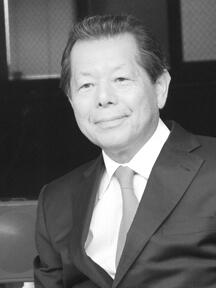
Journalism in Asia has had a long history of covering revolutions and wars. However, peace has reigned over Asia for near on 40 years. Yet, the peace and stability in Asia looks increasingly precarious. Asia too is not immune to populist nationalism. In this climate, Asia could yet again become the battleground for dislocation, revolution and war. Journalism, on top of reacting to potential crises, will be critical for proactively finding ways to prevent and defuse crises in the region.
Yoichi Funabashi is the chairman of the Rebuild Japan Initiative Foundation. He received the Shorenstein Journalism Award in 2015.
Image

Ian Buruma is a writer and the Paul W. Williams Professor of Democracy, Human Rights, and Journalism at Bard College. He received the Shorenstein Journalism Award in 2008.
Image
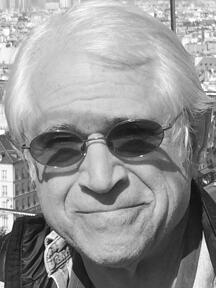
Seth Mydans is a contributing writer for the New York Times. He received the Shorenstein Journalism Award in 2009.
Image
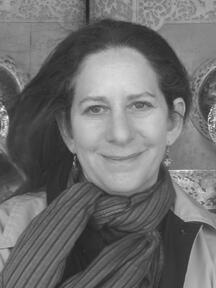
Barbara Demick is the Los Angeles Times’ bureau chief in New York and was formerly bureau chief in Beijing and in Seoul. She is the author of Nothing to Envy: Ordinary Lives in North Korea and Logavina Street: Life and death in a Sarajevo Neighborhood. She received the Shorenstein Journalism Award in 2012.
Image

Aung Zaw is the founder and editor-in-chief of The Irrawaddy. He received the Shorenstein Journalism Award in 2013.
Image
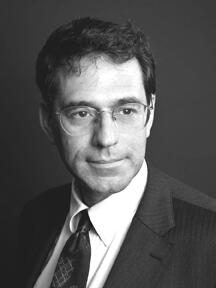
Jacob Schlesinger is a senior Washington correspondent for the Wall Street Journal. He received the Shorenstein Journalism Award in 2014.
Image

Orville Schell is the Arthur Ross Director of the Center on U.S.-China Relations at the Asia Society in New York, and former dean of the School of Journalism at the University of California, Berkeley. He received the Shorenstein Journalism Award in 2003.
Image

John Pomfret was a foreign correspondent with the Washington Post for many years. He is the author of The Beautiful Country and the Middle Kingdom: America and China from 1776 to the Present. He received the Shorenstein Journalism Award in 2007.
Hero Image

All News button
1
Stanford experts offer policy proposals, insights on US-Asia relations
News Type
News
Date
Paragraphs
Stanford scholars are encouraging the new administration to consider steps to alleviate the uncertainty and anxiety felt by countries in East Asia about U.S. intentions toward the region.
President Donald Trump’s anti-China rhetoric during his campaign and his recent withdrawal of the U.S. from the Trans-Pacific Partnership have contributed to the unease in the region, which is drifting in ways that are unfavorable for American interests, they said.
Stanford’s Walter H. Shorenstein Asia-Pacific Research Center (APARC) recently published a 27-page report with recommendations on topics of trade and defense that would improve relations between the U.S. and Asian countries. The report, co-authored by eight Stanford scholars, is aimed to help shape U.S. policies in the region.
“The advent of any new administration provides an opportunity to reassess policy approaches,” wrote Gi-Wook Shin, director of the Shorenstein center. “A new mandate exists, and it is our hope that that mandate will be used wisely by the new administration.”
Trade and defense
The biggest trade concern for experts in the region is President Trump’s decision to withdraw the U.S. from the Trans-Pacific Partnership (TPP) and his intention to focus on bilateral agreements instead of multinational pacts.
The agreement, which bound 12 countries in the region by a set of international trade and investment rules, had problems, Stanford scholars said. For example, some have criticized the treaty for not requiring full compliance with international labor standards for all the participating countries. Also, the rules of origin, which were supposed to give preferential treatment to countries in the TPP, were deemed to be weak by many, allowing goods produced outside the TPP to receive benefits.
But it would not be wise or efficient for the U.S. to start negotiations from scratch in the region because the U.S. withdrawal from the agreement, which was touted as a model for the 21st century, already has hurt its credibility with other Asian countries, said Takeo Hoshi, director of the Japan Program at the Shorenstein Center. In addition, Asian countries view the idea of bilateral agreements as an attempt to force trade deals on them that disproportionately benefit the U.S., he said.
“The TPP was not perfect and many problems remain, but they are not removed by abandoning the TPP,” Hoshi wrote in the report. “Completely abandoning the TPP could hurt not only the U.S. economy but also erode U.S. leadership in Asia.”
Hoshi said the U.S. should rely on aspects of TPP that are consistent with the current U.S. trade policy when creating new bilateral agreements, while maintaining and improving existing free trade agreements with other Asian countries.
Another immediate concern for scholars is the maintenance of security and stability in the region.
“The region is unsettled because of uncertainty about us,” said Thomas Fingar, a Shorenstein APARC fellow. “The U.S. has long served as the guarantor of prosperity and security in the region but Asians are no longer convinced that we have the will or ability to do so. This has real consequences … It’s not simply because they are already beginning to act as if we intend to play a less active or positive role.”
If China’s national power and economy continue to expand, it will become increasingly difficult to maintain stability in the region if the U.S. does not continue to play a constructive role. Possible dangers include escalation of tensions between China and the U.S. or its allies following accidents or tactical encounters near areas over which China claims sovereignty.
In the report, scholars recommend a comprehensive review of security in the region to make sure military plans are in place that prioritize management of a possible collapse of North Korea or a sudden military strike coming from the country. Other priorities should include peaceful resolution of China-Taiwan differences and ensuring military access in the South China Sea and East China Sea, wrote Karl Eikenberry, director of the U.S.-Asia Security Initiative at the Shorenstein Center.
“The United States also should engage in a more long-range, exploratory strategic dialogue, first with allies and partners, and then with Beijing, to identify potential areas of mutual interest that can help prevent the unintended escalation of conflicts and reduce already dangerous levels of misperception and mistrust on both sides,” Eikenberry wrote.
China is key
Maintaining a peaceful, productive relationship with China should be of the utmost importance for the U.S., according to the Stanford scholars.
“Managing America’s multifaceted relationship with China is arguably the most consequential foreign policy challenge facing the new administration,” Fingar said.
Although President Trump’s anti-China rhetoric during his campaign made Asian countries anxious about the future, China has been criticized by many American leaders before. Ten previous U.S. presidents were critical of China during their campaigns, but once they assumed office, their tone changed and they adopted a more pragmatic view of U.S. interests in the area, Fingar wrote.
However, while in the past China’s political moves have been predictable for the most part, now that its economy is slowing, the country is increasingly relying on social control and nationalism to reinforce regime legitimacy. This makes China less predictable, according to Fingar.
But the scholars say that there are several opportunities to approach the relationship with China in a way that is beneficial for the U.S. and the rest of the region.
One such opportunity would be for the U.S. to declare its willingness to join China’s newly created Asian Infrastructure Investment Bank, which was formed in early 2016 to support construction projects in the Asia-Pacific region. This would be an “any outcome we win” opportunity that would showcase the U.S. desire to cooperate with China and help establish the region’s confidence in the U.S., Fingar said.
The new administration should also consider pushing for a quick completion of a Bilateral Investment Treaty with China – something that two previous U.S. administrations were not able to achieve. Creating this agreement would help protect things that are important to the U.S. businesses and reassure the willingness of the U.S. to deepen its relationship with China, according to Fingar.
“In my view, how we’re going to establish or reestablish relations with China is key,” Shin said. “Will there be more tension? That’s really important. This affects not only the U.S., but also our allies in the region.”
Alex Shashkevich is a writer for the Stanford News Service.
Hero Image

All News button
1
Shorenstein APARC releases annual Center Overview for 2015-16
News Type
News
Date
Paragraphs
As 2017 approaches, the Shorenstein Asia-Pacific Research Center documents highlights from the 2015-16 academic year. The latest edition of the Center Overview, entitled "Challenges to Globalization," includes research, people, events and outreach features, and is now available for download online.
Hero Image

All News button
1
Navy Secretary speaks on US maritime partnerships in Asia
News Type
News
Date
Paragraphs
Speaking at the Shorenstein Asia-Pacific Research Center on Tuesday, U.S. Secretary of the Navy Ray Mabus underscored the importance of partnerships in the Asia-Pacific region and need for an adaptable force to meet the rapidly changing security environment around the world.
Mabus began by recognizing William J. Perry, a Stanford emeritus professor and former U.S. secretary of defense, with a Distinguished Public Service Award for his exceptional record of public service and collaboration on alternative energy initiatives, and set the stage for a conversation on innovation in the Navy and Marine Corps.
Throughout his remarks, Mabus highlighted the challenges of preparing for today’s security landscape and offered examples of how the Navy engages them.
The Navy must not be complacent in its ways, he said, especially in a context of eroding trust in multilateral institutions, unpredictable threats, and increasing competition for resources as sea levels rise.
“You’re not going to be able to tell what those next threats are. You never will. But what you can do is make sure that whatever they are you can respond,” he said. “You’ve got to be flexible.”
Mabus, who has led the Navy administration for the past seven years, said four “Ps” – people, platforms, power and partnerships – have guided his approach to improve force capabilities and rapid-response time.
Reviewing his own record as secretary, he cited updates to policies that extend family leave time, boost diversity in the force, and explore alternative energy sources for Navy aircraft and ships, including the earlier launch of the “Great Green Fleet,” a carrier strike group that uses biofuels.
Partnerships in Asia
Implementing the U.S. rebalance to Asia strategy has been a focus of the Navy’s interaction in the region.
“We’re doing it diplomatically, we’re doing it economically, we’re doing it in every region that we as a government are active in,” said Mabus, who formerly served as U.S. ambassador to Saudi Arabia and governor of Mississippi.
Sixty percent of the United States naval presence is located in the Asia-Pacific region and it is poised toward growth, Mabus said. Three more guided missile destroyers will be stationed in Japan and be "on station when North Korea launches one of its missiles," he said.
“If something does happen, if a crisis does erupt, we’re already there,” Mabus said, emphasizing the importance of force readiness.
Responding to crises effectively, however, requires an awareness and interoperability between many countries, he said. To practice and prepare, around 500 naval exercises occur between the United States and other countries each year, including Malabar, a trilateral exercise between India, Japan and the United States, and the biannual 27-nation Rim of the Pacific “RIMPAC” exercise, which China joined last year.
South China Sea issues
Answering a question from the audience about fortifications being built by China on land features in the South China Sea, Mabus said, “We don’t think any one country should try and change the status quo.”
Mabus reaffirmed the United States’ commitment to both sail and fly over the land features in accordance with international law. The American naval presence in the region has been there for 70 years and will remain steadfast, he said.
He noted the importance of upholding international law and warned of the dangers of setting a precedent of reinterpreting the U.N. Convention on the Law of the Sea regarding the South China Sea, attempting to do so would have “a really dramatic impact, not just there, but around the world."
A main goal for the U.S. Navy is to continue engagement between China and the United States, he said. The two countries already collaborate on a number of bilateral measures, such as scheduled passing exercises and visits by the navies to each other’s ports of call.
“What we want China to do is to assume the responsibilities of a naval power, to work with us, and to make sure that freedom of navigation is ensured.”
Gi-Wook Shin, a Stanford professor of sociology and director of Shorenstein APARC, concluded the event by thanking Mabus, and recognized the secretary’s friendship with the late Walter H. Shorenstein, after whom the center was named.
Hero Image

All News button
1

Call for applications: Postdoctoral fellowship in contemporary Asia
News Type
News
Date
Paragraphs
The Shorenstein Asia-Pacific Research Center (APARC) at Stanford is now accepting applications for the Shorenstein Postdoctoral Fellowship in Contemporary Asia, an opportunity made available to two junior scholars for research and writing on Asia.
Fellows conduct research on contemporary political, economic or social change in the Asia-Pacific region, and contribute to Shorenstein APARC’s publications, conferences and related activities. To read about this year’s fellows, please click here.
The fellowship is a 10-mo. appointment during the 2017-18 academic year, and carries a salary rate of $52,000 plus $2,000 for research expenses.
For further information and to apply, please click here. The application deadline is Dec. 16, 2016.
Hero Image

All News button
1


