-

Webinar recording: https://youtu.be/FLKbADCk1o8


During multiple periods of economic crises, the U.S. economy has depended on Mexican labor. From World War II to the present, agricultural workers have been deemed essential to harvest our fruits and vegetables across the United States.

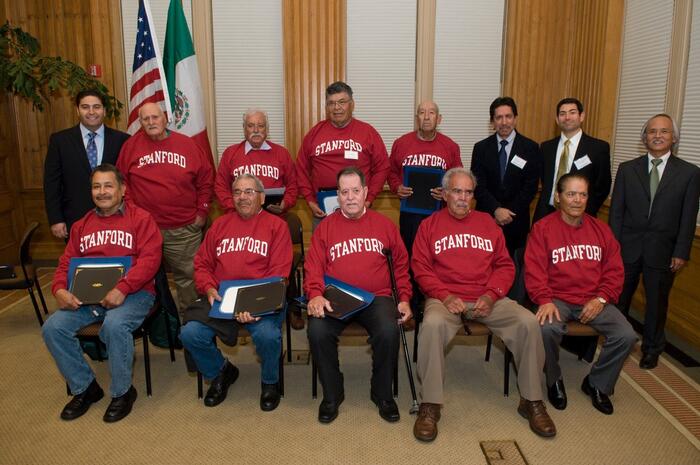
The Bracero Program began during World War II during a massive labor shortage due to the war and internment of Japanese Americans. It was the largest guest worker program agreement in United States history. Over 4.5 million contracts were awarded to young male Mexican immigrants from 1942 to 1964 to work in the railroad and agriculture industries.

Moreover, during the current health pandemic, agricultural workers have been categorized as “essential workers” by the federal government. Yet, many workers lack legal status to work in the United States.

Dr. Ignacio Ornelas Rodriguez has conducted extensive research and oral histories with former Braceros. In this seminar, he will discuss significant topics in Mexican American history, including the history of the Bracero Program, agricultural history in California, and the current H2-A Guest Worker Program. The webinar will broaden educators’ understanding of Mexican and Mexican American history and help to prepare them to provide instruction that is culturally inclusive.

This webinar is a joint collaboration between the Center for Latin American Studies at Stanford University and SPICE.


Featured Speaker:

Image
ignacio ornelas rodriguez

Ignacio Ornelas Rodriguez, Ph.D.

Ornelas is a historian, and currently a visiting scholar at the University of California, Berkeley. His work and research focuses on California history, and in particular, Chicano history and Chicano/Latino studies and Latino politics. Much of his work has focused on archival research that documents Mexican and Mexican American history. The history of Mexican labor in the United States necessarily includes the study of civil and voting rights and the generations of Mexicans who advocated for those rights. Ornelas is currently rewriting for publication his dissertation, titled The Struggle for Social Justice in the Monterey Bay Area 1930-2000: The Transformation of Mexican and Mexican American Political Activism. Dr. Ornelas Rodriguez currently serves on the board of directors of the California Institute for Rural Studies. His areas of expertise include U.S. and California History, Political Science, and Latino Politics.


Via Zoom Webinar. Registration Link: https://tinyurl.com/yc7j6qdd.

Dr. Ignacio Ornelas Rodriguez Stanford University
Workshops
News Type
News
Date
Paragraphs

A team of SHP faculty and researchers, together with Stanford Medicine graduate and medical students and in collaboration with colleagues at CIDE in Mexico, have launched a modeling framework to investigate the epidemiology of COVID-19 and to support pro-active resource planning and policy evaluations for diverse populations and geographies — including California, Mexico and India.

The Stanford-CIDE Coronavirus Simulation Model — or SC-COSMO — incorporates realistic demography and patterns of contacts sufficient for transmission of the virus that has infected more than 2 million people worldwide and claimed more than 125,600 lives, according to the widely used Johns Hopkins COVID-19 map which is updated several times a day.

The SC-COSMO model also incorporates non-pharmaceutical interventions, such as social distancing, timing and effects on reductions in contacts which may differ by demography.

Jeremy Goldhaber-Fiebert, an associate professor of medicine at Stanford Health Policy, is the principal investigator of the project, along with Fernando Alarid-Escudero, an assistant professor at the Center for Research and Teaching in Economics (CIDE) in Mexico and Jason Andrews, an assistant professor of medicine (infectious diseases) at Stanford Medicine. Other SHP faculty among the 20 investigators and staff members who are working on the project are Joshua Salomon and David Studdert, both professors of medicine.

The model also allows for the comparison of many future what-if scenarios and how they might impact outcomes over time and cumulatively.

The SC-COSMO team is a multi-disciplinary, multi-institutional team including expertise and experience in infectious disease, epidemiology, mathematical modeling and simulation, statistics, decision science, health policy, health law and health economics.

“As COVID-19 transmission occurs throughout the world’s diverse populations, it is critical to efficiently model and forecast its future spread between and within these populations and to appropriately reflect uncertainty in modeled outcomes,” Goldhaber-Fiebert said. “Doing so supports timely resource planning and decision making between potentially appropriate and effective interventions that balance the trade-offs they embody.”

The team is currently working on three projects:

  1. The researchers are providing California with county-level COVID-19 estimates for such things as the number of infections, detected cases and projections of future needs for hospital and ICU beds, personal protective equipment (PPE) and ventilators.
  2. The project is working on potential strategies to mitigate the COVID-19 pandemic in Mexico by focusing on three specific objectives: collecting, synthesizing and openly sharing the most relevant and useful data; accelerating the development of the SC-COSMO model and its adaptation to the Mexican situation; and identifying a set of mitigation strategies, comparing the health and economic consequences in the population in the medium and long term.
  3. They are developing forecast models of the COVID-19 epidemic in India with the Wadhwani Institute of Artificial Intelligence and its Indian government partners, providing a rapid response to urgent needs for planning and resource allocation.


jeremy

Jeremy Goldhaber-Fiebert

Associate Professor of Medicine
His research focuses on complex policy decisions surrounding the prevention and management of increasingly common, chronic diseases and the life course impact of exposure to their risk factors.

Read More

gettyimages n95mask
News

COVID19: Can Masks Help with Reopening the Economy?

COVID19: Can Masks Help with Reopening the Economy?
jeremy class
News

SHP faculty to Teach Students How To Build COVID-19 Mathematical Projection Models for Policymakers

SHP faculty to Teach Students How To Build COVID-19 Mathematical Projection Models for Policymakers
gettyimages trumpcorona
Commentary

Federalism Meets the COVID-19 Pandemic: Thinking Globally, Acting Locally

Federalism Meets the COVID-19 Pandemic: Thinking Globally, Acting Locally
Hero Image
gettyimages coronainvestigate
All News button
1
Subtitle

The Stanford-CIDE Coronavirus Simulation Model — or SC-COSMO — incorporates realistic demography and patterns to investigate resource planning and policy evaluations for diverse populations and geographies in California, Mexico and India.

Encina Hall, E112 616 Jane Stanford Way Stanford, CA 94305-6055  
0
CDDRL Postdoctoral Scholar, 2019-20
tesalia.jpg

Tesalia Rizzo holds a Ph.D. in Political Science at the Massachusetts Institute of Technology (MIT). Her research focuses on the demand and supply side of political mediation. Specifically, on how political (formal, informal or clientelist) intermediaries shape citizens’ attitudes and political engagement. She also works with non-governmental practitioners in Mexico to develop and test policies that disincentivize citizen reliance on clientelist and corrupt avenues of engaging with government and strengthen citizen demand for accountability. Her work with Mexican practitioners was awarded the 2017 Innovation in Transparency Award given by the Mexican National Institute for Access to Information (INAI). She is also a Research Fellow at MIT GOV/LAB and the Political Methodology Lab, at MIT. She is a graduate of the Instituto Tecnológico Autónomo de México (ITAM) in Mexico City. Prior to arriving at Stanford, she was a pre-doctoral fellow at the Center for US-Mexican Studies at University of California, San Diego and will join the Political Science Faculty at the University of California, Merced in 2020.

CV
Paragraphs

Abstract

We report on the results of a field experiment in Puebla, Mexico that informed randomly-selected households facing a nonlinear price schedule about how different electricity-consuming actions might change their electricity bills. Households that received this 20-minute, in-person intervention reduced their electricity use, with much of this reduction driven by those that paid the highest marginal price for electricity. The estimated impacts were durable with no observed rebound for at least a year. Households with less educational attainment reduced use the most, consistent with the conclusion that the intervention imparted new knowledge to consumers that led to this observed behavior change. The high rate at which customers accepted the intervention, the resulting consumption decrease, and low implementation costs make this intervention cost-effective relative to several previous energy conservation campaigns in Mexico.

All Publications button
1
Publication Type
Working Papers
Publication Date
Journal Publisher
SSRN
Authors
Ognen Stojanovski
Frank Wolak
Mark C. Thurber
Authors
News Type
News
Date
Paragraphs

By comparing historical temperature and suicide data, researchers found a strong correlation between warm weather and increased suicides. They estimate climate change could lead to suicide rate increases across the U.S. and Mexico.

Suicide rates are likely to rise as the earth warms, according to new research published July 23 in Nature Climate Change. The study, led by Stanford economist Marshall Burke, finds that projected temperature increases through 2050 could lead to an additional 21,000 suicides in the United States and Mexico.

“When talking about climate change, it’s often easy to think in abstractions. But the thousands of additional suicides that are likely to occur as a result of unmitigated climate change are not just a number, they represent tragic losses for families across the country,” said Burke, assistant professor of Earth system science in the School of Earth, Energy & Environmental Sciences at Stanford.

Researchers have recognized for centuries that suicides tend to peak during warmer months. But, many factors beyond temperature also vary seasonally – such as unemployment rates or the amount of daylight – and up to this point it has been difficult to disentangle the role of temperature from other risk factors.

“Suicide is one of the leading causes of death globally, and suicide rates in the U.S. have risen dramatically over the last 15 years. So better understanding the causes of suicide is a public health priority,” Burke said.

Heat and suicide

To tease out the role of temperature from other factors, the researchers compared historical temperature and suicide data across thousands of U.S. counties and Mexican municipalities over several decades. The team also analyzed the language in over half a billion Twitter updates or tweets to further determine whether hotter temperatures affect mental well-being. They analyzed, for example, whether tweets contain language such as “lonely,” “trapped” or “suicidal” more often during hot spells.

The researchers found strong evidence that hotter weather increases both suicide rates and the use of depressive language on social media.

“Surprisingly, these effects differ very little based on how rich populations are or if they are used to warm weather,” Burke said.

For example, the effects in Texas are some of the highest in the country. Suicide rates have not declined over recent decades, even with the introduction and wide adaptation of air conditioning. If anything, the researchers say, the effect has grown stronger over time.

Effect of climate change

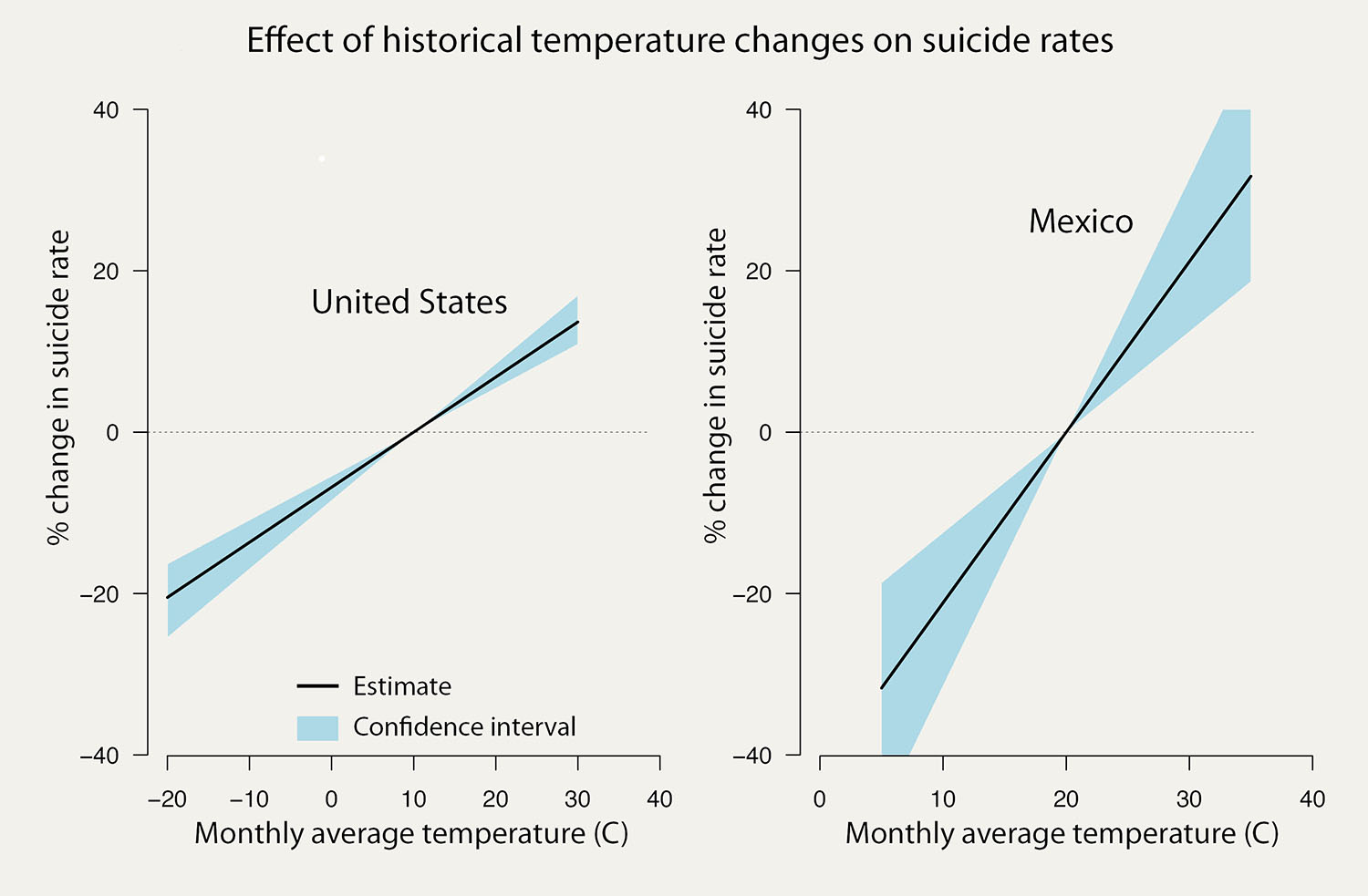
To understand how future climate change might affect suicide rates, the team used projections from global climate models. They calculate that temperature increases by 2050 could increase suicide rates by 1.4 percent in the U.S. and 2.3 percent in Mexico. These effects are roughly as large in size as the influence of economic recessions (which increase the rate) or suicide prevention programs and gun restriction laws (which decrease the rate).

Graph Showing Effects of historical temperature changes on suicide rates are shown for the U.S. and Mexico. Effects of historical temperature changes on suicide rates are shown for the U.S. and Mexico. (Image credit: Marshall Burke)
Effects of historical temperature changes on suicide rates are shown for the U.S. and Mexico. (Image credit: Marshall Burke)

“We’ve been studying the effects of warming on conflict and violence for years, finding that people fight more when it’s hot. Now we see that in addition to hurting others, some individuals hurt themselves. It appears that heat profoundly affects the human mind and how we decide to inflict harm,” said Solomon Hsiang, study co-author and associate professor at the University of California, Berkeley.

The authors stress that rising temperature and climate change should not be viewed as direct motivations for suicide. Instead, they point out that temperature and climate may increase the risk of suicide by affecting the likelihood that an individual situation leads to an attempt at self-harm.

“Hotter temperatures are clearly not the only, nor the most important, risk factor for suicide,” Burke emphasized. “But our findings suggest that warming can have a surprisingly large impact on suicide risk, and this matters for both our understanding of mental health as well as for what we should expect as temperatures continue to warm.”

Marshall Burke is also a fellow at the Center on Food Security and the EnvironmentStanford Woods Institute for the EnvironmentFreeman Spogli Institute for International Studies, and Stanford Institute for Economic Policy Research. Solomon Hsiang is also a faculty research fellow at the National Bureau of Economic Research. Other Stanford co-authors include Sanjay Basu, assistant professor of medicine, and Sam Heft-Neal, research scholar at the Stanford Center on Food Security and the Environment. Additional co-authors are from Pontificia Universidad Católica de ChileVancouver School of Economics, and the University of California, Berkeley. The research was partially supported by the Stanford Woods Institute for the Environment.

Hero Image
istock 682825852 copy iStockphoto/beer5020
All News button
1
0
CDDRL Postdoctoral Scholar, 2017-2019
monica.jpg

Dr. Monica Teran has experience in the analysis focus on the domains of disparities in health services and response to population health needs of the health system governance using spatial statistical methodology and Geography of health approach that takes into account spatial variation in socioeconomic factors and accessibility to services. Since September 2017 she is a member of Sistema Nacional de Investigadores, SNI (National System of Researcher) in Mexico, CONACYT.

CV
Subscribe to Mexico