Authors
News Type
News
Date
Paragraphs

Europe is benefiting from tough, painful economic reforms in the wake of the 2008 downturn, according to the leader of the European Union.

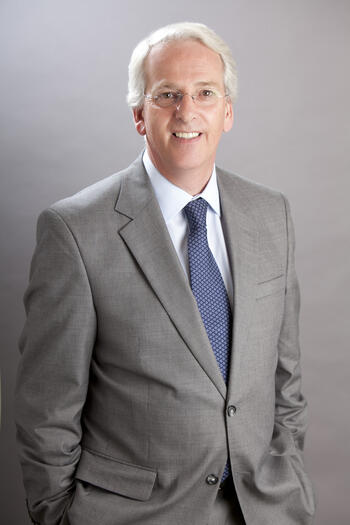
"Europe had to evolve dramatically because reality forced it to," said José Manuel Barroso, president of the European Commission, in a May 1 talk on campus. "This change came about with the economic and financial crisis initiated with the collapse of the Lehman Brothers back in 2008, and that has caused me many sleepless nights."

The title of Barroso's presentation was "Global Europe, from the Atlantic to the Pacific." The event was co-sponsored by Stanford's Freeman Spogli Institute for International Studies, The Europe Center and the Center for Russia, East European and Eurasian Studies. The European Commission is the executive body of the European Union.

Barroso acknowledged that the financial meltdown hit Europe especially hard, given the "serious flaws" in the way some countries were running their economies, living beyond their means and lacking the competitiveness required in a globalized world.

The crisis revealed, he added, the "economic interdependence inside Europe," and the fact that the 28-member union did not have the capability to handle large-scale financial emergencies or prevent unsound policies on the part of member nations like Greece.

"So we had to adapt and reform as we have done many times in the European Union," Barroso said.

Economic reforms, regulations

And so, the European Union adopted a more extensive system of economic and budgetary governance to ensure member states stick to their financial commitments and become more competitive. Today, each country sends their national budget to the EU headquarters in Brussels before approving it at the national level, he said.

Barroso added that the EU created a "European stability mechanism," or safety net, worth about $1 trillion to help member states adopt key reforms and assist them in times of crisis. There are also more detailed banking regulations that give the EU more authority over national banks.

"Now the control is exercised at European level through the European Central Bank and there are common rules for banks so that we avoid having to use taxpayers' money to rescue them," he said.

Barroso dismissed criticism that the EU moves too slowly, saying that is inevitable in a system that depends on the will of national governments and citizens to work together rather than coercion.

Still, high unemployment persists in Europe, especially among the young, he said. But he is hopeful about Europe's prospects in the long run.

He added, "We have now returned to growth after some painful but necessary reforms."

Upheaval in Ukraine

With the situation in Ukraine worsening by the day, Barroso said that Europe "stands ready" to support that country in becoming a democratic, prosperous and independent country. He described the Ukrainian crisis as the "biggest threat to Europe's stability and security since the fall of the Berlin Wall."

He said the people of Ukraine expressed a "clear wish to take their future into their own hands and come closer to the European Union" through an agreement that would have given them political association and economic integration.

"Instead of accepting the sovereign choices of Ukraine, Russia decided to interfere, to destabilize and to occupy part of the territory of a neighboring country in a gesture that we hoped was long buried in history books," said Barroso.

He noted, "Europe cannot accept nor condone this type of behavior." Russia's aggression will carry political, diplomatic and economic costs, he said, adding that the issue looms larger than Europe, the United States or even the G7.

"It should concern the rest of the world as well, as it is a direct threat to international law and to international peace," he said.

Barroso served as the prime minister of Portugal from 2002 to 2004. He has been the president of the European Commission for the past 10 years.

Clifton B. Parker is a writer for the Stanford News Service. 

All News button
1
Date
Paragraphs

By 

Europe is benefiting from tough, painful economic reforms in the wake of the 2008 downturn, according to the leader of the European Union.

"Europe had to evolve dramatically because reality forced it to," said José Manuel Barroso, president of the European Commission, in a May 1 talk on campus. "This change came about with the economic and financial crisis initiated with the collapse of the Lehman Brothers back in 2008, and that has caused me many sleepless nights."

The title of Barroso's presentation was "Global Europe, from the Atlantic to the Pacific." The event was co-sponsored by Stanford's Freeman Spogli Institute for International Studies, the Europe Center and the Center for Russia, East European and Eurasian Studies. The European Commission is the executive body of the European Union.

Barroso acknowledged that the financial meltdown hit Europe especially hard, given the "serious flaws" in the way some countries were running their economies, living beyond their means and lacking the competitiveness required in a globalized world.

The crisis revealed, he added, the "economic interdependence inside Europe," and the fact that the 28-member union did not have the capability to handle large-scale financial emergencies or prevent unsound policies on the part of member nations like Greece.

"So we had to adapt and reform as we have done many times in the European Union," Barroso said.

Economic reforms, regulations

And so, the European Union adopted a more extensive system of economic and budgetary governance to ensure member states stick to their financial commitments and become more competitive. Today, each country sends their national budget to the EU headquarters in Brussels before approving it at the national level, he said.

Barroso added that the EU created a "European stability mechanism," or safety net, worth about $1 trillion to help member states adopt key reforms and assist them in times of crisis. There are also more detailed banking regulations that give the EU more authority over national banks.

"Now the control is exercised at European level through the European Central Bank and there are common rules for banks so that we avoid having to use taxpayers' money to rescue them," he said.

Barroso dismissed criticism that the EU moves too slowly, saying that is inevitable in a system that depends on the will of national governments and citizens to work together rather than coercion.

Still, high unemployment persists in Europe, especially among the young, he said. But he is hopeful about Europe's prospects in the long run.

He added, "We have now returned to growth after some painful but necessary reforms."

Upheaval in Ukraine

With the situation in Ukraine worsening by the day, Barroso said that Europe "stands ready" to support that country in becoming a democratic, prosperous and independent country. He described the Ukrainian crisis as the "biggest threat to Europe's stability and security since the fall of the Berlin Wall."

He said the people of Ukraine expressed a "clear wish to take their future into their own hands and come closer to the European Union" through an agreement that would have given them political association and economic integration.

"Instead of accepting the sovereign choices of Ukraine, Russia decided to interfere, to destabilize and to occupy part of the territory of a neighboring country in a gesture that we hoped was long buried in history books," said Barroso.

He noted, "Europe cannot accept nor condone this type of behavior." Russia's aggression will carry political, diplomatic and economic costs, he said, adding that the issue looms larger than Europe, the United States or even the G7.

"It should concern the rest of the world as well, as it is a direct threat to international law and to international peace," he said.

Barroso served as the prime minister of Portugal from 2002 to 2004. He has been the president of the European Commission for the past 10 years.

All News button
1
Authors
News Type
Q&As
Date
Paragraphs

CISAC Senior Fellow Siegfried Hecker and a delegation of American scientists traveled to Moscow last week to revitalize nuclear cooperation with Russia, despite diplomatic tensions between the United States and Russia over the crisis in Ukraine.

The delegation that traveled to Russia last week included former U.S. laboratory scientists Paul White, James Toevs, and K. David Nokes, as well as CISAC research assistants Peter Davis and Alla Kassianova and CISAC fellow Jason Reinhardt.

The team traveled to Russia to host a workshop and make the case that continued scientific cooperation in reducing nuclear risks – particularly to prevent nuclear proliferation and terrorism – should remain a top priority for both countries, even as U.S.-Russia relations continue to deteriorate.

The White House has implemented increasingly stricter sanctions against top Russian officials and has restricted official travel and scientific cooperation. Washington accuses Moscow of trying to destabilize the new government in Ukraine by backing pro-Russian separatists in the former Soviet state.

Hecker chaired a Track II workshop at the Moscow Engineering and Physics Institute (MEPhI) on April 24 on “Cooperation on Countering Nuclear Terrorism and Nonproliferation.” Presenters from Russian institutes and U.S. laboratories included Reinhardt, a national security systems analyst at Sandia National Laboratories who is pursuing a PhD at Stanford in Management Science & Engineering. He argued for expanded cooperation to counter nuclear terrorism and reduce the risk of global proliferation.

“It is paramount that American and Russian scientists continue to work together to deal with today’s nuclear risks despite the tension between our two nations,” says Hecker, a Stanford professor of management science and engineering. The former head of the Los Alamos National Laboratory made his first trip to the Russian nuclear complex in early 1992, shortly after the collapse of the Soviet Union to promote joint efforts to mitigate the threats posed by the huge Russian nuclear complex during a time of political and economic turmoil.

The threats have changed during the past 22 years, but have not gone away, Hecker says. Yet cooperation between Russian and American nuclear scientists has declined significantly during the past decade because Russia has recovered economically and has grown progressively more protective against external intervention. Now, the crisis in the Ukraine threatens to stop cooperation completely.

More than 200 students from MEPhI’s nuclear science and nonproliferation programs participated in the workshop, alongside prominent Russian scientists.

“The large audience indicates how seriously the nuclear specialists from both sides take the need to protect the world from the spread of nuclear weapons and materials to other states and non-state actors,” says Hecker, whose workshop grew from his Nuclear Risk Reduction Project (NRR), which is funded by the Carnegie Corporation and the MacArthur Foundation.

Hecker is also working with his former Russian counterparts at the Russian nuclear weapons laboratories on a book about the history of U.S.-Russia national laboratory cooperation, which is due out later this year. That book will tell the story of how the scientists worked together during difficult times to make the world a safer place.

Russian and American scientists discuss nuclear collaboration as students from the Moscow Engineering and Physics Institute look on.
Photo Credit: Peter Davis

We asked Hecker to answer several questions related to his trip to Moscow.

Why did you still travel to Moscow given the recent events in Ukraine?

I had to discuss the book with my Russian collaborators in order to meet our fall deadline for publication. We also wanted to reinforce the belief of scientists on both sides that we must continue to cooperate even, or perhaps especially, when our governments are at odds. That is why we organized the educational conference on nuclear cooperation.

Did the U.S. government try to stop you?

Since I went as a Stanford University professor, I did not need official approval. Key individuals in the government knew that I was going and did not try to stop me. However, colleagues from the Department of Energy’s nuclear laboratories were prohibited from attending a related conference and Washington canceled several official bilateral meetings and visits.

Were the Russians allowed to meet with your delegation?

Yes, we met with the key individuals on the Russian side and MEPhI organized a great conference. We did have to switch the venue of one of our side meetings from one of the Russian nuclear weapons laboratories to neutral ground. I think the Russian government did not want these meetings to look official after the U.S. government has canceled most interactions for the foreseeable future.

How do your Russian collaborators view the recent events in Ukraine?

Without exception, they viewed it with alarm and laid the blame squarely on the “fascists” who took over Kiev’s government illegally. They could not understand how the Americans could support what they see as an illegitimate regime. We got quite a lesson on the intertwined history of Russia and the Ukraine. They believe the Americans simply don’t understand the deep relations and commitment all Russians have for Ukraine. When we tried to give a Western point of view, some Russian colleagues told us that we have been brainwashed by Washington and the media.

How does the downturn in relations affect your views on the need for cooperation?

Despite their views on Ukraine, our Russian colleagues all said we must continue to work the nuclear issues together. So while we couldn’t agree on Ukraine, we agreed for the need to keep up our work – which for me has now spanned 49 visits to Russia during the past 22 years. 

What role has CISAC’s collaboration with the Moscow Engineering and Physics Institute (MEPhI) played in your work on nuclear cooperation?

MEPhI is a great counterpart for CISAC and a number of other American universities. It educates about one-third of the scientists and engineers that make up the Russian nuclear complex. It is with the next generation that we have the best chance of reducing the global nuclear risks that we face now and in the future.

All News button
1
News Type
News
Date
Paragraphs

President Barack Obama’s trip to four Asian nations – Japan, South Korea, Malaysia and the Philippines – set out to address an ambitious agenda, including trade negotiations, territorial disputes, and the threat of North Korea. Scholars at the Shorenstein Asia-Pacific Research Center in the Freeman Spogli Institute provided commentary to local and international media about the state tour.

Ambassador Michael Armacost, a distinguished fellow at Shorenstein APARC, evaluated the goals of the trip, saying it aimed to deliver a message of reassurance to East Asia that the U.S. rebalance is intact. Armacost highlighted the efforts to negotiate a 12-nation trade pact, the Trans-Pacific Partnership (TPP) as the centerpiece of the Obama trip to Asia. He was interviewed by Weekly Toyo Keizi, a Japanese political economy magazine. An English version of the Q&A is available on Dispatch Japan.

Many foreign policy issues shadowed the outset of President Obama’s Asia trip, the crisis in Ukraine and Syria, among others. Daniel Sneider, associate director of research at Shorenstein APARC, said in Slate that Asian nations notice where the United States focuses its time. Obama’s commitment to the region may have come across as distracted given the breadth of his current foreign policy agenda.

Sneider also spoke with LinkAsia on Obama’s stop in Tokyo. President Obama met with Japanese Prime Minister Shinzo Abe; the two leaders addressed issues surrounding territorial disputes and attempted to reach an agreement on outside market access issues in the TPP negotiations.

Donald Emmerson, director of Shorenstein APARC’s Southeast Asia Forum, offered an assessment of America’s ‘pivot to Asia’ and on the significance of the Malaysia and Philippines visits. He said the trip most notably reinforced America’s efforts to upgrade security commitments and promote freer trade negotiation in that region. The Q&A was carried by the Stanford News Service.

Emmerson spoke with McClatchyDC on two occasions about the Philippines leg of the tour. He commented on Obama’s statement reaffirming the United States’ security commitment to Japan, which recognized Japan’s administrative control over the Senkaku Islands. Emmerson suggested the greater context of claims in the South China Sea must be considered, including Manila’s. He also said maintenance of the security alliance is a positive step, but trade is a an essential part of the the pivot's sustainablility.

Hero Image
Obama Asia Trip Japan Logo
All News button
1
Authors
News Type
News
Date
Paragraphs
Donald K. Emmerson, director of Shorenstein APARC's Southeast Asia Program and FSI senior fellow emeritus, offers insight on U.S. President Barack Obama's Asian tour. He says the trip most notably reinforces America's 'rebalance' efforts to upgrade security commitments and promote freer trade negotiation in that region.

When President Barack Obama this week began a high-profile visit to Asia, it called into question how effective the "Asian pivot" in America's foreign policy has been. A few years ago, Obama announced that a rebalancing of U.S. interests toward Asia would be a central tenet of his legacy. Now he is visiting Japan, South Korea, Malaysia and the Philippines to reassert the message that America is truly focused on Asia – despite finding itself repeatedly pulled away by crises in Ukraine and the Middle East, and political battles in Washington, D.C.

Stanford political scientist Donald K. Emmerson, an expert on Asia, China-Southeast Asia relations, sovereignty disputes and the American "rebalance" toward Asia, sat down with the Stanford News Service to discuss Obama's trip. Emmerson is a senior fellow emeritus at the Walter H. Shorenstein Asia-Pacific Research Center in the Freeman Spogli Institute for International Studies.

President Obama started his Asian pivot a few years ago. Have problems in Ukraine, Syria, Iran and at home detracted from this new approach?

The pivot as practiced continues unabated. The pivot as perceived has suffered from its displacement on various attention spans by superseding events and concerns, both foreign and domestic. President Obama's current trip to Asia is itself a reflection of these distractions. Originally planned for October, it was postponed by extreme political discord in Washington. But the chief elements of the pivot remain in place and in progress. They are most notably the upgrading of American security commitments and the effort to negotiate freer trade.

Why does this rebalancing in U.S. foreign policy make sense – or not?

The pivot certainly serves U.S. interests. Americans cannot afford to deny themselves, or be denied by others, the opportunities for trade and investment that Asia's most dynamic economies will continue to generate. The U.S. also needs to work with China and its neighbors to help ensure that China's rise serves the wider security interests of Americans, Chinese, Asians and the world, however dissonant the day-to-day advocacy of those interests may be. Ironically, by obliterating Obama's proposed reset of U.S.-Russia relations, Vladimir Putin has become an unintentional friend of the rebalance toward Asia. His aggression in Crimea and eastern Ukraine has made all the more urgent the need for Washington to pursue mutually beneficial relations with Beijing and the rest of Asia that could moderate China's willingness and ability to force its ownfaits accomplis in the East and South China Seas.

Do Chinese leaders view Obama's Asian pivot as a de facto containment approach to a rising China?

China's leaders do question U.S. intentions. But one ought not ignore the dozens and dozens of venues and ways in which the two countries' governments continue to cooperate on multiple fronts. In domestic terms it is politically convenient for Chinese hardliners to disparage American motives. As with the pivot itself, however, perception and practice are not the same thing.

Are Asian countries more rattled than ever by China's behavior in places like the South and East China Seas?

Concerned, yes; rattled, no. There are six or seven different claimants to contested land features and/or sea space in the South China Sea, not to mention the territorial tensions that also bedevil interstate relations in Northeast Asia. East Asian leaders are not lined up in a united front against Beijing. They are themselves divided. The more assertive China becomes, the more pushback it can expect. But most of the states in Southeast Asia do not want to ally with the U.S. against China, or with China against the U.S.

The U.S. and the Philippines are poised to sign a treaty that will expand America's military presence in the island country. What's the significance of the treaty?

Articles 4 and 5 of the treaty commit Washington and Manila to "act to meet the common dangers" implied by "an armed attack in the Pacific Area" on the "metropolitan territory" of either party, or on the "island territories under its jurisdiction," or on "its armed forces, public vessels or aircraft in the Pacific," and to do so "in accordance with its constitutional processes." But these provisions are hardly self-implementing; they require interpretation. Even if China were to forcibly evict the Philippine marines who now occupy Second Thomas Shoal in the South China Sea, the treaty would not automatically trigger an American military response. Applied to that scenario, the treaty would not instantly entrap the U.S. in a war with China. But the treaty would require some action or statement on the part of Washington. In Manila, Obama will try to reassure his Philippine host in this regard without enraging its Chinese neighbor.

Obama will be the first U.S. president in five decades to visit Malaysia. What does that visit mean for that country?

Of the four countries that Obama is visiting, it is in Malaysia that the pivot's third face after security and economy – namely democracy – will be most visible. Obama will be careful not to appear to enter into the domestic political turbulence Malaysia is experiencing, but his visits with civil society actors and university students in Kuala Lumpur will send the nonpartisan message that America remains committed to democratic values for itself and for Asians as well.

Clifton Parker is a writer for the Stanford News Service.

Hero Image
Obama Asia April2013 Japan logo
All News button
1
News Type
News
Date
Paragraphs

The Europe Center recently initiated a distinguished annual lectureship named, The Europe Center Lectureship on Europe and the World.  The lectures are intended to promote awareness of Europe's lessons and experiences with a goal of enhancing our collective knowledge of both contemporary global affairs and Europe itself.  Each year, faculty affiliates at the Center select a renowned intellectual to deliver the lectureship on a topic of significant scholarly interest.  The Europe Center invites you to the inaugural annual lectures of this series by Adam Tooze, Barton M. Briggs Professor of History, Yale University.


“Making Peace in Europe 1917-1919: Brest-Litovsk and Versailles”

Date: Wednesday, Apr 30, 2014

Time: 4:00 - 5:30 pm

Location: Koret Taube Room, Gunn-SIEPR


“Hegemony: Europe, America and the Problem of Financial Reconstruction, 1916-1933”

Date: Thursday, May 1, 2014

Time: 4:00 - 5:30 pm

Location: Koret Taube Room, Gunn-SIEPR


“Unsettled Lands: The Interwar Crisis of Agrarian Europe”

Date: May 2, 2014

Time: 4:00 - 5:30 pm

Location: Bechtel Conference Center

Reception: 5:30 - 6:15 pm


RSVP by Apr 23, 2014


On the centenary of the outbreak of the First World War, Adam Tooze will deliver three lectures about the history of the transformation of the global power structure that followed from Imperial Germany’s decision to provoke America’s declaration of war in 1917.  Tooze advances a powerful explanation of why the First World War rearranged political and economic structures across Eurasia and the British Empire, sowed the seeds of revolution in Russia and China, and laid the foundations of a new global order that began to revolve around the United States and the Pacific.  These lectures will present an argument for why the fate of effectively the whole of civilization changed in 1917, and why the First World War’s legacy continues to shape our world today.

Tooze is the author of The Wages of Destruction: The Making and Breaking of the Nazi Economy (2006) and Statistics and the German State 1900-1945: The Making of Modern Economic Knowledge (2001), among numerous other scholarly articles on modern European history.

Hero Image
front page iwm art 2856 the signing of peace 420
All News button
1
-

Economists and business scholars have long tried to construct theoretical models that can explain economic growth and development in emerging economies, but Western models have not always been fully applicable to developing economies, particularly in Asia, due to differences in political, economic and social systems. Created to address this gap, the ABCD framework of K-Strategy is a more nearly universal approach showing how inherent disadvantages can be overcome and competitive advantages achieved. Using the ABCD framework, the lecturer will analyze Korea’s success at both national and corporate levels since the 1960s and discuss the framework’s implications for Korea’s future government policies and corporate strategies. He will also demonstrate the ABCD framework’s applicability to other countries. Hwy-Chang Moon, dean of Seoul National University’s graduate school of international studies, has done extensive research and theoretical work on the ABCD framework.

Hwy-Chang Moon received his PhD from the University of Washington and is currently a professor of international business and strategy in the graduate school of international studies at Seoul National University. Professor Moon has taught at the University of Washington, University of the Pacific, State University of New York at Stony Brook, Helsinki School of Economics, Kyushu University, Keio University, Hitotsubashi University, and other executive and special programs in various organizations. On topics such as international business strategy, foreign direct investment, corporate social responsibility, and cross-cultural management, Professor Moon has published numerous journal articles and books. He is currently the editor-in-chief of the Journal of International Business and Economy, an international academic journal. Professor Moon has conducted consulting and research projects for several multinational companies, international organizations (APEC, World Bank, and UNCTAD), and governments (Malaysia, Dubai, Azerbaijan, and Guangdong Province of China). For interviews and debates on international economy and business, he has been invited by international newspapers and media, including New York Times and NHK World TV.

This event is made possible through the generous support of the Koret Foundation.

Philippines Conference Room

Hwy-Chang Moon Dean, Graduate School of International Studies; Professor of International Business and Strategy Speaker Seoul National University
Seminars
-

This event has moved to the Philippines Conference Room

Professor Paine will explore China’s outlook on the territorial disputes in the South China Sea within the larger settings of Chinese geography and history, including the lessons Chinese leaders continue to draw from Russia’s experience, and how these contexts shape China’s views of its East Asian neighbors. Earlier paradigms of foreign policy offered by Confucianism before 1911 and by Communism thereafter have undergone serious critiques. Which elements in these partly tarnished legacies will China’s leaders decide to affirm, alter, reject, or ignore as they fashion a foreign policy for the 21st century? The outcome will signally affect not only China, but most particularly its neighbors in Southeast and Northeast Asia.

Sarah Paine is a professor of strategy and policy at the U.S. Naval War College, Newport, RI. She is the author of two prize-winning books: The Wars for Asia, 1911-1949 (Cambridge, 2012) and Imperial Rivals: China, Russia, and Their Disputed Frontier (M. E. Sharpe,1996). Among her other publications are The Sino-Japanese War of 1894-1895 (2003); Modern China, 1644 to the Present (co-auth., 2010); Nation Building, State Building, and Economic Development (ed., 2010); and four co-edited naval books respectively on blockades, coalitions, expeditionary warfare, and commerce-raiding. She has degrees in in history (Columbia, PhD), Russian (Middlebury, MA), and Latin American studies (Harvard, BA).

Philippines Conference Room

Sarah C. M. Paine 2013-14 Campbell and Bittson National Fellow Speaker Hoover Institution, Stanford University
Seminars
-

Mark von Hagen teaches the history of Eastern Europe and Russia, with a focus on Ukrainian-Russian relations, at Arizona State University, after teaching 24 years at Columbia University, where he also chaired the history department and directed the Harriman Institute.  At the Harriman Institute, he developed Ukrainian studies in the humanities and social sciences.  He was elected President of the International Association for Ukrainian Studies in 2002 and presided over the Congress in Donetsk in 2005.  He also served as President of the Association for Slavic, East European and Eurasian Studies (2009).  During his New York years, he was a member of the Council on Foreign Relations, and remains a member of the Advisory Board for Europe and Asia at Human Rights Watch.  He has worked with historians, archivists, and educators in independent Ukraine and with diaspora institutions.  He has served on the advisory board of the European University in Minsk (in exile in Vilnius, Lithuania), to the Open Society Institute; on the Board of Directors of the National Council for Eurasian and East European Research, and the International Fellowship Committee of the Social Science Research Council.
 

Ambassador Vlad Lupan has been the Ambassador, Permanent Representative of the Republic of Moldova to the United Nations, in New York, since January 2012, where he is focusing on development issues, rule of law and human rights, and conflict resolution. He has held a variety of diplomatic posts since 1996 till 2008, last one being Head of Political-Military Cooperation Department and was a negotiator on Transnistrian conflict settlement. He also worked with OSCE field Missions in in Georgia, Albania and Croatia. In 2008 Mr. Lupan joined the civil society, and became a member of the advisory board to the Ministry of Defense. During this time he was also the host of the “Euro-Atlantic Dictionary” radio talk show. In 2010 he became the Foreign Policy Advisor to the Acting President of the Republic of Moldova, and was later elected as a Member of the Parliament. 

Educated at the State University of Moldova and at the National School of Political Science and Public Administration in Bucharest, Romania, Ambassador Lupan earned his international relations degree, and later a master’s degree in journalism and public communications from the Free Independent Moldovan University in Chisinau.  Ambassador Lupan has published mainly in Romanian, though he also published in Russian or English, on foreign and domestic politics issues, including international security matters, Security Sector Reform, Transnistrian conflict settlement and European Union Eastern Partnership.
 

Dr. Yaroslav Prytula is an Associate Professor at the Department of International Economic Analysis and Finance at Lviv Ivan Franko National University (LIFNU) and a Professor at the Lviv Business School of the Ukrainian Catholic University in Lviv, Ukraine. Previously he served as an Academic Secretary of LIFNU and a Vice-Dean of the Faculty of International Relations at LIFNU. He is a member of the Supervisory Board of Lviv Ivan Franko National University. His scholarly interests are in macroeconomic modelling, quantitative methods in social science and higher education in transitional societies. His current research is related to socio-economic regional development in Ukraine. During 2001 he spent a semester in The George Washington University Elliott School of International Affairs under William and Helen Petrach scholarship and continued his research during 2003-04 in The George Washington University Research Program in Social and Organizational Learning under the U.S. Department of State funded Junior Faculty Development Program. During 2004-07 he was a fellow of the Open Society Institute Academic Fellowship Program. During 2007-09 Yaroslav was a fellow of the Global Policy Fellowship Program of the Institute for Higher Education Policy (Washington, DC). In 2011 Dr. Prytula was a visiting scholar at the George Mason University under the University Administration Support Program funded by the Carnegie Corporation of New York and administered by the International Research and Exchanges Board (IREX). Currently Dr. Prytula is a Fulbright Research Scholar at the George Washington University School of Business. Dr. Prytula was awarded his PhD in Mathematical Analysis from LIFNU in 2000. He graduated from the Faculty of Mechanics and Mathematics of LIFNU.  Yaroslav Prytula has received numerous awards and scholarships.


Presented by the Center for Russian, East European and Eurasian Studies, and co-sponsored by The Europe Center and the Stanford Humanities Center.

Levinthal Hall

Mark von Hagen Professor of History Speaker Arizona State University
Ambassador Vlad Lupan Permanent Representative of the Republic of Moldova to the UN Speaker
Yaroslav Prytula Associate Professor Speaker Lviv Ivan Franko National University
Robert Crews Associate Professor of History Moderator Stanford University
Panel Discussions
Subscribe to Russia and Eurasia