Stanford Law School
Neukom Building
Room N255

(650) 736-8090 (voice)
0
Distinguished Austrian Chair Professor (2013-2014)
Visiting Professor, Stanford Law School
Professor of Law, University of Vienna, Austria
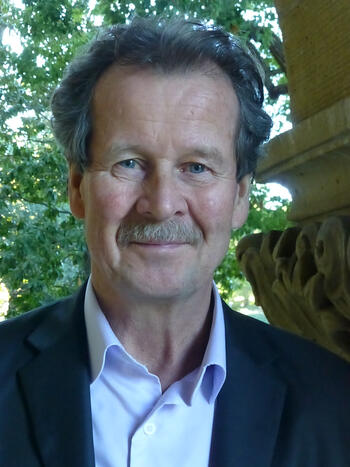
manfred_nowak.jpg

Manfred Nowak graduated from the Vienna Law School (Dr. iur. 1973) and from Columbia University New York (LL.M. 1975). He has been professor at the Institute of Constitutional and Administrative Law at the University of Vienna since 1986. He was member of the Austrian Delegation to the U.N. Commission on Human Rights (1986 and 1993) as well as director of the Netherlands Institute of Human Rights (SIM) at the University of Utrecht (1987-1989). In 1989, he founded the Austrian Ludwig Boltzmann Institute of Human Rights in Vienna and coordinated NGO-parallel events during the 1993 UN Conference for Human Rights in Vienna while he also was Professor of Law at the Austrian Federal Academy of Public Administration in Vienna until 2002.

As U.N. expert on missing persons in the former Yugoslavia he started a process aiming at the identification of missing persons through exhumation of mortal remains between 1994 and 1997.

From 1996-2003, Manfred Nowak was a judge at the Human Rights Chamber in Bosnia. Since 2000, he is head of an independent human rights commission at the Austrian Interior Ministry. From 2002 to 2003 he was visiting professor at the Raoul Wallenberg of Human Rights and Humanitarian Law at the University of Lund. He has been a UN expert on legal questions on enforced disappearances since 2002 and was appointed UN Special Rapporteur on Torture and other Cruel, Inhuman or Degrading Treatment in 2004 with a mandate until 2010.

In addition, Manfred Nowak is also Chairperson of the European Masters Degree in Human Rights and Democratisation (since 2000). Manfred Nowak has published more than 400 books and articles on international, constitutional, administrative, and human rights law, including the standard commentary on the International Covenant on Civil and Political Rights. He was awarded the UNESCO Prize for the Teaching of Human Rights in 1994 and the Bruno Kreisky Prize for Human Rights in 2007.


CV
Authors
Gi-Wook Shin
News Type
News
Date
Paragraphs

Northeast Asia is a global center of economic dynamism, propelled by phenomenal growth in social and cultural interactions among the region's nations. Still, wounds from past wrongs, committed during times of colonialism and war, have not yet fully healed, and the question of history has become a highly contentious diplomatic issue. After one and a half years in office, the leaders of China and South Korea (Korea hereafter) still refuse to hold bilateral summits with their Japanese counterpart, largely due to disputes over the past. Questions about history touch on the most sensitive issues of national identity, making it very difficult for countries to compromise.

How should we understand and approach current historical tensions in Northeast Asia? Pessimists worry that the legacies of the past will persist and that there is not much we can do about it. Optimists believe that these issues will inevitably fade over time as the wartime generation passes away and the countries of the region become increasingly integrated economically and culturally.

Last summer, I had an opportunity to deliver a special lecture series at a Korean university. More than 30 students from China, Japan, Korea, the U.S. and Europe attended the lectures, which focused on problems related to the modern history of Northeast Asia and territorial disputes. I asked students whether they thought Japan had apologized for its past actions of aggression. Korean and Chinese students mostly replied that Japan had either "not apologized at all" or was "not sincere." In contrast, most Japanese students were hardly aware of the misfortunes of the past and the controversies about the government's stance.

The historical amnesia of Japanese students is most worrisome, but the insistence by Chinese and Korean students that the Japanese have not apologized at all is troubling, too. Although the definition of "apology" may vary depending on circumstances, it is undeniable that Japanese leaders, including prime ministers, have directly expressed regret about Japan's actions of aggression to Koreans and Chinese. Of course, legitimate doubts arise in Korea and China as to Japan's sincerity. More than once, a prime minister's apology has been undercut by the denial of wartime responsibility by his education minister, or by a subsequent visit by the prime minister to the Yasukuni Shrine to Japan's war dead.

My teaching experience illustrates the danger posed by a crucial gap in perceptions. History does not merely narrate events or developments. In reconstructing the past, it is inevitable that certain parts are omitted or stressed, producing different views. Divided historical memories separate nations, resulting in distinct, often contradictory, perceptions. Those perceptions become deeply embedded in the public consciousness, transmitted to succeeding generations formally by education and informally through the arts, popular culture and mass media.

Time isn't a cure-all

Why have these nations developed distinct, and incomplete, memories of the wartime period?

One common answer is that Japan was an aggressor while China and Korea were victims, but this is too simplistic to explain the complexities of modern history and collective memory in Northeast Asia. Different events acquire disproportionate weight in the formation of each nation's historical consciousness. For China and Korea, Japanese acts of aggression -- such as the Nanjing Massacre or forced labor and sexual slavery -- constitute the most crucial elements. For Japan, events related to U.S. actions, such as the firebombings of Japanese cities or the nuclear attacks on Hiroshima and Nagasaki, are more important. Korea and China are a less significant element in Japan's memory, while Japan looms large in theirs.

Japan's focus on U.S. actions, over the sufferings of Koreans and Chinese, explains the country's historical amnesia and reluctance to come to terms with its Asian neighbors. Unlike Germany, postwar Japan developed a mythology of victimhood, shaped by the sacrifice of hundreds of thousands of civilians in the massive incendiary and atomic bombings of its cities. Victim consciousness provided fertile soil for the growth of postwar neo-nationalism that justified colonialism and war and denied Japan's responsibility for atrocities.

Balanced historical memory with a better understanding of the perspective of the other side is urgently needed. Japan needs to clearly comprehend the mindset of its neighbors, instead of complaining about its "apology fatigue." China and Korea are also responsible for educating their citizens about Japan's own struggle to come to terms with its past. That kind of mutual understanding rests on resuming efforts at joint historical study with a commitment to open-minded debate. Only then can the nations of Northeast Asia begin to narrow perception gaps and forge a shared view.

This is a task not only for governments but for civil society. We should encourage exchanges among young people from the three countries, including joint visits to historic sites such as the Nanjing Massacre Memorial Hall, Hiroshima Peace Memorial Park and Seodaemun Prison History Museum in Seoul. Such gatherings would constitute a regionwide attempt to share and heal the pains of the past. Disregarding or ignoring dark events means not only evading historical accountability but also missing the opportunity to learn from history. Germany's failure to learn from its defeat in World War I led to the rise of Nazism and another world war. The German experience should provide a valuable lesson for all, especially Japan.

We cannot depend on time alone to heal these wounds. When issues of the past posed a stumbling block in improving relations between China and Japan in the 1970s, Chinese leader Deng Xiaoping said, "Because our generation is not wise enough to resolve all of the pending questions, let's leave the unsettled ones to the next generation." Contrary to his expectations, however, the two countries are stricken today with a worse situation involving history and territorial disputes, and the younger generation tends to be even more swayed by the fever of nationalism.

This is a moment of both danger and opportunity for Northeast Asia. The current impasse in regional relations demands a commitment to confronting the corrosive nationalism fed by the unresolved issues of history. As the wartime generation passes from the scene, they are called upon to leave behind a wiser generation capable of realizing the potential of Northeast Asia to be the center of the 21st century.

This article was originally carried by Nikkei Asian Review on 25 July and reposted with permission.

Hero Image
Yasukuni Shrine Abe Reuters Headline 3
Japan's Prime Minister Shinzo Abe visits Tokyo's Yasukuni Shrine in Dec. 2013.
Reuters/Toru Hanai
All News button
1
News Type
News
Date
Paragraphs


Human Capital & Ageing

as part of the "Next World Program"

Harvard School of Public Health

Boston, Massachusetts

April 13-14, 2015

Organized by:

David E. Bloom, Harvard School of Public Health, USA; David Canning, Harvard School of Public Health, USA; Karen Eggleston, Stanford University, USA; Wang Feng, Fudan University, China; Hans Groth, World Demographic & Ageing Forum, Switzerland; Alfonso Sousa-Poza, University of Hohenheim, Germany; Thomas Zeltner, Special Envoy, World Health Organization, Switzerland.

Topic

One of the challenges faced by ageing societies is maintaining a workforce large enough to supply the goods and services needed by a country's entire population. In the coming decades, industrialized countries will experience a steep increase in the share of elderly persons in the population and a fall in the share of the working-age population. In some countries, the number of people aged 60-64 (many of whom are about to retire) already exceeds the number of people aged 15-19 (the cohort soon entering the labour market). There will, however, be mitigating factors that will tend to decrease the effects of declines in the working-age share of the population: (a) the burden of caring for a high number of elderly people will be offset by there being fewer children to support, and (b) the proportion of adult women who work will rise when there are fewer children to take care of. Still, if there is no change in work and retirement patterns, the ratio of older inactive persons per worker will almost double from around 38 percent in the OECD area in 2000 to just over 70 percent in 2050 (OECD, "Live Longer, Work Longer", 2006). In Europe, this ratio could rise to almost one older inactive person for every worker over the same period.

Ageing on the anticipated scale will place substantial pressure on public finances and economic growth. According to the OECD, on the basis of unchanged participation patterns and productivity growth, the growth of GDP per capita in the OECD area would decline to around 1.7 percent per year over the next three decades, as compared with about 2.4 percent per year between 1970 and 2000. These negative consequences of ageing could be possibly offset by postponement of retirement, greater immigration, faster productivity growth, or higher fertility (although the positive economic effects of higher fertility would only come several decades after an uptick in fertility rates). While these developments would all help offset the negative effects, they need to go hand-in-hand with attempts to mobilize available labour in order to sustain economic growth. One of the most significant sources of additional labour supply is older people who are currently inactive. Indeed, as labour markets tighten, companies will soon have little choice but to be more welcoming of older employees. Prompt action to harness – and enhance – the contributions of older workers could become a key competitive advantage.

The objective of this workshop would be to discuss one important topic related to an ageing workforce, namely human capital. How does a worker’s human capital change over the life course and what role does the health and skill status of workers play? The answer to these questions is of great importance, not only for adequate human resource policies, but also for macroeconomic policies, especially those associated with retirement and economic growth. Despite the importance of this issue, this question is not easily answered.

The workshop will bring together researchers to present recent research on ageing and human capital. Research questions and topics that could be dealt with include:

  • Human capital, economic growth, and the demographic dividend.
  • Firm-level experience in promoting human capital among older workers.
  • Evaluation of policies aimed at enhancing the quantity, quality, and value of older workers’ human capital.
  • The relationship between human capital and productivity.
  • Training and wages of older workers.
  • Technological change, knowledge replenishment, and productivity. 

Submission for the Workshop

Interested authors are invited to submit a 1-page abstract by the 30th of September 2014 to David E. Bloom (dbloom@hsph.harvard.edu) and Alfonso Sousa-Poza (Alfonso.sousa-poza@uni-hohenheim.de). The authors of accepted abstracts will be notified by the end of October and completed draft papers will then be expected by the 28th of February 2015.

Economy class travel and accommodation costs for one author of each accepted paper will be covered by the organisers.

A selection of the papers presented at the workshop will (assuming successful completion of the review process) be published in a special issue of the Journal of the Economics of Ageing.

Submission for the Special Issue

Interested authors (also those not attending the workshop) are invited to submit papers for the special issue in the Journal of the Economics of Ageing by the 31st of May 2015. Submissions should be made online at http://ees.elsevier.com/jeoa. Please select article type “SI Human Capital.”

About the Next World Program

The Next World Program is a joint initiative of Harvard University’s Program on the Global Demography of Aging, the WDA Forum, Stanford University’s Asia Health Policy Program, and Fudan University’s Comparative Aging Societies. These institutions will organize an annual workshop and a special issue in the Journal of the Economics of Ageing on an important economic theme related to ageing societies.

Hero Image
village Karen Eggleston
All News button
1
News Type
News
Date
Paragraphs

Petra Moser, Assistant Professor of Economics and Europe Center faculty affiliate, and co-authors Alessandra Voena and Fabian Waldinger's forthcoming article in the American Economic Review analyzes how Jewish émigrés from Nazi Germany influenced chemical innovation in the U.S. 

For a more information, please visit the publication's webpage by clicking on the article title below.

All News button
1
News Type
News
Date
Paragraphs

This paper written by political scientists Michael Bechtel, Jens Hainmueller and Yotam Margalit, is the first systematic analysis of the question of why European Union voters agree to bear the costs of bailing out other countries.

Jens Hainmueller is an Associate Professor of Political Science at Stanford and a Europe Center Faculty Affiliate.

For a more information, please visit the publication's webpage by clicking on the article title below.

All News button
1
Paragraphs

Historical accounts suggest that Jewish émigrés from Nazi Germany revolutionized U.S. science. To analyze the émigrés’ effects on chemical innovation in the US we compare changes in patenting by U.S. inventors in research fields of émigrés with fields of other German chemists. Patenting by U.S. inventors increased by 31 percent in émigré fields. Regressions that instrument for émigré fields with pre-1933 fields of dismissed German chemists confirm a substantial increase in U.S. invention. Inventor-level data indicate that émigrés encouraged innovation by attracting new researchers to their fields, rather than by increasing the productivity of incumbent inventors.

All Publications button
1
Publication Type
Journal Articles
Publication Date
Journal Publisher
American Economic Review
Authors
Paragraphs
Why do voters agree to bear the costs of bailing out other countries? Despite the prominence of public opinion in the ongoing debate over the eurozone bailouts, voters’ preferences on the topic are poorly understood. The article's authors conduct the first systematic analysis of this issue using observational and experimental survey data from Germany, the country shouldering the largest share of the EU’s financial rescue fund. Testing a range of theoretical explanations, we find that individuals’ own economic standing has limited explanatory power in accounting for their position on the bailouts. In contrast, social dispositions such as altruism and cosmopolitanism robustly correlate with support for the bailouts. The results indicate that the divide in public opinion over the bailouts does not reflect distributive lines separating domestic winners and losers. Instead, the bailout debate is better understood as a foreign policy issue that pits economic nationalist sentiments versus greater cosmopolitan affinity and other-regarding concerns.
All Publications button
1
Publication Type
Journal Articles
Journal Publisher
American Journal of Political Science
Authors
Jens Hainmueller
News Type
News
Date
Paragraphs

Recap: Pascal Lamy Lecture, “World Trade and Global Governance”

 
On February 10, 2014, Pascal Lamy, the former Director-General of the World Trade Organization, visited Stanford University as a special guest of The Europe Center and the Freeman Spogli Institute for International Studies. During his two-term tenure at the helm of the WTO (from 2005 to 2013), Mr. Lamy successfully guided the organization through complex changes in the regulation of international trade. Among his many achievements, he oversaw the systematic integration of developing countries into positions of political leadership in the world economic order. Prior to the WTO, Mr. Lamy served as the European Commissioner for Trade, the CEO of the French bank Crédit Lyonnais, and in the French civil service. 
 
At Stanford, Mr. Lamy first participated in a lunchtime question and answer roundtable with students that was moderated by Stephen Stedman, Deputy Director of the Center for Democracy, Development, and the Rule of Law. Among other topics, he spoke about the necessary mix of economic, social, and political policies that determine the efficacy of free trade as an engine of global economic growth. 


Image

Mr. Lamy then delivered a public lecture on “World Trade and Global Governance” before an audience of over a hundred members of the Stanford community. In this talk, Mr. Lamy outlined a statement of his thinking about the future of global governance, focusing on three overarching points. First, despite some setbacks, governments and international organizations have achieved major successes in regulating the liberalization of global trade. Tariffs are on average lower than ever before, and governments did not raise tariffs during the recent financial crisis as they did during the Great Depression. Second, a new feature of the global economy is that protectionism based on economic objectives has been replaced by ‘precautionism’ based on normative prerogatives. For example, competing national perspectives on product standards such as those related to safety or labor norms thwart efforts to achieve consensus on trade regulation. Third, in order to achieve regulatory convergence, we need to bring together stakeholders from the public and private sector to build coalitions that jointly negotiate conflicts in matters of global governance. For example, the “C20-C30-C40 Coalition of the Working” that comprises countries, companies, and cities is currently striving to overcome regulatory gridlock on climate change.
 
We welcome you to visit our website for additional details about this event.


Save the Date: The Europe Center Lectureship on Europe and the World

 
Please mark your calendars for the inaugural annual lectures in this series by Adam Tooze, Barton M. Briggs Professor of History, Yale University. 
 
Dates: April 30, May 1, and May 2, 2014
 
 
Image
Image of Adam Tooze
Adam Tooze will deliver three lectures from his forthcoming book, A World Fit for Heroes. In particular, he will speak about the history of the transformation of the global power structure that followed from Imperial Germany’s decision to provoke America’s declaration of war in 1917. Tooze is the author of The Wages of Destruction: The Making and Breaking of the Nazi Economy (2006) and Statistics and the German State 1900-1945: The Making of Modern Economic Knowledge (2001), among numerous other scholarly articles on modern European history.


Meet our Visiting Scholars:  Manfred Nowak 

 
In each newsletter, The Europe Center would like to introduce you to a visiting scholar or collaborator at the Center. We welcome you to visit the Center and get to know our guests.
 
 
Image
Image of Manfred Nowak, Visiting Austrian Chair Professor 2013-2014, Stanford University
Manfred Nowak (LL.M., Columbia University, 1975) is Distinguished Visiting Austrian Chair Professor; Visiting Professor, Stanford Law School; and, Professor of Law, University of Vienna. One of the world’s most renowned human rights scholars and legal theorists, Nowak has published more than 400 books and articles on international, constitutional, administrative, and human rights law, including the standard commentary on the International Covenant on Civil and Political Rights. He was the Director of the Netherlands Institute of Human Rights at the University of Utrecht (1987-1989), and he founded the Austrian Ludwig Boltzmann Institute of Human Rights in 1989. From 1996-2003, Nowak was a judge at the Human Rights Chamber in Bosnia. He has also served as a U.N. legal expert on missing persons and enforced disappearances, and was appointed the U.N. Special Rapporteur on Torture and other Cruel, Inhuman or Degrading Treatment in 2004. 
 
Manfred Nowak was awarded the UNESCO Prize for the Teaching of Human Rights in 1994 and the Bruno Kreisky Prize for Human Rights in 2007.


Workshop Schedules  

 
The Europe Center invites you to attend the talks of speakers in the following workshop series: 
 

Europe and the Global Economy

 
February 20, 2014
Alan Deardorff, John W. Sweetland Professor of International Economics & Prof. of Economics and Public Policy, University of Michigan
RSVP by Feb 19, 2014
 
Mar 6, 2014
Sophie Meunier, Research Scholar, Woodrow Wilson School and Co-Director, EU Program at Princeton, Princeton University
RSVP by Mar 3, 2014
 
Mar 13, 2014
Randy Stone, Professor of Political Science, University of Rochester
RSVP by Mar 10, 2014
 
Apr 3, 2014
Kåre Vernby, Associate Professor, Department of Government, Uppsala University
RSVP by Mar 31, 2014
 
Apr 17, 2014
Mark Hallerberg, Professor of Public Management and Political Economy, Hertie School of Governance 
RSVP by Apr 4, 2014
 
May 15, 2014
Christina Davis, Prof. of Politics and International Affairs, Princeton University
RSVP by May 12, 2014
 

European Governance

 
May 22, 2014
Wolfgang Ischinger, Former German Ambassador to the U.S.; Chairman, Munich Security Conference
RSVP by May 19, 2014
 
May 29, 2014
Simon Hug, Professor of Political Science, University of Geneva
RSVP by May 26, 2014


The Europe Center Sponsored Events

 
We invite you to attend the following events sponsored or co-sponsored by The Europe Center:
 
March 6, 2014
“Promise and Critique of Capitalism: Changing Discourses Since the 18th Century”
Jürgen Kocka, Professor and Former President of the Social Science Research Center, Berlin
Location: Watt Room, Stanford Humanities Center
 
March 6 and 7, 2014
Indian Ocean Conference
“Connecting Continents: Setting an Agenda for a Historical Archaeology of the Indian Ocean World”
Location: Stanford Archaeology Center, Building 500, 488 Escondido Mall
 
March 31, 2014
Simon Hix, Professor of European and Comparative Politics, London School of Economics and Political Science
Political Science Comparative Politics Workshop
Location: Encina Hall West Room 400
 
April 15, 2014
Ulrich Wilhelm, Director General, Bavarian Broadcasting Corporation
“Assessing the Impact of the NSA Spy Scandal on American-European Relations” 
The Europe Center and FSI Stanford Special Event
Location: Oksenberg Conference Room, Encina Hall
RSVP by April 10, 2014


Other Events

 
The Europe Center also invites you to attend the following events of interest:
 
February 20, 2014
Gregory Shaffer, Melvin C. Steen Professor of Law, University of Minnesota Law School
“How the WTO Shapes Regulatory Governance”
Room 185, Stanford Law School
 
European Entrepreneurship & Innovation @Stanford Engineering
February 24, 2014
    “Switzerland and Turkey - Venture Capital and Product Design Firms”
    Giuseppe Zocco, Founding Partner, Index Ventures; Emrah Yalaz, CEO, Spring Ventures
March 3, 2014
    “Flanders and Sweden - Enterprise Software and VC Funds”
    Lieven Vermaele, CEO, SDNsquare; Martin Hauge, Founding Partner, Creandum
March 10, 2014
    “Hungary and Italy - Digital Infrastructure Startups and ‘Maker’ Movements”
    Gyula Feher, CTO & Co-Founder, Ustream
Location: Hewlett 201 Auditorium, Engineering School
 

We welcome you to visit our website for additional details.

All News button
1
-

The presentation summarizes preliminary findings of my research project on Allied policy towards resistance groups during World War II and its impact on post-war political and ideological divisions.

The research is linked with a multiplicity of historical problems: the western Allies’ balance of political and military considerations during World War II; the Anglo-American cooperation and competition in the field of intelligence; the use of special operations as an instrument of foreign policy, especially in regard to countries where the development of resistance movements had a strong impact on post-war settlement (e.g. Yugoslavia, Greece and Poland); the politics of communist movements between war and revolution in Central and Eastern Europe; the relationship between the Western Allies and the Soviet Union and the Allies’ perception of the latter.

The particular contribution of the project is to bring together aspects which are usually addressed separately: the different national scenarios, whose connections and mutual influence will be investigated; the two Western intelligence agencies, which have been researched mostly in separate ways by scholars of the corresponding nationalities; the Soviet and Western allies’ policies.

Tommaso Piffer is a Marie Curie Postdoctoral Fellow at the Davis Center for Russian and Eurasian Studies at Harvard and at the University of Cambridge. Among his publications is a biography of Alfredo Pizzoni, the political chief of the Italian Resistance (Il Banchiere della Resistenza, 2005), an account of the relationship between the Allies and the Italian Resistance during World War II (Gli Alleati e la Resistenza Italiana, 2010) as well as several essays. He also edited a book in memory of Victor Zaslavsky on Totalitarian societies and democratic transition (Società totalitarie e transizione alla democrazia, 2011, with Vladislav Zubok) and the collection of essays on the political mass murder of Porzus (Porzus. Violenza e resistenza sul confine orientale, 2012). He is an affiliate at the Harvard Center for European Studies and a contributor to the cultural insert of the Italian newspaper Corriere della Sera.

Open to Stanford affiliates

Sponsored by the Center for Russian, East European and Eurasian Studies and co-sponsored by The Europe Center

History Corner, Room 307

Tommaso Piffer Marie Curie Postdoctoral Fellow, Davis Center for Russian and Eurasian Studies, Harvard and University of Cambridge Speaker
Seminars

Workshop Goals

On the first day, develop a set of research interventions (surveys, experiments, archival searches, participant observations, etc.) that will gain some leverage in measuring differential policies in Europe and their impact on integration, however specified; or in examining the various immigrant populations to measure their differential success in integration, however specified. Each of the participants (either singly or in collaboration) will write up one or two research proposals that lay out the outcomes of interest and the strategy for explaining variation on those outcomes.  Discuss problems and opportunities for each of the submitted proposals and fulfill this first goal.

The second goal of the workshop, and the subject for the second day, to think through three related issues. The first is how to frame the set of proposals in a way that they all fit into a well-defined framework, as if each proposal were a piece of a coherent puzzle. The second is to think through funding sources for this set of interventions that would allow us to conduct the research we proposed and to continue collaborating across these projects. The third is to explore whether there are scholars whose work we know who should be invited to join our group and become part of the grant proposing team.

Wednesday, May 7, 2014 Agenda

I.  Citizenship (discussant Thad) – [9-11AM]

  • Hainmueller/Hangartner – Return on getting citizenship; encouragement design in Switzerland
  • Gest/Hainmueller/Hiscox – Encouragement design on citizenship in US (Chicago)
  • Hainmueller/Laitin – Encouragement design on citizenship in France
  • Alter/Margalit – Immigration and political participation, where immigrants get immediate rights to citizenship (Israel)
  • Dancygier/Vernby – return on citizenship for labor market success (Sweden)

II. Local Context (Rafaela) [11:15-12:15]

  • Adida/Hangartner – RDD on Sudanese refugees in various US cities; experiment with IRC on Iraqi/Chaldian integration in El Cajon

III. Contracts of Integration (Yotam) [1:30-3PM]

  • Hainmueller/Hangartner – Integration Contracts and Naturalization
  • Hainmueller/Laitin – Integration Contracts in France

IV. Discrimination (Jens) [3:30-5PM]

  • Ortega/Polavieja – Immigrants and Job security in Spain and elsewhere in Europe
  • Margalit – Overcoming employer abuse of immigrant workers
  • Dancygier/Vernby – failure of immigrants to get nominated for political office

Thursday, May 8, 2014 Agenda

Discussion on what investments in collective goods might advance this research perspective productively. We might look at favorable granting institutions and how we might combine our memos into a macro proposal; or we might think about building a common research infrastructure (in the way J-PAL has done for experimental development studies). Working towards a jointly authored volume might be another way to aggregate our research projects. All of this discussion depends on the complementarities that emerge from our discussions on Wednesday. David will chair the Thursday discussion.

Reuben W. Hills Conference Room

Department of Political Science
Stanford University
Encina Hall, W423
Stanford, CA 94305-6044

(650) 725-9556 (650) 723-1808
0
James T. Watkins IV and Elise V. Watkins Professor of Political Science
laitin.jpg PhD

David Laitin is the James T. Watkins IV and Elise V. Watkins Professor of Political Science and a co-director of the Immigration Policy Lab at Stanford. He has conducted field research in Somalia, Nigeria, Spain, Estonia and France. His principal research interest is on how culture – specifically, language and religion – guides political behavior. He is the author of “Why Muslim Integration Fails in Christian-heritage Societies” and a series of articles on immigrant integration, civil war and terrorism. Laitin received his BA from Swarthmore College and his PhD from the University of California, Berkeley.

Affiliated faculty at the Center for International Security and Cooperation
Affiliated faculty at The Europe Center
David Laitin (Workshop Faculty Organizer) Stanford University Speaker

616 Serra Street
Encina Hall West, Room 100
Stanford, CA 94305-6044

0
Associate Professor of Political Science
Europe Center Affiliated Faculty
101105_JensHainmueller_1583.jpg

Jens Hainmueller's research has appeared in journals such as the American Political Science Review, American Journal of Political Science, Journal of the American Statistical Association, Review of Economics and Statistics, Political Analysis, International Organization, and the Journal of Statistical Software, and has received awards from the American Political Science Association, the Society of Political Methodology, the Midwest Political Science Association.

Hainmueller received his PhD from Harvard University and also studied at the London School of Economics, Brown University, and the University of Tübingen. Before joining Stanford, he served on the faculty of the Massachusetts Institute of Technology.

Jens Hainmueller Stanford University Speaker
Claire Adida UC San Diego Speaker
Dominik Hangartner London School of Economics and Political Science Speaker
Kare Vernby Uppsala University, Sweden Speaker
Yotam Margalit Columbia University Speaker
Francesc Ortega Queens College CUNY Speaker
Thad Dunning UC Berkeley Speaker
Rafaela Dancygier Princeton University Speaker
Simon Ejdemyr Stanford University Speaker
Simon Hix London School of Economics and Political Science Speaker
Workshops
Subscribe to Central Europe