Authors
Noa Ronkin
News Type
News
Date
Paragraphs

Corruption is typically understood as a sign of weak institutions and failed governance. But what if it is a deliberate political technology used to consolidate power, discipline rivals, and reshape political systems?

This is the argument advanced by University of Chicago sociologist Kimberly Kay Hoang in the latest episode of the APARC Briefing series. Drawing on years of ethnographic research across Southeast Asia, including Vietnam, Myanmar, Hong Kong, and Singapore, as well as offshore tax havens, Hoang uses a comparative Asian lens to show how both democratic and authoritarian governments strategically align with private capital, reinforcing elite power. Hoang joined APARC Director Kiyoteru Tsutsui to share core insights from her work.
 

Image
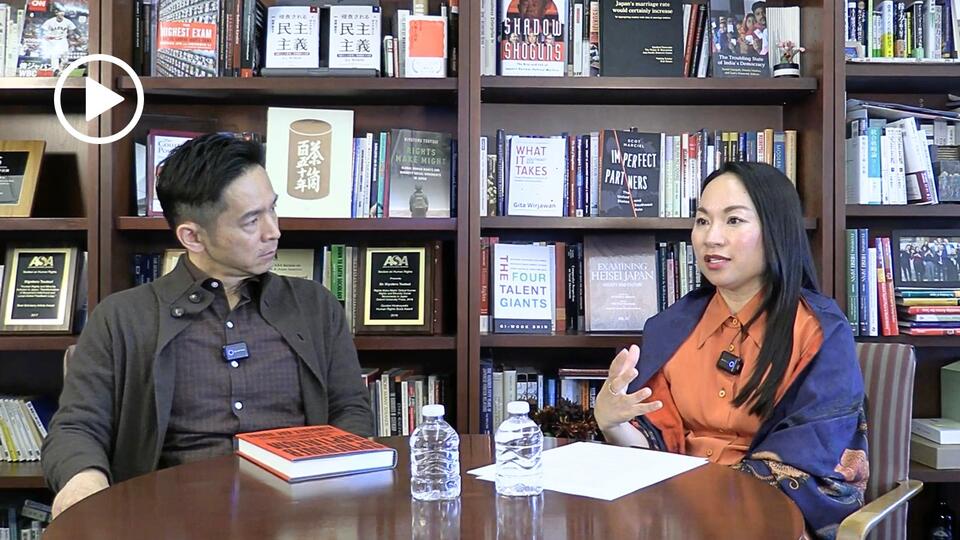
Kimberly Hoang and Kiyoteru Tsutsui seated in an office during a recorded podcast conversation.

Kimberly Kay Hoang speaks on the APARC Briefing series with host Kiyoteru Tsutsui.


Sign up for APARC newsletters to receive our experts' analysis >


She argues that corruption discourse often operates as a political tool, widely seen across Asian political economies and increasingly evident in the United States during the Trump era. This rhetoric, she says, tends not so much to dismantle institutions but to reshape them, concentrating authority in the executive and weakening checks and balances. According to Hoang, these patterns reflect a broader global shift toward more oligarchic forms of governance, where political power is increasingly concentrated among transnational elites.

"We often think of corruption as a failure of governance – that it's a weak state, and weak states can’t govern," Hoang says. "But in Southeast Asia and in other parts of East Asia, it has become an instrument for governance. It's a way of consolidating political power, weaponizing corruption."

From Vietnam's Hostess Bars to Global Finance


Hoang's research journey began in an unexpected place: working 12-hour shifts in Vietnamese hostess bars in 2009-2010, shortly after the global financial crisis. What started as an ethnographic study of the sex industry and human trafficking in Vietnam evolved into something far larger: a story of Asian ascendancy and Western decline playing out in micro-transactions.

"I started to witness local Vietnamese men turning down deals with Western businessmen and taking extraordinary deals from investors from China, parts of Southeast Asia – Hong Kong and Singapore – and Korea, Taiwan," Hoang recalls. When she examined foreign direct investment data, "the numbers lined up to what I was seeing at a micro level."

But when she presented these findings in the United States, the response was skeptical, even hostile. "People would say, 'Okay, yes, the economy is in decline, but America still has the strongest military,' or 'China is really dependent on the American economy, so if the American economy collapses, so will China's,'" she remembers. "It was a huge oversight of American arrogance to just believe that [Asian ascendancy] was impossible."

Her continued research led her to follow not just the money but "the people who move the money" – from Vietnam and Myanmar to Hong Kong and Singapore, and ultimately to offshore tax havens in the British Virgin Islands, Panama, the Seychelles, and the Cayman Islands.

The Architecture of Global Capital


What Hoang uncovered was what she calls an "architecture of global capital" – an invisible financial infrastructure built by "hidden engineers" including specialized wealth managers, lawyers, and financial advisors who coordinate across borders to move elite wealth beyond the reach of any single nation-state.

The scale is staggering: approximately $7.6 trillion in household wealth is hidden offshore globally, with the top 0.01% avoiding about 25% of their tax obligations through legal structures and shell corporations.

"We have to move beyond national boundaries," Hoang argues, "because global oligarchs choose the sovereigns and choose the jurisdictions that govern their financial transactions and activities."

This system creates what Hoang describes in her book, Spiderweb Capitalism: How Global Elites Exploit Frontier Markets (Princeton University Press), as a web of legal and financial gray zones that allow wealth to compound while evading accountability.

If we think of corruption as a tool of governance in authoritarian states and increasingly in democratic countries, [...] it means that we no longer rely on institutions or law branches of government [...] People who have executive authority can just go after their rivals.
Kimberly Kay Hoang

Corruption as Governance Mechanism


Hoang’s work exposes the connections between the rise of global elites, corruption, and the emergence of oligarchic governance. Across both Asia and the United States, she explains, corruption discourse operates as a mechanism for reshaping democratic governance by means of dissolving the boundary between political authority and economic power.

"What does that mean? It means that we no longer rely on institutions," she says. "People who have executive authority can just go after their rivals."

This creates what Hoang calls "anticipatory compliance," a situation in which political and economic elites preemptively align themselves with power centers. The mechanism works through strategic ambiguity: when corruption charges can be selectively deployed, everyone becomes potentially vulnerable, leading to self-regulation through fear.

While this pattern is well-established in countries like China and Vietnam, Hoang sees similar dynamics emerging in the United States. "Under the Trump administration, we've seen charges of corruption being weaponized as a tool of governance," she notes, while emphasizing that elements of this already appeared under the Biden administration.

Democratic Reordering, Not Collapse


When explaining the impacts of corruption discourse on democratic governance, Hoang is careful to distinguish between democratic collapse and what she terms "democratic reordering." Rather than overtly capturing the state, global oligarchs work through existing institutions, gradually redefining their function through moralized narratives, weakened oversight, selective enforcement, and strategic risk management. The outward forms of democracy remain intact, but the independence of courts, election fairness, and accountability mechanisms are steadily eroded. "They increasingly serve concentrated elite interests."

In comparing the United States to China, Hoang notes a crucial difference: "China has a long view. They're playing a 50-year view [...] If we're in this constant [electoral] cycle, and we've delegitimized oversight and political authority, [...] we need to have stronger independent institutions that outlast whoever is in office."

Finding Hope in Resistance


Despite her sobering analysis, Hoang sees reasons for optimism. "What gives me hope is that, if you look carefully, there are a lot of resistance movements," she says. "I think there's a growing battle between the millionaires and billionaires."

She points to resistance not just from grassroots movements but from millionaires who "don't want to live in a billionaire oligarchy world, who feel economically precarious vis-à-vis the extreme inequality."

The challenge, she argues, is that both mainstream and social media highlight extremes while missing the middle-level discourse and resistance movements that are actively organizing.


Kimberly Kay Hoang is Professor of Sociology and the College, and Director of Global Studies at the University of Chicago. In addition to Spiderweb Capitalism, she is the author of Dealing in Desire: Asian Ascendancy, Western Decline, and the Hidden Currencies of Global Sex Work (University of California Press). Her forthcoming work examines U.S.-China power relations in offshore financial centers.

The full APARC Briefing conversation with Hoang is available on APARC’s YouTube channel.

Read More

Supporters of impeached South Korean President Yoon Suk Yeol gather on April 4, 2025 in Seoul, South Korea, with a foucs on a man holding a sign reading "Stop the Steal" and an American flag.
News

Reactionary Politics in South Korea: Understanding Far-Right Ideas and Practices

University of Hawaiʻi at Mānoa sociologist Myungji Yang offers a historical account of South Korea’s far right, arguing that recent reactionary mobilization reflects long-standing Cold War legacies, anti-communism, and conservative political networks. Although South Korea is often viewed as one of Asia’s democratic success stories, Yang suggests that recent political turmoil has revealed how deeply rooted illiberal forces remain.
Reactionary Politics in South Korea: Understanding Far-Right Ideas and Practices
People walk through the flooded streets at Kampung Pulo on January 18, 2014 in Jakarta, Indonesia.
News

APARC Visiting Scholar Sheds Light on the Cold War Roots of Contemporary Urban Politics in Southeast Asia

Gavin Shatkin, a Lee Kong Chian NUS-Stanford fellow on Southeast Asia at APARC, argues that prevailing urban development challenges in Jakarta, Metro Manila, and Bangkok stem from Cold War-era political and institutional structures imposed by U.S.-backed authoritarian, anti-communist regimes.
APARC Visiting Scholar Sheds Light on the Cold War Roots of Contemporary Urban Politics in Southeast Asia
Japan's Prime Minister Sanae Takaichi speaks to the media in front of a board displaying the names of LDP candidates on general election day on February 8, 2026 in Tokyo, Japan.
Commentary

What's Next for Japan After Prime Minister Sanae Takaichi's Historic Election Victory

In a new APARC Briefing explainer, APARC and Japan Program Director Kiyoteru Tsutsui analyzes how Takaichi secured a landmark supermajority in a landslide election win for her party and what this outcome means for Japan's fiscal policy, constitutional change, its relationship with China, and its alliance with the United States.
What's Next for Japan After Prime Minister Sanae Takaichi's Historic Election Victory
Hero Image
All News button
1
Subtitle

Speaking on the APARC Briefing video series, University of Chicago sociologist Kimberly Kay Hoang examines the architecture of global capital and how corruption discourse is transforming governance and political order in Asia and the United States.

Date Label
Display Hero Image Wide (1320px)
Yes
Authors
Michael Breger
News Type
News
Date
Paragraphs

How do aging populations reshape health and innovation policies in Asian economies? What role can the private sector play in public health service delivery, and how do individual preferences affect the development of emerging technologies? Mai Nguyen and Jinseok Kim, the 2024-25 Asia health policy postdoctoral fellows at APARC, focus on these questions as part of their research into health care service adaptation and behavioral economics.

At a recent joint seminar, “Health, Aging, Innovation, and the Private Sector: Evidence from Vietnam and Korea,” they offered a comparative look at how Vietnam and South Korea navigate aging populations, rising healthcare demands, and rapid technological change. While Nguyen focuses on health system design in Vietnam and Kim explores innovation diffusion in Korea, they both use discrete choice modeling to understand how individuals make decisions within systems influenced by age, infrastructure, and policy.

Sign up for APARC newsletters to receive updates from our scholars >


Nguyen and Kim’s work is supported by APARC’s Asia Health Policy Program (AHPP), which offers a postdoctoral fellowship each year to an early-career scholar conducting original research on health policy in the Asia-Pacific, particularly in low- and middle-income economies across the region. The fellowship demonstrates the program’s commitment to fostering the next generation of Asia-focused health policy researchers.

Vietnam’s Mixed Health System and the Role of Patient Choice


Mai Nguyen’s research centers around the role of private healthcare providers in Vietnam, especially for patients managing chronic diseases such as diabetes. She studies how patients choose between public and private healthcare providers, and what attributes of care they value most.

To analyze these preferences, she uses a method known as the Discrete Choice Experiment, which allows her to quantify the relative importance of various service attributes — such as appointment flexibility, doctor choice, quality of care, drug diversity, and cost coverage — in influencing patients’ decisions.

Despite potential downsides, such as increased costs, equity concerns, and profit-driven service delivery, my study finds that private healthcare helps relieve pressure on the public system and meets diverse patient needs.
Mai Nguyen

Nguyen’s interest in this topic began while she worked at Vietnam’s Ministry of Health. “That earlier work highlighted the growing contribution of the private sector in filling service delivery gaps, particularly in urban areas and for non-communicable diseases such as diabetes,” she says.

Her findings suggest that Vietnam’s private sector has become a necessary complement to public healthcare. “Despite potential downsides, such as increased costs, equity concerns, and profit-driven service delivery, my study finds that private healthcare helps relieve pressure on the public system and meets diverse patient needs.”

At APARC, Nguyen has sharpened the focus of her research under the mentorship of AHPP Director Dr. Karen Eggleston, a leading expert on public and private roles in Asian health systems. Nguyen also values her collaboration with Jinseok Kim. “Dr. Kim’s expertise provides valuable insights into how Korea is addressing the challenges of a rapidly aging population through innovative policy and service delivery models,” she notes.

Her time at Stanford has also broadened Nguyen’s horizons beyond traditional health economics. “I have developed a strong interest in the application of artificial intelligence to enhance the delivery of medical services,” she says. Looking forward, she plans to expand her research to Asian American populations in the United States, exploring how AI and digital health can improve diabetes care while also addressing barriers related to equity and access.

Innovation Adoption and the Aging Consumer in South Korea


Jinseok Kim investigates how aging affects new technology adoption and consumer behavior in South Korea, a country facing one of the fastest demographic shifts in the world.

“My current research involves looking at population aging and innovation diffusion, specifically in the context of the rapid aging trend in Korea,” Kim says. He studies how age influences consumer preferences in choosing new technologies such as electric vehicles, telemedicine, and generative AI platforms like ChatGPT.

By working out the relationship between consumer choice and population aging, I forecast the effect of the population aging trend on the diffusion of innovative products and provide the potential policy and marketing implications for government policy and corporate management.
Jinseok Kim

Understanding these preferences, Kim argues, is critical for both policy and market strategy. “By working out the relationship between consumer choice and population aging, I forecast the effect of the population aging trend on the diffusion of innovative products and provide the potential policy and marketing implications for government policy and corporate management.”

The challenge, he says, lies in making sense of a wide range of behaviors across age groups and product types. “The biggest challenge I had in my studies was finding the overarching trend in the relationship between consumer choice for particular innovative products and population aging and then translating this finding into meaningful implications for society and the economy.”

Kim credits his time at APARC, especially participating in the Stanford Next Asia Policy Lab (SNAPL) meetings, with broadening his perspective. “Working as a member of SNAPL gave me insights and perspectives I didn’t have before,” he says.

SNAPL, directed by Professor Gi-Wook Shin, is an interdisciplinary research initiative housed within APARC addressing pressing social, cultural, economic, and political challenges in Asia through comparative, policy-relevant studies. The lab cultivates the next generation of researchers and policy leaders by offering mentorships and fellowship opportunities for students and emerging scholars.

Kim sees APARC’s model as effectively bridging academia and policy. “There are so many opportunities to interact with other scholars, policymakers, and practitioners,” Kim says. “Scholars here not only research and write, but they also get to share their voice and research findings in real-world policy.”

His advice to early-career researchers is straightforward. “Be more down-to-earth with your studies and thinking,” Kim says. “Sometimes scholars tend to get caught up in their way of thinking and perspective, but it may not be practical in real life. That is why I think it is important to just get outside and observe real consumer choice and behavior.”

Kim plans to continue researching questions related to innovation and demographic change to help governments and businesses adapt to aging populations and shifting consumer needs.

Ground-Level Data, Big-Picture Impact


Mai Nguyen and Jinseok Kim approach shared societal challenges through distinct yet complementary lenses. Nguyen’s research reveals how patient preferences can guide more effective public-private collaboration in healthcare, ultimately shaping systems that are more responsive to real-world needs. Meanwhile, Kim examines how patterns of technology adoption — especially among older adults — can influence the trajectory of innovation in aging societies.

Both scholars emphasize the value of ground-level data in addressing large-scale issues. By centering real behaviors and preferences, their work helps inform smarter, more adaptive policy, whether in designing patient-centered care or planning for technology's role in future societies. At APARC, their research bridges theory and practice, offering fresh insight into how Asian countries can navigate the twin forces of demographic change and rapid innovation.

Read More

Photo of Stanford Main Quad and logos of APARC and media outlet Netra News, winner of the 2025 Shorenstein Journalism Award.
News

Bangladesh-Focused Investigative Media Outlet Netra News Wins 2025 Shorenstein Journalism Award

Sponsored by Stanford University’s Shorenstein Asia-Pacific Research Center, the 24th annual Shorenstein Journalism Award honors Netra News, Bangladesh's premier independent, non-partisan media outlet, for its unflinching reportage on human rights abuses and corruption in Bangladesh and its efforts to establish and uphold fundamental freedoms in the country.
Bangladesh-Focused Investigative Media Outlet Netra News Wins 2025 Shorenstein Journalism Award
Brandon Yoder, Stanford Next Asia Policy Fellow
News

Political Signaling in an Uncertain World: Brandon Yoder’s Empirical Lens on Chinese Foreign Policy

Brandon Yoder, APARC’s 2024–25 Stanford Next Asia Policy Fellow, focuses on a central challenge in international politics: how states can credibly signal their intentions and avoid war. His work investigates this question in high-stakes contexts, such as during power shifts, amid strategic uncertainty, and in multi-actor settings where traditional signaling models often fall short.
Political Signaling in an Uncertain World: Brandon Yoder’s Empirical Lens on Chinese Foreign Policy
Shilin Jia
News

Tracking Elite Political Networks: Shorenstein Postdoctoral Fellow Shilin Jia’s Data-Driven Approach to Understanding Chinese Bureaucracy

APARC’s 2024-25 Shorenstein Postdoctoral Fellow on Contemporary Asia Shilin Jia researches the careers of high-level Chinese political elites during the economic reform period from 1978 to 2011. Using a quantitative approach, Jia explores how China's party-state orchestrated elite circulation as a governance tool during a time of significant economic and political transformation.
Tracking Elite Political Networks: Shorenstein Postdoctoral Fellow Shilin Jia’s Data-Driven Approach to Understanding Chinese Bureaucracy
Hero Image
Two young scholars in conversation on a background of Encina Hall arcade.
All News button
1
Subtitle

As Asian economies grapple with aging populations, rising healthcare demands, and rapid technological change, APARC’s 2024-25 Asia Health Policy Program Postdoctoral Fellows Mai Nguyen and Jinseok Kim study large-scale health care structural and policy challenges from the lens of individual decision-making.

Date Label
Paragraphs

Shorenstein APARC's annual report for the academic year 2023-24 is now available.

Learn about the research, publications, and events produced by the Center and its programs over the last academic year. Read the feature sections, which look at the historic meeting at Stanford between the leaders of Korea and Japan and the launch of the Center's new Taiwan Program; learn about the research our faculty and postdoctoral fellows engaged in, including a study on China's integration of urban-rural health insurance and the policy work done by the Stanford Next Asia Policy Lab (SNAPL); and catch up on the Center's policy work, education initiatives, publications, and policy outreach. Download your copy or read it online below.

All Publications button
1
Publication Type
Annual Reports
Publication Date
Authors
1
Asia Health Policy Postdoctoral Fellow, 2024-2025
Mai Nguyen.JPG Ph.D.

Mai Nguyen joined the Walter H. Shorenstein Asia-Pacific Research Center (APARC) as Asia Health Policy Postdoctoral Fellow for the 2024-2025 academic year. She holds a PhD in health services and health policy from Queensland University of Technology (QUT), Australia, and a Master of Science from Heller School for Social Policy and Management, Brandeis University.

Her doctoral research focused on how the expanding private healthcare sector can be managed more effectively to better supplement public health services to achieve universal health coverage in Vietnam. The study analyzed large and complex national health datasets from two consecutive Household Living Standard Surveys, clinical hospital data at national levels and in-depth interviews with key stakeholders of Vietnam's health system to investigate consumers' choice for private and public health care services in Vietnam. Her research findings have implications for policy change in terms of harnessing and regulating private health services in Vietnam and other Asia-Pacific countries, especially low and middle-income countries.

Dr. Nguyen has worked as a senior health specialist at Vietnam Ministry of Health. Her research interest stems from her professional experience in health policy and program management, including health policy and management, health services, private healthcare and health equity. Her works have been published in many Q1-international journals such as BMC Public Health, BMC Health Services Research, Human Resources for Health and International Journal of Health Policy and Management.

At APARC, Dr. Nguyen extended her research on the roles of private healthcare to supplement the public health sector to address the growing burden of chronic diseases and conditions in Vietnam.

Date Label
Paragraphs

Why are some states open to talking while fighting while others are not? The co-authors argue that a state considering opening negotiations is concerned not only with the adverse inference that the opposing state will draw but also with the actions that the opposing state might take in response to that inference. They use a formal model, with assumptions grounded in extensive historical evidence, to highlight one particular response to opening negotiations — the escalation of war efforts— and one particular characteristic of the state opening negotiations—its resilience to escalation. They find that states are willing to open negotiations under two conditions: when their opponents find escalation too costly, and when there is a signal of high resilience that only the highly resilient care to use. To illustrate the dynamics of the second condition, the co-authors offer an extended case study detailing North Vietnam’s changing approach to negotiations during the Vietnam War.

All Publications button
1
Publication Type
Journal Articles
Publication Date
Subtitle

Explaining the Emergence of Peace Talks in Interstate War

Journal Publisher
Journal of Theoretical Politics
Authors
Oriana Skylar Mastro
Number
3
Paragraphs
Book cover for "Imperfect Partners"

Watch our interview below with Scot Marciel about Imperfect Partners. You can also read a summary news article of the conversation.

Listen to a conversation with Marciel on the Insight Myanmar podcast, below.

About the book

Scot Marciel is widely considered the State Department’s top Southeast Asia hand, the result of decades of experience working in and on the region and the key role he has played in shaping and implementing U.S. policy. He was on the ground in the Philippines during the historic People Power revolt in the 1980s, became the first U.S. diplomat to serve in Hanoi in the early 1990s, was appointed the first U.S. ambassador to ASEAN in the 2000s, and spent the last 15 years twice serving as the State Department’s point person on Southeast Asia policy, and as U.S. ambassador to Indonesia and then to Myanmar during that country’s democratic experiment and its horrific ethnic cleansing of the Rohingya.

Imperfect Partners encapsulates Marciel’s experiences, providing the perspective of an American diplomat who has dealt with the dual challenges of working with foreign governments and also within the U.S. government. Noting that the United States “has a history of not quite knowing how to engage with Southeast Asia,” he highlights the ups and downs of critical U.S. relationships in the region. Marciel explores not only diplomatic successes, but challenges faced, missteps made, and opportunities missed in U.S. diplomacy with Southeast Asia. His on-the-ground witness account of the normalization of U.S.-Vietnam relations is essential reading, as is his passionate analysis of the gains and the failures of Myanmar’s decade-long opening.

While China’s rise has re-injected a long-absent strategic element into U.S. policy toward Southeast Asia, Marciel warns against making China the focus of that policy. He argues that the United States can best advance its own interests—and support the freedom of maneuver of Southeast Asia—through a strategy of consistent engagement based on a positive agenda and by focusing on the region’s dynamic younger generation.


Virtual Book Talks

"What we have in this very readable book are the reflections of an eminent American diplomat on issues of particular significance for Australia as it continues to ponder how it should be responding to China’s rise, and how those responses are likely to affect its alliance with the US." — Dr. Allan Patience

Read the complete review at the Australian Institute for International Affairs >    

Praise for the Book

"For the United States, Southeast Asia is one of the most important and least understood parts of the world. Scot Marciel draws on his vast diplomatic experience to bring a wealth of illuminating stories, hard-earned insights, and wise analysis to bear on a region that will help determine our capacity to deal with the most pressing issues of the 21st century. . . . Imperfect Partners is an indispensable resource for anyone seeking to understand Southeast Asia and America’s relationship with its countries and people."
Ben Rhodes, former deputy national security advisor and author of After the Fall

"Drawing on his 35 years of diplomatic experience, Scot Marciel has written an illuminating survey of the United States' relations with Southeast Asia. . . . This is an excellent primer on a part of the world whose significance has grown substantially in recent years with the rise of neighboring China."
John Negroponte, career diplomat, former U.S. Permanent Representative to the United Nations and the first director of national intelligence

"Ambassador Scot Marciel has written a gem of a book. His thoughtfully researched account is brought to life with fascinating insights and captivating, on-the-scene anecdotes. . . . Imperfect Partners is a must-read for U.S. policymakers, business leaders, academics, humanitarians, and everyday Americans engaging with the nations of Southeast Asia."
Kristie Kenney, former State Department counselor and U.S. ambassador to Thailand, the Philippines, and Ecuador

"A master practitioner has provided us with a ring-side view of how our diplomats pursue American interests in Southeast Asia.  This is must reading for aspiring Southeast Asia hands who want to familiarize themselves with American regional diplomacy.  It’s also indispensable reading for American strategists, who will ignore Ambassador Marciel’s policy prescriptions at their peril."
Dave Shear, former assistant secretary of defense for Asian and Pacific Security Affairs and U.S. ambassador to Vietnam

All Publications button
1
Publication Type
Books
Publication Date
Subtitle

The United States And Southeast Asia

Authors
Scot Marciel
Book Publisher
Shorenstein APARC
Authors
Noa Ronkin
News Type
News
Date
Paragraphs

As the COVID-19 pandemic remains a crucial global public health threat, pandemic control measures such as lockdowns and mobility restrictions continue to disrupt the provision of health services, leading to reduced healthcare use. Indeed, evidence shows the pandemic has emerged as a particular challenge for people with chronic conditions such as diabetes and hypertension. Yet there is limited data comparing the pandemic’s impact on access to care and the severity of chronic disease symptoms at the population level across Asia.

Now a new collaborative study, published by the Asia Pacific Journal of Public Health, addresses this limitation. The study co-authors, including APARC’s Asia Health Policy Program Director and FSI Senior Fellow Karen Eggleston, offer the first report comparing the impacts of the COVID-19 pandemic and its associated mobility restrictions on people with chronic conditions at different stages of socio-demographic and economic transitions in five Asian regions — India, China, Hong Kong, Korea, and Vietnam.

The findings show that the pandemic has disproportionately disrupted healthcare access and worsened diabetes symptoms among marginalized and rural populations in Asia. Moreover, the pandemic’s broad social and economic impact has adversely affected population health well beyond those directly suffering from COVID-19, with the resulting delayed and foregone care leading to uncertain longer-term effects.


 [Sign up for APARC newsletters to receive the latest research by our scholars]


Unintended Adverse Consequences

Routine screening, risk factor control, and continuity of care for non-communicable diseases are a global challenge. The COVID-19 pandemic has exacerbated the challenge even further. Existing reports show the pandemic has particularly adverse impacts on essential prevention and treatment services for people with chronic conditions. These reductions in health services arose from pandemic-associated factors such as mobility restrictions, lack of public transport, and lack of health workforce.

Eggleston and a group of colleagues set out to provide evidence on how the pandemic has impacted chronic disease care in diverse settings across Asia during COVID-19-related lockdowns. Using standardized questionnaires, the researchers surveyed 5672 participants aged 55.9 to 69.3 years with chronic conditions in India, China, Hong Kong, Korea, and Vietnam. The researchers collected data on participants’ demographic and socio-economic status, comorbidities, access to healthcare, employment status, difficulty in accessing medicines due to financial and nonfinancial (COVID-19 related) reasons, treatment satisfaction, and severity of their chronic condition symptoms.

If no immediate actions are taken to mitigate pandemic impacts, the Asia-Pacific region will struggle to achieve the 2030 Sustainable Development Goal target 3.4 to reduce premature mortality from non-communicable diseases […] and to promote mental health and wellbeing.
Karen Eggleston et al.

The results show that the pandemic’s broad social and economic impact has adversely affected population health well beyond those directly suffering from COVID-19. Study participants with chronic conditions faced significant challenges in managing their symptoms during the pandemic. They experienced a loss of income and difficulties in accessing healthcare or medications, with the resulting delayed and foregone care leading to uncertain longer-term effects. For a nontrivial portion of participants, these factors are associated with the worsening of diabetes symptoms. The threat is twofold among people living in rural populations with limited access, availability, and affordability of healthcare services.

A Global Health Priority

The unintended adverse consequences of the COVID-19 pandemic on chronic disease care may also further aggravate inequality in health outcomes. “If the trend continues and no immediate actions are taken to mitigate pandemic impacts,” Eggleston and her colleagues caution, then “the Asia-Pacific region will struggle to achieve the 2030 Sustainable Development Goal (SDG) target 3.4 to reduce premature mortality from non-communicable diseases by a third relative to 2015 levels and to promote mental health and wellbeing.”

Addressing the pandemic’s unintended negative social and economic impacts on chronic disease care is a global health priority, determine the researchers. They propose several measures to help provide timely care for people with chronic conditions in resource-constrained settings. These include implementing innovations in healthcare delivery models to improve the adoption of healthy lifestyle changes and self-management of chronic disease and mild COVID-19 symptoms, increasing investment in interventions to provide social and economic support to disadvantaged populations, and strengthening primary healthcare infrastructure and support of healthcare providers.

The study was supported in part by funding from Shorenstein APARC’s faculty research award, Stanford King Center for Global Development, and a seed grant from the Stanford Center for Asian Health Research and Education.

Read More

 A woman at a desk in a village medical clinic in China.
News

Strengthening the Frontline: How Primary Health Care Improves Net Value in Chronic Disease Management

Empirical evidence by Karen Eggleston and colleagues suggests that better primary health care management of chronic disease in rural China can reduce spending while contributing to better health.
Strengthening the Frontline: How Primary Health Care Improves Net Value in Chronic Disease Management
Closeup on hands holding a glucometer
News

A New Validated Tool Helps Predict Lifetime Health Outcomes for Prediabetes and Type 2 Diabetes in Chinese Populations

A research team including APARC's Karen Eggleston developed a new simulation model that supports the economic evaluation of policy guidelines and clinical treatment pathways to tackle diabetes and prediabetes among Chinese and East Asian populations, for whom existing models may not be applicable.
A New Validated Tool Helps Predict Lifetime Health Outcomes for Prediabetes and Type 2 Diabetes in Chinese Populations
money
News

Bargaining Behind Closed Doors: Why China’s Local Government Debt Is Not a Local Problem

New research in 'The China Journal' by APARC’s Jean Oi and colleagues suggests that the roots of China’s massive local government debt problem lie in secretive financing institutions offered as quid pro quo to localities to sustain their incentive for local state-led growth after 1994
Bargaining Behind Closed Doors: Why China’s Local Government Debt Is Not a Local Problem
Hero Image
A makeshift barricade is seen in front of a residential area to restrict movement and control COVID-19 spread in Hanoi, Vietnam.
A makeshift barricade is seen in front of a residential area to restrict movement and control COVID-19 spread, September 2021, Hanoi, Vietnam.
Linh Pham / Getty Images
All News button
1
Subtitle

In the first report of its kind comparing the impacts of the pandemic on people with chronic conditions in five Asian regions, researchers including APARC’s Karen Eggleston document how the pandemic’s broad social and economic consequences negatively affected population health well beyond those directly suffering from COVID-19.

Authors
Chaeri Park
News Type
Blogs
Date
Paragraphs

My summer internship experience at the Asia Society Policy Institute (ASPI) was remote due to the pandemic. It was nonetheless a memorable experience as I got to explore cybersecurity issues around Southeast Asia. ASPI is a think-tank under the umbrella of the Asia Society family, which aims to explain the diversity of Asia to the United States and the complexity of the United States to Asia. It heightens understanding between the two regions and tackles major policy challenges confronting the Asia-Pacific in security, prosperity, and sustainability by providing solution-oriented recommendations and ideas for such challenges.

At Asia Society Policy Institute (ASPI), I delved into policies and developments around the data privacy issue in Malaysia, Indonesia, Vietnam, Thailand, and Singapore. I learned how these countries bring up policies and collaborate bilaterally, regionally, and globally to tackle problems around cybersecurity. My summer internship experience also enriched my knowledge and understanding of the world.

 
I learned how these countries bring up policies and collaborate bilaterally, regionally, and globally to tackle problems around cybersecurity. My summer internship experience also enriched my knowledge and understanding of the world.

Working at ASPI

The internship started in June 2021, around the end of the spring quarter, and continued through the end of summer. There were a total of four interns in the Washington D.C. office. I mainly worked with a small team of three - Elina, my supervisor, Chris, my co-intern, and I - which focused on cybersecurity issues.

My supervisor, Elina Noor, an inspiring expert in cyberspace, especially in the Southeast Asia region, led the team with great insights and leadership. Along with my co-intern, Chris, we spent the entire three months working on a project that studies Ethical Artificial Intelligence (AI) and Data for Inclusive Development in Southeast Asia. The project itself is expected to continue for a year, and we were in the early stages of the project. 

As a security research intern, I collected data and assisted the research. Additionally, I focused on building-up fundamental understanding of the project - determining the stages of development each country is in, how they respond to the global trend and issues, and what criteria need to be included in analyzing the different characteristics of each country, considering both the local context and the global trend. In the next nine months, the project will survey countries’ positions on these issues, assess the importance and impact of the topic, and highlight the significance of engaging in international developments. I am excited for the final product to come forth, a collaborative work of all people involved in this project.

Other responsibilities also came along the way. I had the opportunity to find the correlation between the South China Sea dispute and cyber incidents between the countries claiming sovereignty over the region. These incidents are ambiguous to identify, and the attribution is not always clear. It was also challenging to make a data set from scratch as it was a whole new experience. However, I managed to conclude that cyber incidents spiked around the time of the major disputes around the South China Sea. No secret that the Global Economy class taught by Professor Aturupane from Fall 2020-21 helped me make sense of the data set and read graphs!

The interns in the New York and Washington D.C. office took turns doing daily press scans, following up with news from the Northeast to the Middle East. It was amazing to learn how Asia, as one big continent, held such a diverse set of news and events occurring each day. I also accumulated lists of people in congress, embassies, and the government to share the op-eds from ASPI. Most of these administrative works were done as a team effort, and I met a larger ASPI family through the experience.

Ending My Internship

Working at ASPI was a rewarding way to spend my summer. I owe special thanks to Elina and Chris, who were incredibly supportive and made me feel like I was making a significant contribution to the institution. I was also rewarded with knowledge and insights into new topics in Asia and its relations with the world, mainly focusing on the U.S. It provided great insight into the developments of cybersecurity issues and data privacy around Southeast Asian countries. It was a fantastic opportunity to apply what I learned at Stanford to real-world policy problems. I thoroughly enjoyed my internship this summer and feel ready to embark on new challenges that will come forth in my career path.

 
Chaeri Park, Master's in International Policy ('22)

Chaeri Park

Master's in International Policy Class of 2022
See Full Profile
Hero Image
Chaeri Park, Master's in International Policy ('22)
All News button
1
Subtitle

During her summer internship with the Asia Policy Institute, Chaeri Park (Master's in International Policy '22) focused on how nations in Southeast Asia are working bilaterally, regionally, and globally to tackle problems around cybersecurity.

News Type
Commentary
Date
Paragraphs

Vice President Kamala Harris traveled to Hanoi on Tuesday, August 24, as part of a high-stakes visit to Southeast Asia this week that aims to bolster economic and security ties with U.S. partners in Singapore and Vietnam. Ms. Harris is the first U.S. Vice President to visit Vietnam.

Vietnamese online newspaper VnExpress spoke with APARC Southeast Asia Program Director Donald K. Emmerson about the significance of Harris’ visit. The following is an expanded version of the interview.  


VnExpress: What does the visit mean to the United States, to Vietnam, and to the U.S.-Vietnam relationship?

Emmerson: U.S.-Vietnam relations have steadily and markedly improved in recent years, especially in the security realm. A case in point is the recent visit of the U.S. secretary of defense. The first-ever visit to Hanoi by a sitting American vice-president, Kamala Harris, is meant to further strengthen U.S.-Vietnam relations. Their importance will be underscored by Kamala Harris’s status in the U.S. government, second only to President Biden’s. Their scope will be advanced by the prominence of nonmilitary topics on her agenda.

The two governments have agreed to call their relations “comprehensive.” By attending to economic and social cooperation as well as security matters, the visit will better illustrate that inclusive label. It is even possible that the United States and Vietnam could, in the not too distant future, upgrade their relationship by calling it not only “comprehensive” but “strategic” as well.

VnExpress: In Hanoi, Harris will launch the U.S. Centers for Disease Control and Prevention regional office in Southeast Asia. Why did the United States choose Vietnam for the CDC regional office? And what is your assessment of the Vietnam-U.S. medical cooperation, particularly during the COVID-19 pandemic?

Emmerson: In the realm of health, Vietnam offers a record of achievement and challenge. Based on official statistics, Vietnam appears to have countered the virus more effectively than most Asian countries. Yet it still needs to deal more thoroughly with the consumption of wildlife sold in wet markets where future viruses can bridge the gap from animals to people. COVID-19, which began in neighboring China, has killed nearly 4.5 million people worldwide and worsened the lives of almost everyone on the planet. A regional office of the US Centers for Disease Control and Prevention in Vietnam could reduce the threat of future pandemics while helping to strengthen health systems and policies throughout Southeast Asia.  

VnExpress: What do you think about Vietnam's role in the region and in the world?

Emmerson: Nearly five decades have passed since the end of Vietnam’s successful “Resistance War against America” in 1975 and the failure of China’s invasion of Vietnam in 1979. The challenge for Vietnam going forward will be to maintain the resilience and autonomy that it has earned at such a high cost in lost lives. Kamala Harris’s visit can contribute to that goal. If and as inter-state peace continues to prevail in East Asia, one can also hope that Vietnam’s leaders will feel less threatened and thus possibly less obliged to curtail the rights and freedoms of their own people.  

As for Vietnam’s role in the region (and, indirectly, the world), one priority could be for Hanoi to coordinate its policies on the South China Sea with those of other Southeast Asian claimant states and possibly with other states who use the sea and also oppose China’s campaign to control its waters.

Read More

Silhouettes carrying a flag of Indonesia with a sunset or sunrise in the background
Commentary

Good News for Indonesian Studies

Good News for Indonesian Studies
Figures of Kuomintang soldiers are seen in the foreground, with the Chinese city of Xiamen in the background, on February 04, 2021 in Lieyu, an outlying island of Kinmen that is the closest point between Taiwan and China.
Commentary

Strait of Emergency?

Debating Beijing’s Threat to Taiwan
Strait of Emergency?
Flags of Asian states and text "Symposium: The Stakes in Asia"
Commentary

Talking Democracy: A Symposium on Asia

On a panel discussion hosted by the political quarterly 'Democracy,' Donald K. Emmerson joins experts to assess how the Biden administration is navigating the U.S. relationships in Asia.
Talking Democracy: A Symposium on Asia
Hero Image
SINGAPORE (Aug. 23, 2021) Vice President Kamala Harris visits combat ship USS Tulsa, part of a deployment in the U.S. 7th Fleet area of operation in support of a free and open Indo-Pacific region.
U.S. Navy photo by Mass Communication Specialist 3rd Class Richard Cho via Flickr
All News button
1
Subtitle

Emmerson talks to VnExpress about the implications of Harris’ visit to Hanoi, the first such visit by a U.S. vice president.

Authors
News Type
Q&As
Date
Paragraphs

Vietnam and China are frequently referred to as 'authoritarian regimes,' but in history, political practice, and social governance these two countries are starkly different. This is particularly true of how each government responds to social pressure and civil unrest. Nhu Truong, one of APARC's 2020-21 Shorenstein Postdoctoral Fellows, is researching the root causes of these differences, what they reveal about the specific contexts of each nation's political trajectory, and how they can inform academic discussions of authoritarianism.

Nhu Truong’s dissertation explains how and why the two most similar communist, authoritarian regimes of China and Vietnam differ in their responsiveness to mounting unrest caused by government land seizures. Despite their many similarities, Vietnam has exhibited greater institutionalized responsiveness, whereas China has been relatively more reactive. While at APARC, Nhu has been refining 16 months of fieldwork into a book manuscript. Following her tenure as a Shorenstein Fellow at APARC, she will join the Council for Southeast Asian Studies and the Council for East Asian Studies at Yale University as a postdoctoral associate and has accepted a position as an assistant professor at Denison University starting in 2022.

Nhu sat down to talk more about her research and how the ongoing pandemic has heightened the need to better understand the ways in which different governments implement policy and address social issues. She also shares how she's stayed grounded and positive during an unusual year of change and being a long-distance fellow.

1. Can you give us an overview of your research and the topics you’re investigating?

My research addresses the following question: Why are some authoritarian regimes more responsive to social unrest than others? While it might seem counterintuitive to think of authoritarian regimes in this light, repression and responsiveness often occur in tandem under authoritarian rule. Centered on a comparison between Vietnam and China, I document the steps that each has taken to address social discontent fueled by pervasive government seizures of rural land. In response to societal input between 2003 and 2017, Vietnam enacted comprehensive and programmatic reforms to reduce the permissible scope for government land expropriation whereas those enacted by China were relatively marginal and piecemeal. At the subnational level, this difference has had important implications for land rights and the security of villagers in both countries. In summary, despite their many similarities, the manner and degree of their responsiveness have varied. My research then traces the historical origins that undergird the political development and institutional character of Vietnam and China’s divergent responsiveness to social unrest. 

2. How did you first become interested in these topics?

My interest in the repressive-responsive character of authoritarian regimes stems from my preoccupation with questions of political legitimacy, societal resistance, and institutional dynamics in authoritarian contexts. One particular experience that stoked my interest was my visit to Wukan, Guangdong in 2016. Wukan was once hailed as an emblematic case of grassroots democracy and accommodation by the Chinese state, when villagers’ outcries against the local government’s seizure of their land resulted in the re-election of the village committee in 2012. Yet, when I visited in 2016, villagers expressed that nothing had changed, and that “everything that could be done has already been done.” This experience led me to question what responsiveness means in authoritarian contexts.

3. During the last year, the world has changed significantly because of the pandemic and fluctuating politics in many nations. Have these changing global situations given you any new insights into your research?

The pandemic has underscored the need for a nuanced and contextual understanding of democracies and non-democracies. For instance, the variation in state responses to COVID-19 suggests that there is no clear correlation between responsiveness or the effectiveness of government responses to COVID-19 and regime types. Consider Vietnam’s proactive approach and success at containing the pandemic as opposed to the US. Other recent developments such as the crackdowns on pro-democracy protests in Thailand and mass protests against the recent military coup in Myanmar showcase how quickly state responsiveness to social demands can erode, even in multi-party states.

4. What has your experience as one of our Shorenstein Fellows been like during this unusual period of time when we haven’t physically been together at APARC?

My fellowship has been remote, and I have therefore needed to be much more proactive to stay as engaged as possible. I have consulted with my mentor often over Zoom, and reached out to other scholars for their feedback and advice on my research. I have also especially appreciated the chance to participate in the China Social Science Workshop, where I've shared my work and learned from other presenters. Other postdoctoral fellows at APARC and I have also gotten together virtually to exchange stories and to share our experiences from this unusual year.  

5. What are some of the things you've done during this past year to give yourself a break from work and have some fun?

Due to the pandemic, I have been living back home to Austin, Texas, since March of last year. The last time that I was home for this long must have been after I graduated from college. So, for the first time in a long time, I've planted tomatoes, eggplants, and sunflowers in our garden, and I've really enjoyed watching them bloom and ripen. With everything growing, it feels like I've spent most of my break in our backyard defending our flowers, fruits, and vegetables from squirrels and bunnies! But luckily I also have our two dogs, Wishie and Sushi, to help me!

6. As the state of the pandemic changes and things in academia and our communities, what are some things you are looking forward to both professionally and personally?

I'm certainly looking forward to having conferences in person again! I'm also still not sure when it will be possible and safe for me to visit Asia again, especially Vietnam and China, but I have missed these places. I'm also learning Khmer this summer, and I'm excited to eventually visit Cambodia to pursue my research there.

Read More

[Left] Hong Kong skyline; [Right] Encina Hall, Stanford
Q&As

Predoctoral Spotlight: Shan Huang on Development and Urban Politics in Hong Kong

Meet Shan Huang, a Stanford doctoral candidate in anthropology and a 2020-21 APARC predoctoral fellow, whose dissertation provides an ethnographic account of Hong Kong’s political culture in the post-Handover era.
Predoctoral Spotlight: Shan Huang on Development and Urban Politics in Hong Kong
[Left] Postdoc Spotlight, Jeffrey Weng, Shorenstein Postdoctoral Fellow in Contemporary Asia, [Right] Jeffrey Weng
Q&As

Postdoc Spotlight: Jeffrey Weng on Language and Society

Shorenstein Postdoctoral Fellow in Contemporary Asia Jeffrey Weng shares insights from his research into how language and society shape one another, particularly how the historical use of Mandarin affects contemporary Chinese society and linguistics.
Postdoc Spotlight: Jeffrey Weng on Language and Society
Hero Image
Postdoc Spotlight on Nhu Truong, 2020-21 Shorenstein Fellow
All News button
1
Subtitle

2020-21 Shorenstein Postdoctoral Fellow Nhu Truong, who studies how authoritarian regimes like China and Vietnam respond to social pressure, explains why understanding differences in governance is crucial in an era of fluctuating politics and pandemic.

Subscribe to Vietnam