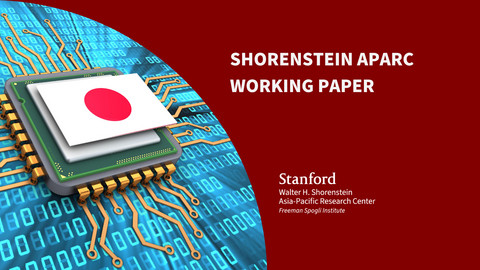
Japan’s semiconductor industry, once globally dominant in DRAM during the 1980s, declined through the 1990s and 2000s due to trade friction with the United States, the rise of Korean competitors, and a failure to adapt to the fabless/foundry model. Today, Japan’s logic IC process technology lags at the 40nm node.
The 2020 global semiconductor shortage prompted Japan to launch two major revitalization projects under the banner of economic security: TSMC Kumamoto, a joint venture producing 12–28nm logic ICs for Japan’s automotive, industrial, and consumer electronics sectors; and Rapidus, an ambitious startup targeting 2nm logic IC manufacturing by 2027.
The paper argues that while TSMC Kumamoto meaningfully strengthens Japan’s domestic supply chain — connecting Japanese equipment and materials suppliers with downstream industries — Rapidus tells a different story. Because Japan has virtually no domestic industrial base currently using 2nm chips, Rapidus’s primary market will likely be the United States. Rather than enhancing Japan’s supply chain resilience, Rapidus effectively inserts Japan into a global advanced logic IC supply chain running from the Netherlands through Japan to the United States. Unless Japan develops industries using these chips, the Rapidus project will not directly address Japan’s economic security strategy.
Read More
The Co-Governance of Community in China’s Megacities
At a seminar on reactionary politics in South Korea, University of Hawaiʻi at Mānoasociologist Myungji Yang argued that the large far-right mobilizations defending former President Yoon Suk Yeol after his martial law declaration were not an isolated development. Instead, they were the product of decades of ideological conflict, authoritarian legacies, and organizational infrastructure on the Korean right.
Yang argued that much of the existing scholarship on the far right focuses on globalization, economic insecurity, and anti-immigrant politics. In South Korea, however, the far-right is shaped less by immigration than by the country’s Cold War history and deeply entrenched anti-Communism during the authoritarian era.
For decades, anti-Communism functioned as a dominant state ideology, defining the boundaries of acceptable political thought. Under authoritarian governments, even moderate reform movements could be dismissed as sympathetic to Communism or North Korea. Yang argued that these ideological structures were never fully dismantled after democratization.
As a result, the boundary between mainstream conservatism and the far right remains blurred. Yang suggested that what is often labeled as conservatism in Korea would be considered far-right politics in many other democracies.
Far-right politics in Korea is organized around anti-Communism, hostility toward North Korea and China, and strong pro-Americanism. It is also tied to nostalgia for authoritarian leaders such as Syngman Rhee, Park Chung Hee, and, increasingly, Chun Doo Hwan, who are remembered by supporters as figures who protected the nation and delivered economic growth.
Building a Right-Wing Infrastructure
Rather than viewing the far right as a fringe movement, Yang described it as a broad right-wing infrastructure made up of parties, religious groups, intellectuals, media organizations, and grassroots activists.
She emphasized that these actors are closely connected. Conservative politicians often participate in far-right rallies, while influential pastors, online personalities, and activists help shape the broader political agenda and organize these events. In this sense, Yang argued, the Korean far right cannot be understood simply through party politics or street protests alone. It is the interaction between formal institutions and social movements that gives the far right its durability.
Yang traced the growth of this infrastructure to the “lost decade” between 1998 and 2008, when reform-oriented governments and former democracy activists became newly influential. Many conservatives viewed this period as a moment of political and cultural displacement. In response, the “New Right” invested heavily in think tanks, publishing houses, online media, and cultural organizations to spread conservative worldviews and challenge the legacy of the democratization movement.
Drawing on ideas of cultural hegemony, these groups focused not only on elections but also on shaping how Koreans think about history, democracy, and national identity.
New Strategies and New Constituencies
Yang also highlighted how the Korean far right has adopted new forms of mobilization. Far-right activists increasingly portray themselves as defenders of freedom and democracy, borrowing the language of civil disobedience and resistance. In their view, they are protecting South Korea from totalitarian threats associated with North Korea, China, and the domestic left. Some even compare their actions to the struggles of figures such as Mahatma Gandhi, Martin Luther King Jr., and Nelson Mandela, framing themselves as guardians of democracy rather than opponents of it.
At the same time, anti-feminism has become a powerful source of support, particularly among younger men. Yang noted that many men in their twenties and thirties have been drawn to right-wing politics because anti-feminist rhetoric resonates strongly with their frustrations and sense of exclusion. These appeals have allowed the far right to expand beyond its traditional base of older anti-Communist conservatives and build support among a younger generation.
Yang also pointed to the far-right’s growing transnational connections. Korean conservative activists increasingly borrow strategies, messaging, and organizational models from global right-wing movements, while cultivating relationships with foreign donors and international conservative networks.
Yang concluded that South Korea’s far right is best understood as “old wine in a new bottle.” Its core narratives – anti-Communism, fear of the left, and nostalgia for authoritarian order – are not new. What has changed are the strategies, technologies, and social coalitions through which those ideas are expressed.
Key Takeaways
Cold War legacies remain central: anti-Communism and authoritarian political culture continue to shape South Korea’s right-wing politics.
The boundary between conservatism and the far-right is often blurred in Korea, making far-right ideas more socially accepted than in many other democracies.
South Korea’s far-right operates through a broad infrastructure of parties, churches, media outlets, and protest movements rather than through fringe groups alone.
Old narratives have found new forms: anti-feminism, social media, conspiracy theories, and transnational conservative networks are helping the far right expand its influence.
Kerstin Norris is a research associate at APARC’s Korea Program and managerial editor of The Journal of Korean Studies.
Read More
News
A Homecoming for Korean Studies: The Journal of Korean Studies Returns to Stanford
The Walter H. Shorenstein Asia-Pacific Research Center’s Korea Program welcomes back The Journal of Korean Studies with the publication of Volume 31, Issue 1.
Indo-Pacific Powers Diversify and De-Risk as Multipolar World Takes Shape
At the 2026 Oksenberg Conference, scholars and foreign policy experts assessed how Indo-Pacific powers are coping with a less predictable United States as China pursues selective leadership and Russia exploits Western divisions.
The Untapped Social Capital of International Students in Japan and Korea
This article examines how international students can play a strategic role in “rebalancing” national talent portfolios in countries with strong ethnonational identities facing demographic decline. In Japan and South Korea, “brain linkage” facilitated through international students’ transnational social capital offers a pathway to leverage foreign talent without requiring immediate, large-scale immigration reforms.
Supporters of impeached South Korean President Yoon Suk Yeol gather on April 4, 2025, in Seoul, South Korea. | Han Myung-Gu/ Getty Images
All News button
1
Subtitle
University of Hawaiʻi at Mānoa sociologist Myungji Yang offers a historical account of South Korea’s far right, arguing that recent reactionary mobilization reflects long-standing Cold War legacies, anti-communism, and conservative political networks. Although South Korea is often viewed as one of Asia’s democratic success stories, Yang suggests that recent political turmoil has revealed how deeply rooted illiberal forces remain.
The Journal of Korean Studies(JKS), the flagship peer-reviewed publication in the field of Korean studies, returns to Stanford University’s Korea Program at the Walter H. Shorenstein Asia-Pacific Research Center (APARC) with the publication of Volume 31, Issue 1. JKS publishes a broad range of original scholarly articles related to Korean history, culture, politics, and society. The journal also publishes reviews of new Korea-related books, making it both a venue for original research and a guide to the field’s expanding literature. Its contributors and readership span disciplines and continents, bringing together historians, literary and cultural scholars, sociologists, political scientists, and anthropologists representing the wide range of disciplinary approaches in Korean studies.
The journal’s institutional history traces the arc of Korean studies in the United States. The journal was originally established in 1969 at the University of Washington in Seattle, the early center of gravity for Korean studies in America. After the publication of two standalone volumes (1969, 1971), James Palais, an influential historian of premodern Korea, shaped the journal's intellectual character through serial publication (1979-1987). Michael Robinson, at Indiana University-Bloomington, carried the journal forward as editor (1988-1992) before a long publication hiatus. In 2004, JKS was revived at Stanford University by co-editors Gi-Wook Shin, the William J. Perry Professor of Contemporary Korea and director of the Korea Program at APARC, and John Duncan, professor of Korean history at UCLA and former director of its Center for Korean Studies. It was housed at Stanford until 2008. The journal has since been guided by editorial leadership at the University of Washington (Clark Sorensen), Columbia University (Theodore Hughes), and The George Washington University (Jisoo Kim). JKS returns to Stanford under the new editorial team of Paul Chang (Shorenstein APARC), Yumi Moon (Department of History), and Dafna Zur (Department of East Asian Languages and Cultures).
JKS welcomes manuscripts from researchers at all career stages, working across the full range of topics, periods, and methodologies reflected in the field of Korean studies. Korean studies is undergoing genuine growth with new generations of scholars producing compelling work that is reshaping our understanding of Korea’s past and present. The Journal of Korean Studies exists to support and disseminate that work.
Kerstin Norris is a research associate at APARC’s Korea Program and managerial editor of The Journal of Korean Studies.
Read More
Commentary
The Untapped Social Capital of International Students in Japan and Korea
This article examines how international students can play a strategic role in “rebalancing” national talent portfolios in countries with strong ethnonational identities facing demographic decline. In Japan and South Korea, “brain linkage” facilitated through international students’ transnational social capital offers a pathway to leverage foreign talent without requiring immediate, large-scale immigration reforms.
How Gender Inequality Drives Talent Abroad and Keeps Women Away
Minyoung An, a postdoctoral fellow with the Korea Program and the Stanford Next Asia Policy Lab at APARC, studies how gender inequality shapes migration pathways and return decisions among South Korean highly skilled women, highlighting risks to Korea's long-term future and revealing that gender is a powerful yet often overlooked driver of global talent flows.
Income-Based Health Inequalities Persist in the US and South Korea, Though Universal Coverage Helps Reduce Disparities
South Korea achieves comparable clinical outcomes at lower per-capita spending than the United States, according to a new study. The co-authors, including Stanford health economist Karen Eggleston, find systemic income-based inequalities in health care access and utilization in both countries, albeit they are less pronounced under South Korea's universal health care system.
The Walter H. Shorenstein Asia-Pacific Research Center’s Korea Program welcomes back The Journal of Korean Studies with the publication of Volume 31, Issue 1.
The legacies of colonialism, the Cold War, and U.S. policies significantly shaped state-building and economic growth in post-World War II Asia, including South Korea. While these factors have been extensively studied, one crucial aspect has been underexplored: the power of ideas. This talk will cover the historical changes and continuity of ideas and knowledge on public administration in South Korea during the 1940-1960s. The presenter will focus on the dissemination and transformation of American administrative knowledge in this period, addressing how the original American knowledge was disseminated to South Korea, and why and how it was sought to be ‘Koreanized’ by public administration scholars in South Korea.
Speaker: Seok Jin Eom is a professor of the Graduate School of Public Administration at Seoul National University in Korea. He is a Fulbright scholar and a 2025-26 visiting scholar at Stanford's Shorenstein Asia-Pacific Research Center. His current research interests include the intellectual history of Korean public administration, the changes and continuity of public governance in Korea, and the digital transformation of government in the AI era. He has published numerous academic papers and books including The Intellectual History of Korean Public Administration Research and Education (2026, Seoul National University Press), Enabling Data-Driven Innovation and AI Government in Korea (2026, Springer), and The Changes and Continuity of Japanese State Apparatus (2015, Seoul National University Press).
Total DALYs increased across all five Asian societies between 2000 and 2019.
Population aging was identified as the primary driver of total DALY increases.
However, substantial decreases in DALYs per disease case were observed.
These trends were especially pronounced for non-communicable diseases.
Background
Rapid population aging in Asia has significantly increased the disease burden. However, there is limited research on the drivers of such changes in disability-adjusted life years (DALYs).
Objective
To examine the factors contributing to changes in DALYs in China, Japan, Singapore, South Korea, and Taiwan in 2000 and 2019.
Methods
We conducted a cross-sectional analysis using data from the Global Burden of Disease Study 2021. Changes in DALYs between 2010 and 2019 were decomposed into four factors: population size, age-sex structure, disease cases per person, and DALYs per disease case.
Results
From 2000 to 2019, total DALYs increased across all locations. While DALYs from injuries, communicable, maternal and neonatal conditions, and nutritional deficiencies decreased, DALYs from non-communicable diseases increased. Decomposition analysis identified population aging (changes in age-sex structure) as the primary driver of increases in total DALYs, contributing an average of 33.6%. Population growth accounted for 15.3% on average. However, these increases were partially offset by decreases in DALYs per disease case, which fell by an average of -29.4%. Contributions from disease cases per person were relatively modest, averaging -3.4%. Notably, the decline in DALYs per disease case was more pronounced for non-communicable diseases, despite an overall increase in disease cases per person.
Conclusions
The increase in DALYs across these Asian societies was primarily driven by population aging and growth. However, DALYs per disease case decreased, suggesting improvements in disease management. Given the growing burden of non-communicable diseases in these societies, maintaining a focus on effective interventions remains crucial.
Read More
Journal Articles
Income-Based Inequalities in Health System Performance in the US and South Korea
Indo-Pacific nations are racing to adapt to a world in which the United States has become fundamentally unpredictable. The 2026 Oksenberg Conference, hosted by the Shorenstein Asia-Pacific Research Center (APARC), gathered scholars and foreign service veterans at Stanford University to assess how regional stakeholders are confronting what Canada's Prime Minister Mark Carney had famously named "a rupture, not a transition" in the post-World War II order. The conference took place as Carney was in the midst of an Indo-Pacific trip, visiting Australia, India, and Japan to forge "middle power" trade alliances, and as the United States joined Israel in a war against Iran.
“For Indo-Pacific countries, the question is no longer just how to balance between Washington and Beijing,” said APARC Director Kiyoteru Tsutsui in his welcome remarks, “but how to understand and respond to the emergence of a multipolar world in which the United States is less predictable, less committed to multilateral frameworks, less invested in alliance maintenance, and more willing to pursue narrowly defined national interests at the expense of broader international stability.”
The panelists agreed that, while the U.S. retreat from the eight-decade-old international order it had previously championed creates multiple opportunities for China, Beijing is not naturally filling the vacuum, and regional powers are not pivoting toward it but instead scrambling to diversify security and economic partnerships. The consensus is that the international system is moving toward multipolarity and the world toward an increasingly unstable period, and no one knows yet what will replace the disintegrating post-WWII order.
China has a very low appetite for global governance or leadership [...] We want to be powerful and respected in the region.
Da Wei
China Sees Opportunity in Multipolarity
To commemorate the legacy of the late Michel Oksenberg, a renowned scholar of contemporary China and a pioneer of U.S.-Asia engagement, the Oksenberg Conference, an annual tradition sponsored by APARC and led by the center’s China Program, gathers individuals who have advanced U.S.-Asia dialogue to examine pressing issues affecting China, U.S.-China relations, and broader U.S. Asia policy.
At this year’s convening, the first panel, moderated by Shorenstein APARC Fellow Thomas Fingar, focused on how China perceives, interprets, and responds to the new vulnerabilities and opportunities in the international system.
Da Wei Speaks via video link from the Stanford Center at Peking University. | Rod Searcey
Speaking via video link from Beijing, Da Wei, a professor in the Department of International Relations at Tsinghua University and the director of its Center for International Security and Strategy, said China views the current moment as neither ideal nor catastrophic but better than recent alternatives.
China has experienced three scenarios, Da explained. First, from the 1990s through the Obama era, China benefited greatly from the U.S.-led liberal order, but was increasingly criticized by the West. Second, during Trump's first term and the Biden administration, while facing mounting pressure of decoupling in a bipolar system, China was forced into a camp with Russia, which Da characterized as Beijing’s “worst scenario.” Now, under Trump's second term, the shift toward multipolarity has redirected pressure away from China and onto multilateral institutions and U.S. allies – "the least bad option" from Beijing’s perspective.
Da argued that “culturally, China has a very low appetite for global governance or leadership.” China sees itself primarily as a regional power, he said. Rather than filling the vacuum left by the U.S. withdrawal from international institutions, "we want to be powerful and respected in the region. I don't think China has a very big appetite for leadership in faraway regions, except for economic interests." He contrasted this “Emperor's perspective,” demonstrated by China’s foreign policy, with the U.S. “boss perspective.”
Susan Shirk, a research professor at the University of California, San Diego’s School of Global Policy and Strategy and director emeritus of its 21st Century China Center, noted that China's response to Trump's trade war has been robust, muscular, but disciplined. "The Xi Jinping administration was operating in a more disciplined manner than it had previously," she said, contrasting this approach with what she called Xi's "rash reactions” to Japan and failure to engage Taiwan diplomatically.
L to R: Thomas Fingar, Susan Shirk, and Mark Lambert at the first panel of the 2026 Oksenberg Conference. | Rod Searcey
Shirk stated that, while Trump's alienation of U.S. allies through extreme tariffs and military interventions has created clear opportunities for China to expand its influence and further divide Washington from Europe and Asian partners, Beijing has only modestly exploited these openings.
She emphasized that Xi's support for Russia in its war against Ukraine represents "self-defeating overreach" that undermines China's ability to improve relations with Europe. "Russia represents an existential threat to Europe," she said. "Xi Jinping really doesn't grasp how important this is."
Mark Lambert, a recently retired U.S. State Department official who served as China coordinator and deputy assistant secretary in the Bureau of East Asia and Pacific Affairs, contrasted the Biden administration's China strategy with the current U.S. policy vacuum.
The Biden approach, he explained, was rooted in U.S. relations with five Asian treaty allies plus NATO and positioned China as the only country with the means and capabilities to reshape the post-World War II order. It required "all hands on deck" to address this challenge through what U.S. officials called a "lattice work of relations": the Quad involving India, AUKUS with Australia, the Camp David summit between South Korea and Japan, and strengthened linkages between NATO allies and East Asian partners. China's support for Russia's invasion of Ukraine unified Europeans in understanding the China challenge in ways never seen before. The administration also successfully reframed Taiwan's importance, emphasizing that Taiwan's chip dominance was vital to global prosperity.
Today, Lambert argued, the United States either has no China strategy or “one so classified that neither our allies nor our practitioners know what it is.” On security, trade, technology, and international cooperation, the United States has given China “fantastic opportunities,” he noted.
L to R: Laura Stone, Victor Cha, and Katherine Monahan at the second panel of the 2026 Oksenberg Conference. | Rod Searcey
Allies’ Transactional Coping Strategies
The second panel, moderated by Laura Stone, a retired U.S. ambassador and APARC's inaugural China Policy Fellow, turned to other regional states – South Korea, Japan, Russia, and India – and how they read the geopolitical landscape and devise strategies to shape the regional order.
Victor Cha, the D.S. Song-KF Chair and professor of government at Georgetown University and president of the Geopolitics and Foreign Policy Department at the Center for Strategic and International Studies (CSIS), noted that "every U.S. ally around the world is looking at a Plan B," pointing out that, in the first year of the second Trump administration, allies were not acting on these plans, but that "we’re now at a threshold where many of them are executing their Plan B's."
Cha identified seven types of behavior that U.S. partners have adopted when dealing with the Trump administration. These are drawn from a recent CSIS project on ally and partner responses to the paradigm shift in U.S. foreign policy. First is prioritizing face-to-face meetings with Trump himself, "because there's a recognition that the policy process in the United States is broken,” Cha said, “and that policy making is not being informed, as it traditionally has been, by foreign policy professionals. It's all happening at the leader level."
Other strategies include minimizing risk to avoid what Cha called "the Zelensky moment" – the public humiliation Ukraine's president suffered in the Oval Office in February 2025 – and preparing "trophy deliverables," such as South Korea's promise to buy Boeing airplanes and Japan's commitment to purchase Ford trucks.
“The America First policies have effectively put the custodial burden of maintaining the alliance on the partner,” Cha said. “Whether it's Japan, Korea, Taiwan, the Philippines, or whoever it might be, the burden traditionally has been on the United States, but now it's on the partner. They're the ones who have to try to maintain this relationship. So it's about minimizing risk.”
We have two leaders in Korea and Japan that normally we would think would not get along [...], but because of the very difficult situation they're both in, they find a way to do it.
Victor Cha
South Korea's recent summit with Trump yielded a $350 billion investment package, yet soon after, U.S. immigration authorities raided a Hyundai facility, and Trump threatened 25% tariffs on Korea.
"Why take all this abuse?" Cha asked. His answer: South Korea and Japan see no alternative to the United States on security, and they secured previous concessions in areas such as nuclear submarines, ship building, and enrichment and reprocessing of spent nuclear fuel, which they do not want to renegotiate.
One positive outcome, Cha pointed out, has been the unexpectedly warm bilateral relationship between Japan and Korea. Despite having leaders who would normally clash – a far-right conservative in Japan and a progressive in South Korea – the uncertain geopolitical environment has brought the two countries together.
He predicted China would eventually use economic coercion against South Korea over the U.S.-Korea nuclear submarine agreement, just as it did during the 2016-17 THAAD dispute and is currently doing to Japan. "It's not happening now because I don't think China wants bad relations with Japan and Korea at the same time, but it's coming," he said, adding that this development will likely push South Korea closer to the United States and Japan.
Economically, Japan was always talking about de-risking from China. You're not hearing that language anymore. I'm starting to hear about balancing trade with China.
Katherine Monahan
Japan Reconsiders Alliance Dependence as Its "Too Big to Fail" Status Proves No Shield
Katherine Monahan, a 2025-26 visiting scholar and Japan Program Fellow at APARC and a foreign service officer with the U.S. Department of State, said Japan's relationship with the United States is "too big to fail," but that has not prevented serious strain between the two allies.
Having served in Tokyo as deputy chief of mission at the U.S. Embassy in Japan until April 2025, Monahan shared that, when Trump's Liberation Day tariffs hit Japan with a 25% rate, the Japanese could not believe that was the figure next to their name, while other allies were at 20% and 15%. They wondered, “Don't we have any special relationship at all?”
Monahan called attention to a recent Foreign Affairs article by Masataka Okano, Japan's former national security advisor, in which he argues that Japan needs to take strategic autonomy more seriously. When made by a former Japanese official, such a statement represents a significant shift in the nation’s mindset, she said.
Japan is also reconsidering previously used language around "de-risking" from China in favor of diversifying trade with multiple partners, including China, Canada, and Europe. This shift is happening on the backdrop of the current war with Iran, as 90% of Japanese oil comes through the Strait of Hormuz. “Japan has to start balancing sources and supply chains,” Monahan argued.
The second panel at the 2026 Oksenberg conference brought together (L to R) Laura Stone, Victor Cha, Katherine (Kemy) Monahan, Kathryn Stoner, and Emily Tallo. | Rod Searcey
Putin wants multipolarity [...] Reclaiming Imperial Russia is really the goal.
Kathryn Stoner
Russia Exploits American Unreliability
Russia expert Kathryn Stoner, the Satre Family Senior Fellow at Stanford’s Freeman Spogli Institute for International Studies, said America’s unpredictability under Trump represents pure opportunity for Vladimir Putin.
"Putin knows Trump. He gets him," Stoner said. "They have a not-completely dissimilar worldview." Trump's red carpet welcome for Putin at last year's Alaska summit, despite the Russian leader's indictment by the International Criminal Court for war crimes, sent a powerful message, Stoner asserted. So did Trump's lack of concern for democratic values and his criticism of U.S. allies.
She reminded the audience that Putin has been in power for 26 years and has watched multiple U.S. presidents come and go, adapting successfully to each. Putin wants multipolarity, she said, and Trump’s actions have emboldened him. Putin’s goal is to “reclaim Imperial Russia as a global power and restore what he views as its proper sphere of influence,” extending through Ukraine and Belarus into Poland, up to German borders in the west and to the south, through Moldova, Serbia and Bulgaria, to the Black Sea in the east, all the way to the Kamchatka Peninsula.
According to Stoner, the Russia-China relationship is significantly more durable than many believe. The relationship between the two powers extends beyond oil sales to investment, defense coordination, and sophisticated military exercises. “It kind of doesn't matter whether there's love lost or not. There's an opportunity to be gained on both sides."
"Russia's economy is actually not on the verge of collapse," Stoner added. "It has completely retooled toward the military."
India wants to be a regional power aligned with but not allied with the United States [...] They want to be considered as the United States’ main partner in Asia and a major counterbalance to China.
Emily Tallo
India Feels Betrayed
Emily Tallo, a postdoctoral fellow at Stanford’s Center for International Security and Cooperation, who studies how political elites structure foreign policy debates in democratic countries, especially in India, explained that New Delhi felt especially betrayed by Trump's foreign policy pivot.
The first Trump administration had centered India as a key partner against China. In May 2025, however, when an India-Pakistan conflict flared up, Trump claimed credit for brokering peace, but India took issue with his threat of trade measures to bring an end to the conflict. He then hosted Pakistan's army chief at the White House and signed deals with Islamabad. "This was a twist of the knife for India," Tallo said.
Trump also imposed 50% tariffs on India, including a penalty for buying Russian crude oil, which was not applied to China, and backed out of a QUAD summit in New Delhi.
India now views China as its primary security threat, and the recent India-Pakistan crisis, in which China supplied all of Pakistan's weapon systems and possibly intelligence, made New Delhi’s two-front threat fears a reality. "India is really sensitive to any hints of U.S. retreat in the Indo-Pacific, and any acceptance of Chinese Hegemony in the region," according to Tallo.
She concluded that, like other regional powers, India is committed to preserving the U.S. partnership but is diversifying and seeking a “Plan B.” It finalized free trade agreements with the European Union and the United Kingdom, agreed to purchase French Dassault Rafale jets, and conducted a pragmatic reset with China, citing U.S. unreliability as cover to stabilize a difficult bilateral relationship.
“India wants to be a regional power aligned with but not allied with the United States [...] They want to be considered as the United States’ main partner in Asia and a major counterbalance to China.”
Read More
News
A World Safe for Autocracy: How Chinese Domestic Politics Shapes Beijing's Global Ambitions
China studies expert Jessica Chen Weiss of the Johns Hopkins School of Advanced International Studies reveals how the Chinese Communist Partyʼs pursuit of domestic survival, which balances three core pillars, drives Beijingʼs assertive yet pragmatic foreign policy in an evolving international order.
U.S. Venezuela Operation Likely Emboldens China, Risks Strategic Neglect of Indo-Pacific, Stanford Scholars Caution
Speaking on the APARC Briefing video series, Larry Diamond and Oriana Skylar Mastro analyze the strategic implications of the U.S. operation in Venezuela for the balance of power in the Taiwan Strait, Indo-Pacific security, America’s alliances, and the liberal international order.
The Future of U.S.-China Relations: A Guardedly Optimistic View
Eurasia Group’s David Meale, a former Deputy Chief of Mission at the U.S. Embassy in Beijing, reflects on the last 30 years and describes how the two economic superpowers can maintain an uneasy coexistence.
Panelists gather for a group photo at the 2026 Oksenberg Conference. Photo Credit: Rod Searcey
All News button
1
Subtitle
At the 2026 Oksenberg Conference, scholars and foreign policy experts assessed how Indo-Pacific powers are coping with a less predictable United States as China pursues selective leadership and Russia exploits Western divisions.
How do income-related inequalities in health system performance differ between the US and South Korea?
Findings
In this cross-sectional study of 224 168 US adults and 179 452 South Korean adults, higher-income adults had lower health care spending, greater preventive care use, greater access to care, fewer behavioral risk factors, and better self-reported health than lower-income adults in both countries. These inequalities were generally more pronounced in the US.
Meaning
The findings suggest that income is associated with disparities in health system performance in the US and South Korea, with larger differences by income in the US.
Abstract
Importance
Income is a key social determinant of health, yet its influence on health system performance may differ across settings. Cross-national comparisons can help identify where income-related disparities are most pronounced and inform targeted policy responses; the US and South Korea are 2 members of the Organisation for Economic Co-operation and Development with high poverty rates but different health systems.
Objective
To compare health system performance and income-related inequalities in health system performance between the US and South Korea.
Design, Setting, and Participants
This repeated cross-sectional study including nationally representative samples of noninstitutionalized adults from the US and South Korea used data from the Medical Expenditure Panel Survey (MEPS; 2010-2019), National Health and Nutrition Examination Survey (NHANES; 2009-2018), Korean Health Panel Study (KHPS; 2010-2019), and Korean National Health and Nutrition Examination Survey (KNHANES; 2010-2019). Data were analyzed from March 2024 to March 2025.
Exposures
Annual household income, categorized into country-specific deciles.
Main Outcomes and Measures
The main outcomes were 30 indicators across 6 domains: health care spending, health care utilization, access to care, health status, behavioral risk factors, and clinical outcomes. To evaluate income-related inequalities in outcomes, adjusted mean values across income deciles were estimated using regression models.
Results
The sample included 224 168 US adults (female: 51.1% in MEPS, 51.7% in NHANES) and 179 452 South Korean adults (female: 52.4% in KHPS, 56.1% in KNHANES). Mean (SD) age was 46.6 (18.0) years in MEPS, 46.5 (17.4) years in NHANES, 47.7 (16.2) years in KHPS, and 50.5 (17.1) years in KNHANES. US adults had higher mean total health care spending (lowest income decile: $7852 [95% CI, $7456-$8247]; highest decile: $6510 [95% CI, $6218-$6802]) than South Korean adults (lowest decile: $1184 [95% CI, $1105-$1263]; highest decile: $1025 [95% CI, $950-$1100]) despite similar levels of self-reported good health. A 1-decile increase in income was associated with a difference of −$142 (95% CI, −$179 to −$104) in total health care spending in the US compared with −$33 (95% CI, −$41 to −$25) in South Korea. A 1-decile increase in income was associated with an increase of 2.4 (95% CI, 2.3-2.5) percentage points (pp) in self-reported good health in the US compared with 1.5 (95% CI, 1.4-1.6) pp in South Korea. Income-related disparities in preventive service use were also larger in the US, ranging from 0.2 (95% CI, 0.2-0.2) pp for cervical cancer screening to 4.0 (95% CI, 3.9-4.1) pp for dental checkups. In South Korea, disparities ranged from 0.6 (95% CI, 0.4-0.8) pp for dental checkups to 2.0 (1.8-2.2) pp for routine checkups. Similar income gradients were observed in access to care and behavioral risk factors. Differences in clinical outcomes were modest in both countries.
Conclusions and Relevance
In this cross-sectional study, income was associated with disparities in health system performance in both the US and South Korea, with larger differences by income in the US. The findings suggest that structural and systemic policy efforts are needed to address income-based health inequalities, particularly in the US.
Read More
Income-Related Disparities in the Value of Health Care in South Korea
The rise of the illiberal, far-right politics threatens democratic systems throughout the world. Former South Korean President Yoon Suk-yeol’s martial law declaration stunned the world in December 2024. More puzzling is that Yoon’s insurrection unexpectedly gained substantial support from the ruling right-wing party and ordinary citizens. Why do ordinary citizens support authoritarian leaders and martial law in a democratic country? What draws these citizens to extreme actions and ideas? Through eighteen months of field research and drawing from rich qualitative data, this talk will provide an in-depth account of the ideas and practices of far-right groups and organizations to help understand the roots of current democratic regression.
Speaker: Myungji Yang is an associate professor of sociology at the University of Hawai‘i-Mānoa. A political sociologist and social movement scholar, she is interested in the issues of power, inequality, civil society, and democracy. Her research has appeared in Nations and Nationalism, Politics and Society, Mobilization: An International Inquiry, Urban Studies, and Sociological Inquiry, among other venues. She is the author of two books, From Miracle to Mirage (2018, Cornell University Press) and Reactionary Politics in South Korea: Historical Legacies, Far-Right Intellectuals, and Political Mobilization (2025, Cambridge University Press). She is currently developing a research project on young men’s radicalization and anti-feminist politics.
Ki Soon Park joins the Walter H. Shorenstein Asia-Pacific Research Center (APARC) as visiting scholar beginning spring 2026 from Sungkyunkwan University, where he serves as Adjunct Professor in the Graduate School of Chinese Studies. While at APARC, he will be conducting research on economic security and industrial policy, with a focus on the U.S., China, and South Korea.