-

Webinar recording: https://youtu.be/9eyHTMF2L7w


Upwards of 15,000 to 20,000 individual migrant Chinese laborers performed the bulk of the work constructing the Central Pacific span of the Transcontinental Railroad. Between 1864 and 1869, these Chinese also crossed the Pacific Ocean in what was then, and may still rank among the largest transnational labor migration movements. How do we find sources to uncover this forgotten and deliberately erased history? How did they live their daily lives? What kinds of enterprise did they innovate? How did their work on the railroad shape their lives in communities on both sides of the Pacific? We will look together at digital resources available at: http://web.stanford.edu/group/chineserailroad/cgi-bin/website/.

In 2018, the Stanford Program on International and Cross-Cultural Education (SPICE), which is a program of the Freeman Spogli Institute for International Studies, published four lessons on the Chinese Railroad Workers. These units adapt the research, primary sources, and insights of the Chinese Railroad Workers in North America Project for high school students and classes. Together, we'll engage in several activities from these lessons which are free for download from the SPICE website.

This webinar is a joint collaboration between the Center for East Asian Studies and SPICE at Stanford University.


Featured Speakers:

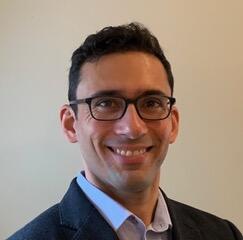
Roland Hsu, Ph.D.

Dr. Roland Hsu Dr. Roland Hsu

Roland Hsu is Director of Research for the Chinese Railroad Workers in North America Project at Stanford University. Hsu’s publications address migration and ethnic identity formation. His is the author of multiple essays in international scholarly collections, and in policy journals including Le Monde Diplomatique. Hsu’s most recent book is Migration and Integration. His writing focuses on the history of migration, and on contemporary immigration policy questions, combining humanistic and social science methods and materials to answer what displaces peoples, how do societies respond to migration, and what are the experiences of resettlement. Hsu earned his Ph.D. in Modern European History at the University of Chicago. He holds an M.A. in Art History from the University of Chicago, and a dual B.A. in Art History and also English Literature from the University of California, Berkeley.


Greg Francis

Image
Greg Francis

Greg Francis is a Curriculum Consultant for SPICE. Previously, he was Director of Impact Programs for Net Impact. In that role, he led a team that designed and executed experiential learning programs for college students. Before that, Greg was a director for The Broad Superintendents Academy, where he oversaw an executive training program for leaders of urban school districts. With SPICE, Greg has authored or co-authored 10 curriculum units, including Along the Silk Road; Security, Civil Liberties, and Terrorism; International Environmental Politics; and China’s Cultural Revolution. In 2007, Greg received the Franklin Buchanan Prize, which is awarded annually by the Association for Asian Studies to honor an outstanding curriculum publication on Asia at any educational level. Greg received a B.A. in International Relations from Stanford University and M.A. in Latin American Studies from the Universidad Andina Simón Bolívar in Ecuador.

Via Zoom Webinar. Registration Link: https://bit.ly/37XYffc.

Roland Hsu, Ph.D. Stanford University
Greg Francis Stanford University
Workshops
News Type
News
Date
Paragraphs

Won-Gi Jung (BA '20, History and East Asian Studies) has been awarded the ninth annual Korea Program Prize for Writing in Korean Studies for his paper, "The Making of Chinatown: Chinese migrants and the production of criminal space in 1920s Colonial Seoul." "Jung has written a thoroughly researched, beautifully crafted and convincingly argued honors thesis, that was sparked by his interest in colonial Korea’s articulation of its ‘Chinese problem,’ a crisis that resulted in anti-Chinese riots and massive relocation of migrants back to China," notes Dafna Zur, Associate Professor, Korean Literature and Culture and Director of the Center for East Asian Studies. The details of the annoucement are available here.

Sponsored by the Korea Program and the Center for East Asian Studies, the writing prize recognizes and rewards outstanding examples of writing by Stanford students in an essay, term paper or thesis produced during the current academic year in any discipline within the area of Korean studies, broadly defined. The competition is open to both undergraduate and graduate students.

Past Recipients:
8th Annual Prize (2019)
7th Annual Prize (2018)
6th Annual Prize (2017)
5th Annual Prize (2016)
4th Annual Prize (2015)
3rd Annual Prize (2014)
2nd Annual Prize (2013)
1st Annual Prize (2012)


Hero Image
encina 2x1
All News button
1
Subtitle

Won-Gi Jung (BA '20) is awarded the ninth annual Writing Prize in Korean Studies for his paper, "The Making of Chinatown: Chinese migrants and the production of criminal space in 1920s Colonial Seoul."

Date Label
News Type
Commentary
Date
Paragraphs

Stretching from China in the north to Indonesia in the south, the South China Sea – the third largest of the world’s 100-plus seas – possesses rich oil and natural gas reserves, constitutes a thriving fishing zone, and transits a vast amount of trade. It is also the center of disputes over issues of territorial sovereignty and maritime rights and interests involving China, Brunei, Indonesia, Malaysia, the Philippines, Taiwan, and Vietnam.

No Chinese behavior in Southeast Asia illustrates the “binary of strength over weakness more clearly than Beijing’s unilateral, adamant, and expansive assertion of full sovereignty over or proprietary rights in virtually all of the waters and land features in the South China Sea,” writes APARC’s Southeast Asia Program Director Donald K. Emmerson in his upcoming volume The Deer and the Dragon: Southeast Asia and China in the 21st Century. The fallout from COVID-19 and increased military activity in the region raise the risk of conflict between China and the United States, which has a strong interest in preventing China from controlling the disputed waterway.

Shorenstein APARC · Strategy in the South China Sea | Donald K. Emmerson

Against this background, the U.S. Embassy in Kuala Lumpur, Malaysia, hosted a virtual conversation with Emmerson, titled “Strategy in the South China Sea.” Held on May 12, 2020 (May 13 in Kuala Lumpur), the discussion drew attendees from across the United States and Southeast Asia. Emmerson's analysis focuses on issues such as the tactics China has used to advance its goal in the South China Sea; how the countries of Southeast Asia are reacting to the situation and whether they are pursuing defined strategies regarding the tensions in the region; and what an ASEAN strategy in the South China Sea might look like. Listen to his presentation above or on our SoundCloud channel.

Read More

Michael McFaul, Xueguang Zhou, Karen Eggleston, Gi-Wook Shin, Don Emmerson, and Yong Suk Lee
News

FSI Hosts APARC Panel on COVID-19 Impacts in Asia

Scholars from each of APARC's programs offer insights on policy responses to COVID-19 throughout Asia.
FSI Hosts APARC Panel on COVID-19 Impacts in Asia
People queue while wearing face masks
Blogs

COVID-19 in the Philippines – at a Glance

Marjorie Pajaron, assistant professor at the University of the Philippines School of Economics, describes the unfolding of the pandemic in the country and how Filipinos have coped with the evolving situation.
COVID-19 in the Philippines – at a Glance
Ambassador Dan Kritenbrink and Donald Emmerson seated at a conference room during a group discussion
News

U.S. Ambassador to Vietnam Meets with Stanford Experts

U.S. Ambassador to Vietnam Meets with Stanford Experts
Hero Image
Fiery Cross Reef, Spratly Islands
Fiery Cross Reef, Spratly Islands.
Loco Steve via Flickr, CC BY-SA 2.0.
All News button
1
Subtitle

Donald K. Emmerson analyzes China’s tactics in the South China Sea and how the countries of Southeast Asia are reacting to the tensions in the disputed waterway.

Authors
News Type
Commentary
Date
Paragraphs

Senior U.S. officials reportedly have discussed conducting a nuclear weapons test for the first time in 28 years.  Some apparently believe that doing so would provide leverage to persuade Russia and China to agree to Washington’s proposal for a trilateral nuclear arms negotiation.

In fact, a U.S. nuclear test would most likely have a very different effect:  opening the door for tests by other countries to develop more sophisticated nuclear weapons.  A smarter policy would maintain the current moratorium on nuclear testing, and ratify and seek to bring into force the 1996 Comprehensive Test Ban Treaty (CTBT).

Several media sources have reported that a recent Deputies Committee meeting (composed of deputy or under secretaries of the Departments of State, Defense and Energy and senior representatives from other relevant agencies such as the Joint Chiefs) discussed a “rapid [nuclear] test.”  It was suggested that this could provide leverage to press Moscow and Beijing to take up the Trump administration’s proposal for a trilateral negotiation on nuclear arms.

No consensus was reached.  Apparently, representatives from State and Energy’s National Nuclear Security Administration opposed the idea.  They were correct to do so.

Beijing opposes a trilateral negotiation since the United States and Russia each have well more than ten times as many nuclear weapons as does China.  How would a U.S. nuclear test influence that calculation?

Moscow has linked a negotiation on all nuclear weapons (going beyond the deployed strategic warheads constrained by the 2010 New Strategic Arms Reduction Treaty) to U.S. readiness to address issues such as missile defense constraints, a no-go area for the Trump administration.  How would a U.S. nuclear test change that?

The more likely impact of a U.S. nuclear test would be to open the door to resumed testing by other countries.  China, which has conducted 47 nuclear tests—less than one-twentieth the number conducted by the United States—might jump at the chance to test more sophisticated weapons designs.  India and Pakistan, who each conducted a small handful of tests in 1998, could likewise consider new testing.  They could blame Washington for breaking a nuclear testing moratorium that all countries, except North Korea, have observed since 1998.[*]


Ending the moratorium would not advance U.S. security interests.  The United States has conducted about as many nuclear weapons tests as the rest of the world combined (and 30 percent more than the number conducted by the Soviet Union/Russia).  U.S. weapons scientists learned more from testing.  When I served as a diplomat at the American Embassy in Moscow in 1988, I accompanied a U.S. team to the Soviet nuclear test site at Semipalatinsk (in what is now Kazakhstan).  Our Soviet hosts showed us a vertical shaft for an upcoming underground test; it was about three feet in diameter.  A U.S. team member from the test site in Nevada, which the Soviets would visit the following month, commented that U.S.-drilled vertical shafts for nuclear tests typically were nine to eleven feet in diameter.  That maximized the area above the weapon for instruments that would gather a burst of data in the nanosecond before they vaporized.

The testing moratorium and the CTBT, if ratified and entered into force, would seem to lock in an area of U.S. advantage regarding nuclear weapons and nuclear effects.  Why would we want others to test and erode that advantage?

Up until the idea of gaining leverage with Beijing and Moscow arose, the primary possible reason for a return to testing was if it became necessary to confirm the reliability of a weapons type in the stockpile.  However, the National Nuclear Security Administration has overseen for 25 years the Stockpile Stewardship Program, intended to confirm that U.S. nuclear weapons are safe, secure and reliable without having to test them in a manner that produces a nuclear yield. To do so, the program uses supercomputers, modeling and tools such as the Dual Axis Radiographic Hydrodynamic Test Facility (think of the world’s most powerful X-ray device).

Each year, the commander of Strategic Command and the directors of the national nuclear laboratories at Los Alamos, Sandia and Lawrence Livermore certify the safety and reliability of the nuclear stockpile.  When I visited Los Alamos several years ago, the director told me that, as long as the Stockpile Stewardship Program was funded, he was confident that nuclear testing was not needed.  He added that, as a result of the program, weapons scientists had learned things about how nuclear weapons work that they did not and could not learn from testing nuclear weapons underground.

The smart thing for U.S. national interests is to continue the moratorium, ratify the CTBT, and press others to ratify so that the treaty can be brought into force.  The Senate failed to give consent to ratification in 1999, due to concerns about how to maintain the stockpile’s reliability without nuclear testing and about monitoring the treaty.  The Stockpile Stewardship Program, just in its beginning stage then, can now answer the first concern and has been doing so.

As for monitoring a test ban, U.S. national technical means have improved over the past two decades, and the Comprehensive Test Ban Treaty Organization has established the International Monitoring System with some 300 stations around the world.  It can detect underground nuclear explosions down to below one kiloton (the weapon that destroyed Hiroshima had a yield of 15 kilotons) as well as detecting tests in the atmosphere or ocean, both of which are banned by the 1963 Limited Test Ban Treaty.  Once in force, the CTBT also provides for an inspection mechanism.

As former Secretary of State George Shultz said in 2013, senators might have been correct not to consent to ratification in 1999, but given the Stockpile Stewardship Program’s development and enhanced monitoring systems, they would be right to vote for ratification now.

Conducting a nuclear test to bring China and Russia to the negotiating table will not work.  It will instead open the door for others to resume testing and close a nuclear weapons knowledge gap that favors the United States.  That will not make us safer or more secure.  It is an unwise idea that hopefully will continue to meet resistance within the U.S. government.


[*] The Director of the Defense Intelligence Agency stated in May 2019 that Russia “probably is not adhering to its nuclear testing moratorium in a manner consistent with the [CTBT’s] ‘zero-yield’ standard” but backed away from that assertion in answer to a follow-up question, in which he said that Russia had the “capability” to conduct very low-yield tests.  A June 2019 U.S. statement affirmed the assessment that “Russia has conducted nuclear weapons tests that have created nuclear yield” but provided no back-up information.  Moscow heatedly denied the charge.

Hero Image
gettyimages 115566615
All News button
1
-

看微信网页:https://bit.ly/3gRDy8Q
View this page on WeChat: https://bit.ly/3gRDy8Q


This is a virtual event. Please click here to register and generate a link to the talk. 
The link will be unique to you; please save it and do not share with others.


Sponsored by the Stanford China Program and the Stanford Center at Peking University.

The ravages of COVID-19 are now global. But the pandemic first struck in China, and the nation suffered a 6.8% decline in its first-quarter GDP. China is also the first country to move towards a recovery, however, rolling out government measures, re-opening businesses, and re-starting its economy. In this key moment, the Stanford China Program, in collaboration with alumni members of the Stanford Graduate School of Business, surveyed senior executives in China as their companies reboot their operations. In this two-part program, we first unveil potential trends and key takeaways from the survey. In the second half, we host a panel of prominent CxOs from China who give their insights and experiences rebooting their businesses. What are short-term challenges that companies in China currently face? What are some long-term implications of COVID-19 for their operational model, supply chain strategies, technology, and business digitization? What might they also mean, if any, for global trade relations and the future of globalization?

Agenda (in Pacific Time)

5:00-5:30 PM   Survey Presentation: Key Takeaways
5:30-6:15 PM   China CxO Panel: Discussion
6:15-6:45 PM   Audience Q&A

Agenda (in China)

8:00-8:30 AM   Survey Presentation: Key Takeaways
8:30-9:15 AM   China CxO Panel: Discussion
9:15-9:45 AM   Audience Q&A


PANEL SPEAKERS

Portrait of Shiqi WangAlvin Shiqi Wang (王世琪) has served as CEO and President of 21Vianet Group, Inc. since February 2018. Currently, Mr. Wang serves as Vice President of TUS Digital Group, a subsidiary of TUS Holdings, and serves on the board of directors of Beijing CIC Technology Co., Ltd. and Guangzhou Tuwei Technology Co., Ltd. . Mr. Wang has nearly 20 years of experience in the telecommunications industry, working at various renowned international companies, including 11 years with Ericsson, focusing primarily on strategy development and execution, corporate management, and equity investments. Mr. Wang received a bachelor's degree from Tsinghua University and an MBA from Peking University-Vlerick MBA Programme (BiMBA).


Portrait of Xiang WangXiang Wang (王翔) is President and Acting CFO of Xiaomi Corporation, responsible for platform functions and for assisting the CEO with Group operations. Mr. Wang joined Xiaomi Corporation in July 2015 served as its Senior Vice President and President for International Business, responsible for global expansion, IP strategy, and strategic partner relationship management. Mr. Wang has more than 20 years of experience in the semiconductor and communications fields, with great vision and comprehensive understanding of next-generation wireless communications. He has played an integral role in shaping Xiaomi’s international business operations including with respect to its intellectual property compliance, management and strategy throughout the world. In 2016, Mr. Wang put together an international team of sales and marketing teams to expand into more markets outside of China. Within just 3 years, he led his teams into over 90 markets. As of Q3 2019, Xiaomi’s international revenue accounted for 48.7% of its total revenue. Today, Xiaomi is ranked among top 5 smartphone brands in over 40 markets. Mr. Wang previously served as the Senior Vice President of Qualcomm and President of Qualcomm Greater China, leading the company’s business and operations in Greater China. Prior to that role, he was Vice President of Qualcomm CDMA Technology, responsible for Qualcomm chipset business and customer service in China. Under his leadership, Qualcomm rapidly extended and strengthened its partnerships with increasing numbers of Chinese manufacturing customers. Before joining Qualcomm, Mr. Wang held key positions in sales and marketing at internationally leading companies, including Motorola and Lucent/Agere. Mr. Wang earned his BSEE from Beijing Polytechnic University.


Image
Portrait of Simon Yang
Simon Yang (杨士宁) is the CEO of Yangtze Memory Technologies Co., Ltd. (YMTC), who brings YMTC to a new height in 3D NAND industry. As an experienced executive in the semiconductor industry for over 30 years, Dr. Yang served as the CEO of XMC, COO/CTO of SMIC, and CTO/SVP of Chartered Semiconductor (Now GlobalFoundries), in charge of fab operation and technical R&D. Before that, he was in the Portland Technology Development sector of Intel for more than 10 years, in which he led a series of technical R&D projects. Dr. Yang obtained a Bachelor’s Degree from Shanghai University of Science & Technology, and a Master’s Degree and a Doctoral Degree from Rensselaer Polytechnic Institute.


Portrait of Zhiqiang (ZZ) ZhangZhiqiang (ZZ) Zhang (张志强) is President of ABB in China since October 2018. He has extensive management experience and a deep understanding of the Chinese market, developed during his career at several large global companies over the past three decades. He joined ABB from Sandvik where he was Asia- Pacific Regional Holding Officer and President of Sandvik China, and Member of Sandvik Group Executive Committee. Prior to that, he held leadership positions at several other companies, including Nokia Siemens Networks, where he was President of the Greater China Region, and Siemens VDO Automotive, China, where he was President and CEO. Mr. Zhang is Non-Executive Board member of Georg Fischer AG (Switzerland) and Daetwyler Holding AG (Switzerland). He holds a bachelor’s degree in electronic engineering from Beijing Jiaotong University, China, and a master’s degree in business administration from the Smith School of Business at Queen’s University in Canada.


SURVEY PRESENTERS

Jean C. OiJean C. Oi is the William Haas Professor of Chinese Politics in the Department of Political Science and a senior fellow in the Freeman Spogli Institute for International Studies at Stanford University. She directs the China Program at the Walter H. Shorenstein Asia-Pacific Research Center and is the Lee Shau Kee Director of the Stanford Center at Peking University. Professor Oi has published extensively on China’s reforms. Recent books include Zouping Revisited: Adaptive Governance in a Chinese County, coedited with Steven Goldstein (Stanford University Press, 2018), and Challenges in the Process of China’s Urbanization, coedited with Karen Eggleston and Yiming Wang (2017). Current research is on fiscal reform and local government debt, continuing SOE reforms, and the Belt and Road Initiative.


Photo of Christopher ThomasChristopher Thomas was most recently a partner with McKinsey & Company. He served as co-Managing Partner for the Firm’s Global Digital Strategy service line as well as its Global IoT service line; and as the leader of its Asia Semiconductor Practice. Prior to McKinsey, Mr. Thomas spent ten years at Intel. He was the General Manager of Intel China, with joint ownership for the region’s $5 billion-plus P&L. In this role, he grew revenues by more than 50% and oversaw China’s successful elevation from a sales unit to an independent regional P&L business reporting directly into headquarters. Mr. Thomas began his career as a private equity investor at The Blackstone Group in New York City. He is currently a Visiting Professor at Tsinghua University, China’s leading educational institution. He received an MBA from Stanford Business School, where he was an Arjay Miller scholar; a Master of Arts in Political Science from Stanford University; and a Bachelor of Science in Economics, summa cum laude, from the Wharton School.


Image
Portrait of Xander Wu
Xander Wu (吴雪) oversees industry development and builds partnerships with the world’s top cloud computing companies for China Mobile International (USA). He helps clients expand their global footprint and advises companies on best practices for digital transformation. Mr. Wu has 13 years' experience in the global 4G and 5G industry, with a track record of achieving a number of the world’s first milestones in 5G and several de-facto standards for 4G and data networks. Mr. Wu graduated from Stanford Graduate School of Business, where he researched digital transformation and advised startups in the energy sector. He serves as a mentor at several incubators such as Plug and Play, helping startups find the right product/market fit and tailor go-to-market strategy.


Via Zoom Webinar.
Register at: https://bit.ly/2U2r30q

Alvin Shiqi Wang (王世琪) <br>CEO, President of 21Vianet Group, Inc.<br><br>
Xiang Wang (王翔) <br>President of Xiaomi Corporation<br><br>
Simon Yang (杨士宁) <br>CEO of Yangtze Memory Technologies Co., Ltd. (YMTC)<br><br>
Zhiqiang (ZZ) Zhang (张志强) <br>President, ABB (China)<br><br>
Jean C. Oi <br>Director of Shorenstein APARC China Program; William Haas Professor of Chinese Politics, Stanford University<br><br>
Christopher Thomas <br>Visiting Professor, Tsinghua University<br><br>
Xander Wu (吴雪) <br>China Mobile International (USA)<br><br>
Panel Discussions
Paragraphs

From 1996 to 2006, China’s oil consumption growth far exceeded that of all major consuming countries. China’s average growth in oil consumption over the time period 2000 to 2006 was estimated to be approximately 8 percent per year, up from 6 percent per year from 1996 to 2000. One factor alleged to have caused this rapid increase in the growth of oil consumption in China is the under-pricing of oil to domestic consumers--selling oil-derived products such as gasoline and diesel fuel domestically at prices that are less than the world oil price plus the cost of producing that product. We explore validity of this claim, quantify the extent to which oil domestic oil consumption is subsidized by the Chinese government, and assess the impact of these subsidies on China’s demand for oil. We find economically significant evidence of under-pricing of gasoline and diesel fuel by China relative to the US over our sample period of January 2005 to July 2008 for all of the approaches to computing the comparable price of these products for the two countries. We estimate that underpricing of oil in the form of gasoline and diesel fuel in China resulted in a total subsidy to Chinese consumers of between 5 and 15 billion dollars in 2007. We also analyze the likely change in the consumption of gasoline and diesel in 2007 that would result from the elimination of this underpricing and find that it had little impact on gasoline and diesel fuel consumption for short-run own-price elasticities in the range of recent estimates of these magnitudes from cross country studies.

All Publications button
1
Publication Type
Working Papers
Publication Date
Journal Publisher
Program on Energy and Sustainable Development
Authors
Frank Wolak
Authors
News Type
Commentary
Date
Paragraphs

President Trump’s newly named envoy for arms control, Marshall Billingslea, gave a lengthy interview last week on the administration’s approach to nuclear arms negotiations. He stressed bringing in China, struck a pessimistic note about the sole treaty constraining Russian and U.S. nuclear forces, and offered no ideas for getting Moscow to discuss non-strategic nuclear arms.

Unfortunately, the interview reinforces the view that the Trump administration is unlikely to achieve a nuclear deal…or even develop a serious proposal.

Read full article at Defense One

Hero Image
hussein mallaap Hussein Malla/AP
All News button
1
Subtitle

Officials in Moscow and Beijing will read Mr. Billingslea’s interview and see nothing to give them reason to negotiate.

-

This event is co-sponsored with the Cyber Policy Center and the Center for a New American Security.

* Please note all CISAC events are scheduled using the Pacific Time Zone


Seminar Recording: https://youtu.be/KaydMdIVtGc


About the Event: The United States is steadily losing ground in the race against China to pioneer the most important technologies of the 21st century. With technology a critical determinant of future military advantage, a key driver of economic prosperity, and a potent tool for the promotion of different models of governance, the stakes could not be higher. To compete, China is leveraging its formidable scale—whether measured in terms of research and development expenditures, data sets, scientists and engineers, venture capital, or the reach of its leading technology companies. The only way for the United States to tip the scale back in its favor is to deepen cooperation with allies. The global diffusion of innovation also places a premium on aligning U.S. and ally efforts to protect technology. Unless coordinated with allies, tougher U.S. investment screening and export control policies will feature major seams that Beijing can exploit.

On early June, join Stanford's Center for International Security and Cooperation (CISAC) and the Center for a New American Security (CNAS) for a unique virtual event that will feature three policy experts advancing concrete ideas for how the United States can enhance cooperation with allies around technology innovation and protection.

This webinar will be on-the-record, and include time for audience Q&A.


About the Speakers: 

Anja Manuel, Stanford Research Affiliate, CNAS Adjunct Senior Fellow, Partner at Rice, Hadley, Gates & Manuel LLC, and author with Pav Singh of Compete, Contest and Collaborate: How to Win the Technology Race with China.


Daniel Kliman, Senior Fellow and Director, CNAS Asia-Pacific Security Program, and co-author of a recent report, Forging an Alliance Innovation Base.


Martijn Rasser, Senior Fellow, CNAS Technology and National Security Program, and lead researcher on the Technology Alliance Project

Virtual Seminar

Anja Manuel, Daniel Kliman, and Martijn Rasser
Seminars
Paragraphs

Significant political barriers to implementing na- tional climate policies exist in both the US and China. Successful linkage of regional climate policies in the two countries can help overcome these impediments. Each country can be seen as willing to cooperate with the other to address the global climate challenge, which can help each national government overcome the resistance to formulating its own national climate policy.

Solving the climate challenge involves many years of sustained actions coordinated across the major emitting countries. Like any long journey, it begins with︎ a first step. Coordinating regional policies is such a step.

All Publications button
1
Publication Type
Commentary
Publication Date
Journal Publisher
Boao Review
Authors
Frank Wolak
News Type
News
Date
Paragraphs

Applications are open for the China Scholars Program, an intensive, college-level online course on contemporary China for U.S. high school students. The China Scholars Program is offered by the Stanford Program on International and Cross-Cultural Education (SPICE), Stanford University, and is open to rising 10th, 11th, and 12th graders. The Fall 2020 online course will run from late August through December. Applications are due June 15, 2020.


Stanford University China Scholars Program for high school students
Fall 2020 session (late August through December)
Application period: April 25 to June 15, 2020
 

Accepted applicants will engage in a rigorous academic exploration of key issues in China, spanning politics, economics, social issues, culture, and the arts, with an emphasis on the relationship between the United States and China. In real-time conversations with leading scholars, experts, and diplomats from Stanford University and other institutions, participants will be exposed to the cutting edge of U.S.–China relations and scholarship. Students who complete the online course will be equipped with a rare degree of expertise about China and international relations that may have a significant impact on their choice of study and future career.

As in previous sessions of the China Scholars Program, the Fall 2020 cohort will comprise high school students from across the United States. Participants in the current cohort represent states across the nation, including California, Florida, Georgia, Illinois, Michigan, Missouri, Nebraska, New Jersey, New York, and Washington.

The immense diversity of student backgrounds and experiences within each online course allows for an especially rich exchange of ideas and perspectives among the young scholars—a crucial and invaluable component of the learning experience.

“Learning from Stanford’s knowledgeable East Asian studies experts remains one of my most formative educational experiences,” noted Rebecca Qiu, an alum of the program now at Tufts University. She continued, “Synchronous live lectures and lively discussion boards allowed me to learn from our professors and students alike, facilitating tremendous academic growth.”

More information on the China Scholars Program is available at http://chinascholars.org. Interested high school students can apply now at https://spicestanford.smapply.io/prog/china_scholars_program/. The deadline to apply is June 15, 2020.

To be notified when the next China Scholars Program application period opens, join our email list or follow us on Facebook, Twitter, and Instagram.


The China Scholars Program is one of several online courses for high school students offered by SPICE, Stanford University, including the Reischauer Scholars Program (on Japan), the Sejong Korea Scholars Program, the Stanford e-Japan Program (on U.S. society, offered to high school students in Japan), and the Stanford e-China Program (on technologies changing the world to high school students in China).


Related article:


Hero Image
encina hall
All News button
1
Subscribe to China