Authors
News Type
Q&As
Date
Paragraphs

We often think of language as a democratic field, but it is not quite the common property of its speakers, argues Jeffrey Weng, APARC’s 2020-21 postdoctoral fellow on contemporary Asia. Rather, language is a skill that must be learned, says Weng, and it creates social divisions as much as it bridges divides. 

Weng studies the social, cultural, and political nature of language, with a focus on the evolution of language, ethnicity, and nationalism in China. His doctoral dissertation investigates the historical codification of Mandarin as the dominant language of contemporary mainland China. This summer, he will begin his appointment as an assistant professor at National Taiwan University. In this interview, Weng discusses the dynamics between linguistic and social change and the implications of his research for Asian societies today.


[Subscribe to APARC's newsletters to stay informed on our scholars' research.]


What has shaped your interest and research into the study of language and linguistic dissemination?

As a first-grade student in the early 1990s attending Chinese school in central New Jersey on Saturday mornings, I learned how to write my first complete sentence in the language: “I am an overseas Chinese.” Now, this was a curious sentence to teach to a class full of American-born children of Taiwanese parents, and it’s a reminder that language is never a neutral conveyor of meaning. Language cannot but be freighted with social, cultural, and political import, a lesson reinforced in my high-school Spanish classes, in which I made my first forays into literature in a foreign language: stories by the great writers of Spain and Latin America not only spoke a wholly different language, but they told wholly different stories from those of their British and American counterparts.

Linguistic difference also is a signal of individual and social difference: my childhood visits with family in Taiwan opened my ears to a cacophonous Babel in the media and on the streets—though we spoke Mandarin at home, whenever we went out, people speaking Taiwanese were everywhere to be seen and heard. This was further amplified when I visited mainland China for the first time in my early 20s. Beijing, the supposed wellspring of the nation’s language, was bewildering—I could not understand much of the unselfconscious speech of the locals. And traveling several hundred miles in any direction would only deepen my incomprehension. And yet, on the radio and on TV, during formal events and on university campuses, there was always Mandarin to clear the way. I wanted to learn more about how this language situation came to be. For me, studying the social, cultural, and political nature of language is a way to a deeper understanding of how people are united and divided in vastly different contexts across the globe.

As you’ve looked deeper into how language shapes society and society shapes language, what is something surprising you’ve come to realize about that relationship?

People often see language as the ultimate democratic field when it comes to cultural practice. No matter how much you might tell people not to split their infinitives or end their sentences with prepositions, popular practice will always win the day. Or so we English speakers think. Ever since Merriam-Webster came out with its infamously descriptivist Third New International Dictionary in 1961, Anglophone language nerds have fought over whether dictionaries should be “prescriptive”—that is, rule-setting—or “descriptive”—reflective of popular usage. But really, these are two sides of the same coin. We take it for granted that privately-owned publishers of dictionaries spell out the supposed norms of our language. Not only that, we even think this ought to be the case. French is the usual counterexample: when government language authorities in Quebec or Paris try to stem the Anglophone tide, we think it absurd that so-called authorities would ever try to rule over something so fundamentally unruly as language.

In my research, however, I learned how fundamentally invented Mandarin as a language is—from its highly artificial pronunciation to the way its orthography has been stabilized. There used to be a lot of variability in how characters were written and how they could be used, much like English spelling before the 18th century. Mandarin, both spoken and written, was standardized only in the 1920s to facilitate mass literacy and national cohesion. So linguistic change might often follow and reflect social change, but the process can also operate in reverse—a government can change language in hopes of facilitating social change.

In your latest journal publication, you argue that language nationalization in Japan, Korea, and Vietnam between 1870-1950 was a state-led, top-down process directed at remaking society rather than the more traditional view of diffusion through trade, economics, and cultural exchange. Why is this an important distinction to make?

Again, we often see language as a democratic field, the common property of its speakers, but it isn’t really. Sociolinguists are often quick to remind us that linguistic differences reflect class differences—“proper” language is that of “educated” speakers. But language is a skill, and skills must be learned. Some people can learn skills more easily than others, whether through natural ability or, more importantly, the life circumstances they were born into. Rich people can more easily get a good education. Educational disparities are now part and parcel of today’s broader debates about inequality. But the very fact that we think this is a problem is a product of developments in the late 19th and early 20th centuries.

Before then, broad swaths of humanity were totally illiterate and had no chance at being educated, and most people did not think this was a problem. In Europe, the language of the Church and academia, even to some extent in Protestant areas, was Latin until the 18th century. Local vernaculars had gradually developed as independent media of communication in government chancelleries and popular literature since the Middle Ages, but they did not really gain ascendancy until the age of print-capitalism and nationalism in the 18th and 19th centuries. Marxian-influenced scholars have therefore concluded that the rise of national languages coincided with the rise of the bourgeoisie, whose own languages became those of the nations they constructed.

In France, for example, while revolutionaries in the 1790s advocated the use of Parisian French to unify a country divided by hundreds of local forms of speech, into the mid-19th century, even journeying 50 miles outside Paris found travelers having trouble making themselves understood to the locals. It took more than a century for French to gain a foothold in most of the country. Asia, too, was a polyglot patchwork for millennia, unified at the top by an arcane language much like Latin—Classical Chinese. This situation became politically untenable in the 19th century as European imperialism encroached on traditional sovereignties in China, Japan, Korea, and Vietnam. In order to counter the foreign threat, governments sought to strengthen their societies by educating their populations, which required making it easier to learn how to read and write. While standard languages have been described by historians and sociolinguists as “artificial” for less-privileged learners, Asia’s standard languages were artificial even to their bourgeois inventors.

Our understanding of the present is invariably colored by our interpretation of the past: if we understand a national language to be a bourgeois imposition that diffused via economic development, then we more easily see its continued imposition as a perpetuation of class prejudices. If on the other hand, we see an invented national language as a tool for bridging regional divisions and expanding economic opportunity for our children, then we feel much more positively about the spread of such languages. Both interpretations can be true at the same time, but we must remember that one is inseparable from the other.

Do you see any parallels between how language nationalization has occurred in the past to how language and society are shaping one another in the present?

The number of “standard” Mandarin speakers in the early 1930s could be counted on one hand. Today, it’s the world’s largest language by a number of “native” speakers. Though it began as an elite nationalizing project that was largely ignored by the masses of people in China, Mandarin is now more often seen as a hegemonic threat to local languages and cultures. Language can thus bridge divides, but also create new divisions. People in China are often ambivalent about the pace of change these days. When I visited cousins in rural Fujian during the Lunar New Year a few years ago, I noticed that all my nieces and nephews spoke Mandarin in almost all situations, to their parents, and especially to one another. Only my grandparents’ generation used the local Fuqing dialect as a matter of course. My parents’ generation spoke dialect to their parents, but a mix of Mandarin and dialect to their children—the cousins of my generation, who were able to speak the dialect, but were more comfortable speaking Mandarin among themselves and to their children. One of my young nieces who’d grown up in Beijing, where her parents had moved for work, even had a perfect Beijing accent. In a span of three generations, migration due to expanded opportunity had wrought enormous change in language habits. Much had been gained, but also much had been lost.

How has your time at APARC as one of our Shorenstein Postdoctoral Fellows aided your research project?

It’s certainly been a strange year to be a postdoc, given how we’ve all been operating remotely. Nevertheless, life and work have continued, and we’ve all been able to find new ways of building community and getting things done. I’ve personally benefited from the access to the vast academic resources of Stanford—library access, even online alone, is a lifeline to any researcher. Moreover, I’ve had the opportunity to chat on Zoom with Stanford faculty about research and connect with my fellow postdocs to support one another as we figure out how to move forward in our careers in these challenging times.

With your recent appointment as an assistant professor at National Taiwan University in Taipei, how do you anticipate your research interests growing and developing given the tension between Taiwan and China?

I am gratified to begin my academic career in a place of such diversity and openness as Taiwan. Language and identity are constant sites of contention in Taiwan's politics, and I look forward to expanding my on-the-ground understanding of these issues as I begin teaching in the sociology department at National Taiwan University. It is nothing short of miraculous that democracy has flourished at such an intersection of empires, colonialism, repressions, and struggles. And it is unsettling to see that flourishing takes place in such a precarious geopolitical location. NTU's sociology department is at the forefront of understanding all of these vital issues as we barrel forward into an ever more uncertain future.

Read More

Stanford campus, main quad with cloudy sky
News

APARC Offers Fellowship and Funding Opportunities to Support, Diversify Stanford Student Participation in Contemporary Asia Research

The Center has launched a suite of offerings including a predoctoral fellowship, a diversity grant, and research assistant internships to support Stanford students interested in the area of contemporary Asia.
APARC Offers Fellowship and Funding Opportunities to Support, Diversify Stanford Student Participation in Contemporary Asia Research
Spring blooms in the courtyard near History Corner, Stanford University.
News

APARC Names 2021-22 Shorenstein Postdoctoral Fellows

Political scientist Dr. Diana Stanescu and sociologist Mary-Collier Wilks will join APARC as Shorenstein postdoctoral fellows on contemporary Asia for the 2021-22 academic year.
APARC Names 2021-22 Shorenstein Postdoctoral Fellows
Hero Image
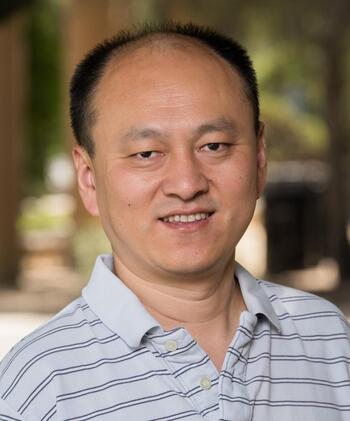
[Left] Postdoc Spotlight, Jeffrey Weng, Shorenstein Postdoctoral Fellow in Contemporary Asia, [Right] Jeffrey Weng
Jeffrey Weng's research examines the relationship between how language shapes society and society shapes language.
All News button
1
Subtitle

Shorenstein Postdoctoral Fellow in Contemporary Asia Jeffrey Weng shares insights from his research into how language and society shape one another, particularly how the historical use of Mandarin affects contemporary Chinese society and linguistics.

-

The Stanford Center on China's Economy and Institutions (SCCEI) and the Stanford King Center on Global Development held a special event on the potential for China and U.S. collaboration on climate change. 

China and the U.S. are critical for global action on climate change. Together, the two countries created up to 40 percent of global greenhouse gas emissions in 2019, and both countries have significant global influence. This event highlights several important challenges for climate action at the start of the Biden Administration. How can China-U.S. cooperation on climate be revived in light of the current bilateral relationship, in particular for fostering innovations in both technologies and policies for mitigating climate change? 

The special event featured Steven Chu, William R. Kenan Jr. Professor of Physics and Professor of Molecular & Cellular Physiology in the Medical School at Stanford University, and was moderated by Gretchen C. Daily, Bing Professor of Environmental Science and co-founder and faculty director of the Natural Capital Project at Stanford University. 

Watch the recording:

Following the lecture, SCCEI and the King Center hosted a virtual reception for audience members to continue the conversation in small breakout rooms. The Zoom meeting link was distributed at the end of the lecture.


About the Speakers:

Image
Headshot of Dr. Steven Chu
Steven Chu is the William R. Kenan Jr. Professor of Physics and Professor of Molecular & Cellular Physiology in the Medical School at Stanford University. He is currently the Chair of the Board of the American Association for the Advancement of Science (AAAS) and its past President. He has published papers in atomic physics, polymer physics, biophysics, molecular biology, ultrasound imaging, nanoparticle synthesis, batteries and other clean energy technologies.

He served as U.S. Secretary of Energy from January 2009 through April 2013. Prior to that, he was director of the Lawrence Berkeley National Laboratory, professor of Physics and of Molecular and Cell Biology (2004 to 2009) at UC Berkeley, the Francis and Theodore Geballe professor of Physics and Applied Physics at Stanford University (1987 to 2009), a member of the technical staff and head of the Quantum Electronics Research Department at AT&T Bell Laboratories (1978 – 1987).

Dr. Chu is the co-recipient of the 1997 Nobel Prize in Physics for his contributions to laser cooling and atom trapping. He received numerous other awards and is a member of the National Academy of Sciences, the American Philosophical Society, the American Academy of Arts and Sciences and 8 foreign Academies. He received an A.B. degree in mathematics and a B.S. degree in physics from the University of Rochester, and a Ph.D. in physics from the University of California, Berkeley, and 32 honorary degrees.


Image
Headshot of Dr. Gretchen Daily.
Gretchen Daily is Bing Professor of Environmental Science and co-founder and faculty director of the Natural Capital Project at Stanford University.  Her work focuses on understanding the dynamics of change in the biosphere, their implications for human well-being, and the deep societal transformations needed to secure people and nature.  She engages extensively with governments, multilateral development banks, businesses, communities, and NGOs. Daily co-founded the Natural Capital Project, a global partnership that is integrating the values of nature into policy, finance and management globally.  Its tools and approaches are now used in 185 nations through the free and open-source Natural Capital Data & Software Platform.  Daily has published several hundred scientific and popular articles, and a dozen books, including Green Growth that Works: Natural Capital Policy and Finance Mechanisms from Around the World (2019).  Daily is a fellow of the U.S. National Academy of Sciences and has received numerous international honors for her work.


Event Sponsors:
Stanford King Center on Global Development
Stanford Center on China's Economy & Institutions


News Type
News
Date
Paragraphs

Foreign Policy: China Will Run Out of Growth if it Doesn't Fix its Rural Crisis

No country with China’s vast education and public health problems has ever broken out of the ranks of middle-income countries.

"At a time when every other major economy is shrinking, China announced in late January that its GDP grew 2.3 percent in 2020. Beneath that impressive achievement, however, lies a very unbalanced recovery: As in the past, Beijing relied heavily on state investment and a state-led push for higher industrial production, while private investment and consumer spending remained weak. Easy credit to fuel growth has likely formed even more so-called zombie companies with little prospect of future profitability and filled the books of Chinese banks with even more bad loans.

That much is familiar to many who have taken a closer look at China’s skewed model for economic growth. What’s much less well known is the disproportionate burden of the COVID-19-induced downturn that has fallen on rural Chinese, including the 290 million migrant workers with rural hukou (household registrations) who work in cities throughout China. Lockdowns forced by the pandemic paralyzed economic sectors where many migrants work, such as services and retail. According to one estimate, Chinese migrant workers lost about $100 billion in wages that they are unlikely ever to recover.

Among migrant workers and the underdeveloped rural communities that depend on the wages they send home, a quiet crisis is taking place—with potentially dramatic consequences for China’s future growth. Despite what the GDP number suggests about the country’s successful handling of the pandemic, China’s longer-term economic risks have only grown—and are a direct result of the crisis in rural China. As Stanford University researchers Scott Rozelle and Natalie Hell document in their meticulously researched book, Invisible China: How the Urban-Rural Divide Threatens China’s Risehundreds of millions of rural Chinese face a dangerous lack of human capital and suffer from pervasive health problems, including widespread iron-deficiency anemia, uncorrected myopia, and parasitic intestinal worms. Exacerbated by the pandemic, China’s rural crisis remains largely invisible to outside observers, and even to many Chinese."


Read the full article from Foreign Policy.

Hero Image
A mother and child preparing food inside a yurt in rural China.
GettyImages - Matteo Colombo
All News button
1
Subtitle

Chorzempa & Huang write on China's rural human capital crisis stating that "no country with China's vast education and public health problems has ever broken out of the ranks of middle-income countries." The article references FSI Senior Fellow and SCCEI Director Scott Rozelle's book "Invisible China: How the Urban-Rural Divide Threatens China’s Rise" throughout.

Authors
Callista Wells
News Type
News
Date
Paragraphs

On February 10, 2021, the China Program at Shorenstein APARC hosted Professor Oriana Skylar Mastro, Center Fellow at the Freeman Spogli Institute for International Studies​ for the virtual program "Military Competition with China: Harder to Win Than During the Cold War?" Professor Jean Oi, William Haas Professor of Chinese Politics and director of the APARC China Program, moderated the event.

As US-China competition intensifies, experts debate the degree to which the current strategic environment resembles that of the Cold War. Those that argue against the analogy often highlight how China is deeply integrated into the US-led world order. They also point out that, while tense, US-China relations have not turned overtly adversarial. But there is another, less optimistic reason the comparison is unhelpful: deterring and defeating Chinese aggression is harder now than it was against the Soviet Union. In her talk, Dr. Mastro analyzed how technology, geography, relative resources and the alliance system complicate U.S. efforts to enhance the credibility of its deterrence posture and, in a crisis, form any sort of coalition. Mastro and Oi's thought-provoking discussion ranged from the topic of why even US allies are hesitant to take a strong stance against China to whether or not Taiwan could be a catalyst for military conflict. Watch now: 

Read More

Min Ye speaking
News

Domestic or International? The Belt and Road Initiative Is More Internally Focused Than We Think, Says Expert Min Ye

Domestic or International? The Belt and Road Initiative Is More Internally Focused Than We Think, Says Expert Min Ye
Banner of Hau L. Lee
News

The Pandemic, U.S.-China Tensions and Redesigning the Global Supply Chain

The Pandemic, U.S.-China Tensions and Redesigning the Global Supply Chain
Hero Image
Photograph of Xi Jinping and Vladmir Putin walking in front of two lines of armed Chinese soldiers
Getty Images
All News button
1
Subtitle

On February 10th, the APARC China Program hosted Professor Oriana Mastro to discuss military relations between the US and China, and why deterrence might be even more difficult than during the Cold War.

Authors
Arzan Tarapore
News Type
Commentary
Date
Paragraphs

This piece was originally published by the Lowy Institute's The Interpreter

To break the border stand-off between India and China in the Himalayas, some Indian analysts have advocated going on the offensive against China in the Indian Ocean. But that would be vague, illogical and imprudent, with little chance of success and significant risk of blowback. Instead, India and its partners should prioritize a more effective denial strategy in the Indian Ocean, to deter and counter any potential future coercion there.

Strategies of denial seek to reinforce defensive bulwarks so that potential aggressors are dissuaded from launching an attack – or, failing that, thwarted from succeeding. They are generally considered more effective and reliable than strategies of punishment, which rely instead on the threat of retaliation after the aggressor launches its attack. Punishment was the cornerstone of nuclear deterrence during the Cold War and since, but that strategy is considerably less reliable in the conventional and sub-conventional conflicts which India now faces.

[Subscribe to APARC's newsletters to get the latest commentary and analysis by our scholars.]

The False Promise of Punishment

Since May 2020, Indian and Chinese troops have been locked in a tense – and, at timesviolent – stand-off in the Himalayas, after Chinese incursions into the Indian-controlled territory of Ladakh. This scenario looks likely to last for months, if not years, to come. Some Indian analyses have called for bold action hundreds of kilometers away, in the Indian Ocean. They argue that horizontal escalation would broaden the Himalayas confrontation to an arena where India enjoys clear strategic advantages, allowing it to counter Chinese coercion more effectively.

The idea of taking the fight to the oceans has superficial appeal. India sits astride some of the world’s most vital sea lines of communication in the northern Indian Ocean – on which China, like all of East Asia, depends critically for trade and energy flows. India’s Navy dominates the Indian Ocean and could, the argument goes, apply excruciating pressure on the Chinese economy. This leverage could be applied in times of crisis, such as the ongoing border stand-off, or even in peacetime as a deterrent against Chinese coercion. Surely this would be less bloody than a war between the two largest armies in the world.

Rather than using its advantages to start a war it would lose, a denial strategy would be mindful of India’s limitations and focus on erecting political and military obstacles to Chinese coercion in the region.
Arzan Tarapore

But the concept is unclear. It is often framed as a vague statement of Indian power, without elucidating exactly how force should be used. Should India impose a blockade of all oil tankers bound for East Asia? Board and inspect some Chinese trading vessels? Intimidate a Chinese survey ship in the Bay of Bengal, or sink a Chinese navy ship conducting anti-piracy patrols? Some of these moves would be seen as acts of war – and most would be dramatically escalatory, especially for an Indian government that has been at pains to downplay the current crisis.

More fundamentally, such moves would have no “theory of success”. How would such pressure create the desired political effect in countering Chinese coercion? A blockade would be tantamount to an act of war – but a painfully slow war that would likely require months of stringent application and be unlikely to decisively strangle the Chinese economy. Short of a long blockade, in any realistic contingency, incremental Indian pressure in the Indian Ocean is unlikely to compel a Chinese regime that has staked its legitimacy on national rejuvenation and regional hegemony.

On the other hand, history suggests that even minor Indian naval offensives against China would invite an escalating retaliation. China would not only unleash its rapidly expanding surface and sub-surface fleet against India’s navy, but it could also impose pain elsewhere. China’s options against the Indian homeland – from long-range missile strikes to cyberattacks to more land grabs on the border – would be militarily feasible and politically devastating to New Delhi. Going on the offensive in the Indian Ocean, therefore, is likely to backfire, probably very badly.

Building “Strategic Leverage” in the Indian Ocean

While the Indian Ocean may not offer a magic bullet to resolve the border crisis, it is intrinsically important for India-China competition. China’s military expansion into the Indian Ocean poses multiple risks for India and its partners such as Australia and the United States. These like-minded partners should build their strategic leverage – political relationships and military capability – to manage these risks.

India enjoys unique advantages in the Indian Ocean, due to its geography and informal networks across the region. But rather than using its advantages to start a war it would lose, a denial strategy would be mindful of India’s limitations and focus on erecting political and military obstacles to Chinese coercion in the region.

India could focus on more actively binding itself to smaller regional states – as it already does by sharing maritime domain awareness and space-based surveillance data. Building strategic interdependence would cultivate smaller states’ desire for continued cooperation with India, and institutional resistance to Chinese attempts to coerce or bribe their political leadership.

India could also enhance its sea denial capabilities. Improving its anti-submarine warfare capabilities and expanding its stock of long-range precision missiles, for example, would help to deter the prospect of Chinese direct military intervention. This could be done at a fraction of the cost of building a small number of large capital ships. The Indian Navy is doctrinally committed to pursuing sea control, which like-minded partners such as Australia should welcome. But rapidly expanding its capabilities for sea denial would serve as a stopgap and hedge against China’s ballooning naval power, which will soon be able to contest India’s dominance in the ocean.

A denial strategy in the Indian Ocean will not resolve the current border crisis in Ladakh. But it would offer a realistic roadmap for building political influence and military power in the region. It would provide the strategic leverage necessary to deter or counter future acts of coercion in the Indian Ocean.

Read More

U.S. Navy and Indian Navy ships steam in formation in the Indian Ocean.
News

How to Mitigate the Risks of Chinese Military Expansion in the Indian Ocean Region

China’s expanding military capacity in the Indian Ocean region poses risks for the United States and its partners, writes South Asia Research Scholar Arzan Tarapore in 'The Washington Quarterly,' offering a framework by which the Quad and others can build strategic leverage to curtail China’s capacity to coerce small states or posture for war.
How to Mitigate the Risks of Chinese Military Expansion in the Indian Ocean Region
National Guard at the US Capitol
Commentary

The Soft War That America Is Losing

The US depends far more on its soft power than authoritarian China does. Once it is lost, it is hard to get back.
The Soft War That America Is Losing
Protesters in Myanmar stand on a picture of General Min Aung Hlaing
Commentary

Democracy Challenged: Donald Trump, Min Aung Hlaing, and Indonesia

Southeast Asia Program Director Donald K. Emmerson compares responses across Southeast Asia to the February coup in Myanmar and reflects on the parallels and differences between the state of democracy there and in the United States.
Democracy Challenged: Donald Trump, Min Aung Hlaing, and Indonesia
Hero Image
Two destroyer navy ships sail alongside each other
The Indian Navy destroyer INS Kolkata alongside guided-missile destroyer USS Street during Exercise Malabar, November 2020. | US Pacific Fleet/ Flickr
All News button
1
Subtitle

The stand-off with China in the Himalayas has raised a broader debate about India’s strategic outlook.

Authors
Callista Wells
News Type
News
Date
Paragraphs

On January 27, 2021, the China Program at Shorenstein APARC hosted Professor Hau L. Lee, The Thoma Professor of Operations, Information & Technology at the Stanford Graduate School of Business for the virtual program “The Pandemic, U.S-China Tensions and Redesigning the Global Supply Chain.” Professor Jean Oi, William Haas Professor of Chinese Politics and director of the APARC China Program, moderated the event.

Professor Lee focused on an important question that has only become more pressing due to the COVID-19 pandemic: How, if at all, should businesses redesign their supply chains? Since the beginning of the pandemic, explains Lee, there has been an increase in calls for “redundancy” in supply chains in order to protect them from the problems they faced early in the pandemic, when China was first hit by shut downs and slowed productivity. Advice has been varied, ranging from the “China Plus One” strategy in which businesses simply add a secondary production location, to completely domesticating supply chains.

Lee warns, however, of the perils of overreaction. There are numerous risks that come along with a fully domestic supply chain, not least the danger of “having all of your eggs in one basket.” Instead, says Lee, businesses should move cautiously and, instead of fully divesting from China, should use the country intelligently. 

Professor Lee’s “In and Out Design” encourages businesses to work from the inside out, securing and strengthening their supply chains by starting at home. Companies must first build “internal supply chain excellence,” after which they can move on to making sure their strategic partners are equally strong and can work to their advantage. Eventually, companies can move on to strengthening the extended value chain and, ultimately, their entire ecosystem. Using strategies like dual response, leveraging “lubricants,” and bolstering capacity-building capabilities, businesses can create a more stable future. 

The session concluded with a fruitful Q&A between Professor Lee and the audience, moderated by Professor Oi.

A video recording of this program is available upon request. Please contact Callista Wells, China Program Coordinator at cvwells@stanford.edu with any inquiries.

Read More

Min Ye speaking
News

Domestic or International? The Belt and Road Initiative Is More Internally Focused Than We Think, Says Expert Min Ye

Domestic or International? The Belt and Road Initiative Is More Internally Focused Than We Think, Says Expert Min Ye
Photograph of the UN building in Geneva, Switzerland
News

Rebuilding International Institutions Will be Tough but Necessary, Say Stanford Experts Thomas Fingar and Stephen Stedman

Fingar and Stedman spoke as part of the APARC program “Rebuilding International Institutions,” which examined the future of international institutions such as the United Nations (UN), World Trade Organization (WTO), and World Health Organization (WHO) in our evolving global political landscape.
Rebuilding International Institutions Will be Tough but Necessary, Say Stanford Experts Thomas Fingar and Stephen Stedman
Hero Image
Banner of Hau L. Lee
All News button
1
-

Image
SCCEI February 2021 Meet & Greet montage of faculty affiliates. Event held on Februrary 17, 2021 at 11am.

Wednesday, February 17, 2021 | 11:00 - 12:00 pm Pacific Time

SCCEI Co-Directors Hongbin Li and Scott Rozelle will share the motivation, mission, and vision for the new center. They will then be joined by SCCEI faculty affiliates for a panel discussion on their current and future research plans related to SCCEI's six flagship research initiatives. 

This event is by invitation only and has limited space, if you would like to attend please reach out to Heather Rahimi to inquire about an invitation.

SCCEI Directors

Image
Headshot of Dr. Scott Rozelle

Scott Rozelle holds the Helen Farnsworth Endowed Professorship at Stanford University and is Senior Fellow in the Food Security and Environment Program and the Shorenstein Asia-Pacific Research Center, Freeman Spogli Institute (FSI) for International Studies. For the past 30 years, he has worked on the economics of poverty reduction. Currently, his work on poverty has its full focus on human capital, including issues of rural health, nutrition and education. For the past 20 year, Rozelle has been the chair of the International Advisory Board of the Center for Chinese Agricultural Policy, Chinese Academy of Sciences (CAS). In recent years Rozelle spends most of his time co-directing the Rural Education Action Project (REAP). In recognition of this work, Dr. Rozelle has received numerous honors and awards. Among them, he became a Yangtse Scholar (Changjiang Xuezhe) in Renmin University of China in 2008. In 2008 he also was awarded the Friendship Award by Premiere Wen Jiabao, the highest honor that can be bestowed on a foreigner. 

Image
hongbin li headshot
Hongbin Li is the James Liang Director of the China Program at the Stanford King Center on Global Development, and a Senior Fellow of Stanford Institute for Economic Policy Research (SIEPR). Hongbin obtained his Ph.D. in economics from Stanford University in 2001 and joined the economics department of the Chinese University of Hong Kong (CUHK), where he became full professor in 2007. He was also one of the two founding directors of the Institute of Economics and Finance at the CUHK. He taught at Tsinghua University in Beijing 2007-2016 and was C.V. Starr Chair Professor of Economics in the School of Economics and Management. He founded the Chinese College Student Survey (CCSS) in 2009 and the China Employer-Employee Survey (CEES) in 2014.

Hongbin’s research has been focused on the transition and development of the Chinese economy, and the evidence-based research results have been both widely covered by media outlets and well read by policy makers around the world. He is currently the co-editor of the Journal of Comparative Economics.


Zoom Meeting

Panel Discussions
Authors
News Type
News
Date
Paragraphs

The COVID-19 pandemic has disrupted economies and expectations for economic growth and development the world over. But even before the pandemic, Asian economies were reassessing their growth strategies.

In a podcast conversation about the new edited volume Shifting Gears in Innovation Policy: Strategies from Asia, APARC's Korea Program Deputy Director Yong Suk Lee discusses some of the impediments Asian countries face in trying to encourage economic development and entrepreneurship, but also the inherent strengths that could allow innovative strategies take hold and grow in East Asia. Listen to the full conversation below.

[Subscribe to APARC's newsletters to get the latest updates from our scholars.]

Edited by Lee, Gi-Wook Shin, and Takeo HoshiShifting Gears in Innovation Policy is the first of three volumes resulting from APARC's Stanford Asia-Pacific Innovation project that produces policy research to promote innovation and entrepreneurship in East Asia and the greater Asia-Pacific region.

Lee explains, “Many Asian countries achieved economic growth by importing new technologies from advanced economies like the U.S., using them very effectively, and then expanding exports. But now where East Asia stands, many of these countries have already successfully caught up to the technological frontier of advanced economies, so if they want to maintain growth, there needs to be a shift in their strategies.”

The shift Lee and the other volume authors propose is one towards economic growth that is driven by innovation and entrepreneurship rather than the ‘catch-up’ model that Asian economies have commonly relied on. Unlike startup hubs such as the San Francisco Bay Area of California, Asian countries often lack an entrepreneurial tradition because of antagonistic financial structures and differences in cultural definitions of success. These additional financial and social risks have cast entrepreneurial endeavors in an unattractive light for multiple generations of workers.

But encouraging entrepreneurship and endemic innovation are crucial to maintaining stable economic growth. With rapidly aging populations, greater interconnections in both trade and diplomacy, and transformation in the workforce, workplace, and work itself, effectively adapting development strategies to meet present and future challenges remains a central priority for East Asia policymakers and innovators alike. As Lee advises, “There’s strong infrastructure in East Asia, both physically and digitally, which is a great advantage. But they’re now at a frontier with no trajectory to follow, and there needs to be indigenous growth and continuous innovation in order to not be surpassed by competitors.”

Read More

Stanford students participate in class.
News

University Entrepreneurship Programs May Not Increase Entrepreneurship Rates, Stanford Researchers Find

A study by Yong Suk Lee, the deputy director of APARC’s Korea Program, and Management Science and Engineering professor Charles Eesley investigates the efficacy of two major Stanford entrepreneurship education initiatives, suggesting they may not increase entrepreneurial activity.
University Entrepreneurship Programs May Not Increase Entrepreneurship Rates, Stanford Researchers Find
Stanford campus, main quad with cloudy sky
News

APARC Offers Fellowship and Funding Opportunities to Support, Diversify Stanford Student Participation in Contemporary Asia Research

The Center has launched a suite of offerings including a predoctoral fellowship, a diversity grant, and research assistant internships to support Stanford students interested in the area of contemporary Asia.
APARC Offers Fellowship and Funding Opportunities to Support, Diversify Stanford Student Participation in Contemporary Asia Research
A man with interacts with 'Emiew,' a humanoid robot.
News

“Co-Bots,” Not Overlords, Are the Future of Human-Robot Labor Relationships

Yong Suk Lee and Karen Eggleston’s ongoing research into the impact of robotics and AI in different industries indicates that integrating tech into labor markets adjusts, but doesn’t replace, the long-term roles of humans and robots.
“Co-Bots,” Not Overlords, Are the Future of Human-Robot Labor Relationships
Hero Image
Shifting Gears in Innovation Policy: Strategies from Asia
'Shifting Gears in Innovation Policy: Strategies from Asia,' is now available.
All News button
1
Subtitle

Yong Suk Lee explains in the new volume, Shifting Gears in Innovation Policy, that while ‘catch-up’ strategies have been effective in promoting traditional economic growth in Asia, innovative policy tools that foster entrepreneurship will be needed to maintain competitiveness in the future.

-

This is a virtual event. Please click here to register and generate a link to the talk. 
The link will be unique to you; please save it and do not share with others.


U.S. relations with China evolved into outright rivalry during the Trump administration. In this talk, Thomas Wright will look at whether this rivalry will continue and evolve during a Biden administration. To answer this question, he will look at the roots of strategic competition between the two countries and various strands of thinking within the Biden team. The most likely outcome is that the competition will evolve into a clash of governance systems and the emergence of two interdependent blocs where ideological differences become a significant driver of geopolitics. Cooperation is possible but it will be significantly shaped by conditions of rivalry.


Image
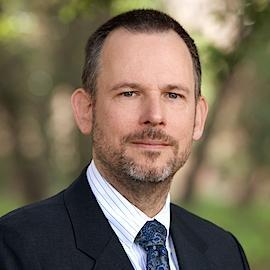
Portrait of Thomas Wright
Thomas Wright is the director of the Center on the United States and Europe and a senior fellow in the Project on International Order and Strategy at the Brookings Institution. He is also a contributing writer for The Atlantic and a nonresident fellow at the Lowy Institute for International Policy. He is the author of “All Measures Short of War: The Contest For the 21st Century and the Future of American Power” which was published by Yale University Press in May 2017. His second book "Aftershocks: Pandemic Politics and the End of the Old International Order" will be published by St Martin's Press in 2021. Wright also works on U.S. foreign policy, great power competition, the European Union, Brexit, and economic interdependence.

Wright has a doctorate from Georgetown University, a Master of Philosophy from Cambridge University, and a bachelor's and master's from University College Dublin. He has also held a pre-doctoral fellowship at Harvard University's Belfer Center for Science and International Affairs and a post-doctoral fellowship at Princeton University. He was previously executive director of studies at the Chicago Council on Global Affairs and a lecturer at the University of Chicago's Harris School for Public Policy.


Image
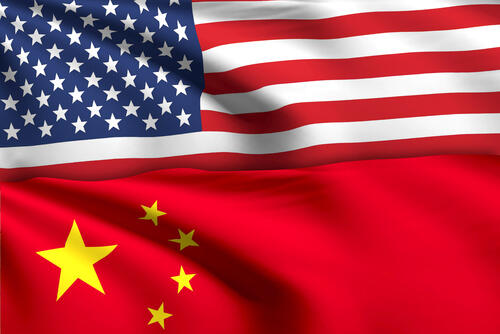
American and Chinese flags
This event is part of the 2021 Winter/Spring Colloquia series, Biden’s America, Xi’s China: What’s Now & What’s Next?, sponsored by APARC's China Program.


Via Zoom Webinar. Register at: https://bit.ly/3r1glp7

Thomas Wright Director, Center on the United States and Europe, Brookings Institution; Senior Fellow, Foreign Policy, Project on International Order and Strategy, Brookings Institution
Seminars

Encina Hall East, 4th floor
616 Jane Stanford Way
Stanford, CA 94305-6055

0
Senior Fellow at the Freeman Spogli Institute for International Studies
Associate Professor at the Graduate School of Education
prashant_loyalka.png PhD

Prashant Loyalka is an Associate Professor at the Graduate School of Education and a Senior Fellow at the Freeman Spogli Institute for International Studies at Stanford University. His research focuses on examining/addressing inequalities in the education of children and youth and on understanding/improving the quality of education received by children and youth in multiple countries including China, India, Russia, and the United States. He also conducts large-scale evaluations of educational programs and policies that seek to improve student outcomes.

CV
Subscribe to China