-
2026 SCCEI China Conference will be held on May 7, 2026 and focus on Understanding “DeepSeek Moments” and China’s Innovation Ecosystem.


Governments, markets, and analysts in the United States and around the world frequently find themselves surprised by China’s capabilities in industries central to economic and national security—from artificial intelligence and robotics to pharmaceuticals, advanced manufacturing, and strategic supply chains. Episodes widely described as “DeepSeek moments” reflect more than isolated breakthroughs; they reveal a systematic failure to understand how China builds technological capacity and scales it with speed. Yet these cutting-edge advances are emerging against the backdrop of a sustained economic slowdown, raising new questions about whether China’s push for technological supremacy is occurring at the expense of broader economic health. 

The Stanford Center on China's Economy and Institution's (SCCEI) annual China Conference convenes leading experts to examine why prevailing frameworks consistently underestimate China’s industrial performance and assess how its technology ecosystem, industrial policies, and trade strategies function and interact to push many critical sectors to the frontier.


We are finalizing an outstanding lineup of speakers from academia, industry, and policy communities. Updates will be posted here as confirmed. 

*Schedule is subject to change  

Location: 
Bechtel Conference Center
Encina Hall
616 Jane Stanford Way, Stanford University

*Topics, speakers, and timing will be confirmed soon. 


10:30 AM - 11:00 AM  Registration & Light Breakfast

11:00 AM - 11:15 AM  Welcome & Opening Remarks


Scott Rozelle 
Faculty Co-Director of the Stanford Center on China's Economy and Institutions;
Senior Fellow at the Freeman Spogli Institute for International Studies and at the Stanford Institute for Economic Policy Research
Stanford University


11:15 AM - 12:15 AM  Session 1 | What Distinguishes China's Innovation Ecosystem?


Session Panelists:
Barry Naughton
So Kwan Lok Chair of Chinese International Affairs
University of California, San Diego 

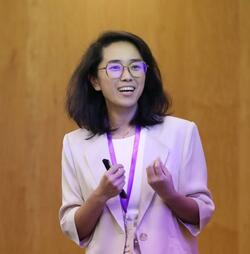
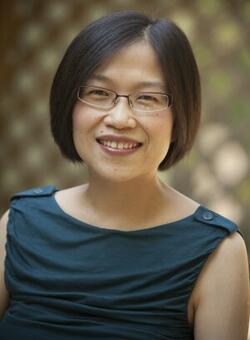
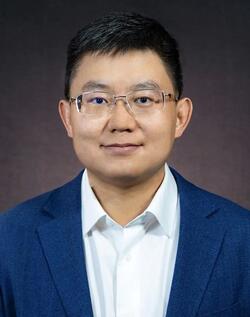
Philip Wong
Willard R. and Inez Kerr Bell Professor of Electrical Engineering, Stanford University
Chief Scientist Advisor, TSMC

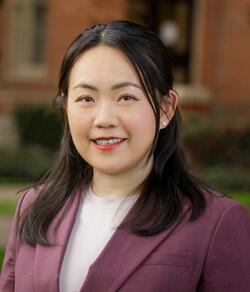
Chenjian Li
Research Fellow, Hoover Institution
Stanford University

Moderator:
Hongbin Li 
Faculty Co-Director of the Stanford Center on China's Economy and Institutions; 
Senior Fellow at the Freeman Spogli Institute for International Studies and at the Stanford Institute for Economic Policy Research
Stanford University
 

12:15 PM - 1:30 PM  Lunch
 
1:30 PM - 2:30 PM  Session 2 | Industrial Policy at the Tech Frontier


Session Panelists:
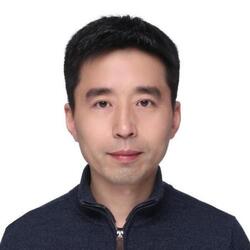
Heiwai Tang
Victor and William Fung Professor in Economics; Associate Vice President (Global); 
Associate Dean for External Relations, Business School
University of Hong Kong 

Scott Kennedy
Senior Adviser and Trustee Chair in Chinese Business and Economics 
Center for Strategic and International Studies

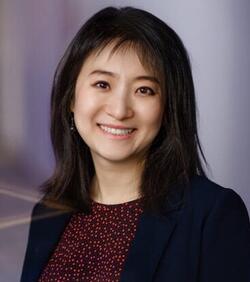
Ruixue Jia
Professor of Economics, School of Global Policy and Strategy
University of California, San Diego

Moderator:
Shanjun Li
Professor of Environmental Social Sciences, Stanford Doerr School of Sustainability; 
Senior Fellow, Freeman Spogli Institute for International Studies
Stanford University 
 

2:30 PM - 3:00 PM  Break
 
3:00 PM - 4:00 PM  Session 3 | Trade War Meets Tech War: Trade Technology in a Fragmented World


Session Panelists:
Jiajun Wu
Assistant Professor of Computer Science
Stanford University

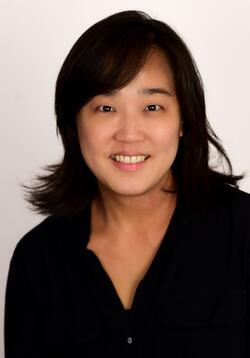
Bingjing Li
Associate Professor of Economics
University of Hong Kong

Hong Ma
Professor and Chair, Department of Economics
Tsinghua University

Moderator:
Jennifer Pan
Professor of Communication
Stanford University


4:00 PM - 4:15 PM  Break

4:15 PM - 5:30 PM  Keynote Address


Rush Doshi
C.V. Starr Senior Fellow for Asia Studies and Director of the China Strategy Initiative, Council on Foreign Relations
Assistant Professor of Security Studies, Walsh School of Foreign Service, Georgetown University 

Moderator:
Scott Rozelle 
Faculty Co-Director of the Stanford Center on China's Economy and Institutions;
Senior Fellow at the Freeman Spogli Institute for International Studies and at the Stanford Institute for Economic Policy Research
Stanford University


Questions? Contact scceichinaconference@stanford.edu 


Bechtel Conference Center
Encina Hall
616 Jane Stanford Way, Stanford University

This event is by invitation only.

Conferences
News Feed Image
banner_2_to_1_dimensions_2026-no_topic.png
Date Label
Authors
News Type
News
Date
Paragraphs
The Highest Exam books are lined up and displayed on a table.

The Stanford Center on China's Economy and Institutions (SCCEI) hosted a fireside chat featuring authors Hongbin Li and Ruixue Jia, moderated by Yiqing Xu, to discuss their newly published book The Highest Exam: How the Gaokao Shapes China.

The discussion explored China's gaokao—the nationwide college entrance exam taken annually by over ten million students—which uniquely determines college admission entirely through test performance and a regional quota system. The authors presented research drawing from extensive surveys, historical analysis, economic data, and personal narrative to reveal how this centralized testing system functions as a centralize, hierarchical tournament serving the Chinese Communist Party's needs while driving economic growth. The conversation also addressed the gaokao's broader societal impacts, including how Chinese-American families' expectations shaped by this test-based system increasingly conflict with the holistic admissions approaches used by U.S. educational institutions.


Watch the Recorded Event

Read More

The Highest Exam book cover.
News

New Book Explores China’s Gaokao and Its Profound Impact on Society

"The Highest Exam: How the Gaokao Shapes China", written by Ruixue Jia, Hongbin Li, and Claire Cousineau, combines rigorous research with compelling personal narratives to reveal how the gaokao has become much more than a test: it is a tool to shape China’s society and economy.
New Book Explores China’s Gaokao and Its Profound Impact on Society
Group photo of students, staff, and faculty in China during the 2025 SCCEI China Study Program.
News

Stanford Students Gain Firsthand Insights into China’s Economy, Culture, and Global Role

Led by Stanford faculty members, 20 Stanford students traveled across China engaging in academic exchanges, site visits to leading companies and institutions, and rich cultural experiences to gain a deeper understanding of the country’s economy, culture, and international relations.
Stanford Students Gain Firsthand Insights into China’s Economy, Culture, and Global Role
All News button
1
Subtitle

Hongbin Li and Ruixue Jia joined Yiqing Xu for a fireside chat on their newly published book, "The Highest Exam: How the Gaokao Shapes China." Watch the recording and see event highlights.

Date Label
Authors
News Type
News
Date
Paragraphs

This article was originally written by Jikun Huang in Mandarin and published by Peking University. Read the original article here. 


Founding

The story of the China Center for Agricultural Policy (CCAP) started with my encounter with Scott Rozelle in the Philippines in 1988. Then a Ph.D. student at Cornell University, Scott attended an international conference hosted by Dr. Cristina David, my advisor at the International Rice Research Institute (IRRI). This chance encounter started our collaboration that has lasted 30 years and continues today. We both completed our graduate studies in 1990: Scott began teaching at Stanford University, while I started my postgraduate work at IRRI after receiving my degree from IRRI and the University of the Philippines, Los Baños (UPLB). 

Two photos of Jikun Huang and Scott Rozelle side by side from the 1990s.

Jikun Huang and Scott Rozelle.

Between 1990 and 1992, we submitted a joint project proposal to study China’s rice economy to the International Development Research Center (IDRC). I returned to China in 1992 and initiated the project with Scott at the National Rice Research Institute under the Chinese Academy of Agricultural Sciences (CAAS). Besides producing many important findings, the project helped us discover a cohort of talented scholars, including Yongzhong Qian, Ting Zuo, and Ruifa Hu, who later became my Ph.D. advisee at Zhejiang Agricultural University. Scott and I have since become not only collaborators in research, but also mentors and friends to each other.

Group photo of the agricultural economics project team in 1992, including Scott Rozelle and Jikun Huang.

The agricultural economics project team in 1992.

The decision to establish CCAP was deeply informed by my experience at the International Food Policy Research Institute (IFPRI). After being promoted to become the youngest principal investigator at CAAS in 1993, I joined IFPRI to conduct research on its 2020 Vision Initiative. During my time there, Lester R. Brown, founder of the Worldwatch Institute, proposed in his famous opinion piece that “China could starve the world in 2020.” I felt compelled to rebut his claim and, inspired by IFPRI’s framework for agricultural policy research, sought to establish a research institution for agricultural policy in China. My idea received support from Scott and Dr. Xigang Zhu, then director of the Institute of Agricultural Economics at CAAS. I also contacted Linxiu Zhang, my colleague at UPLB, and Ninghui Li, a collaborator of IFPRI, to enlist their support. When my decision finally reached Dr. Per Pinstrup-Andersen, then director of IFPRI, he felt surprised by my decision to return to China but excited by the prospect of my establishing a “mini-IFPRI” there.

I travelled back to China in August 1995 and started preparing for CCAP in September. Our first office was two small rooms on the first floor of an unassuming two-story building in the computation center of CAAS in Beijing. In the rooms were computers, files, and a laser printer I purchased in the U.S.– since then it had served us loyally for years, only retiring when we relocated out of CAAS. The team at the time included me, Linxiu, two graduate students, and a research assistant. With help from Scott and Songqing Jin, my assistant at the China National Rice Research Institute, CCAP’s work began in fall 1995. 

The first months at the office were sprinkled with many fun and memorable moments: I gave the students a budget of 500 CNY to buy a thermos so that we can drink hot water in the office; They brought back an electric kettle with a button-operated dispenser, a luxury item that turned out to be our most trusty office appliance. 

After about six months in the small office in the computation center, we relocated in the spring of 1996 to an office in the Institute of Agricultural Economics. The Institute offered a suite of four rooms to accommodate our team, which grew with the joining of new scholars, including Ruifa Hu and Ninghui Li. With newly acquired funding, we equipped our office with state-of-the-art infrastructure, complete with corner desks, swivel office chairs, and cubicle dividers. Even our logo, which we designed ourselves, stood out at the time for its creativity.

The center’s administrative structure was also innovative for its time. Thanks to support from my mentors and the senior agricultural economists at CAAS, like director Xigang Zhu and Dr. Fangquan Mei, the center remained financially independent from the Institute. Its staff received an annual salary, and its expenses were managed independently to allow for more efficient allocation. 

In May 1996, the center was officially named as the Center for Chinese Agricultural Policy. Our first large-scale field research in rural China began that summer and lasted for over a month. For many of us, this was our first foray into standardized field research, and it left a lasting impression: Many of the children we surveyed dropped out of school due to poverty. In 1997, I proposed that we pool a research award the center had received and a proportion of our wage together to start a financial aid program for children struggling with poverty to stay in schools. The proposal was warmly welcomed by my colleagues and collaborators. On our behalf, education officials in Xingguo County in Jiangxi Province subsidized the education of children from low-income families in the county and purchased stationery for them. The program lasted 15 years until the government initiated its poverty-alleviation initiatives in the 2010s. Many of the beneficiaries attended college, and some even completed Ph.D. degrees.

CCAP’s work quickly accelerated after the establishment of the first Advisory Committee in 1997, with Scott as its chair and 12 renowned scholars from 10 countries, including Professor Yifu Lin at Peking University and Dr. Shenggen Fan at IFPRI, serving as members. In January 1998, we initiated a project on the challenges and strategies of China’s grain production in the 21st Century. Inspired by IFPRI’s framework, we focused our research on four areas: agricultural technology, food and agricultural economics, resource and environmental economics, and rural developmental economics. Our projects examined China’s agricultural technology and innovation, rice production, pesticide use and conservation, industrial policy, land rights and the labor market, the grain market and agricultural subsidies, water resources, and rural public goods.

As our projects grew, so did the number of late nights at the office. I was fortunate to have the company of my family in Beijing from the summer of 1996, while many colleagues split their time between conducting fieldwork in rural communities and cleaning data in Beijing. We often stayed up in the office, writing research reports until the security guard locked the gate to the building at midnight, and had to ask to be let out. On several memorable nights when even the guards had left, we resorted to exiting from a second-floor window and sliding down the tree outside.  

The team expanded, too. Dinghuan Hu and Zhenyu Sun joined in 1998; I invited Jintao Xu, who had just finished his studies in the U.S., to join after meeting him in Singapore in 1999; In 2000, Luping Li joined after graduating from UPLB. The center also enrolled over 30 graduate students between 1997 and 2000 and hired a growing team of dedicated administrative and research assistants to support them. Many of the assistants went on to pursue degrees at universities abroad. Besides Scott, the center also hosted international scholars like Don Antiporta, Carl Pray, Loren Brandt, Chunlai Chen, and students like Albert Park, Bryan Lohmar, and Xiaoyong Zhang. Outside of our research, we organized many gatherings and outings to bring the growing team closer together.

Our work soon paid off. To our pride, two projects were awarded by the Department of Agriculture for advancing agricultural technology between 1996 and 1999, and our center and I also received numerous awards for contributions to agricultural technology and China’s food security. 

The center’s first five years at CAAS laid the foundation for its development in the following 25 years; Despite the center being restructured as part of the Chinese Academy of Sciences (CAS) later, the collaboration with CAAS continued, and its use of fieldwork to inform agricultural economics research still influences us today.
 

Development    

The years between 2000 and 2015 saw CCAP expand from a team of several researchers to one of Asia’s premier agricultural economics research institutions. In 1999 and 2000, CCAP’s work drew attention from officials spearheading CAS’s intellectual innovation initiative. With support from Scott, we felt prepared to contribute to this initiative. In September 2000, the two institutions reached a consensus that CCAP would be restructured as part of the CAS, while individual researchers who chose to remain at CAAS did so. Soon, in October, my students and assistant helped pack up my office supplies and files and shipped them to the new office in the CAS while I left town for my university reunion. When I returned to Beijing, I was astonished to find my familiar desk, chair, bookshelves, and even air conditioner shipped to my new office. When I asked my assistants why they went to the great lengths to move these large pieces of furniture, they simply replied that they had seen me and the team work hard to raise the funds for these “assets” – how could they just be thrown away? We had barely settled into our new office when new opportunities for research and exchange unfolded before us. In November 2011, CCAP co-hosted a delegation from the International Institute for Applied Systems Analysis (IIASA) at the “CHINA–IIASA DAY” conference with support from China’s Academy of Labor and Social Security.

The tenth anniversary of CCAP coincided with the mid-autumn festival of 2005. It was celebrated with a conference that included three days of memorable events and fruitful exchange: Scott and Jintao invited colleagues working in many different countries, while I extended invitations to the center’s long-time advisors and collaborators in China. On the first day, we had the honor to hear from Jiayang Li, the vice president of the CAS, and Joachim von Braun, the director of IFPRI. CAS academician Guofang Shen and Professor Partha Dasgupta of Cambridge University also spoke about their work on sustainable development. The focus of the second day was agricultural economics: Mr. Xiwen Chen unpacked China’s agricultural finance policy on behalf of finance officials; Scott Rozelle, Tushaar Shah, then chief scientist at the International Water Management Institute, and I each reported our ongoing research; The presentations entailed heated discussions among the guests, including officials from China’s State Council and National Reform and Development Commission. The third day was reserved for celebration, culminating with gatherings and performances by dancers from the logging communities in the Northeast Forest Area.

A group photo of adults standing outside in front of a building.

CCAP's Board of Academic Advisors at the at CCAP's 10th anniversary celebration held on September 25, 2005.

As part of the CAS, CCAP systematically expanded its areas of research: We have deepened our work on seed technology and policy while extending into bioenergy innovation and seed-industry governance; We continued to develop a analytics system to support decision-making on agricultural industrial policies, while also tackling emerging topics like WTO and China’s food security, price-subsidies, and value-chain restructuring; We leveraged our long-standing strengths in water and forest sustainability research to expand into interdisciplinary projects on land management, pollution control, climate-change adaptation, and ecological compensation; Finally, we applied our research in rural public services provision, governance, and urban–rural integration. Part of this effort were the groundbreaking projects on human capital development like the Rural Education Action Program in collaboration with Stanford.

During this period, we initiated 300 research projects in our areas of focus and published over 1,000 manuscripts in academic journals both in China and abroad. Since 2003, we have submitted over 100 reports via the CAS to the central government, over 60 of which led to feedback and discussion that directly informed China’s agricultural policy. Since about 2007, CCAP has ranked among the most influential agricultural economics research institutions in Asia. 

Four photos depicting a team doing fieldwork during CCAP’s time as part of the CAS.

Fieldwork during CCAP’s time as part of the CAS.

CCAP also became a cradle for agricultural economists: Two of our members (myself included) were elected to The World Academy of Sciences for the Advancement of Science in Developing Countries (TWAS), four were awarded by the Chinese government for outstanding contributions to scientific research, in addition to numerous awards both at home and abroad. Between 2001 and 2015, we welcomed numerous post-doctorate scholars and visiting scholars, while several Ph.D. students chose to remain on the team as researchers after receiving their degrees. Meanwhile, Jintao Xu left for the School of the Environment at Peking University (PKU) and later its National School of Development, Ran Tao joined the faculty of Renmin University, and numerous other team members joined the faculty of universities across China to advance their work. 

Group photo of enumerators doing fieldwork in rural China.

A group photo during a CCAP fieldwork excursion in 2012. Researchers featured include current team members of the Rrural Education Action Program: Scott Rozelle, Matthew Boswell, Alexis Medina, and Huan Wang.

We also developed a rigorous program for training graduate students: Besides studying agricultural economics, students at CCAP were required to complete advanced coursework in microeconomics, econometrics, and other core topics in economics at PKU. After completing their coursework, students conducted an average of three months of fieldwork in rural China every year to advance their dissertation research. For this, we have become affectionately known as “the national census team,” and being part of the Huang lab carried immense respect in the field of agricultural economics.

The year 2015 was particularly significant for CCAP. Then in its 20th year, the center faced difficult decisions about its future directions as the CAS underwent major restructuring. I consulted with Scott, Linxiu, and presented our past work and current vision at the 29th Conference of the International Association of Agricultural Economists in Milan, Italy. The resulting consensus was that, for CCAP to maintain its independence and development trajectory, it needed a new institution and platform. Eventually, CCAP found its new home at Peking University, marking the end of 15 years of rapid yet steady development with support from the CAS and the beginning of a new chapter.

Exploration

The decision to join Peking University (PKU) was motivated by intensifying competition in China’s academia and changing performance benchmarks for promotion within the CAS. We had always found the academic ecosystem at PKU ideal for CCAP’s development, but it was not until I got in touch with the administration that I realized how competitive and rigorous PKU’s talent acquisition process was: Each member of the center underwent an individual review process, in which we defended our work in front of a panel of reviewers. Surprisingly, despite most of us being economists, our first round of reviews was led by a panel of natural scientists and engineers, and none of us passed our review; I then requested an unprecedented second round of reviews by economics and social scientists who were more familiar with our work. Eventually, all members of CCAP had passed their reviews and relocated to PKU by the end of 2016, except for two colleagues, Linxiu and Xiangzheng, who chose to remain at the Institute of Geography in the CAS.

Scott Rozelle and Jikun Huang.

Scott Rozelle and Jikun Huang.

At PKU, CCAP changed its name from the “Center for Chinese Agricultural Policy” to the “China Center for Agricultural Policy.” While the acronym remained the same, the name change reflected the shift in our focus from China’s agriculture to agricultural policy in the global South. To achieve this, we expanded the agricultural economics curriculum at PKU, a change anticipated by the field. We also closely integrated our research with policymaking. Specifically, we furthered our research on plant breeding and the seed industry to inform the transition to digital agriculture and governance in rural communities; We situated our food security research within China’s geopolitical context while also giving more attention to sustainable agriculture; And we drew on our previous works on human capital development in rural China to study the theory and policies of rural transformation in emerging economies.

Like in any other stage of CCAP’s journey, talent has remained the driving force of our work. CCAP welcomed five research scholars between 2021 and 2025, while hosting 43 Ph.D. students and 41 post-doctoral scholars. We also welcomed 13 visiting scholars from our partner institutions, many of whom have become leading figures in agricultural economics. Notably, our collaboration with Jiangxi Agricultural University also took off through the exchange of faculty and students and the joint development of data and research infrastructure. In 2021, I transitioned into an advisory role as the honorary director of CCAP, and Jinxia Wang succeeded the role of director and was supported by two assistant directors, Chengfang Liu and Lingling Hou. The new leadership embodies the very international vision and innovative thinking that have come to define CCAP.

In the past ten years, CCAP’s work has made notable contributions to the field. More than 400 of our 500 publications since 2016 were included in the Science Citation Index / Social Sciences Citation Index; We have published in not only agricultural economics journals like the American Journal of Agricultural Economics (AJAE) and Food Policy, but also natural science journals like Nature, Nature Plants, Nature Ecology & Evolution, Nature Communications, and Proceedings of the National Academy of Sciences (PNAS) and many other academic journals in economics, environmental studies, and public health. We established a good reputation in the global agricultural economics community, too: CCAP has been ranked among the top research institutions in Asia by RePEc/IDEAS for nine consecutive years, and five of our team members have been named Highly Cited Scholars by Elsevier. Meanwhile, the Institute of Advanced Agricultural Sciences at PKU, a joint effort headed by CCAP and supported by 16 academic departments across the university, has become a globally renowned think tank for rural development since its founding in 2018. The institute focuses on applied research on rural development and agricultural policy and has contributed over 100 proposals to the government. CCAP was also part of the scientific group in the United Nations Food Systems Summit in 2021 and organized the G20 expert working group on grain security and sustainable agriculture in Argentina in 2018 and again in Indonesia in 2022. The 2024 PKU Forum on Rural Revitalization, organized by CCAP, received a total of six million visits from in-person and online audiences, highlighting the influence of our work on public conversations around rural development.

New Horizons

For me, CCAP’s accomplishments today are thanks to five reasons. The first is our commitment to institutional environments that support principal investigators (PIs) in their independent research and innovation. The second is our commitment to facts and integrity, embodied by our tradition of gaining insights from rigorous fieldwork and drawing conclusions from data. The third is collaboration, which includes establishing rapport with our research participants, teamwork between assistants and PIs to collect data, and constructive debate between students and their mentors to further our understanding. The fourth is the rigorous training our students and young scholars receive, which not only enhances their understanding of theory and methods but also cultivates their commitment to research integrity. The fifth and final reason is our effort to use research to inform policymaking and make tangible contributions to rural development.

In the future, CCAP plans to leverage the interdisciplinary approach of PKU to train researchers who can advance the work of the center and transform the discipline of agricultural economics. As a think tank, we are confident that through enhancing our capacity for data collection and analysis, we can contribute solutions to global sustainable development.

Read More

A staff member at a parenting center reads a book aloud to a child and caregiver.
News

REAP Parenting Center Based in Tech Factory Receives Positive National Media Attention

REAP helped establish a parenting center at the Zhengzhou Foxconn Facility serving migrant factory employees and their families. The center implements a research-based curriculum for early childhood development to better meet local needs. The new center has recently received positive media attention across several outlets in China.
REAP Parenting Center Based in Tech Factory Receives Positive National Media Attention
All News button
1
Subtitle

Jikun Huang reflects on his 30 years with the China Center for Agricultural at Peking University and how the founding of the center was deeply influenced by his chance encounter with Scott Rozelle in the Philippines in 1988.

Date Label
Paragraphs

China’s unprecedented expansion of higher education in 1999 increased annual college enrollment from 1 million to 9.6 million by 2020. We trace the global ripple effects of that expansion by examining its impact on US graduate education and local economies surrounding college towns. Combining administrative data from China’s college admissions system and US visa data, we leverage the centralized quota system governing Chinese college admissions for identification and present three key findings.

First, the expansion of Chinese undergraduate education drove graduate student flows to the US: every additional 100 college graduates in China led to 3.6 Chinese graduate students in the US. Second, Chinese master’s students generated positive spillovers, driving the birth of new master’s programs and increasing the number of other international and American master’s students, particularly in STEM fields. And third, the influx of international students supported local economies around college towns, raising job creation rates outside the universities, as well. Our findings highlight how domestic education policy in one country can reshape the academic and economic landscape of another through student migration and its broader spillovers.

All Publications button
1
Publication Type
Working Papers
Publication Date
Journal Publisher
National Bureau of Economic Research (NBER)
Authors
Hongbin Li
Number
w34391
Paragraphs

The starkly different paths of economic development followed by China and the West leading to the Industrial Revolution is often being attributed to environmental factors. This column argues that institutions and culture played a key role in setting Europe and China on divergent paths well before the onset of the Industrial Revolution, but the role they played was mediated by a critical difference between the two civilizations: the nature of their prevalent social organizations. A key factor behind China’s remarkable economic resurgence has been its capacity to adapt traditional institutions and cultural practices to the needs of a modern economy.

All Publications button
1
Publication Type
Journal Articles
Publication Date
Journal Publisher
VoxEU / CEPR
Authors
Avner Greif
Authors
Khushmita Dhabhai
News Type
Q&As
Date
Paragraphs

The "Meet Our Researchers" series showcases the incredible scholars at Stanford’s Center on Democracy, Development and the Rule of Law (CDDRL). Through engaging interviews conducted by our undergraduate research assistants, we explore the journeys, passions, and insights of CDDRL’s faculty and researchers.

On a busy Thursday afternoon at Stanford’s Center on Democracy, Development and the Rule of Law (CDDRL), I sat down with Professor Michael McFaul, Director of the Freeman Spogli Institute for International Studies (FSI) and Ken Olivier and Angela Nomellini Professor of International Studies in the Department of Political Science, for a wide-ranging conversation on great power competition, U.S.–China relations, Cold War legacies, and the role of ideology in shaping global politics.

A former U.S. Ambassador to Russia and one of the most prominent voices on American foreign policy, Professor McFaul’s new book Autocrats vs. Democrats: China, Russia, America, and the New Global Disorder examines the stakes of the current geopolitical moment. Over the course of nearly an hour, we spoke about the elasticity of the term “great power competition,” the dangers of isolationism, the importance of middle powers, and the enduring influence of ideas in world politics. He also shared advice for young people interested in foreign policy, as well as the two books that shaped his early intellectual journey.

The term “great power competition” has become such a potent buzzword in Washington. Everyone uses it all the time, and it feels like it can mean many different things depending on who’s talking. How do you define great power competition? And do you think there’s a way for Washington to stop treating it as a catch-all phrase and instead turn it into a strategy with clear ends, means, and metrics?


The original motivation for writing my book came in 2017 when the Trump administration came into power. They wrote a National Security Strategy that very explicitly stated that we were in a new era of great power competition. And that document, in my view, became one of the most famous national security strategies of recent decades because it was so clear about that shift. The Pentagon even came up with an acronym — GPC (great power competition) — and when they create an acronym, it usually means it’s here to stay.

Around that time, there was also a big debate about whether we had entered a new Cold War. It began first with Russia — books were being written about a “new Cold War” as early as 2009 — and then the conversation shifted to China. So my first motivation for writing the book was to ask: Is this actually true? Is the Cold War analogy useful or not? My answer is complicated. Some things are similar, some things are different. Some of what’s similar is dangerous; some isn’t. Some of what’s different makes things less dangerous, and some of what’s different is scarier than the Cold War. If we don’t get the diagnosis right, then we won’t have smart policies to sustain American national interests.

You’ve written and spoken about how the Cold War analogy can be misleading. What are the main lessons from that period that we should remember, both the mistakes and the successes?


Because we “won” the Cold War, a lot of the mistakes made during it are forgotten. I use the analogy of when I used to coach third-grade basketball. If we won the game, nobody remembered the mistakes made in the first quarter. But if we lost, they remembered every single one. Because the U.S. “won,” people forget the mistakes.

There were major errors: McCarthyism, the Vietnam War, and allying with autocratic regimes like apartheid South Africa when we didn’t have to. So, in the book, I dedicate one chapter to the mistakes we should avoid, one to the successes we should replicate, and one to the new issues the Cold War analogy doesn’t answer at all. It’s not about glorifying the past; it’s about learning from it in a clear-eyed way.

President Trump and former President Biden have had very different approaches to great power competition. President Biden’s vision is closer to a liberal international order, whereas President Trump talks about a concert of great powers — almost a 19th-century idea. How do you evaluate that model? Do you think it can work today?


The short answer is no. I don’t believe in the concert model or in spheres of influence. That’s the 19th century, and this is the 21st. Trump’s team itself was internally confused on China. Trump personally thinks in terms of great powers carving up the world into spheres, but the national security strategy he signed was written by his advisors, not necessarily by him.

In thinking about Trump, I find it useful to remember that U.S. foreign policy debates don’t fall neatly between Democrats and Republicans. They run along three axes: isolationism versus internationalism, unilateralism versus multilateralism, and realism versus liberalism. Trump is radical on all three fronts — he’s an isolationist, he prefers unilateralism, and he doesn’t care about regime type. I think that combination is dangerous for America’s long-term interests.


I find it useful to remember that U.S. foreign policy debates don’t fall neatly between Democrats and Republicans. They run along three axes: isolationism versus internationalism, unilateralism versus multilateralism, and realism versus liberalism.
Michael McFaul


What role do middle or “auxiliary” powers — like India, Brazil, or Turkey — play in this evolving landscape of great power competition?


This is one of the biggest differences between today and the Cold War. Back then, the system was much more binary. Today, the world is more fragmented. I think of it as a race: the U.S. is ahead, China is closing the gap, and everyone else is running behind. But they’re running. They have agency. They’re not just sitting on the sidelines.

Countries like India, South Africa, Turkey, and Brazil are swing states. They’re not going to line up neatly with Washington or Beijing. BRICS is a perfect example — democracies and autocracies working in the same grouping. The U.S. has to get used to living with that uncertainty. We need to engage, not withdraw.

And at the same time, while the U.S. seems to be retreating from some of its instruments of influence, China appears to be expanding. What worries you about this divergence?


It’s striking. We’re cutting back on USAID, pulling out of multilateral institutions, shutting down things like Voice of America, Radio Free Asia, Radio Free Europe, and cutting back on diplomats. Meanwhile, the Chinese are expanding their presence, their multilateral influence, their media footprint, and their diplomacy.

If the autocrats are organized, the democrats have to be organized too. We can’t just step back and assume things will turn out fine. That’s not how competition works.


If the autocrats are organized, the democrats have to be organized too. We can’t just step back and assume things will turn out fine. That’s not how competition works.
Michael McFaul


During the Cold War, despite intense rivalry, the U.S. and USSR cooperated on nuclear nonproliferation and arms control. How do you see cooperation taking shape in today’s U.S.–China rivalry?


That’s a really important point. Cooperation in the Cold War wasn’t just about deterring the Soviets — it was also about working with them when we had overlapping interests. The Nuclear Nonproliferation Treaty of 1968 was a monumental achievement. It was signed at the height of the Vietnam War, while we were literally fighting proxy conflicts, and yet we found common ground on nuclear weapons.

I think something similar can and should happen now. Even if we’re competing with China, and even with Russia, there are areas where cooperation is in everyone’s interest: nuclear arms control, nonproliferation of dangerous technologies like AI and bioweapons, and climate change. These are existential issues. We cooperated with our adversaries in the past; we should be able to do it again.

One of the big debates in international relations is about the role of ideology. How much does ideology matter in this current geopolitical context?


It matters a lot. My book isn’t called Great Powers — it’s called Autocrats vs. Democrats for a reason. I believe ideas and regime type shape international politics.

Putinism and Xi Jinping Thought are exported differently. Putinism — illiberal nationalism — has ideological allies in Europe and here in the U.S. Xi’s model is more economically attractive to parts of the Global South. Power matters, of course, but it’s not the only thing.

You can see this clearly if you compare Obama and Trump. There was no big structural power shift between 2016 and 2017, but their worldviews were radically different. That’s evidence that ideas and individuals matter a great deal in shaping foreign policy.


My book isn’t called "Great Powers" — it’s called "Autocrats vs. Democrats" for a reason. I believe ideas and regime type shape international politics.
Michael McFaul


You’ve warned about the dangers of U.S. retrenchment. Are there historical moments that you see as parallels to today?


I worry about a repeat of the 1930s. When Italy invaded Ethiopia, Americans said, “Where’s Ethiopia?” When Japan invaded China, they said, “Why do we care?” Then came 1939. Stalin and Hitler invaded Poland, and we still said, “That’s not our problem.” Eventually, it became our problem.

If we disengage now, we may find ourselves facing similar consequences. That’s part of why I wrote this book — to push back against the idea that retrenchment is safe. It’s not.

To close, what advice would you give to students who want to build careers like yours? And, could you recommend a book or two for young people entering this field?


Be more intentional than I was. Focus on what you want to do, not just what you want to be. Develop your ideas first, then go into government or academia to act on them. Don’t go into public service just for a title. I saw too many people in government who were there just to “be” something, without a clear agenda. The “to do” should come first; the “to be” comes later.

As for books, my own book, Autocrats vs. Democrats: China, Russia, America, and the New Global Disorder, is coming out soon — you can pre-order it. But the two books that shaped me the most when I was young are Crane Brinton’s The Anatomy of Revolution and Guillermo O’Donnell and Philippe Schmitter’s Transitions from Authoritarian Rule.

Read More

Meet Our Researchers: Alain Schläpfer
Q&As

Meet Our Researchers: Alain Schläpfer

Investigating how reputation, cultural norms, and conditional cooperation shape social harmony and conflict with CDDRL Research Scholar Alain Schläpfer.
Meet Our Researchers: Alain Schläpfer
Meet Our Researchers: Michael Bennon
Q&As

Meet Our Researchers: Michael Bennon

Investigating how infrastructure project financing has changed amidst global geopolitical competition and how democracies can more effectively build in the future with CDDRL research scholar Michael Bennon.
Meet Our Researchers: Michael Bennon
Hero Image
Meet Our Researchers: Prof. Michael McFaul
All News button
1
Subtitle

Exploring great power competition, Cold War lessons, and the future of U.S. foreign policy with FSI Director and former U.S. Ambassador Michael McFaul.

Date Label
-

SCCEI Seminar Series (Winter 2026)


Friday, February 13, 2026 | 12:00 pm -1:20 pm Pacific Time
Goldman Room E409, Encina Hall, 616 Jane Stanford Way 

Due to room capacity limitations and high interest in this seminar, registration is now closed. 


From Empire to Nation-State: Aspirational Nation-Building in China


The rise of nation-states was one of the most transformative developments of the 20th century. What drives nation-building? Existing theories emphasize enmity: external threats provoke fear, humiliation, and hostility, hardening national identity through opposition. We propose an aspirational theory of nation-building, highlighting a parallel mechanism—emulation. Under threat, elites not only rally against foreign powers; they also look outward with admiration, comparing their nation to more successful states and seeking to close the gap. This forward-looking ambition can transform crisis into reform.

We test this theory by analyzing China’s transition from empire to nation-state (1872–1911), using two original datasets: a complete collection of newspaper titles and full-text articles from Shen Bao, the most influential publication of the period. We find that emulation—particularly of culturally proximate powers like Japan—consistently outweighed enmity. War sparked temporary surges in antagonism, but emulation quickly returned. This article contributes to scholarship on nation-building and state formation.

Please register for the event to receive email updates and add it to your calendar. Lunch will be provided.


About the Speaker 
 

Peng Peng headshot.

Peng Peng is currently an assistant professor in the Department of Political Science and Global Studies at Washington University in St. Louis. Previously, she was a postdoctoral research associate at the Macmillan Center, Yale University (July 2022 - June 2024). She received her doctoral degree from the Department of Political Science at Duke University in December 2022. Before that, she completed a dual master's program in International Affairs from Paris School of International Affairs of Sciences Po Paris and School of International Relations of Peking University, and she earned her BA from Beijing Foreign Studies University.

Peng Peng studies state-building, nation-building, and political economy of development. Much of her work focuses on the role of political elites in shaping state development and national identity. Her work combines quantitative methods with extensive qualitative archival research. She teaches courses on state building and Chinese politics.


Questions? Contact Xinmin Zhao at xinminzhao@stanford.edu


Goldman Room E409, Encina Hall

Peng Peng, Assistant Professor, Washington University in St. Louis
Seminars
Date Label
Authors
Michael Breger
News Type
News
Date
Paragraphs

As the world becomes increasingly interconnected through digital infrastructure, the governance of critical technologies has emerged as a central issue in global politics. Once dominated by Western powers, the standard setting of emerging technologies such as 5G, artificial intelligence, and the Internet of Things  is tilting toward East Asia, particularly China and South Korea. Their expanding role in defining global technology rules raises questions: How do emerging powers influence international norms through transnational platforms? What role do multinational firms play in the competition to set technical standards? And how does the shift in international digital governance affect the global distribution of technological power?

These are among the core questions guiding the research of Yingqiu Kuang, a 2024–25 Shorenstein Postdoctoral Fellow on Contemporary Asia at the Walter H. Shorenstein Asia-Pacific Research Center (APARC). The fellowship is now accepting applications for the 2026-27 cycle

Drawing on a mixed-method approach that combines a novel dataset of 5G standard proposals from more than 400 multinational enterprises with over 100 interviews conducted across China and elsewhere, Kuang’s research reveals how these firms strategically navigate and transform complex global rulemaking environments. By integrating perspectives from comparative political economy, international business, and non-market strategy, her work offers new insights into how emerging economies are reshaping the global technological order.

We spoke with Dr. Kuang about her ongoing research, her experience at APARC, and her reflections on the future of global digital governance. The conversation has been lightly edited for length and clarity.


Sign up for APARC newsletters to receive our experts' updates >


Tell us a bit about your research project

I am currently working on my first book manuscript, entitled A Mosaic of Mundane Innovations: Emerging Powers, Multinational Firms, and Global 5G Technology Rules. It investigates a pivotal transformation currently underway in the global order: China and other East Asian states are reshaping the governance of critical technologies, especially in 5G telecommunications. Through transnational standard-setting and rulemaking, they are playing a leading role in the new era of digital transformation.

The project asks two key questions: First, why are nearly half of the global 5G standards coming from multinational enterprises (MNEs) of emerging markets such as China and South Korea? Second, how are their engagements in the global technology competition different from those of traditional technological superpowers during earlier waves of disruptive innovation?

My research reveals the novel strategic repertoire of these emerging economy MNEs. By strategically orchestrating domestic and supranational institutions in technology rulemaking, they have transformed institutional complexity into a global competitive advantage and driven the ascent of China and other East Asian economies in the new global technology complex.  

The project offers two important implications. First, at a time when the world’s attention is focused on state-level geopolitical competition, my research highlights the crucial and often underestimated role of transnational private governance in shaping the outcomes of the global tech race. Second, by revealing a new and more complex pattern of state–business interplay, my research underscores the renewed importance of studying economic dynamism and governance in Asia and beyond in the digital age.

What initially drew you to study your current research topic?

My journey to this topic began not with a theory, but with a simple curiosity about what lies beneath the big numbers. When I was working as a policy researcher at the Asia Pacific Foundation of Canada, I was involved in a multi-year project tracing two-way foreign direct investment (FDI) flows between Canada and Asia. But as I began to look more closely at the aggregated data and analyze their patterns, I found myself constantly wondering: What does each FDI project actually look like on the ground? How do multinational firms interact with local communities and governments? And most importantly, how does innovation really happen in these economies?

These questions drew me toward the firm-level dynamics that large datasets often obscure. As I dug deeper, I realized that in critical technology sectors, emerging economies such as China and South Korea were not just catching up but were beginning to lead, often leapfrogging established Western giants. And surprisingly, this ascent was being driven by the firms themselves, not merely by top-down government directives. This puzzle became the foundation of my book project.

What are some of the largest challenges you have identified in studying rule-making on transnational platforms and global technology governance more broadly?

There are two main challenges that I am still working to address in my research. The first is a fundamental disconnect between the actual practice of global technology governance and the public narrative surrounding it. On one hand, technology rulemaking has long been perceived as a mundane, apolitical process. It typically involves engineers debating minute technical parameters to find optimal solutions to concrete problems. On the other hand, the evolving U.S.-China rivalry has amplified the geopolitical implications of these very rules, capturing the attention of political leaders and the public.

This disconnect creates a fascinating challenge, which I encountered firsthand in my fieldwork: engineers focused on technical minutiae, while executives and policymakers debated grand strategy. Bridging this gap — understanding how technology should best be developed and governed — is a central intellectual task of my work.

The second major challenge is data availability. Because this work was historically seen as purely technical, many international organizations involved in global technology governance have maintained poor archival practices. A crucial next step for the entire field — and a personal passion of mine — is to develop new methods for archiving and analyzing the day-to-day activities of global rulemaking. This would not only expand the scope of my own research but also provide a foundational public good for other scholars seeking to understand this critical intersection of technology, business, society, and global politics.

How has your time at APARC aided your research?

At APARC, I have benefited from what at first seems like a paradox: a lively intellectual community and the rare luxury of a quiet working space. On one hand, the seminars, workshops, and events hosted at APARC and other campus organizations gave me countless opportunities to engage with scholars across disciplines. Their intellectual energy greatly broadened my perspective on Asia and the world. On the other hand, I was also fortunate to enjoy the quiet, friendly, and focused environment of the APARC office, which allowed me to both recharge and concentrate deeply on my research. 

Did you discover anything surprising while you were here?

What surprised me most was the balance between structure and spontaneity at APARC. On one hand, I learned a great deal from the Center’s formal events — seminars, fireside chats, and interdisciplinary workshops that brought together scholars of Asia from across Stanford and beyond. On the other hand, some of the most inspiring moments came in less expected settings: impromptu hallway conversations in Encina Hall, coffee chats in the lounge, lively exchanges over lunch or dinner, and even an afternoon walk with fellows around campus. These informal encounters often stayed with me and shaped my thinking in surprising ways.

What advice would you give to a young scholar in your field?

It’s more of my experience rather than advice, that is, to stay positive and open-minded. Research rarely follows the path you first imagine, but in my experience, the most exciting ideas often emerge when you adapt and embrace unexpected opportunities.

What is on the horizon for you? What's next?

I will continue working on my book manuscript and plan to conduct new fieldwork in Asia and Europe to enrich the qualitative side of the project. At the same time, I am excited to launch my second book-length project, which explores how emerging technologies are pushing states and firms to forge new strategic relationships to facilitate innovation and govern technological change.

Read More

Colonade at Stanford Main Quad with text: call for applications for APARC's 2026-28 fellowships.
News

Applications Open for 2026-2028 Fellowships at Stanford's Asia-Pacific Research Center

The center offers multiple fellowships in Asian studies to begin in fall quarter 2026. These include a postdoctoral fellowship on political, economic, or social change in the Asia-Pacific region, postdoctoral fellowships focused on Asia health policy and contemporary Japan, postdoctoral fellowships and visiting fellow positions with the Stanford Next Asia Policy Lab, and a visiting fellow position on contemporary Taiwan.
Applications Open for 2026-2028 Fellowships at Stanford's Asia-Pacific Research Center
U.S. President Donald Trump (L) listens as Nvidia CEO Jensen Huang speaks in the Cross Hall of the White House during an event on "Investing in America" on April 30, 2025 in Washington, DC.
Commentary

Lawless State Capitalism Is No Answer to China’s Rise

Invoking national security and the economic rivalry with China, the Trump administration is pursuing legally dubious interventions and control of private industry, with potentially high costs for US dynamism. Like the panic over Japan's rise in the 1980s, the administration's response is unwarranted and counterproductive.
Lawless State Capitalism Is No Answer to China’s Rise
Traders work on the floor of the New York Stock Exchange (NYSE).
Blogs

The Political Economy of Global Stock Exchange Competition [ Harvard Law School Forum on Corporate Governance]

Global stock exchanges today operate in a transformed environment. They remain commercial enterprises competing for listings, but they are also strategic assets deeply embedded in state policy and geopolitical rivalry.
The Political Economy of Global Stock Exchange Competition [ Harvard Law School Forum on Corporate Governance]
Hero Image
Yingqiu Kuang spotlight
All News button
1
Subtitle

In this interview, Shorenstein Postdoctoral Fellow on Contemporary Asia Yingqiu Kuang discusses her research on the transformation of global technology governance, focusing on how China and other East Asian economies are influencing emerging technical standards and redefining the rules that underpin digital innovation.

Date Label
Authors
Heather Rahimi
News Type
News
Date
Paragraphs
Hanming Fang presents in front of slides in a conference room.
Professor Hanming Fang presents on China's industrial policies during a SCCEI seminar. | Xinmin Zhao

At a recent SCCEI Seminar economist Hanming Fang presented a sweeping new analysis of how China’s industrial policies have evolved over the past 20 years. The study, Decoding China’s Industrial Policies, coauthored with Ming Li and Guangli Lu, uses large language models to compile, codify, and analyze nearly 3 million documents to build one of the most detailed databases of industrial policymaking in China to date.

By linking these documents to firm-level administrative data, the researchers provide a comprehensive look at who makes industrial policy, what tools are used, why specific industries are supported, and how those policies play a role in overcapacity in China.


Local Governments Drive Most Industrial Policymaking


The data show that roughly 80 percent of industrial policies originate from local governments, including provinces, cities, and counties, while only about 13 percent come from the central government. This pattern highlights the importance of local initiative in shaping China’s industrial landscape.

Over time, however, the researchers find that central influence has grown, with greater policy coordination across different levels of government, especially since the early 2010s.

Policy Tools Evolve as Industries Mature


The study finds that China uses a wide range of tools to carry out its industrial policies, including fiscal subsidies, market access and regulation policies, support technology R&D and adoption, labor policy, and tax incentives, among others. 

The composition of these tools shifts systematically as industries develop.

  • Emerging industries tend to receive entry-oriented support such as subsidies and land incentives.
  • Mature-industry policies more often target R&D, labor and skills development, supply chain coordination, and consumer-side demand stimulation.

This evolution shows a clear pattern in how governments adjust policy instruments over time.

Imitation is Widespread — and Linked to Weaker Results


Many local governments replicate industrial policies from other regions, particularly from cities within the same province. This imitation contributes to policy duplication, inefficient competition, and industrial overcapacity when multiple localities pursue the same sectors or strategies.

Empirically, the study shows that “follower cities” — those that copy policy language or design from others and upper level governments without nuanced local adaptations — experience smaller gains in firm sales, profits, and productivity compared with cities that create original policies. The findings highlight how widespread imitation can dilute the effectiveness of local policy initiatives.

Different Tools Yield Different Firm Outcomes


By linking policy activity to firm-level data, researchers identify how industrial support affects businesses:

  • Industries targeted with supportive policies are more likely to receive subsidies, higher tax deduction rates, and long-term loans.
  • Fiscal and land subsidies are associated with higher rates of firm entry and investment.
  • R&D support, cluster development, and equity investment show stronger correlations with productivity growth.

These findings highlight the diversity of policy instruments and their varied associations with firm performance.

A Comprehensive View of China’s Policy Landscape


Together, the results provide an unprecedented data-driven map of China’s industrial policymaking from 2000 to 2022.

The dataset—covering millions of documents and thousands of firms—offers a new empirical foundation for understanding how industrial policies are designed, implemented, and adapted over time.


Professor Hanming Fang is an applied microeconomist with broad theoretical and empirical interests focusing on public economics. His research integrates rigorous modeling with careful data analysis and has focused on the economic analysis of discrimination; insurance markets, particularly life insurance and health insurance; and health care, including Medicare. 

Hanming Fang is Norman C. Grosman Professor of Economics at the University of Pennsylvania. In early 2026, Professor Fang will join the Stanford Center on China’s Economy and Institutions as a Skyline Scholar. During his appointment he will participate in a rich spectrum of activities including expert talks and collaborative research efforts.


All News button
1
Subtitle

At a SCCEI Seminar economist Hanming Fang presented a sweeping new analysis of how China’s industrial policies have evolved over the past 20 years. Using LLMs, the researchers compiled, codified, and analyzed nearly 3 million documents to build one of the most detailed databases of industrial policymaking in China to date.

Date Label
All Publications button
1
Publication Type
Journal Articles
Publication Date
Subtitle

Background
Mindfulness-based interventions (MI) have shown efficacy in improving mental health among adults; however, the results for younger populations remain inconsistent Research on this topic in low- and middle-income countries is still limited. This study seeks to address this gap by examining the impact of a mindfulness-based intervention on Chinese migrant youth.

Methods
A randomized controlled trial delivering mindfulness and life skills mentorship to 653 migrant students aged 9 to 17 in China. Quantitative results in depression and anxiety were examined between Mindfulness Training group (MT group, n = 167), the Mindfulness Training plus Life Skill Training group (MT + LS group, n = 118), and Control group (n = 368) using student t-tests and Differences-in-Differences. Qualitative study from 20 interviews was conducted using a semi-structured interview and deductive approach.

Results
Quantitatively, participants in intervention group did not show significantly different anxiety and depression symptoms compared to control groups post intervention. Nevertheless, qualitative data highlighted several key benefits of the mindfulness intervention, including improved emotional regulation and increased social support among participants.

Conclusions
A volunteer-led, two-month mindfulness and life skills intervention with Chinese migrant youth did not yield statistically significant reduction in depression or anxiety symptoms. While no notable quantitative benefits were observed, qualitative findings suggested enhanced application of mindfulness and emotional regulation skills among participants that the quantitative measures failed to capture.

Journal Publisher
Children and Youth Services Review
Authors
Huan Wang
Scott Rozelle
Subscribe to China