-

Science Under Pressure: Global Decoupling, Ideological Recalibration, and the Future of Knowledge in China


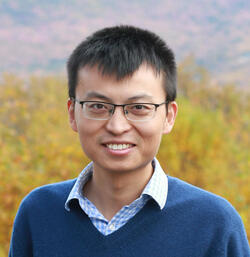
Speaker: Naiyu Jiang, PhD Candidate in Political Science, Stanford University

This project examines how external geopolitical pressures and domestic political shifts are reshaping knowledge production in China. Specifically, it asks how targeted U.S. sanctions—such as the 2020 visa restrictions on researchers in critical fields—have affected the volume, quality, and global integration of Chinese scientific output. At the same time, this study explores how growing ideological control since the 2010s has redirected the thematic priorities and intellectual orientation of social science research in China. Drawing on two large-scale datasets—over 70 million Chinese-language publications from CNKI (1995–2024) and 80 million global articles from Web of Science (1972–2024)—the project traces shifts in collaboration networks, funding patterns, and research agendas across disciplines. It aims to provide a comprehensive account of how China’s research system is being reconfigured by both global decoupling and domestic political realignment—and what this transformation means for the future of cross-border knowledge production.


About the Workshops


Our Young Researcher Workshops offer emerging China scholars an opportunity to engage directly with interdisciplinary faculty and peers from across campus to discuss and receive feedback on their research. Each workshop features one or several PhD students presenting their latest empirical findings on issues related to China’s economy. Past topics have included college major selection as an obstacle to socioeconomic mobility, the effect of a cooling-off period on marriage outcomes, and factors contributing to government corruption. Faculty and senior scholars provide comments and feedback for improvement. This event series helps to build and strengthen Stanford’s community of young researchers working on China.

Workshops are held on select Fridays from 12 - 1 pm. Lunch will be provided! 

Visit the Young Researcher Workshops webpage for more information on the content and format of the series and to learn how to sign up to present. 


Questions? Contact Ragina Johnson at raginaj@stanford.edu


Goldman Room, Encina Hall, E409

Naiyu Jiang, PhD Candidate in Political Science, Stanford University
Workshops
Date Label
Authors
Noa Ronkin
News Type
News
Date
Paragraphs

Team members of the Stanford Next Asia Policy Lab (SNAPL) recently presented findings from several of the lab’s research projects at forums and meetings with policy and academic communities in Washington, D.C. Their activities included a joint symposium with the Center for Strategic and International Studies (CSIS), a presentation at George Washington University’s Elliott School of International Affairs, and meetings with think tanks and Congress members. These policy engagements are supported by a Freeman Spogli Institute for International Studies grant.

SNAPL, which is housed at the Shorenstein Asia-Pacific Research Center (APARC), is led by sociologist Gi-Wook Shin, the William J. Perry Professor of Contemporary Korea, a senior fellow at FSI, and the director of APARC and the Korea Program. SNAPL is committed to generating evidence-based policy recommendations and promoting transnational collaboration with academic and policy institutions to advance the future prosperity of Asia and U.S.-Asia relations.

On September 16, 2024, SNAPL and CSIS co-hosted the symposium “A New Cold War?: Congressional Rhetoric and Regional Reactions to the U.S.-China Rivalry.” At this event, SNAPL team members presented fresh perspectives on the U.S.-China relationship, grounded in two original studies that challenge the application of the “new Cold War” narrative to frame the competition between the two powers. Both studies are part of SNAPL’s U.S.-Asia Relations research track.

Research Fellow Xinru Ma shared the first study, “A New Cold War? An Analysis of Congressional Discourse on U.S. Rivalries with the USSR, Japan, and China.” Discussant Evan Medeiros, Penner Family Chair in Asian Studies and the Cling Family Senior Fellow in US-China Relations at Georgetown University, commented on the study. In a following session, Postdoctoral Fellow Gidong Kim presented a second study, “The U.S. Alliance and Public Attitudes toward China: Evidence from the Asia-Pacific Region.” Discussant Matthew Kroenig, professor in the Department of Government and the Edmund A. Walsh School of Foreign Service at Georgetown University, offered feedback on the research.

Sign up for APARC newsletters to receive our scholars’ research updates > 


Moving Beyond Cold War Comparisons


Ma’s study, which analyzes over 41,000 Congressional speeches, upends the notion that today’s U.S.-China tensions mirror Cold War dynamics. The research shows that Cold War debates historically focused on two primary themes — ideological expansion and military aggression — with the former as the dominant concern. By contrast, current concerns about China center on human rights issues more than outward ideological expansion, while military concerns focus on budgetary issues rather than the kind of direct confrontations that defined the Cold War.

Ma’s findings also reveal that the current U.S.-China rivalry bears more resemblance to the U.S.-Japan economic competition of the 1980s, where economic concerns and domestic priorities took center stage rather than ideological or military threats. With these findings, the study establishes an empirical baseline for defining the current state of the U.S.-China relationship, illuminating the risks of framing it by the misleading “new Cold War” label.

Risks of the Cold War Analogy: Policy Implications


Ma’s study highlights that Cold War-era strategies are ill-suited for addressing the challenges posed by China today. Clinging to a Cold War analogy presents several risks:

  • Misguided Focus: Framing China as a Cold War-like rival risks overemphasizing military buildup and ideological competition globally, overlooking the true nature of today’s competition, which is primarily economic and technological.
  • Paranoia and Isolationism: The new Cold War analogy could foster a climate of paranoia and isolation, undermining the principles of open engagement and collaboration that have historically supported American leadership. Maintaining open dialogue and people-to-people exchanges that promote democratic values and human rights is more effective for preserving U.S. leadership in addressing ideological differences with China than confrontational ideological warfare.

The study has even further implications for U.S. domestic debates:
 

  • Impacts on the American Workforce: At a bilateral level, the economic tensions that constitute the backbone of today's challenges with China, such as concerns over the loss of American jobs, were virtually missing from the dynamics of the Cold War era. Addressing these tensions requires new strategies and measures such as reinforcing free trade practices, upgrading infrastructure, upskilling the workforce, and fostering technological innovation.
  • Overlooked U.S. Domestic Challenges: The Cold War analogy can also lead to ignorance about challenges rooted in pressing U.S. domestic issues — such as education inequality, the opioid crisis, and political polarization — which could be more consequential to American global leadership than the challenges China poses.
(From left): Gi-Wook Shin, Matthew Kroenig, and Gidong Kim in conversation at the Center for Strategic and International Studies.
(From left): Gi-Wook Shin, Matthew Kroenig, and Gidong Kim in conversation at the Center for Strategic and International Studies. | CSIS

Public Perceptions of China in U.S. Allies


Kim’s study examines how geopolitical contexts such as the U.S.-China tensions and alliance relationships shape public attitudes toward China among citizens of U.S. allies. It analyzes data from the Gallup World Poll (2006-2022) covering 22 Asia-Pacific countries and the Asian Barometer Survey (2010-2021) from 14 countries.

The study shows that U.S. alliances and the U.S.-China rivalry influence public attitudes toward China. It finds that, as U.S.-China tensions escalate, citizens in U.S. allied countries — unlike those in non-allied nations — are more likely to develop unfavorable views of China. Additionally, public opinions of China and the United States tend to move in opposite directions as the great power competition intensifies because U.S. alliance relationships help strengthen a sense of shared identity during times of geopolitical crisis.

Shapers of Anti-China Sentiments: Policy Implications
 

  • Strengthening Alliances Amid U.S.-China Tensions: The United States should understand that alliance relationships increasingly matter as U.S.-China tensions intensify. Strengthening these ties can be particularly effective in managing escalating tensions with China.
  • Alliance Diplomacy vs. Traditional Value Diplomacy: During periods of geopolitical rivalry, U.S. alliances may have a greater impact than traditional diplomacy based on democratic values. In such times, alliances serve as critical frameworks for shared identity and mutual defense.
  • Understanding Anti-China Sentiment: U.S. allies should recognize that rising anti-China sentiments among citizens are closely related to broader geopolitical dynamics. While anti-Japan or anti-America sentiments in countries like South Korea and the Philippines were historically bilateral issues, today's anti-China views are more structural issues and unlikely to diminish unless U.S.-China relations improve.
  • China’s Need for a Shift in Strategy: China should consider the geopolitical factors contributing to rising anti-China sentiment in U.S.-allied nations. China’s public diplomacy efforts to strengthen its soft power through financial and non-financial measures may be ineffective when applied to U.S. allies. The Chinese government should therefore prioritize improving its relationship with the United States to mitigate anti-China sentiments in U.S. allies.
     

National Understandings of Race and Racism in Asia


On September 17, 2024, Postdoctoral Fellow Junki Nakahara shared findings from a SNAPL project that is part of another Lab research track, Nationalism and Racism, at a discussion titled Deconstructing Racism “Denial” in Asia, hosted by George Washington University’s Sigur Center for Asian Studies.

Nakahara’s study examines how nationalism and racism intersect to create exclusion and marginalization across Asia. By analyzing state reports from 16 Asian countries submitted to the United Nations Committee on the Elimination of Racial Discrimination (CERD), the research investigates how these official reports conceptualize race and racism, uncovering pervasive patterns of their denial — literal, interpretive, and ideological. Nakahara thus offers a comparative view of how these perspectives by Asian nations align with or deviate from global norms. Her analysis also illustrates how historical identities and dominant social, political, and religious values shape national attitudes toward race in Asia.

Following Nakahara’s presentation, discussants Hiromi Ishizawa, associate professor of sociology at George Washington University, and Erin Aeran Chung, the Charles D. Miller Professor of East Asian Politics and Director of Undergraduate Studies in the Department of Political Science at Johns Hopkins University, provided insightful commentary. They emphasized the importance of studying race and racism in the Asia-Pacific region and their implications for marginalized communities. The event also sparked an engaging dialogue with the audience, addressing how racism in Asia remains a “blind spot” overlooked in policy, media, and public discourse.

See the coverage of the event in George Washington’s student newspaper >

Read More

U.S. and China flags on Constitution Avenue, Washington, DC, with the Capitol building in the background.
News

Stanford Next Asia Policy Lab Receives Grants to Advance Policy Engagement and Research Collaboration

New grants to inform U.S. Asia policy and fuel cross-disciplinary research on Asia’s role in the global system of the 21st century.
Stanford Next Asia Policy Lab Receives Grants to Advance Policy Engagement and Research Collaboration
Walking Out: America’s New Trade Policy in the Asia-Pacific and Beyond
News

Walking Out: New Book Unravels the Shift in America's Trade Policy and Its Global Consequences

A new book by APARC Visiting Scholar Michael Beeman offers a timely analysis of the shift in United States' foreign trade policy, examines its recent choices to “walk out” on the principles that had defined the global trade system it had created, and offers recommendations for a redefined and more productive trade policy strategy.
Walking Out: New Book Unravels the Shift in America's Trade Policy and Its Global Consequences
Hero Image
Gi-Wook Shin, Evan Medeiros, and Xinru Ma in conversation at the Center for Strategic and International Studies.
(From left): Gi-Wook Shin, Evan Medeiros, and Xinru Ma in conversation at the Center for Strategic and International Studies, September 16, 2024. | CSIS
All News button
1
Subtitle

Lab members recently shared data-driven insights into U.S.-China tensions, public attitudes toward China, and racial dynamics in Asia, urging policy and academic communities in Washington, D.C. to rethink the Cold War analogy applied to China and views of race and racism in Asian nations.

Date Label
-

What Determines the Price of Health? Corruption-Information Tradeoff in Authoritarian Governance


Speaker: Victoria Liu, PhD Candidate in Political Science, Stanford University

China runs one of the largest public health systems in the world, with over 1 million health institutions caring for more than 1.4 billion people. In recent years, this system faces increasing pressure from rising demand due to an aging population, limited funding, and widespread accusations of corruption. In response to these challenges, the Chinese government has launched sweeping reforms to contain costs — most notably Xi Jinping’s high-profile anti-corruption campaign specifically targeted at the health sector. While these efforts aim to improve transparency and reduce costs, their broader effects remain unclear. This study examines the impact of anti-corruption efforts on a range of health system outcomes, including drug affordability, innovation, and health outcomes. Early findings suggest that while anti-corruption efforts may curb rent-seeking behavior, they do not always lead to improved outcomes. In some cases, anti-corruption campaigns may undermine the state’s capacity to gauge information from private industry or dampen incentives for innovation. This research contributes to a broader literature on corruption, state-business relations, and public service delivery in authoritarian context.


About the Workshops


Our Young Researcher Workshops offer emerging China scholars an opportunity to engage directly with interdisciplinary faculty and peers from across campus to discuss and receive feedback on their research. Each workshop features one or several PhD students presenting their latest empirical findings on issues related to China’s economy. Past topics have included college major selection as an obstacle to socioeconomic mobility, the effect of a cooling-off period on marriage outcomes, and factors contributing to government corruption. Faculty and senior scholars provide comments and feedback for improvement. This event series helps to build and strengthen Stanford’s community of young researchers working on China.

Workshops are held on select Fridays from 12 - 1 pm. Lunch will be provided! 

Visit the Young Researcher Workshops webpage for more information on the content and format of the series and to learn how to sign up to present. 

Goldman Room, Encina Hall, E409

Victoria Liu, PhD Candidate in Political Science, Stanford University
Workshops
Date Label
-

Turning the Table: How Private Companies in China Leverage and Exploit State Assets from Local Governments


Speaker: Qianmin Hu, PhD Candidate in Political Science, Stanford University

While existing literature emphasizes state dominance and the frequent expropriation of private assets, this research investigates how private enterprises gain significant bargaining power over local governments, enabling them to expropriate state resources. Drawing on extensive qualitative fieldwork and a unique quantitative dataset derived from court judgments involving firm-government investment contracts, this study finds that private firms in China frequently breach contracts, leveraging and exploiting substantial subsidies and land price discounts from local governments. Such reversal of power is possible because local officials face intense bureaucratic incentives—such as unrealistic investment targets, prospects of promotion, and pressure from public shaming—to follow the central government's developmental agenda. These findings suggest that when an authoritarian government opens itself to potential exploitation by private firms, it implicitly guarantees property rights protection for private investments, thereby making its commitment to the private sector more credible.


About the Workshops


Our Young Researcher Workshops offer emerging China scholars an opportunity to engage directly with interdisciplinary faculty and peers from across campus to discuss and receive feedback on their research. Each workshop features one or several PhD students presenting their latest empirical findings on issues related to China’s economy. Past topics have included college major selection as an obstacle to socioeconomic mobility, the effect of a cooling-off period on marriage outcomes, and factors contributing to government corruption. Faculty and senior scholars provide comments and feedback for improvement. This event series helps to build and strengthen Stanford’s community of young researchers working on China.

Workshops are held on select Fridays from 12 - 1 pm. Lunch will be provided! 

Visit the Young Researcher Workshops webpage for more information on the content and format of the series and to learn how to sign up to present. 

Goldman Room, Encina Hall, E409

Qianmin Hu, PhD Candidate in Political Science, Stanford University
Workshops
Date Label
-

This event has been cancelled.

We hope to see you at another SCCEI event!


About the Workshops


Our Young Researcher Workshops offer emerging China scholars an opportunity to engage directly with interdisciplinary faculty and peers from across campus to discuss and receive feedback on their research. Each workshop features one or several PhD students presenting their latest empirical findings on issues related to China’s economy. Past topics have included college major selection as an obstacle to socioeconomic mobility, the effect of a cooling-off period on marriage outcomes, and factors contributing to government corruption. Faculty and senior scholars provide comments and feedback for improvement. This event series helps to build and strengthen Stanford’s community of young researchers working on China.

Workshops are held on select Fridays from 12 - 1 pm. Lunch will be provided! 

Visit the Young Researcher Workshops webpage for more information on the content and format of the series and to learn how to sign up to present. 

Goldman Room, Encina Hall, E409

Workshops
Date Label
-

The Moderating Role of Caregiver Mental Health in Parenting Interventions in Rural China


Speaker: Qi Jiang, Doctoral Candidate in Health Policy at University of California, Berkeley

Caregiver mental health plays a crucial role in early childhood development (ECD) and may influence the effectiveness of parenting stimulation interventions. This study examines how caregiver mental health moderates intervention compliance, child development outcomes, and responsive stimulation in LMICs. Using data from a cluster-randomized controlled trial in 100 rural villages in China, including 2,040 caregiver-child dyads, we found caregiver depressive symptoms significantly moderated treatment effects on child cognitive development, caregiver-child interactions, and caregiver stress symptoms. In contrast, caregiver anxiety symptoms did not show significant moderating effects. These results suggest that integrating mental health support into parenting programs can enhance the impact of interventions, even when mental health is not the primary focus. This study provides key policy insights for improving ECD outcomes through targeted mental health support in LMICs.


About the Workshops


Our Young Researcher Workshops offer emerging China scholars an opportunity to engage directly with interdisciplinary faculty and peers from across campus to discuss and receive feedback on their research. Each workshop features one or several PhD students presenting their latest empirical findings on issues related to China’s economy. Past topics have included college major selection as an obstacle to socioeconomic mobility, the effect of a cooling-off period on marriage outcomes, and factors contributing to government corruption. Faculty and senior scholars provide comments and feedback for improvement. This event series helps to build and strengthen Stanford’s community of young researchers working on China.

Workshops are held on select Fridays from 12 - 1 pm. Lunch will be provided! 

Visit the Young Researcher Workshops webpage for more information on the content and format of the series and to learn how to sign up to present. 

Goldman Room, Encina Hall, E409

Qi Jiang, Doctoral Candidate in Health Policy at University of California, Berkeley
Workshops
Date Label
-

Join us for a lightning round edition of the SCCEI Young Researcher Workshop series. Each presenter will have 30 minutes to share their research and field audience questions.

Round 1: China’s Two-Child Policy and Gender Wage Gap


Presenter:  Ni Yan, PhD Candidate in Economics, Stanford University


Round 2: Governance Structure and Cropland Protection


Presenter: Ru Yan, PhD Candidate in Agricultural Economics, Zhejiang University 


About the Workshops


Our Young Researcher Workshops offer emerging China scholars an opportunity to engage directly with interdisciplinary faculty and peers from across campus to discuss and receive feedback on their research. Each workshop features one or several PhD students presenting their latest empirical findings on issues related to China’s economy. Past topics have included college major selection as an obstacle to socioeconomic mobility, the effect of a cooling-off period on marriage outcomes, and factors contributing to government corruption. Faculty and senior scholars provide comments and feedback for improvement. This event series helps to build and strengthen Stanford’s community of young researchers working on China.

Workshops are held on select Fridays starting at 12 pm. Lunch will be provided! 

Visit the Young Researcher Workshops webpage for more information on the content and format of the series and to learn how to sign up to present. 

Goldman Room, Encina Hall, E409

Workshops
Date Label
-

In the wake of the 2024 presidential election, the U.S. will face a new chapter under its latest administration, leaving the future of U.S.-China relations uncertain. The China Program at Stanford’s Shorenstein APARC presents a pivotal panel that convenes leading experts to analyze the implications of the U.S. election results on the evolving relationship between these two global superpowers.

Moderated by Professor Jean Oi, director of the China Program at Shorenstein APARC, this session features Shorenstein APARC Fellow Dr. Tom Fingar and Professor Yu Tiejun, international relations scholar from Peking University. Together, they will offer insights into the geopolitical shifts expected to unfold in 2025 and explore critical topics such as trade, security, and strategic diplomacy between the U.S. and China.

Jean C. Oi is the William Haas Professor of Chinese Politics in the Department of Political Science and a Senior Fellow of the Freeman Spogli Institute for International Studies (FSI) at Stanford University. A Ph.D. in Political Science from the University of Michigan, she directs the China Program at the Shorenstein Asia-Pacific Research Center and is the Lee Shau Kee Director of the Stanford Center at Peking University. She also is the current President of the Association for Asian Studies.

Yu Tiejun is APARC's China Policy Fellow for the 2024 fall quarter. He currently serves as President of the Institute of International and Strategic Studies (IISS) and Professor at the School of International Studies (SIS), all at Peking University (PKU). Previously, he studied at the University of Tokyo in 1998-2000. He served as visiting fellow at the Center for International Security and Cooperation at Stanford University in 2005, and also as visiting scholar at the Fairbank Center for East Asian Research at Harvard University in 2005-06.

Thomas Fingar is a Shorenstein APARC Fellow in the Freeman Spogli Institute for International Studies at Stanford University. He was the inaugural Oksenberg-Rohlen Distinguished Fellow from 2010 through 2015 and the Payne Distinguished Lecturer at Stanford in 2009. From 2005 through 2008, he served as the first deputy director of national intelligence for analysis and, concurrently, as chairman of the National Intelligence Council.

Jean Oi, William Haas Professor of Chinese Politics at Stanford University

Philippines Room, Encina Hall (3rd floor), Room C330
616 Jane Stanford Way, Stanford, CA 94305

Tiejun Yu, President of the Institute of International and Strategic Studies (IISS) at Peking University and Visiting Scholar at APARC
Thomas Fingar, Shorenstein APARC Fellow and Affiliated Scholar at the Stanford Center on China's Economy and Institutions
Panel Discussions
Date Label
-

The Fallacy of the China Model and its Long-term Consequences: A Roundtable Discussion 


Yasheng Huang, Skyline Scholar and MIT Professor of Global Economics and Management

This talk draws on Professor Yasheng Huang’s recently completed book manuscript, Statism with Chinese Characteristics: From Directional Liberalism to the China Model—A History of China’s Reforms and Reversals (forthcoming from Cambridge University Press). Based on detailed archival research and rare databases in the 1980s, he shows that China's healthiest and most inclusive growth took place during the most politically liberal period. The China Model, which asserts that autocracy and statist finance created the Chinese growth miracle, gets many facts wrong and gets causal order backward. But the China Model is the prevailing economic thinking in China, and it is the root cause of many problems in the Chinese economy today.  

Please register for the event and add it to your calendar. Lunch will be provided.


About the Speaker 
 

Yasheng Huang headshot.

Yasheng Huang is a Professor and holds the Epoch Foundation Professorship of Global Economics and Management at MIT Sloan School of Management. From 2013 to 2017, he served as an Associate Dean in charge of MIT Sloan’s Global Partnership programs and its Action Learning initiatives. His previous appointments include faculty positions at the University of Michigan and at Harvard Business School.

Professor Huang is the author of 11 books and counting in both English and Chinese He is currently involved in research projects in three broad areas: 1) political economy of contemporary China, 2) historical technological and political developments in China, and 3) as a co-PI in “Food Safety in China: A Systematic Risk Management Approach” (supported by Walmart Foundation, 2016). He has published numerous articles in academic journals and in media outlets.


A NOTE ON LOCATION

Please join us in-person in the Goldman Conference Room located within Encina Hall on the 4th floor of the East wing.


Questions? Contact Xinmin Zhao at xinminzhao@stanford.edu


Goldman Room E409, Encina Hall

Yasheng Huang, Professor of Global Economics and Management, MIT Sloan School of Management
Seminars
Date Label
Authors
Heather Rahimi
News Type
News
Date
Paragraphs

Why do authoritarian regimes charge political opponents with non-political crimes when they can levy charges directly related to opponents' political activism?

On October 3, 2024, Stanford Professor of Communication, Jennifer Pan, presented her recent research answering this question. Professor Pan and her research collaborators used experimental and observational data from China and found that, “disguising repression by charging opponents with non-political crimes undermines the moral authority of opponents, minimizing backlash and mobilization while increasing public support for repression.”

During the lecture, Pan detailed the survey she and her collaborators conducted in China and shared a case study using data from Weibo to illustrate how China uses select charges to manipulate the public's view of influential dissidents and induce self-censorship among other dissidents in an act of disguised repression.


SCCEI China Briefs: Translating academic research in evidence-based insights

SCCEI produced a China Brief based off of Professor Pan’s paper on disguised repression in China. Read the brief here for a synthesized recap of the paper. 


Watch the recorded lecture to learn more about the research and her findings. 


Read More

Shipping containers at a loading dock
News

Decoding China’s Economic Slowdown: A Roundtable Discussion

The Stanford Center on China’s Economy and Institutions and Asia Society Policy Institute’s Center for China Analysis co-organized a closed-door roundtable on China's recent economic slowdown and produced summary report of the discussion.
Decoding China’s Economic Slowdown: A Roundtable Discussion
Craig Allen speaks at SCCEI 2024 conference
News

Silicon Showdown: Craig Allen Unpacks the Competition for Technology Leadership between the U.S. and China

Craig Allen, the President of the U.S.-China Business Council, spoke on the evolving dynamics of technological leadership between the U.S. and China and their implications for the rest of the world.
Silicon Showdown: Craig Allen Unpacks the Competition for Technology Leadership between the U.S. and China
All News button
1
Subtitle

Why do authoritarian regimes charge political opponents with non-political crimes when they can levy charges directly related to opponents' political activism? Professor Pan presents her newest research during a Fall 2024 SCCEI event.

Date Label
Subscribe to China