News Type
News
Date
Paragraphs

Noncommunicable diseases (NCDs) have become the leading causes of death worldwide and China's increased NCD prevalence is of growing concern. Randall Stafford, Professor of Medicine in the Stanford Center for Research in Disease Prevention and SCPKU Faculty Fellow, led a symposium at the center last fall.  Entitled "Tackling China's Noncommunicable Diseases: Shared Origins, Costly Consequences, and the Need for Action," the symposium focused on China's NCD threats to public health and the urgent need for solutions.  The symposium summary was published earlier this month in the Chinese Medical Journal.

Hero Image
dsc 1586 Yan Min
All News button
1
News Type
News
Date
Paragraphs

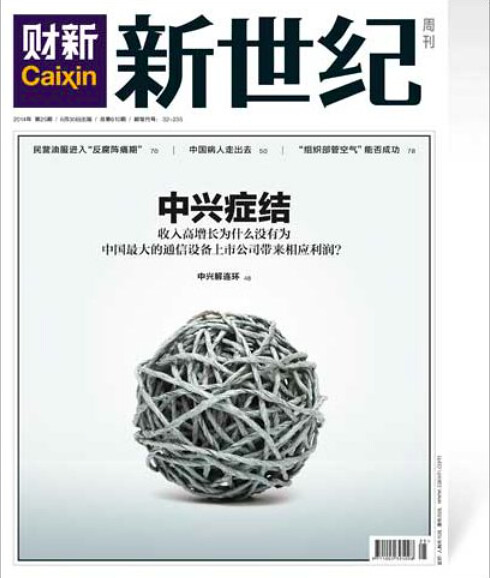
Caixin Magazine features REAP co-director Scott Rozelle, who has been researching and supporting policy change in China for the last 30 years.  This article was translated and reprinted with permission from Caixin Magazine.  Read the original article here.


January 15, 2015

By spending time not only in the ivory towers of academia but also experiencing life in the field, he has been able to create more real change in Chinese society than the vast majority of researchers.


"He’s more Chinese than Chinese people," say those who know him well.

He is development economist Scott Rozelle. 2014 marks the 30th year since he first came to China’s mainland. In the last 30 years, he went from being a graduate student to a faculty member at the University of California, Davis and then Stanford University, and was awarded the Chinese Academy of Sciences’ International Science and Technology Collaboration Award and the State Administration of Foreign Experts Affairs’ China Friendship Award.

He has spent approximately a third of the last 30 years in China. The affinity he shares with China began in 1966.

Lasting Bonds With China

Born in 1955, Rozelle was only 12 years old at the time. The junior high school he attended happened to be one of only a few in the United States to offer Chinese language courses. At that time, Sino-US relations still had not normalized, but the US government saw the opportunity to build a relationship of mutual understanding with China.  The US government therefore sought to prepare for the re-opening of Sino-US relations by improving education in Chinese.  This Chinese language program was the starting point at which Rozelle was first exposed to the Chinese world.

In 1974, Rozelle, an undergraduate at Cornell University, took part in a student exchange program to Taiwan to learn Chinese. "At first I had planned to stay for three months, but I ultimately ended up staying for three years,” he told Caixin reporters.

On January 1, 1979, the People's Republic of China formally established diplomatic relations with the United States. That year, Rozelle, now pursuing his Master’s Degree at Cornell, applied for funding from the US National Science Foundation to go to Shandong, China in 1982 to research the system of contract labor in rural areas. However, these plans did not come to fruition, and he temporarily left school to work for several years instead.

A new opportunity appeared for Rozelle in 1984, when Nanjing Agricultural University invited Cornell University to send an instructor to China to teach Western economics. Rozelle’s advisor immediately thought of him. "Can’t Scott speak Chinese? He can go!"

Thus, Rozelle came to China and became the first foreign exchange student accepted into the Chinese Academy of Social Sciences, Institute of Agricultural Development, to study and to gather data. Since the 1980s, he has maintained friendships with many Chinese economists.

At the same time, he was also pursuing his PhD at Cornell. He was deeply interested in poverty alleviation in rural areas, but he believed that because the dividends of institutional reforms and the free market manufacturing were only temporary, long-term development had to rely on new technology. Therefore, he chose hybrid rice production as his doctoral dissertation topic, "I just wanted to figure out why some farmers are willing to use hybrid rice while others did not? How do they decide?"

To answer this question, he visited various rural villages throughout northern Jiangsu and Hubei to conduct interviews and research,  conducted interviews throughout various rural villages in northern Jiangsu and Hubei, yet was unable to find an answer.  Finally, while in Hubei, a young official in the local education bureau who had just graduated from university told him, "There is no relationship between the farmer and the decision to grow hybrid rice or not. The decision lies with the head of the village or the other leaders who fall under his jurisdiction. They are the ones who decide.”

Struck by this sudden realization, Rozelle used this perspective to understand the logic behind individual choice, economic production and power dynamics among leaders in China, and ultimately completed his doctoral dissertation on “The Economic Behavior of China’s Village Leaders.”

Between the Ivory Tower and the Field

In 1990, Rozelle travelled to the Philippines to attend a meeting organized by the International Rice Research Institute, he got to know a young agricultural economist named Jikun Huang, who was a visiting scholar in Manila at the time. This marked the beginning of nearly twenty-five years of collaboration between the two. After Huang returned home, he and Rozelle both searched eagerly for funds that would eventually allow them to jointly open and run the Center for Chinese Agricultural Policy.

Since the mid-1990s, together they have observed the repeated reforms in China’s agricultural market, and witnessed the changes as farmers have left their land to invest in village businesses or move to cities to work.  The research center also investigates agricultural expansion, rural development, agricultural technology and other related topics. The center’s policy recommendations have garnered increased attention from leaders of the Ministry of Agriculture and the State Council.

In 2000, the Center for Chinese Agricultural Policy became part of the Chinese Academy of Sciences, and was therefore able to directly submit policy recommendations to upper-level decision makers.  According to the Rural Education Action Program (REAP), a research team affiliated with the Center for Chinese Agricultural Policy, between 2009 and 2012, the center submitted 34 policy briefs to the State Council.  Of these policy briefs, 31 have been adopted and 25 have received comment from deputy- and higher-level government officials.

To Rozelle, engaging in academic research, influencing policy change, and improving the real situation in poverty-stricken areas are not mutually exclusive, but in fact function together simultaneously. By spending time not only in the ivory towers of academia but also experiencing life in the field, he has been able to create more real change in Chinese society than the vast majority of China researchers from the West.

"My role in this has changed, from a scholar to now a kind of advocate," the nearly 60-year-old Rozelle--with a head of silver hair and a weathered yet joyful face--jokes,  "I’m too old to publish more papers anyway."

The Goal is to Solve Practical Problems

That being said, in his academic career Rozelle has published more than 300 articles on Chinese development problems, all of which have relied on rigorous experimentation, comparison, and statistical analysis. Rozelle recalls when he first threw himself into development economics in the 1980s it was still a relatively new discipline on the international scene, and was therefore an almost exclusively theoretical construct.  Empirical study was not introduced into the discipline until the 1990s.  For Rozelle, the purpose of experimentation is not simply to meets the standards of academic research, but to find the most efficient and cost-effective solutions to real-world problems.

While Rozelle’s team gathered research in Shaanxi, Gansu, Qinghai, Ningxia, and other areas, they found that nearly 40 percent of fourth and fifth grade students in northwest regions of the Northwest were suffering from iron deficiency anemia. Iron deficiency anemia has led to unhealthy development among rural children, causing them to be in poor health and weakening cognition, and preventing them from competing on an even academic playing field with children from rural areas.  Through his visits to many rural villages, Rozelle discovered that the meals of rural children were composed primarily of rice, noodles, and steamed buns, and severely lacked meat and fresh fruit and vegetables.  “Almost 70% of parents understand that to raise a piglet into a healthy, plump pig, a certain amount of micronutrients are needed, but not even a third of parents believe that babies also need them.”

Now that the central government is aware of this problem, it has decided to grant 3 to 4 yuan per day for each child living in poor areas to begin eating healthy lunches.  However, Rozelle and his team estimate that for each child to consume the necessary amount of iron, they need to eat two servings of meat and fresh vegetables everyday, which would cost at least 8 to 9 yuan.  Schools would also have to add cafeterias, hire more cooks, and take on additional expenses.  Taking into account the budgets, facilities, and feasibility of implementation in poor areas, Rozelle proposed a different plan: the most cost-effective method to combat iron deficiency anemia is to provide vitamin tablets to rural children.  Each tablet costs only 20 to 30 cents and provides the same amount of iron as meat and vegetables.

Rozelle recognized that children should not have to rely on vitamin tablets everyday to survive, but this is nevertheless the safest, most effective, and inexpensive way to provide iron and other micronutrients. Not only would special subsidies for these vitamins be easy to regulate, there would also be low wastage during the implementation process, and no additional facilities are required.  “If this plan is successfully implemented, malnutrition among children in rural China will soon become a thing of the past."

Rozelle and his team have often seen that in the course of solving one problem they discover yet another.

For example, while working to improve nutrition and educational efficiency, Rozelle realized that in Guizhou province and other southern regions with similar climates, several million school-aged children may be suffering from intestinal parasites.  In his initial investigation, Rozelle found that 50 percent of school children were infected with one or more parasites, including roundworm, hookworm, and whipworm.  As early as 2010, Rozelle and his team reported on this problem, pointing out the depth of the issue to relevant government leaders.  Three years later, when Rozelle again travelled to Guizhou, he found that situation had in no way improved.  He continued to draw attention to the importance and simplicity of preventing and curing intestinal worm infection, “Children only need to take two deworming tablets every six months, each tablet costs only 2 yuan, and within one or two days you can see results.  In one year, for only 8 yuan a child can be freed from suffering from intestinal parasites.

Another way to improve the learning efficiency of rural children--that, in Rozelle’s mind, is critical--is to protect their eyesight.  According to his data, on average, 30 percent of China’s 10- to 12-year-old students suffer from myopia, or nearsightedness.  However, in the thousands of primary schools that Rozelle visited in villages throughout China, he had very rarely seen students wearing glasses; in middle schools of 100 or more students, only one or two would be wearing glasses.  He eventually concluded that in China, 57 percent of middle school students and 24 percent of primary school students failed to receive timely treatment for their vision problems.  Furthermore, among rural children and the children of migrant workers, only one in seven had glasses.  Whether or not students were appropriately wearing glasses had a huge impact on their learning outcomes.  After putting on glasses, some weak students jumped to medium academic standing.  On average, student scores increased 10 percent when given glasses.

Rozelle approached lens manufacturers and managed to receive more than 8,000 pairs of free glasses to distribute.  However, his research also showed that even when given free, high-quality glasses, only 35 percent of students would regularly wear them.  Finally, he found a “best practice” to ensure that students wore their glasses--giving teachers incentives.  In an experiment he designed, Rozelle found that by simply offering teachers an iPad if their students wore glasses appropriately, the teachers would continuously supervise and exhort their students to wear their glasses, and uptake increased to 80 percent.  In contrast, in classes in which teachers were not offered incentives, only 9 percent of students wore their glasses.

From nutrition to vision and anemia to parasites, Rozelle realized that many small details were affecting the effectiveness of education policies for the poor. In Rozelle’s words, while the Chinese government has already invested several billion yuan in improving facilities, raising teacher salaries, and other programs, if students are not healthy enough to study, “then the huge amount that has already been invested is likely to go to waste.”  

Turning Toward Health and Education

In recent years, Rozelle has extended his interest in poverty in rural China beyond his initial focus on agricultural policy to two other key areas: health and education.  The structure of China’s educational system and prospects for mobility in the system are causes of concern.  “75 percent of the five-year-olds in China live in rural areas.  But in rural areas, only 37 percent of students graduate high school.”  As a result, will there be an adequate supply of skilled workers to fuel China’s economic transformation and industrial upgrade?

Rozelle uses the example of European garment industry workers to illustrate his point: European workers must have a grasp of mathematics, language, computer skills, and other fundamental knowledge in order to do their jobs, and their salaries can reach 11 euros per hour.  But when he tested young Chinese factory workers using a fifth grade exam, “60 percent of workers couldn’t pass math, 70 percent failed Chinese, and English is not even worth mentioning.”  Rozelle worries that in the future young workers such as these will be unable to enter the ranks of the high-income labor force after China’s economic transformation. “This is not ten or twenty million people, its three or four hundred million people.  This is the future of China’s population.”

He also cautions that China's current education system is very similar to Mexico’s in the 1980s.  From the mid-1970s to 1980, Mexico’s and South Korea’s economic growth rates and industrial composition were almost identical.  However, throughout the 1980s to the late 1990s the development trajectories of the two countries changed.  In South Korea--where almost everyone received a high school education--the economy smoothly continued to improve.  In contrast, following the exodus of the low-level manufacturing industry, a large portion of the labor force was insufficiently educated to turn to high productivity positions in the service sector or innovative industries, causing Mexico to sink into the “middle-income trap.”

Rozelle also compared vocational training in China and Germany.  He believes that German vocational training emphasizes building foundational knowledge and cultivating learning ability as the best way to prepare individuals for future technology and skills.  “Chinese vocational training focuses excessively on training for a single occupation, training workers in only in skills that currently in demand but can be outdated in the blink of an eye.”

In December 2014, the Ministry of Education finally issued a document setting forth strict rules declaring that in addition to teaching technical skills, vocational schools also have to teach language, mathematics, English, computer skills, physical education, history, and other common fundamental courses.  In vocational middle schools these basic classes should take up one third of total instruction time, and in vocational high schools these courses must make up no less than one quarter of total instruction.

After having worked with people on the ground in China for the last three decades, Rozelle does not begrudge praise for Chinese officials, especially basic-level cadres; “many of them are hard-working, intelligent, and eager to do good.”  However, Rozelle is occasionally dismayed by the excessive misgivings of officials in some areas.  In Qinghai province, while carrying out an experiment to test the effectiveness of computer-assisted learning software in helping Tibetan students to learn Mandarin.  Although “the local governor liked it very much,” due to his American citizenship and the foreign background of those in the Rural Education Action Program team, his research was temporarily halted. “Let’s take a break for a semester, then see if we can start again.”  In the next two days, Rozelle rushed to Shangluo, in Shaanxi province.  There, he and the National Health and Family Planning Commission started a new experiment.  This experiment prepares for the future transformation and training of rural cadres responsible for enforcing the One Child Policy, and enable them to become trainers in charge of educating village families--especially grandparents raising migrant children--in accurate information about child development and skills for raising babies.

Rozelle said, "I have heard too many grandparents in rural China ask me in surprise, ‘why should we talk to an infant? Why should we sing to them? Why should we give them toys to play with?’” He found that by the age of four, a significant IQ gap had already appeared between rural children--who in the first four months after birth lack sufficient stimuli--and urban children--whose parents interacted with them from a young age.

"We all say that we cannot let children lose before they get to the starting line. This starting line begins much earlier than we thought," Rozelle said.

 
Hero Image
14704471956 6f94012a16 b
All News button
1
Paragraphs

Global Talent seeks to examine the utility of skilled foreigners beyond their human capital value by focusing on their social capital potential, especially their role as transnational bridges between host and home countries. Gi-Wook Shin (Stanford University) and Joon Nak Choi (Hong Kong University of Science and Technology) build on an emerging stream of research that conceptualizes global labor mobility as a positive-sum game in which countries and businesses benefit from building ties across geographic space, rather than the zero-sum game implied by the "global war for talent" and "brain drain" metaphors.

"Advanced economies like Korea face a growing mismatch between low birth rates and increasing demand for skilled labor. Shin and Choi use original, comprehensive data and a global outlook to provide careful, accessible and persuasive analysis. Their prescriptions for Korea and other economies challenged by high-level labor shortages will amply reward readers of this landmark study."  —Mark Granovetter, Professor of Sociology, Stanford University

The book empirically demonstrates its thesis by examination of the case of Korea: a state archetypical of those that have been embracing economic globalization while facing a demographic crisis—and one where the dominant narrative on the recruitment of skilled foreigners is largely negative. It reveals the unique benefits that foreign students and professionals can provide to Korea, by enhancing Korean firms' competitiveness in the global marketplace and by generating new jobs for Korean citizens rather than taking them away. As this research and its key findings are relevant to other advanced societies that seek to utilize skilled foreigners for economic development, the arguments made in this book offer insights that extend well beyond the Korean experience.

Media coverage related to the research project:  

Dong-A Ilbo, January 27, 2016

Interiew with Arirang TV, March 10, 2016 (Upfront Ep101 - "Significance of attacting global talent," interview with Arirang)

All Publications button
1
Publication Type
Books
Publication Date
Journal Publisher
Stanford University Press
Authors
Gi-Wook Shin
-

Abstract: Why do states provide nuclear weapons support to other states? This paper analyzes this question by examining China’s nuclear cooperation with Pakistan. Based on an original framework for explaining nuclear weapons support, I argue that two main factors drove China’s decision. First, China did not have to worry about cascade effects because India had already crossed the nuclear threshold. Second, Pakistan had major strategic value to China, and enjoyed a reputation for being a reliable partner. By arming Pakistan, China could maintain a favorable power balance in the region and prevent India from dominating South Asia. 

The paper also criticizes existing supply-side theories of nuclear proliferation. These theories also describe the strategic incentives for helping other states to develop nuclear weapon, but they have largely overlooked the disincentives. I also challenge some of the case-specific literature. This literature claims that China halted its support of Pakistan from the mid-1990s because it finally recognized the dangers of nuclear proliferation. In contrast, I argue that China has continued, albeit more subtly, to support Islamabad’s weapons program.

About the Speaker: Henrik Hiim is a Stanton Nuclear Security Predoctoral Fellow at MIT. His main research interests are Chinese foreign policy, East Asian security, and nonproliferation and arms control. His dissertation examines the evolution of China’s approach to nuclear nonproliferation, with a special emphasis on policies towards North Korea, Iran, and Pakistan. Henrik holds an M.A. in Political Science from the University of Oslo. He has also studied at Renmin University and Huazhong Normal University in China. During spring 2013, he was a visiting scholar at the School of International Studies at Beijing University. Henrik has worked as a journalist for several Norwegian newspapers.

Encina Hall (2nd floor)

Henrik Hiim Stanton Nuclear Security Predoctoral Fellow Speaker Massachusetts Institute of Technology
Seminars
Paragraphs
Cover of the book "Crossing Heaven's Border," showing a defector looking at North Korea across the border with China.

From 2007 to 2011 South Korean filmmaker and newspaper reporter Hark Joon Lee lived among North Korean defectors in China, filming an award-winning documentary on their struggles. Crossing Heaven’s Border is the firsthand account of his experiences there, where he witnessed human trafficking, the smuggling of illicit drugs by North Korean soldiers, and a rare successful escape from North Korea by sea.

As Lee traces the often tragic lives of North Korean defectors who were willing to risk everything for their hopes, he journeys to Siberia in pursuit of hidden North Korean lumber mills; to Vietnam, where defectors make desperate charges into foreign embassies; and along the 10,000-kilometer escape route for defectors stretching from China to Laos and to Thailand. 
 

Desk, examination, or review copies can be requested through Stanford University Press.

All Publications button
1
Publication Type
Books
Publication Date
Authors
Book Publisher
Shorenstein APARC
News Type
News
Date
Paragraphs

A rapidly aging population poses serious challenges for many countries around the world, particularly in Asia, home to the most populous countries. China and India account for nearly 36% of the world’s population, and are expected to face social and economic complications from demographic change in the next decades.

A special issue of the Journal of the Economics of Ageing explores these trends in a comparative perspective, “The Economic Implications of Population Ageing in China and India” (December 2014), co-edited by David Bloom, a professor at Harvard University’s School of Public Health, and Karen Eggleston, a Center Fellow at the Shorenstein Asia-Pacific Research Center.

“Population ageing represents uncharted waters for China and India,” Bloom and Eggleston write in their coauthored introduction.

The special issue is a collection of 10 articles that examine the economic benefits and potential dilemmas arising from decreased fertility and increased life expectancy, two trends that will impact the development and future trajectories of China and India at the micro- and macroeconomic levels.

Dropping or continued low birth rates imply fewer young people to refresh the labor market. But will this cause the workforce to shrink to an unsustainable level? Demand will increase for health care, long term care, and other social services that support the elderly. What must the government do to ensure adequate access to care?

Empirical data and commentary presented in the special issue seek to inform stakeholders about emerging patterns, and to provide insight on how to best address related policy challenges going forward.

“By adopting responsive behaviors and consultative institutions that address the challenges of population ageing in ways that are appropriate to their unique circumstances, China and India could reap the full economic and social benefits of longer, healthier lives,” they write.

The special issue includes an introduction by Bloom and Eggleston, a feature interview with Richard Suzman, and additional analysis by noted global health experts following each article. The titles and authors of the 10 original research articles are listed below:

  • Intergenerational co-residence and schooling (Anjini Kochar)
  • Regional disparities in adult height, educational attainment, and late-life cognition: Findings from the Longitudinal Aging Study in India (LASI) (Jinkook Lee, James P. Smith)
  • Healthy aging in China (James P. Smith, John Strauss, Yaohui Zhao)
  • Gender differences in cognition in China and reasons for change over time: Evidence from CHARLS (Xiaoyan Lei, James P. Smith, Xiaoting Sun, Yaohui Zhao)
  • Reprint of: Health outcomes and socio-economic status among the mid-aged and elderly in China: Evidence from the CHARLS national baseline data (Xiaoyan Lei, Xiaoting Sun, John Strauss, Yaohui Zhao, Gonghuan Yang, Perry Hu, Yisong Hu, Xiangjun Yin)
  • Should China introduce a social pension? (Bei Lu, Wenjiong He, John Piggott)
  • China’s age of abundance: When might it run out? (Yong Cai, Feng Wang, Ding Li, Xiwei Wu, Ke Shen)
  • The macroeconomic impact of non-communicable diseases in China and India: Estimates, projections, and comparisons (David E. Bloom, Elizabeth T. Cafiero-Fonseca, Mark E. McGovern, Klaus Prettner, Anderson Stanciole, Jonathan Weiss, Samuel Bakkila, Larry Rosenberg)
  • Economic development and gender inequality in cognition: A comparison of China and India, and of SAGE and the HRS sister studies (David Weir, Margaret Lay, Kenneth Langa)
  • Comparing the relationship between stature and later life health in six low and middle income countries (Mark E. McGovern)

The special issue of the Journal of the Economics of Ageing, vol. 4, pages 1-154 (December 2014) is available through Elsevier’s online platform ScienceDirect.

Hero Image
eggleston coedited paper headline
Asia health policy scholar Karen Eggleston (Center Right) learns about a digital health information system in a visit to a primary care center in Hangzhou, China in Oct. 2014.
Robin Yao
All News button
1
News Type
News
Date
Paragraphs

REAP's biggest goal is to connect action-based research with effective policy change that makes a meaningful difference in the lives of China's rural poor families.  Our recently completed Teacher Performance Pay project was designed with policy change in mind.  Teacher performance pay addresses the low education quality and extremely high dropout rates found in rural schools by focusing on teachers and tying improved teaching to monetary incentives.

In 2009, the Chinese government launched a nationwide policy asking schools to implement teacher performance pay.  However, in 2012, REAP researchers found that almost half of rural schools still had not done so, and most programs that were in place did not lead to improved student achievement.  Therefore, REAP researchers tested three different teacher incentive designs, with the goal of identifying which scheme boosted student achievement the most.  Overall, the "Pay-for-Percentile" design, which rewarded teachers for focusing on low-achieving students in addition to high-achievers (thereby differing sharply from most incentive schemes that have been used in China) generated remarkable improvements in overall student test scores.

When the REAP team presented these results to the prefectural government in Tianshui, Gansu province, policymakers requested our support in upscaling the project over the next three years.  China Education Daily, a national newspaper published by the Department of Education with daily readership in the millions, also printed a feature article on REAP's findings.  

In response to this article, we recently received a handwritten letter from a principal working at a rural school in Anhui province requesting support in implementing REAP's successful teacher performance pay design in his school as well.  An English translation of his letter, which underscores the practical impact of teacher performance pay on the daily lives of students and education workers, is printed here:

"Dear Professor Shi,

"Forgive my intrusion, my name is Su Qi and I am the principal of Anhui Lixin County Qi Ming Secondary School, Zip: 236700 Tel: 13856881938.

"When I read an article in the China Education Daily about the research that your team has conducted on the "Pay for Percentiles Teacher Performance Pay Program” I became very excited. For many years we have been plagued by these same rural school management problems and now you have helped us to solve them; this is wonderful!  I can’t help but feel quite excited, so I wrote this letter.

"Our school is located in a nationally designated poverty county, and we are a rural secondary school. 98 percent of our students are rural children and 90 percent of students are left-behind children [left-behind by migrant parents]. Given this lack of parental care, the teachers are basically the students’ guardians. Due to a chronic lack of parental guidance, our students’ behavior is poor and their academic performance is even worse. It’s not that the teachers don’t want to teach well, it’s just that as soon as a student’s grades increase slightly their parents take them to a better ranked school in the county seat or the city. Every year we have fewer and fewer students.

"The teachers are helpless, and the school is even more helpless. As principal, I was very confused about how to stimulate the enthusiasm of our teachers. Now, the government has a performance pay policy for which they give us more than five thousand yuan each year and I try to use that money to stimulate the enthusiasm of our teachers. However, the national policy requires us to divide that money into different categories for "teaching ethics, ability, diligence, achievements, and integrity," with small amounts of money going to each category, so in the end there is no strong intervention and no real difference in pay for the best teachers and the worst teachers. This national performance pay policy cannot incentivize teachers. This is very disappointing.

"When I saw the research you had conducted about this topic I was very excited, especially because you found the program was successful. We really want to implement the “incentive program” that you designed and I hope that you can help us to do it. Thank you, thank you!!!

"Yours sincerely,

Su Qi

November 11, 2014"


Read Principal Qi's handwritten letter (in Chinese) and the China Education Daily article he refers to (in Chinese and English) below.

Hero Image
screen shot 2015 01 16 at 11 31 48 am
All News button
1
Subscribe to China