Authors
News Type
Blogs
Date
Paragraphs

The following is a guest article written by Yuri Tsutsumi, who traveled to the San Francisco Bay Area with other graduate students from the University of Tokyo—under the leadership of Professor Hideto Fukudome—in January 2025. SPICE/Stanford collaborates closely with the Graduate School of Education at the University of Tokyo and met with the students during their visit to the Bay Area.

Arriving at Jtown Pizza Co. on North 6th Street, our meeting place for the Japantown study tour in Downtown San Jose led by Dr. Gary Mukai, I noticed a striking contrast between the scenery to the east and west sides of the street. On the east side stood brand-new, reinforced-concrete construction apartment buildings, while on the west side was an ivory-colored, two-story wooden building with an archaic balcony. Right beside it, I spotted a restaurant sign reading “Minato,” a familiar Japanese proper name. As I walked out onto Jackson Street, I saw more signboards of stores and restaurants related to Japan and Hawaii. In the United States, it’s probably not unusual for the atmosphere of a neighborhood to noticeably change just bygoing straight down a street, but here it felt especially distinctive. Photo of Jtown Pizza Co. (below) courtesy the Graduate School of Education at the University of Tokyo. 

Image
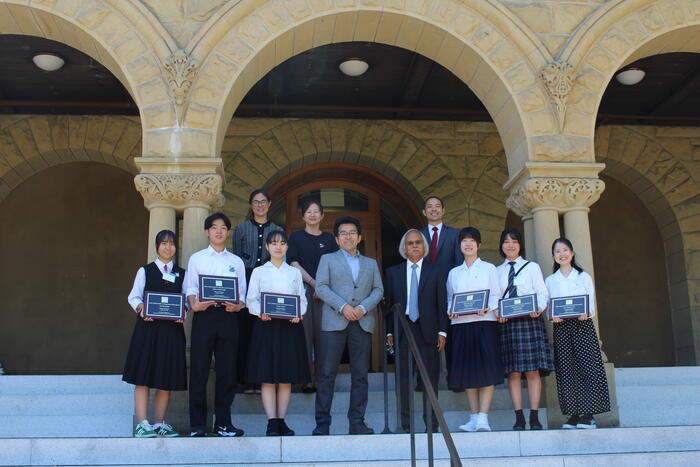
People gathered in front of a building


The few-block area known as “Nihonmachi”Japantown in Downtown San Josehas retained much of its original appearance to this day. Local Japanese American organizations—as well as non-Japanese Americans, including Chinese Americans—have made great efforts to preserve and revitalize Japantown, including its once neighboring Heinlenville, a former site of a Chinatown in San Jose. Jtown Pizza Co. now occupies what was once a Chinese restaurant called Ken Ying Low. In addition to preserving Japantown as a historic area, the Japanese American Museum of San Jose was established in 1987. The museum showcases Japanese American life from the earliest generation of immigrants to the postwar period. Artifacts like soy sauce barrels and numerous farming tools offered me a glimpse into the lives of 19th-century Japanese American farmers. A wide range of historical archives on wartime internment, along with a recreated barracks room interior and exterior from one of the camps that gave off a dusty smell, allowed me to imagine the harsh conditions endured by internees. Through this study tour, I came to realize that, although many years have passed and the environment surrounding Japanese Americans has drastically changed, the everyday lives of 19th-century Japanese American farmers and those interned during the war shared much in common with our lives in Japan today—e.g., keeping a soy sauce barrel for planting, playing baseball and sumo with close friends and neighbors on weekends, going to a local bathhouse, and so on. Thanks to the people dedicated to preserving Japantown’s heritage and passing it down to future generations, I was able to catch a glimpse of what everyday life was like back then.

In graduate school, I came to appreciate once again how much I can learn from academic books and papers digitally archived in the university library. Those learnings were, of course, invaluable—yet at the same time, this study tour made me realize how much more I could learn by engaging all five senses. During the tour, there were the firsthand stories of Japanese Americans, the scent of dust in the reconstructed camp room at the museum, the umami-rich taste of loco moco gravy at the Hawaiian restaurant Hukilau where we had lunch during the tour, the strong California sunlight breaking through the clouds, and the texture of the wooden buildings. Although there are many ways and tools to learn, stepping beyond the university library to immerse myself in other people’s lives holds deeply important meaning. What makes this kind of learning possible are the people who continue to play a crucial role in maintaining the vitality of Japantown, the museum that collects, preserves and shares Japanese American history, and the generous financial support that sustain these efforts. I am truly grateful for this opportunity and hope that these learning experiences, which gave me insight into past generations of Japanese Americans, will continue to be offered to future generations.

To stay informed of SPICE news, join our email list and follow us on FacebookX, and Instagram.

Read More

A man on a boat; island in the background
Blogs

Japan and the Myth of “Ethnic Homogeneity”: Reflecting on Contemporary Challenges

Shotaro Yoshida, a PhD student in the Graduate School of Education at the University of Tokyo, shares his thoughts following a study tour to the San Francisco Bay Area led by Professor Hideto Fukudome.
Japan and the Myth of “Ethnic Homogeneity”: Reflecting on Contemporary Challenges
a group photo taken at a table with four people sitting down.
Blogs

SPICE Provides Excellent Learning Opportunities for Japanese University Students

SPICE/Stanford collaborates with the Graduate School of Education at the University of Tokyo.
SPICE Provides Excellent Learning Opportunities for Japanese University Students
Hero Image
a person in gown with flowers
Yuri Tsutsumi at the University of Tokyo’s Hongo Campus
Photo Courtesy: Yuri Tsutsumi
All News button
1
Subtitle

Yuri Tsutsumi, a graduate of the Graduate School of Public Policy at the University of Tokyo, shares her reflections following a study tour of San Jose Japantown, led by Dr. Gary Mukai, Director of SPICE.

Date Label
Authors
News Type
Blogs
Date
Paragraphs

As part of its efforts to teach and train future leaders and policymakers, the Freeman Spogli Institute for International Studies sponsors four student-led initiatives that engage participants in international affairs and help develop their skills in foreign diplomacy. Through collaborations with universities abroad, FSI students have launched regionally-focused initiatives to build intellectual and cultural networks with scholars in other countries, gain leadership skills, and connect with a global cohort of like-minded students.

This year, students from the Stanford Japan Exchange Conference (SJEC), the Forum for American/Chinese Exchange at Stanford (FACES), and the Stanford Indo-Pak Dosti Forum (SIPDF) shared highlights of their respective programs. From classroom course design to annual summits and field trips, students collaborated with their peers in Japan and China, and promoted dialogue, mutual understanding, and cooperation to foster reconciliation between India and Pakistan. FSI offers several programs providing Stanford students with international opportunities to advance their personal, academic and professional objectives. Learn more on the FSI Student Programs website.
 

The Stanford Japan Exchange Conference

As members of the Stanford Japan Exchange Conference, Anais Sobrier and Jessie Kong hosted a week-long exchange program for visiting Japanese students. The Stanford students introduced their guests to campus life, the U.S. educational system, and local employers, while also learning about the visitors' political history, social structures, and cultural practices.

Jessie Kong: Every year, SJEC puts on a week-long, entirely student-run, exchange program for 20-25 visiting Japanese students from Keio, Doshisha, and Kyoto Universities. Through this programming, we strive to provide authentic insights into Stanford academics, extracurriculars, and lifestyle by having the Japanese students join our lives and develop bonding experiences. 

As one of the co-presidents of SJEC this year, my work has centered around coordinating the entire team of Stanford officers, delegating tasks between teams, communicating with and preparing the Japanese students, and facilitating activities during the conference.

Through leading SJEC this year, I have realized the importance of dedication and commitment when planning these activities. My previous years in SJEC leading the social team has also shown me how to plan events from start to finish in an efficient way that leverages the capabilities of everyone on the team while focusing on the experience for the Japanese students. I think being able to put the group's interest above my own was also a good skill I learned while in the co-president position.

Socially, I have been able to build connections both for myself and other Stanford students with the Japanese student community. Starting with SJEC, I was able to meet and take care of visiting Japanese students at Stanford, and this effort was reciprocated when I went to study abroad through the BOSP Kyoto program. Being able to feel the reciprocity of my efforts in SJEC only makes me more motivated to continue working in SJEC to create a good experience for more Japanese students who visit in the future.
 

The Forum for American-Chinese Exchange at Stanford

Yifei Cheng and Irene Zhang participated in organizing the annual summit for the Forum for American-Chinese Exchange at Stanford (FACES), facilitating dialogue and the exchange of geopolitical experiences between Chinese and American scholars. The students gained skills in logistics management, community building, and academic leadership by mentoring their peers in their research interests.

Yifei Cheng: The main event from our organization this year is the FACES annual summit that took place in January 2025. We invited 40 college students from Chinese and American universities to engage in dialogue about US-China relations on Stanford campus. As the president of FACES, I was involved in candidate selection and planning the summit schedule. I also took the initiative to organize the summit field trip at the Angel Island Immigration Facility. 

Through the lecture of Professor Gordon H. Chang on the persecution of Chinese scientists during the McCarthy Era, I learned about the repeated interlocks between politics and academia in the US, which has significant contemporary repercussions with the current administration's restrictions of student visas and immigration process. 

The FACES summit also enhanced my understanding of diplomacy on a personal level. This experience taught me that cultural exchange isn’t about reaching agreement—it’s about creating a shared space where different truths can coexist. I learned to listen across differences, become comfortable with discomfort, and see the value in ambiguity. These lessons have reshaped how I engage in conversations not only about geopolitics, but also about identity, equity, and belonging more broadly.

I gained concrete organizational skills with managing timelines, delegating tasks, and staying calm when things went wrong—like when the hotel rooming list gets wrong and messy. I also learned that leadership is less about control and more about creating the conditions for others to grow. I facilitated the daily reflection session during the summit. As the discussion facilitator, I found it rewarding to moderate discussions where sometimes disagreements arise. I think this is a valuable skill for my academic and professional development. 
 

The Stanford Indo-Pak Dosti Forum

Aimen Ejaz and Luv Jawahrani launched the new Stanford Indo-Pak Dosti Forum (SIPDF) this year and designed two courses to navigate the complexities of peacebuilding between India and Pakistan. From hosting distinguished diplomats and entrepreneurs to moderating student debates on potential diplomatic solutions to decades of conflict, the two undergraduate students cultivated a safe space for cross-generational dialogue. In the process, they also acquired hands-on experience in pedagogy, diplomacy, and leadership.

Aimen Ejaz and Luv Jawahrani: This year, in its inaugural term, the Stanford Indo-Pak Dosti Forum (SIPDF)achieved what many said was impossible: bringing together Indians and Pakistanis in the same room – voluntarily – twice a week.

In the fall, we launched INTNL REL 47SI: Bridging the Divide, a student-initiated course focused on the political and economic dimensions of India-Pakistan relations. The class brought together prominent individuals concerned about peace-building, ranging from former Indian and Pakistani ambassadors who’d been involved in negotiating peace to professors from the Stanford Graduate School of Business (GSB), to research fellows at the Hoover Institute and the Center for International Security and Cooperation (CISAC), and veteran journalists who have covered the subcontinent for decades.

In spring, we co-taught GLOBAL 47SI: Building Bridges—a course that spotlights cross-border entrepreneurship as a tool for soft diplomacy. We invited legendary South Asian entrepreneurs and venture capitalists from both sides of the border: Mamoon Hamid (Managing Director at Kleiner Perkins), Samir Kaul (Managing Director at Khosla Ventures), Amit Patel (Managing Director at Owl Ventures), Bilal Zuberi (Partner at Lux Capital), and Anand Swaminathan (Senior Partner at McKinsey), among others. The goal? To explore how venture-building, innovation, and chai-fueled resilience can outpace political gridlock.

Academically, co-leading our student-led initiative taught us more than any textbook ever could, mostly because we had to build the syllabus ourselves. And we didn’t just co-lead — we co-dreamed and co-hustled, getting the syllabi approved by multiple departments and cold-emailing, even chasing down, speakers from across the U.S.

In designing INTNL REL 47SI: Bridging the Divide, we dove headfirst into the complexities of India-Pakistan political and economic relations. But we didn’t stop at reading IR theory. We debated it with the very diplomats and policymakers who once shaped those theories in real time. Every week became a crash course in postcolonial statecraft, regional security, and the surprisingly human side of high diplomacy.

Then came GLOBAL 47SI: Building Bridges, where we shifted from conflict to collaboration, exploring how entrepreneurship can serve as a tool of soft power. Through case studies, guest lectures, and our own classroom debates, we began asking whether a startup pitch can accomplish  what politicians can't. What happens when innovation moves faster than diplomacy? And what does it mean when the biggest South Asian venture capitalist in the world funds a startup founded by someone from the "other" side?

More than anything, we learned how to turn theory into action. Whether it was teaching concepts like diaspora diplomacy or moderating discussions between venture capitalists and undergrads, we were constantly translating complex ideas into real-world conversations. We didn’t just learn. We taught, we built, and we questioned everything along the way.

Culturally and socially, our student-led initiative felt less like organizing a class and more like hosting weekly peace talks, with chai and biryani. We came in thinking we were building a curriculum; we ended up navigating generations of silence, suspicion, and identity.

We learned that Partition isn’t just a historical event–it’s a living memory passed down through stories and subconscious hesitation. It’s in the way some students avoid eye contact when the topic turns political, or how others lower their voices when mentioning where their family is really from. But we also learned that these barriers can soften when people feel safe enough to speak, and laugh, together.

We watched students from India and Pakistan, often meeting for the first time, begin to open up. Conversations that started stiffly turned into long debates, jokes, shared Desi Spotify playlists, and sometimes even plans to visit each other’s cities, if our countries ever allow it. We learned that vulnerability—especially in a region taught to fear it—is a radical act. And that our generation is more ready than we think to rewrite the script we inherited.

There were moments when we questioned whether this initiative was worth it. When we received backlash online for platforming certain voices. When a class discussion got tense and uncomfortable. When friends warned us that this was “too political,” “too idealistic,” “too risky.” And we didn’t always have the perfect response.

But leadership, we realized, isn’t about always being right. It’s about being rooted in a vision that peace isn’t naïve — it’s necessary. That bridging divides isn’t weakness—it’s the only strength that can outlast hate. And when things fell apart — when a high-profile speaker pulled out at the last minute, or a student pushed back hard in class — we didn’t pivot away from our mission. We dug deeper. We turned cancellations into teachable moments. We turned criticism into conversation. Most importantly, we learned to trust ourselves and to trust that our generation doesn’t have to inherit the silence, the suspicion, and the separation.

Read More

Students from Gordian Knot Center classes at the White House with NSC Senior Director for Technology and National Security Tarun Chhabra in Washington D.C.
News

AI-augmented Class Tackles National Security Challenges of the Future

In classes taught through the Freeman Spogli Institute’s Gordian Knot Center, artificial intelligence is taking a front and center role in helping students find innovative solutions to global policy issues.
AI-augmented Class Tackles National Security Challenges of the Future
Liza Goldberg
News

CDDRL Honors Alumna Named 2025 Knight-Hennessy Scholar

Liza Goldberg (Fisher Family Honors Program class of 2023-24) is among 84 scholars in the Knight-Hennessy Scholars' eighth cohort.
CDDRL Honors Alumna Named 2025 Knight-Hennessy Scholar
A collage of group photo from the capstone internship projects from the Ford Dorsey Master's in International Policy Class of 2025.
Blogs

Globe Trotting MIP Students Aim for Policy Impact

Students from the Ford Dorsey Master's in International Policy Class of 2025 visited organizations around the world to tackle pressing policy challenges such as human trafficking, cyber threats, disinformation, and more.
Globe Trotting MIP Students Aim for Policy Impact
Hero Image
Three photos showing student groups focused on building U.S.-China, Indo-Pakistani, and U.S.-Japan relations.
All News button
1
Subtitle

With funding from the Freeman Spogli Institute for International Studies, students at Stanford University are making connections, learning, and listening to their counterparts in Japan, China, India, and Pakistan.

Date Label
-
Digital flyer of Shorenstein Asia-Pacific Research Center Japan Program Conference "Japan's Global Content Industries: Manga, Anime, Game, Music, and More" with speaker headshots.

Join the Japan Program of the Shorenstein Asia-Pacific Research Center (APARC) at Stanford University for a full-day, in-person conference on May 29, 2025, celebrating the global power and creative evolution of Japanese content — anime, manga, video games, music, VTubers, and more.

Bringing together influential creators, producers, technologists, and scholars from Japan and the United States, this unique event examines the creative ecosystems that fuel Japan’s content industries, the future of global fandom, and the strategic pathways for collaboration between Japan and the U.S. in media, technology, and education. Focusing on creative processes in the morning and media innovations in the afternoon, the conference explores how Japanese content industries continue to shape cultural imagination and drive innovation across sectors and borders, led by visionary creators and behind-the-scenes innovators who are redefining storytelling, interactivity, and global reach in the digital age.

Held at Stanford — where innovation meets scholarship — the event reflects APARC Japan Program’s mission to foster U.S.-Japan dialogue and academic insight into real-world cultural and technological transformations. Whether you are a fan, a founder, or a future creator, join us to uncover what’s next at the intersection of Japanese content and global innovation.

This event is co-organized with Orange Inc. and Yasushi Maruyama.

Please note that submitting this form does NOT guarantee seating. We will send you a follow-up email confirming your seat for this event around a week before May 29.


Note: This event will be photographed and videotaped, and by entering this venue, you consent to Stanford University and approved media using your image and likeness. Any photography and videography may not be available for future viewing at a later date.

Media Advisory and Press Contact

Journalists interested in covering the conference should contact Shorenstein APARC’s Communications Manager, Michael Breger, at mbreger@stanford.edu by May 26 at 5 p.m. PT to register and receive accreditation. At the venue, they will be required to present a press credential from an established news organization. Freelance reporters should email a letter from the news organization for which they work to Michael Breger by the May 16 deadline. The press area is limited, and press seating is not guaranteed.


Parking Information

Click here for instructions on purchasing visitor parking. The closest visitor parking to Encina Hall can be found at the following:

  • Track House Lot (ParkMobile Parking Zone 7295)
  • Memorial Lot (ParkMobile Parking Zone 7213)
  • Littlefield Lot (ParkMobile Parking Zone 7282)
  • Knight Management Center Garage (ParkMobile Parking Zone 7207)
     

For general inquiries, contact aparc-communications@stanford.edu.

Kiyoteru Tsutsui
Kiyoteru Tsutsui
Yasushi Maruyama
Susan Napier
Mizuko Ito

Bechtel Conference Center 
Encina Hall, 1st Floor
616 Jane Stanford Way
Stanford, CA 94305

Parking
Click here for instructions on purchasing visitor parking. The closest visitor parking to Encina Hall can be found at the following:

  • Track House Lot (ParkMobile Parking Zone 7295)
  • Memorial Lot (ParkMobile Parking Zone 7213)
  • Littlefield Lot (ParkMobile Parking Zone 7282)
  • Knight Management Center Garage (ParkMobile Parking Zone 7207)
Tai Yasue Square Enix
Shoko Ugaki Orange Inc
Hiroyuki Nakano Shueisha
Junichi Masuda The Pokemon Company
Motoaki Tanigo COVER
Hide Nagata Sony Music Entertainment
Date Label
Authors
News Type
Blogs
Date
Paragraphs

The following is a guest article written by Wenxin Fu, a student from China studying at the Graduate School of Asia Pacific Studies at Waseda University in Japan. Wenxin enrolled in the 2025 SPICE/Stanford–Waseda Intensive Course: Exploring Peace in East Asia and Beyond Through the Lenses of Cultural Understanding, Education, and International Relations, which was organized by SPICE and Waseda’s Faculty of Social Sciences and taught by Meiko Kotani. The course brought together students from the Graduate School of Social Sciences, the School of Social Sciences, the Graduate School of Asia-Pacific Studies, the School of International Liberal Studies, and the School of Political Science and Economics. With participants from Japan and international students representing 10 different countries, the course created a truly dynamic and diverse learning environment.

If I had to pick out a few moments that reshaped how I see things, two come to mind. The first was in what seemed like an ordinary seminar classroom in the UK where I experienced, not exactly a cultural shock, but a striking contrast between the student-led discussions there and the education system I grew up with in mainland China. The second is this time, through the 2025 SPICE–Waseda program, where I encountered not just diversity, but a sense of collaborative equality, where difference didn’t translate into distance or hierarchy.

In both instances, I was far from my home country—surrounded by faces of different colors, speaking my second language, and engaging in conversations that ranged from broad theoretical questions to concrete, real-world issues. But the experiences felt very different. Back then, I was trying hard to blend in, to insert myself into a conversation shaped by others. I wanted a seat at the table, not just physically present, but to be part of the actual dialogue. This time, however, diversity felt less sharp, less hierarchical. Skin color didn’t map onto power relationships, and the usual lines between who’s “in” and who’s “out” felt blurred. I felt more comfortable speaking up, and more importantly, I felt genuinely heard.

I think this contrast also speaks to a commonly criticized tendency in international relations theory to center the dominant voices of the world’s most powerful countries. There’s now a growing emphasis on the globally relevant, rather than the globally dominant. That’s why this program’s focus on East Asia resonated so deeply with me, not only because I’m from the region, but because I’m eager to engage with perspectives and lived experiences that reflect the richness and complexity of the region. These are stories often told less loudly, but no less powerfully. This aligns with what we were often encouraged to do throughout the course: to anchor our reflections in personal experience.

And it’s also why I want this reflection to stay personal.

To be honest, even after a full semester as an international relations major, I still struggle to articulate anything truly meaningful about shifting global dynamics, geopolitical tensions, or the strategic calculus of major powers. Coming from a media studies background, I often feel I lack the kind of structural, macro-level thinking that international relations seem to require, and I’m rarely confident in how I speak about it. But still, one thing is clear to me: we don’t need to be experts to understand how important peace is. It’s not just a theory, it shapes our everyday lives and connects all of us through our shared hopes and fears. While international relations theories often emerge in response to crisis, it’s peace that fills most of our time on this planet. And peace isn’t just the pause between wars. It’s something that takes effort, patience, and long-term commitment. That’s what we should really be focusing on.

Image
classroom full of students discussing in groups


When we ask ourselves how to contribute to something as vast as peace, I found this course offered both clarity and encouragement. It didn’t stick only to traditional international relations theories themselves, but brought in topics like cultural understanding, education, migration and mobility, and identity. Each day added a new layer, helping me connect big ideas to real-life issues. Looking back at the course title, I noticed the word “intensive.” I was mentally prepared for five days packed with lectures, seminars, group work, and a final project under pressure. But what I encountered was something else entirely. There wasn’t pressure to impress—just space to think and share. The assigned readings were meaningful but not overwhelming, and the discussions felt open and welcoming. I showed up, I listened, I reflected, I exchanged. I was inspired, not in bursts, but in a steady, unfolding way. Ideas moved, and so did I. That was the most rewarding kind of intensity for me.

I’m grateful for the way this program was designed, for the freedom to move at our own pace, and to learn in a space that felt both focused and generous. Thanks not only to my teammates, but also to the organizers who made this possible. Our group included undergraduates, master’s, and PhD students. I had concerns at first that our different nationalities, academic backgrounds, and levels of experience might lead to friction. But as we worked together on the contemporary challenges related to peace-building, I saw something quietly powerful: a shared spirit of curiosity, openness, and care. What moved between us was real peace and love, flowing quietly in the smallest units, from one person to another, and beyond.

To stay informed of SPICE news, join our email list and follow us on FacebookX, and Instagram.

Read More

a student standing in front of a tower on university campus
Blogs

Pros, Impressions, and Takeaways from the SPICE/Stanford–Waseda Intensive Course on Peacebuilding in East Asia

Lindsay Baltzell, an undergraduate student at Waseda University, reflects on her experience participating in the SPICE/Stanford–Waseda intensive course.
Pros, Impressions, and Takeaways from the SPICE/Stanford–Waseda Intensive Course on Peacebuilding in East Asia
a student standing in front of a sign
Blogs

Deepening Understanding: Insights from SPICE/Waseda Intensive Course on Peacebuilding in East Asia

Graduate student Geunhyung Kim reflects on her experience participating in the SPICE/Stanford-Waseda intensive course.
Deepening Understanding: Insights from SPICE/Waseda Intensive Course on Peacebuilding in East Asia
Meiko Kotani with students at Waseda University's School of Social Sciences and Moe Kaneko
Blogs

SPICE Offers Course in Collaboration with Waseda University’s School of Social Sciences

Reflections on an intensive course on sustainable business and social innovation.
SPICE Offers Course in Collaboration with Waseda University’s School of Social Sciences
Hero Image
a person standing at a crossing
Wenxin Fu at a crossing in Tokyo
Photo Credit: Wenxin Fu
All News button
1
Subtitle

Graduate student Wenxin Fu reflects on the impact of the SPICE/Stanford–Waseda intensive course on her academic and personal growth.

Date Label
Authors
Michael Breger
News Type
News
Date
Paragraphs

As the global geopolitical landscape shifts and the United States redefines its role on the world stage, Japan, its closest ally in the Asia-Pacific, faces mounting expectations and emerging opportunities. In recognition of this critical juncture, APARC’s Japan Program and the United States-Japan Foundation convened a timely symposium at Stanford University, Recalibrating U.S.-Japan Collaboration in a Time of Tumult. The event brought together scholars, policymakers, and practitioners to explore how U.S.-Japan relations are adapting to new global realities. Over the course of five thematic sessions, participants engaged in a dialogue that spanned foreign policy, international trade, social governance, civil society, and even the cultural diplomacy of baseball.

📄  Get the event highlights below

📹  Watch the symposium sessions on our YouTube channel >

🔗  Read Nikkei coverage of the event >

📧  Sign up for APARC newsletters to receive our event invitations and guest speaker insights >

The opening session, “Global Democracy, Foreign Aid, and Regional Security: As the U.S. Pulls Back, Will Tokyo Step Up?,” featured Larry Diamond, Mosbacher Senior Fellow of Global Democracy at Stanford’s Freeman Spogli Institute, Shinichi Kitaoka, former Japanese ambassador to the United Nations and past president of the Japan International Cooperation Agency (JICA), along with APARC Japan Program Director Kiyoteru Tsutsui. Together, they examined Japan’s potential to assume a greater leadership role in defending democratic norms and providing regional public goods in an era of American retrenchment. The discussion underscored both Japan’s growing capacity and its constitutional and cultural constraints.

In the second session, “How Tariffs and Trade Wars are Reshaping the Indo-Pacific,” Wendy Cutler of the Asia Society Policy Institute and Peter Wonacott of the Stanford Doerr School of Sustainability reflected on the disruptions facing global trade. Drawing on their experience in economic policy and journalism, respectively, they traced how protectionist policies and decoupling strategies are altering regional supply chains. Their analysis emphasized the importance of maintaining open trade flows while also reinforcing economic resilience across the Indo-Pacific.

The third session, “The Future of DEI, ESG, SDGs: Will Japan Follow the U.S. or Stay the Course?,” focused on evolving norms around corporate and social governance. Keiko Tashiro, deputy president at Daiwa Securities Group, joined Gayle Peterson of Oxford’s Saïd Business School and Stanford sociologist Patricia Bromley to evaluate whether Japan’s institutions will align with American trends or continue along a distinct trajectory. Panelists discussed Japan’s historically unique approach to equity and sustainability, noting the domestic implementation of global frameworks such as the UN-sanctioned Sustainable Development Goals.

The fourth session, “Redefining the Relationship Through Civil Society: Burden Sharing, Knowledge Sharing, Picking up the Slack,” included remarks from Mike Berkowitz of the Democracy Funders Network, Laura Deal Lacey of the Milken Institute, and Jacob M. Schlesinger, president and CEO of the United States-Japan Foundation, who explored how non-state actors are increasingly stepping in to fill voids left by governments. The conversation highlighted the growing role of philanthropic networks and think tanks in shaping bilateral cooperation, particularly in areas such as disaster response, democratic resilience, and public diplomacy.

Capping the day’s proceedings was the session titled “Diamond Diplomacy Redux: Baseball as a Bilateral Bridge.” Featuring Stan Kasten, president and CEO of the Los Angeles Dodgers, and Yuriko Gamo Romer, director of the documentary “Diamond Diplomacy,” the discussion viewed U.S.-Japan relations from a cultural diplomacy perspective. The two reflected on the enduring symbolism of baseball in forging people-to-people ties, illustrating how shared pastimes can foster mutual understanding even amid geopolitical uncertainty.

The symposium served as a vital platform for reassessing the U.S.-Japan alliance in a period marked by shifting global norms. As the international system undergoes profound change, the panelists indicated that the robust partnerships must evolve not only through diplomacy and defense but also across the realms of trade, governance, civil society, and cultural exchange.

Read More

U.S. President Donald Trump holds up a chart of "reciprocal tariffs" while speaking
News

Tariffs Boost China's Image, But the US Has No Substitute, Says APARC Scholar Thomas Fingar

President Trump's tariff policy will serve no one's interests, says Thomas Fingar, a Shorenstein APARC Fellow at Stanford University's Freeman Spogli Institute for International Studies.
Tariffs Boost China's Image, But the US Has No Substitute, Says APARC Scholar Thomas Fingar
American flag and network imagery
Commentary

US Research in Retreat?

Zealous measures to defend against foreign exploitation of university-based research would be inadequate to preserve US preeminence in science and technology without much greater effort to strengthen US capabilities.
US Research in Retreat?
A woman using smartphone while walking on busy street in Tokyo, Japan.
News

Asahi Shimbun GLOBE+ Spotlights Stanford Japan Barometer’s Latest Findings on Marital Surname Choices

Approximately 20 percent of Japanese women are likely to choose a different surname if a dual-surname option for married couples is introduced, according to the latest survey of the Stanford Japan Barometer. A new installment in the Asahi Shimbun’s GLOBE+ series features these and other Japan Barometer survey results.
Asahi Shimbun GLOBE+ Spotlights Stanford Japan Barometer’s Latest Findings on Marital Surname Choices
Hero Image
Group photo from the event Recalibrating U.S.-Japan Collaboration in a Time of Tumult
Panelists and organizers of the event Recalibrating U.S.-Japan Collaboration in a Time of Tumult gather for a group photo. [Photo Credit: Shabnam Tabesh]
All News button
1
Subtitle

As geopolitical uncertainty deepens and traditional alliances are tested, APARC’s Japan Program and the United States-Japan Foundation convened thought leaders at Stanford to explore the shifting bilateral cooperation across areas spanning global democracy, economic resilience, civil society and governance, and the unexpected power of baseball diplomacy.

Date Label
Authors
News Type
Blogs
Date
Paragraphs

The following is a guest article written by Lindsay Baltzell, a student from the United States studying at the School of International Liberal Studies at Waseda University in Japan. Lindsay enrolled in the 2025 SPICE/Stanford–Waseda Intensive Course: Exploring Peace in East Asia and Beyond Through the Lenses of Cultural Understanding, Education, and International Relations, which was organized by SPICE and Waseda’s Faculty of Social Sciences and taught by Meiko Kotani. The course brought together students from the Graduate School of Social Sciences, the School of Social Sciences, the Graduate School of Asia-Pacific Studies, the School of International Liberal Studies, and the School of Political Science and Economics. With participants from Japan and international students representing 10 different countries, the course created a truly dynamic and diverse learning environment.

Stanford’s SPICE course conducted at Waseda University was a perfect opportunity to engage with the subjects I’m interested in among like-minded individuals and under the instruction of teachers with diverse yet equally valuable experiences. I was incredibly impressed with what the course was able to achieve over the course of just five days, and I left feeling more informed and inspired than when I came in.

Each lecture was engaging and concise and allowed participants to ask questions and share ideas as valued voices in the discussions. Each lecturer was receptive and responsive to what participants shared, and the topics covered were different, but related, which helped me build connections between ideas. I felt like an equal among people of diverse backgrounds and educational levels, and I believe my contributions were honored and respected. This type of atmosphere was achievable because of the care put into the course’s coordination, from the staff’s openness and willingness to communicate to the time allocated for questions and discussion.

Students were able to draw upon the lecture content to support their own presentations on the last day of the course. Initially, I was intimidated by the idea of preparing a presentation within just a few days, but everyone came together to produce thoughtful, well-informed, and unique presentations. I learned just as much from my peers’ interests and perspectives during this process as I did from the scheduled lectures. Of course, I believe this was partly due to the students themselves, but such a motivated, engaged, and intelligent group was drawn in by the course’s design (i.e., the topic of the course, being scheduled over our spring break/voluntary, being open to several departments). It was a pleasure to be able to spend time learning with these people, and we have continued to keep in touch since the course ended.

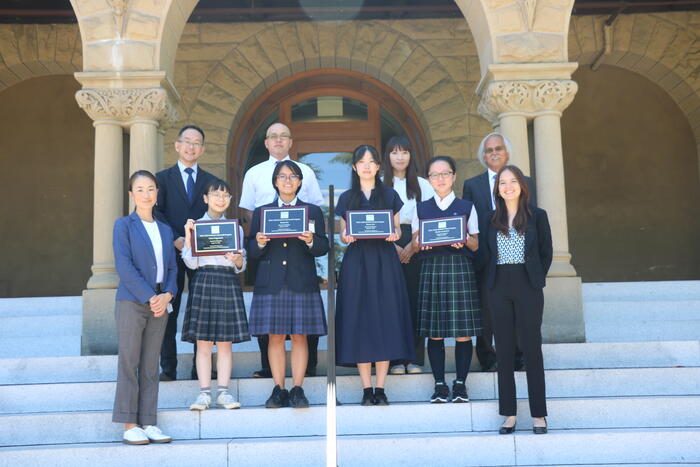
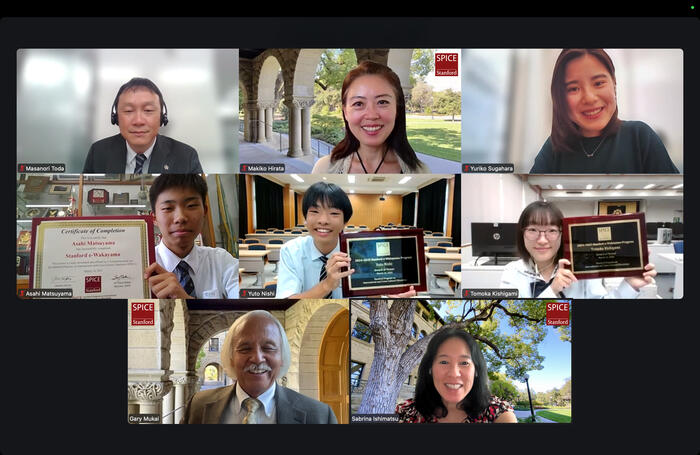
Image
people standing in front of a screen while holding certificates


A few memorable moments come to mind: 1) Dr. Mukai’s presentation, which I found extremely touching. His and the other presentations provided a good balance between teaching practical lessons and using pathos to bring empathy into the complex topics that were covered. What I loved about Dr. Mukai’s presentation in particular was the positive notes strung throughout that left me feeling motivated to do good work rather than discouraged by our history or the state of the world. This attitude was emblematic of the entire course. 2) The conversations with my peers, which spanned more areas of interest, expertise, and experience than I could have ever anticipated. I have been in environments like that before where there is an undeniable sense of comradery and outspokenness that everyone can appreciate—but I still believe this group was exceptional. This course was as much about being a member of a team and a dynamic ‘community’ as it was about meeting and learning from professionals in relevant fields of research.

I think this course exceeded in encouraging participation by allowing students from different faculties and education levels to participate, and by inviting guest lecturers who were excited to share their wisdom and research with us. I commend the coordinators for their obvious passion for this project and their respectful and sincere approach to speaking with the students. There was also ample time built into the course schedule for us to work on our group presentations, which helped eliminate my initial fear of a strenuous workload. Overall, I left the course with a better sense of the various topics that could fall under the title “Exploring Peace in East Asia and Beyond Through the Lenses of Cultural Understanding, Education, and International Relations.” It is a course I will be recommending to my friends and classmates.

To stay informed of SPICE news, join our email list and follow us on FacebookX, and Instagram.

Read More

a student standing in front of a sign
Blogs

Deepening Understanding: Insights from SPICE/Waseda Intensive Course on Peacebuilding in East Asia

Graduate student Geunhyung Kim reflects on her experience participating in the SPICE/Stanford-Waseda intensive course.
Deepening Understanding: Insights from SPICE/Waseda Intensive Course on Peacebuilding in East Asia
Meiko Kotani with students at Waseda University's School of Social Sciences and Moe Kaneko
Blogs

SPICE Offers Course in Collaboration with Waseda University’s School of Social Sciences

Reflections on an intensive course on sustainable business and social innovation.
SPICE Offers Course in Collaboration with Waseda University’s School of Social Sciences
Hero Image
a student standing in front of a tower on university campus
Lindsay Baltzell in front of Okuma Auditorium, Waseda University
Photo Credit: Hironori Mizukami
All News button
1
Subtitle

Lindsay Baltzell, an undergraduate student at Waseda University, reflects on her experience participating in the SPICE/Stanford–Waseda intensive course.

Date Label
Authors
News Type
Blogs
Date
Paragraphs

The following is a guest article written by Makoto Nagasawa, who traveled to the San Francisco Bay Area with other graduate students from the University of Tokyo—under the leadership of Professor Hideto Fukudome—in January 2025. Makoto is also an Associate Professor at Saitama University. SPICE/Stanford collaborates closely with the Graduate School of Education at the University of Tokyo and met with the students during their visit to the Bay Area.

In a contemporary world where knowledge is instantly accessible and the digitalization of education is accelerating, the value of gathering in physical spaces and learning together is being re-evaluated. The intensive seminar on international and cross-cultural education held in the San Francisco Bay Area in late January 2025 vividly demonstrated the unique appeal of in-person global education and the potential for learning that digital platforms alone cannot replicate.

This seminar—a collaboration between the Center for Advanced School Education and Evidence-Based Research (CASEER) at the University of Tokyo and SPICE at Stanford University—was not merely a venue for acquiring knowledge but a precious opportunity for participants to encounter the world through direct exposure and gain new perspectives through interaction with others. The firsthand experience of the current state of elite higher education institutions in the Bay Area, a bastion of liberalism, was an invaluable lesson in understanding live social dynamics.

On the first day at Stanford University, SPICE experts shared a wide range of insights on international and cross-cultural education. Among these, Mariko Yang-Yoshihara’s lecture, which utilized Stanford Professor Ge Wang’s video, provided participants with a stimulating experience to deeply consider the “creation of learning” from non-traditional approaches that transcend existing frameworks. Furthermore, the in-person workshops based on digitally pre-assigned tasks served as an interactive learning environment where first-time participants could share their knowledge and experiences and deepen discussions, fostering a sense of solidarity that is difficult to achieve online. The direct dialogue with Gary Mukai and other SPICE members proved to be of great significance in infusing academic knowledge with real-world context and building human connections. During the sessions at Stanford (photo below courtesy Makoto Nagasawa) students’ laptops were open, and their minds even more so as learning came alive at Stanford with SPICE experts at the table.

Image
people gathered in a conference room


Moreover, visits to cultural areas such as San Francisco’s Chinatown, San Jose’s Japan town and the Japanese American Museum, and the Angel Island Immigration Station were indispensable experiences for connecting knowledge learned in the classroom with the realities of society. In particular, encountering the history of Japanese Americans and the hardships faced by immigrants provided an opportunity to deeply understand the historical experiences of different communities and the complex paths through which present-day society has been shaped. During Gary’s tour of San Jose’s Japan town, he helped to bring the history of Japan town to life by asking the students to compare old photos—page by page—from the early 20th century to the present-day buildings and surroundings; photo below courtesy Makoto Nagasawa.

Image
a group of people standing in a circle


“The only source of knowledge is experience,” as Einstein said, a quote mentioned during Professor Stephen Murphy-Shigematsu’s lecture at Stanford. This highlights that experience gained by being present in a place and engaging all five senses remains crucial in grasping the essence of learning, even in today’s increasingly digital world. The sense of presence and enthusiasm gained through co-learning in classrooms, direct dialogue with faculty and fellow participants, and fieldwork are the unique appeals of in-person education that cannot be fully experienced through online-only education.

Through this overseas intensive seminar, participants reaffirmed the significance of the physical presence of universities, the importance of learning together in person, and the value of walking the world with their own feet and experiencing it directly. Even as digital tools evolve, the deep learning and acquisition of diverse perspectives that arise from human interaction are the wellspring of wisdom and power to navigate the complexities of modern society. 

To stay informed of SPICE news, join our email list and follow us on FacebookX, and Instagram.

Read More

A man on a boat; island in the background
Blogs

Japan and the Myth of “Ethnic Homogeneity”: Reflecting on Contemporary Challenges

Shotaro Yoshida, a PhD student in the Graduate School of Education at the University of Tokyo, shares his thoughts following a study tour to the San Francisco Bay Area led by Professor Hideto Fukudome.
Japan and the Myth of “Ethnic Homogeneity”: Reflecting on Contemporary Challenges
a group photo taken at a table with four people sitting down.
Blogs

SPICE Provides Excellent Learning Opportunities for Japanese University Students

SPICE/Stanford collaborates with the Graduate School of Education at the University of Tokyo.
SPICE Provides Excellent Learning Opportunities for Japanese University Students
Hero Image
people gathered in a restaurant, holding red paper bags
Makoto Nagasawa (front row, far right) with Professor Hideto Fukudome (front row, middle), Professor Kazuaki Iwabuchi (front row, second from the right) and graduate students
Photo Courtesy: Makoto Nagasawa
All News button
1
Subtitle

Makoto Nagasawa, a doctoral researcher at the University of Tokyo’s Graduate School of Education, reflects on his experience in the SPICE-linked intensive seminar in the San Francisco Bay Area, led by Professor Hideto Fukudome.

Date Label
Authors
News Type
News
Date
Paragraphs

This interview first appeared in the Brazilian newspaper Folha de S.Paolo, on April 6. The following English version was generated using machine translation and subsequently edited for accuracy and clarity.


WASHINGTON — The tariff hike against all countries announced last week by President Donald Trump may bolster China's image, but that doesn't mean China or any other country is poised to replace the United States, says Thomas Fingar, Shorenstein APARC Fellow at the Freeman Spogli Institute at Stanford University.

Fingar, a former chief of the State Department's China Division, among other roles in the U.S. Foreign Service and national intelligence, believes that Trump's tariffs will be bad for all nations.

"I hesitate to predict how other countries will react, except that this has more or less given everyone an incentive to bypass the U.S.," he tells Folha.

Donald Trump announced tariffs this week against virtually every country. China has already announced retaliation, imposing a 34% tariff on American products. Are we facing a trade war?

I don't think the war metaphor works for me. I don't know what Trump is trying to do. One could say that this is a game of imposing an outrageous tariff in the hope that specific targets, which are basically all countries, might give in to what they say are their demands. In doing so, they would reduce barriers to trade with the United States. To me, it doesn't make sense with the vast majority of targets of the 10% tariffs.

Why?

I hesitate to predict how other countries will react, except that this has more or less given everyone an incentive to bypass the U.S., to make the U.S. a supplier of last resort, to hold the line, to have a kind of united front to compete with each other.

If the assessment is that the Dutch or the French or the Germans or the Brazilians or somebody else is talking about doing something to eliminate a 10% tariff to gain a comparative advantage in accessing the U.S. market, if that's the logic, then fine. Maybe there's something rational about that, but I think it's more likely that the targets of those low tariffs are just getting together.

My main trade competitor has the same or higher tariffs levied against them. Why should I give in if we are competing on a level playing field?

I think Trump is going to make the U.S. pay a huge geopolitical price. But what he thinks he will gain from this, I don't know. Is it likely that he will achieve anything really significant from it? I doubt it.

You mentioned a geopolitical price tag for the United States. What would it be?

The tendency of much of the world, most of the time, was to try to work with the United States, to the extent that they couldn't automatically do what Washington wanted, but they were inclined to cooperate because they saw it as benign, if not beneficial, to their interests. I think Trump has reversed that. This is going to lead to a disinclination to work with us, an incentive to try to bypass us. I think the inclination now is going to be: I'm not going to vote with the Americans, I'm going to look elsewhere first, for my investment, for my capital, for the market, for what I'm doing, for partners.

But I don't think that these measures are necessarily going to play in favor of any particular country. Maybe China in some places, the European Union in some places, Japan in some places. It's going to be a very different environment for the United States, for American companies and diplomats to operate in. It's going to be much more difficult.

This tariff strategy that you say is hard to understand is seen by some analysts as part of Trump's isolationist policy.

As my kids would say, this is so last century. This is really 19th century, the idea of bringing industries, manufacturing back to the United States. Very little manufacturing, I think, is going to come back to the United States. We have 4% unemployment. We can't fill the jobs that we have now, imagine bringing back manufacturing of basic commodities like shoes, toys, that kind of thing.

That left the United States a long time ago and went to Japan, moved from Japan to Taiwan, moved from Taiwan to South Korea, moved from South Korea to somewhere else, and then moved to China and then to Vietnam. Those things are not coming back here because there's not enough profitability to justify investing in robots and mechanizing those things to bring them back to the United States. Our workforce is small relative to the size of the economy. It's not coming back.

It's already moving from China because labor costs are so high. The fallacy in Trump's logic is that things like furniture, construction, textiles, clothing, and manufacturing would come back. And the people who would actually do the work are the people he's persecuting with his ridiculous immigration policies.

Trump has argued that he imposed the tariffs to curb alleged abuses against the United States that would benefit China. Is he containing Beijing with this move?

I don't think he really cares about containing China. But the answer is no. These moves boost China's image. Beijing has seized on the rhetoric of defending the open, globalized international trading order that the United States has attacked. They will take advantage of that as much as they can. I don't think the tariffs are part of the U.S. rivalry with China. China's rise has not disadvantaged the United States economically — it has done so to Japan, and, to some extent, South Korea and Taiwan, but not the United States. So Trump is using this argument with false, exaggerated, and distorted statements.

Could we witness a change in the world order, the end of the American era and the beginning of a Chinese era?

No.

Not even as a consequence of tariffs?

Absolutely not. Part of the problem is that China's economy is closed. One of the reasons is that it doesn't have a consumer society because people don't have enough income. That's because of the amount of wealth that the state extracts to pay for high-speed rail, military structures, and energy development. Some of that is good, some of it is excess.

U.S. tariffs won’t create a market that can rival the size and influence of the United States. It would have to be somewhere else that is very rich, and China is not very rich. China is barely in the middle-income category, it has a per capita income at a level that Mexico has been at for decades. It's not binary. So, the U.S. retreat from its leadership position in the world order, which I don't necessarily see as a bad thing, doesn't automatically hand that role over to China, Russia, the European Union, Japan, Brazil, the BRICS, or any other set of players.

Can China gain ground by investing more in countries that are affected by tariffs?

China has invested more in countries that are affected by tariffs, like Indonesia and Vietnam. These countries are very wary of Chinese investment for various historical reasons, and to some extent for ethnic reasons. But China is actually cutting back on its overseas investments because its own population is asking: Why are we giving money to countries that are richer than us? That is a reasonable question.

They have real problems meeting the expectations, demands, and needs of their own population, which is now largely urban. The cities have to function, you can't say, "Go back to the farm and do sustainable agriculture." That phase is long gone in China. So they have to spend more. Half of the population still has rural identity cards. That means they don't get free education beyond primary school. That means 50% of the future workforce won't have more than a primary school education. This is a country with enormous challenges. Can they manage them? Probably yes, but there is not much room for maneuver. Their own slowing economy will be hurt by these tariffs. I don't think that's Trump's intention, but it will hurt them.

What impact might the tariffs have on Brazil and Latin America? Do you think China will become more attractive?

I don't know specific commodities from specific places, but my general starting point is that a 10% distribution across Latin America won't have much of an impact on the price for consumers in those countries. You'll export the same amount; we'll pay more for whatever the commodity is, flowers from Colombia, grapes, wine from Argentina or Chile. Since the tariff is general, it doesn't give Chile an advantage on wine over Argentina, because they both have the same amount. Most of what Latin America exports to the United States doesn't go to China.

In short, what are the main consequences of tariffs in terms of the geopolitical landscape and the domestic landscape?

It destabilizes the international trading system that has benefited most countries for a long time. It will force adjustments, that is number one. And number two is that it undermines the image of the United States, and therefore its influence as a stabilizing, predictable, and broadly beneficial member of the international community. It disrupts economies and undermines American influence and attractiveness.

In the end, does anyone benefit from Trump's tariff policies?

No one. This is not a policy that works to anyone's obvious benefit. It upsets everyone. And there is no alternative to the United States, in the sense that the Soviet Union was during the Cold War. China is not that, and China does not want to be that.

Read More

American flag and network imagery
Commentary

US Research in Retreat?

Zealous measures to defend against foreign exploitation of university-based research would be inadequate to preserve US preeminence in science and technology without much greater effort to strengthen US capabilities.
US Research in Retreat?
A collage of group photos featuring speakers at the Taiwan Forward conference.
News

Stanford Conference in Taipei Ponders Taiwan’s Path Forward in a Changing World

At its first convening in Taiwan, APARC’s Taiwan Program gathered scholars and industry experts to consider policy measures and practices for tackling the technological, economic, social, and demographic forces shaping the island nation’s future and strategies for ensuring its continued growth and success.
Stanford Conference in Taipei Ponders Taiwan’s Path Forward in a Changing World
Oksenberg Symposium panelists (L to R) Jean C Oi, Alex Gabuev, Sumit Ganguly, Da Wei, Michael McFaul
News

Oksenberg Symposium Panelists Analyze Evolving Strategic Dynamics Between China, Russia, India, and the United States

APARC's 2025 Oksenberg Symposium explored how shifting political, economic, and social conditions in China, Russia, India, and the United States are reshaping their strategies and relationships. The discussion highlighted key issues such as military and economic disparities, the shifting balance of power, and the implications of these changes for global stability, especially in the Indo-Pacific region.
Oksenberg Symposium Panelists Analyze Evolving Strategic Dynamics Between China, Russia, India, and the United States
Hero Image
U.S. President Donald Trump holds up a chart of "reciprocal tariffs" while speaking
U.S. President Donald Trump holds up a chart of "reciprocal tariffs" while speaking during a “Make America Wealthy Again” trade announcement event in the Rose Garden at the White House on April 2, 2025 in Washington, DC.
Photo by Chip Somodevilla/Getty Images
All News button
1
Subtitle

President Trump's tariff policy will serve no one's interests, says Thomas Fingar, a Shorenstein APARC Fellow at Stanford University's Freeman Spogli Institute for International Studies.

Date Label
-
Fellowships for Research in Japan Digital flyer with Sakura Cherry Blossoms


Japan Society for the Promotion of Science (JSPS) is the largest funding agency for academic research in Japan. Fellowships are offered for graduate students, Ph.D. students, post-doctoral fellows, researchers, and professors at all levels in all fields. If you are interested in researching in Japan, join us for a hybrid information session with JSPS SFO staff to find out more. 

Featuring Prof. Kiyoteru Tsutsui, director of the Japan Program at APARC and center deputy director.

JSPS SFO will be hosting a giveaway and providing lunch! 

If you have any questions, you can reach JSPS SFO at: (510) 665-1890 or sfo-fellowship@overseas.jsps.go.jp

Kiyoteru Tsutsui

Philippines Conference Room

Encina Hall 3rd Floor
616 Jane Stanford Way, Stanford CA 94305

Seminars
Date Label
Authors
News Type
Blogs
Date
Paragraphs

The following is a guest article written by Geunhyung Kim, a student from South Korea studying at the Graduate School of Asia-Pacific Studies at Waseda University in Japan. Geunhyung enrolled in the 2025 SPICE/Stanford–Waseda Intensive Course: Exploring Peace in East Asia and Beyond Through the Lenses of Cultural Understanding, Education, and International Relations, which was organized by SPICE and Waseda’s Faculty of Social Sciences and taught by Meiko Kotani. The course brought together students from the Graduate School of Social Sciences, the School of Social Sciences, the Graduate School of Asia-Pacific Studies, the School of International Liberal Studies, and the School of Political Science and Economics. With participants from Japan and international students representing 10 different countries, the course created a truly dynamic and diverse learning environment.

This March, I had the privilege of participating in the 2025 SPICE/Stanford–Waseda Intensive Course on “Exploring Peace in East Asia and Beyond Through the Lenses of Cultural Understanding, Education, and International Relations.” It featured insightful lectures from esteemed professors and a former U.S. Ambassador, focusing on cultural understanding, history, and international relations in the Asia-Pacific region.

A key takeaway from the course that will forever resonate with me is the importance of thinking critically and respecting diverse perspectives. Dr. Gary Mukai’s opening lecture laid a foundational understanding of cultural biases and stereotypes, emphasizing the potential harm of psychological mechanisms that simplify complex entities. He highlighted the crucial need for recognizing and overcoming our own cultural biases. In another session, Mr. Rylan Sekiguchi led an exercise where we compared history textbooks from the United States, South Korea, Japan, China, and Taiwan. This activity underscored the significance of critical thinking and demonstrated why historical education is essential. It illustrated how nations, like individuals, possess unique perspectives shaped by distinct histories and experiences. The central challenge we discussed was not the presence of diverse viewpoints per se, but rather how to constructively engage with these differences to foster regional peace. Dr. Shuoyang Meng’s lecture on knowledge diplomacy and transnational academic mobility further inspired me as a student in higher education to act as a knowledge diplomat for peacebuilding. Ambassador Karl Eikenberry’s insights on the evolving U.S.–China security dynamics and broader security issues in the Asia-Pacific region highlighted the necessity of strategic empathy in international relations.

Image
students working in a group in a classroom


The most remarkable feature of the 2025 SPICE/Stanford–Waseda Intensive Course was undoubtedly its interactive environment. The program did a great job of bringing together students from diverse cultural backgrounds, including China, Japan, and South Korea, and succeeded in creating a genuinely safe and welcoming space for open discussions on sensitive historical issues. This atmosphere of openness was instrumental in building trust and fostering a deeper understanding among students. This may seem small, but I believe the experience of participating in such a diverse and collaborative setting has profoundly enriched our understanding of international relations and conflict resolution.

Initially, I was a little skeptical and curious about the feasibility of discussing sustainable peace in East Asia, considering the region’s complex history of tensions and territorial disputes. However, SPICE exceeded expectations by providing a thought-provoking and safe platform for these critical discussions.

I would recommend this course to my peers, as it broadens perspectives and equips future leaders with essential skills for meaningful dialogue on peace and cooperation in East Asia and beyond.

To stay informed of SPICE news, join our email list and follow us on FacebookX, and Instagram.

Read More

Tamaki Hoshi in front of Okuma Auditorium, Waseda University
Blogs

Reflecting Inward, Failing Forward and Innovating Onward

Graduate student Tamaki Hoshi shares reflections on the SPICE-Waseda joint course.
Reflecting Inward, Failing Forward and Innovating Onward
Meiko Kotani with students at Waseda University's School of Social Sciences and Moe Kaneko
Blogs

SPICE Offers Course in Collaboration with Waseda University’s School of Social Sciences

Reflections on an intensive course on sustainable business and social innovation.
SPICE Offers Course in Collaboration with Waseda University’s School of Social Sciences
Hero Image
a student standing in front of a sign
Geunhyung Kim at the Waseda University campus
Photo Credit: Geunhyung Kim
All News button
1
Subtitle

Graduate student Geunhyung Kim reflects on her experience participating in the SPICE/Stanford-Waseda intensive course.

Date Label
Subscribe to Japan