News Type
News
Date
Paragraphs

The California Department of Education adopted the Ethnic Studies Model Curriculum last March. Chapter 3 of the Model Curriculum includes a section on “Native American Studies.”

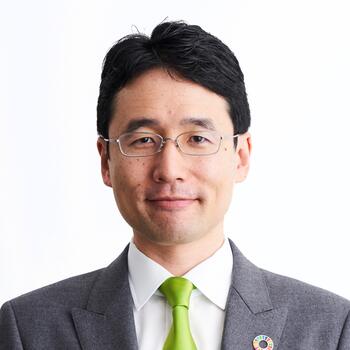
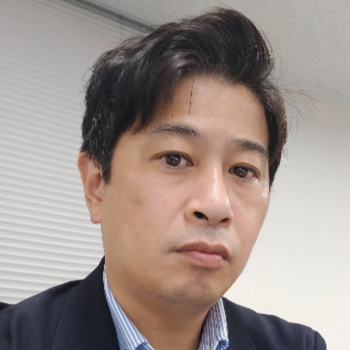
On June 18, 2021, SPICE will host a panel of three Native and Indigenous scholars to reflect on California’s new model curriculum and the state of ethnic studies in their respective regions. The panel will include Navajo, Native Hawaiian, and Ainu educators who will provide a range of educational perspectives on Native and Indigenous studies in the United States and Japan.

  • Dr. Harold Begay, Superintendent of Schools, Navajo Nation
  • Dr. Sachi Edwards, Faculty Member at Soka University in Tokyo, Japan
  • Dr. Ronda Māpuana Shizuko Hayashi-Simpliciano, Vice Principal, Ke Kula Kaiapuni ʻo Ānuenue, Honolulu, Hawaiʻi

The webinar, titled “Indigenous Voices: Educational Perspectives from Navajo, Native Hawaiian, and Ainu Scholars in the Diaspora,” will address several additional topics, such as the various academic field names of the study of Native and Indigenous people, the complexity and diversity of Native and Indigenous people’s experiences, and recommended resources for K–12 educators.

These topics are not only relevant to teachers in California but to educators in other states as well. K–12 educators and administrators are encouraged to attend. Register in advance at https://bit.ly/3z4kxtc.

This webinar is a joint collaboration with the National Consortium for Teaching about Asia (NCTA) and the Center for East Asian Studies at Stanford University.

To stay informed of SPICE news, join our email list and follow us on Facebook, Twitter, and Instagram.

Read More

Tokyo’s Shin Okubo neighborhood, known for its Korea Town
Blogs

Global Human Rights and Minority Social Movements in Japan: A Webinar by Professor Kiyoteru Tsutsui

Tsutsui introduced the audience to three minority groups in Japan—the Ainu, resident Koreans (Zainichi), and the Burakumin—and illustrated how human rights have galvanized minority social movements there.
Global Human Rights and Minority Social Movements in Japan: A Webinar by Professor Kiyoteru Tsutsui
Chinese railroad workers
Blogs

Stanford’s Center for East Asian Studies and SPICE Co-Sponsor Webinar on “Chinese Railroad Workers in North America Project”

The speakers shared extensive primary source documents from Stanford Libraries’ Department of Special Collections, as well as free lesson plans from SPICE's online curriculum unit on Chinese railroad workers.
Stanford’s Center for East Asian Studies and SPICE Co-Sponsor Webinar on “Chinese Railroad Workers in North America Project”
Hero Image
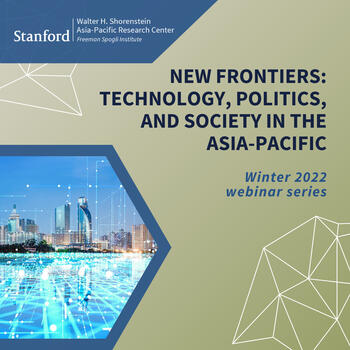
Flyer for the SPICE webinar "Indigenous Voices: Educational Perspectives from Navajo, Native Hawaiian, and Ainu Scholars in the Diaspora"
The June 18 webinar will feature Dr. Harold Begay, Dr. Sachi Edwards, and Dr. Ronda Māpuana Shizuko Hayashi-Simpliciano.
All News button
1
Subtitle

Navajo, Native Hawaiian, and Ainu educators will join together on June 18 to examine the state of Indigenous studies.

Authors
News Type
Blogs
Date
Paragraphs

Stanford e-Entrepreneurship Japan is an online course offered to high school students in Japan. It is offered annually in fall and spring by SPICE and the Japanese NPO e-Entrepreneurship, led by Yusuke Matsuda. The instructors are Irene Bryant (fall) and Maiko Tamagawa Bacha (spring). The goal of the course is to foster creative thinking and problem-solving skills in students with a focus on innovation to address social issues.


Because of my experiences with social issues in Brazil, Argentina, the United States, Japan, and Mexico, my decision to apply to Stanford e-Entrepreneurship Japan—a course for those with a passion in social issues and innovation—was immediate. However, when I started taking the course, I had little idea of the connection between business and social issues. Soon after classes began, I saw real-life examples of how unique innovations can improve the world. Every two weeks, a different professional gave us a lecture. Getting to hear stories of their first-hand experiences as entrepreneurs was an opportunity I never received at school, and I embraced it fully by asking question after question.

My favorite lecture was one given by David “Mas” Masumoto, who runs a sustainable peach farm in California. Through his lesson on growing organic peaches and passing down the farm to his children, I was able to make connections to a larger social issue in Japan: the lack of young people in agriculture. His lecture provided insights on specific ways professionals were practicing social entrepreneurship.

The course was certainly demanding. After the lectures, we had to work on group projects to come up with our own solutions, which enabled me to further understand and practice aspects of social entrepreneurship. It took hours of preparation and as I was one of the only students who lived abroad, I sometimes had to work with peers at ungodly hours. Nonetheless, all the hard work was absolutely worth it. The diversity provided by the unique regional backgrounds of other students located all around Japan exposed me to important perspectives on social issues.

For the final project, which included an individual research report on a social issue and a group business pitch, we had full control of what we wanted to do. The individual paper was refreshing for me because at school there is never this much flexibility, and it was a perfect chance for me to explore my interest in addressing social issues like environmental sustainability through entrepreneurship. For the group project, we created a business plan for a sustainable toothpaste. I have never worked with such motivated, diverse, and brilliant students willing to put in so many hours of work. Through the project, not only did I get to put skills that I learned during the program into practice, but I also made lifelong friends who shared the same passions as me.

Finally, Stanford e-Entrepreneurship Japan has grown my interest in how social issues can be resolved through entrepreneurship, and has motivated me to pursue not only the exploration of social issues, but business in college. It is a course like no other, with wonderful peers, invaluable lessons, and a supportive teaching staff. I encourage people who are curious about social issues or business in general to take advantage of the program.

Read More

un sustainable development goals
Blogs

Bringing UNSDGs and Entrepreneurship into Oita’s Virtual Classroom

Bringing UNSDGs and Entrepreneurship into Oita’s Virtual Classroom
Hero Image
Stanford e-Entrepreneurship Japan student Naho Abe in Mexico City
Naho Abe in Mexico City; photo courtesy Naho Abe
All News button
1
Subtitle

The following reflection is a guest post written by Naho Abe, an alumna of Stanford e-Entrepreneurship Japan.

Authors
Kiyoteru Tsutsui
News Type
Commentary
Date
Paragraphs

This commentary by Kiyoteru Tsutsui and Charles Crabtree was originally published in The Hill.


The recent White House summit meeting between President Biden and Japanese Prime Minister Yoshihide Suga signaled to the world, and especially to China, that the U.S.-Japan alliance is strong and ready for intensifying competition in Asia.

For the first time in more than 50 years, the Japanese and American leaders mentioned Taiwan in their joint statement. China immediately responded with strong words, as expected, but since has moderated its tone. Furthermore, Chinese leader Xi Jinping participated in the U.S.-organized Leaders Summit on Climate the week after the Biden-Suga meeting and took a collaborative stance, a hopeful sign that competition will not eliminate the possibility of some collaboration and that climate change is an area where Beijing, Tokyo and Washington can work together.

But the U.S. and Japan still have at least three concerns about China: Beijing’s continued posturing on Taiwan and the Senkaku Islands; its significant leverage in economic relations; and its repression of human rights in Xinjiang, Hong Kong and beyond. How should the alliance handle these important issues? 

On the security front, America’s return to multilateralism under Biden is a welcome development for Japan and other like-minded states in the region. The U.S.-Japan alliance is obviously central in the coalition of democratic nations concerned about China’s ambitions. The primary goal of these countries ought to be walking the thin line between demonstrating their resolve to counter any aggressive behavior by China with force and avoiding any unnecessary provocation against China. 

Toward that end, the most promising framework is the Quad that includes India and Australia in addition to Japan and the U.S. The first-ever leader-level meeting in March elevated the Quad’s status significantly. While it still is a long way from becoming a NATO-like security apparatus — and it’s not even clear if that’s the consensus goal — it could help stabilize the region by creating a credible counterweight to check China’s territorial ambitions.

Beyond the Quad, the inclusion of other like-minded stakeholders such as South Korea and ASEAN countries on security matters is important. With South Korean President Moon Jae-in’s visit to Washington planned in late May, a good first step for the Biden administration would be to invest some diplomatic capital in mending fences between Japan and South Korea. A full-scale reconciliation between the two regional powers is unlikely this year; Suga faces elections in the fall, for which he needs to consolidate the conservative base, and Moon is a lame duck with limited political power. But some reconciliation would be welcome for the U.S. as it seeks to resurrect the trilateral alliance with Japan and South Korea to complement the Quad in deterring China’s ambitions and addressing the threat posed by North Korea. 

In the economic domain, China is arguably even more difficult to contain, being the largest trade partner for virtually all the countries in the region. Decoupling from China was a key theme at the Biden-Suga summit, but this is a task that has proven much easier said than done. From semiconductors to rare earth minerals, the battle for key materials for the 21st century economy will only intensify, and China’s grand scheme in the Belt and Road Initiative needs to be countered by a similarly grand long-term strategy that would flesh out the Free and Open Indo-Pacific vision.

In this regard, the U.S.-Japan Competitiveness and Resilience Partnership can be quite consequential. In addition to pledging cooperation on “sensitive supply-chain” issues, it outlines the agenda for technological innovation that cuts across security and economic domains, making it a critical tool in the competition with China. This is because whoever develops an edge in transformational technologies — such as artificial intelligence, 5G infrastructure, and outer space development — will enjoy diplomatic and military advantages as well as economic profits. The combined $4.5 billion investment in the partnership is a good first step to ensuring that the U.S. and Japan retain an innovation advantage. Additional expenditures likely will be necessary, though, considering China’s commitment in these areas.

On human rights, Japan and America take different approaches. While the U.S. has called the situation in Xinjiang a genocide and imposed sanctions there, as well as in Myanmar following the military coup, Japan has taken a more subdued stance. This is a standard approach for Tokyo, which prefers to emphasize engagement with violating governments.

The Biden administration seems to accept Suga’s strategy of engagement, and perhaps the diplomatic channel that this approach provides can be useful in negotiating some kind of settlement. However, the strategy of engagement that has produced some benefits in countries such as Thailand and possibly Myanmar is unlikely to be as effective with China. Furthermore, several Western corporations are facing boycotts in China for taking a stand against forced labor in Xinjiang. If Japanese corporations avoid paying the price and continue business as usual, Tokyo might face greater pressure to take some action. Given the central importance of the Chinese market for Japanese businesses, this could give rise to significant tension between Tokyo and Washington. 

On all these dimensions, for Japan and the U.S. to be effective in countering China, both Biden and Suga would have to consolidate domestic support. Biden’s first 100 days generally were seen as successful, with COVID-19 vaccine distribution going smoothly and Congress passing ambitious spending bills. Besides, Biden has at least until the midterm elections in November 2022 to move things forward.

The timetable is less friendly for Suga, who needs to win the Liberal Democratic Party (LDP) presidential election in September and hold a House of Representatives election by October. His fate will be shaped in large measure by his government’s pandemic response and how that influences economic fortunes, and to a lesser extent the success of the Tokyo Olympics. Most Tokyo insiders predict that he will remain in office past October, citing weak opposition both in and outside of the ruling LDP. If, however, COVID-19 vaccine distribution does not move forward by the fall, as projected by the government, and the economy continues to slide, that could still trip him up.

Only with domestic political stability and economic prosperity can Tokyo and Washington take the next steps in projecting strength vis-à-vis China, and that is the best deterrent against China’s expansionist ambitions and toward ensuring peace and stability in the Indo-Pacific area.

Read More

President Biden and President Suga walk through the Rose Garden colonnade at the White House
Commentary

U.S. and Japan Gear Up for a New Era of Competition with China

The time is near when other Asian nations will have to pick a side in the great power competition between the United States and China, says Japan Program Director Kiyoteru Tsutsui.
U.S. and Japan Gear Up for a New Era of Competition with China
A man wearing a face mask prays for the new year at Meiji Shrine in Tokyo, Japan.
Commentary

Japan's Challenges in the Next Year are Greater than its Opportunities

Surging coronavirus cases and ongoing political scandals have docked Suga's approval ratings, but successfully handling the upcoming Olympics and taking further strides with the United States, ASEAN, and South Korea may help him rebound.
Japan's Challenges in the Next Year are Greater than its Opportunities
A loaded shipping liner sails out of port.
Commentary

Let's Keep it the 'Free and Open' Indo-Pacific

Both Japan's Suga and the incoming Biden administration should maintain the language of the "free and open Indo-Pacific" for consistency and to signal their ongoing commitment to maintaining a firm policy stance on China's ambitions.
Let's Keep it the 'Free and Open' Indo-Pacific
Hero Image
President Biden and President Suga walk through the Rose Garden colonnade at the White House Getty Images
All News button
1
Subtitle

From Taiwan and the Senkaku Islands to economics, trade, and human rights issues in Xinjiang and Hong Kong, the U.S.-Japan alliance has plenty to tackle with its policies towards China.

News Type
News
Date
Paragraphs

SPICE currently runs four regional programs for high school students in Japan: Stanford e-Hiroshima, Stanford e-Kawasaki, Stanford e-Oita, and Stanford e-Tottori. These online courses are coordinated in collaboration with school and government officials at the city and prefectural levels, with the goal of presenting creative and innovative approaches to teaching Japanese high school students about U.S. society and culture and global themes.

All four courses recently finished their 2020–21 term. This summer, two top students from each course will be honored through a virtual event hosted by SPICE, Stanford University. Congratulations to the eight honorees below on their academic excellence!

Stanford e-Hiroshima (Instructor Rylan Sekiguchi)

Student Honoree: Sara Arakawa
School: Hiroshima Prefectural Hiroshima Kokutaiji Senior High School
Project Title: Silicon Valley: Secrets Behind Success

Student Honoree: Chika Isone
School: Hiroshima Prefectural Hiroshima Senior High School
Project Title: Making Innovation by Design Thinking in Silicon Valley

Stanford e-Kawasaki (Instructor Maiko Tamagawa Bacha)

Student Honoree: Eric Silang
School: Kawasaki High School
Project Title: Humor and America

Student Honoree: Shunya Tani
School: Kawasaki High School
Project Title: Possible Ways to Promote Renewable Energy in Japan and the U.S.

Stanford e-Oita (Instructor Kasumi Yamashita)

Student Honoree: Hana Burkart
School: Hofu High School
Project Title: Social Discrimination Against Foreigners in Japan

Student Honoree: Yayano Okuda
School: Usa High School
Project Title: Environmental Education

Stanford e-Tottori (Instructor Jonas Edman)

Student Honoree: Eri Tamura
School: Tottori Nishi High School
Project Title: Teachers’ Treatment in the U.S.

Student Honoree: Hinata Yonemura
School: Yonago Higashi High School
Project Title: Veganism: How Japanese Society Can Promote It


The SPICE staff is looking forward to honoring these eight students in a virtual ceremony on August 23, 2021 (August 24 in Japan). Each student will be given the opportunity to make a formal presentation to members of the Stanford community and the Japanese community in the San Francisco Bay Area.


SPICE also offers online courses to U.S. high school students on Japan (Reischauer Scholars Program), China (China Scholars Program), and Korea (Sejong Korea Scholars Program), and online courses to Chinese high school students on the United States (Stanford e-China) and to Japanese high school students on the United States and U.S.–Japan relations (Stanford e-Japan).

To stay informed of SPICE news, join our email list and follow us on Facebook, Twitter, and Instagram.

Read More

Honorees of SPICE’s regional programs in Japan
News

Ceremony Honors Top Students from SPICE’s Regional Programs in Japan

Congratulations to the eight honorees of SPICE’s 2019–2020 regional programs in Japan.
Ceremony Honors Top Students from SPICE’s Regional Programs in Japan
Victoria Tsai in Kyoto
Blogs

Stanford e-Kawasaki Guest Speaker: Victoria Tsai, Founder and CEO, Tatcha

The entrepreneur and businesswoman spoke to students about how certain key experiences in her life influenced her path.
Stanford e-Kawasaki Guest Speaker: Victoria Tsai, Founder and CEO, Tatcha

Read More

Sumire Hirotsuru performing in Tokyo; photo courtesy Sumire Hirotsuru
Blogs

Giving Back to One’s Hometown: Stanford e-Oita Guest Speaker, Sumire Hirotsuru

The accomplished young violinist, who was born and raised in Oita Prefecture, encouraged students to think about their strengths and emphasized the importance of balancing academics and extracurricular activities.
Giving Back to One’s Hometown: Stanford e-Oita Guest Speaker, Sumire Hirotsuru
Two students holding diplomas with a principle in a room
Blogs

Stanford e-Tottori: An Oasis of Promise

Stanford e-Tottori: An Oasis of Promise
Hero Image
Cherry blossoms in bloom in Karuizawa, Japan
Cherry blossoms in bloom in Karuizawa, Japan; photo courtesy Naoaki Mashita.
All News button
1
Subtitle

Congratulations to the eight student honorees from Hiroshima Prefecture, Kawasaki City, Oita Prefecture, and Tottori Prefecture.

Authors
News Type
Blogs
Date
Paragraphs

The Instructor of the Reischauer Scholars Program (RSP) is Naomi Funahashi.


When Tai Young Whang, an ambitious high school graduate from Pyongyang, stepped onto the dock in Tokyo in 1933 to attend Hitotsubashi University, he never could have imagined that his personal dream of building economic bridges between Korea and Japan would fuel his great-grandson’s desire to follow in his footsteps almost a century later.

***

At the end of my first year of middle school, I chose to study the Japanese language for the first time. What started out as a curiosity of the language and some of Japan’s popular cultural exports (such as Pokémon games) gradually blossomed into a deeper passion for Japan’s culture and history. During my eighth-grade world history class, I turned my focus to researching the intricate sankin kōtai system and skilled political maneuverings underlying the Tokugawa shogunate’s iron grip on power during the 17th century. I even found myself at Eiheiji Temple in Fukui Prefecture that May meditating towards a blank wooden wall at four in the morning. Yet, I was not satisfied. These brief historical vignettes, like still frames in the film reel of humanity, remained fragments of a larger narrative that I was increasingly eager to discover.

As my school did not offer courses in East Asian or Japanese history, I was excited to apply during my sophomore year to Stanford’s Reischauer Scholars Program (RSP), an online program on Japan offered to high school students across the United States. By providing its students with the ability to comprehensively explore Japanese history, economics, society, and more, the program presents a unique opportunity to delve into these topics alongside similarly motivated peers. While the course taught me a lot about Japan proper, I also gained a much deeper understanding of the U.S.–Japanese relationship.

During the course of the 20-week program, we spent the first 14 weeks on a series of in-depth readings and comprehensive seminars led by government officials, business leaders, and scholars. As actual practitioners of the fields we were studying, these visiting experts brought their worldviews and inspiring insights to life. During one of the virtual seminars, for example, we had the opportunity to meet Rachel Brunette-Chen, the then-Principal Officer for the U.S. Consulate General in Sapporo, and learn about both the U.S.–Japan Security Alliance and her own foreign service experience bolstering the ties that connect the two countries. Hearing from an actual foreign service officer provided a tangible sense of the dedication and importance of those who work to link American and Japanese interests on the ground.

Starting from week one, we unpacked what we had learned from our readings and virtual classrooms through weekly discussion boards. These online forums continued throughout the week, often filled with thought-provoking perspectives, respectful rebuttals, and witty banter. We debated the efficiency of Abenomics, the impact of textbook revisions on Japanese history education, and the societal strains of modernization on early 20th century Japan, among other topics. Each new post became another thread weaving our different ideas together into a tapestry of cross-cultural connections that we all grew to treasure. Even today, many of us remain connected both online and by our shared experience.

***

Brandon Cho’s great-grandparents, Tai Young Whang and Bong Soon Whang, Seoul Brandon Cho’s great-grandparents, Tai Young Whang and Bong Soon Whang, Seoul; photo courtesy Brandon Cho
In 1956, Tai Young Whang founded the first private commercial television broadcasting company in South Korea, based on the knowledge he had gained from working in Japan. Like my great-grandfather 88 years ago, I’ve come to appreciate the intercultural bonds that tie us all together. Truly, learning from others builds empathy and understanding. I am grateful to the RSP for providing such a comprehensive learning experience and strengthening my own aspiration to pursue further studies and contribute positively to the U.S.–Japanese relationship.

Read More

George Takei, Hosato Enterprises, Inc., Los Angeles
Blogs

Live Long and Prosper… and Stand Back

In his March 15, 2021 lecture for SPICE’s Reischauer Scholars Program, actor George Takei—who played Hikaru Sulu, helmsman of the USS Enterprise in Star Trek—added “and Stand Back” to the iconic Star Trek words, “Live Long and Prosper,” as he was greeting students.
Live Long and Prosper… and Stand Back
Illustration of a virtual classroom session
Blogs

Bridging “Social Distancing” Across the Pacific: 6 Tips for Facilitating Cross-Cultural Online Learning

Bridging “Social Distancing” Across the Pacific: 6 Tips for Facilitating Cross-Cultural Online Learning
Hero Image
Brandon Cho at Todaiji Temple, Nara
Brandon Cho at Tōdai-ji Temple, Nara; photo courtesy Brandon Cho
All News button
1
Subtitle

The following reflection is a guest post written by Brandon Cho, an alumnus of the Reischauer Scholars Program.

-

The six Asian countries examined in the new book Shifting Gears in Innovation Policy — China, India, Japan, Singapore, South Korea, and Taiwan — have achieved high economic growth in many industrial sectors, but the catch-up phase of their growth is over or ending. These countries can no longer rely on importing or imitating new technologies from abroad. Rather, they must develop their own innovations to maintain growth. The traditional industrial policy tools they often used to advance “innovation” by selecting promising industries and diverting resources to them are no longer effective. Indeed, governments in Asia have recently put forward new policies, such as China’s push for mass entrepreneurship and innovation. It is at this juncture that the authors of Shifting Gears reassess Asia’s innovation and focus on national strategies and regional cluster policies that can promote indigenous entrepreneurship and innovation in the larger Asia-Pacific. In this virtual book launch, contributing chapter authors join Yong Suk Lee to discuss their findings.

SPEAKERS

Image
Edison Tse
Edison Tse is an Associate Professor in the Department of Management Science & Engineering at Stanford University. He is also the Director of Asia Center of Management Science and Engineering, which has the charter of conducting research on the growth of emerging economy in Asia, with a special focus in China, Korea and India. In 1973, he received the prestigious Donald Eckman Award from the American Automatic Control Council in recognition of his outstanding contribution in the field of Automatic Control. In 2003, he received the Golden Nugget Award from General Motors R & D and Planning. In 2008, he received the Dean’s Award for Industry Education Innovation from School of Engineering, Stanford University. He had served as an Associate Editor of the IEEE Transactions of Automatic Control, and a co-editor of the Journal of Economic Dynamics and Control, which he co-founded. Since 2003, he dedicated his research effort in dynamic entrepreneurial strategy and transformation of Chinese production economy to innovation economy. He wrote a book in Chinese entitled “源创新”on this theory and published in China in 2012. A second edition of this book, with new chapters incorporating some experiences of practicing the theory in China, was published in 2016 by China CITIC Press with a new title “重新定义创新(Redefine Innovation)”. He is now working on the extension of this theory to developing countries. His main thesis is that innovation is cultural dependent. Successful innovation in a developing country must be synergistic to its culture, its political, social and economic environment. Professor Edison Tse received his BS, MS, and Ph.D. in Electrical Engineering from Massachusetts Institute of Technology. 

Image
Dinsha Mistree
Dinsha Mistree is a Lecturer and Research Fellow in the Rule of Law Program at Stanford Law School. In his research, he examines how formal legal systems sometimes can sometimes stimulate economic development, while at other times these same systems can hold back development. His work considers incentives for innovation and entrepreneurship, meritocracy in public administration and education, and drivers of economic development more broadly. Much of Dr. Mistree’s research focuses on India and other South Asian countries. His work has appeared or is forthcoming at Social Science and MedicineStanford Law Review, and Cambridge University Press. Dr. Mistree holds a PhD and an MA in Politics from Princeton University and an SM in Political Science from MIT.

Image
Michelle Hsieh
Michelle F. Hsieh is an Associate Research Fellow in the Institute of Sociology, Academia Sinica, Taipei, Taiwan. She received her PhD (in Sociology) from McGill University, Montreal, Canada, and was a Shorenstein Postdoctoral Fellow at the Shorenstein Asia-Pacific Research Center at Stanford University. Her research interests include economic sociology, sociology of development, comparative political economy, and East Asian societies. Her ongoing research explores the variations and consequences of industrial upgrading among the East Asian latecomers. She has done empirical analysis of the different configurations of the state-society linkages for innovation through comparative industry studies on Taiwan and South Korea. Her investigations focus on how technology learning and adaptation take place in a decentralized system of SME network production and the institutional arrangements that can facilitate or hinder coordination and collaboration. Other research interests are the origins of the East Asian developmental state and the connection between technological development and Cold War geopolitics in the latter half of the twentieth century. 

Image
WoonJoon Kim
Wonjoon Kim is the Head of the Graduate School of Innovation and Entrepreneurship, a Professor at the School of Business and Technology Management, KAIST. He is also the Director of KAIST Center for Innovation Strategy and Policy. He has been conducting and publishing numerous researches on the strategic management of innovation of firms, industry, and governments centering on emerging innovation paradigms. His current research interest also covers the changing nature of innovation, including AI and industrial and social change, the convergence of technology as well as the changing nature of the process of entrepreneurship. Currently, he is the President of Asia Innovation and Entrepreneurship Association (AIEA), Organizing Committee Chair for the AIEA-NBER Conference and a Vice President of the Korean Society for Innovation Management and Economics. He is also serving as the Editor of the Journal of Technology Innovation, and an Editorial Board Member for several journals on innovation such as Technovation, Innovation Studies. Before he joined KAIST, he has been an Adjunct-Assistant Professor at the Department of Economics, NYU as and a Research Fellow at the Yale School of Management. He holds a Ph.D. in Economics of Innovation including Science and Technology Policy from Seoul National University. 

MODERATOR 

Yong Suk Lee, SK Center Fellow at the Freeman Spogli Institute for International Studies and Deputy Director of the Korea Program at the Walter H. Shorenstein Asia-Pacific Research Center at Stanford University. 

This event is being held virtually via Zoom. Please register for the webinar via the following link: https://bit.ly/3axXNab

Edison Tse <br><i>Associate Professor in the Department of Management Science & Engineering at Stanford University</i><br><br>
Dinsha Mistree <br><i>Research Fellow and Lecturer at the Program in the Rule of Law at Stanford Law School</i><br><br>
Michelle Hsieh <br><i>Associate Research Fellow in the Institute of Sociology, Academia Sinica, Taipei, Taiwan</i><br><br>
Wonjoon Kim <br><i>Head of the Graduate School of Innovation and Entrepreneurship and Professor at the School of Business and Technology Management at KAIST</i><br><br>
Panel Discussions
Authors
Kiyoteru Tsutsui
News Type
Commentary
Date
Paragraphs

This op-ed by Kiyoteru Tsutsui originally appeared in Nikkei Asia.


In one of the few unscripted moments in the meticulously planned U.S.-Japan summit meeting last Friday, President Joe Biden referred to Prime Minister Yoshihide Suga as "vice president" before quickly correcting himself.

In a different era, this could have turned into a diplomatic incident, with right-leaning Japanese pundits calling it evidence of the U.S.'s patronizing approach to Japan. Fortunately for Biden, the current geopolitical environment is not conducive to such provocation, and no major media picked up on the slip.

[Subscribe to APARC's newsletters to receive updates on our scholars.]

Much has been made of Suga being the first foreign leader to meet Biden in person. According to the U.S. State Department Office of the Historian, this is only the second time ever that a Japanese prime minister became the first foreign leader to meet a new president in the White House.

The other time was in 1989, when Prime Minister Noboru Takeshita visited President George H.W. Bush. Back then, Japan was a major threat to U.S. economic hegemony. Today, China is that threat, and not just in the economic domain. China is the first bona fide competitor to the U.S. since the Soviet Union, and its threat extends to every nook and cranny of the globe.

To counter China's ascension, the U.S. needs its allies, and Japan is the most important partner for that purpose. This is the context in which Suga visited the White House despite all the COVID-related restrictions.

Not surprisingly, the statements were carefully crafted to send strong signals to China. Building on the two-plus-two dialogue in March, the joint statement touched on the importance of peace and stability in the Asia-Pacific, from the East and South China seas to even Hong Kong, Xinjiang and Taiwan.

Japan certainly wanted a reference to the Senkaku Islands, which Beijing claims and calls the Diaoyu, and the applicability there of Article V of the U.S.-Japan Treaty of Mutual Cooperation and Security. The Biden administration had made that commitment earlier, calming concerns among Japanese leaders that the new administration may be softer on China than the Trump administration.

Biden has, in fact, been quite tough on China and has given almost a perfect answer to what Japanese foreign policymakers wanted. In return, the U.S. wanted Japan to be squarely on Washington's side. The wording of the joint statement — negotiated until the last minute — saw Japan agree to include a reference to Taiwan for the first time in 52 years, but with Japan's preferred wording, encouraging "the peaceful resolution of the cross-Strait issues."

Predictably, China reacted quickly and strongly, accusing the two countries of interfering in its domestic affairs and warning Japan about siding with the U.S. We have yet to see what retaliatory actions China might take, but the reference to Taiwan signals the beginning of a new trilateral relationship between China, Japan and the U.S.

The summit covered other important issues, all with China in the background. One key issue is economic security. In particular, supply chain decoupling will become a battle cry for the U.S. and its allies as they seek to reduce dependence on materials from China. Semiconductors are especially critical, as they power all the major growth areas in the new economy. Taiwan's dominance in the semiconductor industry is the main reason why Taiwan is so important to both sides.

To remain in the driver's seat in the new economy, the joint statement announced a new U.S.-Japan Competitiveness and Resilience (CoRe) Partnership. The most concrete proposal was an initial commitment of $4.5 billion from the two governments toward fifth generation (5G) and 6G networks, reflecting concerns about China's dominance in the key digital infrastructure of the future.

Human rights is another thorny issue, with the joint statement specifying concerns over Xinjiang and Hong Kong. With some companies joining the boycott campaign on cotton from Xinjiang, and China countering by criticizing racial division in the U.S., the clash between China and the U.S. will intensify in this area as well. Japan has stepped out of its comfort zone and criticized China on human rights, following the American approach more explicitly than before. In this regard, it is notable that Suga also referred to rising violence against Asians in the U.S.

One area in which China might be more of a partner than a competitor is climate change, with all three countries committing to zero emissions by mid-21st century. Almost concurrently with the Biden-Suga meeting, American and Chinese climate envoys — John Kerry and Xie Zhenhua — met in China and issued a joint statement affirming their commitment to work together on global climate challenges.

All these initiatives and commitments are potentially meaningful and consequential developments that can reshape the Indo-Pacific, although more concrete ideas are needed before we can evaluate their impact. The biggest take-away ought to be the confirmation that the U.S.-Japan alliance is gearing up for a new era of competition with China.

Japan more than reaffirmed its commitment to the alliance with the U.S., risking its economic relations with China. The U.S. will be sure to ask for more concrete actions from Japan on the basis of the joint statement, and Japan can no longer evade questions about what it would do in a confrontation with China. Japan has to navigate a tough terrain of standing with the U.S. in the competition with China while preventing the escalation of tensions between Beijing and Washington, and at the same time protecting its own national interests.

A new phase of the trilateral relationship has just begun, and like it or not, other Asian nations might face the same decision that Japan faced, and sooner rather than later.

Read More

Protesters hold signs and chant slogans during a Black Lives Matters Peaceful March on June 14, 2020 in Tokyo, Japan.
Commentary

What Japan and the U.S. Can Learn from Each Other

Japan Program Director Kiyoteru Tsutsui explores the cost of racial division versus the cost of homogeneity by comparing the experiences of Japan and the United States.
What Japan and the U.S. Can Learn from Each Other
President Biden walks past a row of Chinese and American flags.
News

APARC Experts on the Outlook for U.S.-Asia Policy Under the Biden Administration

Ahead of President-elect Biden’s inauguration and on the heels of the attack on the U.S. Capitol by a pro-Trump mob that has left America shaken, an APARC-wide expert panel provides a region-by-region analysis of what’s next for U.S. policy towards Asia and recommendations for the new administration.
APARC Experts on the Outlook for U.S.-Asia Policy Under the Biden Administration
President-elect Joe Biden and Chinese President Xi Jinping
News

Biden Administration Will Rely On U.S. Allies for Support as Tensions with China Continue to Rise

On the World Class Podcast, international security expert Oriana Skylar Mastro says conflict between China and Taiwan is plausible within the next 15 years, and the U.S. will likely be involved.
Biden Administration Will Rely On U.S. Allies for Support as Tensions with China Continue to Rise
Hero Image
President Biden and President Suga walk through the Rose Garden colonnade at the White House Getty Images
All News button
1
Subtitle

The time is near when other Asian nations will have to pick a side in the great power competition between the United States and China, says Japan Program Director Kiyoteru Tsutsui.

News Type
News
Date
Paragraphs

Stanford e-Japan is an online course that teaches Japanese high school students about U.S. society and culture and U.S.–Japan relations. The course introduces students to both U.S. and Japanese perspectives on many historical and contemporary issues. It is offered biannually by the Stanford Program on International and Cross-Cultural Education (SPICE). Stanford e-Japan is currently supported by the Yanai Tadashi Foundation.

In Summer 2021, top students of the Spring 2020 and the Fall 2020 Stanford e-Japan courses will be honored through an event at Stanford University.

The three Spring 2020 honorees—Minami Matsushima (Senri & Osaka International Schools of Kwansei Gakuin), Yuna Naoi (Tokyo Metropolitan Hibiya High School), and Kenta Yoshii (Shukutoku Junior and Senior High School)—will be recognized for their coursework and exceptional research essays that focused respectively on “The Price We Pay for Men to be Men: Toxic Masculinity in the United States,” “Online Secondary School Education in Japan and the U.S. Amid the COVID-19 Crisis,” and “In Search of a Realistic Substitute for U.S. Extended Deterrence for Japan.”

Risako Nomura (Yokohama Senior High School of International Studies) received an Honorable Mention for her research paper on “How Untranslatability Between Japanese and English Fosters the U.S.–Japan Relationship.”

The three Fall 2020 honorees—Coco Kawaguchi (Keio Girls Senior High School), Sotaro Kunieda (Suwa Seiryo High School), and Yun-Tzu (Allison) Lin (Canadian Academy)—will be recognized for their coursework and exceptional research essays that focused respectively on “To Infinity and Beyond! National Survival in the Era of Venture Space Development,” “Fostering Social Enterprises in Japan: Lessons from the United States,” and “Nuclear Deterrence Theory: An Evaluation of Its Effectiveness in Preventing Future Deployment of Nuclear Weapons.”

Satoru Uchida (Tokyo Metropolitan High School) received an Honorable Mention for his coursework and research paper on “What the Japanese Government Should Do Immediately to Protect Children’s Human Rights.”

In the Spring 2020 session of Stanford e-Japan, students from the following schools completed the course: Aoba Japan International School (Tokyo); Clark Memorial International High School (Osaka); Hiroshima Jogakuin Senior High School (Hiroshima); Hiroshima Prefectural Junior/Senior High School (Hiroshima); Kaijo High School (Tokyo); Kamakura Gakuen High School (Kamakura); Katoh Gakuen Gyoshu Senior High School (Shizuoka); Keio Girls Senior High School (Tokyo); Kurume University Senior High School (Fukuoka); Meikei High School (Ibaraki); Municipal Urawa High School (Saitama); Musashino University Chiyoda High School (Tokyo); Nirayama High School (Shizuoka); Okayama Prefectural Okayama Asahi High School (Okayama); Seigakuin High School (Tokyo); Senior High School at Komaba, University of Tsukuba (Tokyo); Senior High School at Otsuka, University of Tsukuba (Tokyo); Senri & Osaka International Schools of Kwansei Gakuin (Osaka); Shibuya Makuhari Senior High School (Chiba); Shukutoku Junior and Senior High School (Tokyo); Tokyo Gakugei University International Secondary School (Tokyo); Tokyo Metropolitan Hibiya High School (Tokyo); Tokyo Metropolitan Ryogoku High School (Tokyo); Urawa Minami High School (Saitama); Waseda University Senior High School (Tokyo); Yokohama Senior High School of International Studies (Kanagawa); Yonezawa Kojokan High School (Yamagata); and Zero High School (Fukushima).

In the Fall 2020 session of Stanford e-Japan, students from the following schools completed the course: Canadian Academy (Hyogo), Doshisha International High School (Kyoto), Fukushima Prefectural High School (Fukushima), Hamamatsu Nishi High School (Shizuoka), Hiroo Gakuen High School (Tokyo), Hiroshima Prefectural Hiroshima Senior High School (Hiroshima), Fukuoka Prefectural Kaho High School (Fukuoka), Kaichi Junior/Senior High School (Wakayama), Kamakura Jogakuin (Kanagawa), Keio Girls Senior High School (Tokyo), Kyoto Prefectural Rakuhoku Senior High School (Kyoto), Miyagi Prefectural Sendai Nika High School (Miyagi), Musashino University Chiyoda High School (Tokyo), N-High School (Okinawa), Otaru Choryo High School (Hokkaido), Seikei High School (Tokyo), Seisho High School (Nara), Senior High School at Otsuka, University of Tsukuba (Tokyo), Shibuya Makuhari Senior High School (Tokyo), Suwa Seiryo High School (Nagano), Takada Senior High School (Mie), Tokyo Gakugei University International Secondary School (Tokyo), Tokyo Metropolitan Hitotsubashi High School (Tokyo), Tokyo Metropolitan Ryogoku High School (Tokyo), Tsurumaru Senior High School (Kagoshima), and Waseda University Senior High School (Tokyo).

For more information about the Stanford e-Japan Program, please visit stanfordejapan.org.

To stay informed of news about Stanford e-Japan and SPICE’s other programs, join our email list and follow us on FacebookTwitter, and Instagram.


SPICE offers separate courses for U.S. high school students. For more information, please see the Reischauer Scholars Program (online course about Japan)Sejong Scholars Program (online course about Korea), and China Scholars Program (online course about China).

Read More

John Roos
Blogs

Ambassador John Roos and the Importance of Student-to-Student Exchange

Just over ten years after becoming the first U.S. ambassador to Japan to participate in the Hiroshima Peace Memorial Ceremony in 2010, Ambassador John Roos spoke about his experiences with 26 high school students in Stanford e-Japan from throughout Japan.
Ambassador John Roos and the Importance of Student-to-Student Exchange
female student standing in front of Akamon in Japan
Blogs

Stanford e-Japan: A Turning Point in My Life

The following reflection is a guest post written by Hikaru Suzuki, a 2015 alumna and honoree of the Stanford e-Japan Program, which is currently accepting applications for Spring 2021.
Stanford e-Japan: A Turning Point in My Life
Hero Image
Sakura (cherry blossoms) in Kobe City
Sakura (cherry blossoms); photo courtesy Tomoko Nakamura, Fukiai High School, Kobe City
All News button
1
Subtitle

Congratulations to the eight students who have been named our top honorees and Honorable Mention recipients for 2020.

-

This event is part of Shorenstein APARC's spring webinar series "The United States in the Biden Era: Views from Asia."

American politics, especially presidential elections, have always drawn significant attention from Japanese policy makers and the public, because of their enormous impact on Japanese politics. The recent developments in the U.S. – from the Trump presidency to the contested election and the unconventional transition of power that included a riot at the Capitol – have engendered an elevated level of curiosity and concern about the state of American politics in Japan. This webinar will examine how Japanese leaders and citizens have processed what unfolded in the U.S. and how it may have shaped their current views on US-Japan relations, featuring two leading experts on the topic, Keiko Iizuka (Yomiuri Shimbun) and Toshihiro Nakayama (Keio University). Moderated by Kiyoteru Tsutsui, Director of the Japan Program at APARC, the webinar will have a Q&A session, and the participants are welcome to submit their questions in advance using the registration form and at the event using the Q&A function of Zoom.

SPEAKERS

Image
Keiko Iizuka
Keiko Iizuka is Senior Political Writer/Editorial Writer at The Yomiuri Shimbun and lead commentator for the nightly news program “News in Depth (Shinso News)” on the BS4 channel. Her expertise is international relations specially focusing on Indo-Pacific, Japan-U.S. relations, and European affairs. Her U.S. experience includes working at the Brookings Institution as a visiting fellow (2008-2009) and a role of Washington Bureau Chief with Yomiuri (2013-2015). She has held several other positions at the paper including chief editor for international news department (2015-2017) and chief political correspondent at the Prime Minister’s office of Japan (2006-2007). She was posted twice in London as correspondent (2003-2006, 2017-2019).

Image
Toshihiro Nakayama
Toshihiro Nakayama, Ph.D, is a Professor of American Politics and Foreign Policy at the Faculty of Policy Management at Keio University. He is also a Senior Adjunct Fellow at the Japan Institute of International Affairs (JIIA). He was a Special Correspondent for the Washington Post at the Far Eastern Bureau (1993-94), Special Assistant at the Permanent Mission of Japan to the United Nations in New York (1996-98), Senior Research Fellow at The Japan Institute of International Affairs (2004-06), Associate Professor at Tsuda College (2006-10), and Professor at Aoyama Gakuin University (2010-14). He was also a CNAPS Visiting Fellow at the Brookings Institution (2005-06), Sir Howard Kippenberger Chair Visiting Professor at the Center for Strategic Studies, Victoria University in Wellington (2017) , Japan Scholar at the Woodrow Wilson Center (2018-2019), and an Advisor to the Ministry of Defense (2019-2020). He received his M.A.(1993) and Ph.D.(2001) from Aoyama Gakuin University. He has written two books and numerous articles on American politics, foreign policy and international relations. Recipient of Nakasone Yasuhiro Award (Incentive Award) in 2014.

MODERATOR 

Image
Kiyoteru Tsutsui
Kiyoteru Tsutsui is Henri H. and Tomoye Takahashi Professor and Senior Fellow in Japanese Studies at the Walter H. Shorenstein Asia-Pacific Research Center at Stanford University, where he is also Director of the Japan Program, a Senior Fellow of the Freeman Spogli Institute for International Studies, and a Professor of Sociology. He is the author of Rights Make Might: Global Human Rights and Minority Social Movements in Japan (Oxford University Press, 2018), co-editor of Corporate Responsibility in a Globalizing World (Oxford University Press, 2016) and co-editor of The Courteous Power: Japan and Southeast Asia in the Indo-Pacific Era (University of Michigan Press, forthcoming 2021). 

This event is being held virtually via Zoom. Please register for the webinar via the following link: https://bit.ly/3sfxcVs

Keiko Iizuka <br><i>Senior Political Writer/Editorial Writer at The Yomiuri Shimbun</i><br><br>
Toshihiro Nakayama <br><i>Professor of American Politics and Foreign Policy at the Faculty of Policy Management at Keio University</i><br><br>
Seminars
-

The Tokyo Olympics-Paralympics Games are scheduled to open in late July with various adjustments to address concerns about COVID-19 such as no foreign visitors to watch the game. The unusual Olympics has sparked heated debates in Japan and elsewhere, but what will it look like when it opens and what should the organizers seek to accomplish? In the process of planning for the Olympics, a number of issues around governance and gender in Japanese sports associations got exposed. How should we go about resolving these issues and create an environment that is most desirable for athletes? Our seminar features two prominent former Olympians who continue to wield significant influence in Japanese sports scenes, Yuko Arimori and Dai Tamesue, to discuss these issues and the future of the Japanese sports world beyond the Tokyo Olympics. Moderated by our program director Kiyoteru Tsutsui, the seminar includes a Q&A session featuring questions from the audience. Simultaneous interpretation will be provided. 

コロナ禍の東京五輪と日本スポーツ界におけるガバナンスとジェンダー

東京オリンピック・パラリンピックの開幕を7月下旬に控え、コロナ対策のために外国人観戦客を受け入れないなど、通常の五輪とは異なる大会へ向けた準備が進んでいる。日本国内でも世界でも様々な意見が交錯する今回の五輪はどのような大会になるのか、どのような大会を目指すべきなのか。また、東京五輪への準備の中で、様々な日本スポーツ界の問題点、特にそのガバナンスとジェンダー・バランスの問題が浮き彫りになってきた。頻発するこのような問題を解決し、アスリートにとって理想的な環境を提供するにはどうすれば良いのか。今回のセミナーでは、高名なオリンピアンで、日本スポーツ界で大きな影響力を持つ、有森裕子氏と為末大氏に御登壇いただき、これらの問題について考え、五輪後も見据えた日本のスポーツ界の将来を語っていただく。当プログラム所長の筒井清輝をモデレーターとして、両氏に参加者からの質問に答えてもらう質疑応答の時間も予定されている。

このイベントは日本語で行われます。同時通訳がついています。

This event will be held in Japanese. Simultaneous translation will be offered. 

SPEAKERS 

Image
Yuko Arimori
Yuko Arimori was born in 1966 in Okayama prefecture. After graduating from Nippon Sport Science University, she joined Recruit. She won silver and bronze medals in the women's marathon event at the Barcelona Olympics and the Atlanta Olympics, which marked the beginning of the “Golden era of the Marathon” for Japanese female athletes. She became the first professional marathon runner in the country after the Atlanta Olympics. After her retirement, in addition to her running and marathon activities, she has served as a member of the International Olympic Committee (IOC), Sports and Active Social Committee, Director of the Japan Association of Athletics Federations, a Representative Director of the Heart of Gold, a president of Special Olympics Nippon, and Vice President of the University Sports Association (UNIVAS). In June 2010, she was the first Japanese to win the (IOC) Women and Sports Award.

有森裕子は1966年岡山県生まれ。日本体育大学卒業後、リクルート入社。バルセロナオリンピック、アトランタオリンピックの女子マラソンでは銀メダル、銅メダルを獲得し、その後に続く日本女子マラソン黄金期の幕開けを切った。アトランタオリンピック後、国内のプロマラソンランナー第1号に。現役引退後は、ランニングやマラソンに関わる活動以外にも、国際オリンピック委員会(IOC)スポーツと活動的社会委員会委員、日本陸上競技連盟理事、ハート・オブ・ゴールド代表理事、スペシャルオリンピックス日本理事長、大学スポーツ協会(UNIVAS)副会長などを務めている。2010年6月、国際オリンピック委員会(IOC)女性スポーツ賞を日本人として初めて受賞


Image
Dai Tamesue
Dai Tamesue, born in 1978 in Hiroshima, is the first Japanese medalist in a world competition for a sprint event.  He also participated in three Olympics and holds the Japanese record for men's 400m hurdles (as of April 2021). Dai currently serves as CEO of Deportare Partners. He is also the Director of Shin-toyosu Brillia Running Stadium, and the author of “Winning Alone” "The Philosophy of Running" "The Strength to Give Up," among other titles.

1978年広島県生まれ。スプリント種目の世界大会で日本人として初のメダル獲得者。男子400メートルハードルの日本記録保持者(2021年4月現在)。現在は執筆活動、会社経営を行う。Deportare Partners代表。新豊洲Brilliaランニングスタジアム館長。Youtube為末大学(Tamesue Academy)を運営。主な著作に『Winning Alone』『走る哲学』『諦める力』など。


MODERATOR 

Image
Kiyoteru Tsutsui
Kiyoteru Tsutsui is Henri H. and Tomoye Takahashi Professor and Senior Fellow in Japanese Studies at the Walter H. Shorenstein Asia-Pacific Research Center at Stanford University, where he is also Director of the Japan Program, a Senior Fellow of the Freeman Spogli Institute for International Studies, and a Professor of Sociology. He is the author of Rights Make Might: Global Human Rights and Minority Social Movements in Japan (Oxford University Press, 2018), co-editor of Corporate Responsibility in a Globalizing World (Oxford University Press, 2016) and co-editor of The Courteous Power: Japan and Southeast Asia in the Indo-Pacific Era (University of Michigan Press, forthcoming 2021). 

This event is being held virtually via Zoom. Please register for the webinar via the following link: https://bit.ly/3sfNNs2

Yuko Arimori <br><i>Two Time Olympic Marathon Medalist/バルセロナ・アトランタ オリンピック女子マラソンメダリスト</i><br><br>
Dai Tamesue <br><i>Three Time Olympian and CEO, Deporte Partners/ 元陸上選手・Deportare Partners代表</i><br><br>
Seminars
Subscribe to Japan