


Korea and the Next American Presidency
-
In addition to Iraq, Afghanistan, Pakistan, the financial crisis, and the housing crisis (as if that were not enough!), the next American president will have his hands full with matters on the Korean peninsula. What will be the future of Six Party talks? What is the status of the leadership in Pyongyang? How do changes in leadership in Washington (and potentially in Pyongyang) affect outcomes? What are the prospects for US-ROK relations? And what of the KORUS FTA? Victor Cha, former director of Asian affairs at the White House, will lead a discussion on these issues.
Professor Cha is director of Asian Studies and holds the D.S. Song Chair in the Department of Government and School of Foreign Service at Georgetown University. He left the White House in May 2007 after serving since 2004 as Director for Asian Affairs at the National Security Council. At the White House, he was responsible primarily for Japan, the Korean peninsula, Australia/New Zealand and Pacific Island nation affairs. Dr. Cha was also the Deputy Head of Delegation for the United States at the Six Party Talks in Beijing, and received two Outstanding Service commendations during his tenure at the NSC.
He is the award-winning author of Alignment Despite Antagonism: The United States-Korea-Japan Security Triangle (Stanford University Press) (winner of the 2000 Ohira Book Prize) and co-author of Nuclear North Korea: A Debate on Engagement Strategies (Columbia University Press, 2004). He has written articles on international relations and East Asia in journals including Foreign Affairs, International Security, Political Science Quarterly, Survival, International Studies Quarterly, and Asian Survey. Professor Cha is a former John M. Olin National Security Fellow at Harvard University, two-time Fulbright Scholar, and Hoover National Fellow, CISAC Fellow, and William J. Perry Fellow at Stanford University.
Image
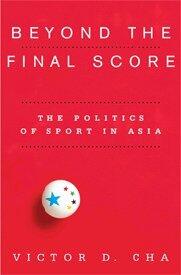
His new book Beyond the Final Score: The Politics of Sport in Asia (Columbia University Press, 2008) looks at the politics of sports and the Beijing Olympics. Cha holds a BA and Ph.D. from Columbia University, MA from University of Oxford.
This event is sponsored by the Pantech Group in Korea.
Philippines Conference Room
Victor D. Cha
Director of Asian Studies
Speaker
Georgetown University
Seminars
U.S. Policy in Korea after the elections
News Type
Commentary
Date
Paragraphs
In the waning days of the Clinton administration, the momentum for engagement with North Korea, building from the earlier agreement to freeze its nuclear program and a moratorium on ballistic missile launches, accelerated to the brink of full-scale normalization of relations. The U.S. presidential election in 2000 brought that diplomatic freight train to an abrupt halt.
Will the 2008 election bring yet another dramatic change in U.S. Korea policy?
The answer, based on the published positions of the two candidates and conversations with his senior Asia policy advisors, seems to be NO. There are important differences of emphasis in the approaches of both candidates, which I will discuss, but the bottom line is that both men are likely to pick up where President George W. Bush leaves off.
There are two fundamental reasons why U.S. policy toward Korea – and more broadly in Northeast Asia --- will not change dramatically. First, Asia will continue to suffer from a deficit of presidential attention. The arc of crisis – Iraq, Iran, Afghanistan and Pakistan -- will necessarily still command, as it has for almost 8 years, the attention of senior American policymakers. Even that will have to fight for space with the growing global financial crisis.
Second, both candidates agree on the broad outlines of an Asia policy, one that does not depart radically from the one pursued by the Bush administration. As a senior McCain advisor put it to me: “There is not a huge difference on Asia between Obama and McCain.” Privately, Obama advisors also stress that there will not be a huge break with current U.S. policy.
Both campaigns are critical of the lack of attention paid to Asia and the need for the U.S. to be more proactive to strengthen existing alliances and to join the discussion about new forms of regional integration. Both candidates support the need to engage, rather than confront, a rising China. Both men call for the U.S. to pay more attention to management of our alliances with South Korea and Japan. And both Obama and McCain support the North Korean nuclear negotiations carried out by President Bush in his second term, although privately both campaigns are critical of the deal that has been struck.
If there are differences, they can be found in two areas – support for the Korea US free trade agreement and the willingness to directly engage North Korea and its regime.
Free Trade and the KORUS Free Trade Agreement
If there is one single issue regarding Korea on which Senators Obama and McCain clearly part company, it is the future of the free trade agreement negotiated with the Bush administration. Senator McCain is an unambiguous supporter of the FTA, not only as a trade pact but also as a symbol of the broader partnership between the U.S. and South Korea.
Senator Obama also supports free trade but is critical of this and other agreements, such as NAFTA, for failing to ensure market access and the protection of labor rights and the environment. Privately, Obama’s advisors understand the symbolic value of the FTA to the alliance, but they plan to ask Seoul to reopen talks on market access, particularly for the automobile industry. Their position reflects the importance of trade unions and the role of some key states – Michigan most of all – in the election outcome. Even if Obama loses, the Democrats are likely to strengthen their control of Congress, making approval of the FTA difficult under any circumstances.
Negotiating with Pyongyang: Back to the Future?
Both the McCain and the Obama camps publicly back the Bush administration’s negotiations with Pyongyang, but both are also privately critical, though for different reasons.
The Obama team is heavily populated by former Clinton administration officials who were involved in the negotiation of the 1994 Agreed Framework with North Korea. They see the current deal as an inevitably flawed bargain, the result of the refusal of the administration to seriously engage the North directly until it had crossed the red line of nuclear weapons testing. With little leverage, not least the credible threat of coercion, we are left with containing the plutonium production of the North, and hoping that a grand bargain down the line can yield full denuclearization.
Obama recognizes the need for “close coordination and consultation with our allies South Korea and Japan,” as one of his advisors put it in a published interview, and supports continuing the Six Party Talks. But the emphasis is clearly on direct talks with North Korea, though conducted with a principled toughness that the Bush administration has not exhibited in its final months in office.
That readiness to conduct direct negotiations, up to conclusion of a peace treaty with Pyongyang and full normalization of relations, is where the two candidates part company. The Republican nominee is clearly uncomfortable with direct dealings with Pyongyang – his position resembles the first term of the Bush administration more than the second in that respect. His advisory team combines realists, mainly veterans of the Powell State Department, and neoconservatives, reproducing the divisions that thwarted coherent policy-making in that first Bush term.
In the end, the views of McCain himself may be decisive. He was an opponent of the Agreed Framework, an agreement he characterized as “appeasement.” He maintained this stance into the Bush administration, vocally opposing any direct negotiations with the North Koreans as long as they maintained the right to develop nuclear weapons. He has been critical as well of the main deal struck by President Bush in his second term – “I didn’t believe in the KEDO agreement that President Clinton made and I don’t believe in this one,” he said in January.
McCain, according to an interview with one of his senior Asia advisors, would “seek a return to the core principles of denuclearization known as CVID, or complete, verifiable, irreversible, dismantlement.” The demand for CVID was the watchword of the Bush administration’s earlier stance, in effect a call for Pyongyang to abandon its nuclear option as a first step. But that demand was dropped after Pyongyang called the Bush administration’s bluff by exploding a nuclear device in October, 2006.
McCain also wants to “broaden our policy goals related to North Korea” beyond nuclear issues, to including human rights, economic and political reform, and reduction of the conventional military threat from North Korea, goals also set out at the outset of the Bush administration. McCain has repeatedly referred to the North Korean regime, and its leader, Kim Jong Il, in harsh terms and embraced a policy of “rogue state rollback.”
Realistically, however, McCain offers no credible, practical means to reach these goals. He reserves, as does Obama, the option to use force. But concretely he comes back to the strategy of pressing China to bring North Korea to heel. Unfortunately the Bush administration also relied on China and found there were clear limits to Beijing’s ability to control or its willingness to press its North Korean client. In the end, McCain may have little option but to follow Bush to Pyongyang’s doorstep.
One Caveat – Events Matter
Despite the powerful impetus to maintain continuity in U.S. policy toward the Korean peninsula, no matter whom is elected in November, there is one important caveat to keep in mind – events matter. Unplanned, and unforeseen, developments could force Korea to the top of the President’s agenda. Already we have seen the reports of Kim Jong Il’s serious illness trigger fresh concerns about a possible collapse of political authority in Pyongyang. A simultaneous rush by China, South Korea and the United States to fill a vacuum of power in the North could upset all calculations. For South Korea, and President Lee Myung-bak, it is always best to prepare for the unexpected.
Hero Image

All News button
1
Divided Memories: History Textbooks and the War in Asia
An international conference will be convened on February 11-12, 2008 at Stanford University at the Walter H. Shorenstein Asia-Pacific Research Center to examine the role of high school history textbooks in the formation of historical memory regarding the events of the Sino-Japanese and Pacific wars and their outcome. Shorenstein APARC researchers have looked at the treatment of those events, in the period from 1931-1951, in the most widely circulated high school history textbooks (national and world history), including those used in college preparatory course, in China, Japan, South Korea, Taiwan and the United States. Translations of those textbooks into English have been prepared for use by historians and other scholars, allowing a comparative study of how historical memory is being shaped in the school systems.
The conference will have three main goals: first it will ask historians to comment and analyze the treatment of history in those textbooks, comparing it to accepted historical understanding. Second, it will look at the process of textbook writing and revision – in some cases (China and Taiwan particularly), the main textbooks have undergone significant revision recently and our data set includes the old and new versions of history textbooks in use in schools. Third, the conference will examine how the formation of divided memories impacts international relations in East Asia and between the United States and Asia and how this effort to understand this process may aid the goal of reconciliation.
The proceedings of this conference will be the basis of an edited volume, including comparative excerpts from the textbooks themselves, to be published by an academic press in the United States and hopefully in Asia as well. Participants will be asked to prepare a written paper for presentation and for publication.
Daniel and Nancy Okimoto Conference Room
Gi-Wook Shin
Shorenstein APARC
Encina Hall E301
616 Jane Stanford Way
Stanford, CA 94305-6055
0
gwshin@stanford.edu
Senior Fellow at the Freeman Spogli Institute for International Studies
Professor of Sociology
William J. Perry Professor of Contemporary Korea
Professor, by Courtesy, of East Asian Languages & Cultures
Gi-Wook Shin is the William J. Perry Professor of Contemporary Korea in the Department of Sociology, senior fellow at the Freeman Spogli Institute for International Studies, and the founding director of the Korea Program at the Walter H. Shorenstein Asia-Pacific Research Center (APARC) since 2001, all at Stanford University. In May 2024, Shin also launched the Taiwan Program at APARC. He served as director of APARC for two decades (2005-2025). As a historical-comparative and political sociologist, his research has concentrated on social movements, nationalism, development, democracy, migration, and international relations.
In Summer 2023, Shin launched the Stanford Next Asia Policy Lab (SNAPL), which is a new research initiative committed to addressing emergent social, cultural, economic, and political challenges in Asia. Across four research themes– “Talent Flows and Development,” “Nationalism and Racism,” “U.S.-Asia Relations,” and “Democratic Crisis and Reform”–the lab brings scholars and students to produce interdisciplinary, problem-oriented, policy-relevant, and comparative studies and publications. Shin’s latest book, The Four Talent Giants, a comparative study of talent strategies of Japan, Australia, China, and India to be published by Stanford University Press in the summer of 2025, is an outcome of SNAPL.
Shin is also the author/editor of twenty-seven books and numerous articles. His books include The Four Talent Giants: National Strategies for Human Resource Development Across Japan, Australia, China, and India (2025); Korean Democracy in Crisis: The Threat of Illiberalism, Populism, and Polarization (2022); The North Korean Conundrum: Balancing Human Rights and Nuclear Security (2021); Superficial Korea (2017); Divergent Memories: Opinion Leaders and the Asia-Pacific War (2016); Global Talent: Skilled Labor as Social Capital in Korea (2015); Criminality, Collaboration, and Reconciliation: Europe and Asia Confronts the Memory of World War II (2014); New Challenges for Maturing Democracies in Korea and Taiwan (2014); History Textbooks and the Wars in Asia: Divided Memories (2011); South Korean Social Movements: From Democracy to Civil Society (2011); One Alliance, Two Lenses: U.S.-Korea Relations in a New Era (2010); Cross Currents: Regionalism and Nationalism in Northeast Asia (2007); and Ethnic Nationalism in Korea: Genealogy, Politics, and Legacy (2006). Due to the wide popularity of his publications, many have been translated and distributed to Korean audiences. His articles have appeared in academic and policy journals, including American Journal of Sociology, World Development, Comparative Studies in Society and History, Political Science Quarterly, Journal of Asian Studies, Comparative Education, International Sociology, Nations and Nationalism, Pacific Affairs, Asian Survey, Journal of Democracy, and Foreign Affairs.
Shin is not only the recipient of numerous grants and fellowships, but also continues to actively raise funds for Korean/Asian studies at Stanford. He gives frequent lectures and seminars on topics ranging from Korean nationalism and politics to Korea's foreign relations, historical reconciliation in Northeast Asia, and talent strategies. He serves on councils and advisory boards in the United States and South Korea and promotes policy dialogue between the two allies. He regularly writes op-eds and gives interviews to the media in both Korean and English.
Before joining Stanford in 2001, Shin taught at the University of Iowa (1991-94) and the University of California, Los Angeles (1994-2001). After receiving his BA from Yonsei University in Korea, he was awarded his MA and PhD from the University of Washington in 1991.
Stanford Next Asia Policy Lab (SNAPL)
Explore SNAPLDirector, Korea Program at the Walter H. Shorenstein Asia-Pacific Research Center (APARC)
Director, Stanford Next Asia Policy Lab at APARC
Hide publication sections
Off
Mark Peattie
0
Visiting Scholar
Mark R. Peattie was a visiting scholar at the Walter H. Shorenstein Asia-Pacific Research Center and a research fellow at the Hoover Institution. He was a professor of history emeritus at the University of Massachusetts at Boston, and was the John A. Burns Distinguished Visiting Professor of History at the University of Hawai'i in 1995.
Peattie was a specialist in modern Japanese military, naval, and imperial history. His current research focused on the historical context of Japanese-Southeast Asian relations. He was also directing a pioneering and international collaborative effort of the military history of the study of the Sino-Japanese war of 1937–45 being sponsored by the Asia Center at Harvard University.
He is editor, with Peter Duus and Ramon H. Myers, of the Japanese Wartime Empire, 1937–1945 (Princeton University Press, 1996). Peattie is the author of the Japanese Colonial Empire: The Vicissitudes of Its Fifty-Year History (Tokyo: Yomiuri Press, 1996).
He coauthored, with David Evans, Kaigun: Strategy, Tactics and Technology in the Imperial Japanese Navy, 1887–1941 (Naval Institute Press, 1997), winner of a 1999 Distinguished Book Award of the Society for Military History. A sequel, Sunburst: The Rise of Japanese Naval Air Power, 1909–1941, was published by the Naval Institute Press in 2001.
Peattie is also the author of the monograph A Historian Looks at the Pacific War (Hoover Essays in Public Policy, 1995).
Peattie was a reader for Columbia University, University of California, University of Hawai'i, Stanford University, University of Michigan, and U.S. Naval Institute Presses.
Peattie frequently served as lecturer in the Stanford University Continuing Studies Program and in the Stanford Alumni Travel Program.
He was named an associate in research at the Edwin O. Reischauer Institute of Japanese Studies at Harvard University from 1982 to 1993.
He was a member of the U.S. Information Agency from 1955 to 1968 with service in Cambodia (1955–57), in Japan (Sendai, Tokyo, Kyoto, 1958–67), and in Washington, D.C. (1967–68).
Peattie held a PhD in Japanese history from Princeton University.
Li Weike
Director, History Department
Speaker
People's Education Press, Beijing
Hsin-Huan Michael Hsaio
Center for Asia-Pacific Area Studies
Speaker
Academica Sinica
Peter Duus
Department of History
Speaker
Stanford University
Tohmatsu Haruo
Speaker
Tamagawa University
Chung Jae-Jung
Speaker
City University of Seoul
Mitani Hiroshi
Speaker
Tokyo University
Chen Qi
Speaker
People's Education Publishing House, China
Chou Liang-kai
Speaker
Feng Chia University, Taiwan
Kim Do-Hyung
Speaker
Yonsei University
Bert Bower
Speaker
Teachers' Curriculum Institute, California
Daniel C. Sneider
Stanford University
Encina Hall, Room E301
Stanford, CA 94305-6055
0
dsneider@stanford.edu
Lecturer in International Policy at the Ford Dorsey Master’s in International Policy
Daniel C. Sneider is a lecturer in international policy at Stanford's Ford Dorsey Master’s in International Policy and a lecturer in East Asian Studies at Stanford. His own research is focused on current U.S. foreign and national security policy in Asia and on the foreign policy of Japan and Korea. Since 2017, he has been based partly in Tokyo as a Visiting Researcher at the Canon Institute for Global Studies, where he is working on a diplomatic history of the creation and management of the U.S. security alliances with Japan and South Korea during the Cold War. Sneider contributes regularly to the leading Japanese publication Toyo Keizai as well as to the Nelson Report on Asia policy issues.
Sneider is the former Associate Director for Research at the Walter H. Shorenstein Asia-Pacific Research Center at Stanford. At Shorenstein APARC, Sneider directed the center’s Divided Memories and Reconciliation project, a comparative study of the formation of wartime historical memory in East Asia. He is the co-author of a book on wartime memory and elite opinion, Divergent Memories, from Stanford University Press. He is the co-editor, with Dr. Gi-Wook Shin, of Divided Memories: History Textbooks and the Wars in Asia, from Routledge and of Confronting Memories of World War II: European and Asian Legacies, from University of Washington Press.
Sneider was named a National Asia Research Fellow by the Woodrow Wilson International Center for Scholars and the National Bureau of Asian Research in 2010. He is the co-editor of Cross Currents: Regionalism and Nationalism in Northeast Asia, Shorenstein APARC, distributed by Brookings Institution Press, 2007; of First Drafts of Korea: The U.S. Media and Perceptions of the Last Cold War Frontier, 2009; as well as of Does South Asia Exist?: Prospects for Regional Integration, 2010. Sneider’s path-breaking study “The New Asianism: Japanese Foreign Policy under the Democratic Party of Japan” appeared in the July 2011 issue of Asia Policy. He has also contributed to other volumes, including “Strategic Abandonment: Alliance Relations in Northeast Asia in the Post-Iraq Era” in Towards Sustainable Economic and Security Relations in East Asia: U.S. and ROK Policy Options, Korea Economic Institute, 2008; “The History and Meaning of Denuclearization,” in William H. Overholt, editor, North Korea: Peace? Nuclear War?, Harvard Kennedy School of Government, 2019; and “Evolution or new Doctrine? Japanese security policy in the era of collective self-defense,” in James D.J. Brown and Jeff Kingston, eds, Japan’s Foreign Relations in Asia, Routledge, December 2017.
Sneider’s writings have appeared in many publications, including the Washington Post, the New York Times, Slate, Foreign Policy, the New Republic, National Review, the Far Eastern Economic Review, the Oriental Economist, Newsweek, Time, the International Herald Tribune, the Financial Times, and Yale Global. He is frequently cited in such publications.
Prior to coming to Stanford, Sneider was a long-time foreign correspondent. His twice-weekly column for the San Jose Mercury News looking at international issues and national security from a West Coast perspective was syndicated nationally on the Knight Ridder Tribune wire service. Previously, Sneider served as national/foreign editor of the Mercury News. From 1990 to 1994, he was the Moscow bureau chief of the Christian Science Monitor, covering the end of Soviet Communism and the collapse of the Soviet Union. From 1985 to 1990, he was Tokyo correspondent for the Monitor, covering Japan and Korea. Prior to that he was a correspondent in India, covering South and Southeast Asia. He also wrote widely on defense issues, including as a contributor and correspondent for Defense News, the national defense weekly.
Sneider has a BA in East Asian history from Columbia University and an MPA from the John F. Kennedy School of Government at Harvard University.
Daniel Chirot
Speaker
University of Washington
Park Soon-Won
Speaker
George Mason University
Gary Mukai
616 Jane Stanford Way
Encina Hall, C331
Stanford, CA 94305-6060
0
gmukai@stanford.edu
gary_mukai.jpeg
EdD
Dr. Gary Mukai is Director of the Stanford Program on International and Cross-Cultural Education (SPICE). Prior to joining SPICE in 1988, he was a teacher in Gunma Prefecture, Japan, and in California public schools for ten years.
Gary’s academic interests include curriculum and instruction, educational equity, and teacher professional development. He received a bachelor of arts degree in psychology from U.C. Berkeley; a multiple subjects teaching credential from the Black, Asian, Chicano Urban Program, U.C. Berkeley’s Graduate School of Education; a master of arts in international comparative education from Stanford University’s Graduate School of Education; and a doctorate of education from the Leadership in Educational Equity Program, U.C. Berkeley’s Graduate School of Education.
In addition to curricular publications for SPICE, Gary has also written for other publishers, including Newsweek, Calliope Magazine, Media & Methods: Education Products, Technologies & Programs for Schools and Universities, Social Studies Review, Asia Alive, Education About Asia, ACCESS Journal: Information on Global, International, and Foreign Language Education, San Jose Mercury News, and ERIC Clearinghouse for Social Studies; and organizations, including NBC New York, the Silk Road Project at Harvard University, the Japanese American National Memorial to Patriotism in Washington, DC, the Center for Asian American Media in San Francisco, the Laurasian Institution in Seattle, the Japanese American National Museum in Los Angeles, and the Asia Society in New York.
He has developed teacher guides for films such as The Road to Beijing (a film on the Beijing Olympics narrated by Yo-Yo Ma and co-produced by SPICE and the Silk Road Project), Nuclear Tipping Point (a film developed by the Nuclear Security Project featuring former Secretary of State George P. Shultz, former Secretary of Defense William J. Perry, former Secretary of State Henry A. Kissinger, former Senator Sam Nunn, and former Secretary of State Colin L. Powell), Days of Waiting: The Life & Art of Estelle Ishigo (an Academy Award-winning film about Japanese-American internment by Steven Okazaki), Doubles: Japan and America’s Intercultural Children (a film by Regge Life), A State of Mind (a film on North Korea by Daniel Gordon), Wings of Defeat (a film about kamikaze pilots by Risa Morimoto), Makiko’s New World (a film on life in Meiji Japan by David W. Plath), Diamonds in the Rough: Baseball and Japanese-American Internment (a film by Kerry Y. Nakagawa), Uncommon Courage: Patriotism and Civil Liberties (a film about Japanese Americans in the Military Intelligence Service during World War II by Gayle Yamada), Citizen Tanouye (a film about a Medal of Honor recipient during World War II by Robert Horsting), Mrs. Judo (a film about 10th degree black belt Keiko Fukuda by Yuriko Gamo Romer), and Live Your Dream: The Taylor Anderson Story (a film by Regge Life about a woman who lost her life in the 2011 Great East Japan Earthquake and Tsunami).
He has conducted numerous professional development seminars nationally (including extensive work with the Chicago Public Schools, Hawaii Department of Education, New York City Department of Education, and school districts in the San Francisco Bay Area and Los Angeles County) and internationally (including in China, France, Indonesia, Japan, Korea, Laos, Malaysia, Myanmar, the Philippines, Singapore, Spain, Thailand, and Turkey).
In 1997, Gary was the first regular recipient of the Franklin Buchanan Prize from the Association for Asian Studies, awarded annually to honor an outstanding curriculum publication on Asia at any educational level, elementary through university. In 2004, SPICE received the Foreign Minister’s Commendation from the Japanese government for its promotion of Japanese studies in schools; and Gary received recognition from the Fresno County Office of Education, California, for his work with students of Fresno County. In 2007, he was the recipient of the Foreign Minister’s Commendation from the Japanese government for the promotion of mutual understanding between Japan and the United States, especially in the field of education. At the invitation of the Consulate General of the Republic of Korea, San Francisco, Gary participated in the Republic of Korea-sponsored 2010 Revisit Korea Program, which commemorated the 60th anniversary of the beginning of the Korean War. At the invitation of the Nanjing Foreign Languages School, China, he participated in an international educational forum in 2013 that commemorated the 50th anniversary of NFLS’s founding. In 2015 he received the Stanford Alumni Award from the Asian American Activities Center Advisory Board, and in 2017 he was awarded the Alumni Excellence in Education Award by the Stanford Graduate School of Education. Most recently, the government of Japan named him a recipient of the Order of the Rising Sun, Gold and Silver Rays.
He is an editorial board member of the journal, Education About Asia; advisory board member for Asian Educational Media Services, University of Illinois at Urbana-Champaign; board member of the Japan Exchange and Teaching Alumni Association of Northern California; and selection committee member of the Elgin Heinz Outstanding Teacher Award, U.S.–Japan Foundation.
Director
Hide publication sections
Off
Conferences
Taiwan and China: Exploring the Limits of Economic Integration
-
This is a CDDRL seminar within our Democracy in Taiwan Program.
Cliff Tan is Consulting Professor and formerly Visiting Scholar at the Stanford Center for International Development. At SCID, Mr. Tan is writing a book on financial market retrospectives of the Asian financial crisis, how those might or might not differ from well-recorded views of policymakers and academics, and if they differ, whether they offer lessons for the financial market crises of today. Mr. Tan is also a founding partner in a new charity that will partly invest in global microfinance, and occasionally consults to hedge funds
Prior to SCID, Mr. Tan headed up local markets strategy in fixed income and foreign exchange for Citigroup in Asia. Over 19 years of research on Asia and Japan, Mr. Tan worked as FX/Interest Rate Strategist and co-head of Asian Economics at Warburg Dillon Read (now UBS), Japan/Asia Economist at Wellington Management Company, LLC, and proprietary trading/credit risk economist at Bankers Trust Company. Mr. Tan has been voted a top five currency strategist several times by Asiamoney (including a #1 ranking in 2003) and has also been cited for work as both an economist and strategist by The Asset magazine.
Before entering financial markets, Mr. Tan covered Greater China at the US Federal Reserve Board, was a Lecturer at the University of Hong Kong and was a Visiting Fellow at the Korea Development Institute.
Mr. Tan received M.Phil. and M.A. degrees in Economics from Yale University, an A.M. in East Asian Regional Studies from Harvard University and an A.B. (magna cum laude) in Journalism and East Asian Studies from the University of Southern California.
Philippines Conference Room
Cliff Tan
Consulting Professor
Speaker
Stanford Institute for Economic Policy Research (SIEPR)
Seminars
Munkh-Erdene Lkhamsuren
Stanford Humanities Center
424 Santa Teresa St, #212
Stanford, CA 94305-4015
0
Humanities and International Studies (HIS) Fellow
Munkh-Erdene Lkhamsuren is a Professor at the Department of Social and Cultural Anthropology, National University of Mongolia. His PhD is from Hokkaido University, Japan. He is especially interested in collective identity, ethnicity, nation and nationalism.
Project Summary:
“Enmity of Independency: Ethnic and National Identities in Mongolia” explores the dynamics of the emergence, formation and continuity of Mongolian national, ethnic, and sub-ethnic identities.
Visiting Faculty
The New Japan: Recent Transformations in Japanese Business Strategies
-
Professor Schaede's seminar will focus on the themes of her new book, Choose and Focus: Japanese Business Strategies for the 21st Century (Cornell UP, 2008). She will argue that Japan has undergone a strategic inflection point so fundamental that relying on what we used to know about Japan from the 1980s is insufficient to understand the new Japanese competitiveness.
In addition to analyzing this recent shift away from diversification to focused, lean organizations among Japan's leading companies, Professor Schaede will also discuss the newly emerging takeover market in Japan, as well as the changing role of venture capital and startups in Japan's newly emerging open system of innovation.
Ulrike Schaede is Professor of Japanese Business at UC San Diego's School of International Relations and Pacific Studies. Schaede has written extensively on business organization and the financial system in Japan. Her recent working papers discuss changes in business groups and Japan's main bank system; investment funds, institutional investors and hostile takeovers; legal reform and "revitalization", as well as changing employment strategies and non-regular work. She is also an investigator for SPRIE's Japanese Entrepreneurship project.
Daniel and Nancy Okimoto Conference Room
Ulrike Schaede
Professor of Japanese Business
Speaker
UC San Diego's School of International Relations and Pacific Studies
Seminars
Asian Regional Cooperation and Global Reform after the Financial Crisis
Paragraphs
The world economy is entering a period of instability unseen since the 1930s, with important consequences for international peace and security. Banking crises increase in frequency with global capital flows, and such flows have recently exceeded the previous peak attained in the early twentieth century.
Furthermore, the international financial system faces new, destabilizing challenges. The Japanese-style economic crisis has called into doubt the efficacy of conventional economic policy tools. In addition, the economic balance of power is shifting decisively away from the United States and toward broader East Asia. In the past, such power transitions have proved destabilizing to the world economy and international peace.
Existing international institutions and arrangements are ill-equipped to handle these monumental shifts, and international cooperation within the G-20 has thus far failed to produce effective solutions. This article by Phillip Lipscy considers innovative reforms.
All Publications button
1
Publication Type
Journal Articles
Publication Date
Journal Publisher
Center for Strategic and International Studies
External Purchase Links
Stanford Project on Japanese Entrepreneurship (STAJE)
| description | structure & personnel |
The Stanford Project on Japanese Entrepreneurship (STAJE) relocates to Stanford Technology Ventures Program (STVP) of Stanford School of Engineering, from September 1, 2013.