Authors
News Type
Blogs
Date
Paragraphs

At Eikei University of Hiroshima (EUH), with its academic mission to contribute to society through engaging with timely and relevant societal issues, explore practical and innovative solutions to these issues, and foster a cadre of young potential change-makers, we are exposed to a wide range of knowledge- and skill-based courses that harness the competencies needed for the realities waiting outside the school. The Social Entrepreneurship – Human-Centered Design for Sustainability and Impact course, developed by SPICE and instructed by Dr. Mariko Yang-Yoshihara, is an excellent intensive program that amplifies and reinforces the school’s focus and goals while providing students with a different perspective on comprehending the socioeconomic world and its stakeholders through understanding oneself.

This course directed us to explore how a human-centered approach can address sustainability challenges within communities. We gained highly valuable skills and insights into social innovation through intensive lectures, interactive discussions, and hands-on workshops. The hybrid learning format allowed us to engage with our three special guest speakers, who are globally active contributors to the field of social entrepreneurship. At the same time, the later sessions immersed us in fieldwork with our assigned local Design Thinking Partners (DTPs)—professionals and entrepreneurs dedicated to creating positive impact in the Hiroshima/Setouchi region. This combination of global and local perspectives, along with the support of our student assistants (SAs), made the entire learning journey vibrant, engaging, and memorable.

One of the takeaways I still carry are prompt questions that were asked of us even before the course started: What drives you? What is your belief and purpose? What is your ‘why’? For me, this self-examination laid the foundation for understanding the human-centered approach. I realized that entrepreneurship is never about the hope of making profits, but about identifying what society truly needs and responding to it with a purpose—the whys that give direction to the work we do, the force that pushes us forward, shaping the impact we aim to create. Additionally, through our DTPs, I also learned that human-centered design revolves around uncovering ‘unmet needs’ rather than simply identifying or restating explicit goals. This realization not only enriched the outcomes and the overall experience of our fieldwork but, more importantly, recalibrated the angle at which I see and engage with the world around me with empathy. 

Image
students giving a presentation in front of a screen


What made this 10-session intensive course special is the way it catered to the needs of all students. The SPICE course invited a diverse group of students and student assistants from across Japan (Hiroshima, Kumamoto, Osaka, Shizuoka, and Tokushima) and the world (India, Liberia, Mexico, Philippines, Senegal, Slovakia, and Vietnam). The course was carried out in English, but some teams interviewed the DTPs in their native language, Japanese. Every student was asked to create a safe and inclusive space to learn in the best way possible, and this encouraged each team to choose the language that ensured richer discussion outputs. This aided better communication for all; however, it posed a challenge to me since I was assigned to a team with varied language backgrounds and, by default, I had to serve a role of a mediator. With a short background in learning the native language, I was intimidated and worried about not being able to contribute meaningfully.

Nonetheless, with the encouragement of Mariko-sensei and the support of my teammates, this challenge turned into one of my proudest breakthroughs since coming to Eikei. I gradually grew more confident using Japanese, overcame a long-standing insecurity, stepped out of my comfort zone, and rekindled the power of teamwork, persistence, and appreciation. Looking back, I came to realize that this was an unmet need of mine—at the heart of what human-centered design thinking strives to uncover. With the trust I received from Mariko-sensei, what initially felt like a source of anxiety transformed into one of the most rewarding aspects of this intensive course.

While I’ve gained many insights, the most meaningful takeaway from this intensive course is the new lens through which I now see both the world and myself. It reminded me of my core, enlightened me to the potential of this core, and motivated me to act on it. At present, I apply these lessons by helping domestic students through student assistant roles in EUH and supporting my co-international students by addressing their unrealized needs through various initiatives as the vice-president of the New in Japan Club 2025. SPICE’s Social Entrepreneurship Course gave me more than what the formal learning and the lessons within the syllabus could offer, leaving me with the resolve to keep turning empathy into action—starting with the community I belong to.


Editor’s Note: SPICE is grateful to Eikei University of Hiroshima for their partnership in making this course possible. We also thank the course’s guest speakers, student assistants, and Design Thinking Partners—two of whom are alumni of the Stanford–Hiroshima Collaborative Program on Entrepreneurship (SHCPE), SPICE’s course for MBA students at Hiroshima Business Management School. The in-line photo was taken during Kayle's final presentation on “solution and prototype.” Photo Credit: SPICE 


SPICE's course on Social Entrepreneurship with Eikei University of Hiroshima is one of SPICE’s local student programs in Japan.

To stay informed of SPICE news, join our email list and follow us on Facebook, X, and Instagram.

Read More

group photo of students and professors in a conference room
Blogs

Reflections on Dr. Mariko Yang-Yoshihara’s Lecture on STEAM Education

Ryoya Shinozaki, a doctoral researcher at the University of Tokyo’s Graduate School of Education, reflects on his experience in the SPICE-linked intensive seminar in the San Francisco Bay Area.
Reflections on Dr. Mariko Yang-Yoshihara’s Lecture on STEAM Education
Hero Image
All News button
1
Subtitle

Renz Kayle Roble Arayan, an undergraduate student at Eikei University of Hiroshima, reflects on his experience in the SPICE course, Social Entrepreneurship.

Date Label
Authors
Noa Ronkin
News Type
News
Date
Paragraphs

On October 21, 2025, Ms. Sanae Takaichi, a hardline conservative, became the first female Prime Minister of Japan, marking a historic moment for the country, which has one of the worst records among the world's developed democracies for gender equality. Yet, Takaichi's views on empowering women are complex, and she steps into office at a moment of internal party weakness and intense domestic and regional strategic pressures. On October 28, she will welcome President Trump to Tokyo, where the two leaders will hold a summit meeting.

In the following video explainer, Stanford sociologist Kiyoteru Tsutsui, the Henri H. and Tomoye Takahashi Professor and Senior Fellow in Japanese Studies at the Shorenstein Asia-Pacific Research Center (APARC) and the director of APARC and its Japan Program, discusses Takaichi’s background and rise to power, her cabinet choices, and what they signal for Japan's future. Watch:

Video: Michael Breger


Subscribe to APARC newsletters to receive our experts' analysis and commentary >


In the Media


On October 28, 2025, on the heels of the summit meeting of Prime Minister Takaichi and President Trump, Tsutsui joined Scott Tong, host of WBUR's Here & Now, to discuss Takaichi's rise to power and what's next for Japan. Listen:

Read More

Tasneem Khalil delivers remarks at a lectern.
News

Shorenstein Journalism Award Honors Netra News, Spotlights Public Interest Reporting Advancing Democracy and Accountability in Bangladesh

The 2025 Shorenstein Journalism Award celebrated Netra News, Bangladesh’s premier independent media outlet, at a celebration featuring Tasneem Khalil, its founding editor-in-chief, who discussed its mission and joined a panel of experts in considering the prospects for democracy in Bangladesh.
Shorenstein Journalism Award Honors Netra News, Spotlights Public Interest Reporting Advancing Democracy and Accountability in Bangladesh
Gita Wirjawan presents his book What It Takes - Southeast Asia
News

How Southeast Asia Can Become a Leader on the World Stage

In his new book, What It Takes: Southeast Asia, Gita Wirjawan examines how Southeast Asia can unlock its untapped potential by leveraging its massive economic and human scale to claim its place on the global stage.
How Southeast Asia Can Become a Leader on the World Stage
Colonade at Stanford Main Quad with text: call for applications for APARC's 2026-28 fellowships.
News

Applications Open for 2026-2028 Fellowships at Stanford's Asia-Pacific Research Center

The center offers multiple fellowships in Asian studies to begin in fall quarter 2026. These include a postdoctoral fellowship on political, economic, or social change in the Asia-Pacific region, postdoctoral fellowships focused on Asia health policy and contemporary Japan, postdoctoral fellowships and visiting fellow positions with the Stanford Next Asia Policy Lab, and a visiting fellow position on contemporary Taiwan.
Applications Open for 2026-2028 Fellowships at Stanford's Asia-Pacific Research Center
All News button
1
Subtitle

Stanford sociologist Kiyoteru Tsutsui, director of the Shorenstein Asia-Pacific Research Center and the Japan Program, explains the path to power of Japan’s first female prime minister and what her leadership means for the country's future.

Date Label
Authors
News Type
Blogs
Date
Paragraphs

The following reflection is a guest post written by Millie Gan, an alum of the Spring 2025 Stanford e-Entrepreneurship Japan Program. Earlier this year, Millie launched Teenage Business Contest Japan, a platform for encouraging social entrepreneurship among teens.

Japan is a place people love to visit, featuring bullet trains, temples, and sushi. Up close, I saw shrinking rural towns, an aging population, and customs fading from daily life. I wanted to do something that wasn’t just talk. The questions that kept coming up were: Who will have the creative ideas necessary to address these issues? And how can we best encourage and empower them?

This summer in Tokyo, the Teenage Business Contest Japan (TBCJ) 2025 invited high school students from across the country to develop business ideas that would help revitalize Japan’s communities. What started as a project organized by students evolved into a nationwide platform where young people could address problems that are typically left to politicians and businesses. As a participant in the Stanford e-Entrepreneurship Japan (SeEJ) program, I planned and built TBCJ in parallel with my SPICE coursework, applying classroom concepts—such as problem framing, rapid testing, and iteration—to real-world challenges.

SeEJ shaped the way I worked: start small, learn fast, and ship. I taught myself Python and JavaScript for websites and games, but for the contest I needed a different kind of tool. I used the Kotae.ai platform to launch TB-Chan, an AI helper on our website. Building it took minutes; training it took discipline. Every morning, I updated TB-Chan with new information—rules, schedules, government datasets, and simple “nudge” prompts—so students, media, and sponsors got instant, consistent answers. Without TB-Chan, we couldn’t have handled the volume of questions.

Let’s be the strikers. Take the shot. Others will follow.

I was very thrilled that my SeEJ instructor and mentor, Dr. Makiko Hirata, presented the opening speech during the contest. Her message that young people can solve even the most complex challenges if they are given the chance set the tone for the day and encouraged everyone who was there. Getting TBCJ off the ground wasn’t glamorous. Working with government agencies entailed months of preparation; demonstrating impact to institutions demanded patience; securing funding from major companies required persistence. In the end, we raised over ¥3 million and built credibility the old-fashioned way: by delivering. The contest drew reporters—including from The Nikkei and the BBC—and more than 300 online articles followed. Importantly, the work didn’t end on stage. After the event, finalists began collaborating across schools and regions, and the University of Tokyo invited all four finalist teams into its WE AT CHALLENGE Business Program for coaching and potential funding.

A story about Japanese soccer guided me throughout. For years, there were few strikers—too risky, too exposed—until kids watched international players who took the shot. The talent was always there; what was missing was the example. On our stage, every finalist was a striker: a student who led without a guarantee. I also had to be one. Organizing a national contest as a teenager meant acting before certainty existed, and letting action create momentum.

That is the link between TBCJ and SPICE: SeEJ is not just theory; it is a bridge to action. It teaches you to listen carefully, test quickly, and improve openly. TBCJ proved that teens aren’t only future leaders—they are present-tense builders. With the right tools, data, mentors, and faith, young people can connect ideas to implementation and turn problems into opportunities.

The message I hope readers take away is simple: let’s be the strikers. Take the shot. Others will follow.

Stanford e-Entrepreneurship Japan is one of several online courses offered by SPICE.

To stay updated on SPICE news, join our email list and follow us on Facebook, X, and Instagram.

Read More

group of people posing in front of a screen
Blogs

Five Years of Impact: Celebrating the Stanford e-Entrepreneurship Japan Program

Alumni from across Japan gather in Tokyo to celebrate SeEJ’s milestone anniversary.
Five Years of Impact: Celebrating the Stanford e-Entrepreneurship Japan Program
a person standing in the snow
Blogs

Solving Tough Problems with Teen Ideas

Millie Gan, a current student of Stanford e-Entrepreneurship Japan, launches Teenage Business Contest Japan (TBCJ), a new social entrepreneurship platform for teens.
Solving Tough Problems with Teen Ideas
All News button
1
Subtitle

Millie Gan, an alum of Stanford e-Entrepreneurship Japan and founder of Teenage Business Contest Japan (TBCJ), reflects on building a platform that empowers teens to use entrepreneurship and innovation to revitalize Japan’s communities.

Date Label
Authors
Natalie Montecino
News Type
Blogs
Date
Paragraphs

On August 2, 2025, Minamata High School once again opened its doors to celebrate the beginning of a new year of the Stanford e-Minamata Program. The familiar sense of anticipation in the auditorium was met with something new as well: the confidence of a community and a program stepping into its second year. If last year’s guiding spirit was resilience and renewal, this year carries the feeling of growth and leadership, an acknowledgment that the seeds planted in 2024 are already beginning to bear fruit.

In his opening remarks, Mayor Toshiharu Takaoka reaffirmed the city’s dedication to supporting young people through this international partnership, while Dr. Gary Mukai, Director of SPICE, offered words of encouragement that were both lighthearted and deeply meaningful to the eager students in the room. Reminding students that mistakes are not just acceptable but essential to learning, Dr. Mukai underscored the courage and curiosity at the heart of leadership development. His message, paired with the mayor’s steady vision, set a hopeful tone for the year ahead.

That spirit was quickly brought to life by Minamata High School students Asuka Umekawa and Yudai Hirata, who delivered their opening remarks in English. Their poise and determination captured the excitement of their classmates, and their eagerness to bridge local and global perspectives embodied the purpose of the program itself. Their words were not only a reflection of their own commitment, but also a reminder of the potential within this year’s entire cohort.

Photo below: Yudai Hirata, August 2, 2025; photo courtesy Minamata High School.

Image
a student in uniform giving a speech at the podium


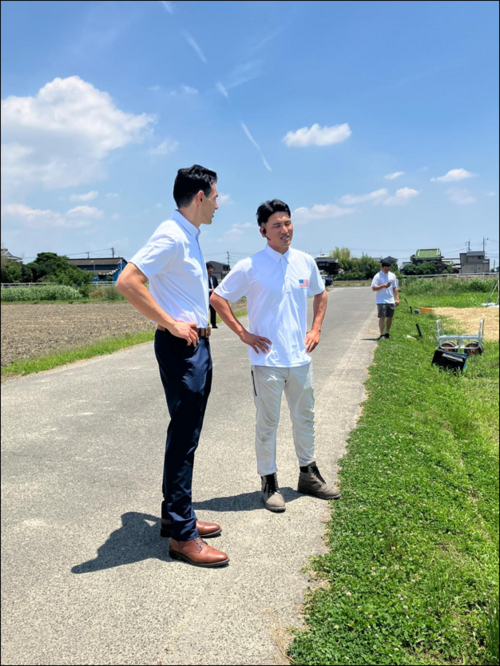
As the program enters its second year, the three themes of environment, emerging technologies, and U.S.–Japan relations remain at the core. Yet, like any thriving endeavor, e-Minamata continues to evolve. This year introduces a new sustainable agriculture module in collaboration with a regenerative farmer in Saga Prefecture, offering students a direct look at innovations shaping the future of Japanese agriculture. Alongside this addition, an expanded roster of guest speakers—some familiar, others new—will broaden the perspectives brought into the classroom.

The 25 students who make up this year’s cohort include first-, second-, and third-year students, creating a dynamic mix of voices and experiences. Their curiosity mirrors that of last year’s inaugural participants, many of whom continue to apply the program’s lessons in their studies, community activities, and even their plans for higher education. The continuity between these groups makes clear that the program is more than a single-year opportunity, it is building a culture of inquiry and leadership that extends beyond the classroom.

Looking ahead, one of the most anticipated elements of this year’s program will be the introduction of a community showcase. Students will work together to identify local challenges and opportunities in Minamata City, and at the end of the year, present their proposed solutions publicly. This new feature not only empowers students to see themselves as problem-solvers, but also invites the broader community to engage with their ideas. In doing so, the showcase promises to deepen the connections between classroom learning and community vitality.

The program’s growth would not be possible without the continued support of many partners. The leadership of Mayor Takaoka and Minamata City Hall remains steadfast. The Minamata Environmental Academia has taken on an expanded role, now guiding much of the program’s coordination. Within Minamata High School, Principal Yasunori Takaki, Vice Principal Fumiko Niibu, and Planning Manager Saho Yagyu continue to provide invaluable support. And while Mr. Hiroki Hara, who was instrumental in the program’s early development, has since relocated to Tokyo, his contributions remain an important part of the program’s foundation.

This year’s opening ceremony revealed the unfolding of student journeys and the steady expansion of a program that is becoming an anchor in Minamata’s ongoing story of renewal. The courage of Asuka and Yudai, the curiosity of their peers, and the unwavering support of local leaders and partners all point to a larger truth: Minamata’s youth are stepping forward not just as students, but as leaders whose perspectives will shape their community and extend far beyond it. The Stanford e-Minamata Program is an invitation to grow, to lead, and to imagine a future rooted in resilience, innovation, and connection.

Stanford e-Minamata is one of SPICE’s local student programs in Japan.

To stay informed of SPICE news, join our email list and follow us on Facebook, X, and Instagram.

Read More

Stanford University front entrance at the oval
Blogs

Top Students in SPICE’s 2024–2025 Regional Programs in Japan Are Honored

Congratulations are extended to the 2024–2025 student honorees from Hiroshima Prefecture, Kagoshima City, Kawasaki City, Kobe City, Oita Prefecture, Tottori Prefecture, Wakayama Prefecture, and Yamaguchi Prefecture.
Top Students in SPICE’s 2024–2025 Regional Programs in Japan Are Honored
group photo of students and instructor
Blogs

Resilience and Renewal: The Official Launch of the Stanford e-Minamata Program

SPICE instructor Natalie Montecino reflects on her recent visit to Minamata City, Kumamoto Prefecture.
Resilience and Renewal: The Official Launch of the Stanford e-Minamata Program
Hero Image
All News button
1
Subtitle

Reflections on the 2025 Opening Ceremony at Minamata High School

Date Label
Authors
Melissa Morgan
News Type
Blogs
Date
Paragraphs

Autumn has arrived at Stanford, and so has a new cohort of students to the Ford Dorsey Master's in International Policy (MIP) program.

MIP is a two-year graduate program administered by the Freeman Spogli Institute for International Studies (FSI) at Encina Hall. While it is structured broadly into four areas of specialization—Cyber Policy and Security (CYBER); Energy, Natural Resources, and the Environment (ENRE); Governance and Development (GOVDEV); and International Security (ISEC)—students are encouraged to personalize their learning according to their interests and goals and engage with scholars from across Stanford's campus. At the end of their studies, students participate in the Policy Change Studio, a unique capstone project designed to give them practical experience with policymaking through in-the-field research and direct collaboration on projects with partner organizations all over the world.

This highly interdisciplinary, hands-on approach to learning is one of the major appeals of the MIP program, which draws applicants from all over the world. This year, the program is welcoming 22 students from thirteen countries and regions, including Haiti, Hong Kong S.A.R., India, Indonesia, Japan, Kenya, Lebanon, Russia, Rwanda, South Korea, Thailand, the United Kingdom, and the United States. They bring to MIP insights from prior experience in academia, military training, and assignments as diplomats and civil servants.

Keep reading to meet six of our new students and learn more about their stories, their goals for the future, and what has them excited to be studying at the MIP program.


Halkano Boru, studying International Security (ISEC); From: Nairobi, Kenya; Fun Facts: Soccer fan, burgeoning beach volleyball player, and tennis-curious
Halkano Boru

I am coming into the MIP program from the world of foreign and defense analysis. I’ve had the opportunity to work for various groups in and out of the government in Washington D.C. looking at the foreign policy and defense strategy of various parts of Africa, the Gulf, and how the U.S. interacts with these regions.

I am particularly interested in a range of complex policy areas focusing on peace and security. My interests include evolving dynamics of drone warfare by great powers and middle powers, use of paramilitary groups by states, and strategies for countering political violence in authoritarian regimes.  

That technology aspect is one reason that drew me here to Stanford and its proximity to the Silicon Valley ecosystem. And, of course, there’s the AI aspect as well. “AI” is the buzzword in everything right now, but I want to know how these new tools and technologies are shaping political violence, democracies, and the global governance structure as a whole. If we don’t understand where the violence is coming from, we can’t understand how to pursue strategies for peace.

Another big appeal of the MIP program was that it allows me to interact with scholars like Francis Fukuyama, Larry Diamond, James Fearon, and Joe Felter. These are names I’ve read and referenced in my analytic work, and now I have the opportunity to learn from them directly. And who knows; maybe I will come back someday as a colleague if I return to Stanford for my PhD! With the hands-on experience at MIP, the networking opportunities here, and the emphasis on both quantitative and qualitative learning, I know I’m going to be in a good position to meet my goals and make a difference.


Christina Farhat, studying Cyber Policy & Security (CYBER); From: Beirut, Lebanon; Fun Facts:  E-waste entrepreneur who went viral on social media for a GPU purse
Christina Farhat

If you had told me ten years ago that I would be working on artificial intelligence at Stanford, in the heart of Silicon Valley, I wouldn’t have believed you. When applying to undergrad, I had to submit my application from an internet cafe in Beirut because the internet in my village in Lebanon wasn’t fast enough to upload my application. To go from a small village in Lebanon to studying at Stanford is a dream come true.

The path that led me here isn’t straightforward, but the thread that connects my experiences is a desire to be a voice for people who aren’t in the room. When I was a foreign correspondent, I published stories about systemic inequities and disadvantages. At the World Bank, it was pointing out biases and gaps in the data sets that directly impacted the distribution of aid and personal protective equipment. Today we are told artificial intelligence is going to be a “democratizing” technology. What about people who don’t have electricity? Who don’t have $20 for a ChatGPT subscription? Who have no AI literacy?  

If AI is going to impact every single person on earth’s life, how we build it can’t be decided by 0.01% of the population. If this is a printing press, Gutenberg Bible moment in history, we can’t simply leave entire communities, entire countries, nor entire continents out of the conversation. 

Drafting better AI policy is why I came back to school to the MIP program at Stanford. I worked with engineers who were Stanford CS alumni, and they were always so collaborative and inclusive. They patiently answered all of my questions while training an LLM. Those are the kinds of people and the kinds of values I want to work with to tackle these challenges. I’ve already seen that spirit here in the few weeks I’ve been at Stanford. These values of connecting the dots between engineering, policy, law and other disciplines has given me confidence that working together, we can write better AI policy and improve outcomes well beyond Silicon Valley. 


Gil Jospeh, studying Governance and Development (GOVDEV); From: Port-au-Prince, Haiti; Fun Facts: Spaghetti aficionado and cycling enthusiast
Gil Jospeh

I come from Haiti, which is a small country. As such, we don’t always think about our foreign policy in an integrated way. How are our population, demography, topography, and borders linked? What about our trade partners and migration patterns? How do those impact our relationships with neighboring countries, or places with diaspora communities like the U.S.? I studied some of these questions while I was an undergrad at Princeton, but there’s much more to understand. 

My dream job is to work in the Ministry of Foreign Affairs in Haiti. So while I’m here at Stanford, I’m trying to write a handbook of sorts for myself and build out the agenda I hope to have someday. That is what is giving me direction for my time here at Stanford. If I’m learning about the balance of payments, the question I’m asking myself is, “What is Haiti’s balance of payment? What does it look like? What are the policy implications of that?”

By the time I graduate, I want to have a fully drafted idea of where Haiti’s policy landscape is currently, so I know what priorities to set to work on for the future. The fact that the MIP program is so customizable is one of the big reasons I wanted to come here; I can really tailor my studies to support these bigger projects. I get to make this time what I want it to be, and what will be most helpful to my goals.

But I also want to challenge myself to think beyond my field and learn about other parts of the world that may not have anything in common with Haiti, at least on the surface. I want to have a local impact, but I also want to develop as a global thinker. There’s a lot that connects us beyond our borders, and being able to think about those connections in a systematic, global way will only become more and more important as populations continue to migrate and integrate into communities throughout the world.


Paulina Montgomery, studying International Security (ISEC); From: Los Angeles, California, U.S.A.; Fun Facts:  Avid equestrian, aggressively mediocre skier, and lifelong dinosaur lover
Paulina Montgomery

When I was serving as an active duty Space Operations Army officer, I had the opportunity to work on electromagnetic warfare and space control operations around the globe. My background is originally in history, and I began my military career as a military police officer, but I’ve always been really passionate about being part of the future.

There’s so much incredible defense technology out there, but the most up-to-date and effective versions don’t always get down to the individuals who really need them to operate effectively. There are so many inefficiencies and gaps between what’s actually codified in policy and what the warfighters on the ground need to execute their missions.

And that’s true of large-scale policies as well. Take the Space Treaty, for example. It was written back in 1967 when there were just 24 known satellites in orbit. Now there are thousands of satellites in orbit, yet we don't have another foundational governing document around space protocols. That’s got to change.

That’s what I want to start tackling while I’m here at Stanford. Making systemic changes in big organizations like the Department of Defense isn’t going to be easy, but we’ve got to close those knowledge gaps between the policymakers, the high level leaders and stakeholders, and those who are actually pressing the buttons of our space systems. We can't avoid these issues anymore, because it’s not just about the military or defense: it’s ATMs, it’s GPS, it's traffic lights, it's everything. There are no borders in space, so we must work hand-in-hand with our partners and allies to be successful in this emerging domain. This problem set truly involves everyone.

This is why being here at Stanford is going to be so beneficial. In addition to my courses in policy, it’s so easy to take a law or a business class or sit in on an aeronautics course. And we’re right in Silicon Valley where a lot of this technology is being built and distributed. That makes it so easy to look at these issues from different perspectives and get new insights into how to tackle them. We need a well-rounded perspective in order to get the right knowledge to the right people to make the right decisions.


Boss Pornprasert, studying International Security (ISEC); From: Samut Songkhram, Thailand; Fun Facts:  Master Thai pad krapao maker and traditional Japanese flutist
Boss Pornprasert

At the root of all my interests in policy and foreign affairs is a desire to help people. I’ve always been drawn to problems that involve alleviating difficulties, whether that’s humanitarian issues, conflict resolution, or any other issues where civilians are not fairly represented. When I was first considering working in government, it was the consular aspect—being able to serve people from Thailand all over the world— that really appealed to me.

When I had the opportunity to serve at the UN as a Peace and Security Intern at the Permanent Mission of Thailand, my excitement for that assignment came from the same place; I liked the spirit of people coming together to discuss problems. There’s been waning faith about the usefulness of these types of big, multilateral organizations, but I still believe these kinds of bodies are important forums for dealing with conflicts. Reforms are needed, yes, but we can’t simply sideline conversations that are difficult to have or shut out nations we don’t easily agree with.

My own country of Thailand, for example, is not the biggest or most influential nation on security issues, but we have a lot we can teach and discuss when it comes to development. How do we balance some of that influence? How do we give countries in the global south more representation on these stages? Or domestically, how can we create policies that actually make a difference to people for the better? There tends to be a lot of talk and lofty goals, but then little action or follow through. 

That’s why one of the major appeals of coming to the MIP program was the emphasis on studying policymaking frameworks. In my undergrad at Columbia, I studied a lot of political theory and philosophy through the core curriculum. Here at Stanford, I want my focus to be on framing, implementation, and learning how to do things that address issues, not just identify them. I will be entering the Thai Foreign Service when I’m finished with my schooling, and I want to be as prepared as possible to excel as a diplomat—someone capable of solving problems effectively as part of a team, and, above all, helping people. I’m excited to learn from the experiences and perspectives of my cohort. MIP may not be as big as the UN, but we’re our own multilateral, multinational group trying to make a difference.


Mariko Takatani, studying Energy, Natural Resources, & the Environment (ENRE); From: Tokyo, Japan; Fun Facts: Former ballerina and windsurfer, and newly aspiring golfer
Mariko Takatani

Behind all of my interests and experiences in policy is a commitment to understand how we shape and are shaped by the environment. Living  in different places and engaging with many kinds of people in different cultures has shown me how our lives are deeply connected to the environments we inhabit. No matter where we come from, we all depend on the same planet. We all have a stake in sustaining this place we share.

That being said, as a former negotiator for the Ministry of Economy, Trade, and Industry (METI) in Japan, I know that the best course of action for how to protect the environment is not always easy or straightforward. Climate policies that make sense in one place may not be feasible in another. Requirements about renewables that work here may not work elsewhere. There are some things that we can do universally, but it’s also important that countries realize and respect that each nation has different circumstances that will require unique planning and policies to address.

One of the areas in which I would specifically like to develop is finding ways to incentivize trade policies that accelerate the dissemination of clean, low emission, or zero emission technologies. How can we make climate-related goods more appealing to the global market? How can we get over price barriers and lower the cost of climate-related products? I want to live in a world where products and trade that support climate goals are the norm, not a specialty, and those goods are easy for everyone to access.

I’ve been fortunate to have experiences already in international engagement and inter-government coordination on climate and trade negotiations, but I am looking forward to being able to learn much more about the science side of climate and the environment. Having the ability to combine my MIP classes with courses from the Doerr School of Sustainability was one of the big appeals for me in coming to this program. Gaining that dual background in policy and analytical skills from MIP and science and research from Doerr through my electives is going to be incredibly beneficial to bring back to my ministry.


Read More

The Class of 2026 of the Ford Dorsey Master's in International Policy on the steps of Encina Hall at Stanford University.
News

Meet the Ford Dorsey Master's in International Policy Class of 2026

Hailing from every corner of the globe, the new class of the Ford Dorsey Master's in International Policy is ready to make an impact on nuclear policy, digital trust and safety, rural investment, and more.
Meet the Ford Dorsey Master's in International Policy Class of 2026
Photo of MIP Student RJ Teoh posing with two others in front of a banner that reads 2025 Exercise Cyber Star
Blogs

Bridging Policy and Practice: My Summer with SANS Singapore

Bridging Policy and Practice: My Summer with SANS Singapore
The graduating class of 2025 of the Ford Dorsey Master's in International Policy on the steps of Encina Hall at Stanford University.
News

“It Is Your Job to Make the Plan:” MIP Graduates Given a Charge to Serve as Leaders and Take Action with Empathy

In his remarks to the Class of 2025 of the Ford Dorsey Master’s in International Policy, Lieutenant General H.R. McMaster (Ret.) called for the new graduates to lead with confidence.
“It Is Your Job to Make the Plan:” MIP Graduates Given a Charge to Serve as Leaders and Take Action with Empathy
All News button
1
Subtitle

Twenty-two students from around the world have landed at Stanford ready to take on pressing issues in international security, space defense, environmental policy, and multilateral reforms.

Date Label
Authors
Michael Breger
News Type
News
Date
Paragraphs

The second annual Sushi Hackathon gathered at Stanford technologists, entrepreneurs, scholars, and students to explore the application of generative AI for societal benefit and encourage the development of AI-powered solutions to advance sustainability and productivity in the fisheries sector.

Held on October 3, 2025, and hosted by APARC’s Japan Program in partnership with GDX Co., Ltd. and SMBC,  the event was headlined by Audrey Tang, Taiwan’s cyber ambassador-at-large and its first digital minister. Tang, named one of TIME’s “100 Most Influential People in AI” and a champion of digital freedoms, shared insights on the civic, regulatory, and ethical dimensions of artificial intelligence in a polarized digital era.

Following her keynote remarks, Tang joined in a fireside chat with Gita Wirjawan, former Minister of Trade of the Republic of Indonesia and a visiting scholar at Stanford’s Precourt Institute for Energy, delving into the political and regulatory implications of generative AI.


Sign up for APARC newsletters to receive our experts' updates >


Epistemic Security and Portable AI


Tang positioned epistemic security, the preservation of shared realities, as a cornerstone of democratic resilience in the age of generative AI. Referencing Silicon Valley as an “epicenter of innovation,” Tang urged attendees to think beyond disruption toward horizontal alignment between humans and AI agents.

She framed the global challenge of “PPM” (Polarization Per Minute), a phenomenon in which digital engagement intensifies social division, as a central threat to civic cohesion. In response, Tang advocated for a design philosophy rooted in civic care and public, portable, and pluralistic AI systems that enable communities to retain agency across technological platforms. Concepts such as AI portability and human context protocols were introduced as tools to ensure interoperability and continuity in digital governance.

Our career choice is this: Are we building an AI system to supercharge conflict, or are we building it to foster cooperation?
Audrey Tang

“Whatever super-information highway we have can have an offramp,” Tang remarked, emphasizing the need for forward-compatibility in AI services, from social networks to national governance systems. “Remember that pluralism is here,” Tang said, calling for AI to be a force for cooperation, not fragmentation.

Regulation, Resilience, and Digital Sovereignty


Wirjawan opened the fireside chat by challenging the premise of the internet as a democratizer of ideas, asking whether the abundance of intelligence would deepen existing polarization. Tang responded by highlighting intentionality and “creation care” as antidotes to algorithmic fragmentation. While cautioning against regulatory overreach, she pointed to initiatives like the Engage California Project as efforts to recalibrate policy-making to better reflect demographic diversity and public needs.

Both speakers discussed the monopolized dynamics of today’s information ecosystem and emphasized the importance of public options as alternatives to corporate platforms. Tang noted that Taiwan’s approach, eschewing bans in favor of preference-driven design, offers a compelling model, as seen in the declining usage of TikTok in favor of locally grounded alternatives.

In a wide-ranging dialogue that touched on small language models, geothermal sustainability, and the geopolitics of AI, Tang warned against replicating the arms races of the Cold War. Instead, she proposed a “third horizon” vision for AI: one that centers pluralism, safety, and a clear understanding of the promises technologies are built to uphold.

“Building AI without a vision of the social contract,” she cautioned, “is like developing a nuclear weapon without understanding nuclear safety.”

AI for Sustainable Fisheries


The second part of the event was devoted to presentations by the teams of university students and young engineers selected to showcase their AI-enabled solutions for sustainable fishing practices in the Global South. 

Teams presented solutions for fish stock monitoring, catch optimization, supply chain transparency, and market hedging, tackling key pain points for small-scale fisheries. Projects like PillSnap’s CARP and Kapybara’s SonarSync showcased the potential of AI to bridge ecological sustainability with economic empowerment in coastal communities. 

The winning team, Sushinnovation, was awarded the top prize for Polaris, a machine learning system that uses sensor data from fishing boats to detect early signs of engine failure. These student innovations underscored the Hackathon’s goal of making AI socially attuned, adaptable, and accessible. 


Read the Stanford Daily’s coverage of the event, below.


Teams Roll Out for Second Annual Sushi Hackathon


By Jack Quach and Kate Quach

Two weeks of intense research, coding and testing came to a peak in the Arrillaga Alumni Center on Friday for the second annual Sushi Hackathon. Sixteen teams made live presentations with closing pitches to compete for a $30,000 grand prize.

GDX Co. Ltd., a Japanese e-commerce company, partnered with the Stanford Shorenstein Asia-Pacific Research Center (APARC) to host the event, which invited participants to develop innovative artificial intelligence (AI) projects for supporting productive and sustainable fishing. Project groups included students from Stanford and universities nationwide, as well as engineers from leading technology companies including Nvidia, Google and OpenAI.

“I believe deeply in the power of collaboration across borders, where diverse ideas and perspectives come together to create long-lasting engagement,” GDX Co. Ltd. COO Kenjiro Ikawa said.

With more than double the number of applicants seeking to compete at the Sushi Hackathon compared to last year, Ikawa acknowledged the growing urge to tackle current-day problems through AI.

Ikawa said that fishers and sushi chefs face a multitude of challenges, including declining fish captures, poor quality of catches, climate change and supply chain inefficiencies. He hoped that the hackathon would bring engineers ready to confront obstacles in the fishing industry and help GDX Co. Ltd. “maximize opportunity to find treasure” and innovative solutions.

Throughout the day, teams rose to present and answer questions from the audience and six judges. Projects included dashboards for Peruvian fishing co-operatives to plan trips, market analysis of fish prices and on-board voice assistants that used machine learning to read sonar data aloud to fishers.

Attendees reconvened in the evening to hear the announcement of the top three prizes. After nearly four hours of presentations and judging, Sushinnovation was awarded the top prize.

The winning team, which was comprised of four students from the University of California (UC) Santa Cruz, UC Davis and San Jose State University (SJSU), used a sensor installed on fishing boats to detect signals indicating potential signs of engine failure or mechanical issues. Their project, Polaris, is a machine learning program designed to interpret these warning signals, notify fishers about problems and guide them through the repair process. The Sushinnovation team used transformer architecture, similar to the backbone of large language models (LLMs) like ChatGPT, to create Polaris.

Rome Drori, a senior from SJSU, likened the feeling of winning to “relief.” The team faced a variety of technical challenges, even in the minutes leading up to their live presentation.

This year’s win was also a story of redemption for the team: during the first Sushi Hackathon in 2024, Sushinnovation finished in second place.

The team said that this year, they focused on fishers’ needs first by driving to Half Moon Bay to meet with fishers before conceptualizing their idea. From there, they decided to solve a problem many fishers faced: dealing with mechanical failures that prevented them from spending time fishing.

“I listened to a series of great presentations with creative, innovative ideas and cool, cool demos,” Kiyoteru Tsutsui, sociology professor and APARC director, said.

Tsutsui described Sushinnovation’s reaction to winning — leaping into the air with loud cheers — as “pure joy.”

The members of Sushinnovation plan to continue their studies, with many saying they would use their split of the grand prize for their tuition. Drori said he would soon return to studying for his midterm — but only after attending a sushi dinner hosted for the winners.

Team Pill Snap, composed of UC San Diego students Brian Liu, Shawn Pana, Caylin Canoy and Reagan Hsu, earned third place. They focused on addressing the health and mobility of fishermen. “I was very shocked to learn that one in three fishers experience carpal tunnel syndrome,” Liu said.

“We believe that for the welfare of fishers, we care not only just about the income they make, but also their health in general,” Canoy said. Their collective concern for the fishers’ nerve conditions motivated them to build a specialized glove that reduces risk of carpal tunnel syndrome.

“Knowing the needs of fishers in their daily life from their requests is something that should be taken more seriously, especially in AI solutions,” said Zijian (Carl) Ma, a first-year Stanford Ph.D. candidate in bioengineering and first-time hackathon participant.

The event also featured highlighted speakers who presented on the broader implications of AI on global public speech, economy and democracy.

“You are the first generation, if you are a young person, to be born in an environment of very high PPM,” said Audrey Tang, a former minister of digital affairs in Taiwan and keynote speaker of the event. PPM, she explained, stands for “polarization per minute.”

Tang emphasized the importance of “public, portable and pluralistic” developments in AI as the technology becomes increasingly integrated in everyday life.

She contrasted the “vertical alignment” of companies using AI to drive up engagement and clicks with the need for “horizontal alignment,” which emphasizes strengthening people’s relationships with each other, AI and the natural world.

“Are we building AI systems to supercharge profit, or are we building it to foster cooperation?” Tang said.

Tang also acknowledged the surging energy demands of massive LLMs like Claude or ChatGPT, which can require up to 10 times as much energy as a traditional search. The solution, she said, may lie in using much smaller models specialized for certain tasks, like language translation. These models would demand significantly less energy and could be more accurate than those built for a wide range of general tasks.

Tsutsui shared that learning about the hackers’ solutions “gave [him] hope that the future will be filled with a lot of new innovations that take advantage of and leverage generative AI.”

“When we see machine learning, let’s make it collective learning,” Tang said to participants at the end of her keynote. “When we see user experience, let’s make it about human experience.”

Jack Quach ’27 is a News staff writer and was a Vol. 266 desk editor for science and technology. He is from San Francisco, CA, and in his free time loves cheering for his hometown sports teams, exploring the outdoors, learning new recipes and being the official™ S.F. expert/tour guide for his friends.

Kate Quach is a high schooler writing as part of The Daily’s Summer Journalism Workshop.


Media Coverage
 

Read More

Colonade at Stanford Main Quad with text: call for applications for APARC's 2026-28 fellowships.
News

Applications Open for 2026-2028 Fellowships at Stanford's Asia-Pacific Research Center

The center offers multiple fellowships in Asian studies to begin in fall quarter 2026. These include a postdoctoral fellowship on political, economic, or social change in the Asia-Pacific region, postdoctoral fellowships focused on Asia health policy and contemporary Japan, postdoctoral fellowships and visiting fellow positions with the Stanford Next Asia Policy Lab, and a visiting fellow position on contemporary Taiwan.
Applications Open for 2026-2028 Fellowships at Stanford's Asia-Pacific Research Center
Group photo in the APARC office
News

The Global Influence of Japanese Content: Creativity, Innovation, and Cross-Cultural Exchange

As global audiences and digital platforms reshape cultural exchange, APARC’s Japan Program convened leading creators, producers, and scholars at Stanford to examine the creative ecosystems driving the international success of Japan’s content industries and their growing influence on innovation, fandom, and international collaboration.
The Global Influence of Japanese Content: Creativity, Innovation, and Cross-Cultural Exchange
Seoul Cheonggyecheon
News

Frontiers in Sociology: From Korea, Takeaways for the World

At the 4th International Conference on the Sociology of Korea, a cross-generational community of scholars gathered at Stanford to examine how Korea’s fast-changing society illuminates shared challenges of demographic transition, inequality, mental health, migration, and more.
Frontiers in Sociology: From Korea, Takeaways for the World
All News button
1
Subtitle

At the second annual Sushi Hackathon, teams of student innovators joined technology professionals and entrepreneurs at Stanford to explore ethical AI and showcase AI-powered solutions to promote sustainability and efficiency in the fisheries industry.

Date Label
-
Poster of the dodumentary The Making of a Japanese, and a portrait of filmmaker Ema Ryan Yamazaki.
Image
Official film poster for The Making of a Japanese, directed by Ema Ryan Yamazaki. Poster features a stylized illustration of a young Japanese boy looming over a Japanese Elementary school


This documentary film chronicles life at a large Japanese elementary school in suburban Tokyo, where filmmaker Ema Ryan Yamazaki has distilled over 700 hours of footage into a compelling examination of how Japanese educational institutions cultivate culturally distinct characteristics in young students. While Japanese approaches to teaching discipline and responsibility in elementary education have historically been viewed with both curiosity and skepticism through a Western lens, these methodologies have garnered increasing recognition in recent years and are now considered exportable models of educational excellence. The film explores the transformative processes that shape unsuspecting six-year-olds into disciplined twelve-year-olds, while thoughtfully examining both the advantages and potential drawbacks of this educational philosophy.

Acclaimed documentary filmmaker Ema Ryan Yamazaki, recognized for her previous works Monkey Business: The Adventures of Curious George's Creators and Koshien: Japan's Field of Dreams, will be present for this exclusive screening of her latest documentary. This event will feature the complete documentary screening of The Making of a Japanese, prior to its official public release in the United States. Following the film presentation, Ms. Yamazaki will join in conversation with Katherine (Kemy) Monahan.

Join us for this lunchtime documentary screening and talk. Lunch will be served on a first-come, first-served basis.

Speaker

Image
Photo headshot of Ema Yamazaki

Raised in Osaka by a Japanese mother and British father, Ema Ryan Yamazaki grew up navigating between Japanese and Western cultures. Having studied filmmaking at New York University, she uses her unique storytelling perspective as an insider and outsider in Japan. In 2017, Ema’s first feature documentary, MONKEY BUSINESS: THE ADVENTURES OF CURIOUS GEORGE’S CREATORS was released worldwide after raising over $186,000 on Kickstarter. In 2019, Ema’s second feature documentary about the phenomenon of high school baseball in Japan, KOSHIEN: JAPAN’S FIELD OF DREAMS, premiered at DOC NYC. In 2020, the film aired on ESPN, and was released theatrically in Japan. It was a New York Times recommendation for international streaming and featured on the Criterion Channel. Ema's latest documentary feature, THE MAKING OF A JAPANESE, follows one year in a Japanese public school. The film premiered at the Tokyo International Film Festival in 2023 and is currently playing festivals around the world, with a release set in Japan for December 2024. 

Moderator

Image
Headshot photo of Katherine (Kemy) Monahan

Katherine (Kemy) Monahan joins the Walter H. Shorenstein Asia-Pacific Research Center (APARC) as a visiting scholar, Japan Program Fellow, for the 2025-2026 academic year. She has served 30 years as a Foreign Service Officer with the U.S. Department of State, across 16 assignments on four continents.  She most recently served as Deputy Chief of Mission of the U.S. Embassy in Japan, following an assignment as Charge d’affaires for Papua New Guinea, Solomon Islands, and Vanuatu, and an assignment as Deputy Chief of Mission to New Zealand, Samoa, Cook Islands, and Niue.  Ms. Monahan established and led UNICEF’s Washington D.C.-based International Financial Institutions liaison office, where she negotiated over $1 billion in funding for children in need. Ms. Monahan also served in the U.S. Embassy Mexico as Advisor in the World Bank’s Africa Office, as Deputy Executive Director of the Secretary of State’s Global Health Initiative, and as Senior Development Counselor at the U.S. Mission to the European Union in Brussels. Earlier in her career, she worked in Warsaw, Poland, to privatize the energy and telecommunications sectors and led the team to ratify the Hague Intercountry Adoption Convention.

Katherine Monahan
Katherine Monahan
Ema Yamazaki Filmmaker
Date Label
Paragraphs
Image of Korean currency with banner "Shorenstein APARC Working Paper"


This paper examines the “Korea discount,” the chronic undervaluation of South Korean stocks compared to other developed markets. Despite Korea ranking 13th globally in market capitalization, its stock market has grown only 25% over the past decade, while the S&P 500 grew 186%. The author attributes this poor performance to weak corporate governance, particularly the dominance of family-controlled conglomerates (chaebols) that prioritize the interests of founding families over those of minority shareholders. An analysis of successful reforms in Japan, Taiwan, and the United States shows that the Korea discount could be successfully resolved by strengthening corporate disclosure requirements, resolving conflicts of interest among institutional investors, and making South Korea’s voluntary stewardship code more enforceable to encourage active shareholder engagement and improve market valuations. 

All Publications button
1
Publication Type
Working Papers
Publication Date
Subtitle

Institutional Investor–Driven Governance Reform and the Resolution of the Korea Discount

Authors
You Jung Lee
-
Sushi Hackathon October 3rd event digital flyer, featuring headshots of Audrey Tang, Gita Wirjawan, and Kiyoteru Tsutsui


**NOTE: Registration is for attending the keynote session and student presentations. Food will not be served at this event**


Agenda


Check-in opens: 12:30 p.m.

Welcome remarks by Kiyoteru Tsutsui: 1:00 p.m.

Keynote by Audrey Tang: 1:05-1:25 p.m.

Fireside Chat with Audrey Tang and Gita Wirjawan: 1:25-2:00 p.m.

Student Presentations: 2:00-6:20 p.m.

Award Ceremony: 6:40 p.m.

Closing Remarks: 6:55 p.m.


The Shorenstein Asia-Pacific Research Center (APARC) Japan Program hosts an interdisciplinary event highlighting the transformative potential of technology for societal benefit. Designed to pair immersive cultural engagement with advanced problem-solving, the program convenes university students who apply computer science and programming skills to urgent social and organizational challenges.

This year’s program explores the intersection of generative artificial intelligence and Japan’s fisheries sector, encouraging innovative solutions that address real-world industry needs while fostering a deeper appreciation of Japanese culture.

The event will feature a keynote address by Audrey Tang, Taiwan’s former Minister of Digital Affairs (2022–2024), on Ethical AI for Societal Good, followed by a fireside conversation with Gita Wirjawan, former Minister of Trade of the Republic of Indonesia. Subsequent sessions will showcase presentations from university student teams unveiling generative AI projects developed specifically to enhance sustainability and efficiency in Japan’s fisheries industry.

This event is hosted by the Shorenstein Asia-Pacific Research Center Japan Program and co-sponsored by GDX Co., Ltd. and SMBC


Speaker:

Headshot photo of Audrey Tang

Audrey Tang, Taiwan’s Cyber Ambassador-at-large and 1st Digital Minister (2016-2024), is celebrated for her pioneering efforts in digital freedom. Named one of TIME’s “100 Most Influential People in AI” in 2023, Tang was instrumental in shaping Taiwan’s internationally acclaimed COVID-19 response and in safeguarding the 2024 presidential and legislative elections from foreign cyber interference.
Tang is now focused on broadening her vision of Plurality — technology for collaborative diversity — to inspire global audiences.


Discussant:

Gita Wirjawan

Gita Wirjawan is a visiting scholar at Stanford's Precourt Institute for Energy and formerly a visiting scholar at Shorenstein APARC (2022-24). Wirjawan is the chairman and founder of Ancora Group and Ancora Foundation, as well as the host of the podcast "Endgame." While at APARC, he researched the directionality of nation-building in Southeast Asia and sustainability and sustainable development in the U.S. and Southeast Asia.


Moderator:

Square portrait photo of Kiyoteru Tsutsui

Kiyoteru Tsutsui is the Henri H. and Tomoye Takahashi Professor, Professor of Sociology, Senior Fellow at the Freeman Spogli Institute for International Studies, and Director of the Walter H. Shorenstein Asia-Pacific Research Center, where he is also Director of the Japan Program and Co-Director of the Southeast Asia Program. Tsutsui’s research interests lie in political/comparative sociology, social movements, globalization, human rights, and Japanese society. His most recent publication, Human Rights and the State: The Power of Ideas and the Realities of International Politics (Iwanami Shinsho, 2022), was awarded the 2022 Ishibashi Tanzan Award and the 44th Suntory Prize for Arts and Sciences.

Kiyoteru Tsutsui

Arrillaga Alumni Center - McCaw Hall
326 Galvez St, Stanford, CA 94305

Gita Wirjawan
Audrey Tang
Date Label
Authors
News Type
News
Date
Paragraphs

Three of SPICE’s online programs for U.S. high school students have begun accepting applications for the spring 2026 academic term. The Reischauer Scholars Program (RSP) and the Sejong Korea Scholars Program (SKSP) welcome applications from high school sophomores, juniors, and seniors in the United States. U.S.–China Co-Lab on Climate Solutions brings together 10th–12th graders from the United States and China in the same program to collaborate on solutions to the global climate crisis.

The RSP engages students in an intensive study of Japan and the U.S.–Japan relationship, facilitating discussions with scholars, diplomats, and other guest speakers with personal and professional expertise in Japanese culture, society, and U.S.–Japan relations. The 2026 RSP course dates are February 1 to June 14. The application deadline is October 17, 2025.

The SKSP provides students an enriching and academically rigorous overview of Korean history and U.S.–Korea relations through online lectures with top scholars and experts and engaging student discussions. The 2026 SKSP course will run February through early June. The application deadline is November 1, 2025.

The U.S.–China Co-Lab program focuses specifically on climate-related issues and U.S.–China cooperation, past and potential, and strategies for global cooperation. High school students from the U.S. and China will get to know each other’s lives and environments and actively work together on projects to develop their expertise on local, bilateral, and global climate action. This is a joint program of SPICE’s Stanford e-China (for students in China) and China Scholars Program (for U.S. students). The spring 2026 Co-Lab course dates are February 27 to May 22. The application deadline for U.S. students is November 1, 2025.

Students who are interested in applying to more than one program may do so and rank their preferences on their applications. Those who are accepted into multiple programs for spring 2026 will be invited to enroll in their highest-preference course.

Applications for all three programs can be found at https://spicestanford.smapply.io/. Deadlines vary:


For more information on a specific online course, please refer to its individual webpage.

To stay informed of SPICE news, join our email list and follow us on Facebook, X, and Instagram.

To learn more about SPICE’s student programs, visit our Student Programs page.

Read More

people gathering outside in front of palm trees
Blogs

Japan Day 2025: Recognizing the Highest Performing Students in Stanford e-Japan and the Reischauer Scholars Program

SPICE instructors Waka Takahashi Brown, Naomi Funahashi, and Meiko Kotani recognize their student honorees.
Japan Day 2025: Recognizing the Highest Performing Students in Stanford e-Japan and the Reischauer Scholars Program
person standing in the street at night
Blogs

The Endurance of History: A Reflection on the Importance of the Sejong Korea Scholars Program

The following reflection is a guest post written by Eloisa Lin, an alumna of the Sejong Scholars Program.
The Endurance of History: A Reflection on the Importance of the Sejong Korea Scholars Program
All News button
1
Subtitle

Students with a strong interest in East Asia or international relations are encouraged to apply.

Date Label
Subscribe to Japan