"Samuel Huntington was not right about everything. Rather, his greatness lay in his ability to conceptualize big ideas in a wide variety of fields," writes Francis Fukuyama in this comparative article. Read here.
Colin H. Kahl will serve as co-director of the social sciences for Stanford’s Center for International Security and Cooperation (CISAC).
Kahl, a top international security expert and veteran White House advisor, is the Steven C. Házy Senior Fellow at Stanford’s Freeman Spogli Institute (FSI) for International Studies. He begins his new position on September 1, following Amy Zegart, the previous co-director for the social sciences. Rodney Ewing is the CISAC co-director for science and engineering.
Prior to Stanford, Kahl was an associate professor in the Security Studies Program at Georgetown University’s Edmund A. Walsh School of Foreign Service. From 2014 to 2017, he was deputy assistant to the U.S. president and national security advisor to the vice president. In that position, he served as a senior advisor to President Obama and Vice President Biden on all matters related to U.S. foreign policy and national security affairs, and represented the Office of the Vice President as a standing member of the National Security Council Deputies’ Committee.
Kahl’s research is focused on American grand strategy and a range of contemporary international security challenges, particularly digital and nuclear security, which are core CISAC research areas. He also leads the Middle East Initiative at FSI. The Initiative seeks to improve understanding of how developments in the Middle East impact people in the region and security around the globe.
In the Winter Quarter, Kahl will teach a course, “Decision Making and U.S. Foreign Policy,” in the Ford Dorsey Master’s in International Policy program; he will also co-teach CISAC’s introductory class, “International Security in a Changing World.”
“For more than three decades, CISAC has been one of the nation’s premier centers for interdisciplinary research on international affairs,” Kahl said. “The Center has a long tradition of bringing together social scientists and hard scientists to conduct cutting edge, policy-relevant research on some of the most pressing security challenges we face,” Kahl said. “I look forward to working with Rod Ewing and my other CISAC colleagues to continue and expand upon this tradition of excellence.”
“Colin Kahl, who has both academic and extensive policy experience through his work in government and think tanks, will be a terrific co-director and asset to CISAC,” said Ewing.
“We are thrilled that Colin will be leading CISAC with Rod Ewing. Colin’s extensive experience in both theory and policy will enhance CISAC’s work in all areas,” said FSI Director and Senior Fellow Michael McFaul.
Kahl received his B.A. in political science from the University of Michigan (1993) and his Ph.D. in political science from Columbia University (2000).
MEDIA CONTACTS:
Colin H. Kahl, Center for International Security and Cooperation: ckahl@stanford.edu Katy Gabel, Center for International Security and Cooperation: (650) 725-6488, kgabel@stanford.edu
State repression is used in many countries by unpopular regimes. Why does repression deter dissent in some cases, but encourage it in others? I argue that repression is most effective against the poor because they are both physically and psychologically more vulnerable to violence. I test this prediction using data on pre-election repression in Zimbabwe and two empirical strategies at the constituency and individual level that draw on exogenous variation in poverty and exposure to repression. Across multiple analyses, I find evidence that the poor are less likely to dissent after repression. I also rule out several important alternative explanations including changes in preferences, differences in the type of repression, or differences in the effectiveness of clientelism. These results may help explain why poverty is associated with authoritarian, non-responsive institutions, and why we see little redistribution to the poor in non-democratic states.
Speaker Bio:
Image
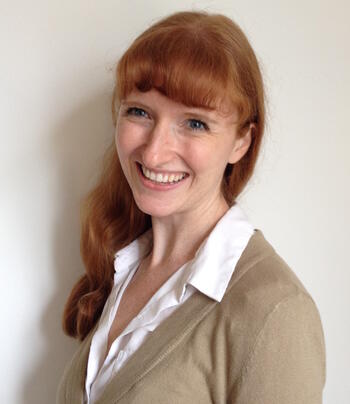
Lauren is an assistant professor of political science at UC Davis. Lauren's research aims to understand how people behave in violent or coercive environments. Her primary research topics include why people participate in violence and how exposure to violence affects people in the short and long term. Much of her past research and policy work is in sub-Saharan Africa, particularly Zimbabwe. Prior to coming to Davis, she was a postdoctoral scholar at the Center on Democracy, Development, and the Rule of Law at Stanford University and a non-resident postdoctoral fellow at the Center for Global Development. She completed her PhD in political science with distinction in 2016 at Columbia University.
Assistant professor of political science at UC Davis
While numerous studies examine the relationship between social media and political behavior, scholars continue to debate its effects on political polarization. To inform this debate, we measure the effect of social media echo chambers on public opinion by evaluating 40,000 tweets around major breaking news stories, and comparing pre-and post-event policy positions amongst far and moderate right, and far and moderate left groups on Twitter. Our research improves on current approaches of measuring polarization by combining network analysis with supervised machine learning to examine what sampled individuals within different social media networks actually say about political topics. We find that individuals’ opinions on a variety of political issues converge on the modal opinion of media elites within their echo chamber following large-scale media events. We use this evidence to argue that people become more ideologically sorted—rather than more ideologically polarized—vis-à-vis social media echo chambers.
Speaker Bio:
Image
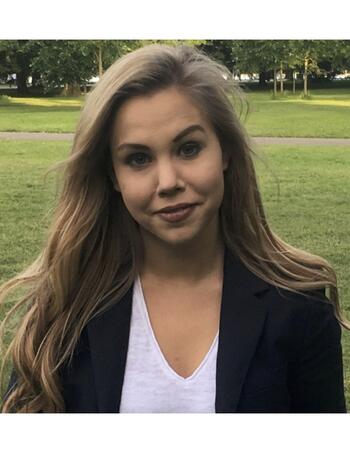
Laura Jakli is a Predoctoral Fellow at the Center on Democracy, Development and the Rule of Law at Stanford University, and a Ph.D. Candidate in the Department of Political Science at the University of California, Berkeley. Her dissertation draws on digital survey and ad experiments, machine learning, and qualitative fieldwork to examine the relationship between digital politics and political radicalization. Her related research examines how digital networks shape migration patterns and refugee behavior. Her research appears in International Studies Quarterly and the Virginia Journal of International Law. Her co-authored book chapter is forthcoming in Democratization (Oxford University Press).
My research examines political extremism, destigmatization, and radicalization, focusing on the role of popularity cues in online media. My related research examines a broad range of threats to democratic governance, including authoritarian encroachment, ethnic prejudice in public goods allocation, and misinformation.
My dissertation won APSA's Ernst B. Haas Award for the best dissertation on European Politics. I am currently working on my book project, Engineering Extremism, with generous funding from the William F. Milton Fund at Harvard.
My published work has appeared in the American Political Science Review, Governance, International Studies Quarterly, Public Administration Review, and the Virginia Journal of International Law, along with an edited volume in Democratization (Oxford University Press). My research has been featured in KQED/NPR, The Washington Post, and VICE News.
I received my Ph.D. in Political Science at the University of California, Berkeley in 2020. I was a Predoctoral Research Fellow at the Center on Democracy, Development and the Rule of Law at Stanford University and the Stanford Program on Democracy and the Internet. I hold a B.A. (Magna Cum Laude; Phi Beta Kappa) from Cornell University and an M.A. (with Distinction) from the University of California, Berkeley.
"History is directional and progressive, and the modernization process points to liberal democracy as its fullest embodiment. But getting there is harder than it seemed back in 1992, and the possibility of institutional decay is ever-present," writes CDDRL Mosbacher Director Francis Fukuyama. Read here.
Please join Stanford's Center on Democracy, Development, and the Rule of Law (CDDRL) on Sept. 27 for the launch of Francis Fukuyama's latest book, "Identity: The Demand for Dignity and the Politics of Resentment." Fukuyama, the Mosbacher Director of CDDRL, will be joined in conversation with Michael McFaul, the director and Senior Fellow at the Freeman Spogli Institute for International Affairs. The event will begin promptly at 4:00 pm and be followed by a light reception and book signing from 5:30-6:30 pm.
Please note that there is only 1 ticket permitted per person.
In 2014, Francis Fukuyama wrote that American institutions were in decay, as the state was progressively captured by powerful interest groups. Two years later, his predictions were borne out by the rise to power of a series of political outsiders whose economic nationalism and authoritarian tendencies threatened to destabilize the entire international order. These populist nationalists seek direct charismatic connection to the people, who are usually defined in narrow identity terms that offer an irresistible call to an in-group and exclude large parts of the population as a whole. Demand for recognition of one's identity is a master concept that unifies much of what is going on in world politics today.
The universal recognition on which liberal democracy is based has been increasingly challenged by narrower forms of recognition based on nation, religion, sect, race, ethnicity, or gender, which have resulted in anti-immigrant populism, the upsurge of politicized Islam, the fractious identity liberalism of college campuses, and the emergence of white nationalism. Populist nationalism, said to be rooted in economic motivation, actually springs from the demand for recognition and therefore cannot simply be satisfied by economic means. The demand for identity cannot be transcended; we must begin to shape identity in a way that supports rather than undermines democracy.
Encina Hall, C148
616 Jane Stanford Way
Stanford, CA 94305
0
f.fukuyama@stanford.edu
Olivier Nomellini Senior Fellow at the Freeman Spogli Institute for International Studies
Director of the Ford Dorsey Master's in International Policy
Research Affiliate at The Europe Center
Professor by Courtesy, Department of Political Science
yff-2021-14290_6500x4500_square.jpg
Francis Fukuyama is the Olivier Nomellini Senior Fellow at Stanford University's Freeman Spogli Institute for International Studies (FSI), and a faculty member of FSI's Center on Democracy, Development and the Rule of Law (CDDRL). He is also Director of Stanford's Ford Dorsey Master's in International Policy, and a professor (by courtesy) of Political Science.
Dr. Fukuyama has written widely on issues in development and international politics. His 1992 book, The End of History and the Last Man, has appeared in over twenty foreign editions. His book In the Realm of the Last Man: A Memoir will be published in fall 2026.
Francis Fukuyama received his B.A. from Cornell University in classics, and his Ph.D. from Harvard in Political Science. He was a member of the Political Science Department of the RAND Corporation, and of the Policy Planning Staff of the US Department of State. From 1996-2000 he was Omer L. and Nancy Hirst Professor of Public Policy at the School of Public Policy at George Mason University, and from 2001-2010 he was Bernard L. Schwartz Professor of International Political Economy at the Paul H. Nitze School of Advanced International Studies, Johns Hopkins University. He served as a member of the President’s Council on Bioethics from 2001-2004. He is editor-in-chief of American Purpose, an online journal.
Dr. Fukuyama holds honorary doctorates from Connecticut College, Doane College, Doshisha University (Japan), Kansai University (Japan), Aarhus University (Denmark), the Pardee Rand Graduate School, and Adam Mickiewicz University (Poland). He is a non-resident fellow at the Carnegie Endowment for International Peace. He is a member of the Board of Trustees of the Rand Corporation, the Board of Trustees of Freedom House, and the Board of the Volcker Alliance. He is a fellow of the National Academy for Public Administration, a member of the American Political Science Association, and of the Council on Foreign Relations. He is married to Laura Holmgren and has three children.
(October 2025)
Global Populisms
A new project examining the global surge in populist movements and what it means for established democratic rules and institutions.
Olivier Nomellini Senior Fellow at the Freeman Spogli Institute for International Studies (FSI), and Mosbacher Director of FSI's Center on Democracy, Development, and the Rule of Law.
Encina Hall
616 Jane Stanford Way
Stanford, CA 94305-6055
0
Senior Fellow, Freeman Spogli Institute for International Studies
Ken Olivier and Angela Nomellini Professor of International Studies, Department of Political Science
Peter and Helen Bing Senior Fellow, Hoover Institution
mcfaul_headshot_2025.jpg
PhD
Michael McFaul is the Ken Olivier and Angela Nomellini Professor of International Studies in Political Science, Senior Fellow at the Freeman Spogli Institute for International Studies, and the Peter and Helen Bing Senior Fellow at the Hoover Institution, all at Stanford University. He joined the Stanford faculty in 1995 and served as FSI Director from 2015 to 2025. He is also an international affairs analyst for MSNOW.
McFaul served for five years in the Obama administration, first as Special Assistant to the President and Senior Director for Russian and Eurasian Affairs at the National Security Council at the White House (2009-2012), and then as U.S. Ambassador to the Russian Federation (2012-2014).
He is a recipient of numerous awards, including an honorary PhD from Montana State University; the Order for Merits to Lithuania from President Gitanas Nausėda of Lithuania; Order of Merit of Third Degree from President Volodymyr Zelenskyy of Ukraine, and the Dean’s Award for Distinguished Teaching at Stanford University. In 2015, he was the Distinguished Mingde Faculty Fellow at the Stanford Center at Peking University.
McFaul was born and raised in Montana. He received his B.A. in International Relations and Slavic Languages and his M.A. in Soviet and East European Studies from Stanford University in 1986. As a Rhodes Scholar, he completed his D. Phil. in International Relations at Oxford University in 1991.
International Working Group on Russian Sanctions
The International Working Group on Russian Sanctions aims to provide expertise and experience to governments and companies around the world by assisting with the formulation of sanctions proposals that will increase the cost to Russia of invading Ukraine, and support democratic Ukraine in the defense of its territorial integrity and national sovereignty.
Director and Senior Fellow at the Freeman Spogli Institute for International Affairs, and the Peter and Helen Bing Senior Fellow at the Hoover Institution.
As Stacy Shimanuki delivered her presentation about the Pacific War (1941–45), I was reflective of the fact that the 73rd anniversary of the surrender of Japan, August 15, 1945, was five days away. Stacy was one of several American and Japanese high school students who were honored by SPICE during an annual event called “Japan Day” at Stanford University on August 10, 2018. The top three students of Stanford e-Japan (fall 2017 cohort) and three students of the Reischauer Scholars Program (2018 cohort) gave presentations on their course research papers. The Reischauer Scholars Program (RSP) is a distance-learning course on Japan and U.S.–Japan relations that is offered annually to high school students in the United States, and Stanford e-Japan is a distance-learning course on the United States and U.S.–Japan relations that is offered twice annually to high school students in Japan.
For me, Japan Day is not only a day of recognition of students but is also symbolic of the close friendship between the United States and Japan that has evolved from a once-bitter rivalry. Though the six students had met their instructors Naomi Funahashi (RSP instructor; Dr. Rie Kijima taught the latter part of the 2018 RSP course) and Waka Takahashi Brown (Stanford e-Japan instructor) in online “virtual classrooms,” it was their first time meeting face-to-face. Although they had never met before, it was remarkable to me how the students on both sides of the Pacific seemed almost like old friends by the end of the day.
Japan Day opened with comments by the Honorable Tomochika Uyama, Consul General of Japan in San Francisco. He stated,
The Japan–U.S. alliance is the cornerstone of security, stability, and prosperity in the Asia-Pacific region. As we look at the global challenges we face today, I believe that we must strive to ensure that our special relationship remains strong and vital. One way to accomplish this is by preparing the best and brightest of our young people with the kind of learning opportunities that will deepen mutual understanding. It is my belief that the Reischauer Scholars Program and Stanford e-Japan are admirably working toward this goal by providing the knowledge and expertise our young people will need as future leaders in Japan–U.S. relations.
Before the student presentations, Consul General Uyama took the time to speak with each of the honorees.
RSP honorees
Stanford e-Japan honorees
Grace Rembert, Bozeman High School, Bozeman, Montana
Stacy Shimanuki, Amador Valley High School, Pleasanton, California
Valerie Wu, Presentation High School, San Jose, California
Amane Kishimoto, Kyoto Prefectural Rakuhoku Senior High School, Kyoto
Yurika Matsushima, Keio Girls Senior High School, Tokyo
Jun Yamasaki, Shibuya Kyoiku Gakuen Senior High School, Tokyo
The students presented on topics ranging from open innovation, employment and people with disabilities, and the U.S. and Japanese educational systems to language and nationalism, literature on the atomic bombing of Japan, and urbanization in Japan. Brown and Funahashi had high praise for their students. “I’m always so proud of our e-Japan award winners,” stated Brown. “Their level of research is at such a high level, and to be able to conduct their presentations in English and with such poise is an amazing achievement for students at such a young age.” During the presentations by her students, Funahashi reminded the audience, “These are high school students!” Without fail on Japan Day, Funahashi hears audience members complimenting the intellect of her students and how articulate they are.
Waka Brown and Naomi Funahashi at podium
Attendees represented people from the Stanford community and the U.S.–Japan community in the Bay Area, including Dr. Takeo Hoshi, Director, Japan Program, and Junichiro Hirata, Visiting Scholar, Shorenstein Asia-Pacific Research Center, FSI; and Dr. Kazuhiko Hasegawa, Executive Director, San Francisco Office, Osaka University, Kathleen Kimura, Japan Society of Northern California, and Dr. Yoichi Aizawa, Executive Director, San Francisco Office, Waseda University. Amanda Minami Chao and David Chao were recognized for their many years of support to SPICE.
Following the formal program, the students enjoyed a tour of Stanford University. The SPICE staff and I were left hoping that someday we would see them again as undergraduate or graduate students on campus and more importantly, hoping that they will remain friends to further strengthen the decades of friendship between Japan and the United States.
To stay informed of SPICE-related news, follow SPICE on Facebook and Twitter.
Funding for SPICE’s distance-learning courses is generously provided by Amanda Minami Chao and David Chao, and Jean Mou and Yoshiaki Fujimori. Funding for the 2018 RSP was generously provided by Gen Isayama, the Center for Global Partnership/The Japan Foundation, and The Japan Fund, FSI. Funding for the Stanford e-Japan 2017 courses was generously provided by the United States-Japan Foundation, and for the Stanford e-Japan spring 2018 course by Noriko Honda Chen, Harry Gunji, Akira Horiguchi, Paul Li, Tomonori Tani, and the Capital Group Companies.
Hero Image
The Honorable Tomochika Uyama with six student honorees | Rylan Sekiguchi
Federal health advisors say women can now consider three options when it's time for their cervical cancer screening tests. The influential group, the U.S. Preventive Services Task Force (USPSTF), has expanded its recommendations for this potentially life-saving exam.
The new recommendations were published in the latest issue of JAMA.
Pap smears have saved many lives since they became available decades ago. Inspecting samples of cervical tissue for pre-cancerous changes is effective at catching possible cancer, and is still the go-to test for women aged 21 to 29, according to the USPSTF guidelines. But there's another option.
"Most cervical cancer is caused by what's called the human papilloma virus, or HPV," says Stanford Health Policy's Dr. Douglas Owens, a professor of medicine at Stanford Medicine and vice-chair of the USPSTF. "And we now have tests for HPV and that's an important step forward."
Encina Commons, Room 190
615 Crothers Way
Stanford, CA 94305
650-497-1191
0
bpriestl@stanford.edu
ben_priestley_head-2023.jpg
MPH
Ben Priestley provides leadership and oversight for financial operations, strategic planning, human resources, grant and contract administration, academic affairs, and facilities/space planning. Ben has expertise in interventional clinical research operations and management, specifically in cancer trials. His interest and career in public health began in the field of Parkinson’s Disease research. He received his MPH from Johns Hopkins Bloomberg School of Public Health and his BS in Cognitive Science from University of California San Diego.
"If you want some notion of the problem, just try uttering the words “public administration” before a roomful of students and watch them look at their phones or start to fall asleep. Nonetheless, the classic field of public administration is one of the most important today, and its decline (at least in the United States) is one of the reasons why we get poor service from government," writes CDDRL Director Francis Fukuyama. Read the article here.





 Waka Brown and Naomi Funahashi at podium


