-

**Please note all CDDRL events are scheduled using the Pacific Time Zone


About the Event:  American democracy has been more prone to crisis than we commonly recognize. Comparative studies of democracy suggest that four threats imperil democracy: political polarization, conflict over who belongs as a full member of society, high and rising economic inequality, and excessive executive power. We survey five periods of American history in which these threats have appeared in different configurations, posing recurring challenges to American democracy. When even one threat was present – as in the 1790s, the 1930s, or the 1970s – the nation risked backsliding. Twice – in the 1850s and again in the 1890s – three threats converged, leading to civil war and then precipitating the disenfranchisement of millions of African American men. Today, all four threats are present for the first time, presenting unprecedented danger to the American experiment.

Image

About the Speaker:  Robert C. Lieberman is Krieger-Eisenhower Professor of Political Science at Johns Hopkins University. He is the author of several award-winning books on American politics and previous served as provost of Johns Hopkins and dean of Columbia University’s School of International and Public Affairs.


Image
Image

Suzanne Mettler is the John L. Senior Professor of American Institutions in the Government Department at Cornell. She is the author five previous books, including, most recently, The Government-Citizen Disconnect and Degrees of Inequality: How the Politics of Higher Education Sabotaged the American Dream. She was recently awarded a Radcliffe Fellowship and a Guggenheim Award, and inducted into the American Academy of Arts and Sciences.


Image
Image

Online, via Zoom: REGISTER

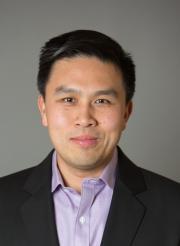
Robert Liberman Krieger-Eisenhower Professor of Political Science at Johns Hopkins University
Suzanne Mettler John L. Senior Professor of American Institutions in the Government Department at Cornell University
Seminars
News Type
News
Date
Paragraphs
Hero Image
Arvind Krishnamurthy
All News button
1
Subtitle

PhD students awarded Arvind Krishnamurthy, the John S. Osterweis Professor of Finance, the PhD Faculty Distinguished Service Award during a virtual ceremony.

Authors
News Type
News
Date
Paragraphs
Hero Image
Ran Abramitzky
All News button
1
Subtitle

Professor of economics Ran Abramitzky has been named the new senior associate dean of the social sciences in the School of Humanities and Sciences. He will begin his term on September 1, 2020.

Authors
News Type
News
Date
Paragraphs

Brazil is China’s most important economic and political partner in South America, as well as a key participant in the Brazil, Russia, India, China, and South Africa (BRICS) grouping of emerging powers that China increasingly leads. When it comes to global aspirations, China and Brazil have historically been in sync on their critiques of the liberal international order, if not on their preferred remedies. Historically, their prescriptions for foreign policy differ in important ways. China would prefer a world order that better accommodates its interests, and it is becoming less reluctant to use the threat of force in foreign policy to maintain its ascendancy in its geopolitical neighborhood. Brazil traditionally has preferred a rules-bound liberal international order that applies to everyone, especially superpowers. Unlike China, it foreswears the use of coercion in international affairs, even to protect its interests in its immediate neighborhood, South America.

Read the rest at Brookings

Hero Image
Photo of two men. Reuters
All News button
1
Subtitle

During the periods when it sought international autonomy, Brazil has found in China an attractive partner in criticizing the liberal international order fostered by the United States in the wake of World War II.

-

Image
Avi Tuschman, Adam Berinsky, David Rand

Please join the Cyber Policy Center for Exploring Potential “Solutions” to Online Disinformation​, hosted by Cyber Policy Center's Kelly Born, with guests Adam Berinsky, Mitsui Professor of Political Science at MIT and Director of the MIT Political Experiments Research Lab (PERL) at MIT, David Rand, Erwin H. Schell Professor and an Associate Professor of Management Science and Brain and Cognitive Sciences, and Director of the Human Cooperation Laboratory and the Applied Cooperation Team at MIT, and Avi Tuschman, Founder & CIO, Pinpoint Predictive. The session is open but registraton is required.

Adam Berinsky is the Mitsui Professor of Political Science at MIT and serves as the director of the MIT Political Experiments Research Lab (PERL). He is also a Faculty Affiliate at the Institute for Data, Systems, and Society (IDSS). Berinsky received his PhD from the University of Michigan in 2000. He is the author of "In Time of War: Understanding American Public Opinion from World War II to Iraq" (University of Chicago Press, 2009). He is also the author of "Silent Voices: Public Opinion and Political Participation in America" (Princeton University Press, 2004) and has published articles in many journals. He is currently the co-editor of the Chicago Studies in American Politics book series at the University of Chicago Press. He is also the recipient of multiple grants from the National Science Foundation and was a fellow at the Center for Advanced Study in the Behavioral Sciences.

David Rand is the Erwin H. Schell Professor and an Associate Professor of Management Science and Brain and Cognitive Sciences at MIT Sloan, and the Director of the Human Cooperation Laboratory and the Applied Cooperation Team. Bridging the fields of behavioral economics and psychology, David’s research combines mathematical/computational models with human behavioral experiments and online/field studies to understand human behavior. His work uses a cognitive science perspective grounded in the tension between more intuitive versus deliberative modes of decision-making, and explores topics such as cooperation/prosociality, punishment/condemnation, perceived accuracy of false or misleading news stories, political preferences, and the dynamics of social media platform behavior. 

Avi Tuschman is a Stanford StartX entrepreneur and founder of Pinpoint Predictive, where he currently serves as Chief Innovation Officer and Board Director. He’s spent the past five years developing the first Psychometric AI-powered data-enrichment platform, which ranks 260 million individuals for performance marketing and risk management applications. Tuschman is an expert on the science of heritable psychometric traits. His book and research on human political orientation have been covered in peer-reviewed and mainstream media from 25 countries. Previous to his career in tech, he advised current and former heads of state as well as multilateral development banks in the Western Hemisphere. Tuschman completed his undergraduate and doctoral degrees in evolutionary anthropology at Stanford.

Authors
Gary Mukai
News Type
News
Date
Paragraphs

In 2015, SPICE launched Stanford e-Japan, an online course for high school students in Japan. Two key objectives of the course were to introduce the students to U.S.–Japan relations and to also encourage the students to consider studying in the United States. Since then, many Stanford e-Japan alumni have spent time studying at U.S. colleges as exchange students for a year and on summer programs, and several as four-year undergraduates.

One of the challenges for international students to enroll in college in the United States is the cost of tuition. To encourage more Japanese students to consider applying to U.S. universities as full-time undergraduates, Mr. Tadashi Yanai—through the Yanai Tadashi Foundation—has offered competitive four-year scholarships to Japanese high school students who enter top colleges in the United States. Several Stanford e-Japan alumni have received the prestigious and very generous scholarships.

This year, four Stanford e-Japan alumni are recipients of the Yanai Tadashi Scholarships. The Yanai Scholars are scheduled to begin their undergraduate studies in the United States from this fall. They are:

  • Yuki Hayashita (Shiba High School, Tokyo): Brown University
  • Ryotaro Homma (Kaisei Academy, Tokyo): Yale University
  • Hugo Ichioka (Zushi Kaisei High School, Kamakura City, Kanagawa Prefecture): Williams College
  • Riki Shimizu (Nada High School, Takatsuki, Osaka Prefecture): Duke University
     

Riki Shimizu, who was a student in the fall 2018 Stanford e-Japan course, noted, “Stanford e-Japan was one of the most instructive programs in high school. Back then I did not have enough English ability to fully express my thoughts, but I think it somewhat improved through the courses to the level that I could consider U.S. colleges as an option. Without attending e-Japan, I wouldn’t be able to go to Duke…” Shimizu’s Stanford e-Japan Instructor Waka Brown commented, “I am touched that Riki credits my course for providing him with the inspiration to apply to universities in the United States.” She continued, “The fact that Riki will be going to Duke University, Yuki to Brown University, and Ryotaro to Yale University is exceedingly rewarding to me as one of their former teachers.”

Stanford e-Japan is also generously supported by the Yanai Tadashi Foundation. Stanford e-Japan Instructor Meiko Kotani, who taught the fall 2019 Stanford e-Japan course, is hopeful that more Japanese students will consider applying to U.S. colleges in the future. Upon hearing that her student, Hugo Ichioka, was accepted into Williams College, she stated, “The excitement that was conveyed from his email, which alerted me to the news that he had become a Yanai Scholar, made me reflect upon the importance of working with young students and encouraging them to think ‘outside of the box’ and to apply to universities outside of Japan… during one of my online classes, I had my students meet with high school students in the United States who were enrolled in SPICE’s Reischauer Scholars Program (RSP) and this seemed to have prompted many to consider studying in the United States.”

This type of meaningful exchange between Japanese students and American students has become significant in the college life of Yanai Scholar Daisuke Masuda, a rising junior at Stanford University. When asked what advice he would give to the new Yanai Scholars, Masuda commented, “Interacting with people with diverse backgrounds has always been an integral part of my college life in the United States. The more you know about their culture, the better you can appreciate why they do what they do. I would encourage you to get to know your peers from around the world and learn various approaches to learning, careers, and life in general.”


SPICE also offers online courses to U.S. high school students on Japan (Reischauer Scholars Program), China (China Scholars Program), and Korea (Sejong Korea Scholars Program), and an online course to Chinese high school students on the United States (Stanford e-China Program).


To stay informed of SPICE news, join our email list and follow us on Facebook, Twitter, and Instagram.

Read More

Stanford e-Japan alumni Jun Yamasaki and Hanako “Hannah” Tauchi
News

The Yanai Tadashi Foundation and Stanford e-Japan: Cultivating Future Leaders in Japan

The Yanai Tadashi Foundation and Stanford e-Japan: Cultivating Future Leaders in Japan
Hero Image
Japanese scholar and Ambassador Armacost chatting in a conference room
Yanai Scholar Ryotaro Homma talking with former U.S. Ambassador to Japan Michael Armacost, August 9, 2019; photo credit, Rylan Sekiguchi
All News button
1
Subtitle

In 2015, SPICE launched the inaugural online course, Stanford e-Japan, for high school students in Japan.

Authors
News Type
Commentary
Date
Paragraphs

Jason Reinhardt was leading a multi-lab effort within Sandia National Laboratories to improve the United States’ ability to detect and prevent illegal nuclear material from entering the country.

A senior member of Sandia’s technical staff at that time, Reinhardt would explain the technical dimensions of his work to policy experts and inevitably hear the same questions: “How do I understand the risk?” or “How do I compare the different risks involved?”

Reinhardt wanted to know more about the discipline of risk analysis so, in 2011, he returned to Stanford (where he’d earned an M.S. in Electrical Engineering in 2005) to pursue a PhD in Management Science and Engineering, with Prof. M. E. Paté-Cornell, the department’s founding chair, as his advisor. He focused on creating a systematic and risk analytic look at the technical and political components of nuclear deterrence.

Reinhardt also worked with Siegfried Hecker, a professor in Management Science and Engineering who was then the Science Co-Director of the Center for International Security and Cooperation (CISAC). Hecker introduced Reinhardt to his CISAC colleagues and encouraged him to attend the weekly seminars where political scientists, historians and diplomats presented their ideas on critical international issues.

“CISAC was one of the places where policy-inclined technical people could sort of bathe in policy discussions for a while,” Reinhardt said. “I use that terminology, really just soak in it.”

In the seminars, lectures and other events, Reinhardt studied how policy experts thought and talked. “I came over there and started listening,” he said. “Oh, that’s what the debate’s really about. I’m a lab geek, I thought it was a technical problem.”

If the problem were strictly technical, Reinhardt would have been able to speak with authority. He had no trouble discussing probability distributions, modeling approaches and complicated mathematical equations with other science-minded souls. But nuclear deterrence demands collaboration across academic disciplines—the hard sciences as well as political theory, international relations, and economics—and Reinhardt wanted policy makers to see the full picture and understand his ideas and their implications for policy.

“CISAC was a bootcamp of how to interact in the policy world, how to understand how that world thinks and acts,” Reinhardt said.

While pursuing his PhD, Reinhardt accepted a pre-doctoral fellowship at CISAC and enjoyed exploring this new world. But, an engineer by training, he also wanted to dig into a project where he could flex his technical skills while sitting elbow-to-elbow with political scientists, international relations experts and other policy wonks.

Hecker, an internationally-recognized expert in nuclear security and a former director of Los Alamos National Labs, understood the desire and had the solution. Hecker had been working with the Russian government for years, beginning after the Soviet Union broke apart in 1989, to secure Russian nuclear assets. For nearly as long, he’d also been working with the Chinese government to make sure their nuclear assets did not fall into the wrong hands.

Man speaking to room full of people Siegfried Hecker presenting to American and Chinese national security scholars.

Hecker invited Reinhardt to join the project at the Stanford Center at Peking University, a mini-campus that serves as a bridge across the Pacific for faculty and students from Stanford’s seven schools.

“Jason was just superb,” Hecker said of Reinhardt. “When you combine his Sandia background with his work with Eisabeth Pate-Cornell at MS&E, you have some of the world’s leading expertise in systems analysis which means a very methodical, engineering look at how you make decisions under complex environments.” 

In China, Reinhardt teamed with Larry Brandt and Leonard Connell, who were both CISAC affiliates and risk analysts at Sandia, to create a course that applied a systems analysis approach to nuclear terrorism. They ran the exercise with Chinese professionals to explore the probability of terrorists obtaining and transporting nuclear materials.

“We had a proper seat to learn how Track II interactions between countries are done,” Reinhardt said. 

Man behind a podium Jason Reinhardt giving talk at SCPKU on systems approach to verification of North Korea’s Nuclear program in Beijing, Oct. 2019.

Hecker, Reinhardt and the others traveled back and forth to China a few times a year—until COVID stopped international trips—to share their knowledge and deepen the understanding of the risks. The experience energized Reinhardt.

“Where else are you going to get that?” he asked. “I was able to sit down and have a technical analytic discussion about a nuclear issue with Chinese researchers who are thinking about the same thing.”

On Stanford’s campus, Reinhardt often found himself in equally intense conversations with CISAC faculty and international security experts like former Secretary of Defense William Perry, Scott Sagan, a leading authority on the politics of nuclear risk, and Martha Crenshaw, who is among the world’s top experts in terrorism.

Reinhardt also observed courses like “International Security in a Changing World,” which Crenshaw co-taught with Amy Zegart, a political scientist who advised the Clinton and Bush Administrations on foreign policy, national security and intelligence. 

When he returned to Sandia, with the wealth of international experience and a newly minted PhD, Reinhardt was quickly promoted to a role where he oversees 20-some people who focus on risk analysis around cyber threats to critical infrastructure in the US.

“Essentially, I build methodology for people to think about really nasty problems from a risk perspective in a national security sphere,” he said. “I’ve worked on that for nuclear weapons, for deterrence, and now for cyber stuff.”

Reinhardt also spends time educating colleagues so individuals on either side of the tech/policy divide can talk to one another. And he’s engaging with Purdue University, where he earned his undergraduate degree in electrical engineering, through Sandia’s Academic Alliance, to help propose a new course, learning from those he observed at Stanford such as the one Crenshaw and Zegart taught.

When Reinhardt reflects on his time at CISAC, he says it didn’t convert him from a technical expert into a policy expert as much as it introduced him to their world and allowed him to be more effective working within it.

“Because of the fellowship, you’re going to understand how policy people think and you’re going to understand their world enough that you can actually talk to them,” Reinhardt said. “And hopefully, if you do your job right, they’ll start to understand the technical world so that they can talk to you.”

Picture of building The Stanford Center at Peking University.

This is the first in an on-going series of profiles of CISAC pre- and post-doctoral fellows.

Hero Image
Several people sitting at a long table.
Jason Reinhardt participated the 16th PIIC Beijing Seminar on “Maintaining Global Strategic Stability and Promoting International Nuclear Cooperation” in October 16-17, 2019 in Shenzhen, China.
Siegfried Hecker
All News button
1
Subtitle

Profile of a CISAC Fellow: Jason Reinhardt, Distinguished Member of Technical Staff at Sandia National Laboratories

Authors
News Type
Blogs
Date
Paragraphs

Starting something new from scratch is always challenging. Though it requires huge amounts of effort and contains the possibility of not working out, I believe that it is absolutely worth exploring a new challenge because it has the power of creating chances of making people happier. This is the most important thing I learned from the people who took the initiative to establish the wonderful program, Stanford e-Japan.

Though it was the inaugural year of the program when I joined in 2015, I was truly impressed not only with the high quality of the academic content, but also with the rich opportunities of communication with prestigious leaders from various fields. Moreover, the program generously offered the top three students the chance to visit Stanford University for a ceremony.

It was exhilarating to be in the program due to the endless surprises and new learnings that I encountered throughout the course. 

When I reflect on the efforts made by the people who actively led the establishment and management of such an amazing program, I realize that I couldn’t appreciate them enough for what they have done for us.
Haruki Kitagawa

Since then, I have resolved to initiate new challenges myself in order to contribute to younger students just as Stanford e-Japan Instructor Waka Brown did for me. After I returned to Keio University from a one-year university exchange program at the University of California, San Diego, I established a student-led organization with several members at Keio from diverse backgrounds. Our student-led organization aims to cultivate young global citizens of Japan by allowing students attending Japanese high schools to have meaningful interactions with international students from Japanese universities like Keio.

In addition to encouraging the high school students to explore new challenges, I also wanted to share how interesting it is to learn about different cultures, including the histories of foreign countries and the benefits of interacting with people who have different backgrounds. We focus on designing an environment so that high school students can actively discuss and exchange ideas with international students in person while also building their English presentation skills. Through our program, we believe every high school student has the opportunity to learn something new like communication skills with individuals of different backgrounds, the ability to reach a mutual understanding with people of differing opinions, and leadership skills to lead discussions in a diverse community.

During our programs at several high schools, I have been able to hear many voices from the high school students, international students, and even high school teachers that suggest that they have fortunately had meaningful and fruitful experiences during our programs. Despite some initial struggles, I now strongly believe that even small programs like ours can make a difference in our society. I will never forget the precious lessons learned from Stanford e-Japan, and perhaps the most important lesson is for me to continue to explore new challenges and to encourage young students to do so as well.

Read More

120219 3010
News

Announcing the Honorees of SPICE’s 2019–20 Regional Programs in Japan

Announcing the Honorees of SPICE’s 2019–20 Regional Programs in Japan
Stanford e-Japan student Ayano Hirose giving her final presentation
News

Winners Announced for the Fall 2019 Stanford e-Japan Award

Winners Announced for the Fall 2019 Stanford e-Japan Award
Hero Image
ejapanphoto
2015 Stanford e-Japan Honorees: Seiji Wakabayashi, Hikaru Suzuki, and Haruki Kitagawa
All News button
1
Subtitle

The following reflection is a guest post written by Haruki Kitagawa, a 2015 alum and honoree of the Stanford e-Japan Program.

Subscribe to The Americas