Image
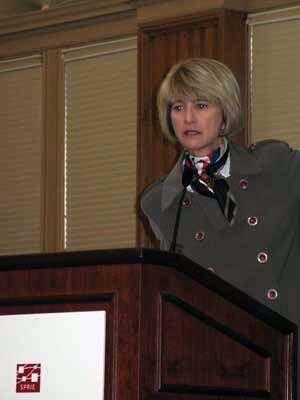
This two-day international forum at Stanford University brought together experts from academia, government, and industry to analyze leading cases of current institutional models for innovation in smart and green industries. Cases included multi-company collaborations, public-private partnerships, and government-funded consortia. To enable more focus and comparative analysis, sectors selected for focus included the built environment and intelligent transportation.

FORUM Speakers & DISCUSSANTS (listed in alphabetical order)

  • Rohit T. Aggarwala, Special Advisor to the Chair, C40 Cities Climate Leadership Group
  • Alan Beebe, Managing Director, China Greentech Initiative
  • Sven Beiker, Executive Director, Center for Automotive Research at Stanford (CARS)
  • Ann Bordetsky, North America Market Development, Better Place
  • Dennis Bracy, cEO, US-China Clean Energy Forum
  • Curtis R. Carlson, President and CEO, SRI International
  • Jaching Chou, Senior Transportation Analyst, Institute of Transportation
  • Stephen J. Eglash, Executive Director, Energy and Environment Affiliates Program, Stanford University
  • Henry Etzkowitz, President of Triple Helix Association; Senior Researcher, Human Sciences and Technology Advanced Research Institute (H-STAR), Stanford University; Visiting Professor at University of Edinburgh Business School
  • Gordon Feller, Director of Urban Innovation, Cisco Systems
  • TJ Glauthier, President, TJG Energy Associates, LLC
  • Russell Hancock, President & Chief Executive Officer, Joint Venture: Silicon Valley Network
  • Ted Howes, Business for Social Responsibility
  • Asim Hussain, Director of Product Marketing, Bloom Energy
  • Paul Chao-Chia Huang, Deputy General Director, Service Systems Technology Center, Industrial Technology Research Institute, Taiwan
  • Kristina M. Johnson, Former Under Secretary of Energy, U.S. Department of Energy
  • Jeffrey Heller, President, Heller Manus Architects
  • Allan King, Senior Manager, Institute for Information Industry, Taiwan
  • Michael Marlaire, Director, NASA Research Park
  • David Nieh, General Manager, Shui On Land Limited
  • Jon Sandelin, Senior Associate Emeritus, Office of Technology and Licensing, Stanford University
  • Gerald Sanders, CEO & Chairman, SkyTran
  • Tim Schweikert, President & CEO, China Region for GE Technology Infrastructure, GE
  • Jonathan Thorpe, Senior Vice President, Gale International
  • Kung Wang, Professor, China University of Technology
  • Sean Wang, President, ITRI International Inc.
  • Jonathan Woetzel, Director, McKinsey & Co; Co-Chair, Urban China Initiative

Questions for presentations and discussion included:

  • What roles are public-private partnerships and other forms of collaboration playing to advance innovations in smart green industries, such as in the built environment or intelligent transportation?
  • What innovations - not only in technologies and products but also in processes, models and platforms - are leading the way?
  • What results are emerging from living labs, leading cities, or other outstanding examples of public-private partnerships around the world?
  • How do results stack up against economic, energy and social metrics, e.g. economic productivity, quality of life, energy impact, financial payback, user response, etc.?
  • What are implications for business strategies?
  • What government policies are effectively nurturing advancement in these areas?

Outcomes will include policy recommendations as well as highlights to be included in a book published by SPRIE at Stanford.

Workshops
Authors
Francis Fukuyama
News Type
Commentary
Date
Paragraphs

Over the course of three short months, popular uprisings have toppled regimes in Tunisia and Egypt, sparked a civil war in Libya and created unrest in other parts of the Middle East. They also have raised a question in many people's minds: Are all authoritarian regimes now threatened by this new democratic wave? In particular, is China, a rising superpower, vulnerable to these forces?  

The Communist government in Beijing is clearly worried. It has limited news coverage of the recent uprisings and has clamped down on democratic activists and foreign reporters, acting pre-emptively against anonymous calls on the Internet for China to have its own "Jasmine Revolution." A recent front-page editorial in the Beijing Daily, an organ of the city's party committee, declared that most people in the Middle East were unhappy with the protests in their countries, which were a "self-delusional ruckus" orchestrated by a small minority. For his part, President Hu Jintao has urged the strengthening of what has been dubbed the "Great Firewall"-the sophisticated apparatus of censorship and surveillance that the regime uses to control access to the Internet.

No social scientist or intelligence analyst predicted the specific timing or spread of the Arab uprising-the fact that it would start in Tunisia, of all places, that it would be triggered by an event like the self-immolation of a vegetable seller, or that protests would force the mighty Egyptian army to abandon Hosni Mubarak. Over the past generation, Arab societies have appeared stolidly stable. Why they suddenly exploded in 2011 is something that can be understood only in retrospect, if at all.

But this doesn't mean that we can't think about social revolutions in a more structured way. Even unpredictable things take place in a certain context, and the present-day situations of China and the Middle East are radically different. Most of the evidence suggests that China is pretty safe from the democratic wave sweeping other parts of the world-at least for now.

Perhaps the most relevant thinker for understanding the Middle East today and China tomorrow is the late Samuel Huntington-not the Huntington of "The Clash of Civilizations," who argued that there were fundamental incompatibilities between Islam and democracy, but the Huntington whose classic book "Political Order in Changing Societies," first published in 1968, laid out his theory of the development "gap."

Observing the high levels of political instability plaguing countries in the developing world during the 1950s and '60s, Mr. Huntington noted that increasing levels of economic and social development often led to coups, revolutions and military takeovers. This could be explained, he argued, by a gap between the newly mobilized, educated and economically empowered people and their existing political system-that is, between their hopes for political participation and institutions that gave them little or no voice. Attacks against the existing political order, he noted, are seldom driven by the poorest of the poor in such a society; they tend to be led, instead, by rising middle classes who are frustrated by the lack of political and economic opportunity.

All of these observations would seem to apply to Tunisia and Egypt. Both countries have made substantial social progress in recent decades. The Human Development Indices compiled by the United Nations (a composite measure of health, education and income) increased by 28% for Egypt and 30% for Tunisia between 1990 and 2010. The number of people going to school has grown substantially; Tunisia especially has produced large numbers of college graduates. And indeed, the protests in Tunisia and Egypt were led in the first instance by educated, tech-savvy middle-class young people, who expressed to anyone who would listen their frustrations with societies in which they were not allowed to express their views, hold leaders accountable for corruption and incompetence, or get a job without political connections.

Mr. Huntington stressed the destabilizing power of new social groups seeking political participation. People used to be mobilized by newspapers and radio; today they are spurred to action by cell phones, Facebook and Twitter, which allow them to share their grievances about the existing system and to learn about the possibilities of the larger world. This change in the Middle East has been incredibly rapid, and it has trumped, for now, old verities about the supposed passivity of Arab culture and the resistance of Islam to modernization.

But do these remarkable developments tell us anything about the possibility for future instability in China?

It is certainly true that the dry tinder of social discontent is just as present in China as in the Middle East. The incident that triggered the Tunisian uprising was the self-immolation of Mohamed Bouazizi, who had his vegetable cart repeatedly confiscated by the authorities and who was slapped and insulted by the police when he went to complain. This issue dogs all regimes that have neither the rule of law nor public accountability: The authorities routinely fail to respect the dignity of ordinary citizens and run roughshod over their rights. There is no culture in which this sort of behavior is not strongly resented.

This is a huge problem throughout China. A recent report from Jiao Tong University found that there were 72 "major" incidents of social unrest in China in 2010, up 20% over the previous year. Most outside observers would argue that this understates the real number of cases by perhaps a couple of orders of magnitude. Such incidents are hard to count because they often occur in rural areas where reporting is strictly controlled by the Chinese authorities.

The most typical case of outraged dignity in contemporary China is a local government that works in collusion with a private developer to take away the land of peasants or poor workers to make way for a glittery new project, or a company that dumps pollutants into a town's water supply and gets away with it because the local party boss stands to profit personally. Though corruption in China does not reach the predatory levels of certain African or Middle Eastern countries, it is nonetheless pervasive. People see and resent the privileged lives of the nation's elite and their children. The movie "Avatar" was a big hit in China in part because so many ordinary Chinese identified with the indigenous people it portrayed whose land was being stolen by a giant, faceless corporation.

There is, moreover, a huge and growing problem of inequality in China. The gains from China's remarkable growth have gone disproportionately to the country's coastal regions, leaving many rural areas far behind. China's Gini index-a standard measure of income inequality across a society-has increased to almost Latin American levels over the past generation. By comparison, Egypt and Tunisia have a much more equal income distribution.

According to Mr. Huntington, however, revolutions are made not by the poor but by upwardly mobile middle-class people who find their aspirations stymied, and there are lots of them in China. Depending on how you define it, China's middle class may outnumber the whole population of the United States. Like the middle-class people of Tunisia and Egypt, those in China have no opportunities for political participation. But unlike their Middle Eastern counterparts, they have benefited from a dramatically improving economy and a government that has focused like a laser beam on creating employment for exactly this group.

To the extent that we can gauge Chinese public opinion through surveys like Asia Barometer, a very large majority of Chinese feel that their lives have gotten better economically in recent years. A majority of Chinese also believe that democracy is the best form of government, but in a curious twist, they think that China is already democratic and profess to be satisfied with this state of affairs. This translates into a relatively low degree of support for any short-term transition to genuine liberal democracy.

Indeed, there is some reason to believe that the middle class in China may fear multiparty democracy in the short run, because it would unleash huge demands for redistribution precisely from those who have been left behind. Prosperous Chinese see the recent populist polarization of politics in Thailand as a warning of what democracy may bring.

The fact is that authoritarianism in China is of a far higher quality than in the Middle East. Though not formally accountable to its people through elections, the Chinese government keeps careful track of popular discontents and often responds through appeasement rather than repression. Beijing is forthright, for example, in acknowledging the country's growing income disparities and for the past few years has sought to mitigate the problem by shifting new investments to the poor interior of the country. When flagrant cases of corruption or abuse appear, like melamine-tainted baby formula or the shoddy school construction revealed by the Sichuan earthquake, the government holds local officials brutally accountable-sometimes by executing them.

Another notable feature of Chinese government is self-enforced leadership turnover. Arab leaders like Tunisia's Zine al-Abidine Ben Ali, Egypt's Mr. Mubarak and Libya's Col. Moammar Gadhafi never knew when to quit, hanging on 23, 30 and 41 years, respectively. Since Mao, the Chinese leadership has rigidly adhered to terms of about a decade. Mr. Hu, the current president, is scheduled to step down in 2012, when he is likely to be replaced by Vice President Xi Jinping. Leadership turnover means that there is more policy innovation, in sharp contrast to countries like Tunisia and Egypt, which have been stuck for decades in the rut of crony capitalism.

The Chinese government is also more clever and ruthless in its approach to repression. Sensing a clear threat, the authorities never let Western social media spread in the first place. Facebook and Twitter are banned, and content on websites and on China-based social media is screened by an army of censors. It is possible, of course, for word of government misdeeds to get out in the time between its first posting by a micro-blogger and its removal by a censor, but this cat-and-mouse game makes it hard for a unified social space to emerge.

A final critical way in which China's situation differs from that of the Middle East lies in the nature of its military. The fate of authoritarian regimes facing popular protests ultimately depends on the cohesiveness and loyalty of its military, police and intelligence organizations. The Tunisian army failed to back Mr. Ben Ali early on; after some waffling, the Egyptian army decided it would not fire on protesters and pushed Mr. Mubarak out of power.

In China, the People's Liberation Army is a huge and increasingly autonomous organization with strong economic interests that give it a stake in the status quo. As in the Tiananmen uprising in 1989, it has plenty of loyal units around the country that it could bring into Beijing or Shanghai, and they would not hesitate to fire on demonstrators. The PLA also regards itself as the custodian of Chinese nationalism. It has developed an alternative narrative of 20th-century history that places itself at the center of events like the defeat of Japan in the Pacific war and the rise of a modern China. It is very unlikely that the PLA would switch sides and support a democratic uprising.

The bottom line is that China will not catch the Middle Eastern contagion anytime soon. But it could easily face problems down the road. China has not experienced a major recession or economic setback since it set out on its course of economic reform in 1978. If the country's current property bubble bursts and tens of millions of people are thrown out of work, the government's legitimacy, which rests on its management of the economy, would be seriously undermined.

Moreover, Mr. Huntington's scenario of rising but unfulfilled expectations among the middle class may still play out. Though there is a labor shortage among low-skill workers in China today, there is a glut of the college educated. Every year into the future, China will graduate more than seven million people from its universities, up from fewer than a million in 1998, and many of them are struggling to find work suitable to their self-perceived status. Several million unemployed college graduates are far more dangerous to a modernizing regime than hundreds of millions of poor peasants.

There is also what the Chinese themselves call the "bad emperor" problem. China's historical achievement over the centuries has been the creation of high-quality centralized bureaucratic government. When authoritarian rulers are competent and reasonably responsible, things can go very well. Indeed, such decision-making is often more efficient than in a democracy. But there is no guarantee that the system will always produce good rulers, and in the absence of the rule of law and electoral checks on executive power, there is no way to get rid of a bad emperor. The last bad emperor, commonly (if quietly) acknowledged as such, was Mao. We can't know what future tyrant, or corrupt kleptocrat, may be waiting in the wings in China's future.

The truth is that, much as we might theorize about the causes of social revolution, human societies are far too complex, and change too rapidly, for any simple theory to provide a reliable guide. Any number of observers dismissed the power of the "Arab street" to bring about political change, based on their deep knowledge of the Middle East, and they were right every year-up until 2011.

The hardest thing for any political observer to predict is the moral element. All social revolutions are driven by intense anger over injured dignity, an anger that is sometimes crystallized by a single incident or image that mobilizes previously disorganized individuals and binds them into a community. We can quote statistics on education or job growth, or dig into our knowledge of a society's history and culture, and yet completely miss the way that social consciousness is swiftly evolving through a myriad of text messages, shared videos or simple conversations.

The central moral imponderable with regard to China is the middle class, which up to now has seemed content to trade political freedom for rising incomes and stability. But at some point this trade-off is likely to fail; the regime will find itself unable to deliver the goods, or the insult to the dignity of the Chinese people will become too great to tolerate. We shouldn't pretend that we can predict when this tipping point will occur, but its eventual arrival, as Samuel Huntington might have suggested, is bound up with the very logic of modernization itself.

Hero Image
fukuyama headshot
All News button
1
Authors
David Lobell
News Type
News
Date
Paragraphs
A team led by FSE fellow David Lobell has found a valuable, untapped resource in historical data from crop yield trials conducted across sub-Saharan Africa. Combined with weather records, they show that yield losses would occur across 65 percent of maize-growing areas from a temperature rise of a single degree Celsius, even with sufficient water. Data from yield tests in other regions of the world could help predict changes in crop yields from climate change.

A hidden trove of historical crop yield data from Africa shows that corn - long believed to tolerate hot temperatures - is a likely victim of global warming.

Stanford agricultural scientist David Lobell and researchers at the International Maize and Wheat Improvement Center (CIMMYT) report in the inaugural issue of Nature Climate Change next week that a clear negative effect of warming on maize - or corn - production was evident in experimental crop trial data conducted in Africa by the organization and its partners from 1999 to 2007.

Led by Lobell, the researchers combined data from 20,000 trials in sub-Saharan Africa with weather data recorded at stations scattered across the region. They found that a temperature rise of a single degree Celsius would cause yield losses for 65 percent of the present maize-growing region in Africa - provided the crops received the optimal amount of rainfall. Under drought conditions, the entire maize-growing region would suffer yield losses, with more than 75 percent of areas predicted to decline by at least 20 percent for 1 degree Celsius of warming.

"The pronounced effect of heat on maize was surprising because we assumed maize to be among the more heat-tolerant crops," said Marianne Banziger, co-author of the study and deputy director general for research at CIMMYT."

"Essentially, the longer a maize crop is exposed to temperatures above 30 C, or 86 F, the more the yield declines," she said. "The effect is even larger if drought and heat come together, which is expected to happen more frequently with climate change in Africa, Asia or Central America, and will pose an added challenge to meeting the increasing demand for staple crops on our planet."

Similar sources of information elsewhere in the developing world could improve crop forecasting for other vast regions where data has been lacking, according to Lobell, who is lead author of the paper describing the study.

"Projections of climate change impacts on food production have been hampered by not knowing exactly how crops fair when it gets hot," Lobell said. "This study helps to clear that issue up, at least for one important crop."

While the crop trials have been run for many years throughout Africa, to identify promising varieties for release to farmers, nobody had previously examined the weather at the trial sites and studied the effect of weather on the yields, said Lobell, who is an assistant professor of environmental earth system science and fellow at Stanford's Program on Food Security and the Environment.

"These trials were organized for completely different purposes than studying the effect of climate change on the crops," he said. "They had a much shorter term goal, which was to get the overall best-performing strains into the hands of farmers growing maize under a broad range of conditions."

The data recorded at the yield testing sites did not include weather information. Instead, the researchers used data gathered from weather stations all over sub-Saharan Africa. Although the stations were operated by different organizations, all data collection was organized by the World Meteorological Organization, so the methods used were consistent.

Lobell then took the available weather data and interpolated between recording stations to infer what the weather would have been like at the test sites. By merging the weather and crop data, the researchers could examine climate impacts.

"It was like sending two friends on a blind date - we weren't sure how it would go, but they really hit it off," Lobell said.

Previously, most research on climate change impacts on agriculture has had to rely on crop data from studies in the temperate regions of North America and Europe, which has been a problem.

"When you take a model that has been developed with data from one kind of environment, such as a temperate climate, and apply it to the rest of the world, there are lots of things that can go wrong" Lobell said, noting that much of the developing world lies in tropical or subtropical climates.

But he said many of the larger countries in the developing world, such as India, China and Brazil, which encompass a wide range of climates, are running yield testing programs that could be a source of comparable data. Private agribusiness companies are also increasingly doing crop testing in the tropics.

"We're hoping that with this clear demonstration of the value of this kind of data for assessing climate impacts on crops that others will either share or take a closer look themselves at their data for various crops," Lobell said.

"I think we may just be scratching the surface of what can be achieved by combining existing knowledge and data from the climate and agriculture communities. Hopefully this will help catalyze some more effort in this area."

Lobell is a Center Fellow at the Program on Food Security and the Environment, a joint program of Stanford's Woods Institute for the Environment and Freeman Spogli Institute for International Studies.

The work was funded by the Rockefeller Foundation

All News button
1
News Type
News
Date
Paragraphs


President Obama's vision of a "world free of nuclear weapons" -- first enunciated in Prague in April 2009 -- has been derided by his critics as a utopian fantasy that will have no influence on the nuclear strategies of other nations.

But in a special issue of The Nonproliferation Review, entitled Arms, Disarmament, and Influence: International Responses to the 2010 Nuclear Posture Review, 13 prominent researchers from around the world examined foreign governments' policy responses to Obama's 2010 Nuclear Posture Review (NPR), the landmark document published a year and a day after his Prague speech.

They found that many nations, though not all, had been "strongly influenced by Washington's post-Prague policy and nuclear posture developments," which reduced the role of nuclear weapons in U.S. national strategy, and assured non-nuclear nations that the U.S. would never use nuclear arms against them provided they remained in compliance with their obligations under the Nuclear Non-Proliferation Treaty.

Indeed, the 11 case studies presented "demonstrate that U.S. pronouncements and actions influenced bureaucratic infighting and domestic debates inside a number of important foreign governments, and that some of these governments have adjusted their own policies and actions accordingly."

Read the full report here.

See a presentation about the report here, or listen to a different one here.

Read CISAC co-director Scott Sagan's essay on "Obama's Disarming Influence" in the Bulletin of the Atomic Scientists.  

Read Thomas Fingar's essay on "How China Views U.S. Policy" in the Bulletin of the Atomic Scientists

Highlights:

* Russia adopted a nuclear doctrine that was considerably more moderated than it would have been had the United States not pushed ahead with its own policy changes. In the run up to the April 2010 publication of the NPR, Washington "reset" relations with Russia, ended the deployment of missile defense components in Poland and the Czech Republic, and resumed the disarmament negotiations that ultimately led to the ratification of the New START treaty. As a result of this process, and continuous consultation with Russia about the NPR, Moscow narrowed the role of nuclear weapons in its policy and the range of circumstances in which it would consider using them. (page 39)

* "The most important short-term success of Obama's nuclear weapons policy," along with the "Prague Spirit," has been to halt the erosion of the NPT. "Obama's policies helped extract a minimum positive result from the 2010 NPT Review Conference, a favorable outcome compared to the chaos that his predecessor's representatives had created at the 2005 conference." The Obama policy was welcomed as a positive development, which allowed "key players, such as Egypt and Brazil, to strive for compromise, and others, such as Russia and China, not to block it." (page 219)

* The U.S. effort to encourage other governments to reduce the role of nuclear weapons in their policy was successful in the United Kingdom, which adopted a nuclear posture that was very similar to that to the U.S. (page 238)

* Due in large part to the Obama policy, some of the non-nuclear weapons states in NATO began to push for the removal of sub-strategic nuclear weapons from Europe. At the November 2010 NATO summit, members agreed to a new Strategic Concept that called for negotiations with Russia and a linkage between the reduction and eventual elimination of nuclear weapons in NATO Europe to comparable reductions in western Russia. (page 238)

* Obama's new nuclear doctrine was a driving force behind a May 2010 agreement among 189 nations at the Nonproliferation Review Conference to a set of disarmament objectives and steps to reinforce the nuclear non-proliferation regime. (page 238)

* The Obama disarmament initiatives encouraged Indonesia's decision to begin the process of ratifying the Comprehensive Test Ban Treaty. (page 238)

* China continues to view Washington's nuclear doctrine with suspicion. Although Beijing viewed the 2010 NPR favorably compared to its 2001 predecessor, it still found serious cause for concern. This is partly the result of timing: the NPR came out amid a period of rising tension between U.S. and China. It also reflected a tendency among Chinese leaders to view virtually all U.S. doctrine and actions as part of a concerted effort to constrain its rise. In this view, the NPR would foster comparisons between nuclear decreases in Russia and the U.S., and increases in China, and be used as leverage to force Beijing to engage in an expensive conventional arms race. In keeping with this China-centric view, Chinese officials were also concerned about the U.S. military's continued development of missile defense capabilities. (page 243)

* Many non-nuclear weapons states--such as Egypt, Brazil, and South Africa--emphasize their opposition to any constraints being placed on their right to enjoy the benefits of civilian nuclear energy. Some of their opposition is "due to post-colonial sensitivity about any apparent inequality in the terms of international agreements that divide the world into 'haves' and 'have-nots.'" Others are engaged in bargaining, waiting to see what nuclear-weapons states will do regarding disarmament before offering to accept more constraints on nuclear technology development. Some governments also appear to be engaged in "hedging behavior--protecting their ability to enrich uranium or reprocess plutonium" to be closer to acquiring nuclear weapons in the future, should they choose to do so. This may be disappointing for Washington policymakers, but it should not be surprising. After all, the U.S. employs a similar "hedging strategy" in its management of its own nuclear stockpile. As a result, it is imperative to begin discussions of how to reduce the danger of both kinds of nuclear hedging behavior. (page 255)

* The Obama administration must continue "to ensure there is consistency and discipline in the messages" emanating from the military and the government bureaucracy. Some foreign governments viewed the NPR's guarantees as mere rhetoric. "Such a skeptical view is encouraged whenever a senior US military officer makes statements that reflect a lack of understanding or lack of discipline regarding nuclear use policy." Even after the NPR was released, a top U.S. general insisted that the United States had not altered its "calculated ambiguity" policy. (page 258)


The special issue of the Nonproliferation Review was coordinated by Scott D. Sagan, co-director of the Center for International Security and Cooperation at Stanford University, and Jane Vaynman, a PhD candidate at the Department of Government at Harvard University, and a National Security Studies Fellow at the Weatherhead Center for International Affairs. The journal is published by the James Martin Center for Nonproliferation Studies at the Monterey Institute of International Studies, and it is edited by Stephen Schwartz.

Authors:

Irma Argüello is founder and chair of the NPSGlobal Foundation, a private nonprofit initiative that focuses on improving global security and reducing risks stemming from WMD proliferation.

Ralph A. Cossa is President of the Pacific Forum CSIS in Honolulu. He is senior editor of the Forum's quarterly electronic journal, Comparative Connections. 

Ambassador Nabil Fahmy is the founding Dean of the School of Global Affairs and Public Policy at the American University in Cairo. He is also the Chair of the James Martin Center for Nonproliferation Studies' Middle East Project.

Thomas Fingar is the Oksenberg-Rohlen Distinguished Fellow and Senior Scholar in the Freeman Spogli Institute for International Studies at Stanford University.

Brad Glosserman is Executive Director of the Pacific Forum CSIS in Honolulu. Mr. Glosserman is co-editor of Comparative Connections, the Pacific Forum's quarterly electronic journal, and writes, along with Ralph Cossa, the regional review.

S. Paul Kapur is associate professor in the Department of National Security Affairs at the U.S. Naval Postgraduate School and a faculty affiliate at Stanford University's Center for International Security and Cooperation.

Mustafa Kibaroglu is an Assistant Professor at Bilkent University.

Michael Krepon is the co-founder of the Stimson Center, a Washington-based think tank specializing in national and international security problems. 

Harald Müller is executive director of Peace Research Institute Frankfurt and Professor at International Relations at Goethe University Frankfurt.

Pavel Podvig is an independent analyst based in Geneva, Switzerland, where he manages the research project Russian Nuclear Forces.

Scott D. Sagan is the Caroline S.G. Munro Professor of Political Science, co-director of Stanford's Center for International Security and Cooperation, and a Senior Fellow at the Freeman Spogli Institute. He also serves as the co-chair of the American Academy of Arts and Science's Global Nuclear Future Initiative.

Scott Snyder is Director of the Center for U.S.-Korea Policy at The Asia Foundation, Senior Associate at Pacific Forum CSIS, and Adjunct Senior Fellow for Korean Studies at the Council on Foreign Relations.

Jane Vaynman is a PhD candidate at the Department of Government at Harvard University and a National Security Studies Fellow at the Weatherhead Center for International Affairs.

The Center for International Security and Cooperation (CISAC), part of the Freeman Spogli Institute for International Studies (FSI), is an interdisciplinary university-based research and training center addressing some of the world's most difficult security problems with policy-relevant solutions. The Center is committed to scholarly research and to giving independent advice to governments and international organizations.


Hero Image
Obama PragueSpeechlogo
All News button
1
-

Dr. Farrell earned a Ph.D. in Government from Georgetown University in 2000. He also holds a B.A. and M.A. in Politics from University College Dublin. Previously, he served as Assistant Professor at the University of Toronto, and was a senior research fellow at the Max Planck Institute on Common Goods in Bonn, Germany. He has taught courses on the political economy of European integration, the politics of the Internet, and the comparative political economy of Europe at the University of Toronto and Georgetown University.

Dr. Farrell's publications include: "Constructing the International Foundations of E-Commerce: The EU-US Safe Harbor Agreement," in International Organization, 57,2 (2003); "Trust, Distrust, and Power," in Distrust, ed. Russell Hardin (Russell Sage Foundation, forthcoming); and "Trust and Political Economy: Comparing the Effects of Institutions on Inter-Firm Cooperation," in Comparative Political Studies (forthcoming). Dr. Farrell is a member of the American Political Science Association, the International Society for the New Institutional Economics, the International Studies Association, and the European Union Studies Association

Graham Stuart Lounge

Henry Farrell Associate Professor of Political Science and International Affairs Speaker George Washington University
Workshops
-

Mohammad H. Fadel joined the Faculty of Law in January 2006. He received his B.A. in Government and Foreign Affairs (1988), a Ph.D. in Near Eastern Languages and Civilizations at the University of Chicago (1995) and his J.D. from the University of Virginia (1999). While at the University of Virginia School of Law, Professor Fadel was a John M. Olin Law and Economics Scholar and Articles Development Editor of the Virginia Law Review.

Prior to law school, Professor Fadel completed his Ph.D in Chicago, where he wrote his dissertation on legal process in medieval Islamic law. Professor Fadel was admitted to the Bar of New York in 2000 and practiced law with the firm of Sullivan & Cromwell LLP in New York, New York, where he worked on a wide variety of corporate finance transactions and securities-related regulatory investigations. In addition, Professor Fadel served as a law clerk to the Honorable Paul V. Niemeyer of the United States Court of Appeals for the 4th Circuit and the Honorable Anthony A. Alaimo of the United States District Court for the Southern District of Georgia. Professor Fadel has published numerous articles in Islamic legal history.

Graham Stuart Lounge

Mohammad Fadel Professor of Law Speaker University of Toronto
Workshops
-

Ruth Grant is Professor of Political Science and Philosophy and Senior Fellow in the Kenan Institute for Ethics at Duke University. She specializes in political theory with a particular interest in early modern philosophy and political ethics. She is the author of John Locke's Liberalism and Hypocrisy and Integrity: Machiavelli, Rousseau and the Ethics of Politics. Her articles have appeared in a variety of journals with audiences in several fields, including political science, medicine, law, education, economics, and philosophy. She has received fellowship awards from the National Endowment for the Humanities, the American Council of Learned Societies, and the National Humanities Center. She earned a bachelor's degree in political science and a doctorate degree in political science from the University of Chicago. She is currently working on a project on ethics and incentives and leading a collaborative project exploring goodness.

Graham Stuart Lounge

Ruth Grant Senior Fellow, Kenan Institute for Ethics Speaker Duke University
Workshops
-

About the seminar

As China's Internet population surges towards the half billion mark—double the United States—how are U.S. Internet companies faring in China? Google, Facebook, eBay, Yahoo and others have all faced challenges in China. These include external (competition, regulation/censorship) and internal (management, strategy). Can these firms find a viable position in China? Will emerging players such as Groupon fare any better? Although U.S. Internet companies have struggled, U.S. institutional investors have reaped rich rewards from stakes in leading Chinese firms such as Tencent, Baidu and Alibaba/Taobao. Is this approach a better bet than hoping that U.S. firms gain a foothold in China? If leading Chinese Internet firms continue to dominate their home market, do they stand a chance to succeed internationally including through expansion or M&A in the US?

About the Speaker

Duncan Clark is Chairman of BDA China, a company he founded in Beijing in 1994. Previously, Duncan was an investment banker with Morgan Stanley in London and Hong Kong, where he focused on telecommunications, media and technology (TMT) transactions.

He has guided BDA to become the leading consultancy servicing participants and investors in the TMT sectors in China and India. With a team of over 50 in Beijing and an office of 15 in New Delhi (opened in 2006), BDA has in recent years added to TMT an advisory capacity serving leading private equity firms investing in other fast-growing sectors in these countries such as education, retail and alternative energy.

Clark holds a B.Sc degree in economics with honors from the London School of Economics and Political Science, and currently chairs the school's alumni group in China. A UK citizen, Clark was raised in the UK, the United States and France.


Media X is the partner of this seminar.


Philippines Conference Room

BDA China Ltd
#2908 North Tower, Kerry Centre
1 Guanghua Road
Beijing 100020, China

0
Senior Advisor for China 2.0 Project
new_Duncan_Clark_headshot.jpeg

Duncan Clark is Chairman of BDA China, a consultancy he founded in Beijing in 1994 after four years as an investment banker with Morgan Stanley in London and Hong Kong. Over the past 19 years, Duncan has guided BDA to become the leading investment advisory firm in China specialized in China's technology, internet and e-commerce sectors.

An angel investor in mobile game app developer Happy Latte and digital content metrics company App Annie Duncan has also served on the Advisory Board of Chinese internet company Netease.com (Nasdaq: NTES) and serves on the Advisory Board of the Digital Communication Fund of Geneva-based bank Pictet & Cie.

A UK citizen, Duncan was raised in England, the United States and France. A graduate of the London School of Economics & Political Science, Duncan is a Senior Advisor to the ‘China 2.0' initiative at the Stanford Graduate School of Business’s Stanford Program on Regions of Innovation and Entrepreneurship, where he was invited as a Visiting Scholar in 2010 and 2011.

Duncan is partner in a Beijing-based film production company CIB Productions, and Executive Producer of two China-themed television documentaries including ‘My Beijing Birthday’.

Duncan was appointed Officer of the Order of the British Empire (OBE) in the 2013 New Year Honours for services to British commercial interests in China.

Duncan Clark Visiting Scholar Speaker Stanford Program on Regions of Innovation and Entrepreneurship (SPRIE)
Seminars
Authors
News Type
News
Date
Paragraphs

Armed only with law textbooks, six Stanford law students and faculty advisor and senior research scholar Erik Jensen landed in Kabul, Afghanistan on Feb. 6 on a mission that would last six days.

The group made up Stanford's Afghanistan Legal Education Project (ALEP), a student-led law school project funded by the U.S. State Department that creates textbooks on Afghanistan's legal system specifically for the instruction of Afghani students.

Stanford students in the Afghanistan Legal Education Project (ALEP) meet with Supreme Court Chief Justice Abdul Salam Azimi during their six-day visit to Kabul. (Courtesy of Daniel Lewis)

Working with the American University of Afghanistan (AUAF), the project is creating a new generation of lawyers to shape Afghanistan's future.

Since it was founded in 2007 by Stanford law alums Alexander Benard J.D. '08 and Eli Sugarman J.D. '09, the project has published four textbooks. These include an introductory text to the laws of Afghanistan and textbooks on commercial, criminal and international law. Students are currently writing a textbook on constitutional law.

"The whole project is indigenously oriented," Jensen said. "The textbooks are written in response to needs and demands of Afghan students, and we try to contextualize our work as much as we can to the politics, economics and social order in Afghanistan."

The purpose of the recent trip to Kabul was to explore the future and progress of the project. Students attended classes that are currently taught using ALEP textbooks, got feedback from Afghani students and professors and interacted with administrators at the AUAF to see where the project is headed.

"Sitting in on the classes and meeting with the students was for us a priority, because that's the best way we can get feedback on our books and make the project better," said Daniel Lewis LAW '12 and ALEP co-executive director.

After meeting with the president of AUAF, the group agreed that the ultimate goal for the project is to build a complete law school curriculum.

"The time frame is uncertain, but we're expanding really quickly," Lewis said.

In addition to rolling out the new textbook, ALEP plans to introduce new classes in the fall on Islamic law and the informal justice system in Afghanistan, taught by a collaborating Afghan professor and an affiliated postdoctoral fellow. Workshops on practical skills such as negotiation and writing are also on the horizon, as well as translations of the books into Dari and Pashto.

The group met other notable Afghan and American officials, including the dean at the Kabul University School of Law, university professors from the most populated provinces and Ambassador Hans Klemm, coordinating director of rule of law and law enforcement at the Embassy of the United States in Kabul.

"All the high officials we met with were extraordinarily supportive of the project," Jensen said.

"We'd gone over there expecting it wouldn't really be easy getting our books out there [past AUAF], or that there would be some hostility," Lewis said. "But that really wasn't the case. The feedback was that they were excited to have another resource that was new and updated."

Other universities are not the only other audiences attracted to the project's textbooks, which are available publicly, and for free, online.

"Over the past year or so, people have been downloading them [the books] and using them, some of which we know about and some of which we don't," said Rose Ehler LAW ‘12, another ALEP co-executive director.

The U.S. military has also used the textbooks to familiarize officers with Afghani law. According to Jensen, retired Gen. Stanley McChrystal was "very familiar" with the textbooks.

The Afghan Ministry of Justice, leading judges and legal academics have also expressed interest in the project, according to Lewis.

"It was fascinating to be [in Kabul] as Stanford law students talking to these really important people in Afghanistan...in a knowledgeable way," Lewis said.

But strengthening the AUAF law school and spreading legal education are only the beginning of ALEP's goals.

"The development of the rule of law is historical process. It takes time; there are fits and starts," Jenson said.

"The problem is when you are at Afghanistan's level of development, it will go through years and years of fits and starts...and as society goes through these episodes, it will need a new cadre of leaders to lead to positive episodes," he added.

ALEP seeks to contribute to the formation of these future leaders, not only in the legal profession but also in the country as a whole. By using analytical methods to teach students critical thinking, they hope to bridge the gap between American style legal education and the Afghan reality.

"They [the Afghan students] will see opportunities that we can't see from Stanford, but they can see on the ground in Afghanistan," Jensen said, describing the project as one that is about imagining alternatives so as to prevent oppression.

The law students' person-to-person contact with the Afghani students made it clear that this project extends far beyond what can be seen on paper.

"The passion that we all saw in the students in Afghanistan just increased our passion for the project at Stanford...the heart and soul of the Stanford group is derived from the heart and soul of the Afghan students."

"Everybody on the trip came away saying, ‘Wow, we're actually doing something that's useful here,'" Lewis said.

The trip left the group optimistic about the project's future.

"Student demand is high; we've been successful at retaining some of the best faculty, and we hope that that the [AUAF] law school becomes a center of educational excellence," Jensen said.

Despite the fact that ALEP is no longer the "sole source" of Afghan law textbooks, Jensen is confident about the books' prospects.

"I look forward to the marketplace of competition...I think our books will show themselves to be the best."

All News button
1
Subscribe to The Americas