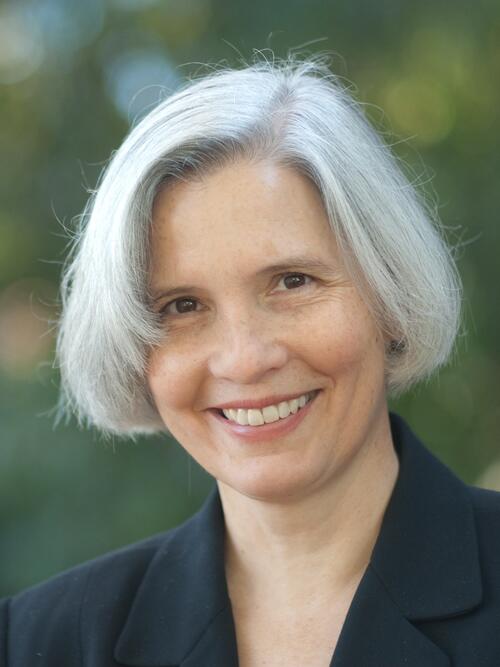
Since Kim Jong Il’s death on Dec. 17, North Korea has a young new leader: Kim’s 28-year-old son Kim Jong Un. What does the new leadership hold in store for the future of the Korean Peninsula, U.S.-Korea relations, and the stability of Northeast Asia? David Straub, who attended the seventh U.S.-Korea West Coast Strategic Forum in Seoul just days before Kim’s death, shares highlights from the Forum and offers insight into the current North Korea situation.
Straub is associate director of the Korean Studies Program at Stanford University and a retired senior U.S. foreign service official with over 30 years of Northeast Asia experience.
The U.S.-Korea West Coast Strategic Forum is held semi-annually, alternating between Stanford and the Sejong Institute in Seoul.
The West Coast Forum opened with a discussion about the current situation in North Korea. After Kim Jong Il’s death, how much do you think that picture will change?
Most Forum experts believe there will be relative stability in North Korea for some time to come.
The reason Kim Jong Il chose Kim Jong Un as his successor is because he is the least controversial person in North Korea to succeed him. Anyone else would be the object of great suspicion and jealousy within the elite there.
North Korea has already had one succession—from founder Kim Il Sung to his son Kim Jong Il—and that went smoothly. The succession from Kim Jong Il to his youngest son Kim Jong Un is natural within that context—it is a dynastic succession. As with other dynastic successions, the easiest person to accept is normally someone who represents a continuation of the person in power.
Do you foresee possible areas for improvement in relations between North and South Korea or for negotiations over North Korea’s nuclear program?
Apr. 15 is the 100th anniversary of Kim Il Sung’s birth, which is going to be a large celebration. North Korea probably will want to commemorate it without a lot of distractions. The North Korean leadership also wants to provide more food and supplies to its people, and provocations toward South Korea would make it harder to get international aid.
A number of Forum experts are concerned that North Korea might conduct another nuclear or long-range missile test this year. Most tests so far have not been fully successful, so from a military and technology perspective they probably want to try again. North Korea has been slapped with international trade sanctions for its previous tests, but China has always stepped in to help. Sanctions will probably not deter the North Koreans from conducting future tests.
As far as inter-Korean relations are concerned, it is unlikely that North Korea will take any major new initiatives toward the South. The leadership does not like conservative South Korean President Lee Myung-bak because he came into office saying that he would not continue giving large-scale aid to North Korea until it abandoned its nuclear weapons program. That was contrary to the Sunshine Policy of his two progressive predecessors.
President Lee’s term is almost up, and South Korea will hold a hold a presidential election on Dec. 19 this year. North Korea probably hopes that the progressives will win the election and restore the Sunshine Policy.
Will North Korea be a major issue for debate in South Korea’s upcoming 2012 presidential election?
Current polling shows that North Korea is the top concern of only 8 percent of the South Korean electorate. As in the past, the main issues for voters there are the economy, their standard of living, and social welfare issues. North Korea will not be the top issue unless something very dramatic happens between now and the election. On the other hand, if the race is close, feelings about North Korea policy could help to decide the outcome.
Among South Korean citizens, is there more fear or hope—or maybe a mixture of both—about North Korea’s new leadership?
Recent opinion polls show that 80 percent of South Koreans feel that North Korea will not give up its nuclear weapons. There is not much reason for optimism. That being said, most South Koreans are concerned about North Korea’s 2010 attack of Yeonpyeong Island and hope for improved relations. And, of course, Kim Jong Un is a different leader and most South Koreans hope he will move in a more positive direction. But they feel it is unlikely to happen in the next few years—if ever.
Does uncertainty over the future of North Korea have the potential to impact or strengthen any aspects of the U.S.-South Korea alliance?
This year, the U.S. and South Korean administrations will likely focus on managing the North Korean situation and continue to prioritize the U.S.-South Korea alliance. The two countries closely cooperate on North Korea policy.
The real question for the alliance in terms of North Korea policy will be who is elected as president in both countries. If a progressive South Korean candidate wins, that person will probably pursue some variation of the Sunshine Policy. Especially if a Republican is elected in the United States, we may see echoes of the difficult U.S.-South Korea relationship we had during the George W. Bush administration.
If President Obama is re-elected, another South Korean Sunshine Policy would also pose challenges. The administration has taken a very firm position that the United States will not significantly improve relations with North Korea until it gives up its nuclear weapons program. South Korea’s Sunshine Policy focuses on embracing North Korea in the hope that relations will improve over time and that North Korea will eventually voluntarily give up its nuclear weapons in that long-term context.
China, the country in Northeast Asia with the most influence over North Korea, recently issued a statement in support of Kim Jong Un. Does this signify any major change in relations between these two countries?
The Chinese government has particular interest in North Korea. China is focused on developing its own economy, including the relatively poor northeastern area that borders North Korea. The last thing China wants is instability on the Korean Peninsula, which would detract from its economic development.
China does not believe it can force North Korea to give up its nuclear weapons without risking instability. In the absence of progress in the Six Party negotiations over North Korea’s nuclear program, China has unilaterally increased economic and diplomatic support for North Korea. Its support is independent of who serves as the North Korean leader.
China tried very hard to get Kim Jong Il to open up the North Korean economy more, but did not succeed, primarily because Kim feared that doing so would also allow in more outside information and undermine his regime. China probably hopes that the younger Kim Jong Un may eventually have not only the power but also the desire to reform the economy.