-

Abstract:

The factually dubious for-profit articles known as “fake news” were read and shared by millions of people during the 2016 U.S. presidential campaign, but little is known scientifically about who read fake news, the mechanisms by which it was disseminated, and the extent to which fact-checks reached fake news consumers. In this study, we use behavioral data to better understand the prevalence and spread of “fake news.” (Joint work with Andrew Guess and Jason Reifler.)


Speaker Bio:

Image
brendan nyan
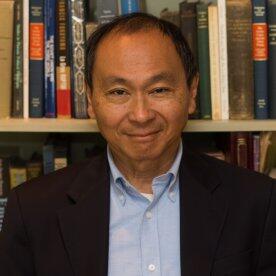
Brendan Nyhan is a Professor in the Department of Government at Dartmouth College. His research, which focuses on misperceptions about politics and health care, has been published in journals including the American Journal of Political Science, British Journal of Political Science, Journal of Politics, Medical Care, Pediatrics, Political Analysis, Political Behavior, Political Psychology, Social Networks, and Vaccine. Before coming to Dartmouth, he was a Robert Wood Johnson Scholar in Health Policy Research at the University of Michigan. Nyhan has also been a contributor to the New York Times website, The Upshot, since its launch in 2014. He previously served a media critic for Columbia Journalism Review; co-edited Spinsanity, a non-partisan watchdog of political spin that was syndicated in Salon and the Philadelphia Inquirer; and co-authored All the President's Spin, a New York Times bestseller that Amazon.com named one of the ten best political books of the year in 2004.

William J. Perry Conference Room, Encina Hall, 2nd Floor, 616 Serra St, Stanford, CA 94305

Brendan Nyhan Professor in the Department of Government at Dartmouth College
Seminars
-

Abstract:

Although peace operations are the main policy instrument for directly protecting civilians from severe violence, only a few are designed to reflect threatened civilians’ security needs. In a forthcoming book, Humanitarian Hypocrisy: Civilian Protection and the Design of Peace Operations, I examine how four major democracies – the US, UK, France, and Australia – contribute to this situation by facilitating gaps between a force’s ambitions to protect civilians and its resources for doing so. Although missions affected by these gaps gesture toward protecting civilians, they can actually worsen their suffering. I describe these gaps as a form of organized hypocrisy and argue that their attraction lies in their ability to help leaders balance competing normative and material pressures to protect civilians while also limiting associated costs. The argument has implications both for when these gaps are most likely and for how leaders can benefit from them politically. I support it with diverse evidence based on quantitative analysis of original data and four in-depth case studies.


Speaker Bio:

Image
everett
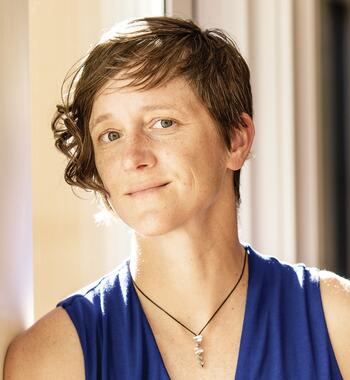
Andrea Everett is a Visiting Scholar at CDDRL. Her research focuses on humanitarian politics and policy. Her first book, Humanitarian Hypocrisy, is forthcoming with Cornell University Press in December 2017, and her work has also been published in Security Studies and Conflict Management and Peace Science. She received her PhD from the Department of Politics at Princeton University in 2012 and has previously worked as a Visiting Assistant Professor in the Politics Department at UC, Santa Cruz and as an Assistant Professor in the Department of International Affairs at the University of Georgia. She also holds a B.A. from Stanford and studied in Berlin as a Fulbright Scholar.

Visiting Scholar at CDDRL
Seminars
News Type
Commentary
Date
Paragraphs

A recently published book in Korean by Shorenstein Asia-Pacific Research Center (APARC) director Gi-Wook Shin has been featured in various media in South Korea. In this book, Superficial Koreathe author discussed the importance of inter-Korea dialogue in dealing with North Korea issues.

The interviews and comments can be viewed in the following links:

Munwha Ilbo (interview in Korean)

Yonhap News (book review in Korean)

Munwha Ilbo (book review in Korean)

Kyunghyang Shinmun (book review in Korean)

All News button
1
-

Abstract:

Modernization theory, institutional capacity, and rational choice institutionalism are the three candidate theories that explain how rich democratic states got to be rich and democratic. External development efforts will only be successful if he objectives or external and internal elites are complementary. This is only likely to be the case for 30-40 countries in the world. For the other 130 poorer countries the best that can be hoped for is good enough governance.


Speaker Bio:

Image
StephenKrasner
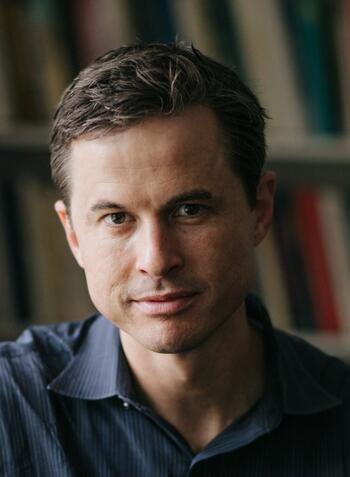
Stephen D. Krasner is the Graham H. Stuart Professor of International Relations at Stanford, and a Senior Fellow at the Freeman Spogli Institute, and the Hoover Institution. From February 2005 to April 2007 he was Director of the Policy Planning Staff at the Department of State. He is a member of the Board of Directors of the United States Institute of Peace, and was a member of the Foreign Policy Advisory Board of the Department of State from 2012 to 2014. He edited International Organization from 1986 to 1992. Professor Krasner is a Fellow of the American Academy of Arts and Sciences and a member of the Council on Foreign Relations. He is a Mercator Fellow at the Free University and was a Fellow at the Wissenschaftskolleg in 2000-2001. He has written or edited eight books and more than eighty articles.

CDDRL
Stanford University
Encina Hall
Stanford, CA 94305-6055

(650) 723-0676 (650) 724-2996
0
Senior Fellow at the Freeman Spogli Institute for International Studies, Emeritus
Graham H. Stuart Professor of International Relations
Senior Fellow at the Hoover Institution, Emeritus
krasner.jpg MA, PhD

Stephen Krasner is the Graham H. Stuart Professor of International Relations. A former director of CDDRL, Krasner is also an FSI senior fellow, and a fellow of the Hoover Institution.

From February 2005 to April 2007 he served as the Director of Policy Planning at the US State Department. While at the State Department, Krasner was a driving force behind foreign assistance reform designed to more effectively target American foreign aid. He was also involved in activities related to the promotion of good governance and democratic institutions around the world.

At CDDRL, Krasner was the coordinator of the Program on Sovereignty. His work has dealt primarily with sovereignty, American foreign policy, and the political determinants of international economic relations. Before coming to Stanford in 1981 he taught at Harvard University and UCLA. At Stanford, he was chair of the political science department from 1984 to 1991, and he served as the editor of International Organization from 1986 to 1992.

He has been a fellow at the Center for Advanced Studies in the Behavioral Sciences (1987-88) and at the Wissenschaftskolleg zu Berlin (2000-2001). In 2002 he served as director for governance and development at the National Security Council. He is a fellow of the American Academy of Arts and Sciences and a member of the Council on Foreign Relations.

His major publications include Defending the National Interest: Raw Materials Investment and American Foreign Policy (1978), Structural Conflict: The Third World Against Global Liberalism (1985), Sovereignty: Organized Hypocrisy (1999), and How to Make Love to a Despot (2020). Publications he has edited include International Regimes (1983), Exploration and Contestation in the Study of World Politics (co-editor, 1999),  Problematic Sovereignty: Contested Rules and Political Possibilities (2001), and Power, the State, and Sovereignty: Essays on International Relations (2009). He received a BA in history from Cornell University, an MA in international affairs from Columbia University and a PhD in political science from Harvard.

CV
Professor of International Relations at Stanford, and a Senior Fellow at the Freeman Spogli Institute, and the Hoover Institution
Seminars
News Type
Q&As
Date
Paragraphs

Stanford University’s Center on Democracy, Development and the Rule of Law (CDDRL) is proud to announce our three incoming fellows who will be joining us in the 2017-2018 academic year to develop their research, engage with faculty and tap into our diverse scholarly community. 

The pre- and postdoctoral program will provide fellows the time to focus on research and data analysis as they work to finalize and publish their dissertation research, while connecting with resident faculty and research staff at CDDRL. 

Fellows will present their research during our weekly research seminar series and an array of scholarly events and conferences.

Topics of the incoming cohort include policing and sectarian conflict in Iraq and Israel, global health and safety regulations and taxation in Southeast Asia.

Learn more in the Q&A below.


Image
screen shot 2017 09 22 at 2 58 37 pm
Matthew Nanes

CDDRL Postdoctoral Fellow


Hometown: Dunwoody, GA

Academic Institution: University of California San Diego

Discipline & Graduation Date:  Political Science, June 2017

Research Interests: Middle East Politics, sectarian conflict, policing and domestic security, comparative institutions

Dissertation Title: From the Bottom-Up: Policing and Sectarian Conflict in Divided Societies

What attracted you to the CDDRL Postdoctoral Fellowship program? I was drawn to the post-doctoral program at CDDRL by the broad range of experts at FSI and across the entire Stanford community. My research interests touch on a wide range of substantive and methodological issues, and I'm very excited to work with experts on a similarly broad range of areas. I was also attracted to CDDRL's focus on bridging the gap between academic scholarship and real-world policy applications.

What do you hope to accomplish during your nine-month residency at the CDDRL? My primary goal is to make progress in converting my dissertation, which is about policing and sectarian conflict in Iraq and Israel, into a publishable academic book. To this end, I intend to spend time honing my theoretical argument about the incentives and constraints generated by sectarian inclusiveness in the police and testing this argument using new and existing data. I also intend to continue progress on ongoing research on policing under low state legitimacy in the Philippines, and to lay the groundwork for follow-up research on the Iraqi police. 

Fun fact: During college, I rode a bicycle from Providence, RI to Seattle, WA


Image
screen shot 2017 09 22 at 2 59 00 pm
Rebecca Louise Perlman

CDDRL Pre-doctoral Fellow

Hometown: Newton, MA

Academic Institution: Stanford University 

Discipline & Expected Graduation Date:  Political Science, 2018

Research interests: Regulation, Trade, International institutions

Dissertation Title: For Safety or Profit? The Determinants of Global Health and Safety Regulations

What attracted you to the CDDRL Pre-doctoral Fellowship program? CDDRL brings together an amazing group of scholars, with a diverse set of research interests. I was eager for the opportunity to work with and learn from these individuals, through workshops and day-to-day interactions. 

What do you hope to accomplish during your nine-month residency at the CDDRL? I'm looking forward to completing my dissertation and hopefully embarking on some collaborative projects with other CDDRL fellows and/or faculty.

Fun fact: I have a cat named Khaleesi.


CDDRL Postdoctoral Fellow


Hometown: Anchorage, AK

Academic Institution: Emory University

Discipline & Graduation Date: Political Science, August 4, 2017

Research Interests: political economy of development, decentralization, taxation, local politics, Southeast Asia

Dissertation Title: Decentralization and the Politics of Local Taxation in Southeast Asia

What attracted you to the CDDRL Postdoctoral Fellowship program? I share CDDRL's concern for the links among multiple dimensions of development, and emphasize the interplay between political and economic institutions in my own research. In addition, the members of the CDDRL community combine disciplinary approaches, technical expertise, and area knowledge to address substantively important and theoretically interesting questions. I am very excited to learn from the community.

What do you hope to accomplish during your nine-month residency at the CDDRL? I will revise and expand my dissertation as I prepare it for publication. The dissertation highlights the role of strong local business associations as key institutions for resolving the distributional and monitoring challenges posed by taxation. Yet, it does not explain the origins of those associations. I will address this question by exploring the histories of local business associations in Southeast Asia, particularly those which exhibit surprising strength or weakness despite expectations to the contrary. 

Fun fact: My summer job in college was to umpire American Legion baseball.


All News button
1
Authors
Beth Duff-Brown
News Type
News
Date
Paragraphs


Women now have the option of getting screened every three or five years for cervical cancer, depending on which type of test they use, according to new draft recommendations from the U.S. Preventive Services Task Force.

The group of independent medical experts is recommending that women 21 to 29 years old get a cervical cytology (PAP test) every three years, while women aged 30 to 65 should either continue to get screened with a Pap every three years, or opt to be tested for the high-risk human papillomavirus (HPV) every five years.

“Cervical cancer is highly curable when found and treated early,” task force member Carol Mangione, MD, MSPH, said in a release on Monday. “Most cases of cervical cancer occur in women who have not been regularly screened or treated. Therefore, making sure all women are adequately screened and treated is critical to reducing deaths from cervical cancer.”

Despite the dramatic reduction of cervical cancer by half since the Pap test was introduced 40 years ago, nearly 13,000 American women are expected to contract this type of cancer this year. Of those, 4,200 are likely to die, according to the American Cancer Society. African-American and Hispanic women are at even greater risk.

The task force is an independent, volunteer panel of national experts in prevention and evidence-based medicine whose recommendations are widely followed by physicians and policymakers. They assign each recommendation a letter grade based on the strength of the evidence — and this recommendation comes with an A.

“We now have two effective screening strategies for women over 30, either cervical cytology every three years or HPV testing every five years,” said Douglas K. Owens, vice-chairperson of the task force.

Owens, a physician, professor of Stanford Medicine and director of the Center for Health Policy and Center for Primary Care and Outcomes Research, said that in women ages 21 to 29, a substantial portion of HPV infections resolve on their own. Cervical cytology, or Pap tests, remains the recommended screening strategy in this age group.

The advisory panel recommended against screening in women younger than 21 and older than age 65 years who have been adequately screened and don’t have a history of high-risk lesions.

The task force emphasized that cervical cytology tests remain an effective method of screening for cervical cancer, but that evidence published since its 2012 found that both Pap tests and HPV testing alone are effective ways to screen for cervical cancer in women aged 30 to 65.

“So women should discuss with their health-care provider which testing strategy is best for them,” Owens said. “What’s most important is that women get screened regularly.”

The Food and Drug Administration in 2011 approved the first test for HPV screening, a DNA test that looks for 14 types of the HPV virus, including types 16 and 18, which cause about 70 percent of all cervical cancers. In 2014, the FDA determined that the HPV test could be used alone instead of alongside the Pap test, which looks for changes in cervical cells.

The task force’s draft recommendation and evidence review have been posted for public comment on its website. Public comments can be submitted through October 9.


Hero Image
physician consult Getty Images
All News button
1
Paragraphs

The seventeenth session of the Korea-U.S. West Coast Strategic Forum held on June 29, 2017 in Seoul convened senior South Korean and American policymakers, scholars and regional experts to discuss North Korea policy and recent developments on the Korean Peninsula. Hosted by the Sejong Institute in association with the Shorenstein APARC, the forum continued its focus on Northeast Asian regional dynamics, the North Korea problem, and the state of the U.S.-Republic of Korea alliance. The participants engaged in candid, productive discussion about issues relating to these topics.

 
All Publications button
1
Publication Type
Policy Briefs
Publication Date
-

The conference is brought to you by the Shorenstein Asia-Pacific Research Center Japan Program's Stanford Silicon Valley-New Japan Project and Mistletoe, Inc.

This event is at full capacity. Please contact Amanda Stoeckicht at amst@stanford.edu if you have any questions.

As we enter the coming age of universal automation, this conference seeks to spark a discussion among thought leaders, technologists, and social entrepreneurs about the replacement of human labor by artificial intelligence and robotics and what that might mean for the future of human welfare and labor opportunities. There is increasing debate regarding the possibility of a new underclass of 'zero economic citizens.' How shall we address these challenges? Does the answer lie in lowering the cost of living? Is it the Universal Basic Income? Or something else? What might be the role of technologies for geographic mobility, sustainability, and community platforms.

Along with keynote presentations and panel discussions, the conference will also feature a startup showcase and participatory world-building exercise.

*The below program is subject to change.

Conference Program

8:30-9:00                  Registration and Breakfast

9:00-9:05                  Welcome

9:05-10:45                Keynote Presentations

Taizo Son (Mistletoe)

Marina Gorbis (Institute for the future)

Sam Altman (Y Combinator)

10:45-11:00              Coffee Break

11:00-12:15                Startup Showcase

Afero

Alesca Life

AstroScale

Binded

Cocoa Motors

Homma

Leomo

ModuleQ

Vivita

Wota

12:15-12:30              Break

12:30-13:00              Mistletoe Fellows Program Announcement

13:00-14:00              Lunch

14:00-15:15              Panel & Debate Sessions: Technology and Social Change in 2045                          

Panel 1: 

Cities of the Future: Removing Barriers to New Ideas with Innovation Districts and Regulatory Sandboxes

Moderator: Ashkan Soltani

Panelists:   Neal Gorenflo (Sheareable)

Taizo Son (Mistletoe)

           Joe Quirk (Seasteading Institute)

           Kaidi Ruusalepp (Funderbeam)           

Panel 2:

The Autonomous Lifestyle: Can Tech-Enabled Mobility Improve Welfare and Opportunity?

Moderator: Kenji Kushida (Stanford University)

Panelists:   Frances Colon (Cenadores Puerto Rico)

Steve Cousins (Savioke)

            Toshi Hoo (IFTF)        


Panel 3:

Reimagining Social Entrepreneurship: Designing Collaboration and Community

                                       Moderator:     Ernestine Fu (Alsop Louie Partners)

Panelists:    Anh Bui (Benetech)

  Chuck Eesley (Stanford University)   

  Daniel Goldman (Ignition Angels)

             Luan Niu (Enviu)


15:15-15:30             Break

15:30-17:30             Zero Economic Citizen in 2045: A World Building Exercise                  

Joshua McVeigh-Schultz (University of Southern California)

Karl Baumann (Univeristy of Southern California)

Elena Marquez Segura (UC Santa Cruz)                         

17:30-17:35             Closing Remarks

17:35-18:35             Cocktail Reception


Conferences
Authors
Gary Mukai
Rylan Sekiguchi
News Type
News
Date
Paragraphs


We often speak about U.S.–Japan relations in grand terms that focus on links between our countries. But the heart of our connection is personal—innumerable interactions between Japanese and American citizens who recognize the national and the individual benefits of such links… This is what gives Japan Day its special significance.

—The Honorable Michael Armacost, former U.S. Ambassador to Japan


The Stanford Program on International and Cross-Cultural Education (SPICE) honored top students of the Reischauer Scholars Program (RSP) and Stanford e-Japan at “Japan Day 2017”—an event held at Stanford University on August 11, 2017. The RSP honorees were Tuvya Bergson-Michelson (Lick-Wilmerding High School, San Francisco, CA), Mallika Pajjuri (Dublin High School, Dublin, CA), and Evan Wright (homeschool, Greenwood, IN), and the Stanford e-Japan honorees were Reon Hiruma (Waseda University Senior High School, Tokyo), Saya Iwama (Takada High School, Mie Prefecture), Mako Matsuzaki (graduate of Keio Girls Senior High School, Tokyo), and Alisa Tanaka (graduate of Keio Girls Senior High School, Tokyo).

Japan Day 2017 began with opening remarks by the Honorable Jun Yamada, Consul General of Japan in San Francisco, who commended the students for their study of U.S.–Japan relations and underscored the importance of educational programs such as the RSP and Stanford e-Japan in strengthening cross-Pacific relations. "There is no better investment for the future of Japan–U.S. relations," he noted, "than in educating and empowering the most promising of our youth, who will become the leaders of the future."

Stanford e-Japan Instructor Waka Takahashi Brown and RSP Instructor Naomi Funahashi presented overviews of the two programs and recognized the honorees for their outstanding academic performance and research papers. The students then took to the podium one by one to present their research to an audience of over 40 people, which included the Honorable Michael Armacost (former U.S. Ambassador to Japan), Ai Hiyama (Advisor for Community Affairs, Consulate General of Japan in San Francisco), and Maiko Tamagawa (Advisor for Educational Affairs, Japan Information and Cultural Center, Consulate General of Japan in San Francisco).

[[{"fid":"228010","view_mode":"crop_870xauto","fields":{"format":"crop_870xauto","field_file_image_description[und][0][value]":"","field_file_image_alt_text[und][0][value]":false,"field_file_image_title_text[und][0][value]":false,"field_credit[und][0][value]":"Rylan Sekiguchi","field_caption[und][0][value]":"Photo caption: Ambassador Michael Armacost with Mallika Pajjuri ","thumbnails":"crop_870xauto","alt":"","title":""},"type":"media","field_deltas":{"6":{"format":"crop_870xauto","field_file_image_description[und][0][value]":"","field_file_image_alt_text[und][0][value]":false,"field_file_image_title_text[und][0][value]":false,"field_credit[und][0][value]":"Rylan Sekiguchi","field_caption[und][0][value]":"Photo caption: Ambassador Michael Armacost with Mallika Pajjuri ","thumbnails":"crop_870xauto","alt":"","title":""}},"link_text":null,"attributes":{"style":"height: 333px; width: 500px;","class":"media-element file-crop-870xauto","data-delta":"6"}}]]
Photo caption: Ambassador Michael Armacost with Mallika Pajjuri

The honorees’ presentations spanned a wide range of topics related to U.S.–Japan relations, including immigration, social media, LGBTQ issues, entrepreneurship, politics, cross-cultural education, and the environment. In several cases, these topics coincided closely with the work and expertise of audience members, making for fruitful conversation and welcome synergies. During his presentation on “Cross-Cultural Education: An Unconventional Path to Immigration Reform and Economic Prosperity in Japan,” Evan Wright spoke about the Japan Exchange and Teaching (JET) Program and its role in promoting grassroots and cross-cultural international exchange between Japan and other nations. Tamagawa was pleasantly surprised to hear Wright’s comments, as she oversees the JET Program at the Consulate General of Japan in San Francisco. Wright hopes to participate in the JET Program after graduating from college.

For the students, a major highlight of the day was simply the chance to meet each other in person, after interacting intensively for months in an online-only context. Seeing the students connect with each other in person was also especially gratifying for the instructors. “One of the most rewarding things for me,” commented Funahashi, “is to see the depth of the connections that are established between RSP and Stanford e-Japan students, and how much they learn from one another. In addition to discussing American and Japanese perspectives on various aspects of contemporary society, education, politics, historical memory, and diplomacy, some students develop friendships that last far beyond their participation in these courses.” Brown agreed, adding, “For my students, having the opportunity to interact with peers from the United States was one of the highlights of the program. To see all the RSP and Stanford e-Japan award winners honored at the same event was extremely rewarding.” Ambassador Armacost emphasized the importance of building real person-to-person connections, too. “Personal relationships are deepened by a shared knowledge of language, culture, and history. But they depend ultimately on awareness of the value of personal ties, a proliferation of friendships, and a sustained effort to cultivate and maintain them through events such as Japan Day.”

Following the formal program, the students and their families took a tour of Stanford University campus. Honoree Mako Matsuzaki commented on how much she enjoyed the tour and regrets not having more time to talk with her American peers. She also somewhat jokingly noted, “I can’t imagine how Stanford students can actually study very seriously with so many temptations! (The good weather, many places to nap, frisbees, cycling, and being close to beaches.)” Funahashi and Brown hope that the friendships that have blossomed among their students will continue to strengthen the ties between the United States and Japan.

SPICE has received numerous grants in support of the RSP (since its inception in 2003) from the United States-Japan Foundation, the Center for Global Partnership (The Japan Foundation), and the Japan Fund, which is administered by the Freeman Spogli Institute for International Studies at Stanford University. Stanford e-Japan (since its inception in 2015) has been supported by a grant from the United States-Japan Foundation.

Hero Image
mallika and mike
Photo caption: Ambassador Michael Armacost with Mallika Pajjuri
Rylan Sekiguchi
All News button
1
616 Serra StreetEncina Hall E301Stanford, CA94305-6055
0
hyun_seung_cho.jpg Ph.D.

Ashton Cho is a 2017-2018 Shorenstein Postdoctoral Fellow in Contemporary Asia. His research focuses on U.S. and Chinese foreign policy towards East Asia's regional institutions with a broader interest in U.S.-China relations, the political economy of East Asia, and qualitative and mixed research methods. During his time at Shorenstein APARC Ashton will be developing his book manuscript on how U.S. and China compete over East Asia's institutional architecture.

Ashton holds a Ph.D. in Political Science from Columbia University and a BSc and MSc from the London School of Economics.

He is located in the Central West wing at C338-I-2 and can be reached at ashtoncho@stanford.edu

More information can be found on his personal webpage www.ashtoncho.com

 
2017-2018 Shorenstein Postdoctoral Fellow in Contemporary Asia
Subscribe to The Americas